Cat Lethargic After Flea Treatment or Vet Visit
By Dr. Zubair Khalid, DVM, MS, PhD ·
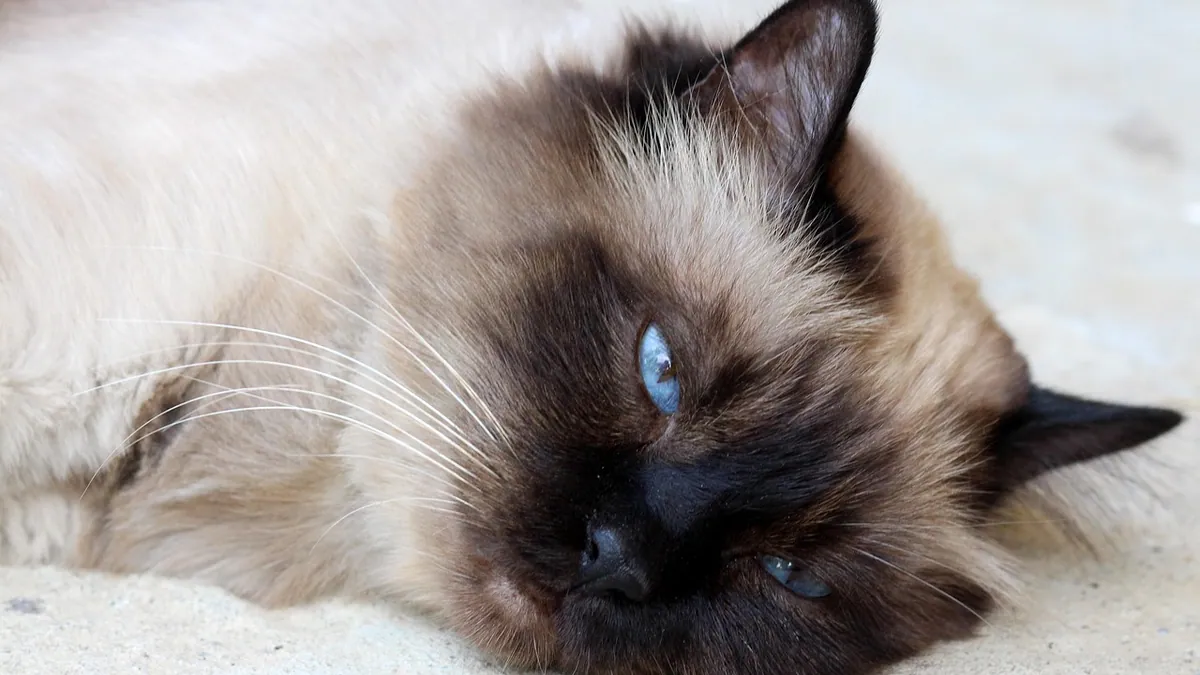
Mild sleepiness for a few hours after flea treatment is common and usually passes on its own, but heavy sedation, tremors, or trouble breathing mean you need to call for help right away. A cat that is lethargic after flea treatment or a vet visit is often just tired, yet the line between a normal reaction and poisoning is not always obvious.
This article is educational and is not a substitute for veterinary diagnosis or treatment.
Quick Answer
- Sleepiness for a few hours after a topical flea product or a vet visit is common and often harmless. Watch your cat closely for the rest of the day.
- If your cat licked wet flea medicine, expect drooling, foaming at the mouth, vomiting, or agitation from the bitter taste [1][2]. Offer water and wet food or tuna to mask the taste [1].
- Call your veterinarian or a pet poison hotline the same day if your cat is hard to wake, wobbling, twitching, vomiting repeatedly, or not eating.
- Go to an emergency clinic now if your cat is panting, having trouble breathing, having seizures, or has a very slow heart rate.
- Never give a second dose, a bath with the wrong product, or any human medication without asking your vet first.
What Flea Medicine Is and Why Veterinarians Use It
Flea and tick products for cats come as spot-on liquids, shampoos, sprays, chewables, and injections. Topical products contain active ingredients plus a carrier that helps the medicine stick to your cat's skin and spread through the coat [1][3]. The goal is to kill adult fleas and stop new ones from biting.
Keeping fleas off your cat is not only about itching. Fleas can carry bacteria and other organisms between cats. In one study, treating cats with fipronil and (S)-methoprene reduced the risk of spreading Bartonella clarridgeiae, a bacterium linked to cat scratch disease, among cats exposed to fleas [4]. That is one reason veterinarians push year-round flea control even for indoor cats.
Your vet picks a product based on your cat's age, weight, health, and lifestyle. Some products treat fleas only. Others also cover ticks, ear mites, or certain worms. If you are still deciding what to use, our guide to Cat Flea Treatment walks through the main options.
How Flea Medicine Works
Most spot-on products work in one of two ways. Some spread across the skin and coat and kill fleas on contact. Others are absorbed through the skin into the bloodstream, so fleas die when they bite. Shampoos and sprays work on the surface and wash or wear off faster.
The carrier in a topical product is part of the problem when a cat licks it. The medicine has to stay on the skin long enough to spread, so the liquid is designed not to dry instantly [1][3]. If your cat grooms the area before it dries, they swallow some of the product. The bitter taste alone can trigger drooling, foaming at the mouth, and vomiting, even when the dose is correct [1][2].
This is why application matters. Place the product on the skin at the back of the neck, between the shoulder blades, where your cat cannot easily reach. Part the fur so the liquid touches skin, not hair. Keep your cat from grooming that spot until it dries, and keep them away from other pets for the same reason [3].
Dosing Basics for Flea Treatment
Your veterinarian decides the dose. It is based on your cat's weight, age, and health, and it is not something you should guess. Never split a dog product for a cat, and never use a product labeled for a larger animal. Cats are not small dogs, and some ingredients that are safe for dogs are toxic to cats.
Follow the label interval for repeat dosing. Most spot-on products are given monthly, but some last longer or shorter. If you miss a dose, do not double up. Call your vet or the product's maker and ask when to apply the next one.
If you gave a bath too soon after a spot-on, or your cat got wet in the rain, the product may not work as well. Ask your vet whether to reapply. Do not reapply on your own, because stacking doses can cause an overdose.
Common and Serious Side Effects
| Side effect | How common or serious | What to do |
|---|---|---|
| Sleepiness or mild lethargy for a few hours | Common and usually mild | Let your cat rest, offer water, and check on them every hour |
| Drooling, foaming at the mouth, pawing at the mouth | Common after licking wet product, usually mild [1][2] | Offer fresh water and wet food or tuna to mask the bitter taste [1] |
| Vomiting once or twice | Common after ingestion, usually mild [1][2] | Withhold food for an hour, then offer small amounts of water |
| Agitation or hyperactivity | Common after licking the product [3][2] | Keep your cat in a quiet, safe room and remove the product with a bath in liquid dish soap if your vet agrees [1] |
| Repeated vomiting, not eating, drooling that will not stop | Serious | Call your vet or a poison hotline the same day |
| Tremors, twitching, wobbling, trouble walking | Serious | Call your vet or poison control now |
| Panting, open-mouth breathing, trouble breathing | Emergency | Go to an emergency clinic now |
| Seizures, collapse, very slow heart rate | Emergency | Go to an emergency clinic now |
A little context helps here. Lethargy is a vague sign, and it shows up in many cat illnesses, not just reactions to medicine. In one review of cats with bleeding into the abdomen, lethargy, poor appetite, and collapse were the most common signs owners noticed [5]. In another report, a cat with severe liver injury came in with fever, lethargy, and not eating [6]. The point is simple. Lethargy that lasts or gets worse deserves a real exam, no matter what you think caused it.
If your cat seems weak or wobbly in a way that worries you, our article on Cat Lethargy: Sudden Weakness and When to Rush to the Vet can help you sort out what needs urgent care.
Cat Panting After Flea Treatment
Panting in a cat is not normal the way it is in a dog. A cat that is open-mouth breathing after flea treatment needs to be seen right away. This can be a sign of a serious reaction, pain, or another emergency. Do not wait to see if it passes.
Cat Lethargic After Vet Visit
Sleepiness after a vet visit is common and often has a simple cause. Sedatives used for exams or procedures can leave cats groggy for hours. In a study of healthy cats given medetomidine before neutering, sedation was measured before and after the procedure and during recovery [7]. Your cat may also be tired from the car ride, the handling, or a vaccine. Most cats perk up within a day. If your cat is still flat and not eating 24 hours later, call your vet.
Who Should Not Take Flea Medicine
Not every product suits every cat. Tell your vet if your cat is pregnant, nursing, under the age of the product's minimum, underweight, or being treated for another condition. Young kittens and senior cats with liver or kidney disease often need a different product or a lower dose set by your vet.
Drug interactions matter too. Some flea products overlap with other parasite preventives, so using two products with the same ingredient can cause an overdose. Bring a list of everything your cat takes, including other flea products, dewormers, and any prescription medicine.
Never use a flea product made for dogs on a cat unless your veterinarian specifically says it is safe for cats. Some dog products contain ingredients that are highly toxic to cats, and the reaction can be severe.
Overdose and When to Call for Help
An overdose can happen if you apply too much, apply it too often, use a dog product, or your cat licks a large amount before it dries. Signs of a serious reaction include tremors, twitching, wobbling, vomiting that will not stop, drooling that will not stop, panting, seizures, collapse, or a very slow heart rate.
If you see any of these, call your veterinarian right away. You can also call a pet poison hotline. Keep the product box or tube with you so you can read the ingredients and the amount applied.
If your cat only licked a small amount and is drooling or foaming at the mouth, offer fresh water and wet food or tuna to mask the bitter taste [1][2]. If your vet agrees, you can bathe your cat in liquid dish soap, such as Dawn, to remove the product from the skin [1][3]. Do not use a medicated shampoo or anything else unless your vet tells you to.
For more on choosing and using flea products safely, see Flea Treatment For Cats and Good Cat Flea Treatment.
Limitations and When to Contact a Veterinarian
No article can tell you whether your specific cat is having a mild reaction or something dangerous. Only a veterinarian who examines your cat can do that. When in doubt, call. A phone call costs nothing, and it can save your cat's life.
Call your veterinarian the same day if your cat:
- Is hard to wake or seems unusually weak
- Is wobbling, twitching, or having trouble walking
- Vomits more than once or twice
- Will not eat or drink
- Has drooling or foaming that will not stop
- Seems agitated or restless for more than a few hours
Go to an emergency clinic now if your cat:
- Is panting or open-mouth breathing
- Is having trouble breathing
- Has a seizure
- Has collapsed
- Has a very slow heart rate
- Is unresponsive
Schedule a routine visit if your cat:
- Is still tired 24 hours after treatment or a vet visit
- Has mild sleepiness that comes and goes over a few days
- Has skin redness, hair loss, or itching at the application site
Frequently Asked Questions
How long does lethargy last after flea treatment?
Mild sleepiness usually fades within a few hours to a day. If your cat is still flat and not interested in food 24 hours later, call your vet. Lasting lethargy can point to a reaction that needs treatment.
Is my cat okay after flea medicine if they are just sleepy?
Often yes, if the sleepiness is mild and your cat still responds to you, eats, and drinks. Watch for drooling, vomiting, tremors, or trouble breathing, which are not normal. Call your vet if anything changes or you are unsure.
Can flea treatment make my cat pant?
Panting is not a typical mild reaction and should be treated as urgent. Open-mouth breathing in a cat can signal a serious problem, including a bad reaction to medicine. Take your cat to an emergency clinic right away.
What should I do if my cat licked flea medicine?
Offer fresh water and wet food or tuna to mask the bitter taste [1]. If your vet agrees, bathe your cat in liquid dish soap to remove the product [1][3]. Call your vet or a poison hotline if your cat vomits repeatedly, twitches, or seems very unwell.
Can I give my cat another dose if the first one did not work?
Do not reapply on your own. Stacking doses can cause an overdose, and the product may simply need more time or a different approach. Ask your vet when the next dose is safe and whether a different product is a better fit.
Related Articles
- Cat Flea Treatment
- Flea Treatment For Cats
- Cat Lethargy: Sudden Weakness and When to Rush to the Vet
- Cat Lethargy
- Good Cat Flea Treatment
- Is It Normal For Dogs To Itch After Flea Treatment
- Cat Jumpy After Flea Treatment: Is It Normal?
- Kitten Sick After Flea Treatment: What to Do
- Cat Licked Flea Medicine: What to Do Right Now
References
- Why Is My Cat Vomiting After Flea. Pet Poison Helpline.
- Flea Medicine Side Effects on Cats. Pet Poison Helpline.
- My Cat Had a Bad Reaction to Flea. Pet Poison Helpline.
- Fipronil and (S)-methoprene can lessen the risk of transmission of Bartonella clarridgeiae among cats with exposure to Ctenocephalides felis. American journal of veterinary research, 2024.
- Factors Associated with Survival to Discharge in Cats with Spontaneous Hemoperitoneum. Animals : an open access journal from MDPI, 2026.
- Blue-Green Neutrophilic Inclusions in a Cat With Severe Hepatocellular Injury. Veterinary medicine and science, 2026.
- EXPRESS: EFFECTS OF INTRAMUSCULAR AND INTRANASAL ADMINISTRATION OF MEDETOMIDINE ON SEDATION AND SOME CARDIOPULMONARY VARIABLES IN HEALTHY CATS. Journal of feline medicine and surgery, 2026.