Cat Licked Flea Medicine: What to Do Right Now
By Dr. Zubair Khalid, DVM, MS, PhD ·
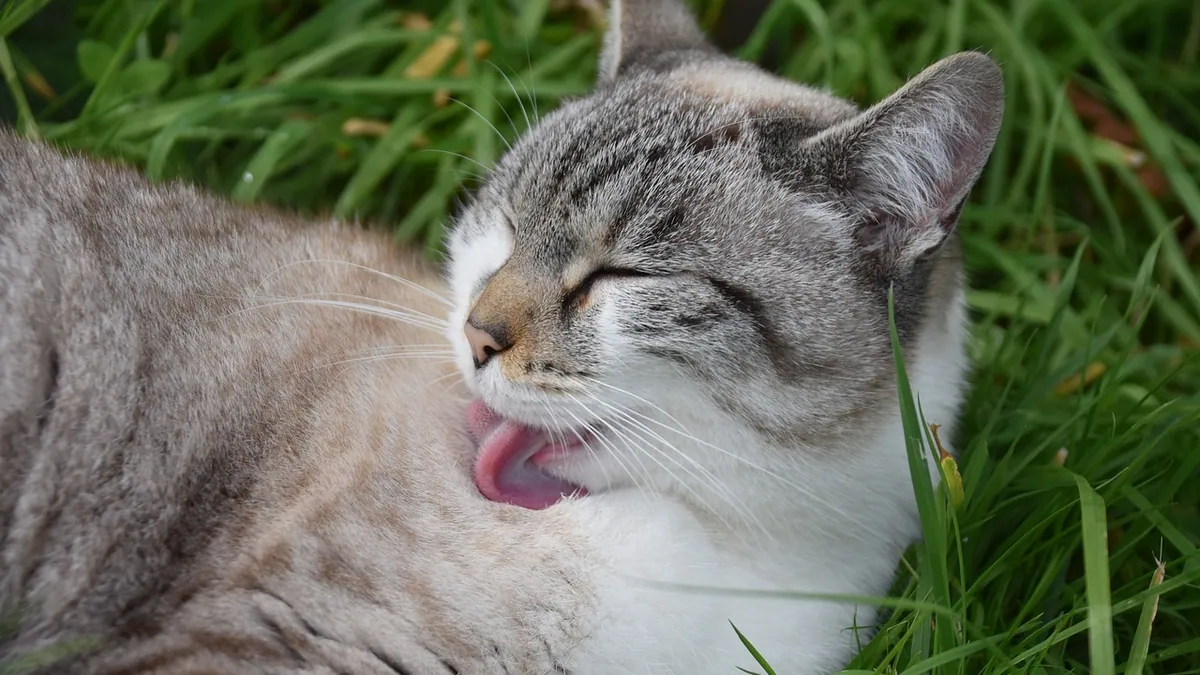
If your cat licked his flea medicine, the first thing to know is that the answer depends entirely on which product you used. Many spot-on flea treatments are bitter but not dangerous when a cat grooms a small amount, while pyrethroid products (common in dog flea treatments) can be life threatening to cats. This article is educational and is not a substitute for veterinary diagnosis or treatment.
Quick Answer
- Find the package and read the active ingredients. If you see permethrin, phenothrin, etofenprox, or any ingredient ending in "-thrin," treat this as an emergency and call a veterinarian or poison control right away.
- If the product is a cat-labeled spot-on (fipronil, imidacloprid, selamectin, or similar), a small lick usually causes drooling, foaming, or vomiting from the bitter taste, not poisoning [1][2].
- Offer fresh water and a small amount of wet food or tuna to help clear the taste [1][2].
- Do not induce vomiting unless a veterinarian specifically tells you to.
- Call the ASPCA Animal Poison Control Center at (888) 426-4435 or Pet Poison Helpline at (855) 764-7661 if you are unsure what you applied or your cat looks unwell.
Is It Safe for Cats to Lick Flea Treatment?
Sometimes yes, sometimes no. The safety of a lick depends on the active ingredient, the dose your cat's skin absorbed, and how much was actually swallowed.
Cat-labeled spot-on products
Spot-on flea medications made for cats contain active ingredients and a carrier that helps the product stick to the skin [1][2]. If the product has not dried yet and your cat licks it off, they can become hyperactive, agitated, nauseous, vomit, foam at the mouth, and salivate because of the bitter taste [1][2]. These signs are distressing to watch but usually reflect taste aversion and mild stomach upset, not true poisoning.
Common cat-safe active ingredients include fipronil, imidacloprid, selamectin, and combinations of these. A field study of 142 naturally infested cats treated with a topical combination of ivermectin, imidacloprid, and praziquantel found effective flea control with assessments at days 1, 7, 14, and 30 after a single application [3]. Topical imidacloprid has also been used safely in other species, with no side effects observed in a colony of captive marmosets treated twice, three weeks apart [4].
Pyrethroid products (the dangerous ones)
Pyrethroids are a different story. These insecticides are widely used for flea control, and they include permethrin, flumethrin, and related compounds [5]. They are common in dog flea and tick products and in some household and environmental sprays.
Cats are far more sensitive to pyrethroids than dogs. A case report described a 1-year-old cat who developed acute weakness, ataxia, muscle twitching, tremors, high body temperature, and seizures after permethrin toxicosis [6]. That cat needed intensive care, including intravenous lipid emulsion therapy, and later developed kidney injury [6]. This is the scenario that makes a licked pyrethroid product a genuine emergency.
Products that are not spot-ons at all
Flea sprays, powders, shampoos, dips, and yard or house treatments can contain pyrethroids too. If your cat groomed any of these off their coat, or licked a surface or another pet treated with one, call poison control. Do not wait for symptoms.
The Toxic Principle and What It Does in the Body
Pyrethroids act on the nervous system. They interfere with sodium channels in nerve cells, which is why the classic signs are neurologic: tremors, twitching, incoordination, and seizures. The severity depends on how much was absorbed through the skin and how much was swallowed during grooming.
The carrier in a spot-on also matters. These products are designed to spread and stay on the skin, so when a cat grooms, they get a mouthful of bitter liquid [1][2]. That bitterness triggers drooling, foaming, and sometimes vomiting even when the active ingredient itself is not toxic to cats.
For cat-labeled products, the main problem is usually local and gastrointestinal. For pyrethroids, the problem is the nervous system, and signs can progress quickly.
Signs to Watch For and Their Timeline
Signs that are common and usually mild
- Excessive drooling or salivation [1][2]
- Foaming at the mouth [1][2]
- Vomiting [1][2]
- Agitation or hyperactivity [1][2]
- Nausea and reduced appetite [1][2]
These signs often appear within minutes to a few hours of grooming, while the product is still wet. If your cat is drooling heavily, our guide on what to do if your cat is drooling after taking medication walks through the steps. If your cat vomits after the dose, see what to do if your cat spits out or vomits their medicine.
Signs that mean an emergency
- Muscle tremors, twitching, or fasciculations [6]
- Weakness, wobbliness, or ataxia [6]
- Seizures [6]
- High body temperature [6]
- Collapse or unresponsiveness
In the permethrin case report, the cat arrived with weakness, ataxia, fasciculations, tremors, hyperthermia, and seizures [6]. These signs can appear within hours of exposure and worsen fast. Do not watch and wait.
What to Do If My Cat Licks His Flea Medicine: Step by Step
Step 1: Identify the product
Pick up the box or tube and read the active ingredients. Write them down. If you threw the packaging away, check your purchase history or call the clinic or store where you bought it. The ingredient list decides everything that follows.
Step 2: Decide if this is an emergency
If the product contains a pyrethroid (permethrin, phenothrin, etofenprox, flumethrin, or any ingredient ending in "-thrin"), or if you applied a dog product to your cat, call a veterinarian or poison control immediately, even if your cat looks fine right now[6].
If the product is labeled for cats and your cat only licked a small amount, you can usually call your veterinarian for guidance instead of rushing in.
Step 3: Call for advice
Your options are:
- Your regular veterinarian or the nearest emergency clinic
- ASPCA Animal Poison Control Center at (888) 426-4435
- Pet Poison Helpline at (855) 764-7661
Have the product name, active ingredients, the time you applied it, and your cat's weight ready. Poison control services may charge a consultation fee.
Step 4: Do not induce vomiting
Never make your cat vomit unless a veterinarian tells you to. Some products are irritating to the esophagus, and vomiting can make things worse. This is one of the most common mistakes owners make.
Step 5: Manage the taste and the product on the skin
If your cat is drooling or foaming from a cat-labeled product, give them fresh water and wet food or tuna to mask the unpleasant taste [1][2]. If you want to remove the product from the skin, give your cat a bath in liquid dish soap [1][2]. Use warm water, keep your cat calm, and avoid getting soap in the eyes or mouth.
Step 6: Watch closely for at least 24 hours
Mild taste-related signs usually settle within a few hours. Neurologic signs from pyrethroids can appear or worsen over the first day [6]. If anything changes, call back.
How Veterinarians Treat This
Treatment depends on the product and the signs.
For mild taste reactions, care is supportive: fluids, a bland meal, and time. Your veterinarian may also bathe your cat to remove residual product [1][2].
For pyrethroid toxicosis, treatment is more involved. In the published case, the cat received intravenous diazepam and 20% intravenous lipid emulsion therapy for permethrin toxicosis [6]. That cat later developed acute kidney injury and needed further hospitalization [6]. This shows how serious pyrethroid exposure can become, and why early treatment matters.
If your cat swallowed something else along with the flea product, or you are not sure what they got into, our article on what to do if your cat ate a human medication covers the same first steps: identify, call, and do not wait.
Your veterinarian will calculate any medication dose from your cat's weight and health status. Never give a dose based on what worked for another pet.
Outlook
For cat-labeled spot-ons, the outlook is excellent. Most cats drool, foam, or vomit once and then return to normal within hours [1][2].
For pyrethroid toxicosis, the outlook depends on how much was absorbed and how fast treatment started. The cat in the case report survived the initial crisis but developed kidney complications that required a second hospitalization [6]. Prompt veterinary care gives the best chance of a full recovery.
Prevention and Safer Alternatives
- Never apply a dog flea product to a cat. This is the single most common cause of severe pyrethroid poisoning in cats [6].
- Read the label every time, even if you have used the product before. Formulations change.
- Separate pets after applying a spot-on. Keep treated pets apart until the product is fully dry so nobody grooms it off the other [1][2].
- Ask your veterinarian which product fits your cat's age, weight, and health.
- Treat the environment too. Flea infestations often involve the home and yard, and environmental control is part of a complete plan [4].
- If your cat has itchy skin from fleas, see how to treat flea dermatitis in cats.
- Keep in mind that flea resistance to some products is a real concern. Mutations linked to resistance have been found in cat flea populations, with frequencies of 2.5% and 10% for two specific mutations in one study [5]. This is another reason to work with your veterinarian on a plan instead of guessing.
Limitations and When to Contact a Veterinarian
Individual cases need a veterinarian. No article can tell you how much product your specific cat absorbed or how they will respond.
Call poison control or an emergency clinic right now if:
- The product contains a pyrethroid or was labeled for dogs [6]
- Your cat is having tremors, twitching, seizures, or collapse [6]
- Your cat is weak, wobbly, or has a high body temperature [6]
- Your cat is having trouble breathing or is unresponsive
Call your veterinarian the same day if:
- Your cat is drooling, foaming, or vomiting repeatedly [1][2]
- Your cat seems agitated or hyperactive [1][2]
- Your cat refuses food or water for more than a few hours
- You are not sure what product was applied
Schedule a routine visit if:
- Your cat had mild drooling that resolved and seems normal now, but you want the product choice reviewed
- You need help choosing a safer flea preventive
Frequently Asked Questions
How long do symptoms last after a cat licks flea medicine?
Mild taste-related signs like drooling and foaming usually fade within a few hours once the mouth is rinsed and the product is removed. Neurologic signs from pyrethroid exposure can last longer and may worsen over the first day, so any tremor or wobbliness needs immediate veterinary care.
Can my cat get sick from grooming another pet's flea treatment?
Yes. If your cat grooms a pet whose spot-on has not dried, they can swallow the product and develop drooling, vomiting, and agitation. If the other pet was treated with a pyrethroid product, the risk is much higher and you should call poison control.
Should I bathe my cat after they lick flea medicine?
A bath in liquid dish soap can help remove product from the skin and reduce further exposure. Use warm water, keep soap out of the eyes and mouth, and dry your cat well afterward. If your cat is already showing neurologic signs, skip the bath and go to the vet.
Will my cat be okay if they only licked a tiny bit?
A tiny lick of a cat-labeled spot-on often causes nothing more than a bad taste and some drooling. A tiny lick of a pyrethroid product is still an emergency because cats are highly sensitive to these ingredients. When in doubt, call poison control.
Can I use my dog's flea medicine on my cat if I use less?
No. Never use a dog flea product on a cat, even in a smaller amount. Dog products often contain pyrethroids at concentrations that are toxic to cats, and reducing the volume does not make them safe. Ask your veterinarian for a cat-specific product instead.
Related Articles
- What to Do If Your Cat Is Drooling After Taking Medication
- What to Do If Your Cat Spits Out or Vomits Their Medicine
- How To Treat Flea Dermatitis In Cats
- What to Do If Your Cat Ate a Human Medication: First Steps and When to Rush
- My Cat Ate a Rubber Band: What Should I Do Right Now?
- What to Do If Your Dog Has a Bad Reaction to Flea Medication
- Kitten Sick After Flea Treatment: What to Do
- What If My Cat Licks NexGard? Safety and Risks
- Is It Safe for Cats to Lick a Flea Collar?
- Dipylidium caninum Flea Tapeworm in Dogs and Cats: Lifecycle, Clinical Signs, and Flea Control
References
- My Cat Had a Bad Reaction to Flea. Pet Poison Helpline.
- Flea Medicine Side Effects on Cats. Pet Poison Helpline.
- Field evaluation of a topical combination of ivermectin, imidacloprid, and praziquantel for flea control in cats under routine clinical. Frontiers in parasitology, 2026.
- Successful Treatment of Captive Common Marmosets (Callithrix jacchus) Infested with Common Cat Fleas (Ctenocephalides felis) by Using Topical Imidacloprid and Environmental Control Measures. Veterinary sciences, 2023.
- Investigation of knockdown resistance mutations in Ctenocephalides felis samples from the cat populations of Istanbul Province. Polish journal of veterinary sciences, 2025.
- Refractory Hyperkalemia With Type 4 Renal Tubular Acidosis Associated With Tubulointerstitial Nephritis and Renal Papillary Necrosis Following Intravenous Lipid Emulsion Therapy in a Cat. Journal of veterinary emergency and critical care (San Antonio, Tex. : 2001), 2025.