Why Is My Parrot Making Weird Noises? What They Mean
By Dr. Zubair Khalid, DVM, MS, PhD ·
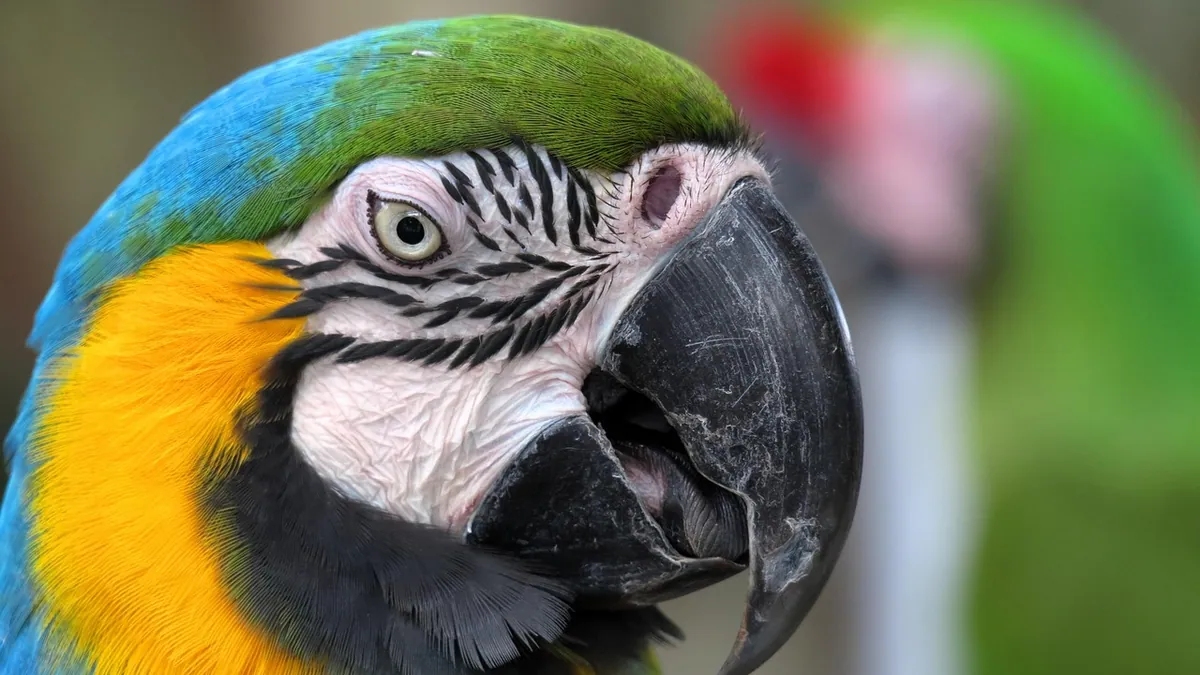
Parrots make weird noises for many reasons, and most of them are normal. Parrots are vocal learners, meaning they pick up sounds from their environment and practice them, so odd squeaks, clicks, and whimpers are often just chatter, mimicry, or a bid for attention. The problem is that a few of those same sounds, especially clicking, can also point to a respiratory infection that needs treatment fast.
This article is educational and is not a substitute for veterinary diagnosis or treatment.
Quick Answer
- Parrots are one of only three bird groups that learn sounds by copying what they hear, so strange noises are part of normal vocal behavior [1].
- Budgies and other parrots need to hear themselves to keep their songs and calls stable. When adult male budgerigars were deafened in a study, their high-frequency syllables dropped significantly within 6 months [2].
- Clicking, wheezing, or tail bobbing with each breath is not normal chatter. It can signal respiratory disease and needs a same-day vet call.
- Screaming is one of the most common behavior complaints from parrot owners, and it usually has an environmental or social trigger [3].
- Music and rhythmic sound can trigger dancing and other positive vocal responses in cockatoos, which suggests sound enrichment can support welfare [4].
Why Is My Parrot Making Weird Noises? Normal Reasons First
Before you worry, rule out the ordinary. Most weird noises in pet parrots fall into a few harmless categories.
Chatter and contact calls
Parrots talk to their flock all day. A single bird in a house often treats you as the flock, so it calls when you leave the room, when it hears you come home, or when it wants food. These contact calls can sound like squeaks, chirps, or a rising whistle. They are communication, not illness.
Mimicry and sound practice
Parrots belong to the small group of birds that learn vocalizations by imitation, along with hummingbirds and songbirds [1]. That means your bird may copy the microwave, a door hinge, your laugh, or a phrase it heard once. Weird noises are often just rehearsal.
Squeaking and squealing
Squeaks usually mean excitement, hunger, or a request for attention. A young bird may squeak while begging for food. An adult may squeak when you bring out a favorite toy or when it wants to be picked up. If the squeak comes with relaxed body language, fluffed feathers, and normal eating, it is almost always behavioral.
Whimpering and whining
Whimpering in parrots often sounds like a soft, drawn-out complaint. Owners usually hear it when the bird is bored, wants out of the cage, or has learned that the sound brings you over. If you respond every time, the behavior gets stronger.
Clicking that is not breathing-related
Some parrots click their beaks when they are content, similar to a cat purring. Beak grinding before sleep is also normal. The clicking to worry about is the kind that comes from the airway, which I cover below.
Singing, dancing, and rhythmic sound
Cockatoos have been recorded performing 17 previously undescribed dance movements in response to music, and researchers suggest this behavior may reflect a positive welfare state [4]. If your bird gets loud and animated when music plays, that is a good sign, not a problem.
Medical Causes to Rule Out
Some weird noises are symptoms. The ones below need a veterinarian, not a training plan.
Clicking and respiratory disease
Respiratory clicking is different from beak clicking. It is a wet or dry click that happens with breathing, often at rest. It can come with tail bobbing, open-mouth breathing, nasal discharge, or a change in voice. Any bird that clicks while breathing needs to be seen the same day. For a closer look at the breathing signs that go with it, see Why Is My Bird Tail Bobbing? Breathing Warning Signs.
Voice changes and hearing
Parrots depend on hearing their own voice to keep their calls stable. When adult male budgerigars were deprived of auditory input, their high-frequency syllables decreased significantly within 6 months and stayed changed a year later [2]. A sudden change in your bird's voice can reflect hearing loss, nerve problems, or another medical issue, so it deserves a veterinary exam.
Other medical triggers
Pain, crop problems, egg binding, and tumors can all change how a bird vocalizes. So can feather damage and skin disease, since discomfort often shows up as new sounds plus picking. If your bird is making odd noises and losing feathers, read Parrot Feather Plucking Causes. A full list of conditions that affect parrots is covered in Common Parrot Diseases: Symptoms, Diagnosis, and Treatment.
When Weird Noises Become a Problem
A noise is a problem when it hurts the bird or the household. Screaming is one of the top three behavior complaints from parrot owners, along with aggression and feather picking [3]. In one survey, veterinarians ranked feather picking, chronic egg laying, aggression, and screaming as the most common behavior problems they were asked about [3].
The same survey found that most owners looked for advice somewhere other than their veterinarian before making an appointment [3]. That delay matters. A noise that starts as a health issue can turn into a learned habit while you try other fixes.
Signs the noise has crossed into a problem:
- It happens for hours a day, most days.
- It starts or stops the moment you enter or leave the room.
- It comes with feather damage, weight loss, or appetite changes.
- It is new for an adult bird that was previously quiet.
- It is loud enough to affect your sleep, work, or neighbors.
What to Do Step by Step
Step 1: Get a medical check first
Book a veterinary visit before you change training. Ask for a full physical exam and a weight. Your veterinarian will decide what testing is needed and will calculate any medication dose from your bird's weight and health. Do not give any medication on your own.
Step 2: Track the noise
Write down when the noise happens, what is going on around the bird, and how long it lasts. Note whether it happens at rest, during play, or when you leave. This log helps your veterinarian separate a symptom from a habit.
Step 3: Build a predictable routine
Parrots do better with routine. Feed, clean, and socialize at similar times each day. Predictability lowers anxiety, and anxiety drives a lot of odd vocalizing.
Step 4: Add enrichment that fits the species
Enrichment works best when it matches how a bird naturally feeds and forages. In a study of two parrot species, rainbow lorikeets (mostly nectar feeders) and regent parrots (mostly seed eaters) responded differently to nectar bucket devices, which shows that one enrichment setup does not fit every bird [5]. Ask your veterinarian or a certified behavior consultant what suits your species.
Step 5: Use sound and music wisely
Cockatoos show dance behavior in response to music, and researchers suggest music may work as environmental enrichment [4]. Try quiet music or nature sounds during alone time. Keep the volume low and watch your bird's response.
Step 6: Teach an alternative
Pick a quiet sound you like, such as a soft whistle, and reward it the moment you hear it. Ignore the noise you do not want. This works only if the bird is healthy and the unwanted sound is not a symptom.
Step 7: Reward calm, not volume
Walk over when your bird is quiet. If you only appear when it screams, you teach it that screaming works.
What Not to Do
- Do not punish your bird. Yelling, spraying water, or tapping the cage raises fear and can make screaming worse.
- Do not ignore clicking, wheezing, or tail bobbing. Those are medical signs, not behavior problems.
- Do not assume a new noise is mimicry. A sudden change in an adult bird's voice can be a health issue.
- Do not cover the cage all day to stop noise. That removes light, social contact, and enrichment.
- Do not copy the noise back if it is loud. You may be rewarding it.
- Do not rely on internet advice alone. Most owners in one survey sought help elsewhere before contacting a veterinarian, and that pattern leaves problems untreated [3].
When to Involve a Veterinarian or Behavior Professional
Call your avian veterinarian the same day if your bird is clicking while breathing, breathing with its tail bobbing, making new sounds with nasal discharge, or has a sudden voice change. These can be signs of respiratory or neurological disease.
Book a routine visit within a few days if the noise is new, if your bird is quieter than usual, or if the noise comes with feather damage, appetite changes, or weight loss.
Ask for a referral to a certified behavior consultant if your veterinarian finds no medical cause and the noise continues. Behavior problems in parrots are common, and a plan that combines a medical workup, diet changes, housing changes, and enrichment is what veterinarians most often recommend [3].
Limitations and When to Contact a Veterinarian
No article can tell you what your individual bird has. Only a veterinarian who examines your bird can do that.
Emergency now:
- Open-mouth breathing at rest
- Tail bobbing with every breath
- Clicking or gurgling sounds while breathing
- Collapse, seizures, or inability to perch
- Bleeding or a swollen, injured beak
Same day:
- New clicking or wheezing
- Nasal or eye discharge
- Sudden voice change in an adult bird
- Fluffed feathers, sitting on the cage floor, or not eating
Routine visit:
- A new noise that lasts more than a few days
- Screaming that disrupts the household
- Feather picking along with new sounds
- Any behavior change in a bird over 5 years old
Frequently Asked Questions
Why is my budgie making weird noises?
Budgies are vocal learners, and they need to hear themselves to keep their calls stable. In one study, adult male budgerigars that lost their hearing showed a significant drop in high-frequency syllables within 6 months [2]. If your budgie's sounds change suddenly, get a veterinary exam before assuming it is just chatter.
Why is my parrot making squeaking noises?
Squeaking is usually excitement, hunger, or a request for attention. Young birds squeak while begging, and adults squeak around favorite toys or people. If the squeak comes with normal eating, normal droppings, and relaxed posture, it is most likely behavioral.
Why is my parrot making clicking noises?
Beak clicking can be a sign of contentment, but clicking that happens with breathing is not normal. Respiratory clicking often comes with tail bobbing, open-mouth breathing, or discharge, and it needs a same-day veterinary visit. Do not wait to see if it passes.
Why is my parrot making whimpering noises?
Whimpering is often a soft complaint that means boredom, wanting out of the cage, or wanting attention. If you respond every time it happens, the sound becomes a reliable way to call you. Reward quiet behavior instead and add enrichment to fill the bird's day.
Can music stop my parrot from making strange sounds?
Music can change vocal behavior in a positive way. Cockatoos have been recorded dancing to music, and researchers suggest music may serve as environmental enrichment that reflects good welfare [4]. Try low-volume music during alone time, and watch whether your bird settles or gets more excited.
Do I need a behavior consultant for a noisy parrot?
Only if your veterinarian rules out a medical cause and the noise continues. Screaming is one of the most common behavior problems in pet parrots, and veterinarians typically recommend a combination of a medical workup, diet changes, housing changes, and enrichment [3]. A certified behavior consultant can build that plan with you.
Related Articles
- Why Is My Bird Tail Bobbing? Breathing Warning Signs
- Parrot Feather Plucking Causes
- Common Parrot Diseases: Symptoms, Diagnosis, and Treatment
- Why Is My Cockatiel Making Squeaking or Clicking Noises?
- Why Is My Cockatiel Hissing at Me? What It Means
- Why Is My Parrot Grinding His Beak? What It Means
References
- Analysis of vocal communication in the genus Falco. Scientific reports, 2023.
- Auditory feedback is necessary for long-term maintenance of high-frequency sound syllables in the song of adult male budgerigars (Melopsittacus undulatus). Journal of comparative physiology. A, Neuroethology, sensory, neural, and behavioral physiology, 2007.
- Surveys of avian practitioners and pet owners regarding common behavior problems in psittacine birds. Journal of avian medicine and surgery, 2011.
- Dance behaviour in cockatoos: Implications for cognitive processes and welfare. PloS one, 2025.
- Functionally Relevant Feeding Enrichment: An Examination of Nectar Feeding Devices With Two Species of Parrot. Veterinary medicine and science, 2026.