Why Is My Parrot Opening and Closing His Mouth? Causes
By Dr. Zubair Khalid, DVM, MS, PhD ·
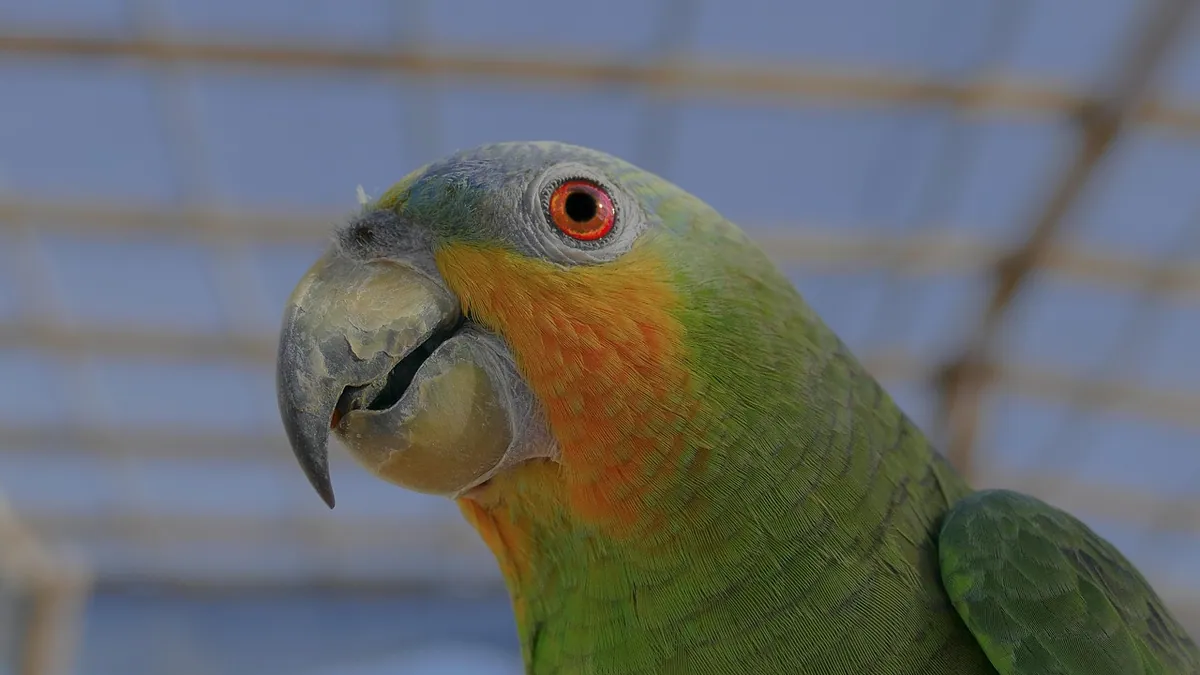
Why is my parrot opening and closing his mouth? In many cases this is normal behavior, such as a yawn, a stretch, or cooling down after activity. But when a bird keeps its mouth open while breathing at rest, it can be a sign of respiratory distress that needs a veterinarian right away.
This article is educational and is not a substitute for veterinary diagnosis or treatment.
Quick Answer
- A single yawn, a beak stretch after eating, or open-mouth breathing after flying or a warm room is usually normal.
- Open-mouth breathing while perched and resting is not normal in parrots and should be treated as urgent.
- Other red flags include tail bobbing, wheezing, clicking sounds, nasal discharge, and a change in voice.
- Move the bird to a quiet, cool, calm spot and call an avian veterinarian or an emergency clinic immediately.
- Do not give any medication, honey, oil, or human drug on your own. A veterinarian calculates any dose based on your bird's weight and condition.
What Mouth Opening Looks Like in a Parrot
Parrots open and close their beaks for many reasons. Some are harmless. Your bird may yawn, which looks like a slow, wide opening followed by a quick close. He may grind or shift his beak while settling down for sleep. He may open his mouth briefly to adjust a piece of food or to pant after a short flight.
The same sign can also be a breathing problem. A bird in respiratory distress often sits with the beak slightly open, neck extended, and body feathers fluffed. You may see the tail move up and down with each breath. This tail bobbing is a warning sign that the effort of breathing has increased, and it deserves the same attention as open-mouth breathing itself. If you notice both signs together, read Why Is My Bird Tail Bobbing? Breathing Warning Signs while you arrange a veterinary visit.
The key difference is context. A bird who opens his mouth for a few seconds after playing and then closes it and acts normal is likely fine. A bird who holds his mouth open while sitting still, especially with a stretched neck or a bobbing tail, is not fine.
Why Is My Parrot Opening and Closing His Mouth? Main Causes
Normal Causes
Yawning and beak stretching. Birds yawn to clear the airways and stretch the jaw. This is brief and happens once or twice, often after a nap or a meal.
Cooling down. Parrots have no sweat glands. They lose heat by panting, which means rapid open-mouth breathing. This is normal after exercise or in a hot room, but it should stop within a few minutes once the bird rests in a cooler place.
Beak adjustment and crop movement. Some birds open the beak slightly while moving food from the crop or while grinding the beak before sleep.
Medical Causes
Upper airway blockage. A plug of inflammatory material in the nostril can block airflow and cause upper respiratory distress. In two African grey parrots, such plugs were linked to several bacteria, including Klebsiella species, Bacillus mycoides, Staphylococcus epidermidis, and Pasteurella multocida, and the plugs caused pressure damage and obstruction of the nostril [1]. A bird with a blocked nostril may open the mouth to breathe and may make a whistling or clicking sound.
Avian pox. This viral disease can cause respiratory distress along with eye and mouth lesions. In an outbreak among blue-fronted Amazon parrots, signs included conjunctivitis, eyelid inflammation, loss of appetite, and varying degrees of respiratory distress, with ulcers and scabs around the eyes and dead tissue plaques inside the mouth [2]. Uncomplicated cases were often self-limiting, but the death rate was high when secondary bacterial and fungal infections developed [2].
Chlamydiosis (psittacosis). This bacterial infection is common in parrots and can spread to people. A two-year-old Congo African grey parrot with chlamydiosis showed loss of appetite, depression, diarrhea, and mild difficulty breathing [3]. In a breeding aviary outbreak, affected parrots and macaws showed weight loss, diarrhea, yellowish green droppings, and respiratory distress, and many died [4]. Because this disease can pass to humans, prompt diagnosis matters for your whole household.
Other infections and organ disease. Respiratory distress can also come from other causes. A double yellow-headed Amazon parrot with an Encephalitozoon infection showed respiratory distress, decreased appetite, diarrhea, and weight loss, with the organism found in the kidneys, intestine, and lungs [5].
Cause, Clues, and Urgency
| Cause | Typical clues | How urgent |
|---|---|---|
| Yawning or beak stretch | Brief, one or two times, bird acts normal | Not urgent |
| Cooling after exercise or heat | Fast open-mouth breathing, stops after rest in a cool spot | Not urgent if it stops quickly |
| Upper airway blockage or nasal disease | Noisy breathing, blocked or crusted nostril, head shaking | Same-day vet visit, emergency if breathing is hard |
| Avian pox | Scabs or ulcers near eyes or in mouth, eye swelling, poor appetite | Same-day vet visit |
| Chlamydiosis | Lethargy, diarrhea, weight loss, mild to severe breathing trouble | Same-day vet visit, emergency if severe |
| Other infections or organ disease | Poor appetite, weight loss, diarrhea, weakness | Same-day vet visit |
Red Flags That Mean an Emergency
Call an emergency veterinary clinic now if you see any of these:
- Open-mouth breathing while the bird is resting on the perch.
- Tail bobbing that is obvious and constant.
- Wheezing, clicking, or a whistling sound with each breath.
- A stretched neck or a bird who sits low on the perch with fluffed feathers.
- Nasal discharge, sneezing with discharge, or a crusted nostril.
- Any bleeding, a wound, or a visible mass in or around the mouth.
- Sudden collapse, weakness, or a bird who cannot stay on the perch.
- A bird who stops eating or whose droppings change color or consistency.
Birds hide illness well because they are prey animals. By the time a parrot shows open-mouth breathing at rest, the problem may already be advanced. Do not wait to see if it improves overnight.
Safe Things You Can Do at Home While You Wait
Your job is to reduce stress and get help, not to treat the bird yourself.
Keep the bird calm and warm. Place the cage in a quiet, dim room away from other pets, loud noise, and foot traffic. Cover part of the cage if that helps your bird settle.
Check the temperature. If the room is hot or the cage sits in direct sun, move the bird to a cooler area. Overheating can cause panting that looks like illness.
Do not handle the bird more than needed. Catching and holding a struggling bird makes breathing harder. Use a small carrier or move the whole cage if you must travel.
Do not give any medication. Never use human drugs, leftover antibiotics, honey, oils, or herbal drops. A veterinarian calculates the correct drug and dose from your bird's weight and health status.
Keep a simple record. Note when the mouth opening started, how long it lasts, what your bird was doing, and any other signs such as droppings, appetite, or voice changes. This helps the veterinarian.
Call ahead. Tell the clinic you have a bird with breathing trouble so they can prepare. If your bird is in crisis, ask whether to come in immediately.
If your bird also shows other behavior changes, such as pulling out feathers or biting, those can be separate problems, but breathing always comes first. You can read about Parrot Feather Plucking Causes and Why Does My Bird Bite, and How to Stop It later, once your bird is stable.
What Your Veterinarian Will Check and Test
An avian veterinarian will start with a full physical exam. This includes listening to the airways, checking the nostrils and choana (the slit in the roof of the mouth), looking at the eyes and mouth for scabs or plaques, and feeling the body for weight loss or swelling.
Common tests include:
- A swab of the choana and cloaca for bacterial and chlamydial testing. In one confirmed case, choanal cleft and cloaca swabs were positive for Chlamydophila species on polymerase chain reaction testing [3].
- Blood work to check for anemia, infection, and organ function. The African grey parrot with chlamydiosis had anemia, a high white cell count, and other blood changes [3].
- Imaging such as radiographs to look at the lungs, air sacs, and heart.
- Fecal testing and cultures when diarrhea or weight loss is present.
- Testing for pox lesions if scabs or plaques are found, since pox can be confirmed by examining tissue or by growing the virus in chicken embryos [2].
Treatment depends on the cause. For chlamydiosis, one reported case was hospitalized and treated with doxycycline for 45 days with weekly testing [3]. Your veterinarian will choose the drug, the dose, and the length of treatment based on your bird's weight and test results.
Prevention and Monitoring
Quarantine new birds. Keep any new bird in a separate room for at least 30 days before introducing him to your flock. Chlamydiosis is highly contagious among birds and can spread to humans [4].
Keep the air clean. Avoid smoke, aerosol sprays, scented candles, and cooking fumes near birds. These irritate the airways and can trigger breathing problems.
Control the temperature. Provide shade and good airflow in warm weather. Watch for panting that does not stop after a few minutes of rest.
Weigh your bird weekly. A kitchen scale that reads in grams is a simple tool. Weight loss is often the first sign of illness, and it appeared in multiple cases described above[4][5].
Watch droppings and appetite. Yellowish green droppings, diarrhea, or a bird who stops eating should prompt a call to your veterinarian [4].
Schedule routine exams. An annual check with an avian veterinarian can catch problems before your bird shows open-mouth breathing.
Know your bird's normal. Learn what your parrot looks and sounds like when healthy. Then changes stand out early, when treatment works best.
Limitations and When to Contact a Veterinarian
This article cannot tell you what is wrong with your specific bird. Only a veterinarian who examines your parrot can do that. Individual cases need a veterinarian, and the timing matters.
Emergency now: open-mouth breathing at rest, tail bobbing, gasping, collapse, or a bird who cannot perch. Go to an emergency clinic immediately.
Same day: noisy breathing, nasal discharge, eye or mouth scabs, a sudden drop in appetite, or a change in droppings.
Routine visit: a single yawn now and then with no other signs, or a bird who pants briefly after exercise and recovers fast. Mention it at your next checkup.
Do not delay care because the sign seems mild. Respiratory problems in birds can worsen quickly.
Frequently Asked Questions
Why is my cockatiel opening its mouth?
A cockatiel may open its mouth to yawn, to cool down, or because of a breathing problem. If your cockatiel holds the mouth open while resting, or if you see tail bobbing or hear wheezing, call an avian veterinarian the same day.
Why is my budgie opening and closing its mouth?
Budgies often open and close the beak briefly while adjusting food or grinding the beak before sleep. If the behavior happens at rest, repeats often, or comes with fluffed feathers and a bobbing tail, treat it as urgent and seek veterinary care.
My parrot keeps opening his mouth. Should I worry?
It depends on when it happens. Brief opening after activity or in a warm room is usually normal. Constant open-mouth breathing while perched is a warning sign of respiratory distress and needs immediate veterinary attention.
Can I treat my bird's breathing problem at home?
No. Home remedies and leftover medications can harm your bird and delay real treatment. Keep the bird calm and warm, avoid handling, and contact a veterinarian who can diagnose the cause and calculate the correct treatment.
How can I tell if my bird is in respiratory distress?
Watch for open-mouth breathing at rest, tail bobbing with each breath, a stretched neck, wheezing or clicking sounds, and fluffed feathers. These signs mean your bird is working hard to breathe and needs emergency care right away.
Related Articles
- Parrot Feather Plucking Causes
- Why Does My Bird Bite, and How to Stop It
- Why Is My Bird Tail Bobbing? Breathing Warning Signs
- Why Is My Budgie Panting? Causes of Open-Mouth Breathing
- Why Is My Parrot Making Weird Noises? What They Mean
- Why Is My Parrot Shaking? Causes and When to Worry
- Avian Chlamydiosis (Psittacosis) in Pet Birds: Diagnostic Challenges and Molecular Detection
References
- Intranasal caseous fibrinous plug causing upper respiratory distress in two African grey parrots (Psittacus erithacus). Avian diseases, 1981.
- Avian pox in blue-fronted Amazon parrots. Journal of the American Veterinary Medical Association, 1981.
- Molecular identification and successful treatment of Chlamydophila psittaci (genotype B) in a clinically affected Congo African grey parrot (Psittacus erithacus erithacus). Iranian journal of veterinary research, 2016.
- Outbreak of Chlamydia psittaci Infection in a Commercial Psittacine Breeding Aviary in Argentina. Animals : an open access journal from MDPI, 2024.
- Encephalitozoonosis in a parrot. Journal of the American Veterinary Medical Association, 1985.