Do Cockatiels Molt? Normal Molting and When to Worry
By Dr. Zubair Khalid, DVM, MS, PhD ·
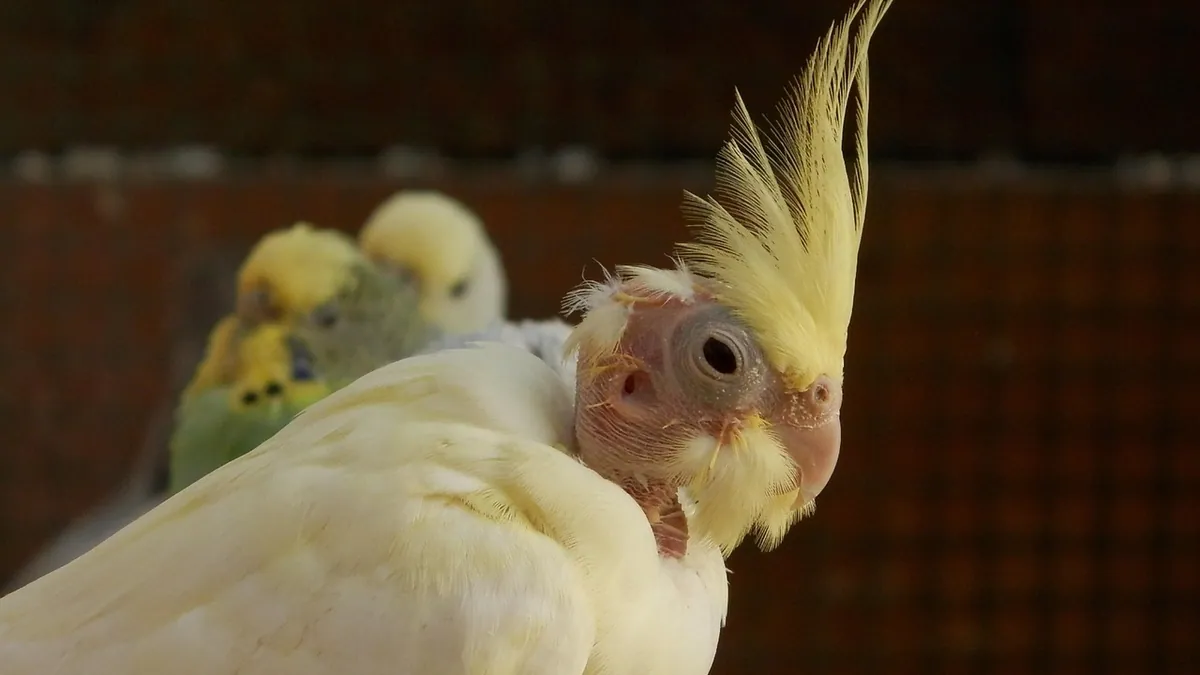
Yes, cockatiels molt. Every healthy cockatiel replaces its feathers on a predictable cycle, usually once or twice a year, and a normal molt is gradual, symmetrical, and leaves no bare skin. Feather loss that is patchy, one-sided, or ongoing outside a molt season is not normal and needs a veterinarian.
This article is educational and is not a substitute for veterinary diagnosis or treatment.
Quick Answer
- Cockatiels molt to replace worn feathers, and most adults go through one or two heavier molts per year, often in spring and fall.
- A healthy molt is gradual and even. You will see loose feathers, pin feathers (new feathers in waxy sheaths), and a slightly scruffy look, but no bare skin.
- Molting takes energy and protein. Expect more food intake, more preening, and more discarded feathers during the heavy weeks.
- Bald patches, bleeding pin feathers, or feather loss that never stops are red flags, not normal molting.
- Any bird with chronic feather loss should be examined for infectious causes such as psittacine beak and feather disease, which is progressive and irreversible in many cases [1].
What Normal Molting Looks Like in Cockatiels
Feathers wear out. Sun, dust, grooming, and normal movement all break down the structure of a feather over time, so birds replace them in cycles. In pet birds, this shedding and regrowth is part of routine grooming and care [2].
A normal cockatiel molt has a few clear features.
It is gradual. You will not wake up to a naked bird. Feathers drop a few at a time, usually symmetrically, so the bird keeps its shape and stays warm.
It follows a pattern. The small body feathers, called contour feathers, tend to drop first. Wing and tail feathers follow. You may find one or two long flight feathers on the cage floor, not a whole wing's worth at once.
It produces pin feathers. New feathers grow in as "pins," which are short shafts wrapped in a waxy sheath. Your cockatiel will spend extra time preening to break the sheath off and free the new feather.
It comes with behavior changes. Many cockatiels get a little quieter, sleep more, and eat more during a heavy molt. Some get grumpy when pin feathers are tender.
Feather loss outside the molt period does happen at a low level in small pet birds. In canaries, budgerigars, and lovebirds, researchers measured routine daily feather loss of roughly 6.65 mg, 8.98 mg, and 8.43 mg per bird per day, respectively, even outside a molt [3]. That is a tiny amount, a few small feathers, not clumps.
How Often Do Cockatiels Molt? A Practical Schedule
Most adult cockatiels go through one or two significant molts each year. The heaviest molt often happens in spring or fall, when daylight length changes. Some indoor birds with stable artificial light molt more evenly across the year instead of in two big pushes.
Juvenile cockatiels are different. Young birds go through a first full molt as they replace baby feathers with adult plumage, usually starting somewhere in the first several months of life. This first molt can look messier than adult molts because so much is changing at once.
Molting is not a fixed calendar event. Nutrition, light cycle, temperature, stress, illness, and breeding activity all shift the timing. In a study of a female white cockatoo, molt progress was tracked alongside hormone cycles, body weight, and egg laying, which shows how closely reproduction and feather replacement are tied together in parrots [4]. If your cockatiel is laying eggs, molting may slow down or pause. If you are managing a chronic layer, see this guide to chronic egg laying and hormonal management.
A Simple Molt Tracking Checklist
| What to check | Normal molt | Call your vet |
|---|---|---|
| Feather loss pattern | Even, symmetrical, gradual | Patchy, one-sided, or sudden |
| Skin visibility | Skin covered everywhere | Bald spots on head, wings, chest, or back |
| Pin feathers | Present, intact, no bleeding | Bleeding, broken, or deformed pins |
| Behavior | Slightly quieter, still eating and playing | Hiding, fluffed, not eating, weak |
| Duration | Weeks to a few months, then settles | Never stops or keeps worsening |
| Beak and nails | Normal shape and growth | Overgrowth, cracking, or flaking |
Step-by-Step: Supporting Your Cockatiel Through a Molt
1. Increase protein and overall nutrition
Feathers are mostly protein, so regrowth raises demand. A cockatiel on a plain seed diet often looks rough during a molt because seed alone is low in quality protein and several vitamins. A balanced pellet-based diet with fresh vegetables gives the building blocks for new feathers. Ask your veterinarian about the right diet for your bird's age and health.
2. Keep fresh water available at all times
Growing feathers need water, and molting birds drink more than usual. Change the water at least daily, and more often if food or droppings get into the dish.
3. Offer regular bathing or misting
Light misting or a shallow bath helps soften pin feather sheaths and supports normal preening. Most cockatiels enjoy this. Let your bird dry in a warm, draft-free spot.
4. Do not pull pin feathers
Pin feathers are living tissue with a blood supply while they grow. Pulling or squeezing them can cause bleeding and pain, and it can damage the follicle so the feather grows back deformed. Let your bird handle them.
5. Watch the cage floor
Count roughly how many feathers you see and note the pattern. A daily handful of small feathers during a heavy molt is expected. A sudden pile of long wing or tail feathers, or feathers with blood at the base, is not.
6. Keep the environment stable
Big changes in light, temperature, or routine can disrupt a molt. Keep your bird's sleep schedule consistent, aim for 10 to 12 hours of dark, quiet rest, and avoid moving the cage around during a heavy molt.
7. Weigh your bird weekly
A kitchen scale that reads in grams is one of the most useful tools you own. A small drop during a molt can be normal. A steady decline, or a loss of more than a few percent of body weight, needs a vet visit.
Signs That Something Is Wrong
Normal molting and abnormal feather loss look very different once you know what to check.
Bald patches
A true molt does not leave bare skin. If you can see skin on the head, chest, back, wings, or around the vent, that is not a normal molt. Symmetric feather loss with replacement by severely abnormal plumage is a hallmark of psittacine beak and feather disease, a progressive condition that is often irreversible [1].
Feathers that look wrong
Healthy new feathers are smooth and shaped correctly. Watch for feathers that are curled, thickened, broken, or stunted. Beak elongation and breakage can appear alongside feather disease in parrots [1].
Loss that never stops
A molt should end. If your cockatiel has been dropping feathers for months with no regrowth, or if the loss keeps spreading, that points to an underlying problem instead of a seasonal cycle.
Bleeding or broken pin feathers
A broken pin feather can bleed steadily because it has an active blood supply. This is a same-day veterinary issue if you cannot stop the bleeding with gentle pressure.
Skin and behavior changes
Red, crusty, or flaky skin, constant scratching, or self-plucking all need a veterinary exam. So does a bird that is fluffed, sitting low, breathing hard, or refusing food.
Young birds with sudden severe signs
In young budgerigars, a polyomavirus infection can cause an acute systemic disease with high death rates, and the virus has also been linked to abnormal feathering [5]. Cockatiels are a different species, but the principle holds: sudden feather abnormalities in a young bird are urgent.
Common Mistakes Owners Make
Mistaking plucking for molting. Cockatiels can pluck or chew their own feathers from stress, boredom, skin disease, or hormonal triggers. Plucking usually creates uneven, chewed, or bare areas, often on the chest, legs, or under the wings. Molting does not.
Assuming a seed-only diet is enough. Feather regrowth is protein-hungry. A poor diet shows up first in the plumage.
Pulling pin feathers to "help." This causes bleeding and follicle damage. Preening is your bird's job.
Ignoring a molt that never ends. Chronic feather loss is a medical sign, not a personality trait.
Skipping the scale. Weight is the fastest way to catch a problem before your bird looks obviously sick.
Panicking over a normal molt. A scruffy, slightly cranky cockatiel with pin feathers everywhere is usually fine. Support it and let it finish.
Supplies and Setup That Matter for Feather Health
A gram scale. Weigh weekly and write it down. Trends matter more than single readings.
A pellet-based diet plus vegetables. Balanced nutrition supports feather growth. If your bird is on seed, transition slowly with your vet's guidance.
A shallow bath dish or spray bottle. Bathing softens pin sheaths and encourages grooming.
Good air quality. Avoid cigarette smoke, scented candles, aerosol sprays, and nonstick cookware fumes near birds. These irritate the respiratory tract and skin.
A consistent light schedule. Ten to twelve hours of dark, uninterrupted sleep helps regulate hormones that drive both molting and egg laying [4].
Perches of varied texture and size. Good foot health supports overall condition. If you notice abnormal growth on the feet or beak, see this guide to overgrown dental spurs and trimming.
A quiet, draft-free drying spot. After bathing, birds chill easily.
A journal. Note molt start and end dates, feather counts, weight, and behavior. This record is genuinely useful at your next vet visit.
If you keep other species, note that molting looks different across animals. A tarantula molting is an entirely separate process with its own risks, covered in this guide to tarantula molting care. Backyard chicken owners can compare notes with this article on chicken molting.
Limitations and When to Contact a Veterinarian
This article covers general patterns. Your individual bird needs a veterinarian who can examine it, take a history, and run tests if needed.
Contact an avian veterinarian the same day if you see:
- Bleeding that will not stop, especially from a broken pin feather
- A bald patch that appeared suddenly
- A bird that is fluffed, sitting on the cage floor, or not eating
- Labored breathing, tail bobbing, or open-mouth breathing
- Feathers with blood, pus, or a foul smell at the base
- A young bird with rapid, severe feather or skin changes [5]
Go to an emergency clinic now if:
- Your bird is unresponsive, collapsing, or having seizures
- There is heavy, ongoing bleeding
- Your bird has stopped eating and drinking completely
Schedule a routine visit if:
- Feather loss has continued for more than a few weeks without regrowth
- You see symmetric feather loss, deformed feathers, or beak changes [1]
- Your bird is plucking or chewing its own feathers
- Weight is trending down over several weeks
- You are unsure whether what you are seeing is a molt at all
Frequently Asked Questions
How long does a cockatiel molt last?
A single molt usually runs for several weeks to a few months, with the heaviest feather drop in the first part. Wing and tail feathers take the longest to fully regrow. If loss continues past a few months with no sign of settling, have your bird examined.
Do cockatiels get bald during a molt?
No. A normal molt replaces feathers gradually and keeps skin covered at all times. Visible bare skin on the head, chest, wings, or back is abnormal and should be evaluated by a veterinarian.
Should I change my cockatiel's diet during a molt?
Yes, it helps to focus on balanced nutrition with adequate protein during a molt. A pellet-based diet with fresh vegetables supports feather regrowth better than seed alone. Ask your veterinarian for a diet plan tailored to your bird.
Can stress cause feather loss in cockatiels?
Yes, stress, boredom, and hormonal triggers can lead to plucking or chewing, which looks different from a molt. Plucked areas are often uneven and may show chewed or broken feather shafts. A vet visit helps sort out whether the cause is behavioral or medical.
Is feather loss ever an emergency?
Yes, in specific situations. Active bleeding from a pin feather, a bird that is weak or not eating, or sudden severe feather and skin changes in a young bird are all urgent. Call your avian veterinarian or an emergency clinic right away.
Related Articles
- Cockatiel Care: Chronic egg laying and hormonal management guide
- Tarantula Molting Care: Humidity, Pre-Molt Signs and What to Avoid
- Cockatiel Care: Pyramiding & Shell Health Management
- Cockatiel Care: Overgrown Dental Spurs & Tooth Trimming Guide
- Cockatiel Lifespan
- Why Is My Budgie Losing Feathers? Molt or Disease
- Why Is My Cockatiel Sneezing or Itching So Much?
- Why Is My Cockatiel Making Squeaking or Clicking Noises?
References
- Psittacine beak and feather disease syndrome in a cockatoo. Journal of the American Veterinary Medical Association, 1988.
- Grooming and Routine Care of Pet Birds - Bird Owners. Merck Veterinary Manual.
- Investigations on feathering, feather growth and potential influences of nutrient supply on feathers' regrowth in small pet birds (canaries, budgerigars and lovebirds). Journal of animal physiology and animal nutrition, 2003.
- Reproductive status of a female white cockatoo (Cacatua alba) based on relationships among urofecal steroid hormone dynamics, molting, and body weight. The Journal of veterinary medical science, 2023.
- Polyomavirus infection in budgerigars (Melopsittacus undulatus): clinical and aetiological studies. Zentralblatt fur Veterinarmedizin. Reihe B. Journal of veterinary medicine. Series B, 1989.