Why Is My Budgie Chirping or Not Chirping?
By Dr. Zubair Khalid, DVM, MS, PhD ·
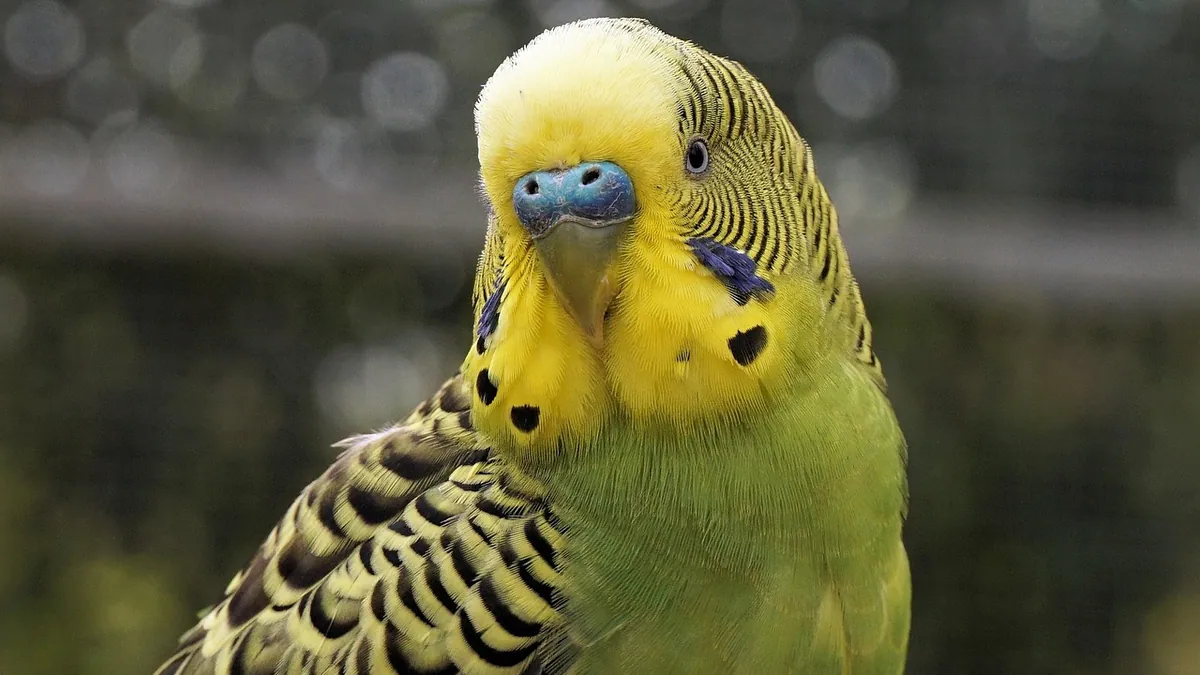
If your budgie has gone quiet, the first thing to know is that chirping is a learned, flexible behavior that shifts with health, mood, light, and social contact. A budgie that stops chirping is often telling you something changed, and a budgie that will not stop may be doing the same thing. This article is educational and is not a substitute for veterinary diagnosis or treatment.
Quick Answer
- Budgies are vocal learners, which means their chirps and calls depend partly on hearing and practice, not just instinct [1].
- Silence can be normal for a few hours (naptime, darkness, a new environment) or a sign of illness, pain, or stress.
- Constant chirping is often normal flock contact, boredom, or hormonal breeding behavior, especially in a single bird or a bonded pair.
- Any budgie that is quiet plus fluffed, sitting low, breathing hard, or not eating needs a same-day veterinary visit.
- Never punish a budgie for noise or silence. Punishment increases stress and removes the signal you need to read.
Normal Budgie Chirping Patterns
Why budgies chirp at all
Budgerigars belong to the parrot group, and parrots are one of the three bird groups known to learn their vocalizations (the others are hummingbirds and songbirds) [1]. That matters for owners because it means a budgie's calls are not fixed at birth. A budgie uses hearing to shape and maintain its sounds, and adult males deprived of hearing input changed their songs within 6 months, losing certain high-frequency syllables [1]. In plain terms, your bird listens to itself and to other birds, and that feedback keeps its voice stable.
Chirping is also social. Budgies are flock birds, and most of their daily noise is contact calling, which means "I am here, where are you?" A budgie alone in a quiet house often chirps more, not less, because it is trying to find the flock.
What happy chirping sounds like
Happy, relaxed budgie sounds are usually short, varied, and repetitive. You may hear soft warbles, single notes, beak grinding, and quiet chatter mixed with chirps. A budgie that is chirping while eating, preening, playing, or moving around the cage is usually content. Budgie happy chirping tends to rise in the morning and late afternoon and drop during midday rest.
Why your budgie chirps nonstop
If your budgie will not stop chirping, look at context before you worry. Common normal reasons include:
- Contact calling. Your bird hears you in another room, hears a wild bird outside, or sees a mirror and calls back.
- Boredom. A cage with few toys, no foraging, and no out-of-cage time pushes a budgie to fill the silence with noise.
- Hormonal and breeding behavior. Budgies are seasonal breeders, and day length drives their reproductive cycle. In one study, spermatogenesis in budgies was arrested when daylight was reduced to 8 hours or less [2]. Long summer light, a nest-like space, or a bonded mate can trigger loud, persistent calling.
- Reinforced noise. If you walk over, talk, or uncover the cage every time your bird screams, you have taught it that noise works.
Constant chirping is rarely a medical emergency by itself. It becomes a problem when it comes with pacing, feather damage, weight loss, or a sudden change from a previously quiet bird.
Why Is My Budgie Not Chirping? Medical Causes to Rule Out
Illness and pain
Birds hide illness well because in the wild a sick bird gets picked off. A budgie that has stopped chirping and is also fluffed up, sleeping more, sitting on the cage floor, or tucking its head is likely sick. Respiratory disease, crop problems, egg binding in females, and internal masses can all reduce vocal activity. Tail bobbing is a specific breathing warning sign worth checking, and you can read more about it here: Why Is My Bird Tail Bobbing? Breathing Warning Signs.
Hearing loss
Because budgie vocal control depends on hearing, a budgie that loses hearing may gradually change or reduce its vocalizations [1]. This is uncommon but real. Causes include chronic ear infection, trauma, and age-related changes. If your budgie's chirps sound different in pitch or pattern over months, mention it to your veterinarian.
Hormonal and reproductive shifts
Reproductive state changes behavior and noise level. When daylight drops to 8 hours or less, budgie testicular activity shuts down, and the tissue changes reflect a shift in metabolic activity [2]. Owners often notice a quieter, calmer bird in winter and a louder, busier bird in spring and summer. That pattern can be normal. A sudden drop in chirping outside the expected seasonal shift is not.
Environmental stress
New cages, new people, a move, a predator outside the window, a household pet, or a change in sleep schedule can all silence a budgie for a day or two. Budgies are sensitive to disrupted routines. A quiet bird that is still eating, drinking, and perching normally is often just adjusting.
Nutritional problems
Seed-only diets are low in vitamin A and other nutrients, and deficiencies can affect the skin, respiratory lining, and overall energy. A budgie that feels unwell from a poor diet may chirp less. Your veterinarian can assess body condition and diet and recommend a balanced pelleted or fresh-food plan.
When Chirping Becomes a Problem
Too much noise
Nonstop chirping becomes a problem when it disrupts your sleep, your household, or your bird's health. Watch for these patterns:
- Chirping that starts before sunrise and continues past dark
- Screaming that escalates when you leave the room
- Noise paired with pacing, cage bar biting, or feather plucking
- Noise paired with a swollen vent, egg-laying behavior, or chronic egg laying in females
Too little noise
Silence becomes a problem when it lasts more than a day, when it comes with other symptoms, or when it follows a stressful event. A budgie that has stopped chirping and is also eating less, sitting fluffed, or breathing with its tail moving needs veterinary care, not home remedies.
What to Do Step by Step
Step 1: Check the basics
Weigh your bird if you have a gram scale. Check droppings, appetite, water intake, and breathing. Look at the vent area for staining. Note whether the change started after a move, a new pet, a diet change, or a light change.
Step 2: Fix the environment
- Give 10 to 12 hours of dark, quiet sleep.
- Move the cage away from drafts, kitchens, and scented products.
- Offer a variety of perches and safe toys.
- Rotate toys weekly so the cage stays interesting.
Step 3: Add enrichment and foraging
Foraging is the single best tool for both excessive noise and unexplained quiet. Hide food in paper cups, cardboard tubes, or foraging trays. Start easy so your bird succeeds, then make it harder. A busy budgie chirps in a normal, varied way instead of screaming or going silent.
Step 4: Train calm behavior
Reward quiet moments with a treat or praise before the noise starts. If your budgie screams for attention, wait for a two-second pause in the noise, then respond. Keep sessions short and consistent. Budgies learn fast when rewards are immediate.
Step 5: Support social needs
If your budgie is alone, consider whether a companion bird fits your situation. If you keep one bird, schedule at least an hour of out-of-cage interaction daily. Talk to your bird, and let it hear household sounds. Budgies are flock animals and quiet houses can be stressful.
Step 6: Address hormonal triggers
Reduce daylight to about 10 hours, remove nest-like boxes and dark corners, and rearrange cage furniture monthly. Do not pet your budgie along the back or under the wings, since that mimics a mate.
What Not to Do
- Do not punish or yell. Punishment does not stop vocal behavior. It increases fear and can make a budgie quieter for the wrong reason, which hides illness.
- Do not cover the cage all day. Extra darkness disrupts the light cycle that controls reproduction and can worsen hormonal noise [2].
- Do not use mirrors to "keep it company." Mirrors often trigger constant calling and hormonal behavior.
- Do not assume silence is fine because the bird still eats. Budgies eat while sick until they are very ill.
- Do not give human medications, honey, or oil. Doses for birds must be calculated by a veterinarian from your bird's weight and health.
- Do not rely on "it will pass." A change lasting more than 24 to 48 hours deserves a call.
When to Involve a Veterinarian or Behavior Professional
Call an avian veterinarian if your budgie has stopped chirping for more than a day, if the change came with any breathing, appetite, or droppings change, or if noise has become constant and self-injurious. A certified behavior consultant can help when medical causes are ruled out and the problem is learned or environmental.
If you are comparing symptoms across species, the same "look at the whole picture" approach applies to coughing in dogs, which you can read about here: Why Is My Dog Coughing And Gagging Randomly and Why Is My Dog Coughing And Gagging Non Stop.
Limitations and When to Contact a Veterinarian
This article cannot diagnose your bird. Individual cases need a veterinarian who can examine your budgie, check its weight and breathing, and run tests if needed.
Contact a veterinarian the same day if your budgie:
- Has stopped chirping and is fluffed, weak, or sitting on the cage floor
- Is breathing with its tail bobbing or with an open beak
- Has not eaten or has not passed droppings in 12 to 24 hours
- Is a female showing straining, a swollen abdomen, or leg weakness
Go to an emergency clinic now if your budgie:
- Is gasping, collapsing, or bleeding
- Has a seizure or sudden loss of balance
- Is trapped, burned, or exposed to fumes, nonstick cookware, or aerosol sprays
Schedule a routine visit within a few days if your budgie:
- Has gradually changed its chirp pattern over weeks
- Has a chronic diet problem or has never had a wellness exam
- Shows persistent hormonal behavior such as chronic egg laying
Frequently Asked Questions
Is it normal for a budgie to be quiet during the day?
Yes, short quiet periods are normal, especially at midday and during naps. A budgie that is quiet for a few hours but still eats, preens, and moves around is usually fine. Quiet that lasts most of the day, or quiet with fluffed feathers, is not normal.
Can a budgie stop chirping because it is lonely?
Yes, loneliness and lack of social contact can reduce chirping in a single budgie. Budgies are flock birds, and a quiet house with no interaction can make them withdrawn. Daily out-of-cage time, talking, and enrichment usually help within days.
Why does my budgie chirp more at certain times of day?
Budgies typically chirp most in the early morning and late afternoon, which are natural flock activity peaks. Long daylight hours can also raise hormonal calling, since budgie reproduction is driven by day length. A consistent 10 to 12 hour light and dark schedule smooths these peaks.
Does a budgie's chirp change as it gets older?
Yes, chirps can change with age, hearing, and health. Because budgies use hearing to maintain their vocal patterns, hearing loss or ear disease can slowly alter the sounds they make. Any steady change in pitch or pattern over months is worth mentioning at a wellness visit.
Should I get a second budgie to fix the noise or the silence?
Sometimes, but it depends on the cause. A companion can reduce loneliness and provide normal flock contact, but it can also increase noise and hormonal behavior if the pair bonds and breeds. Fix the environment, sleep, and enrichment first, then discuss a companion with your veterinarian.
Can I use a mirror or recording to encourage my budgie to chirp?
No, mirrors and recordings often backfire. Mirrors can trigger constant contact calling and hormonal behavior, and recorded calls may confuse a single bird. Live social contact with you or another budgie is more effective and safer.
Related Articles
- Why Is My Bird Tail Bobbing? Breathing Warning Signs
- Do Budgies Cry? What Sad-Sounding Budgie Noises Mean
- Why Is My Cockatiel Making Squeaking or Clicking Noises?
- Budgie Tail Bobbing: When It's Normal and When It's Serious
- Budgerigar Fledgling Disease Virus
References
- Auditory feedback is necessary for long-term maintenance of high-frequency sound syllables in the song of adult male budgerigars (Melopsittacus undulatus). Journal of comparative physiology. A, Neuroethology, sensory, neural, and behavioral physiology, 2007.
- Ultrastructure of the budgerigar testis during a photoperiodically induced cycle. Cell and tissue research, 1975.