Can Dogs Eat Groundnut
By Dr. Zubair Khalid, DVM, MS, PhD ·
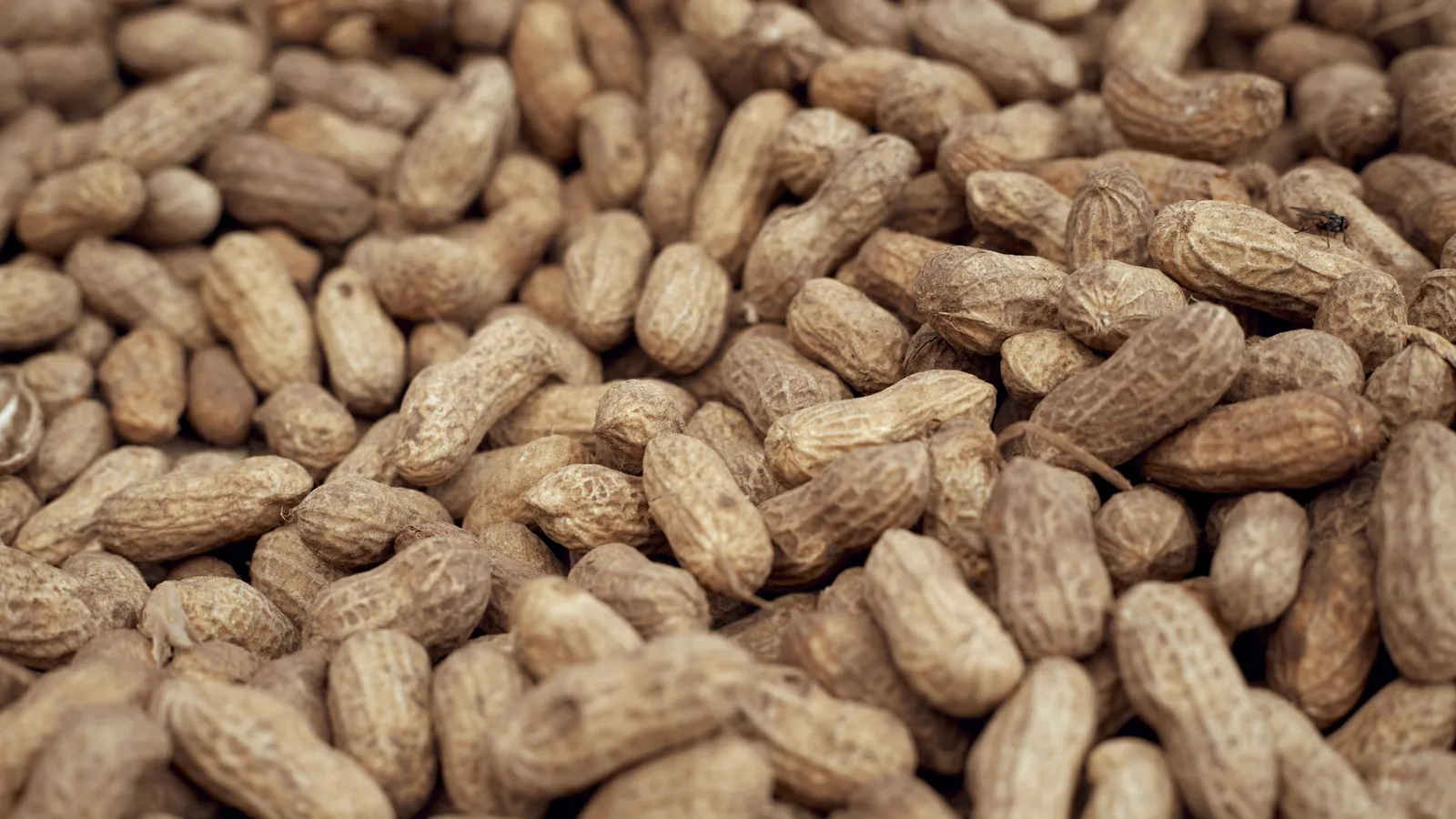
Groundnut is another name for peanut, and "can dogs eat groundnut" is one of the most common questions pet owners ask when they see the term on international food labels or in ingredient lists. The direct answer is that groundnuts are not classified as a toxic food for dogs, but they carry two well-documented risks that make them a poor choice for routine treats. The first risk is aflatoxin contamination, a mold toxin problem that has been confirmed in commercial dog food [1]. The second risk is peanut allergy, which has been studied in dogs using peanut-specific antibody testing and controlled food challenges [2]. Most dogs can eat a very small amount of plain groundnut without immediate harm, but the safer choice is to avoid them entirely or to offer them only with veterinary approval. The information below covers what the research shows, how to reduce risk if you choose to offer groundnuts, and when to contact a veterinarian.
At a Glance: Can Dogs Eat Groundnut?
| Question | Answer |
|---|---|
| What is a groundnut? | Another name for peanut, Arachis hypogaea. A legume, not a tree nut. |
| Can dogs eat groundnuts? | Not recommended as a routine treat. Not inherently toxic, but aflatoxin and allergy risks are real [1][2]. |
| Main risk 1 | Aflatoxin contamination from mold, confirmed in dog food [1]. |
| Main risk 2 | Peanut allergy and sensitization, documented in dogs [2]. |
| Safe serving size | No research-backed dose exists. Ask your veterinarian. |
| When to call the vet | Vomiting, diarrhea, lethargy, facial swelling, hives, difficulty breathing, yellow gums. |
What Is a Groundnut?
Groundnut is the common name for the peanut, Arachis hypogaea. The plant is a legume, not a tree nut, and it produces its pods underground, which is where the name comes from. In the United States, the word peanut is standard, but groundnut appears on products from other countries, in international research papers, and in some veterinary nutrition texts. When a label says groundnut, it means peanut.
The distinction matters for dogs. Tree nuts such as almonds, cashews, and walnuts have different fat profiles and different risks than peanuts. Peanuts are legumes, related to soybeans and lentils. They are also a common ingredient in commercial dog treats and in human snack foods that dogs may encounter around the house.
Groundnuts appear in dog nutrition in several forms, including whole nuts, peanut butter, and peanut-flavored treats. Each form carries the same two risks: aflatoxin contamination and allergic sensitization [1][2].
Peanuts are unusual among common dog foods because they carry two independent risks. The first is contamination with aflatoxin, a mold toxin that can grow on the nut while it is in the soil or in storage. The second is the potential for an allergic immune response to peanut proteins. Both risks are documented in the veterinary literature.
Why Groundnuts Are Risky for Dogs
The groundnut kernel itself is not a recognized canine toxin. The risks come from two separate problems: what can grow on the nut, and how the dog's immune system responds to the nut's proteins.
Aflatoxin Contamination: The Mold Toxin Risk
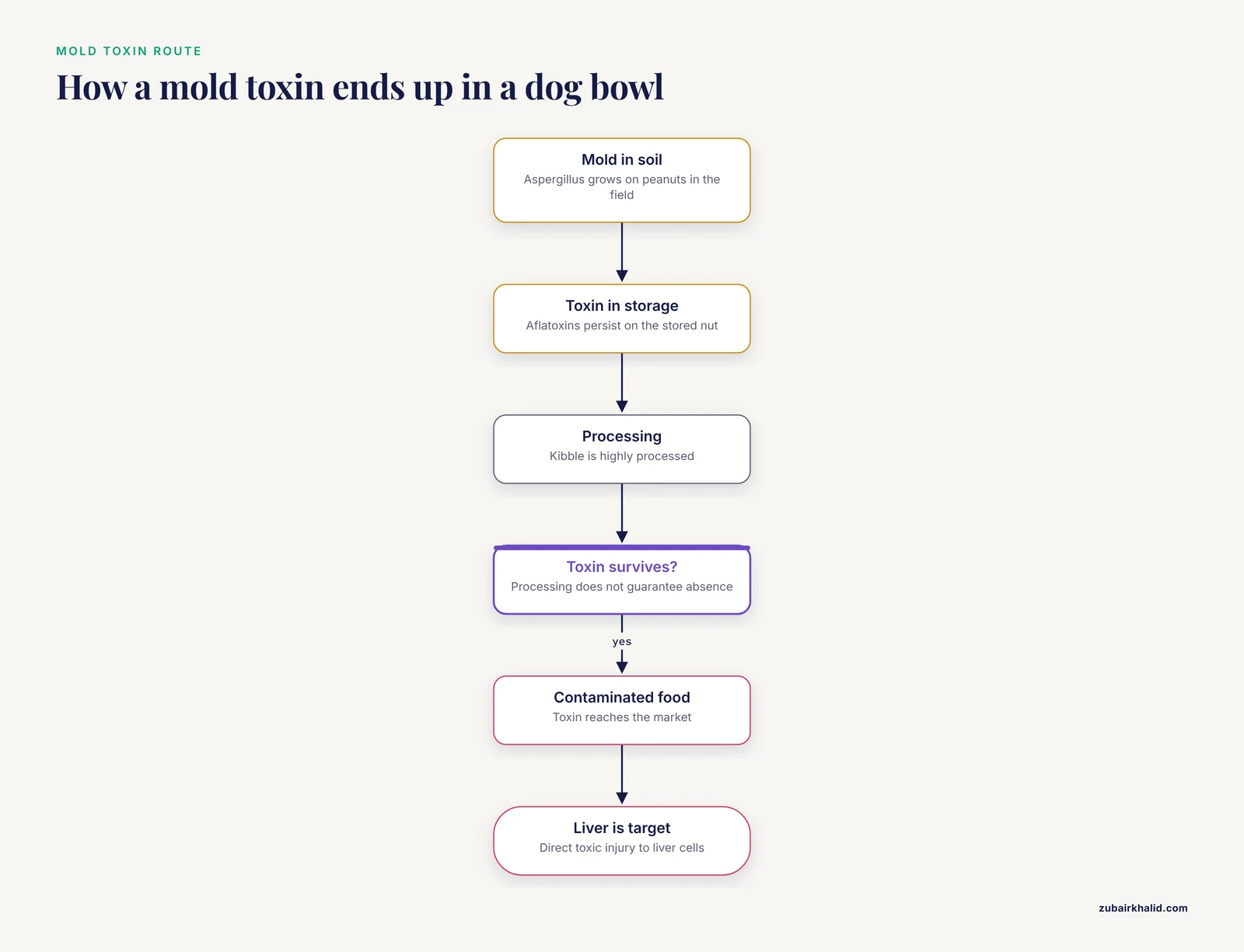
Peanuts grow in the soil and are vulnerable to molds from the Aspergillus group. These molds produce aflatoxins, which are potent mycotoxins. Aflatoxin contamination is a recognized problem in human food and animal feed, and it is the reason that routine testing programs exist for peanuts and peanut products.
The risk extends to dog food. A 2024 study in Frontiers in Veterinary Science evaluated aflatoxin-contaminated dog kibble and paired chemical testing with DNA-based metagenomic analysis to identify both the toxins and the organisms present in the food [1]. The study confirmed that aflatoxin contamination can occur in commercial dog food and that identifying the source of the toxin is a complex process [1].
The researchers used a standardized chemical method for detecting aflatoxins in corn, raw peanuts, and peanut butter [1]. This matters for owners because it shows that raw peanuts and peanut butter are food products with a known aflatoxin risk. When a dog eats raw groundnuts or peanut butter, that dog is exposed to the same contamination risk that the testing method is designed to catch.
The study also highlighted that mycotoxins often occur together. Multiple fungal species can grow on the same food, and the combined effect of several mycotoxins can be different from the effect of a single toxin [1]. A groundnut that looks clean can still harbor a mixture of mold toxins that are invisible to the eye. The 2024 study shows that contaminated products can reach the market, and identifying the problem requires both chemical and DNA-based methods [1].
Peanut Allergy and Sensitization
The second risk is allergy. Dogs can produce antibodies against peanut proteins. A 2017 study in BMC Veterinary Research examined peanut sublingual immunotherapy in healthy beagle dogs that had never been orally exposed to peanut [2]. The researchers measured peanut-specific IgG and IgE antibodies in the blood, performed intradermal skin tests, and later used a controlled oral challenge to assess sensitization [2].
This study was designed to test an immunotherapy treatment, not to determine whether dogs should eat peanuts. But it provides direct evidence that peanut proteins are immunologically active in dogs. Dogs can mount an antibody response to peanut, which means peanut allergy is a real clinical concern, not a theoretical one.
What Research Shows About Aflatoxins in Dog Food
The 2024 study by Ottesen and colleagues is one of the most detailed examinations of aflatoxin-contaminated dog food to date [1]. The research team ground contaminated kibble into a fine powder and ran two types of analysis on the same material. The first was chemical analysis using liquid chromatography mass spectrometry and the AOAC Official Method 2005.08 for aflatoxins in corn, raw peanuts, and peanut butter [1]. The second was metagenomic analysis, where DNA was extracted from the kibble and sequenced on an Illumina NextSeq 2000 [1].
The metagenomic approach provides a DNA-based description of the whole food, including eukaryotic organisms, bacteria, protozoa, viruses, and antimicrobial resistance genes [1]. This allows researchers to identify which fungal species are present in a contaminated food and to link those species to the toxins they produce [1].
The key finding for dog owners is that aflatoxin contamination in dog food is a documented hazard that requires advanced testing to detect. The study also emphasized that co-occurring mycotoxins, whether from a single mold species or multiple species, can change the overall toxicity of the food [1]. A dog that eats groundnuts contaminated with several different mycotoxins may have a different outcome than a dog that eats groundnuts contaminated with only one.
The fact that the contaminated food in the study was kibble, a highly processed product, shows that processing does not guarantee the absence of aflatoxin [1]. Visible mold on a groundnut is a warning sign, but the absence of visible mold does not mean the nut is safe. This is why routine testing of peanut products is a standard food safety practice, and why owners should choose products from manufacturers that test their ingredients.
What Research Shows About Peanut Allergy in Dogs
The 2017 study by Maina and colleagues enrolled eight healthy experimental beagle dogs that had never been orally exposed to peanut [2]. The dogs were randomly assigned to receive either sublingual immunotherapy with peanut or a placebo for four months [2]. The researchers monitored the dogs daily for local and systemic adverse effects, collected blood for complete blood count and serum biochemistry, collected urine for urinalysis, and recorded body weight at days 0, 35, and 119 [2].
Peanut-specific IgG and IgE were measured in the blood at days 0, 35, 49, 70, 91, 105, and 119 [2]. Intradermal skin tests were performed before the study began and again at day 119 [2]. Six months after the study ended, the dogs were challenged with 2000 micrograms of peanut to assess whether sensitization had occurred [2].
The study found that food allergen-specific sublingual immunotherapy was well tolerated and safe in healthy dogs [2]. For the purposes of this article, the more relevant point is the study design itself. The researchers chose dogs that had never eaten peanut, measured peanut-specific antibodies, performed skin tests, and used a controlled oral challenge. This is the same framework used to diagnose peanut allergy in dogs. It confirms that dogs can be sensitized to peanut proteins and that peanut allergy is a condition that veterinary medicine takes seriously.
The practical takeaway is that a dog with no history of peanut exposure can still become sensitized, and a dog that has eaten groundnuts safely for years can develop an allergy later in life. Allergy symptoms can be local, such as itching, hives, and facial swelling, or systemic, such as vomiting, diarrhea, and difficulty breathing. The study monitored for local and systemic adverse effects during immunotherapy [2], which reflects the range of reactions that peanut proteins can trigger.
Can Dogs Eat Groundnut Safely? Practical Guidelines
The honest answer is that no research has established a safe dose of groundnuts for dogs. The two studies available on this topic examined aflatoxin contamination and peanut immunotherapy, not groundnut feeding trials [1][2]. Any amount you offer is a judgment call between you and your veterinarian.
When a Veterinarian Might Approve Groundnuts
A veterinarian may approve a small amount of plain groundnut for a healthy dog with no history of food allergy and no underlying liver or pancreatic disease. The approval would be specific to that dog. There is no universal safe serving size, and no study supports a particular number of nuts per day.
How to Choose a Safer Groundnut Product
If your veterinarian approves groundnuts, product selection matters:
- Choose roasted, unsalted, unflavored groundnuts. Raw groundnuts carry a higher aflatoxin risk, which is why the standard testing method specifically covers raw peanuts [1].
- Choose products from manufacturers that test for aflatoxins. The AOAC method used in the 2024 study is the industry standard for corn, raw peanuts, and peanut butter [1].
- Avoid groundnuts in the shell. Shells are a choking hazard and can carry soil and mold.
- Avoid flavored products. Added salt, sugar, spices, and sweeteners add no nutritional value and can cause gastrointestinal upset.
- Avoid any nut that looks moldy, shriveled, or discolored. Visible mold is a clear warning sign, even though its absence does not guarantee safety.
What About Peanut Butter?
Peanut butter is one of the most common ways dogs encounter groundnuts. It is also one of the food matrices covered by the standard aflatoxin testing method [1]. If your veterinarian approves peanut butter, choose a plain product with no added sweeteners, salt, or other ingredients. Offer a small amount on a spoon or stuffed into a treat toy, and stop at the first sign of an adverse reaction.
Step-by-Step Approach to a First Trial
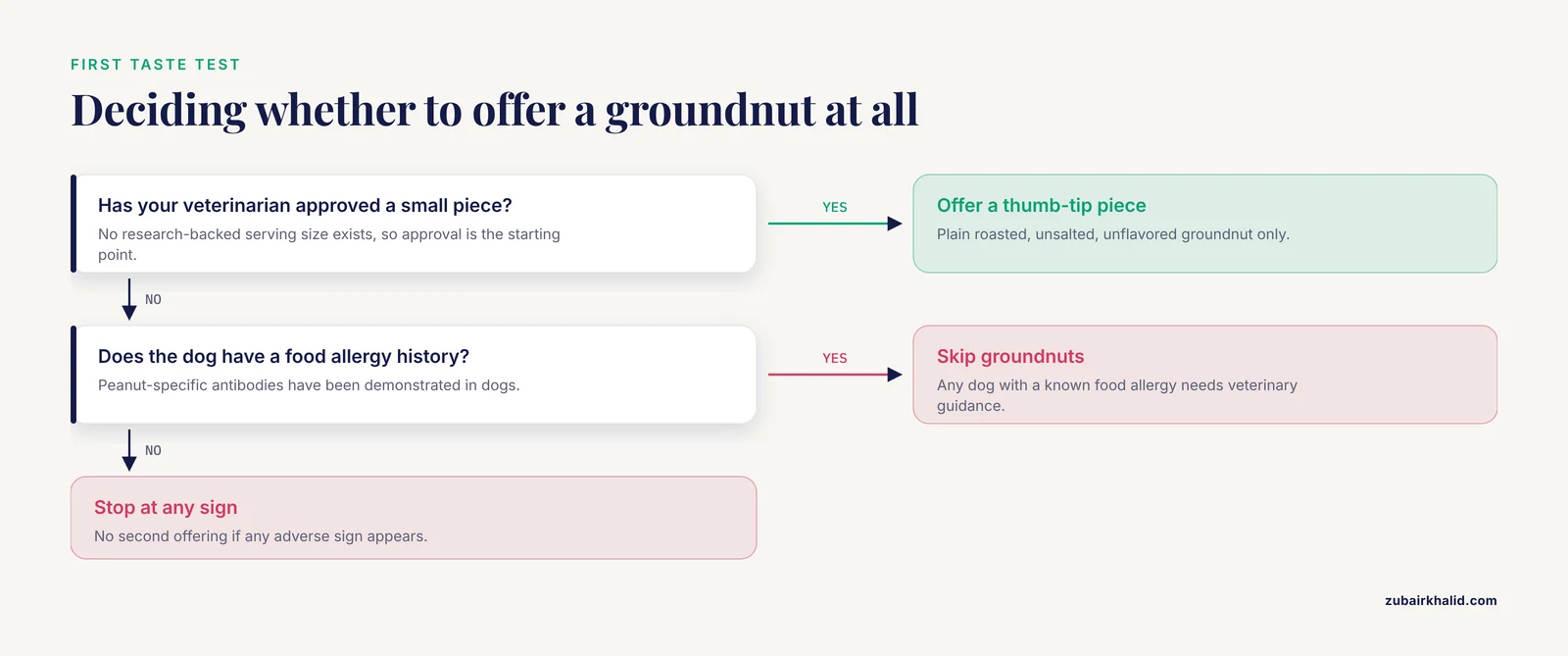
- Ask your veterinarian for approval first.
- Offer a piece no larger than the tip of your thumb.
- Watch your dog closely for the next 24 to 48 hours.
- Stop at the first sign of itching, hives, facial swelling, vomiting, diarrhea, or lethargy.
- Do not offer groundnuts again if any adverse sign appears.
Signs That Warrant Stopping
Local signs of an allergic reaction include itching, excessive licking, hives, and swelling of the face, lips, or ears. Systemic signs include vomiting, diarrhea, lethargy, and difficulty breathing. Any of these signs after eating groundnuts means the dog should not eat them again, and a veterinarian should be consulted.
Common Mistakes Owners Make With Groundnuts
- Feeding raw groundnuts in the shell. Raw peanuts are the primary matrix for aflatoxin testing, and shells add a choking risk [1].
- Assuming visible mold is the only danger. Aflatoxin can be present without visible mold, which is why chemical testing is needed [1].
- Treating groundnuts as a daily snack. No research supports daily feeding, and the aflatoxin and allergy risks make routine feeding hard to justify [1][2].
- Ignoring the allergy risk after a first safe exposure. Dogs can develop peanut-specific antibodies over time, so a dog that tolerated groundnuts once can react later [2].
- Giving whole groundnuts to small dogs. Whole nuts are a physical choking hazard.
- Choosing peanut butter without reading the label. Peanut butter is one of the matrices covered by aflatoxin testing standards, and added ingredients can cause problems [1].
- Offering groundnuts to a dog with a known food allergy. Any dog with a history of food allergy should only try new foods with veterinary guidance [2].
- Forgetting that groundnuts are not a meal replacement. Groundnuts and peanut butter should never replace a nutritionally complete dog food.
Limitations and When to Contact a Veterinarian
This article is educational and is not a substitute for veterinary diagnosis or treatment. Individual cases need a veterinarian.
Contact a veterinarian immediately if your dog shows any of the following after eating groundnuts:
- Vomiting or diarrhea, especially if it continues for more than 12 hours or contains blood
- Lethargy, weakness, or collapse
- Yellowing of the gums, eyes, or skin
- Facial swelling, hives, or intense itching
- Difficulty breathing or coughing
- Loss of appetite lasting more than 24 hours
- Eating a large amount of groundnuts, especially raw or moldy nuts
If you have the product packaging, bring it with you to the veterinary clinic. The packaging can help the veterinarian identify the product and determine next steps. Puppies, senior dogs, and dogs with chronic illness have different nutritional needs. Ask your veterinarian whether groundnuts are appropriate for your dog's specific health status.
Groundnuts vs Other Nuts and Legumes: What Pet Owners Should Know
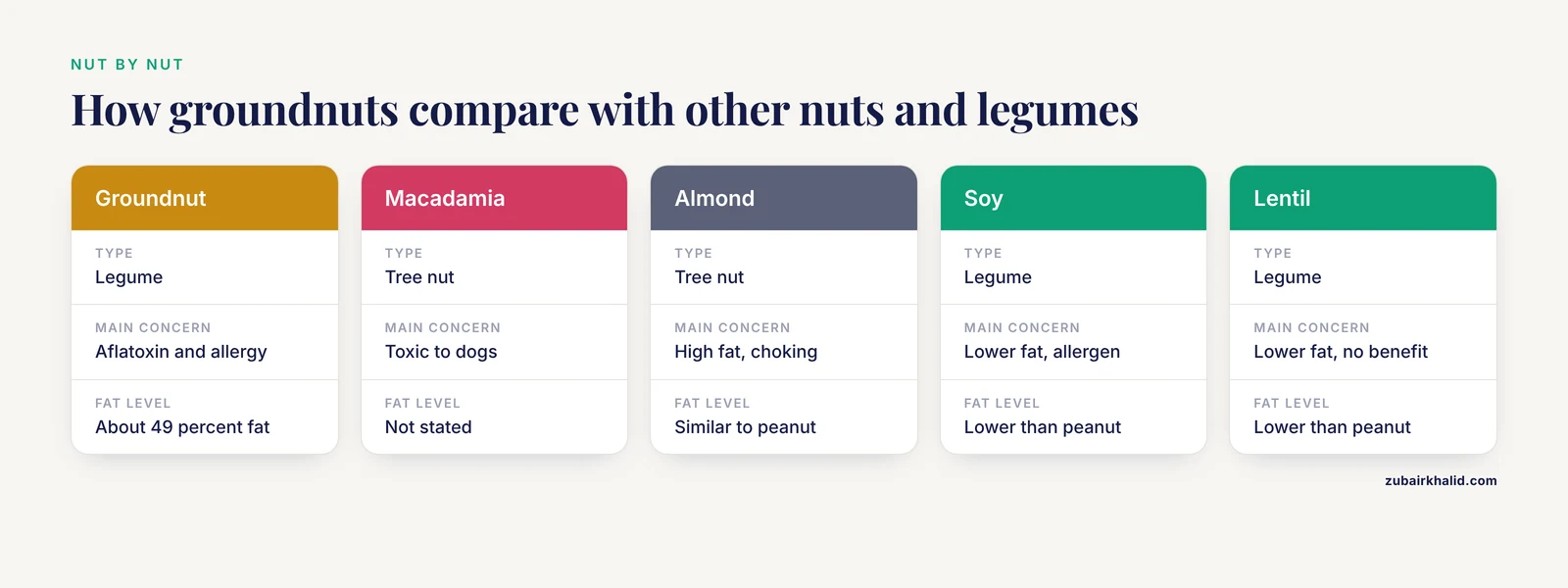
Groundnuts are legumes, not tree nuts, but the label matters less than owners think. The relevant comparisons are fat content, physical risk, and species-specific toxicity.
| Item | Type | Main concern for dogs |
|---|---|---|
| - | - | - |
| Groundnut (peanut) | Legume | Aflatoxin, allergy [1][2] |
| Almond | Tree nut | High fat, choking |
| Cashew | Tree nut | High fat, choking |
| Walnut | Tree nut | High fat, choking |
| Macadamia | Tree nut | Toxic to dogs |
| Soy | Legume | Lower fat, allergen |
| Lentil | Legume | Lower fat, no benefit |
Fat Content and Pancreatitis
Peanuts contain roughly 49 percent fat by weight. Almonds and cashews are similar, walnuts slightly higher. High-fat treats can trigger acute pancreatitis, a painful condition requiring veterinary care. A single handful of any nut delivers more fat than a complete meal. Dogs with a history of pancreatitis should not receive nuts or nut butters; that decision belongs to a veterinarian.
Macadamia Nuts Are Toxic
Macadamia nuts are the exception to the "not toxic" rule. They cause a documented toxic syndrome in dogs, with signs including weakness, tremors, vomiting, and hyperthermia. The toxic dose is low, and even a few nuts can cause signs. No other nut or legume here has a similar species-specific toxin.
Choking and Obstruction Risk
Whole nuts are hard, round, and easy to inhale. Small dogs are at particular risk of choking. Groundnut kernels are similar in size to almonds and cashews, so they carry the same physical risk. Crushing or grinding nuts reduces the choking hazard but does not change the fat or allergy concerns.
Why the "Nut" Label Misleads
Owners often assume that all nuts carry the same risks. They do not. Macadamias are toxic, peanuts carry aflatoxin and allergy risks [1][2], and almonds, cashews, and walnuts are mainly a fat and choking concern. Conversely, owners sometimes assume that because peanuts are legumes, they are as benign as lentils or soy. Wrong. Peanuts behave nutritionally like tree nuts: high fat, high calorie, low moisture. Lentils and soy are lower in fat and higher in fiber, but neither is necessary in a dog's diet, and soy is a common allergen.
An owner who swaps groundnuts for macadamia nuts to avoid aflatoxin trades one risk for a more immediate toxin. An owner who swaps groundnuts for lentils to reduce fat avoids aflatoxin and allergy issues but adds a food with no proven benefit over a complete diet.
Bottom Line
No nut or legume is a required part of canine nutrition. If a veterinarian approves a treat, plain roasted peanuts are safer than macadamias but still carry fat, choking, and allergy considerations [2]. The safest approach is to choose dog-specific treats and ask a veterinarian before introducing any nut or legume.
Recognizing and Managing Aflatoxin Exposure in Dogs
Aflatoxin is a mold toxin that can contaminate groundnuts and commercial dog food [1]. When a dog eats contaminated groundnuts, the liver is the primary target. The clinical picture depends on the dose and the duration of exposure.
Acute Versus Chronic Exposure
| Feature | Acute exposure | Chronic exposure |
|---|---|---|
| - | - | - |
| Onset | Hours to days after a single large dose | Weeks to months of repeated small doses |
| Mechanism | Direct toxic injury to liver cells | Cumulative damage that may not be obvious early |
| Common signs | Vomiting, lethargy, jaundice, collapse | Poor appetite, weight loss, gradual jaundice, increased thirst |
Both forms can be fatal. Chronic exposure is easier to miss because early signs are vague.
Signs of Liver Injury
Liver injury from aflatoxin produces a recognizable pattern. Watch for vomiting, diarrhea, loss of appetite, lethargy, and yellowing of the gums, eyes, or skin. Dark urine, pale stools, abdominal swelling, and unexplained bruising or bleeding also point to liver failure. In severe cases, dogs may develop seizures or coma.
Diagnostic Tests Veterinarians May Use
A veterinarian will start with a history and physical examination. Blood tests are the main tool. Elevated liver enzymes, high bilirubin, and abnormal bile acids suggest liver damage. Clotting times are important because the failing liver stops producing clotting factors. Imaging such as ultrasound can assess liver size and structure. A liver biopsy may be recommended in some cases, but treatment often begins before biopsy results return.
Supportive Treatment
There is no specific antidote for aflatoxin poisoning. Treatment is supportive and intensive. Hospitalization is usually required. Therapy may include intravenous fluids, anti-nausea medication, liver-support supplements such as SAMe and vitamin E, and nutritional support. Dogs with bleeding problems may need plasma transfusions. The veterinarian will monitor blood values and adjust treatment as the liver heals or fails.
Prognosis
Prognosis depends on the amount of toxin ingested, how quickly treatment starts, and the dog's pre-existing health. Dogs that are treated early and have mild to moderate liver injury can recover, but recovery may take weeks. Dogs that develop severe liver failure or bleeding have a guarded prognosis.
Red Flags Requiring Urgent Veterinary Care
Seek immediate veterinary care if your dog has eaten moldy groundnuts or any groundnut product of unknown quality and then shows any of the following:
- Vomiting or diarrhea, especially with blood
- Yellow gums, eyes, or skin
- Severe lethargy or collapse
- Bruising or bleeding without injury
- Seizures or difficulty walking
- Loss of appetite lasting more than 24 hours
Do not wait for signs to appear. If you suspect ingestion of moldy groundnuts, call your veterinarian right away. Bring the product packaging if you have it.
Hidden Groundnut Ingredients and Label Reading for Dog Treats
Groundnut is not always spelled out on a dog treat label. It can appear under several names, and a treat that looks like a simple biscuit may still contain peanut flour as a binder or peanut oil as a flavor carrier. Read the full ingredient list and the allergen statement, not just the front of the package.
Names to Look For
- Peanut, groundnut, and Arachis hypogaea
- Peanut flour and peanut meal
- Peanut oil, groundnut oil, and arachis oil
- Peanut butter, peanut extract, and peanut flavoring
Peanut flour and peanut meal are common in baked treats and can be easy to overlook. Groundnut oil and arachis oil are both peanut-derived oils. A product labeled "peanut free" is not automatically safe if it also carries a cross-contamination warning.
Cross-Contamination Warnings
Look for phrases such as "may contain peanuts," "made in a facility that handles peanuts," or "produced on shared equipment." These statements are voluntary in many countries, so their absence does not prove a product is peanut free. If your dog has a known peanut allergy, call the manufacturer when the ingredient list is vague or uses terms such as "natural flavor."
Dangerous Add-Ins in Groundnut Treats
| Add-in | Why it matters |
|---|---|
| - | - |
| Xylitol | Toxic to dogs. Check sugar-free or "dental" treats carefully. |
| Salt | High sodium can cause problems, especially in small dogs. |
| Chocolate | Contains methylxanthines, which are toxic to dogs. |
| Raisins and grapes | Linked to kidney injury in dogs. |
| Macadamia nuts | Toxic to dogs, even in small amounts. |
A peanut butter treat can also contain xylitol, chocolate chips, raisins, or macadamia pieces. These add-ins are more urgent than the groundnut itself.
After Accidental Ingestion
If your dog eats a treat containing xylitol, chocolate, raisins, grapes, macadamia nuts, or an unknown amount of groundnut, call your veterinarian immediately. Do not wait for signs. Bring the packaging or a photo of the label. Signs that need urgent veterinary care include vomiting, diarrhea, lethargy, weakness, tremors, yellow gums, facial swelling, hives, and difficulty breathing. Early advice is safer than watching and waiting.
Groundnuts for Dogs With Health Conditions: Who Should Avoid Them
Groundnuts are high in fat and contain proteins that can trigger allergic sensitization in dogs [2]. For a healthy dog, a small piece may not cause harm, but for dogs with certain conditions, the risks are amplified. High fat is the main concern for pancreatic and liver disease, while allergen exposure matters for any dog with a history of food allergy [2]. The aflatoxin risk [1] adds an extra burden for dogs with compromised liver function.
Conditions That Rule Out Groundnuts
- Pancreatitis. High-fat foods can trigger pancreatitis. A dog with a history of this condition should not eat groundnuts, because even a small amount of fat can cause a relapse.
- Liver disease. The liver metabolizes fat and clears toxins. Groundnuts carry a documented aflatoxin risk [1], and a diseased liver is less able to handle that load.
- Food allergies. Peanut-specific antibodies have been demonstrated in dogs [2]. Dogs with existing food allergies or allergic skin disease are more likely to react, and repeated exposure can worsen sensitization.
- Obesity. Groundnuts are calorie-dense. Even a few nuts add significant calories to a weight management plan.
- Diabetes. Fat can interfere with glucose control, and peanut butter often contains added sugar.
- Kidney disease. Groundnuts contain moderate protein and phosphorus, both restricted in most kidney diets.
- Sensitive digestion. The fat and fiber content can cause vomiting, diarrhea, or gas in dogs with gastrointestinal disorders.
Puppies, Seniors, and Dogs on Medication
Puppies have immature digestive and immune systems, so a first exposure to groundnuts carries a higher risk of upset or allergy. Senior dogs often have undiagnosed organ changes, and a high-fat treat can unmask a problem. Dogs on any medication should not receive groundnuts without veterinary approval.
When to Ask a Veterinarian
Ask a veterinarian before offering groundnuts to any dog with a chronic condition, a history of adverse food reactions, or a current prescription. Also ask if the dog is a puppy, a senior, or has had unexplained weight loss, vomiting, or diarrhea recently. The veterinarian can decide whether groundnuts are safe for that specific dog and what portion, if any, is acceptable. When in doubt, do not feed groundnuts.
Related Guides
- Can Dogs Eat Celery? Safe Serving Tips: Low-calorie vegetable option for dog treats
- Can Dogs Eat Tomatoes?: Common kitchen food with toxic concerns
- Can Dogs Eat Blackberries? Benefits and Precautions: Berry treat with benefits and precautions
- Can Dogs Eat Raspberries? Safety and Risks: Another berry option with feeding guidance
Frequently Asked Questions
Is groundnut the same as peanut?
Yes. Groundnut is another name for the peanut, Arachis hypogaea. The term is common outside the United States, and it appears on international food labels and in research papers.
Are groundnuts toxic to dogs?
The groundnut kernel itself is not a recognized canine toxin. The risks are aflatoxin contamination from mold and allergic sensitization to peanut proteins [1][2].
Can dogs eat peanut butter?
Peanut butter is a peanut product and carries the same aflatoxin and allergy considerations as whole groundnuts [1][2]. If your veterinarian approves it, choose a plain product without added sweeteners or other ingredients, and offer only a small amount.
What are the signs of aflatoxin poisoning in dogs?
Any dog that develops vomiting, diarrhea, lethargy, or yellowing of the gums after eating groundnuts should be seen by a veterinarian immediately. Aflatoxin is a mold toxin found in groundnuts and dog food [1], and these signs warrant urgent evaluation.
Can dogs be allergic to groundnuts?
Yes. Dogs can produce peanut-specific IgG and IgE antibodies, and peanut allergy is studied using the same diagnostic framework used in human medicine [2].
How much groundnut can I give my dog?
No research-backed serving size exists. The studies on groundnuts in dogs examined aflatoxin contamination and immunotherapy, not feeding amounts [1][2]. Ask your veterinarian for a recommendation specific to your dog.
Are roasted groundnuts safer than raw groundnuts?
Roasted groundnuts are a lower-risk choice than raw groundnuts because the standard aflatoxin testing method specifically covers raw peanuts, which are a known contamination risk [1]. Roasting does not change the fact that dogs can be allergic to peanut proteins [2].
What should I do if my dog ate moldy groundnuts?
Contact a veterinarian immediately. Moldy groundnuts are a suspected aflatoxin risk [1]. Do not wait for signs to appear. If possible, bring the product or its packaging with you.