Can Dogs Eat Quinoa? Safe Serving Guide
By Dr. Zubair Khalid, DVM, MS, PhD ·
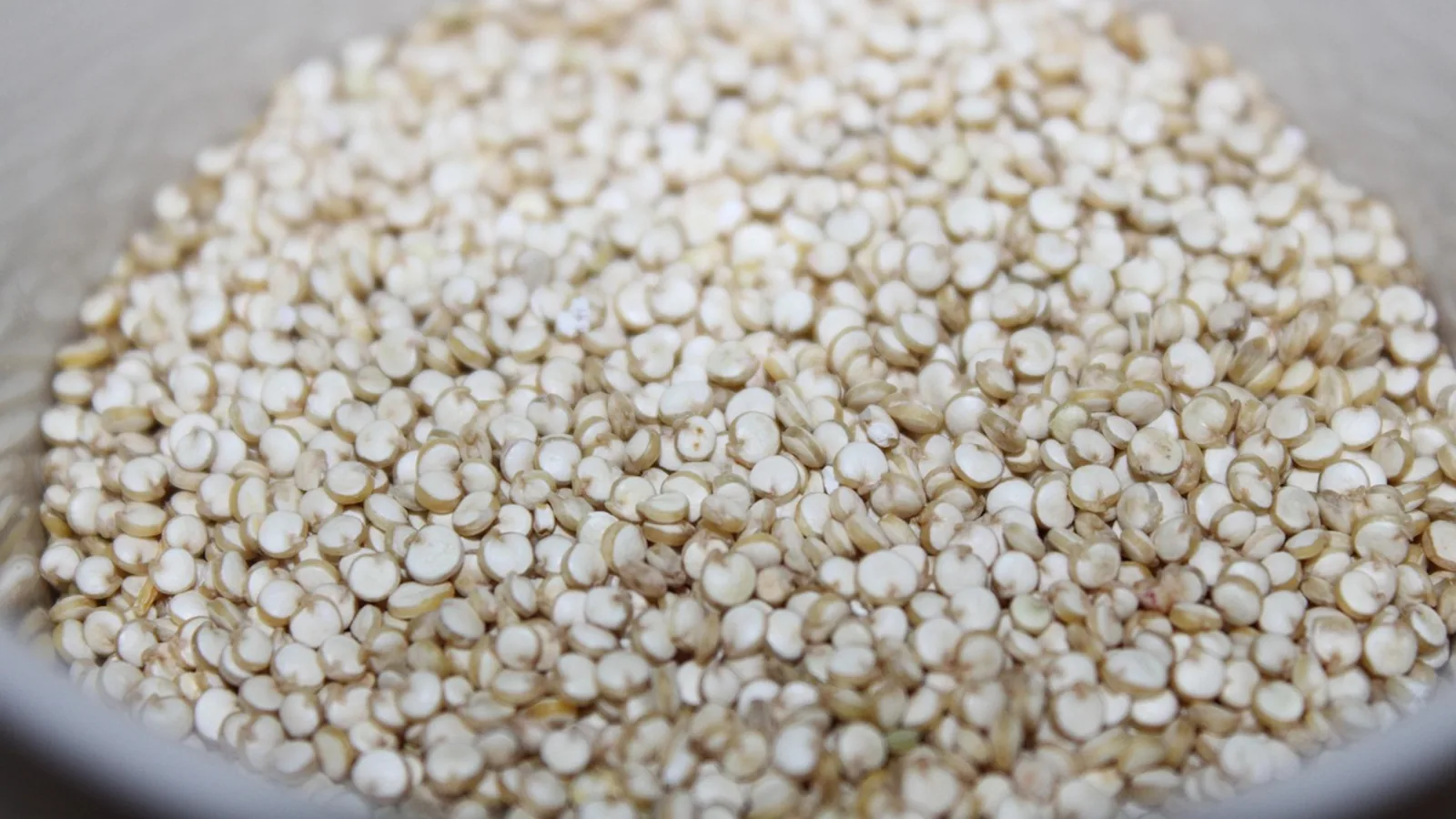
Can dogs eat quinoa? Yes, in most cases. Cooked, plain quinoa is generally safe for healthy adult dogs when it is offered in small amounts as a treat or a minor food topper. The catch is in the word "plain." Raw quinoa and quinoa that has been cooked with oil, salt, onion, garlic, or xylitol can cause problems, and even properly prepared quinoa should stay a small part of the bowl.
This guide explains what quinoa is, why raw quinoa is a different risk from cooked quinoa, how much to serve by body weight, how to prepare it safely, and when quinoa is the wrong choice for a particular dog. It is written for US dog owners who want a clear answer they can act on today.
This article is educational and is not a substitute for veterinary diagnosis or treatment.
At a Glance: The Short Answer
| Question | Answer |
|---|---|
| Can dogs eat quinoa? | Yes, cooked plain quinoa is generally safe in small amounts. |
| Can dogs have raw quinoa? | No. Raw quinoa contains saponins that can cause gastrointestinal upset. |
| How much? | About 1 to 2 tablespoons per 10 kg (22 lb) of body weight, as a treat. |
| Maximum share of the diet | Never more than 10 percent of daily calories. |
| Preparation | Rinse thoroughly, then cook fully in plain water. No oil, salt, onion, garlic, or xylitol. |
| Is it a complete dog food? | No. Quinoa is not a balanced diet for dogs on its own. |
| Gluten | Quinoa is gluten-free. |
| Who should avoid it? | Dogs with a diagnosed food allergy to quinoa, dogs on a veterinary elimination diet, and dogs with certain medical conditions unless a veterinarian approves. |
What Quinoa Actually Is
Quinoa (Chenopodium quinoa) is a seed from a plant native to the Andes, and it is usually grouped with grains in cooking even though it is technically a pseudocereal. It has earned a reputation as a nutrient-dense plant food because it is high in protein and fiber and carries a broad amino acid profile. One analysis of three quinoa varieties found protein content as high as 20.90 g per 100 g in black quinoa and total dietary fiber of 22.97 g per 100 g [1]. Red quinoa had the highest phenolic compound concentration of the three varieties tested, at 338.9 mg per 100 g [1].
That nutritional profile is real, but it is a profile built for human nutrition targets, not canine ones. Dogs can use nutrients from both animal-based and plant-based ingredients, and plant-derived ingredients such as grains and seeds supply non-essential phytonutrients that may support health [2]. That does not make any single plant ingredient a complete meal. Quinoa is best understood as a carbohydrate and fiber source that can sit alongside a balanced diet, not replace any part of it.
Quinoa is also gluten-free. For dogs with a confirmed gluten-related problem, that matters, and quinoa has been studied specifically in the context of gluten-free eating in humans [3]. Most quinoa cultivars do not carry quantifiable amounts of celiac-toxic epitopes, though a small number of cultivars have shown immune activity in laboratory testing [3]. That finding is about human celiac disease, not canine disease, so it should not be stretched into a claim about dog allergies. It does confirm the general point that quinoa is not a gluten grain.
Why Raw Quinoa Is a Different Risk
The safety difference between raw and cooked quinoa comes down to saponins.
Saponins are natural compounds found in quinoa seeds, and they are the reason dry quinoa tastes bitter and feels soapy. A nutritional analysis of black, yellow, and red quinoa varieties identified saponins as one of the predominant antinutritional factors, alongside oxalates and trypsin inhibitors [1]. That same analysis concluded that processing methods are necessary to fully benefit from quinoa's protein and nutritional value [1]. In other words, quinoa is not a food you can scoop straight from the bag.
Saponins are not simply a contaminant to be feared. They have documented biological activity. Quinoa saponin extracts have shown pancreatic lipase inhibition and effects on cholesterol bioaccessibility in laboratory digestion models [4]. Saponin-rich extracts from quinoa, lentil, and fenugreek are transformed by gut microbiota into sapogenins, and quinoa extracts produced the highest sapogenin yield of the three in an in vitro colonic fermentation study [5]. Quinoa saponins have also been studied for metabolic effects in animal models [6]. None of this establishes a safe dose of raw quinoa for dogs. It establishes that saponins are active compounds, which is exactly why the outer coating needs to be removed before the seed is fed.
For a dog, the practical consequence of eating raw or under-rinsed quinoa is gastrointestinal upset. Saponins are the recognized reason quinoa requires processing, and rinsing is the standard first step. Cooking alone without rinsing leaves more saponin in the pot than most owners realize.
There is one more nuance worth knowing. Saponin content varies by quinoa type. Bitter genotypes carry more saponins than nonbitter genotypes, and one study compared 12 genotypes (6 bitter, 6 nonbitter) and found that saponins did not impair the bioaccessibility of minerals, carotenoids, or vitamin E from quinoa [7]. That is a reassuring finding about nutrient absorption, not a green light for feeding raw seed. The rinse-and-cook step remains the standard practice.
Is Quinoa a Complete Protein for Dogs?
No. This is one of the most common misunderstandings about quinoa, so it deserves a direct answer.
Quinoa is often described as a complete protein because it contains all nine essential amino acids that humans must get from food. That description is accurate for human nutrition. It does not transfer to dogs, because dogs have different essential amino acid requirements, different target ratios, and a different total protein need than people. A food being "complete" for humans says nothing about whether it is complete for a dog.
The research on plant proteins in canine diets makes this concrete. When dogs were fed diets with increasing whole pulse inclusion, postprandial amino acid patterns shifted with the ingredient mix. In one study, a corn-inclusive control diet produced roughly 34 percent greater postprandial leucine and roughly 35 percent greater postprandial proline than a low-pulse diet, while a high-pulse diet produced roughly 32 percent greater postprandial asparagine than the low-pulse diet [8]. Different plant ingredients drive different amino acid profiles after a meal. That is the opposite of "one plant food covers everything."
Digestibility matters too. A study of quinoa protein concentrates found baseline protein digestibility of 78.54 percent, which improved to 87.67 percent after fermentation [9]. Quinoa protein is usable, but it is not automatically equivalent to a well-formulated animal protein blend.
There is also a documented safety signal around grain-free and high-legume feeding that owners should understand, because quinoa is sometimes folded into that category. In a controlled study, healthy adult Labrador retrievers fed a grain-free test diet with high inclusion of split peas (20 percent) and lentils (40 percent) for 28 days showed progressive, significant decreases in red blood cell count, hematocrit, and total hemoglobin of 7.7, 8.3, and 6.3 percent respectively, plus a 41.8 percent increase in plasma inorganic phosphate [10]. Those same parameters showed commonalities with clinical cases of suspected dilated cardiomyopathy in a large electronic health record review [10]. A separate 7-day study in beagles found that total tract apparent digestibility of macronutrients and taurine differed among pulse-based diets, although plasma taurine stayed within normal range [11].
Quinoa is not a pulse, and none of those studies fed quinoa. The relevance is the pattern, not the ingredient. Legume-heavy and grain-free formulations have drawn scrutiny, and adding a plant seed to a dog's bowl does not make the underlying diet more balanced. If your dog eats a grain-free or legume-heavy commercial diet, that is a conversation for your veterinarian, not a reason to add quinoa.
How Much Quinoa Can a Dog Have?
Treat quinoa as a treat, not a meal component.
The working range is roughly 1 to 2 tablespoons of cooked plain quinoa per 10 kg (22 lb) of body weight. Keep total treats and toppers, including quinoa, under 10 percent of your dog's daily calories. The remaining 90 percent should come from a complete and balanced diet that meets your dog's nutritional needs.
That 10 percent ceiling is not a quinoa-specific rule. It is the standard structure for feeding anything outside the main diet, and it matters because quinoa adds calories, fiber, and carbohydrate that your dog's regular food was already formulated to provide.
Serving Size by Dog Weight
| Dog body weight | Cooked plain quinoa per serving | Notes |
|---|---|---|
| Under 5 kg (under 11 lb) | 1 teaspoon to 1 tablespoon | Start with 1 teaspoon for toy breeds. |
| 5 to 10 kg (11 to 22 lb) | 1 tablespoon | One serving per day at most. |
| 10 to 20 kg (22 to 44 lb) | 1 to 2 tablespoons | Split into two small servings if desired. |
| 20 to 30 kg (44 to 66 lb) | 2 to 3 tablespoons | Keep under 10 percent of daily calories. |
| 30 to 40 kg (66 to 88 lb) | 3 to 4 tablespoons | Adjust down if your dog gains weight. |
| Over 40 kg (over 88 lb) | 4 tablespoons maximum | Larger dogs still do not need more than a small treat portion. |
These are starting points, not prescriptions. A dog's actual calorie needs depend on age, activity, body condition, and health status. If your dog is overweight, on a weight management plan, or eating a prescription diet, ask your veterinarian before adding anything.
Why Small Amounts Are the Right Amount
Quinoa brings fiber. The black quinoa variety tested in one analysis contained 22.97 g of total dietary fiber per 100 g [1]. Fiber is useful in the right amount and disruptive in the wrong amount. A sudden large serving of a high-fiber food can produce loose stool, gas, or abdominal discomfort in a dog whose gut is not used to it.
Introduce quinoa the way you would introduce any new food. Offer a small amount, watch for 24 to 48 hours, and only increase if your dog tolerates it. Dogs with sensitive stomachs may do better with a single teaspoon to start regardless of body weight.
Safe Preparation: Step by Step
Preparation is where most quinoa mistakes happen. Follow these steps in order.
| Step | Action | Why it matters |
|---|---|---|
| 1 | Measure dry quinoa | Portion control starts before cooking. Cooked volume roughly triples. |
| 2 | Rinse under cold running water for at least 30 seconds, using a fine mesh strainer | Removes surface saponins, the compounds that cause GI upset. |
| 3 | Optional: soak for 15 to 30 minutes, then rinse again | Adds a second reduction step for saponins. |
| 4 | Cook in plain water using a 1 part quinoa to 2 parts water ratio | No broth, no oil, no butter, no salt. |
| 5 | Simmer until the water is absorbed and the seeds are translucent, typically 15 minutes | Fully cooked quinoa is easier to digest. |
| 6 | Cool completely before serving | Hot food can burn the mouth and esophagus. |
| 7 | Serve plain, measured to your dog's weight | No seasonings, no mix-ins, no sweeteners. |
| 8 | Refrigerate leftovers within 2 hours and use within 3 to 4 days | Prevents spoilage. Discard if it smells off. |
What Never Goes Into the Pot
These additions are unsafe for dogs and are common in human quinoa recipes.
- Onion and garlic. Both are toxic to dogs and appear in many quinoa pilafs and seasoned blends.
- Xylitol. A sugar alcohol used in some sweetened or "health" food products. It is highly toxic to dogs.
- Salt. Added sodium is unnecessary for dogs and can be harmful in quantity.
- Oil, butter, and added fats. These add calories and can trigger digestive upset or pancreatitis in susceptible dogs.
- Broth and stock. Most commercial broths contain onion, garlic, or added salt.
- Raisins, currants, and dried fruit. Raisins and grapes are toxic to dogs.
- Nuts, seeds, and nut butters. Many are high in fat and some contain xylitol.
If you want to add flavor, do not. Plain is the point. If your dog turns up their nose at plain quinoa, that is a fine outcome. Quinoa is optional.
Rinsing: The Step People Skip
Rinsing is the single most important safety step, and it is the one most often skipped. Dry quinoa from the bag carries saponins on the outer seed coat. Running it under cold water in a fine mesh strainer for at least 30 seconds, until the water runs clear and the soapy feel is gone, removes most of the surface saponins.
Some owners rinse by swirling quinoa in a bowl of water and pouring it off. That works less well because the seeds settle and the saponin-rich water stays in contact. A fine mesh strainer under running water is more effective and faster.
If you buy pre-rinsed quinoa, still rinse it. The label claim is not a guarantee of saponin removal at the level your dog needs.
Why Quinoa Is Not a Diet by Itself
A dog cannot live on quinoa. This is true of every single ingredient, and it is worth stating plainly because quinoa's human health reputation can create the impression that it is a superfood that can carry a bowl.
Dogs need a diet that meets established nutrient profiles for their life stage. Those profiles are built from many ingredients working together, and they include minimums and maximums for protein, fat, amino acids, vitamins, and minerals. Quinoa contributes carbohydrate, some protein, fiber, and micronutrients. It does not contribute the right balance of everything.
The canine nutrition literature supports including plant-based ingredients as part of a balanced diet. A review of plant-based ingredients and phytonutrients in canine nutrition concluded that dogs can obtain essential nutrients from both animal and plant sources, and that plant-derived ingredients provide non-essential phytonutrients with some data suggesting health benefits [2]. The same review frames these ingredients as part of balanced diets, not as replacements for them [2].
Legume and plant protein research in dogs reinforces the point. A study evaluating garbanzo beans, green lentils, peanut flour, dried yeast, and poultry by-product meal as primary protein sources in extruded canine diets found that macronutrient digestibility was similar across diets and highly digestible at over 80 percent, with ideal fecal quality and normal serum metabolites in all dogs [12]. That study is encouraging about well-formulated plant protein inclusion. It also shows the level of formulation work required. Those diets were designed to be isocaloric and isonitrogenous. A spoonful of quinoa on top of your dog's dinner is not.
There is a storage and handling angle as well. An observational study of extruded dog diets found that a diet formulated primarily with dried ground pea developed mold after 8 months of controlled storage when the other diets did not, and mycotoxin contamination was most pronounced in that diet at both sampling points [13]. That study is about commercial diet manufacturing and storage, not about quinoa in a home kitchen. The takeaway for owners is simpler: plant-based ingredients are not automatically shelf-stable or risk-free, and proper storage and handling matter for any food you give your dog.
Potential Benefits of Quinoa for Dogs
Quinoa is not medicine, and no one should feed it expecting a therapeutic effect. Still, there are legitimate reasons an owner might include a small amount.
Fiber. Quinoa is a fiber source, and fiber supports normal stool quality in the right amount [1].
Plant-based phytonutrients. Quinoa contains phenolic compounds, with red quinoa showing the highest concentration among the varieties tested at 338.9 mg per 100 g [1]. Plant-derived phytonutrients are part of what plant ingredients contribute to canine diets [2].
Gluten-free carbohydrate. For dogs on a gluten-free eating plan, quinoa is a grain-free-compatible carbohydrate option [3].
Variety. A small amount of a novel, well-tolerated food can add interest to a bowl without disrupting nutrition, provided it stays within the treat allowance.
Protein contribution. Quinoa has meaningful protein content, up to 20.90 g per 100 g in black quinoa [1], though its digestibility is lower than animal proteins and improves with processing [9].
None of these justify a large serving. They justify a small, occasional one.
When to Avoid Quinoa
Quinoa is not right for every dog. Skip it, or get veterinary clearance first, in these situations.
Confirmed or suspected quinoa allergy. Any food can trigger an adverse reaction. If your dog has reacted to quinoa before, do not feed it again.
A veterinary elimination diet. If your dog is on a prescription or home-cooked elimination trial for suspected food allergy, every ingredient matters. Adding quinoa can invalidate months of work. Ask the veterinarian managing the trial.
Gastrointestinal disease. Dogs with inflammatory bowel disease, chronic enteropathy, or a history of frequent diarrhea should not have new foods added without veterinary guidance.
Pancreatitis history or fat intolerance. Plain cooked quinoa is low in fat, but any dietary change in a dog with a pancreatitis history should be cleared by a veterinarian.
Diabetes or other metabolic conditions. Quinoa is a carbohydrate source. In a dog on a carefully managed diet for a metabolic condition, adding carbohydrate without adjusting the plan is a mistake.
Weight management plans. Quinoa adds calories. In a dog on a weight loss program, every calorie is accounted for.
Very small dogs and puppies. Toy breed dogs have small calorie budgets, and puppies need a diet formulated for growth. Quinoa displaces nutrition they need.
Dogs eating a grain-free or high-legume commercial diet. The research on grain-free, high-legume feeding has raised concerns about cardiac and hematologic parameters in dogs [10][11]. If your dog is on that type of diet, adding more plant ingredients is not the answer. Talk to your veterinarian about the diet itself.
Common Mistakes Owners Make
Feeding raw quinoa. This is the most serious error. Raw quinoa carries saponins that can cause gastrointestinal upset [1].
Skipping the rinse. Cooking unrinsed quinoa leaves saponins in the pot.
Serving too much. A quarter cup of quinoa for a small dog is a large serving relative to body weight and can cause loose stool.
Adding human flavorings. Onion, garlic, salt, oil, broth, and xylitol are all common in human quinoa dishes and all are problems for dogs.
Treating quinoa as a meal replacement. Quinoa is not a balanced diet [2].
Assuming "gluten-free" means "healthy for every dog." Gluten-free describes what quinoa does not contain. It says nothing about whether your dog needs it.
Not accounting for the calories. Treats and toppers, including quinoa, should stay under 10 percent of daily calories.
Ignoring a reaction. If your dog develops vomiting, diarrhea, or itching after eating quinoa, stop feeding it and contact your veterinarian.
Troubleshooting: What to Do If Something Goes Wrong
Loose stool after quinoa. Stop feeding it. Most mild dietary upset from a single small serving resolves within 24 to 48 hours once the food is removed. Keep water available. If diarrhea persists beyond 24 hours, is bloody, or is accompanied by vomiting or lethargy, contact your veterinarian.
Vomiting after quinoa. Stop feeding it and withhold food for a short period only if your veterinarian advises it. Repeated vomiting, vomiting with abdominal pain, or vomiting in a dog that cannot keep water down needs veterinary attention.
Suspected onion, garlic, or xylitol exposure. These are emergencies. Contact your veterinarian or a pet poison control service immediately. Do not wait for symptoms.
Choking or gulping. Quinoa is small and soft, so choking is unlikely, but a dog that eats too fast can gulp air and vomit. Feed quinoa in a small amount, spread out or mixed into the regular meal.
Refusal to eat it. Some dogs simply do not like quinoa. That is not a problem. There is no nutritional requirement for quinoa in a dog's diet.
Allergic reaction. Hives, facial swelling, excessive scratching, or difficulty breathing after eating quinoa requires immediate veterinary care.
Welfare and Safety Points
Feeding a dog well is about the whole diet, not one ingredient. A few principles keep quinoa in the right place.
Balance comes first. Your dog's main diet should meet established nutrient profiles. Quinoa is a small addition, never a substitution [2].
Novel ingredients deserve caution. Introduce one new food at a time so you can identify what caused a reaction if one occurs.
Portion control is welfare. Overfeeding treats, including healthy-sounding ones, contributes to obesity and its associated diseases. The 10 percent ceiling exists for a reason.
Preparation is safety. Rinsing and cooking quinoa properly is not optional. It is the difference between a safe food and a risky one [1].
Storage matters. Cooked quinoa should be refrigerated promptly and used within a few days. Spoiled food causes gastrointestinal illness.
Your veterinarian knows your dog. Body condition, medical history, and current diet all affect whether quinoa is appropriate. A general answer cannot replace that context.
Limitations and When to Contact a Veterinarian
This guide covers general principles for healthy adult dogs. It cannot account for your dog's specific medical history, current medications, or diet plan. Individual cases need a veterinarian.
Contact your veterinarian before feeding quinoa, or stop and call right away, in these situations:
- Your dog has any diagnosed gastrointestinal, cardiac, kidney, liver, pancreatic, or metabolic condition.
- Your dog is on a prescription diet, an elimination diet, or a weight management plan.
- Your dog is pregnant, nursing, or a puppy still on a growth diet.
- Your dog has a known or suspected food allergy.
- Your dog is currently eating a grain-free or legume-heavy commercial diet.
- Your dog develops vomiting, diarrhea, lethargy, loss of appetite, itching, hives, or swelling after eating quinoa.
- You suspect your dog ate quinoa prepared with onion, garlic, xylitol, raisins, or a large amount of salt or oil. This is an emergency. Contact your veterinarian or a pet poison control service immediately.
- Your dog ate a large quantity of raw quinoa. Call your veterinarian for guidance even if your dog seems fine at first.
Signs that warrant urgent veterinary care include repeated vomiting, bloody or persistent diarrhea, abdominal pain, collapse, difficulty breathing, facial swelling, and seizures.
Frequently Asked Questions
Can dogs eat quinoa every day?
Yes, a small daily serving is generally fine for a healthy dog, as long as it stays under 10 percent of daily calories and the rest of the diet is complete and balanced. Many owners use it a few times a week instead.
Can dogs have quinoa that was cooked for people?
Only if it was cooked plain in water. Most human quinoa dishes contain onion, garlic, salt, oil, broth, or sweeteners, all of which are unsafe or unnecessary for dogs.
Is quinoa good for dogs with allergies?
Quinoa is gluten-free, which may help dogs on a gluten-free plan, but gluten-free is not the same as hypoallergenic. Any dog can be allergic to any food. If your dog is on an elimination diet, ask your veterinarian first.
Can puppies eat quinoa?
Puppies should get their calories from a diet formulated for growth. A tiny taste of plain cooked quinoa is unlikely to cause harm in most puppies, but it displaces nutrition they need. Ask your veterinarian before making it a regular addition.
Does quinoa need to be rinsed before cooking for dogs?
Yes. Rinsing removes surface saponins, the compounds that make raw quinoa a gastrointestinal risk. Rinse under cold running water in a fine mesh strainer for at least 30 seconds before cooking.
Can quinoa cause diarrhea in dogs?
Yes, if it is fed raw, under-rinsed, or in a large amount. Saponins in raw quinoa can cause gastrointestinal upset, and a sudden high-fiber serving can loosen stool even when the quinoa is properly prepared.
Is quinoa a complete protein for dogs?
No. Quinoa is described as a complete protein for humans because it supplies all nine essential amino acids people need. Dogs have different amino acid requirements, so quinoa is not a complete protein source for them.
How much quinoa can I give my dog?
About 1 to 2 tablespoons of cooked plain quinoa per 10 kg (22 lb) of body weight, as a treat, and never more than 10 percent of daily calories. Start smaller and increase only if your dog tolerates it.
Related Articles
- Can Cats Eat Quinoa? Saponins and Completeness
- Can Dogs Eat Pears? Core Hazards & Serving Sizes
- Can Dogs Eat Papaya? Papain Enzyme and Serving Size
- Can Dogs Eat Bananas? Sugar Content & Serving Limits
- Can Dogs Eat Peanut butter? Xylitol Warnings & Serving Size
- Safe Veggies For Dogs To Eat
- Can Dogs Eat Turkey? Safe Serving Guide for Owners
- Can Dogs Eat Lettuce? Safe Types and Serving Tips
Sources
- Unveiling the nutritional spectrum: A comprehensive analysis of protein quality and antinutritional factors in three varieties of quinoa (Chenopodium quinoa Wild).
- Roles of plant-based ingredients and phytonutrients in canine nutrition and health.
- Variable activation of immune response by quinoa (Chenopodium quinoa Willd.) prolamins in celiac disease.
- The hydrolysis of saponin-rich extracts from fenugreek and quinoa improves their pancreatic lipase inhibitory activity and hypocholesterolemic effect.
- In Vitro Colonic Fermentation of Saponin-Rich Extracts from Quinoa, Lentil, and Fenugreek. Effect on Sapogenins Yield and Human Gut Microbiota.
- Saponins From Chenopodium Quinoa Willd. Improve Insulin Resistance and Restore Pancreatic β-Cell Function via Anti-Endoplasmic Reticulum Stress Mechanisms.
- Saponins Do Not Impede the Bioaccessibility of Minerals and Fat-Soluble Vitamins from Different Quinoa Genotypes.
- Postprandial Plasma and Whole Blood Amino Acids Are Largely Indicative of Dietary Amino Acids in Adult Dogs Consuming Diets with Increasing Whole Pulse Ingredient Inclusion.
- Evaluation of quality and protein structure of natural water kefir-fermented quinoa protein concentrates.
- Responses in randomised groups of healthy, adult Labrador retrievers fed grain-free diets with high legume inclusion for 30 days display commonalities with dogs with suspected dilated cardiomyopathy.
- The Effects of 7 Days of Feeding Pulse-Based Diets on Digestibility, Glycemic Response and Taurine Levels in Domestic Dogs.
- Use of Legumes and Yeast as Novel Dietary Protein Sources in Extruded Canine Diets.
- Extruded canine diets containing primarily peas in contrast to those containing lamb and chicken meal are at higher risk of mold and mycotoxin contamination when treated similarly: An observational study.