Thermal Burns in Cats: First Aid and Treatment
By Dr. Zubair Khalid, DVM, MS, PhD ·
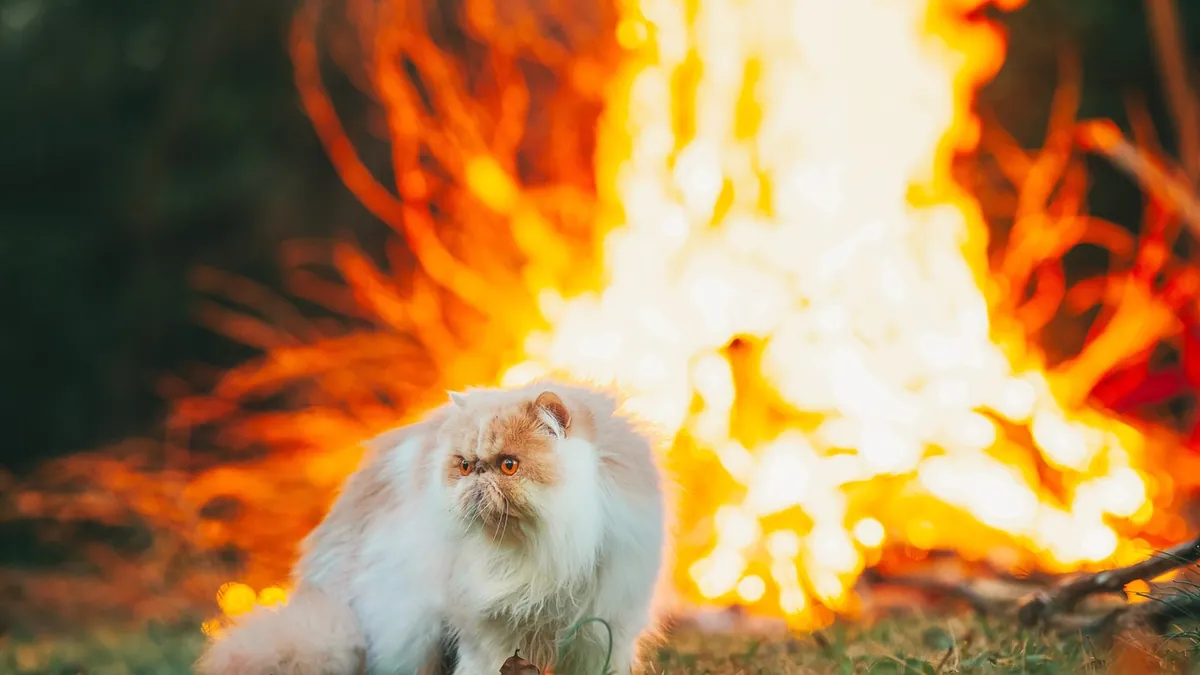
This article is educational and is not a substitute for veterinary diagnosis or treatment.
Thermal burns in cats happen when skin contacts something hot, like a stovetop, space heater, hot water, or open flame. The damage often looks smaller on the surface than it is underneath, and cats hide pain well. That combination is why every burn, even one that seems minor, needs a veterinarian the same day.
Quick Answer
- Cool the burn right away with room-temperature or cool running water for at least 10 to 20 minutes. Never use ice, ice packs, butter, oil, or ointments.
- Do not pop blisters or peel skin. Cover the area loosely with a clean, damp cloth or nonstick dressing on the way to the vet.
- Assume the burn is deeper than it looks. Cat skin is thin and burns can worsen over the first 24 to 48 hours.
- Go to a veterinarian the same day for any burn, and go now for burns on the face, paws, belly, or a large area of the body.
- Pain control and infection prevention are the main reasons small burns still need professional care. Cats with burns are often in more pain than they show [1].
What Are Thermal Burns in Cats?
A thermal burn is tissue damage caused by heat. The heat source can be dry (a hot stovetop, a heating pad, a space heater, a fire) or wet (scalding water, hot oil, steam). The burn injures the skin and sometimes the tissue beneath it.
Veterinarians describe burns by how deep they go. Superficial burns affect only the top layer of skin and look red, like a mild sunburn. Partial-thickness burns damage deeper layers and often blister. Full-thickness burns destroy all layers of skin and may look white, gray, leathery, or charred. Full-thickness burns can be less painful than they look because nerve endings are destroyed, but the surrounding tissue is usually very painful.
Cats are small, so a burn that covers a modest area of skin can be a serious injury. A burn over a large percentage of the body can cause shock, fluid loss, and organ stress. In one reported case, a kitten that fell into scalding bath water arrived obtunded, markedly painful, and in shock, and needed intensive care with intravenous fluids, opioid analgesia, antibiotics, and wound management [1].
Signs Owners Notice After a Cat Burn
The signs depend on where the burn is and how deep it goes. Common things you may see:
- Red, pink, or white skin
- Swelling or a tight, shiny look to the skin
- Blisters, or skin that peels away
- Charred, gray, or leathery patches
- Hair that singes or falls out
- Crying, hiding, flinching when touched, or refusing to move
- Licking or chewing at one spot
- Limping if a paw is burned
- Drooling or pawing at the mouth if the mouth was burned
- Fast breathing, weakness, or collapse with large or deep burns
Cats are masters at masking pain, so a cat that seems "fine" can still have a serious burn. In the kitten case, the cat was overtly painful and resistant to handling on arrival at the referral hospital [1]. Pain after a burn is expected, not a sign that something is wrong with your cat's temperament.
Causes and Risk Factors
Most thermal burns in cats come from everyday household heat sources.
Kitchen hazards. Cats jump onto counters and stovetops. A cat stove burn often happens when a cat lands on a hot burner or walks across a cooling pan. Hot grease and boiling water splash too.
Heaters and heating pads. A cat burned by a heater usually has burns on the belly, flank, or paws from lying too close. Space heaters, radiators, heat lamps, and heating pads set too high are common culprits. Cats may not move away from a heat source that is slowly burning them.
Hot water. Scalds from baths, sinks, or spilled pots cause deep burns fast. The kitten in the published case fell into a bath of scalding water [1].
Fires and smoke. Cats caught in house fires or wildfires can have burns plus smoke inhalation. Cats burned in California wildfires showed heart changes on ultrasound, including thickened heart muscle and blood clots inside the heart [2]. Platelet activation and a tendency toward clotting appear to play a role in these cats [3]. This is one reason burn care involves the whole body, not just the skin.
Sun exposure. Repeated sun exposure can damage the thin skin on ears, nose, and eyelids over time. These lesions can become pre-cancerous or cancerous, and squamous cell carcinoma in cats is invasive and fast-growing, often needing aggressive surgery such as removing part of the ear or nose [4].
Risk factors include being indoors with access to the kitchen, living in a home with space heaters or wood stoves, and having light-colored fur or thin hair on the ears and face.
How Burns Are Diagnosed
Your veterinarian will start with a physical exam and a history. They will ask what the heat source was, when it happened, and how long your cat was exposed. That history often tells them more than the wound looks alone.
The exam focuses on how deep the burn goes and how much of the body is involved. Your vet will check for pain, check the paws and mouth, and look for signs of shock such as pale gums, a fast or slow heart rate, and weakness. In the reported kitten, the primary care vet noted shock and started pain relief, sedation, antibiotics, and IV fluids before referral [1].
Blood work and imaging may be needed for serious burns. Because burn injuries can affect the heart, veterinarians have used echocardiography and a cardiac blood test called cardiac troponin I to monitor burn patients [2]. If your cat was in a fire, your vet will also check for smoke inhalation, which can damage the airways.
Burns change over the first day or two. A wound that looks superficial on day one may turn out to be deeper. That is why a recheck is often scheduled.
First Aid for a Cat Burn
Act quickly, but stay calm. Your cat is likely painful and may bite or scratch, even if they are normally gentle. If you can, wrap your cat in a towel with only the head out before you start.
Step 1: Stop the burning. Move your cat away from the heat source. If the burn is from a heater or stovetop, turn it off. If your cat's fur is wet with hot liquid, that liquid keeps burning, so cooling is urgent.
Step 2: Cool the area. Hold the burned area under cool (not cold) running water for at least 10 to 20 minutes. If you cannot use a sink, use a clean bowl, a wet cloth, or a cool compress that you refresh often. Cool water lowers the temperature of the tissue and can limit how deep the burn goes.
Step 3: Do not use ice. Ice and ice packs narrow blood vessels and can damage already injured skin. They can make the burn worse.
Step 4: Do not apply ointments, butter, oils, toothpaste, or home remedies. These trap heat, add infection risk, and make it harder for your vet to see the wound. Do not use human burn creams unless your veterinarian tells you to.
Step 5: Do not pop blisters or pull away skin. Blisters are a sterile dressing made by the body. Breaking them opens the door to infection.
Step 6: Cover loosely and go. Place a clean, damp cloth or a nonstick dressing over the burn. Do not wrap tightly. Then call your veterinarian or an emergency clinic and head in.
If your cat was in a fire or has trouble breathing, this is a life-threatening emergency. Smoke inhalation can be more dangerous than the visible burns. For other sudden emergencies, our guide to Emergency First Aid for Cats: Open Chest Heatstroke and Seizure Guide covers what to do while you are on the way.
What Not to Do
- No ice or ice water
- No butter, oil, or grease
- No ointments or creams
- No human pain medications. Many are toxic to cats, and the dose is not something you can guess.
- No hydrogen peroxide or alcohol on the burn
- No tight bandages
If you are unsure whether a product is safe, leave it off and ask your vet. For general wound cleaning questions, see How to Safely Clean a Cat's Wound at Home: First Aid Steps, but remember that burns are different from cuts and scrapes.
Treatment Options
Treatment depends on how deep the burn is, how much of the body is involved, and whether your cat is stable.
Pain control. This is the first priority. Burn pain is severe, and cats need prescription pain relief. In the reported kitten, pain was managed with opioid analgesia plus regional analgesia, which blocks pain to a specific area of the body [1]. Your veterinarian calculates the dose from your cat's weight and health. Never give human pain medicine to a cat.
Fluids and shock care. Large burns leak fluid from the bloodstream into the tissues. Intravenous fluids replace that loss and support blood pressure. The kitten in the case report received IV fluid therapy as part of intensive care [1].
Antibiotics. Burned skin cannot keep bacteria out. Your vet may prescribe antibiotics, and for deep or infected burns they may choose them based on a culture. In the reported kitten, septicaemia developed during hospitalization and multidrug-resistant bacteria were cultured, so antibiotics were escalated [1]. This is why early, appropriate care matters.
Wound cleaning and debridement. Dead tissue must be removed so healthy tissue can heal. This is called debridement, and it may be done more than once. In one reported case, a cat with extensive soft tissue necrosis needed surgical debridement before reconstruction [5]. Sedation or anesthesia is often needed because debridement is painful.
Topical therapy and dressings. Your vet will choose a topical treatment and dressing that fit the wound. A recent study in dogs and cats found that topical oxygen therapy combined with hyaluronic acid improved wound healing scores compared with standard care at 21 days [6]. This is one of several options, and your veterinarian will decide what suits your cat's burn.
Surgery. Deep burns may need skin grafts or reconstruction once the wound is clean. Some burns on the ears or nose from sun damage need aggressive surgical removal because squamous cell carcinoma is invasive and resistant to healing [4].
Nutrition. Burned cats need extra calories and protein to heal. A cat that will not eat may need a feeding tube. The kitten in the case report received enteral nutrition as part of intensive management [1].
Heart monitoring. If your cat was in a fire, your vet may watch the heart. Cats with wildfire burns showed thickened heart muscle and intracardiac clots on ultrasound, and some deaths were linked to cardiac causes [2]. Clotting problems related to platelet activation may contribute [3].
Burn Depth at a Glance
| Depth | What it looks like | Pain level | Typical care |
|---|---|---|---|
| Superficial | Red, dry, like sunburn | Painful | Cooling, pain relief, topical care, monitoring |
| Partial thickness | Blisters, wet surface, swelling | Very painful | Pain relief, wound care, dressings, antibiotics if infected |
| Full thickness | White, gray, leathery, or charred | May be less painful in the center, painful at the edges | Debridement, possible surgery, intensive care |
| Large or deep burns | Any depth over a big area, or burns on face, paws, belly | Severe | Hospitalization, IV fluids, IV pain relief, possible heart monitoring |
Recovery, Outlook, and Long-Term Management
Most superficial burns heal in one to three weeks with good wound care. Deeper burns take longer and often leave scars. Hair may not grow back over scarred skin.
The outlook is best when treatment starts early. Cats with serious burns can survive with intensive care, but complications are real. Infection is a major risk, and septicaemia can develop even with treatment [1]. Heart problems are another concern after fire-related burns [2][3].
At home, follow your vet's instructions exactly. Keep the wound clean and covered as directed. Use an Elizabethan collar if your cat licks or chews the area. Bring your cat to every recheck, because burns can look better or worse than they are, and depth can change in the first few days.
Long-term, watch for scarring that tightens the skin, especially over joints or paws. Some cats need physical therapy or further surgery if scars limit movement. If the burn was from the sun, keep your cat out of direct sun and ask your vet about sun protection for the ears and nose.
Prevention
Most thermal burns are preventable with a few changes at home.
- Never leave a hot stovetop unattended. Use back burners and turn pot handles inward.
- Keep cats out of the kitchen while you cook. A closed door or a baby gate helps.
- Check space heaters for tip-over shutoff and keep them behind a barrier.
- Do not use heating pads or heat lamps for cats unless your vet sets the temperature and a safe barrier.
- Test bath water with your wrist before your cat goes near it. Keep the water warm, not hot.
- Store hot drinks and pots away from counter edges.
- Install smoke detectors and check them.
- Limit sun exposure for light-colored cats, especially during peak hours.
If your cat has a heat-related emergency such as overheating, our guide to Cat Heatstroke: Emergency Cooling Steps and When to Rush to the Vet walks through cooling steps.
Limitations and When to Contact a Veterinarian
This article cannot tell you how deep your cat's burn is or whether your cat is in shock. Only a veterinarian can examine your cat, judge the wound, and set treatment. Individual cases need a veterinarian.
Go to an emergency clinic now if:
- The burn covers a large area of the body or is on the face, mouth, paws, belly, or genitals
- Your cat is having trouble breathing, is weak, collapsed, or unresponsive
- The skin is white, gray, leathery, or charred
- Your cat was in a fire or breathed smoke
- Your cat is crying, pacing, or cannot settle
Call your veterinarian the same day if:
- Your cat has any burn, even a small one
- Your cat is licking or chewing at the area
- You see blisters, peeling skin, or swelling
- Your cat is hiding, not eating, or acting painful
Schedule a routine visit if:
- A burn is healing but you have questions about scarring or hair regrowth
- Your cat has crusty or ulcerated spots on the ears or nose from sun exposure
Frequently Asked Questions
Should I put ice on my cat's burn?
No. Use cool running water for at least 10 to 20 minutes instead. Ice narrows blood vessels and can damage the already injured skin, making the burn worse.
Can I use antibiotic ointment on a cat burn?
No, not unless your veterinarian prescribes it. Human ointments can trap heat, add infection risk, and hide the wound from your vet. Keep the burn covered with a clean, damp cloth until you reach the clinic.
Will a small burn heal on its own?
It might, but you should still have it checked the same day. Even small burns are painful, and cats need prescription pain control and a plan to prevent infection. A wound that looks minor on day one can turn out to be deeper.
How do I know if my cat's burn is serious?
You often cannot tell by looking. Signs of a serious burn include white, gray, or charred skin, burns on the face or paws, a large burned area, breathing trouble, weakness, or collapse. When in doubt, treat it as serious and go in.
Can a cat burn from a heater without showing pain?
Yes. Cats may lie next to a heater long enough to burn without moving away, and they often hide pain. Watch for hiding, flinching, licking one spot, or limping, and have any suspicious area examined.
Related Articles
- Emergency First Aid for Cats: Open Chest Heatstroke and Seizure Guide
- How to Safely Clean a Cat's Wound at Home: First Aid Steps
- Cat Heatstroke: Emergency Cooling Steps and When to Rush to the Vet
- Cat Eye Injury: Signs, First Aid, and When to See the Vet
- Cat Hot Spot on Leg: Causes, Treatment, and Prevention
- How to Treat a Cat's Minor Wound at Home: Safe Steps
- Burns in Cats: Types, First Aid, and Treatment Options
- Burns in Dogs and Cats: First Aid and Vet Care
- What to Do If Your Cat Gets Burned: Immediate Steps
References
- Nutritional management of a kitten with thermal burns and septicaemia. JFMS open reports, 2020.
- Cats with thermal burn injuries from California wildfires show echocardiographic evidence of myocardial thickening and intracardiac thrombi. Scientific reports, 2020.
- Platelet Priming and Activation in Naturally Occurring Thermal Burn Injuries and Wildfire Smoke Exposure Is Associated With Intracardiac Thrombosis and Spontaneous Echocardiographic Contrast in Feline Survivors. Frontiers in veterinary science, 2022.
- Pet Sunburn in Cats and Dogs. Pet Poison Helpline.
- Surgical Management of Extensive Urine Extravasation Resulting in Urethrocutaneous Fistulation and Soft Tissue Necrosis of the Femoral Region Secondary to Pelvic Urethral Rupture in Two Cats. Animals : an open access journal from MDPI, 2026.
- Topical oxygen therapy with hyaluronic acid improves wound healing in small animals. Journal of the American Veterinary Medical Association, 2026.