Frostbite in Cats: Signs, First Aid, and When to Vet
By Dr. Zubair Khalid, DVM, MS, PhD ·
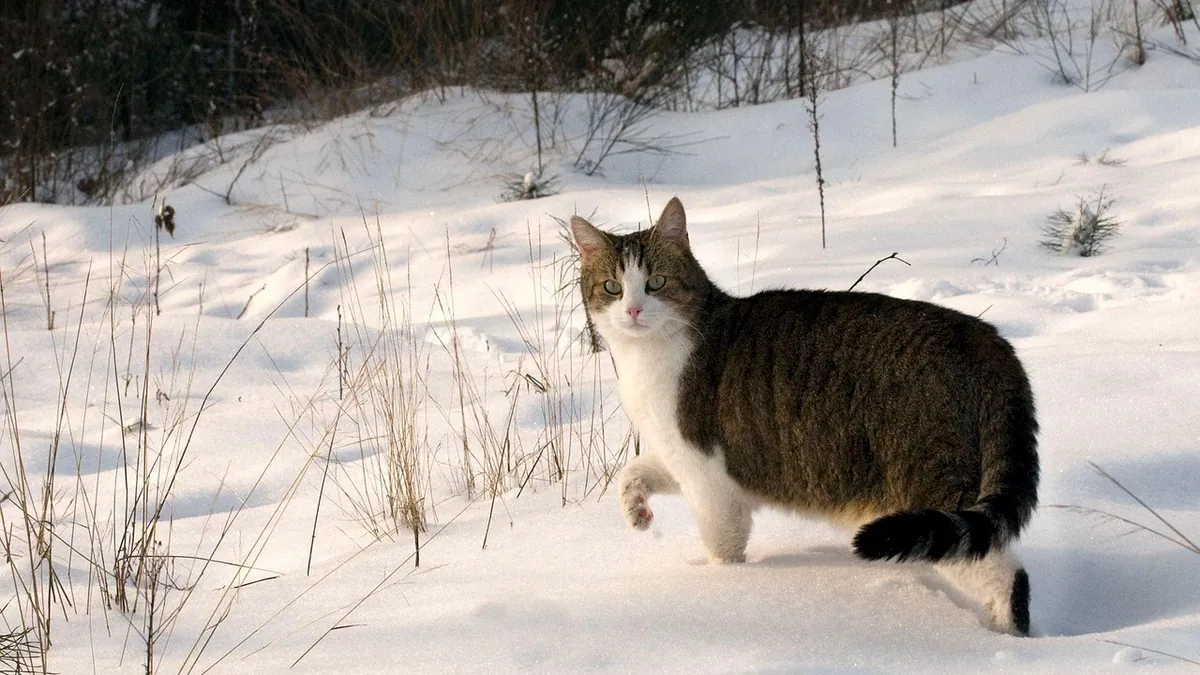
Frostbite in cats happens when cold, wind, and ice reduce blood flow to the ears, tail, paws, and other exposed skin, and the tissue starts to freeze. Treatment for frostbite in cats begins with slow, gentle warming and a same-day call to your veterinarian, because the damage often looks worse days later than it does at first. This article is educational and is not a substitute for veterinary diagnosis or treatment.
Quick Answer
- Any cat that spends time outdoors in freezing weather can get frostbite, even a cat with a thick coat [1].
- The ears, tail tip, and paws are the most common sites because they have little insulation and poor blood supply in the cold.
- Warm the cat slowly with lukewarm water (about 100 to 105°F) or warm towels, never hot water, a hair dryer, a heating pad, or rubbing.
- Frostbite and hypothermia often happen together, so check for a low body temperature and get veterinary care the same day.
- Tissue that looks mildly damaged at first can turn dark and die over the next several days, so a recheck is part of treatment [2].
What Frostbite Looks Like on a Cat
Early signs
In the first hours, frostbitten skin is pale, waxy, and cold to the touch. The ears and tail tip may look white or gray instead of their normal pink. Your cat may pull away when you touch the area, or may not seem to feel it at all.
Later signs
Over the next day or two, the skin may turn red, then blue or purple, then black. Blisters can form. The tissue may swell and become painful. In severe cases, the tips of the ears, the end of the tail, or parts of the paws die and slough off. One report described a young cat whose frostbite killed tissue in all four paws, both ears, and the end of the tail, requiring amputation and reconstruction of the paws [2].
What is normal
Normal ear and paw skin is pink, warm, and soft, and your cat reacts when you touch it. If you press a paw pad, the color should return within a second or two. Skin that stays white after you press it, or that feels hard and cold, is not normal.
Main Causes and Risk Factors
Frostbite is not a disease. It is an injury caused by cold. The risk goes up with wind, wet fur, and time spent outside without shelter [1].
| Cause | Typical clues | How urgent |
|---|---|---|
| Prolonged outdoor exposure in freezing weather | Cat was outside for hours, ears and tail tips pale or white | Emergency if the cat is also cold, weak, or confused |
| Wind and wet fur | Cat is wet from snow or rain, shivering hard | Same-day vet visit |
| No shelter or frozen water source | Cat lives outdoors, no raised shelter, water bowl frozen [1] | Same-day vet visit, plus fix the shelter |
| Lost cat found after a cold night | Cat is thin, dehydrated, paws cracked or bleeding | Emergency |
| Contact with ice, metal, or de-icing chemicals | Pads are raw, cracked, or irritated | Same-day vet visit |
Cats that cannot be kept indoors need shelter raised off the ground, dry bedding such as straw, and water that does not freeze [1]. They also burn more calories in winter, so they need more food to hold their weight [1].
Cat Frostbite Ears, Paws, and Tail
Cat frostbite ears
The ears are thin, have little fat, and stick out into the wind, so they freeze first. Look for white or gray tips, a stiff feel, and a lack of reaction when you touch them. Ear tips that turn black are a sign the tissue has died.
Cat frostbite paws
Paws are close to ice and snow and often get wet, which speeds heat loss. Watch for limping, licking at the feet, cracked pads, or a cat that refuses to walk. Severe paw frostbite can require amputation and reconstruction, though cats can return to walking after surgery in some cases [2].
Tail and other areas
The tail tip and the scrotum in male cats are also common sites. Any hairless or thinly furred area can be affected.
Red Flags That Make This an Emergency
Get emergency care right away if you see any of these:
- Body temperature that feels very cold to the touch, or a rectal temperature below 95°F (35°C). In one study of 1,440 cats at an emergency department, lower triage body temperature was linked to worse outcomes [3].
- Severe shivering that stops, or a cat that is limp, unresponsive, or confused.
- Slow, shallow breathing or a weak pulse.
- Skin that is black, hard, or peeling.
- A cat that cannot stand or walk.
- Any frostbite in a kitten, a senior cat, or a cat with heart, kidney, or thyroid disease.
Hypothermia and frostbite often occur together, so treat the whole cat, not just the frozen skin.
Safe First Aid at Home While You Wait
Step 1: Get the cat inside and warm the body first
Move your cat to a warm room. Wrap the body in dry towels or blankets. Warm the trunk before you focus on the ears or paws, because warming the limbs first can push cold blood back to the heart.
Step 2: Use lukewarm water, not hot
Frostbite cat warming should be slow. Use water at about 100 to 105°F, which feels comfortably warm on your wrist, not hot. Soak the affected area for 15 to 20 minutes, or apply warm, wet towels and change them as they cool.
Step 3: Never rub, never use dry heat
Do not rub or massage the frozen tissue. Do not use a hair dryer, heating pad, hot water bottle, or space heater. Numb skin burns easily, and rubbing can crush ice crystals in the tissue and cause more damage.
Step 4: Keep the area clean and covered
After warming, pat the area dry and cover it with a clean, dry, nonstick dressing. Do not pop blisters. Do not apply ointments, oils, or creams unless your veterinarian tells you to.
Step 5: Do not let the cat lick or chew
An Elizabethan collar can help if your cat is chewing at the ears or paws. Chewing turns a partial-thickness injury into an open wound.
Step 6: Call your veterinarian
Call before you arrive so the team can prepare. If your cat has an open wound, keep it covered with a clean cloth on the way in.
If your cat also has a wound from a fight or a bite, see our guide to cat bite abscess signs and home care and how to treat minor cat bites at home. Frostbitten skin is fragile and heals poorly if it also becomes infected.
What Your Veterinarian Will Check and Test
Your veterinarian will start with a full physical exam and a rectal temperature. They will check the ears, tail, paws, and any other exposed skin, and they will look for signs of hypothermia [3].
They will also check for other cold-weather problems. Cats that were outside may have eye injuries from wind, debris, or smoke, and eye exams in cats exposed to fires found surface damage in about half of the cats examined, with corneal ulcers in some [4]. If your cat has a red, squinting, or cloudy eye, see our article on cat eye injury signs and first aid.
Other tests may include:
- Blood work to check organ function, blood sugar, and hydration.
- X-rays if your cat was hit by a car or fell.
- Wound checks and bandage changes over several days.
- A recheck in 3 to 7 days to see which tissue survives.
Treatment depends on how much tissue is damaged. Mild cases may need only wound cleaning, bandaging, pain medication, and antibiotics. Severe cases may need surgery to remove dead tissue, and in some cats amputation and reconstruction of the paws [2]. Your veterinarian will calculate any medication dose from your cat's weight and health.
Prevention and Monitoring
For indoor cats
Keep cats indoors at all times in freezing weather, which is the best way to prevent frostbite and hypothermia [1]. If your cat goes out, limit trips to a few minutes and watch the ears and paws.
For outdoor cats
If a cat cannot be kept indoors, provide a shelter that blocks wind and precipitation, with dry bedding such as straw (avoid newspaper, cloth, and hay), food, and water that does not freeze [1]. Raise the shelter off the ground to reduce heat loss into the ground [1]. Feed a bit more than in warm months, because cold weather burns extra calories [1].
Monitoring after an injury
Take a photo of the area each day so you can compare. Watch for spreading black color, new blisters, swelling, a bad smell, or discharge. These are signs the damage is worse than it first looked. Keep your cat warm, dry, and indoors during recovery.
Frostbitten skin is more fragile and more prone to infection. If the area becomes red, weepy, or smelly, see our guide to cat skin infection signs and treatment options and cat skin problems and when to see the vet.
Limitations and When to Contact a Veterinarian
This article cannot tell you how much tissue your cat has lost. Only a veterinarian can examine the skin, check the body temperature, and decide what treatment is needed. Individual cases need a veterinarian.
Call your veterinarian the same day if your cat has pale, cold, or discolored ears, tail, or paws, or if your cat was outside in freezing weather and seems painful or quiet.
Go to an emergency clinic now if your cat is limp, confused, not shivering after severe cold exposure, breathing slowly, or has black or peeling skin.
Schedule a routine visit if your cat had mild frostbite and the skin looks better, but you want a recheck. A recheck 3 to 7 days later is often when the true extent of the damage becomes clear.
Frequently Asked Questions
Can cats get frostbite?
Yes. Any cat exposed to freezing temperatures, wind, and wet conditions can get frostbite, especially on the ears, tail, and paws [1]. Cats with thin coats, kittens, and senior cats are at higher risk.
How do I warm a cat with frostbite?
Warm the whole body first with dry blankets, then soak the affected area in lukewarm water at about 100 to 105°F for 15 to 20 minutes. Never use hot water, a hair dryer, or a heating pad, and never rub the tissue.
Will frostbitten ears or paws heal on their own?
Some mild cases heal with wound care and time, but severe frostbite can kill tissue and may need surgery [2]. Your veterinarian can tell you which tissue is likely to survive, often after a few days of monitoring.
Can frostbite show up days later?
Yes. Skin may look only mildly pale at first and then turn dark over the next several days as damaged tissue dies [2]. That is why a recheck visit matters even if your cat seems comfortable.
What is the difference between frostbite and hypothermia in a cat?
Frostbite is localized freezing damage to the skin and tissue, while hypothermia is a drop in the whole body temperature. They often happen together, and a low body temperature at admission is linked to worse outcomes in cats [3]. Treat the whole cat, not just the frozen area.
Related Articles
- Cat Eye Injury: Signs, First Aid, and When to See the Vet
- Cat Bite Abscess: Signs, Home Care, and When to See the Vet
- How to Treat Minor Cat Bites at Home and When to See a Vet
- Cat Skin Problems: When to See the Vet and How to Help
- Cat Skin Infection: Signs and Treatment Options
- Cat Sneezing and Nasal Discharge: When to See a Vet
- Frostbite in Cats: Signs, Ears, Paws, and Care
- Frostbite in Feral and Outdoor Cats: What to Do
- Frostbite in Dogs: Paw, Ear and Nose Signs to Know
References
- Cold Weather Tips For Cats. Cornell University College of Veterinary Medicine.
- Functional reconstruction following bilateral amputation of the manus and pes in a cat with frostbite injury. The Canadian veterinary journal = La revue veterinaire canadienne, 2025.
- Triage body temperature predicts outcome in cats at emergency department admission: a retrospective study of 1440 cases (January 2018 to December 2021). Journal of feline medicine and surgery, 2025.
- Clinical signs, treatment, and outcomes for ophthalmic thermal injury in 108 cats exposed to northern California wildfires between 2015 and 2020. Journal of the American Veterinary Medical Association, 2025.