Are All Dogs Natural Swimmers? Breeds and Safety
By Dr. Zubair Khalid, DVM, MS, PhD ·
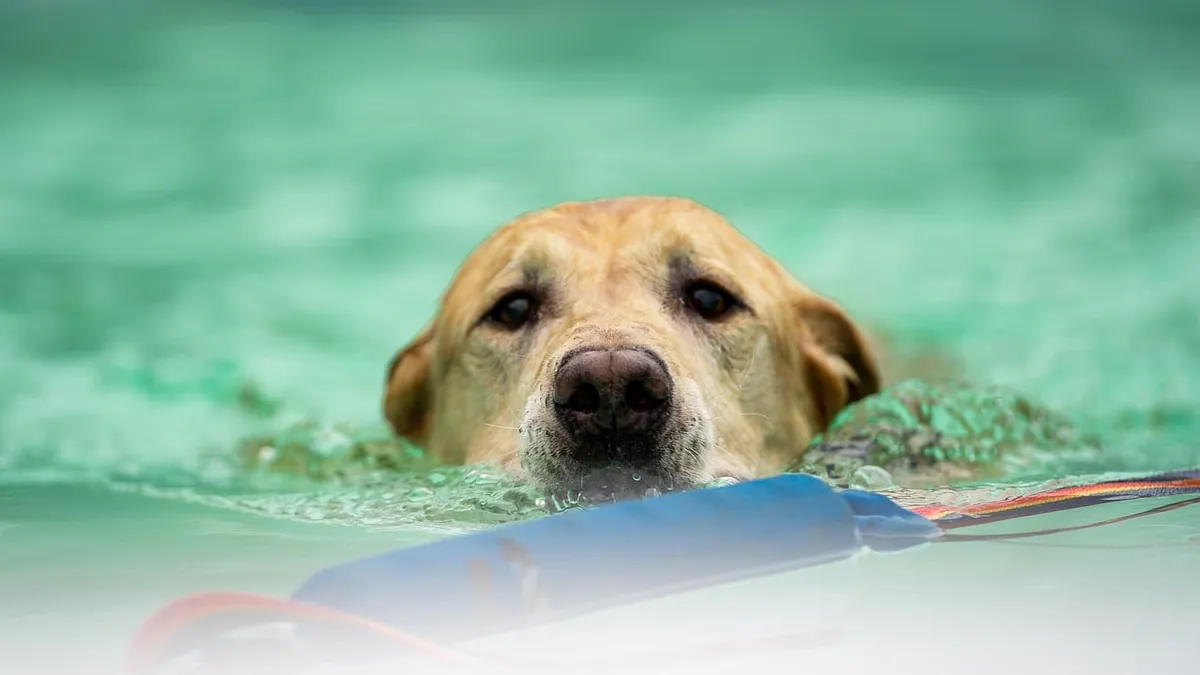
No, not all dogs are natural swimmers. Some breeds have body shapes that make swimming difficult or dangerous, and even strong swimmers need a careful introduction to water. Whether dogs are natural swimmers depends far more on anatomy and experience than on instinct.
This article is educational and is not a substitute for veterinary diagnosis or treatment.
Quick Answer
- Most dogs can learn to swim, but "natural" ability varies widely by breed, body shape, and prior experience.
- Flat-faced (brachycephalic) breeds and dogs with heavy, low-slung bodies face the highest drowning risk.
- Never assume your dog can swim. Test in shallow water with support before any deep-water exposure.
- A life jacket sized to your dog's weight is the single most useful safety purchase for boating, pools, and lakes.
- Supervise constantly. Drowning in dogs is fast and quiet, and most owners miss the early signs.
Why Some Dogs Swim Easily and Others Cannot
Swimming is a physical skill, not a universal instinct. A dog's ability depends on buoyancy, limb length, muzzle length, and body fat distribution. Dogs with long legs, a broad chest, and a long muzzle (think retrievers and many spaniels) can keep their head above water with relative ease. Dogs with short legs, a heavy chest, or a flat face must work much harder to stay afloat.
Brachycephalic breeds are a special concern. The shortened skull and excess soft tissue that define these dogs often produce Brachycephalic Obstructive Airway Syndrome (BOAS), a chronic and incurable condition that veterinarians report as a primary presenting problem in a large share of the flat-faced dogs they treat [1]. A dog who struggles to breathe on land will struggle far more in water, where the chest is compressed and the airway must work against resistance.
Crossbreeding extreme brachycephalic dogs may improve some health outcomes while preserving behavior and the owner-dog relationship, based on assessments of Pugs and their crosses [2]. That does not make a flat-faced dog a swimmer, but it does mean that if you own or are considering one of these breeds, asking your veterinarian about airway health is a reasonable first step. Our Dog Breeds: Health Guide and Care Tips for Popular Types covers breed-specific health issues in more detail.
Body shape is not the only factor. Puppies and young dogs may have coordination that is still developing. One condition, swimming puppy syndrome, causes affected puppies to hold their limbs out to the side and prevents them from standing or walking on their own. In a study of 115 dogs across 48 breeds, most regained the ability to stand and walk at a median age of 4.5 weeks, and signs resolved at a median age of about six weeks, though some took up to 12 weeks [3]. This condition is separate from swimming ability, but it shows that early motor skills in puppies vary a great deal and should never be assumed.
Can All Dogs Swim? A Breed and Body Type Comparison
The table below groups dogs by general swimming ease. Individual dogs vary, and a dog's experience matters as much as breed.
| Category | Typical examples | Swimming outlook | Main risk |
|---|---|---|---|
| Strong natural swimmers | Retrievers, Newfoundlands, Portuguese Water Dogs, many spaniels | Usually learn quickly and swim with confidence | Overexertion, cold water, currents |
| Moderate swimmers | Most herding breeds, terriers, mixed breeds with balanced build | Can learn with a gradual introduction | Fatigue, panic in deep water |
| Strugglers | Bulldogs, Pugs, Boston Terriers, Pekingese, Dachshunds, Basset Hounds | Often cannot keep the head up without support | Rapid drowning, airway distress |
| High-risk | Any dog with BOAS, obesity, arthritis, or a history of seizures | Should not swim unsupervised, if at all | Drowning, aspiration, collapse |
If you are choosing a dog partly for water activities, our Dog Breeds: How to Choose a Dog by Lifestyle, Health, and History walks through how to match a breed to your routine.
How to Teach a Dog to Swim: Step by Step
Step 1: Get a health clearance first
Ask your veterinarian whether your dog's heart, lungs, airway, and joints can handle swimming. This matters most for flat-faced breeds, senior dogs, and dogs carrying extra weight. Your veterinarian can also tell you whether your dog's current medications or skin condition make chlorinated or natural water a poor choice.
Step 2: Choose the right water
Start in a shallow, calm, warm spot with a gentle slope and a easy exit. A kiddie pool in your yard or a quiet lake cove works well. Avoid pools with steep walls, rivers with current, and any water with visible algae or debris.
Step 3: Fit a life jacket
Measure your dog's chest girth and weight, then buy a jacket with a top handle. The handle lets you lift your dog out fast if something goes wrong. Let your dog wear the jacket around the house for a few days before the first water session so it does not feel strange.
Step 4: Enter together, stay shallow
Walk in beside your dog. Keep all four paws on the bottom at first. Let your dog sniff the water and stand in it. Reward calm behavior with treats and praise. Do not throw your dog in. That single mistake creates a lifelong fear in many dogs and is a leading cause of panic in the water.
Step 5: Support the body, not the neck
Slide one arm under the belly and one under the chest. Let your dog paddle a few strokes while you take some of the weight. Release support for one or two seconds, then support again. Build up slowly over several sessions.
Step 6: Teach the exit first
Before any deep-water work, practice getting out. Guide your dog to the ramp, steps, or shore repeatedly until the exit is automatic. A tired dog who cannot find the way out is a drowning waiting to happen.
Step 7: Add distance and depth gradually
Once your dog paddles calmly with light support, move to slightly deeper water for short bursts. End every session while your dog is still relaxed. Ten to fifteen minutes is plenty at first.
Signs a Dog Is Struggling in the Water
Drowning in dogs does not look like the splashing you see in movies. It is often quiet and fast. Watch for:
- Vertical body position with the head tilted back and the nose just above the surface
- Front paws paddling frantically at the surface with no forward movement
- Eyes wide, staring, or rolling
- Whining, yelping, or silence
- Attempts to climb on you or another dog
- Coughing, gagging, or vomiting water after exiting
- Blue or pale gums, weakness, or collapse after swimming
If you see any of these, get your dog out of the water immediately. Do not wait to see if your dog "figures it out."
Common Mistakes Owners Make
Assuming breed equals ability. A Labrador who has never seen water may panic. A Pug who loves the beach may still sink. Judge the individual dog.
Skipping the life jacket. Even strong swimmers tire. Cold water, waves, and currents change everything.
Using pools without an exit. A dog who falls into a pool with no ramp or steps can drown within minutes, even a good swimmer.
Letting dogs drink pool or lake water. Pool chemicals and harmful algae can cause illness. Bring fresh water.
Swimming right after a big meal or in extreme heat. Both raise the risk of vomiting, cramping, and overheating.
Ignoring ectoparasiticide runoff. Flea and tick products containing imidacloprid and fipronil wash off dogs and contaminate water. A study of urban ponds found these compounds at concentrations indicating high environmental risk in ponds used for dog swimming, with a strong correlation between dog swimming activity and measured concentrations [4]. If your dog swims in natural water, ask your veterinarian about product timing and whether a different preventive makes sense.
Forgetting the ears. Repeated water exposure can lead to ear infections, especially in dogs with floppy ears. Dry the ear canals after every swim.
Supplies and Setup That Matter for Safety
- Life jacket with a top handle, sized by chest girth and weight
- Long line or leash for controlled introduction in open water
- Fresh drinking water and a collapsible bowl
- Rinse-off shampoo for after pool or lake swims
- Ear-drying solution recommended by your veterinarian
- Towels and a warm, shaded rest area
- A designated exit point you have practiced with your dog
- A phone within reach in case you need to call for help
For dogs with allergies or sensitive skin, chlorinated pools and lake water can trigger flare-ups. Our Hypoallergenic Dog Breeds: Allergy Facts and Practical Choices explains how breed and skin health interact.
Limitations and When to Contact a Veterinarian
No article can assess your individual dog. Your veterinarian knows your dog's airway, heart, joints, and history, and that context decides whether swimming is safe.
Contact your veterinarian the same day if your dog:
- Coughs persistently or breathes faster than normal after swimming
- Vomits water or seems lethargic for more than an hour after a swim
- Has red, irritated eyes or skin after water exposure
- Shows head shaking, ear scratching, or discharge from the ears
Go to an emergency clinic now if your dog:
- Collapses, has trouble breathing, or has blue or pale gums
- Inhales water and then develops coughing, wheezing, or labored breathing (this can worsen over hours)
- Was pulled from the water unresponsive or nearly unresponsive
- Has a seizure in or near water
Schedule a routine visit if:
- You are planning to introduce a flat-faced, senior, or overweight dog to water
- Your dog has had repeated ear infections after swimming
- You want guidance on flea and tick product timing around water activities
Frequently Asked Questions
Are dogs good swimmers by instinct?
No, dogs are not good swimmers by instinct alone. Puppies may paddle reflexively if placed in water, but that reflex is not the same as controlled swimming, and it does not mean a dog can keep itself afloat. Real swimming skill comes from body shape, practice, and gradual exposure.
Can all dogs swim if they are taught?
Most dogs can learn basic swimming with patient, supported practice, but some cannot swim safely at all. Flat-faced breeds, dogs with severe airway disease, and dogs with certain orthopedic or neurologic conditions may never be safe in deep water. Your veterinarian is the best judge for your dog.
Which breeds cannot swim?
Bulldogs, Pugs, Boston Terriers, Pekingese, and other flat-faced breeds are the most commonly cited poor swimmers because their airway anatomy limits breathing during exertion. Dachshunds and Basset Hounds also struggle due to short legs and heavy bodies. Any dog with obesity or arthritis can join this group.
How do I know if my dog is drowning?
A drowning dog is usually vertical in the water, paddling frantically with no forward progress, with the head tilted back and the nose barely above the surface. The dog may be silent. Get your dog out immediately and call your veterinarian or an emergency clinic.
Do life jackets actually help dogs?
Yes, a properly fitted life jacket keeps the head above water, reduces fatigue, and gives you a handle to lift your dog out quickly. It is not a substitute for supervision, but it is the most reliable safety tool for boating, pools, and open water.
Related Articles
- Hypoallergenic Dog Breeds: Allergy Facts and Practical Choices
- Dog Breeds: Health Guide and Care Tips for Popular Types
- Small Dog Breeds: Health Concerns and Care Tips
- Hypoallergenic Dogs: Best Breeds for Allergy Sufferers
- Dog Breeds: How to Choose a Dog by Lifestyle, Health, and History
- Is It Safe for Dogs to Swim in Lakes, Rivers, and Oceans?
- Do Dogs Instinctively Know How to Swim?
- Dog Breathing Patterns: What's Normal and What's Not
References
- Veterinarians' attitudes towards the treatment and surgical management of brachycephalic dogs - a survey among small animal veterinarians in Austria. BMC veterinary research, 2026.
- A solution right under our nose? Crossbreeding extreme brachycephalic dogs results in better health outcomes while preserving behavioural profiles and dog-owner relationship quality. Animal welfare (South Mimms, England), 2026.
- A questionnaire-based investigation of the swimming puppy syndrome: 115 dogs. Frontiers in veterinary science, 2023.
- Dog swimming and ectoparasiticide water contamination in urban conservation areas: A case study on Hampstead Heath, London. The Science of the total environment, 2024.