
Dog Breeds: How to Choose a Dog by Lifestyle, Health, and History
Choosing among dog breeds is an exercise in matching a living animal to a real household. A breed can help explain a dog's typical body size, coat workload, original function, and some health-screening priorities. It cannot promise temperament, safety around children, compatibility with another pet, or the medical future of an individual dog. The useful question is not "Which dog breed is best?" It is "Which traits can this household support every day, and which risks can it manage responsibly?"
Search behavior reflects that practical question. People look for a dog breeds list, small dog breeds, dogs that do not shed, family dogs, and dog breed selector tools. Those phrases describe different decisions. A person considering a low-shedding coat is planning grooming and allergy management. A person considering a livestock guardian is planning space, visitors, fencing, and training. A person comparing retrievers may be asking about daily activity, carrying behavior, and food motivation. A good breed choice starts by separating these decisions instead of treating a breed name as a personality label.
Quick Answer
Start with the household before the breed list. Record the adult dog's likely size, your daily availability, walking and training capacity, climate, grooming tolerance, other animals, visitors, budget for preventive care, and willingness to use a qualified trainer or veterinarian. Then compare a short list of breeds and individual dogs against those conditions.
Breed history is a useful clue, especially for body form, coat maintenance, and the type of work for which a population was selected. Individual behavior still varies widely. A large genomics and owner-survey study found that breed explained a limited share of behavioral variation among individual dogs, even though some behavioral tendencies and physical traits have genetic contributions. Morrill and colleagues provide an important corrective to claims that any breed guarantees a particular personality.
For a purebred puppy, ask for the parents' documented health results that are relevant to that breed. The Orthopedic Foundation for Animals CHIC program and the AKC's breed-specific health-testing requirements are starting points. Completion of a screening protocol does not guarantee a healthy puppy. It shows that recommended tests were performed and recorded.
At a Glance
| Decision area | What to assess | A weak shortcut to avoid | Better evidence |
|---|---|---|---|
| Size | Adult weight, height, handling strength, transport, stairs, and housing rules | Choosing by puppy size or a photograph | Adult dogs of the same type, breed standard, and rescue assessment |
| Activity | Daily movement, training, play, scent work, and recovery time | Counting backyard space as exercise | A seven-day schedule that includes ordinary workdays |
| Behavior | Sociability, recovery from novelty, handling history, and training response | Assuming a breed label predicts the individual | Meet the dog repeatedly and obtain a detailed history |
| Coat | Brushing, clipping, bathing, shedding, and professional grooming | Treating low shedding as allergy-free | Grooming plan plus an allergen discussion with a clinician if needed |
| Health | Parent testing, body shape, lifelong preventive care, and insurance planning | A single DNA panel or a fashionable color | Breed-club or CHIC recommendations and a veterinary exam |
| Source | Socialization, records, return policy, and honesty about limitations | A listing that promises a perfect temperament | Transparent breeder, rescue, or shelter documentation |
What a Dog Breed Is, and What It Is Not
A dog breed is a human-defined population shaped through selection, registration rules, and shared ancestry. Breed standards describe desired conformation and, in some systems, function. The American Kennel Club groups recognized breeds according to historical roles such as sporting, hound, working, terrier, toy, non-sporting, and herding. Its group-history overview is a useful introduction to those categories.
Those categories are maps, not diagnoses. A sporting dog may enjoy retrieving, yet an individual may be cautious around water. A herding dog may be quick to learn, yet an individual may have low stamina, pain, fear, poor early socialization, or no interest in stock. A toy dog may be physically small, yet still need careful training and a structured social life. The original task gives a reader questions to investigate. It does not excuse ignoring the individual dog in front of them.
Modern breeds also represent a relatively recent layer of canine history. Artificial selection has altered canine size, skull shape, coat, gait, and many other visible traits. A genome-wide study of selection in dogs describes how selection has left measurable signatures in the canine genome. The biological lesson is straightforward: form and function are linked, but no simple checklist can predict every outcome for a particular dog.
Mixed-breed dogs deserve the same careful assessment. Visual breed guesses can be wrong. DNA tests may add ancestry information, but they cannot produce a complete behavioral forecast. Evaluate a mixed-breed dog through the same lens used for a purebred dog: health records, observable behavior, handling tolerance, activity level, the needs of the household, and the support available after adoption.
A Brief History of Dog Types
Dogs have worked alongside people in hunting, herding, guarding, hauling, pest control, companionship, and many other roles. The details vary across geography and culture. A practical breed history should therefore focus on what a dog was selected to do and what that task could mean in a present-day home.
| Historical function | Examples of familiar types | Useful present-day question | Common mismatch to prevent |
|---|---|---|---|
| Retrieving and field work | Retrievers, spaniels, pointers | Can the household provide training, outdoor activity, and supervised carrying games? | Treating a young, active sporting dog as a passive ornament |
| Scent or sight hunting | Beagles, coonhounds, dachshunds, sighthounds | Can the household manage recall, fencing, and safe enrichment? | Allowing off-leash access without reliable control or a safe area |
| Herding | Border Collies, Australian Shepherds, Corgis, German Shepherd Dogs | Is there a daily outlet for learning, movement, and controlled play? | Expecting a dog to create its own healthy activity indoors |
| Guarding and protection | Mastiff types, Dobermans, Rottweilers, livestock guardians | Can adults manage visitors, boundaries, socialization, and training? | Mistaking aloofness or territorial behavior for a status symbol |
| Draft and endurance work | Huskies, Malamutes, Bernese Mountain Dogs | Can the climate, fencing, and exercise plan fit the dog? | Selecting by appearance while ignoring heat tolerance or escape risk |
| Earthwork and vermin control | Terriers | Can the home safely manage digging, persistence, and small-animal interactions? | Assuming a small dog has small behavioral needs |
| Companion work | Toy breeds and many small companion breeds | Can the household protect the dog from injury and teach calm, consistent routines? | Carrying the dog everywhere instead of teaching coping skills |
History can guide enrichment. A scent hound may enjoy a supervised scent trail. A retriever may enjoy a structured retrieve with safe objects. A herding-type dog may enjoy skill training, cooperative games, and carefully managed movement. These are options, not prescriptions. A veterinarian, qualified trainer, or behavior professional can help adapt activities for a dog's age, health, and behavior.
Use a Lifestyle Audit Before You Compare Dog Breeds
The best dog breed selector is often a written household audit. Complete it honestly on an ordinary week, not a holiday week or an idealized future schedule. Include every adult who will handle the dog and any child whose routine affects the dog.
Time and routine
Record morning, daytime, evening, and weekend availability. Include commuting, school runs, caregiving, travel, and days when the household is tired. A dog needs more than a walk. It needs toileting, feeding, social contact, rest, basic training, supervision, grooming, and veterinary care across its life. A puppy requires more frequent care than an adult dog. An older dog may need slower activity, more medical visits, or help with mobility.
Space and management
Housing has practical limits. Consider stairs, elevator access, lease restrictions, secure doors, window safety, storage for food and equipment, and a quiet sleeping area. A garden or yard may be valuable, but it does not replace planned activity or training. Fencing needs to fit the individual dog's size, jumping ability, digging behavior, and tendency to investigate wildlife.
Household composition
Children, older adults, visitors, cats, birds, rabbits, and existing dogs all change the management plan. A child should never be treated as a dog's trainer or sole caretaker. A dog with a known history of chasing small animals may require strict separation and professional guidance. A home with frequent visitors needs a plan for arrivals, resting space, doors, food, and supervision.
Budget and support
Routine care should be expected, not treated as an emergency expense. Consider food, preventive medications, annual examinations, vaccines recommended for the dog's circumstances, training, grooming, boarding or pet sitting, and urgent care. A body shape or family history may add different health-screening or management discussions. Pet insurance and a savings plan can reduce the pressure to make rushed decisions during an emergency.
Compare Dog Breed Families by Management Needs
Breed groups provide a useful first filter, but a family is not a guarantee. The table below focuses on the questions that matter to an owner.
| Breed family | Typical original work | Questions that deserve attention | Useful household preparation |
|---|---|---|---|
| Sporting | Locating, flushing, pointing, or retrieving game | Does the dog have enough outdoor activity and trainable play? Is food motivation managed? | Recall training, safe retrieving, weight monitoring, water safety |
| Hound | Following scent or pursuing prey by sight | Is the property secure? Can the dog be exercised safely without relying on off-leash recall? | Secure fencing, long-line training where appropriate, scent enrichment |
| Working | Guarding, hauling, rescue, or other demanding tasks | Can the household handle a large adult dog and clear visitor rules? | Early socialization, calm handling, transport plan, structured training |
| Terrier | Locating and dispatching vermin | Are there small pets, wildlife, gardens, or fragile household items? | Digging outlets, supervised introductions, safe chew and play activities |
| Toy | Companionship | Can people prevent falls, rough handling, and overdependence? | Gentle handling rules, dental care discussions, independent rest practice |
| Non-sporting | Diverse functions and body types | What is the exact breed's coat, airway, skin, and exercise profile? | Breed-specific source review, grooming schedule, heat and exercise plan |
| Herding | Moving and controlling livestock | Can the household provide daily training and an appropriate outlet for attention and movement? | Skill training, predictable routine, safe play, early help for reactivity |
The American Kennel Club's group system is one registry-based classification. Other registries organize breeds differently. When researching a specific breed, use the relevant parent club and registry standard, then verify health information through a veterinary source or recognized screening program.
Popular Dog Breeds: Compare the Questions, Not the Hype
High search volume does not make a breed an appropriate choice for every home. The most useful comparison is between the household's capacity and a dog's expected care needs. This table groups common search targets into practical questions. It does not rank breeds or predict an individual dog's behavior.
| Breed or type often searched | Strengths people often seek | Questions to investigate before acquiring a dog | Health and welfare conversation |
|---|---|---|---|
| Labrador Retriever or Golden Retriever | Sociability, trainability, outdoor companionship | Is there time for daily activity, food management, and training through adolescence? | Ask about breed-specific screening and a lifetime weight-management plan |
| German Shepherd Dog or Australian Shepherd | Trainability, partnership, working ability | Can the household provide skilled training, socialization, and a predictable routine? | Review orthopedic, eye, and genetic-screening recommendations relevant to the line |
| Border Collie | Intense learning and activity | Is the goal a truly active partnership instead of a visually appealing pet? | Discuss injury prevention, development, and behavior support early |
| French Bulldog, Boston Terrier, Pug, or other short-muzzled type | Compact size and companion appeal | Can the household recognize exercise and heat limitations? | Discuss airway, eye, skin, dental, and temperature-management concerns before purchase or adoption |
| Dachshund | Small size and distinctive form | Can people prevent risky jumping and safely manage stairs or furniture access? | Ask a veterinarian about spinal-health risk reduction and body condition |
| Poodle | Coat style, trainability, low-shedding reputation | Is there a real grooming budget and routine? Are allergies evaluated in person? | Review coat care, dental care, and breed-specific health screening |
| Beagle or scent hound | Friendly expression and moderate size | Can the household manage scent-driven exploration, sound, and secure containment? | Review ear, weight, and preventive-care needs with the dog's veterinarian |
| Rottweiler, Doberman, Cane Corso, or mastiff type | Size, loyalty, guarding history | Can adults manage strength, visitors, training, and safe public handling? | Obtain transparent breed-specific health records and discuss the family lifestyle honestly |
| Chihuahua, Yorkshire Terrier, Pomeranian, or Cavalier type | Small size and close companionship | Can the dog be protected from injury while still receiving consistent training? | Discuss dental care, body condition, and relevant breed-specific screening |
| Great Dane, Bernese Mountain Dog, or Newfoundland | Large stature and gentle-companion appeal | Are transport, space, flooring, travel, and handling realistic? | Ask about large-breed development, orthopedic care, cardiac screening, and emergency planning |
Health Screening, Body Form, and Welfare
Health information should be specific. A statement that a breed is "healthy" or "unhealthy" is too crude to guide a family. Each dog has an individual history, and different conditions have different inheritance, testing, and management patterns. Good questions include these:
- Which screening tests are recommended by the breed's parent club or CHIC profile?
- What results are available for both parents, and can they be independently verified?
- Which traits are assessed through physical examination or imaging, and which through DNA testing?
- What cannot be predicted by the available tests?
- Has body form created a foreseeable welfare challenge, such as an airway, eye, skin-fold, mobility, or whelping concern?
- Will the prospective owner have a veterinary relationship and financial plan from the first day?
The CHIC program compiles breed-specific protocols with participating parent clubs. Its records can help buyers ask better questions. A CHIC number does not certify that every result is normal and does not remove all risk. The AKC explanation of health testing makes the same point in owner-facing language.
Extreme body shape warrants careful scrutiny. The World Small Animal Veterinary Association has called attention to welfare problems associated with brachycephalic breeding, including the importance of avoiding traits that compromise normal breathing and comfort. WSAVA's position on brachycephalic welfare is useful context. A family considering an extreme conformation should seek an independent veterinary discussion before acquisition, not after a crisis.
Size, Coat, Climate, and the Physical Reality of Daily Care
Visible traits often drive initial interest in a breed. They can also drive the daily workload. A long, continuously growing coat is not a styling preference alone. It creates a brushing, bathing, drying, clipping, skin-checking, and professional-grooming commitment. A double coat changes seasonal shedding, indoor cleaning, and heat management. A large dog changes lifting, vehicle choice, boarding availability, flooring, and the physical strength required for calm handling. A short-legged or long-backed dog may need an environment designed to reduce avoidable jumping and slipping.
The most responsible comparison is specific enough to change a decision. Instead of asking whether a breed is easy to groom, ask who will brush the coat on a Tuesday night, who will pay for professional clipping, and what happens if matting develops. Instead of asking whether a breed is large, estimate whether every adult can attach a leash, help a dog into a vehicle if ill, and manage a dog at a veterinary clinic. Instead of asking whether a breed can live in an apartment, examine noise, elevator access, toileting routines, exercise options, and the dog's individual ability to settle.
Climate deserves equal attention. Thick-coated dogs still need shade, water, and activity choices suited to heat. Short-muzzled dogs may be less able to cool themselves efficiently and need an individualized plan created with a veterinarian. Dogs with sparse coats can need protection from sun, cold, or skin injury. No breed label can replace observation for labored breathing, reluctance to move, heat distress, or skin disease.
| Physical trait | Daily management implication | Questions before acquisition |
|---|---|---|
| Large adult size | Transport, handling, feeding, flooring, and housing become more demanding | Can every caregiver safely manage the adult dog? Is there a plan for injury or transport? |
| Long or dense coat | Brushing and grooming are recurring welfare tasks | Who will do coat care, at what interval, and with what budget? |
| Low visible shedding | Hair may be retained in the coat, which can increase grooming needs | Does the household understand that low shedding does not mean allergy-free? |
| Short muzzle or extreme facial fold | Breathing, eye, dental, and skin concerns may require regular attention | Has an independent veterinarian discussed this dog's body form and daily comfort? |
| Long back or short legs | Furniture, stairs, traction, and body condition can influence risk management | Can the home reduce risky jumping and maintain a healthy body condition? |
| Giant size | Growth, mobility, space, and emergency care planning are major considerations | Is there realistic room, transport, and financial capacity for a giant adult dog? |
Choosing by Life Stage: Puppy, Adult, or Senior Dog
Many breed searches begin with a puppy photograph, but the family will live with an adult dog for most of the relationship. A responsible decision therefore includes the adolescent years, the adult routine, and later-life care. The question is not whether puppies are rewarding. The question is whether the household can provide predictable care while the dog grows, learns, makes mistakes, and develops into an adult with its own needs.
Puppies require frequent toileting opportunities, supervised exploration, safe socialization, veterinary visits, sleep, and short training sessions. They do not arrive trained because their parents have titles or because the breed has a favorable reputation. Early experiences matter. A puppy should not be overloaded with frightening or uncontrolled encounters in the name of socialization. Good socialization is gradual, positive, and tailored to the individual dog's comfort.
Adolescent dogs are often physically capable before they are behaviorally mature. This period can expose gaps in recall, leash skills, chewing management, visitor routines, and frustration tolerance. Families who select a breed described as energetic should assume that routine training and appropriate activity will remain necessary after the first few months. The same applies to a small companion breed. Small dogs benefit from the same clear handling, rest, and training principles as larger dogs.
Adult rescue dogs offer a different form of information. Their size, coat, general activity level, and daily habits may be more visible than in a puppy. That does not make every adult dog an easy match. It does make a detailed history especially valuable. Ask about the dog's response to handling, familiar and unfamiliar people, other animals, alone time, transport, grooming, and medical care. A foster home may be able to describe patterns that are difficult to observe during a single shelter visit.
Senior dogs can be exceptionally rewarding companions, yet they may need medication, mobility changes, altered exercise, dental care, or more frequent veterinary monitoring. A family seeking a calm companion should consider whether an older dog with known needs is a better fit than a young dog selected solely by breed reputation. The decision should include veterinary records and a realistic discussion of support.
Common Breed-Selection Mistakes and Better Alternatives
The same mistakes appear across many dog breeds. They are usually failures of planning, not failures of affection.
| Common mistake | Why it creates problems | Better alternative |
|---|---|---|
| Choosing mainly from an attractive image | Images hide adult size, coat work, behavior, and health context | Meet adult dogs, read the breed standard, and examine the daily care plan |
| Treating a label as a personality forecast | Individual dogs vary in behavior and lived experience | Meet the dog and ask for a behavior and handling history |
| Choosing from puppy energy alone | Puppies change rapidly and need active supervision | Plan for adult size, adolescence, training, and lifetime care |
| Using a yard as the entire exercise plan | Space does not create training, enrichment, or social support | Schedule activity, training, rest, and safe exploration |
| Ignoring grooming until the coat becomes difficult | Matting and neglected skin can cause discomfort | Establish brushing and grooming routines before the dog arrives |
| Believing a health test removes all risk | Tests have specific purposes and limitations | Review relevant records with a veterinarian and keep preventive care current |
| Acquiring a dog without a visitor plan | Doorways, children, deliveries, and gatherings can produce stress or risk | Decide where the dog rests and who manages arrivals |
| Delaying help for fear or aggression | Rehearsed behavior can become harder to manage | Seek qualified veterinary or behavior guidance early |
A Breed-Selection Conversation With a Breeder, Rescue, or Shelter
The source of the dog should welcome informed questions. The aim is not to cross-examine an organization. It is to determine whether the information needed for a safe placement exists and whether the answers are transparent.
For a breeder, request the parents' registered names or identifiers, breed-relevant health testing, veterinary records, socialization practices, the age at which puppies go to new homes, support after placement, and the policy if a family can no longer keep the dog. Ask which families are poor matches for the breed or individual puppy. A responsible answer may be more valuable than a sales pitch.
For a rescue or shelter, ask what is known and what is unknown. Ask how the dog behaves in a home, on a leash, during handling, around food, with visitors, with dogs, and around cats or small animals. Ask about medical findings, medication, previous homes, foster observations, adoption support, and return options. A responsible rescue can say when history is incomplete.
For either route, beware of certainty language. Claims that every puppy is allergy-free, every dog is easy with children, or every dog from a line has a fixed temperament conceal uncertainty. Honest placements recognize the dog as an individual and give the future owner a route to support.
Reading a Pedigree Without Treating It as a Guarantee
A pedigree is a recorded ancestry document. It can identify named ancestors, registration information, titles, and sometimes health records linked through other databases. It is not a behavior certificate, a medical guarantee, or proof that a puppy will fit a particular household.
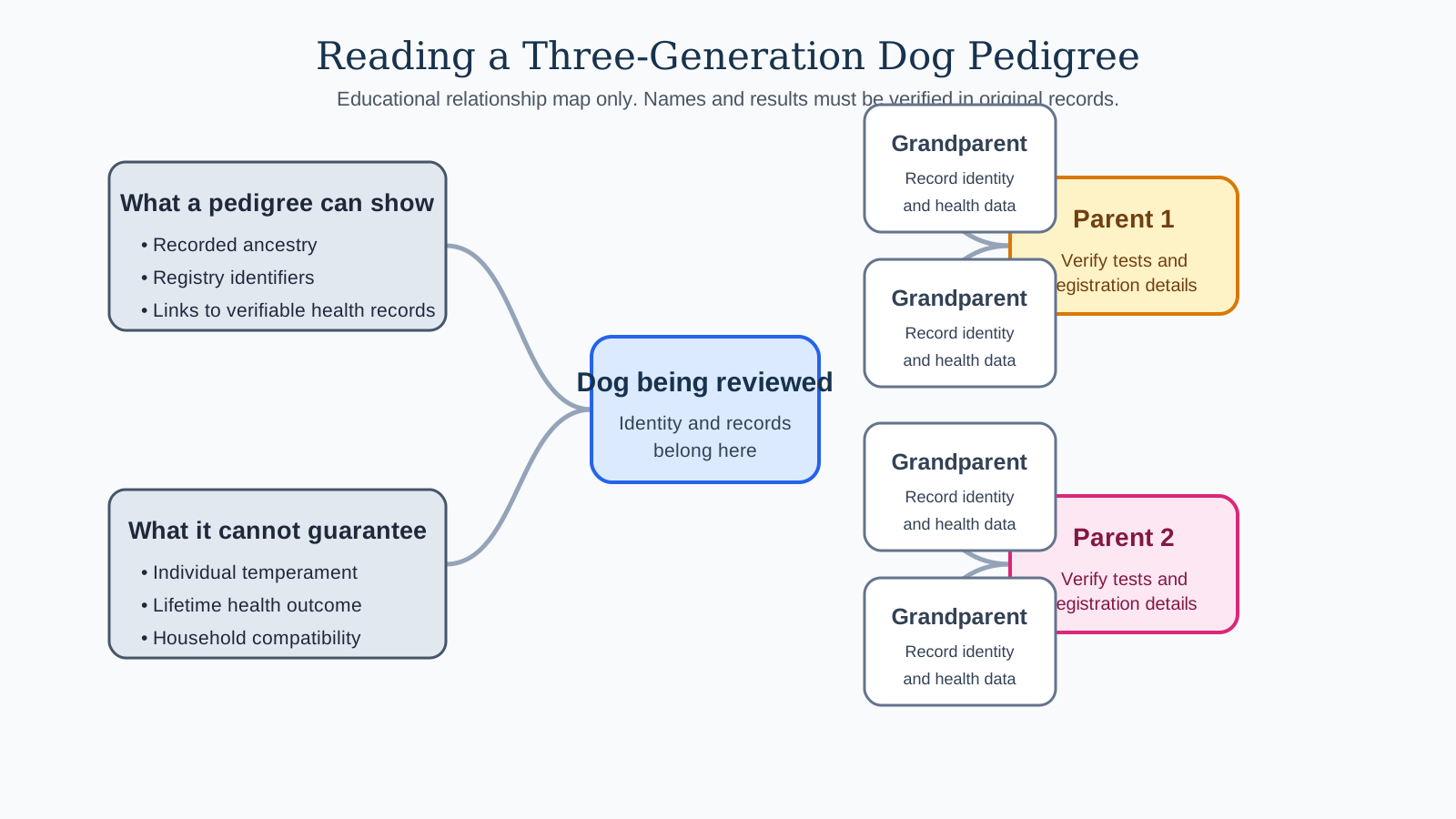
The diagram shows the relationship structure of a three-generation pedigree. It uses generic labels and does not represent a real dog, kennel, health result, or breeding recommendation.
When reading a pedigree, focus on verifiable information. Confirm that registration names and identifiers match the records presented. Ask which health tests apply to that breed and whether results are publicly available. Ask how the breeder makes socialization, placement, and return decisions. A long list of titles does not replace transparent health information, careful rearing, or a willingness to discuss a puppy's limits.
Avoid interpreting a pedigree as a license to make breeding decisions without specialist input. Breeding involves genetics, health, welfare, population diversity, temperament, conformation, and local regulation. Prospective owners can use pedigree information to ask better questions. They should not infer certainty where the evidence cannot provide it.
How to Meet an Individual Dog Before Deciding
For an adult dog, observation can provide more useful information than a generic breed description. Ask the rescue, shelter, foster home, or current owner about handling, feeding, rest, visitors, travel, other dogs, cats, children, unfamiliar places, and any bite or fear history. Ask what has improved, what remains difficult, and what support has helped.
For a puppy, observe the conditions in which the litter is raised. Clean surroundings matter, but social context matters too. A responsible source should be able to discuss the mother, health testing, veterinary records, early handling, socialization practices, and a plan if the placement does not work. Be skeptical of absolute promises such as "never sheds," "perfect with children," "hypoallergenic," or "guaranteed calm."
When a family is concerned about a specific behavior, a qualified trainer or veterinary behavior professional can help distinguish training needs from fear, pain, medical illness, or a safety concern. This beginner dog-training guide and the site's crate-training guide can help with routine-building, but neither replaces an individual behavior assessment.
A Practical Seven-Day Breed-Fit Exercise
Before placing a deposit or completing an adoption, test the proposed routine for one week.
- Schedule the morning and evening care blocks at the times they would actually occur.
- Add one daily training or enrichment block and identify who is responsible.
- Include transport, groceries, school activities, work meetings, travel, and visitors.
- Identify where the dog rests when the door opens, food is prepared, or children play.
- Price food, parasite prevention, grooming, training, routine veterinary care, and an emergency reserve.
- Decide how the household will respond if the dog is fearful, energetic, ill, or unable to be left alone.
- Repeat the exercise for the dog's expected adult size and needs, beyond the puppy stage.
This exercise often narrows a long dog breeds list to a shorter, more honest set of possibilities. It also makes adoption of an adult dog easier to evaluate because the household can compare the dog's known needs against an actual routine.
When to Involve a Veterinarian or Behavior Professional
Contact a veterinarian before acquiring a dog when a household is considering a breed with extreme body shape, a known inherited disease concern, a large dog that may be difficult to handle, or a dog with a history of pain, collapse, breathing difficulty, serious behavior change, or repeated aggression. A veterinarian can explain preventive care, body-condition management, reputable screening records, and questions that need specialist guidance beyond online information.
Seek qualified behavior help before placement if a dog has bitten, repeatedly threatened people, shows severe fear, cannot be safely handled, guards food or space, chases household animals, or becomes distressed when left alone. Early guidance can protect both people and dogs. It can also prevent a family from interpreting a serious safety issue as a normal breed trait.
Frequently Asked Questions
What are the best dog breeds for families?
There is no universal family breed. A useful choice depends on adult supervision, children's ages, the dog's individual history, size, activity needs, handling tolerance, and the household's willingness to train and manage the dog. Meet the individual dog and use a careful introduction plan.
Which dog breeds do not shed?
No dog is entirely free of shedding or allergen exposure. Some coats shed less visibly and require regular clipping or brushing. If someone in the home has allergies, spend time with the individual dog in a realistic setting and seek medical guidance for the person with allergies.
Does a pedigree predict a dog's temperament?
A pedigree provides ancestry information. It may help a buyer investigate health testing and breed history. It does not guarantee an individual dog's temperament, behavior around children, or future health.
Are small dog breeds easier to care for?
Small size can make transport and housing easier, but small dogs still need training, socialization, dental care, safe handling, activity, and preventive veterinary care. Some small breeds have intensive grooming or health needs.
Is a mixed-breed dog a safer choice than a purebred dog?
Neither label guarantees health or behavior. Individual history, body form, known family information, preventive care, and responsible placement all matter. A veterinarian can help an owner plan care for any dog.
How do I find breed-specific health tests?
Start with the breed's parent club and the OFA CHIC program. Ask a veterinarian to explain what each test can and cannot tell you. Verify results through the relevant registry where possible.
Related Guides
- Dog training for beginners
- Dog crate training
- Border Collie care, training, and health
- Veterinary medicine knowledge hub
References and Further Reading
- Morrill K, et al. Ancestry-inclusive dog genomics challenges popular breed stereotypes. Science. 2022.
- MacLean EL, et al. Highly heritable and functionally relevant breed differences in dog behaviour. Proceedings of the Royal Society B. 2019.
- Orthopedic Foundation for Animals, CHIC Program.
- American Kennel Club, Breed Health Testing Requirements.
- American Kennel Club, Health Testing for a Stronger Breed.
- American Kennel Club, History of AKC Breed Groups.
- vonHoldt BM, et al. Tracking footprints of artificial selection in the dog genome. Proceedings of the National Academy of Sciences. 2010.
- World Small Animal Veterinary Association discussion of brachycephalic welfare.
This article is educational and is not a substitute for veterinary diagnosis, treatment, public-health guidance, or regulatory reporting.