Why Is My Cat Pooping in the Sink? Causes and Solutions
By Dr. Zubair Khalid, DVM, MS, PhD ·
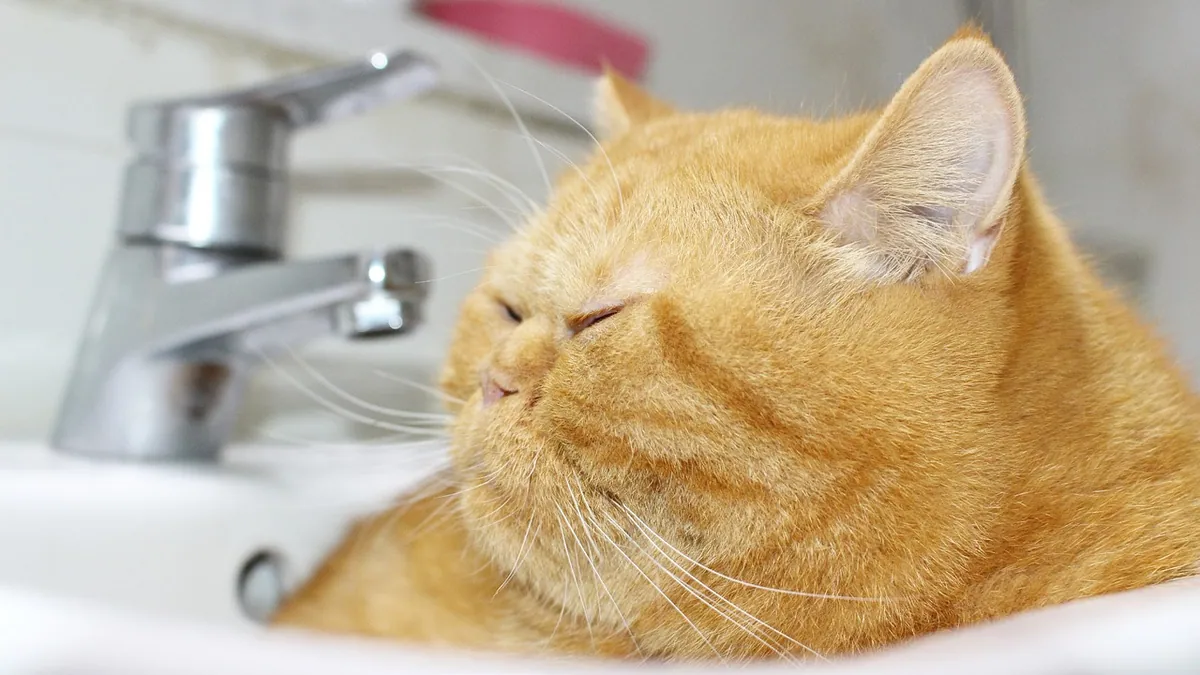
Why is my cat pooping in the sink? Most of the time, a cat chooses a sink because something about the litter box is unpleasant, painful, or stressful, and the sink is clean, cool, and easy to reach. Sometimes the cause is medical, such as constipation or intestinal disease, and sometimes it is behavioral, such as fear, competition with other pets, or a litter box that does not meet your cat's needs. The good news is that this problem is usually solvable once you find the reason.
This article is educational and is not a substitute for veterinary diagnosis or treatment.
Quick Answer
- A sink is smooth, clean, and often cooler than a litter box, which makes it appealing to a cat avoiding a dirty or uncomfortable box.
- House-soiling is the most common behavioral problem in cats and a leading reason owners surrender them to shelters, so this issue deserves a real plan, not punishment [1].
- Medical causes like constipation, diarrhea, arthritis, or intestinal disease must be ruled out first, because a change in elimination behavior is often an early sign of physical disease [2].
- Most cats prefer a large box (at least 50 cm, roughly 20 inches) with clumping clay litter, and giving them that combination reduces house-soiling and unhappy behaviors during elimination [1].
- Scooping daily, fully replacing litter weekly, and providing enough boxes in quiet locations all lower the risk of house-soiling [3][4].
Why Cats Choose the Sink
The sink is a clean, comfortable surface
Cats are fastidious. A sink offers a smooth, hard, often cool surface that stays free of the waste your cat just passed. If the litter box is dirty, the sink looks like a better option. In one large survey of Italian cats, the frequency of scooping and full litter replacement was linked to house-soiling, which supports what most cat owners suspect: cleanliness matters [3].
The sink may be easier on the body
A cat with sore joints, constipation, or anal pain may avoid stepping into a deep litter box or squatting in loose litter. The sink rim is at a comfortable height for many cats, and the flat basin requires less balance. Any cat who associates the litter box with discomfort will look for another spot.
Stress and competition play a role
Cats who share a home with other cats or dogs may feel unable to use a litter box safely. The number of dogs and other cats in the household was associated with house-soiling in a large study of Italian cats [3]. Fearful cats are also more prone to litter box problems than confident cats [5]. A sink in a quiet bathroom can feel like a safer bathroom than a box in a busy hallway.
Some cats simply develop a habit
If your cat once used the sink during a stressful period, a bout of diarrhea, or while the box was unavailable, the behavior can stick. Cats repeat what worked. This is why fixing the underlying trigger early matters.
Medical Causes to Rule Out First
A change in where your cat poops is often one of the first signs of physical disease, and it can also make an existing behavioral problem worse [2]. Your veterinarian will want to check for:
- Constipation or megacolon, which makes passing stool painful
- Diarrhea or colitis, which creates urgency and accidents
- Intestinal parasites or bacterial overgrowth
- Inflammatory bowel disease or intestinal masses
- Arthritis or spinal pain that makes squatting in a box hard
- Anal gland disease or pain around the rectum
- Hyperthyroidism, kidney disease, or diabetes, which can change litter habits and water intake
If your cat is also drinking more than usual, that combination deserves a prompt veterinary visit. You can read more about that sign in Why Is My Cat Drinking So Much Water?.
Loose stool is another clue. If your cat has soft or frequent stool along with the sink behavior, see Cat Diarrhea: Causes, Home Care, and When to Worry. If your cat is straining or not passing stool at all, that is a different and more urgent problem, covered in Cat Not Pooping but Eating Normally: Causes and When to Help.
When Pooping in the Sink Becomes a Problem
Occasional accidents during a stressful event are common. A true problem is when the behavior repeats, when it replaces normal litter box use, or when your cat shows signs of discomfort. House-soiling is the most common problem cat owners face and the main reason cats are surrendered to shelters, so it is worth taking seriously from the start [1].
Watch for these patterns:
- Pooping in the sink every day or most days
- Straining, crying, or taking a long time to pass stool
- Small, hard, dry stools or very loose stool
- Hiding, pacing, or avoiding the litter box entirely
- New fearfulness or aggression around other pets
Fearful cats are more likely to show both house-soiling and litter box fussiness, so anxiety is a real factor, not a character flaw [5].
What to Do Step by Step
Step 1: Get a veterinary exam
Book a visit with your veterinarian. Bring a fresh stool sample if you can. Your vet will decide whether blood work, a fecal test, imaging, or other diagnostics are needed. If a medical cause is found, treating it often resolves the sink behavior on its own. If no medical cause is found, the focus shifts to behavior and environment [2].
Step 2: Fix the litter box setup
This is where most owners see quick improvement.
- Size: Choose a box at least 50 cm (about 20 inches) long. Cats in one study preferred boxes of this size or larger [1].
- Litter: Clumping clay litter was the preferred substrate in the same study [1].
- Number: Provide one box per cat plus one extra, placed in different locations.
- Type: Both covered and uncovered boxes appear in surveys of cat owners, but many cats prefer open boxes because they allow escape and better airflow [4].
- Location: Put boxes in quiet, low-traffic spots with more than one exit route.
- Cleaning: Scoop at least once daily and fully replace litter at least weekly. Cleaning frequency was linked to house-soiling risk in a large cat survey [3][4].
Step 3: Make the sink less appealing
Once the box is right, block the sink between uses. Keep the drain stopper in, place a shallow tray or a few inches of water in the basin, or close the bathroom door. Do not scare your cat. The goal is to remove the option, not to create fear.
Step 4: Reduce stress
Add hiding spots, vertical space, and separate feeding and watering stations. If you have multiple cats, provide separate resources so no cat has to guard a box. Pheromone diffusers and calming supplements may help some cats, but ask your veterinarian which options fit your cat.
Step 5: Reward litter box use
Praise your cat calmly or offer a treat after they use the box. Never punish accidents. Clean soiled sinks with an enzymatic cleaner made for pet waste so no scent remains.
Step 6: Track progress
Keep a simple log of when and where accidents happen, what the stool looks like, and what changed that day. This record helps your veterinarian or behavior professional spot patterns.
What Not to Do
- Do not punish your cat. Yelling, spraying water, or rubbing your cat's nose in waste increases fear and can make house-soiling worse [5].
- Do not assume it is spite. Cats do not plan revenge. They respond to discomfort, stress, and environment.
- Do not switch to a tiny box or a new litter all at once. Sudden changes can trigger more accidents. Make one change at a time.
- Do not use a covered box just because it looks tidy. Some cats feel trapped in covered boxes, especially in multi-pet homes [4].
- Do not wait months to see a vet. A behavior change is often an early sign of disease, and earlier treatment is easier [2].
- Do not rely on "training" alone if pain or illness is present. Medical problems must be treated or ruled out before behavior work can succeed [2].
When to Involve a Veterinarian or Behavior Professional
Call your veterinarian if the sink behavior starts suddenly, if your cat strains or cries while passing stool, if you see blood or mucus in the stool, or if your cat is losing weight. If your veterinarian finds no medical cause, ask for a referral to a veterinary behaviorist or a certified cat behavior consultant. These professionals can build a plan for fear, multi-cat tension, or long-standing habits.
If your cat is also urinating outside the box, that is a separate but related issue. See Why Is My Cat Pooping Outside the Litter Box? Causes and Solutions and Why Is My Cat Peeing on My Clothes? Causes and Solutions for more detail.
Limitations and When to Contact a Veterinarian
This article cannot tell you what is causing your cat's behavior. Only a veterinarian who examines your cat can do that, and individual cases always need a veterinarian's input.
Contact your veterinarian the same day if your cat:
- Strains to poop for more than a few minutes with little or no stool produced
- Cries out or vomits while trying to pass stool
- Has not pooped in 24 to 48 hours
- Has bloody or black stool
- Is hiding, lethargic, or not eating
Go to an emergency clinic now if your cat:
- Is open-mouth breathing, collapsing, or unresponsive
- Has a swollen, painful abdomen
- Is repeatedly vomiting and cannot keep water down
- Has not urinated at all in 24 hours
Schedule a routine visit soon if the sink behavior is new, if your cat's stool has changed, or if the behavior has lasted more than a few days despite a clean, large, well-placed litter box.
Frequently Asked Questions
Should I punish my cat for pooping in the sink?
No. Punishment increases fear and stress, and fearful cats are more likely to have litter box problems [5]. Instead, remove access to the sink and fix the litter box setup.
Can stress alone cause my cat to poop in the sink?
Yes. Stress from other pets, household changes, or a dirty box can trigger house-soiling [3]. Fearful cats are especially prone to litter box issues [5].
Will a bigger litter box really help?
Often, yes. Cats in one study preferred boxes at least 50 cm long, and combining a large box with clumping clay litter reduced house-soiling and unhappy behaviors during elimination [1].
How often should I clean the litter box?
Scoop at least once daily and fully replace the litter at least weekly. Cleaning frequency was associated with house-soiling risk in a large survey of cat owners [3][4].
When should I see a veterinarian?
See your veterinarian as soon as the behavior starts, especially if your cat strains, cries, or has changes in stool. A change in elimination behavior is often an early sign of physical disease [2].
Related Articles
- Why Is My Cat Pooping Outside the Litter Box? Causes and Solutions
- Why Is My Cat Peeing on My Clothes? Causes and Solutions
- Cat Diarrhea: Causes, Home Care, and When to Worry
- Why Is My Cat Drinking So Much Water?
- Cat Not Pooping but Eating Normally: Causes and When to Help
- Why Does My Cat Have Gas?
- Why Is My Cat Not Pooping in the Litter Box? Solutions
- Cat Pooping on Carpet, Bed, or Floor: Causes and Cleaning
- Cat Pooping Under the Bed or Couch: Why and How to Stop It
References
- Litter box size and litter type preference and their associated behavioral changes in cats. The Journal of veterinary medical science, 2025.
- Cat Inappropriate Elimination and its Interaction with Physical Disease. The Veterinary clinics of North America. Small animal practice, 2024.
- Factors associated with house-soiling in Italian cats. Journal of feline medicine and surgery, 2023.
- Litter Management Practices and House-Soiling in Italian Cats. Animals : an open access journal from MDPI, 2023.
- Feline litter box issues associate with cat personality, breed, and age at sterilization. Journal of the American Veterinary Medical Association, 2023.