Dog Regurgitating Food: When It's Normal and When to Worry
By Dr. Zubair Khalid, DVM, MS, PhD ·
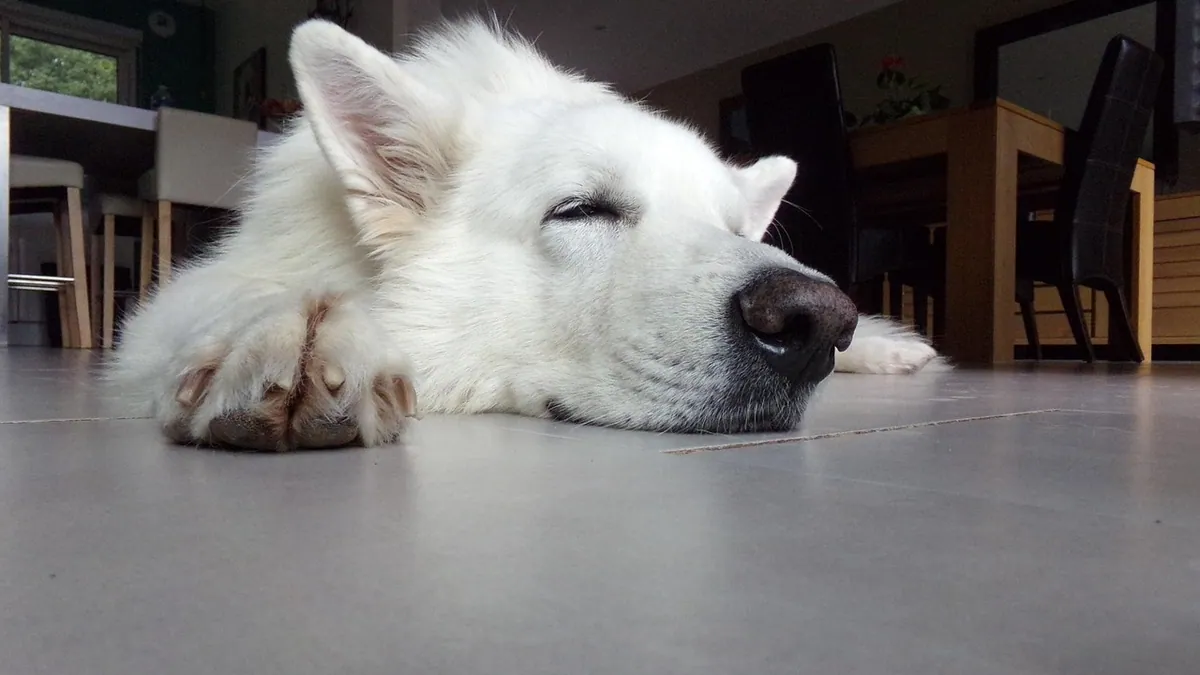
Is it normal for dogs to regurgitate food? Occasionally, yes. A dog that eats too fast and brings up undigested food minutes later, then acts completely fine, is often showing a harmless habit. But regurgitation can also signal a serious problem, so the pattern matters more than any single episode.
This article is educational and is not a substitute for veterinary diagnosis or treatment.
Quick Answer
- Regurgitation is a passive, effortless spill of undigested food, often tube-shaped and coated in saliva. Vomiting is active, with retching, heaving, and usually digested or bile-stained contents.
- A one-off episode in a happy, playful dog that eats quickly is common and often harmless.
- Repeated regurgitation, especially with weight loss, coughing, or trouble breathing, needs a veterinary visit.
- Puppies regurgitate more often than adults, but frequent episodes in a puppy still deserve a checkup.
- Never force food, water, or home remedies into a dog that is actively regurgitating or vomiting.
What Regurgitation Looks Like and What Is Normal
Regurgitation is the backward movement of food from the esophagus, the muscular tube that carries food from the mouth to the stomach. The food has usually not reached the stomach, so it looks much like it did going down. You may see whole kibble, softened chunks, or a cylindrical tube of food wrapped in clear or white saliva. There is little or no bile staining, and often no stomach acid smell.
The key feature is effort. A regurgitating dog usually lowers its head, opens its mouth, and food simply falls out. There is no retching, no heaving, no repeated abdominal contractions. Many dogs look surprised, then walk away and act normal. Some lick their lips once and go back to whatever they were doing.
Vomiting is different. A vomiting dog usually shows nausea first. You may see drooling, lip licking, swallowing, and restlessness. Then the belly contracts hard, the dog retches, and the stomach contents come up with force. Vomit is often partly digested, may be yellow from bile, and may be repeated several times in a row.
Timing helps you sort out what you saw. Regurgitation tends to happen soon after eating, often within minutes to a couple of hours. Vomiting can happen at any time, including on an empty stomach in the early morning.
So is it normal for dogs to regurgitate food? A single episode in a dog that is bright, drinking, and holding down the rest of its meals is common. It becomes a concern when it repeats, when it happens with every meal, or when your dog shows other signs of illness.
Common Causes of Regurgitation in Dogs
Many different problems can cause food to come back up. Some are mild and easy to manage. Others are serious and get worse without treatment. The table below groups the most common causes and what usually points to each one.
| Cause | Typical clues | How urgent |
|---|---|---|
| Eating too fast | Happens right after meals, dog is otherwise well, often a greedy eater or in a multi-dog home | Low, try feeding changes |
| Megaesophagus (a weak, dilated esophagus) | Regurgitation with most meals, poor weight gain, coughing, sometimes a gurgling sound when swallowing | Urgent, needs diagnosis |
| Esophagitis (inflammation of the esophagus) | Regurgitation after pills, bones, or harsh food, sometimes drooling or swallowing discomfort | Same-day to urgent |
| Esophageal foreign body or stricture | Sudden onset, trouble swallowing, repeated attempts, sometimes pain | Emergency |
| Gastrointestinal disease (ulcers, inflammation, obstruction) | Vomiting and regurgitation together, appetite changes, diarrhea, belly discomfort | Urgent |
| Post-surgical or post-anesthesia effects | Regurgitation after major surgery, especially spinal or abdominal procedures | Tell your vet promptly |
| Neurologic or muscular disease | Weakness, wobbliness, changes in bark or gait, regurgitation | Urgent |
| Toxin exposure | Sudden regurgitation or vomiting with weakness, wobbliness, or collapse | Emergency |
Eating Too Fast
This is the most common harmless cause. A dog that gulps food without chewing can swallow air along with the kibble. The food sits in the esophagus, stretches it, and comes back up minutes later. The dog then often eats the regurgitated food again if you let it.
Megaesophagus
Megaesophagus is a condition where the esophagus loses muscle tone and becomes a floppy, dilated tube. Food and water pool there instead of moving to the stomach. Dogs with megaesophagus regurgitate frequently, lose weight, and are at risk of aspiration pneumonia when food or liquid goes down the wrong way. This condition needs a veterinary diagnosis and a managed feeding plan.
Esophagitis and Foreign Bodies
Inflammation of the esophagus can follow a stuck pill, a bone, or a harsh material. A foreign body, such as a bone fragment or toy piece, can partially block the esophagus and cause sudden, repeated regurgitation. These cases often need imaging and sometimes endoscopy to remove the object.
Post-Surgical and Post-Anesthesia Regurgitation
Regurgitation is a known complication after some surgeries. In a study of 126 dogs undergoing ventral slot decompression for cervical disk herniation, 23% developed gastrointestinal signs during hospitalization. Regurgitation occurred in 48% of those affected dogs, and signs lasted 1 to 2 days in 85% of them [1]. This shows that regurgitation can be a short-term, self-limiting effect of anesthesia, surgery, and hospitalization, but it still needs to be reported to your veterinary team.
Toxin Exposure
Some toxins cause vomiting and regurgitation along with neurologic signs. Xylitol, a sweetener in some sugar-free gums, can cause low blood sugar within 10 to 15 minutes of ingestion, with vomiting, unsteadiness, and possible seizures [2]. If you suspect your dog ate gum or another toxin, call your veterinarian or a pet poison hotline right away. Do not induce vomiting unless a professional tells you to, because it can make some poisonings worse [2].
Red Flags That Make It an Emergency
Call an emergency clinic now if you see any of these:
- Repeated regurgitation or vomiting that will not stop
- A bloated, painful, or hard belly
- Unproductive retching, especially in a large-breed dog
- Trouble breathing, coughing, or noisy breathing after regurgitation
- Weakness, collapse, wobbliness, or seizures
- Suspected toxin or gum ingestion
- A known or suspected swallowed object
- Blood in the regurgitated material or black, tarry stool
- A puppy that is lethargic, not nursing, or losing weight
These signs can point to aspiration pneumonia, a blockage, a toxin, or another condition that gets worse quickly. Do not wait to see if it passes.
Safe Things You Can Do at Home While You Wait
If your dog regurgitated once and is acting normal, you can take a few careful steps.
- Withhold food for a short time, usually 1 to 2 hours, then offer a small meal. Your veterinarian can give you a specific plan for your dog.
- Feed smaller, more frequent meals instead of one large meal.
- Slow the eating speed. Use a puzzle bowl, a muffin tin, or scatter kibble on a snuffle mat.
- Keep your dog upright and calm for 10 to 15 minutes after eating. Avoid rough play or jumping right after meals.
- Offer water in small amounts instead of a large bowl at once.
- Do not give human medications, antacids, or home remedies unless your veterinarian prescribes them.
- Do not force food or water into a dog that is still regurgitating.
If your dog refuses food for a day or more, read Dog Not Eating for One Day: When to Start Worrying for guidance on when to call. If your dog has diarrhea along with the regurgitation, Dog Diarrhea but Acting Normal: Should You Worry? can help you decide what to do next.
What Your Veterinarian Will Check and Test
Your veterinarian will start with a full history. They will ask when the regurgitation happens, what it looks like, how often it occurs, and whether your dog is losing weight or coughing. A video of the episode on your phone is often more useful than a description.
The physical exam checks hydration, body condition, heart and lung sounds, and neurologic function. Your vet will also watch your dog swallow if possible.
Common tests include:
- Blood work to check organ function, electrolytes, and blood sugar
- Chest X-rays to look for aspiration pneumonia, a dilated esophagus, or a foreign body
- A barium swallow study or fluoroscopy to watch food move down the esophagus
- Endoscopy to look inside the esophagus and stomach
- Ultrasound of the abdomen if vomiting or gastrointestinal disease is suspected
If your dog had recent surgery, your vet may also check for postoperative ileus, a slowdown of the gut. A study of 469 dogs and cats after foreign body surgery found that nasogastric tubes were used to measure gastric residual volumes and help identify ileus and manage nutrition in anorexic patients [3]. This kind of monitoring is done in the hospital, not at home.
Treatment depends on the cause. Megaesophagus may need a special feeding chair and a specific food consistency. Esophagitis may need medication to reduce acid and protect the esophagus lining. A foreign body may need removal. Toxin exposure needs immediate decontamination and supportive care.
Is It Normal for Puppies to Regurgitate Food?
Puppies regurgitate more often than adult dogs for several reasons. They eat fast, they explore everything with their mouths, and their digestive systems are still maturing. A puppy that regurgitates once after a fast meal and then plays normally is often fine.
That said, frequent regurgitation in a puppy is not something to ignore. Puppies dehydrate faster than adults and have less reserve. If your puppy regurgitates most meals, is not gaining weight, coughs, or seems tired, see your veterinarian promptly. Congenital megaesophagus and other birth defects can show up in puppies, and early diagnosis makes a big difference.
If your puppy is not eating well, My Dog Won't Eat: When to Worry covers the signs that mean a vet visit is needed.
Regurgitation vs Vomiting: How to Tell Them Apart
This is the question owners ask most often. The table below gives you a quick way to compare.
| Feature | Regurgitation | Vomiting |
|---|---|---|
| Effort | Passive, food falls out | Active, retching and heaving |
| Warning signs | Little or none | Drooling, lip licking, restlessness |
| Contents | Undigested food, saliva, tube-shaped | Digested food, bile, sometimes blood |
| Timing | Soon after eating | Any time, often early morning on empty stomach |
| Dog's mood after | Usually normal | Often tired, nauseated, or clingy |
If you are not sure which one you saw, record a video and show your veterinarian. The distinction changes the list of likely causes and the tests your vet will recommend.
Prevention and Monitoring
You cannot prevent every cause of regurgitation, but you can lower the risk for the common ones.
- Feed smaller meals more often. Two to four small meals a day are easier on the esophagus than one large meal.
- Slow down fast eaters with a puzzle feeder or a wide, flat dish.
- Keep your dog upright for 10 to 15 minutes after meals if regurgitation is a known issue.
- Avoid bones, hard chews, and table scraps that can irritate or block the esophagus.
- Keep gum, medications, and small objects out of reach. Xylitol poisoning can be fatal if treatment is delayed [2].
- Track episodes in a notebook or phone app. Note the time, what your dog ate, and what the material looked like.
- Weigh your dog weekly if regurgitation is ongoing. Weight loss is a clear signal to call your vet.
Some regurgitation is linked to underlying disease instead of feeding habits. A study of 97 healthy Chihuahuas found mitral regurgitation in 38% of the dogs, and it was mild in most of them [4]. That study looked at the heart valve, not the esophagus, so it does not explain food regurgitation. It does show that regurgitation as a medical term can refer to different body systems, which is why your veterinarian will ask careful questions to sort out what is happening in your dog.
Limitations and When to Contact a Veterinarian
This article cannot tell you what is causing your dog's regurgitation. Only a veterinarian who examines your dog can do that. Individual cases need a veterinarian, and the timing below is a guide, not a rule.
Contact your veterinarian the same day if:
- Your dog regurgitates more than once in 24 hours
- Your dog is eating less or losing weight
- You see coughing, gagging, or noisy breathing after meals
- Your dog had recent surgery or anesthesia
- Your puppy is regurgitating regularly
Go to an emergency clinic now if:
- Regurgitation or vomiting will not stop
- Your dog is weak, wobbly, collapsing, or having seizures
- You suspect gum, xylitol, or another toxin
- Your dog has a bloated or painful belly
- Your dog is struggling to breathe
Schedule a routine visit if:
- Regurgitation happens occasionally but your dog is otherwise well
- You want to rule out megaesophagus or other chronic conditions
- Your dog has a known condition and you need a feeding plan
Frequently Asked Questions
Should I feed my dog right after it regurgitates?
Wait a short time, usually 1 to 2 hours, then offer a small meal if your dog is acting normal. If your dog regurgitates again, stop feeding and call your veterinarian. A dog that cannot keep any food down needs medical attention.
Can I give my dog water after regurgitation?
Yes, offer small amounts of water instead of a full bowl. Large gulps can trigger another episode, especially in dogs with esophageal problems. If your dog cannot keep water down, call your veterinarian right away.
Does regurgitation always mean megaesophagus?
No. Eating too fast is a much more common cause, especially in dogs that gulp their food. Megaesophagus is one possibility among many, and your veterinarian will use imaging and a swallowing study to confirm or rule it out.
Can regurgitation cause pneumonia in dogs?
Yes. Food or liquid that goes down the wrong way can enter the airway and lead to aspiration pneumonia. This is a serious risk for dogs with megaesophagus and for dogs that regurgitate while lying down. Coughing, fever, and trouble breathing after regurgitation are signs to seek care right away.
How long can a dog go without eating after regurgitation?
A healthy adult dog can usually skip a meal or two without harm, but a puppy or a dog with other health problems should not go long without food. If your dog has not eaten for a full day, call your veterinarian. If your dog is also vomiting, weak, or not drinking, go to an emergency clinic.
Related Articles
- Dog Not Eating: When to Worry and What to Do
- Dog Not Eating for One Day: When to Start Worrying
- My Dog Won't Eat: When to Worry
- Dog Diarrhea but Acting Normal: Should You Worry?
- Dog Not Eating But Acting Normal: When to Wait and When to Call
- Dog Not Eating for 24 Hours: When to Start Worrying
- Regurgitation in Dogs: Causes, Treatment, and When to Worry
- Is It Normal for Puppies to Throw Up? When to Worry
- Is It Normal for Dogs to Burp? When It Signals a Problem
References
- Gastrointestinal complications occur in dogs with intervertebral disk herniation undergoing ventral slot decompression but are mostly self-limiting. Journal of the American Veterinary Medical Association, 2026.
- My Dog Just Ate Gum Should I Be. Pet Poison Helpline.
- Use of gastric residual volume measured by nasogastric feeding tubes for management of dogs and cats after gastrointestinal foreign body surgery: a retrospective study. Frontiers in veterinary science, 2026.
- Prevalence of mitral valve regurgitation in 97 apparently healthy Chihuahua dogs. Journal of veterinary cardiology : the official journal of the European Society of Veterinary Cardiology, 2025.