Why Is My Cat Losing a Canine Tooth? Causes and Next Steps
By Dr. Zubair Khalid, DVM, MS, PhD ·
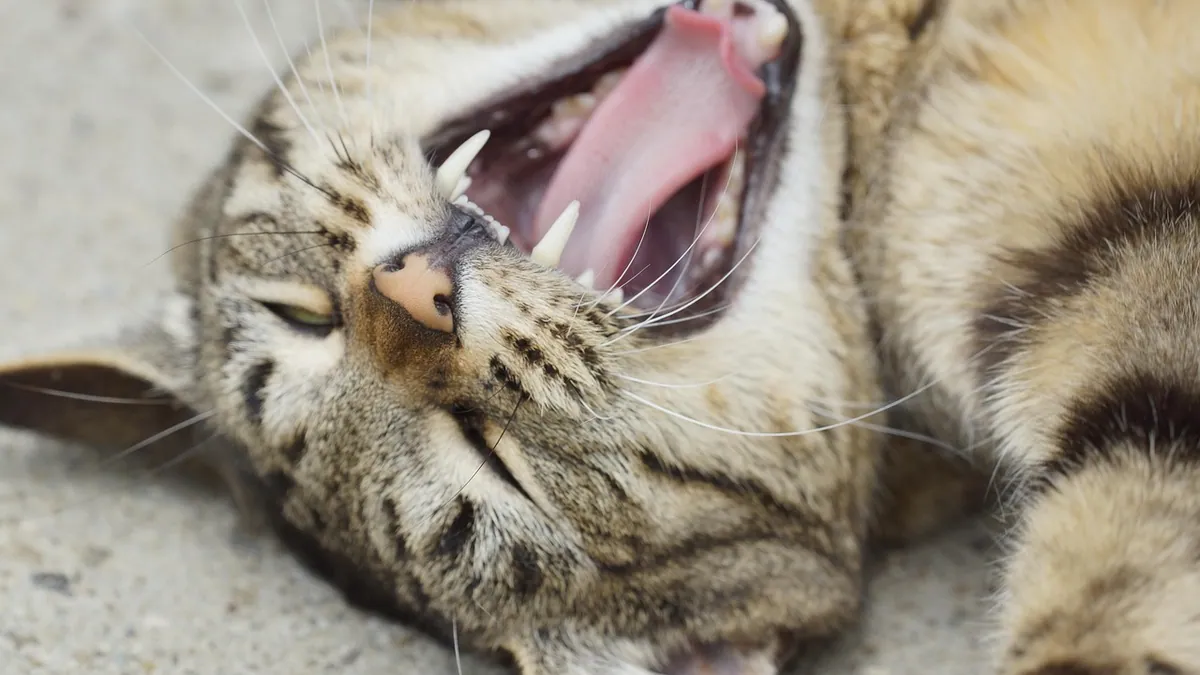
A cat losing a canine tooth is usually a sign of dental disease, not a normal part of aging. Cats do not shed adult teeth the way kittens shed baby teeth, so a loose or missing fang almost always points to resorption, gum disease, or an injury. The socket and the remaining teeth need a veterinary exam, because problems in one tooth often mean problems elsewhere in the mouth.
This article is educational and is not a substitute for veterinary diagnosis or treatment.
Quick Answer
- Adult cats have 30 permanent teeth, and those teeth are meant to last a lifetime. Kittens lose baby teeth, but adult tooth loss is not normal [1].
- Tooth resorption is one of the most common dental diseases in cats and a frequent reason a canine loosens or breaks [2][3].
- Periodontal (gum) disease destroys the tissue and bone that hold teeth in place, and it can lead to tooth loss if untreated [4].
- A broken or missing canine leaves an open socket or a sharp edge that can hurt, bleed, or get infected. Call your vet instead of waiting.
- Never pull a loose tooth at home. Only a veterinarian should remove a tooth, and most extractions require anesthesia [4].
What a Losing Canine Tooth Looks Like in Cats
The canine teeth (the four long fangs, two on top and two on the bottom) are the teeth you notice first. When something is wrong, you may see one of these signs.
- The tooth is visibly loose and shifts when your cat eats or when you gently touch it.
- The tooth has broken, leaving a jagged edge or a hole.
- The tooth has fallen out completely, and you find it on the floor or in the food bowl.
- The gum line looks red, swollen, or receded, and you can see the tooth root.
- Your cat drools, chews on one side, turns the head while eating, or drops food.
- Your cat avoids hard food, eats less, or has bad breath.
Some cats show almost no signs. Cats are good at hiding oral pain, so a missing tooth is sometimes the first clue you get.
What Is Normal for Cat Teeth
Kittens have 26 baby teeth that start coming in at 2 to 4 weeks of age. Permanent teeth usually start appearing around 4 to 7 months, and most cats end up with 30 adult teeth [1]. Once those adult teeth are in, they should stay. Losing an adult canine is not a normal stage of development.
Why Is My Cat Losing a Canine Tooth? Main Causes
Several conditions can cause a cat to lose a canine tooth. The table below gives the typical clues and how quickly you should act.
| Cause | Typical clues | How urgent |
|---|---|---|
| Tooth resorption | Loose tooth, pain when eating, gum overgrowth, tooth looks pink or has a defect at the gum line | Soon. Painful and progressive, needs dental X-rays |
| Periodontal disease | Red, swollen, bleeding gums, bad breath, receding gums, exposed roots, loose teeth | Soon. Infection and bone loss get worse without treatment |
| Trauma | Sudden break after a fall, bite, or hitting the mouth, bleeding, swelling, drooling | Same day if bleeding or the tooth is fractured |
| Fracture from chewing | Broken tip or split tooth, often after chewing hard objects | Soon. Exposed pulp is painful and can get infected |
| Cancer or other growths | Swelling or mass near the tooth, loose tooth with no gum disease, weight loss | Same day to urgent. Needs prompt evaluation |
Tooth Resorption
Tooth resorption is one of the most common dental diseases in cats, and it is painful [2]. The body's own cells break down the tooth structure from the inside or at the root surface, which weakens the tooth until it loosens or breaks. The cause is not fully understood, but age, breed, other oral diseases, and environmental factors are suspected [2]. Bacteria in the mouth likely play a role too [3].
Resorption can affect any tooth, including the canines. A cat with resorption may show no obvious signs at first, or may show pain only when the tooth is touched. Dental X-rays are needed to see what is happening below the gum line, because much of the damage is hidden.
Periodontal Disease
Periodontal disease is infection and inflammation of the tissues around the teeth [4]. Plaque and bacteria build up at and below the gum line, and the infection damages the gums, the ligaments that anchor teeth, and the surrounding bone [4]. Over time, the tooth loses its support and becomes loose or falls out [4][5].
Signs include red, swollen, or bleeding gums, bad breath, drooling, chewing to one side, and reluctance to eat [5]. You may also see receding gums, exposed tooth roots, and mobile teeth [5]. In severe cases, a cat can lose one or more teeth [5]. Periodontal disease is the most common reason cats need tooth extractions, and it becomes more common with age [6].
Trauma and Fractures
A fall, a car accident, a fight with another animal, or a hard blow to the face can break or knock out a canine. Chewing on very hard objects can also crack a tooth. A fractured tooth may expose the pulp, which is the nerve and blood supply inside the tooth. That is painful and can become infected.
If a tooth is knocked out completely, the socket may bleed. Do not try to push the tooth back in. Call your veterinarian right away for advice.
Other Causes
Less common causes include oral tumors, cysts, and severe infections. A loose canine with no gum disease and no history of trauma deserves a close look, because growths in the mouth can loosen teeth as they expand.
Red Flags That Make It an Emergency
Call your veterinarian immediately or go to an emergency clinic if you see any of these.
- Bleeding from the mouth that does not stop within a few minutes of gentle pressure.
- A tooth that is hanging by tissue, or a jaw that looks shifted or broken.
- Swelling around the eye, under the eye, or along the jaw.
- Trouble breathing, gagging, or a swollen tongue or throat.
- Your cat cannot close the mouth or is drooling heavily and cannot swallow.
- Your cat has not eaten or drunk for more than 24 hours.
- Collapse, weakness, or signs of severe pain such as crying out when touched.
These signs can mean serious injury or infection that needs same-day care.
What You Can Do at Home While You Wait
You cannot fix a broken or loose tooth at home, but you can keep your cat comfortable and avoid making things worse.
- Do not pull or wiggle the tooth. You could break the root or cause bleeding and infection.
- Do not give human pain relievers. Many common pain medications are toxic to cats. Ask your veterinarian before giving anything.
- Offer soft food. Wet food or softened kibble is easier on a sore mouth.
- Keep the water bowl fresh and easy to reach.
- Check the mouth gently with a flashlight, but stop if your cat resists.
- Note when you first noticed the problem and any other signs, such as bad breath, drooling, or eating less. This helps your vet.
If your cat has severe gum disease, brushing can be painful, so ask your veterinarian before you start brushing [5]. For general oral care tips, see Prevent Dental Problems In Cats.
What Your Veterinarian Will Check and Test
Your veterinarian will start with a full physical exam, including the mouth. They will check each tooth for looseness, fractures, and resorption, and they will look at the gums for redness, swelling, bleeding, and recession [5].
Most cats with dental disease need dental X-rays. X-rays show the roots and the bone around the teeth, which is where resorption and periodontal damage often hide. Your vet may also recommend blood work to check your cat's overall health before anesthesia.
A professional dental cleaning and any extractions require anesthesia [4]. Cleanings done without anesthesia may make the teeth look better, but they do not treat the plaque below the gum line, which is the real problem [4]. During the procedure, your vet can remove damaged teeth, treat infected tissue, and take X-rays of the whole mouth.
If your cat has other signs, such as weight loss or poor coat, your vet may look for related conditions. Losing weight is common with dental pain, and it can have other causes too. See Why Is My Cat Losing Weight? for more on that sign.
Prevention and Monitoring
You cannot prevent every dental problem, but you can lower the risk and catch issues early.
- Brush your cat's teeth regularly to remove plaque. Use only tooth gel or toothpaste made for cats, because human products can be toxic to cats [5]. Most cats can be trained to accept brushing over time [5].
- Ask your vet how often your cat needs a professional dental exam and cleaning. The schedule depends on your cat's age, breed, and dental history.
- Check the mouth at home. Lift the lip and look at the gums and teeth once a week. Look for redness, tartar, broken teeth, and bad breath.
- Watch for changes in eating. Dropping food, chewing on one side, or refusing hard food can be an early sign of mouth pain [5].
- Keep up with wellness visits. Periodontal disease and tooth resorption both become more common with age [2][6].
Some breeds may be more prone to tooth resorption than others, and brachycephalic cats (flat-faced breeds) may develop more advanced lesions at a younger age [7]. If your cat is one of those breeds, ask your vet about early dental screening.
Dental disease does not stay in the mouth. Moderate to advanced periodontitis is linked to increased oxidative stress in cats, which is a possible link to other health problems [8]. Periodontal disease also changes the bacteria in the mouth [9]. Treating dental disease helps your cat's whole body, not just the teeth. For a broader look at dental care, see Dental Disease In Dogs And Cats.
Limitations and When to Contact a Veterinarian
This article cannot tell you why your cat lost a tooth. Only a veterinarian can examine the mouth, take X-rays, and make a diagnosis. Individual cases need a veterinarian, because the right treatment depends on the cause, your cat's age, and your cat's overall health.
Contact your veterinarian the same day if:
- A tooth is broken, loose, or missing and you do not know why.
- There is bleeding, swelling, or a bad smell from the mouth.
- Your cat is drooling, chewing on one side, or dropping food.
- Your cat has bad breath, red gums, or visible tartar.
Go to an emergency clinic now if:
- Bleeding will not stop.
- The jaw looks broken or misaligned.
- There is swelling around the eye or under the jaw.
- Your cat is having trouble breathing or swallowing.
- Your cat is in severe pain or has collapsed.
Schedule a routine visit if:
- You noticed a missing tooth but your cat seems comfortable.
- Your cat has mild bad breath or a little tartar.
- It has been more than a year since the last dental exam.
Do not wait to see if a loose tooth falls out on its own. A damaged tooth can be painful, and the socket can become infected. Early care is easier on your cat and often less expensive than waiting.
Frequently Asked Questions
Can a cat's canine tooth fall out on its own?
Yes, a canine can fall out on its own, usually because of tooth resorption or advanced periodontal disease. But that does not mean the problem is over. The socket can be painful or infected, and other teeth are often affected too. Your cat needs a veterinary exam and likely dental X-rays.
Is it normal for an older cat to lose teeth?
No, losing teeth is not a normal part of aging. Older cats are more likely to have periodontal disease and tooth resorption, and both can lead to tooth loss if untreated [2][6]. Age raises the risk, but it does not make tooth loss normal.
What should I do if my cat's broken canine tooth is not bleeding?
Call your veterinarian and schedule an exam. A broken tooth can expose the pulp, which is painful and can become infected even without bleeding. Keep your cat on soft food and do not give any human pain medication in the meantime.
Will my cat be able to eat without a canine tooth?
Most cats eat well after a canine tooth is removed or lost, especially once the mouth has healed and the pain is gone. Cats use their canines for grasping, but they can manage with the remaining teeth. Your veterinarian will talk with you about diet and comfort during recovery.
How much does it cost to treat a cat's dental problem?
Costs vary widely by clinic, region, and the treatment needed, so there is no single number. A dental exam, X-rays, anesthesia, cleaning, and possible extraction are usually billed separately. Ask your veterinarian for an estimate before the procedure so you can plan.
Can I prevent my cat from losing more teeth?
You can lower the risk with regular tooth brushing using cat-safe products, professional dental cleanings, and routine exams [5]. Catching gum disease early matters, because periodontitis is almost always the result of untreated gingivitis [5]. Ask your vet to set a dental care plan for your cat.
Related Articles
- Dental Disease In Dogs And Cats
- Why Is My Cat Losing Hair?
- Prevent Dental Problems In Cats
- Why Is My Cat Losing Weight?
- Why Is My Dog Losing Hair?
- Cat Hair Loss: Causes and When to See a Vet
- Why Is My Cat Losing Teeth? Causes by Age
- Missing Teeth in Cats: Causes and What to Do
- Cat Losing a Tooth or Chipped Tooth: What to Do
References
- Dental Development of Cats - Cat Owners. Merck Veterinary Manual.
- A large case-control study indicates a breed-specific predisposition to feline tooth resorption. Veterinary journal (London, England : 1997), 2024.
- Microbiome analysis of feline odontoclastic resorptive lesion (FORL) and feline oral health. Journal of medical microbiology, 2021.
- Dental Disorders of Cats - Cat Owners. Merck Veterinary Manual.
- Feline Dental Disease. Cornell University College of Veterinary Medicine.
- The prevalence of reasons for tooth extraction in cats. Frontiers in veterinary science, 2025.
- Association of Skull Type, Diet, and Chronic Gingivostomatitis with Tooth Resorption in Cats Receiving Dental Treatment. Animals : an open access journal from MDPI, 2026.
- Moderate to advanced periodontitis contributes to increased oxidative stress in cats: a case-control study. BMC veterinary research, 2024.
- Impact of Periodontal Disease on the Oral Microbiome of Cats. Current microbiology, 2025.