French Poodle: Breed Guide and Care
By Dr. Zubair Khalid, DVM, MS, PhD ·
French Poodle is an informal name for Poodles. The practical care question is not coat type. It is size and individual health. Toy Poodles have strong eye and forelimb signals in the veterinary literature [1][2]. Miniature Poodles have been reported with chronic digestive disease and a rare liver vascular condition [3][4]. Standard Poodles appear in foodborne infection and senior bladder cancer case reports [5][6]. This guide turns those signals into daily checks, owner decisions, and clear reasons to call a veterinarian.
This article is educational and is not a substitute for veterinary diagnosis or treatment.
At a Glance
| Area | Do today | Why it matters |
|---|---|---|
| Eyes | Check for redness, cloudiness, squinting, or bumping into objects. Ask about an eye exam. | Toy Poodles were the most frequently reported breed for ophthalmic complaints in a survey of ophthalmologists [1]. |
| Digestion | Track stool, appetite, vomiting, and weight. Report chronic changes. | Miniature Poodles had one of the highest relative risks for chronic enteropathy in a hospital study [3]. |
| Urine | Watch for blood, straining, small urine volumes, or repeated attempts to urinate. | A Toy Poodle case required surgery for bladder stones after two months of urinary signs [7]. |
| Bones | Reduce repeated jumping from furniture or high surfaces. | A biomechanical model found higher stress in Toy Poodle forelimbs than Dachshund forelimbs during simulated jump landing [2]. |
| Food | Avoid raw cervid meat. | A Standard Poodle developed Hammondia heydorni infection after eating raw elk meat [5]. |
| Medications | Lock away fluorouracil 5% cream and all human prescriptions. | A Labrador-poodle cross developed severe toxicity after ingesting fluorouracil [8]. |
| Abdomen | Report new swelling or fluid buildup. | A Miniature Poodle with ascites was diagnosed with primary hypoplasia of the portal vein [4]. |
| Senior bladder | Report blood in urine, straining, or changed urination habits. | A Poodle case report described urothelial carcinoma at the urethrovesical junction [6]. |
Daily Six-Point Check
- Look at both eyes for redness, discharge, cloudiness, or unequal pupils.
- Watch the dog walk and jump. Note stiffness, lameness, or reluctance to land.
- Check urine output and effort. Note blood, straining, or tiny amounts.
- Review stool shape and frequency. Note mucus, blood, or persistent looseness.
- Weigh the dog on the same scale and record the number.
- Scan floors and counters for dropped pills, human creams, and food wrappers.
What French Poodle Means in Practice
French Poodle is not a separate care protocol. The dogs behind the name are Poodles, and owners usually mean a Standard, Miniature, or Toy Poodle. Size changes the health surveillance plan more than the name does. A Toy Poodle and a Standard Poodle may share grooming needs and training needs, but they do not share the same orthopedic, eye, digestive, and senior health priorities.
Use the most specific label you can when you call a veterinarian. Say “Toy Poodle,” “Miniature Poodle,” “Standard Poodle,” or “Poodle cross.” That detail helps the clinic ask better questions about eye screening, weight trends, urine samples, and bleeding risk.
French Poodle Size and Health Priorities
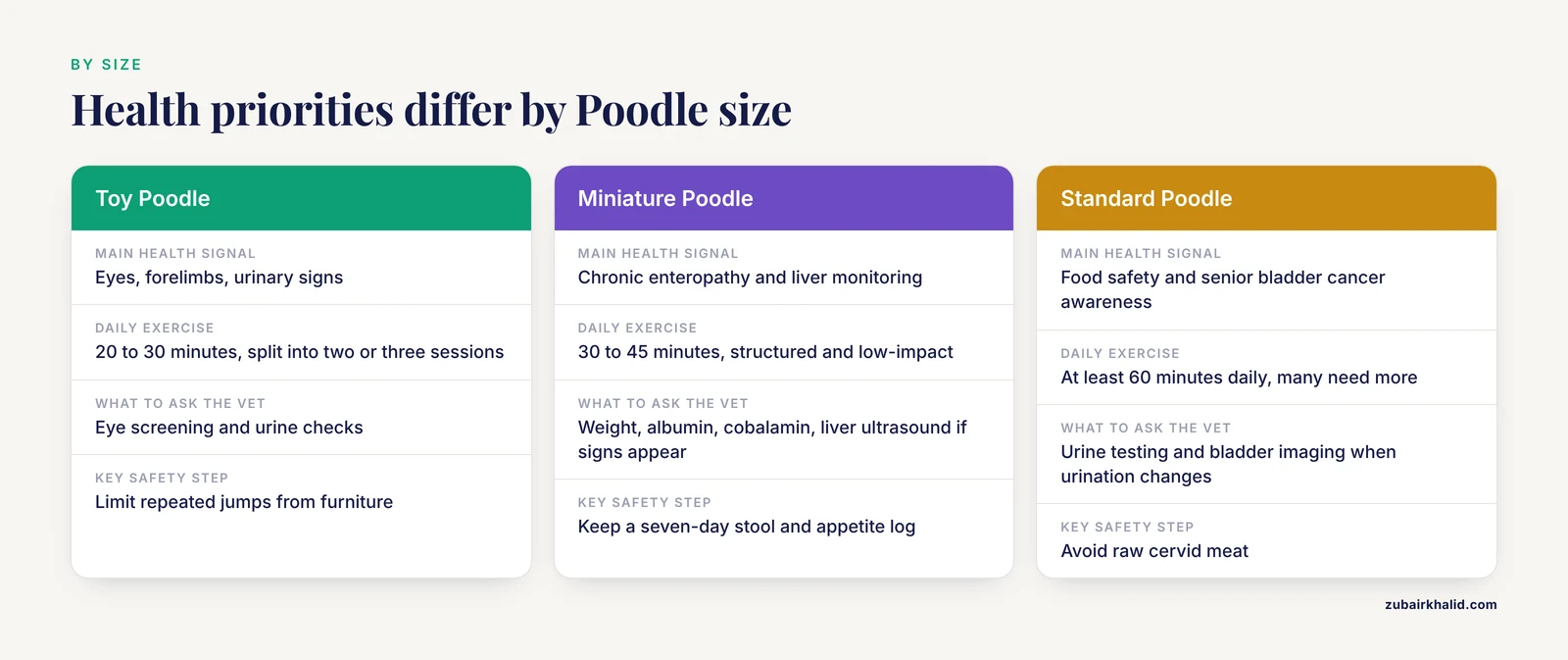
Toy Poodle: Eyes, Forelimbs, and Urinary Signs
Toy Poodles were the most frequently reported breed among 105 veterinarians practicing ophthalmology in Japan, with 99 reports [1]. Cataracts were reported across most popular breeds in that survey, and progressive retinal atrophy was prevalent in Toy Poodles and Miniature Dachshunds [1]. This does not mean every Toy Poodle will go blind. It means eye changes deserve a low threshold for examination.
Toy Poodle forelimb anatomy has also been modeled. A finite element analysis reconstructed the forelimb from CT images and simulated a jump and landing from 40 cm. Toy Poodles showed higher stress at the distal radius and ulna than Dachshunds [2]. This is a biomechanical finding, not a fracture rate. Still, it supports common sense around repeated jumps from furniture and hard landings.
Urinary disease is another Toy Poodle signal. A 2-year-old male Toy Poodle weighing 4.2 kg had hematuria, stranguria, and oliguria for two months, then decreased appetite. Ultrasound found bladder stones, and the dog underwent cystotomy [7]. The lesson is simple. Blood in urine and straining are not “behavior” problems.
Miniature Poodle: Digestive Tract and Liver Monitoring
A Swedish study of 814 dogs with chronic enteropathy found Miniature Poodles among the breeds with the highest relative risk [3]. The period prevalence was 1.1% of the hospital dog population, and the median age at presentation was 3.8 years [3]. Some affected dogs had hypoalbuminemia, hypocobalaminemia, and increased C-reactive protein [3]. These are veterinary tests, not home diagnoses. They are reasons to bring a stool and appetite log to the appointment.
Miniature Poodles also appear in a rare liver vascular case. An 11-year-old, 5 kg castrated male Miniature Poodle had persistent ascites for three weeks. Imaging showed decreased portal vein velocity, and a liver biopsy confirmed primary hypoplasia of the portal vein [4]. Ascites is fluid in the abdomen. It is not ordinary weight gain.
Standard Poodle: Food Safety and Senior Cancer Awareness
A 3-year-old Standard Poodle fed a raw elk-meat diet developed anorexia, icterus, and markedly elevated liver enzyme activities. Histopathology and PCR confirmed Hammondia heydorni in the pancreas and liver [5]. Dogs and coyotes are definitive hosts, and ruminants such as cervids are intermediate hosts [5]. Infection has been linked to raw-meat diets [5]. Avoid raw cervid meat.
A separate case report described an 11-year-old neutered male Poodle with a BRAF V595E-positive lesion at the urethrovesical junction. The dog was managed with NSAIDs, keyhole limpet hemocyanin, and selenium after chemotherapy was declined [6]. This is a single case, not a breed-wide screening rule. It is a reminder that senior Poodles with changed urination need veterinary imaging and urine testing.
Eye Care for Toy and Miniature Poodles
Why Eye Checks Matter
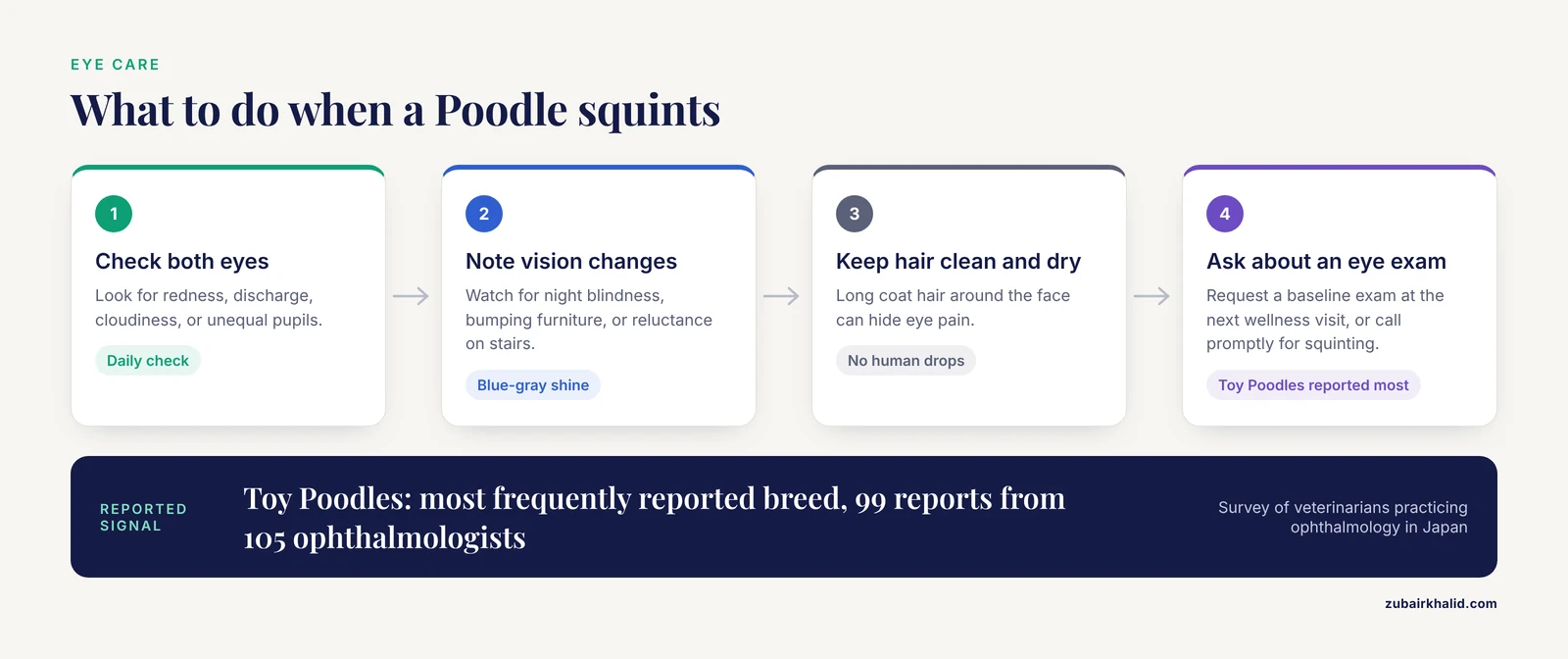
Toy Poodles are frequent ophthalmology patients [1]. Cataracts can cloud the lens and reduce vision. Progressive retinal atrophy affects the retina and tends to be progressive. Owners may notice night blindness, bumping into furniture, reluctance on stairs, or a blue-gray eye shine. These signs need a veterinary ophthalmic examination, not a wait-and-see approach.
What to Do
Ask your veterinarian whether a baseline eye exam is appropriate at the next wellness visit. If the dog squints, rubs the eye, has a red eye, or has sudden vision loss, call promptly. Eye pain can be hidden by long coat hair around the face. Keep the hair around the eyes clean and dry, and do not use human eye drops without veterinary advice.
What Not to Do
Do not assume cloudiness is normal aging. Do not delay an eye exam because the dog still eats. Do not breed a Toy Poodle with known progressive retinal atrophy in its line without veterinary and genetic counseling.
Digestive Health in Miniature Poodles
Why the Gut Deserves Attention
Miniature Poodles have a documented higher relative risk for chronic enteropathy [3]. Chronic enteropathy is prolonged gastrointestinal disease. Owners may see loose stool, vomiting, reduced appetite, weight loss, or a combination. The Swedish study found affected dogs had low albumin and low cobalamin in some cases, plus increased C-reactive protein [3]. Those findings support bloodwork and a structured diagnostic plan.
What to Do
Keep a seven-day log of stool, vomiting, appetite, and weight. Bring the log to the appointment. Ask about albumin, cobalamin, and inflammation testing. The study described treatment response categories that included immunosuppressant-responsive and food-responsive disease [3]. Do not change the diet mid-diagnosis without telling the veterinarian. Diet changes can blur the diagnostic picture.
What Not to Do
Do not call repeated diarrhea a “sensitive stomach” and wait months. Do not use human anti-diarrheal medicines. Do not assume a new food is the answer before the vet has excluded parasites, organ disease, and other causes.
Urinary Health and Bladder Stones in Toy Poodles
Why Urine Signs Matter
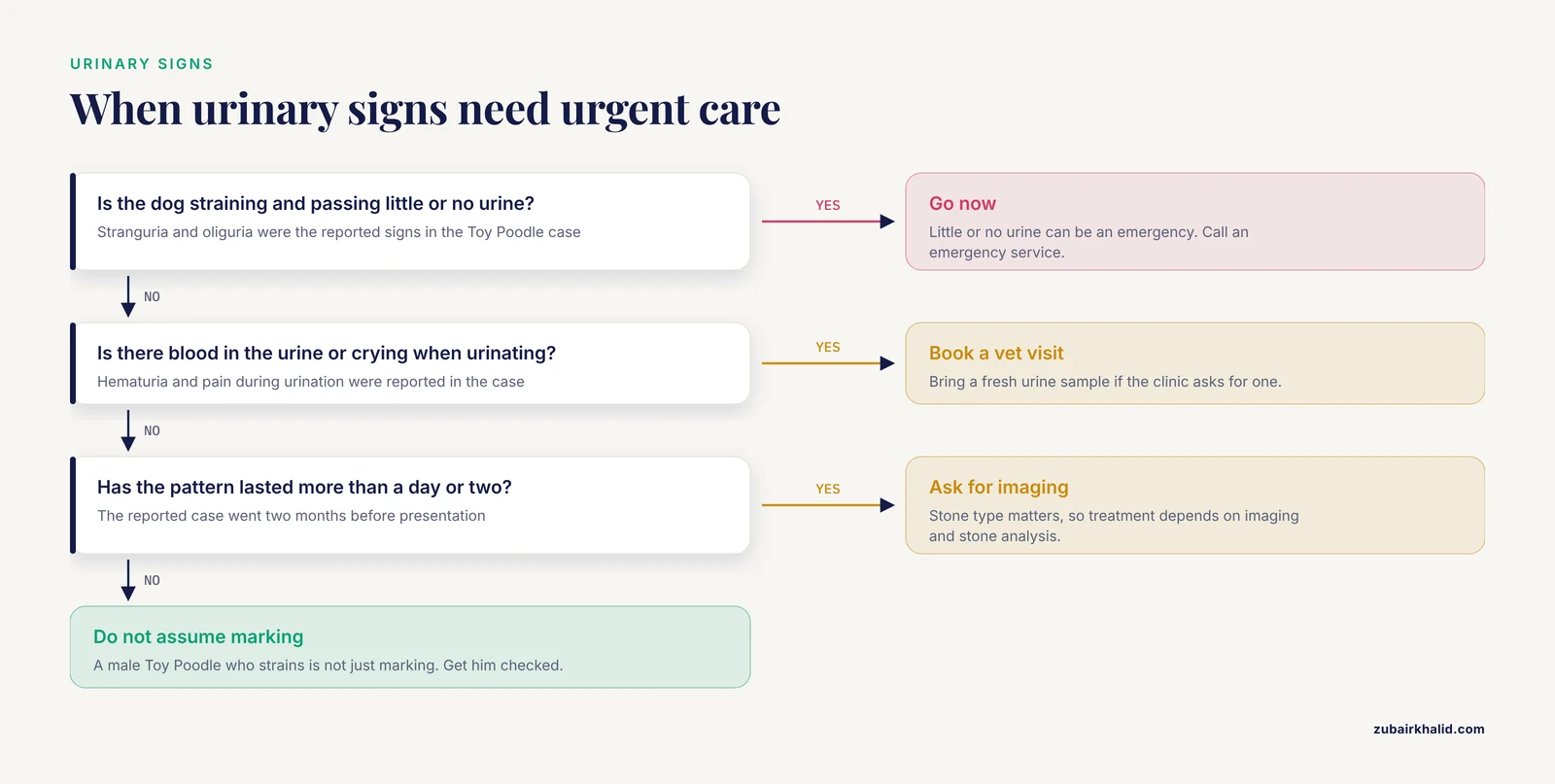
The Toy Poodle case had two months of hematuria, stranguria, and oliguria before presentation [7]. Hematuria is blood in urine. Stranguria is painful, effortful urination. Oliguria is reduced urine output. The dog also had decreased skin turgor, pain during urination, and a distended urinary bladder [7]. Ultrasound identified bladder stones with an acoustic shadow [7].
What to Do
Watch for frequent small urinations, blood, licking the genital area, crying, or accidents in a previously reliable dog. Collect a fresh urine sample if the clinic asks. Do not wait if the dog is straining and producing little or no urine. That can be an emergency.
What Not to Do
Do not assume a male Toy Poodle is “marking” when he strains. Do not give extra water and wait if urine output is low. Do not use home remedies for stones. Stone type matters, and treatment depends on imaging and stone analysis.
Bone and Joint Safety for Toy Poodles
The finite element analysis compared Toy Poodle and Dachshund forelimbs. Toy Poodles had notably higher stress levels at the distal radius and ulna in both static and dynamic analysis [2]. The model simulated a 40 cm jump and landing [2]. This does not prove that Toy Poodles fracture more often. It does support limiting repeated leaps from beds, sofas, and car seats.
Use ramps or steps where practical. Keep nails trimmed so the dog can grip the floor. Provide non-slip rugs on slick surfaces. If the dog yelps after a jump, holds up a leg, or refuses to bear weight, call the veterinarian. Do not splint the leg at home.
Food and Water Safety, Including Raw Meat
The Standard Poodle case is a clear food safety warning. The dog was fed raw elk meat and developed liver and pancreatic disease from Hammondia heydorni [5]. The organism has a two-host life cycle. Dogs and coyotes are definitive hosts, and ruminants are intermediate hosts [5]. Infection follows ingestion of tissue cysts in raw meat [5].
The safest choice supported by that report is to avoid raw cervid meat. If you feed any raw diet, discuss the risks with your veterinarian and handle meat as a contamination source. Use separate surfaces, wash hands, and clean bowls. Do not let a dog lick raw meat juice from counters. Poodles with jaundice, anorexia, or liver enzyme changes need veterinary care.
Household Toxins: Fluorouracil and Medication Storage
A Labrador retriever-poodle cross ingested fluorouracil 5% topical solution. The dog survived but developed status epilepticus, required general anesthesia, spent days hospitalized in a coma, and later had vision and smell deficits. Bloodwork showed severe thrombocytopenia and moderate leukopenia. Ten days after exposure, progressive alopecia affected the entire body [8].
Fluorouracil is a human prescription medication. Keep it in a locked box, not in a bathroom drawer or bedside table. If a Poodle licks, eats, or chews any medication, call your veterinarian or an emergency service immediately. Do not wait for vomiting or seizures to start.
Liver and Vascular Health in Miniature Poodles
The Miniature Poodle with primary hypoplasia of the portal vein presented with ascites, splenomegaly, and hepatomegaly. Portal vein velocity was decreased [4]. After surgery and supportive care, ascites resolved from postoperative day 4 [4]. This is a rare condition. It matters because abdominal swelling is easy to misread as weight gain.
Call your veterinarian if the abdomen looks bloated, the dog breathes harder, or appetite and energy drop. Ultrasound and bloodwork are usually needed. Do not restrict water or sodium on your own.
Blood Type and Transfusion Notes
A Seoul study of 105 canine blood donors and recipients found DEA 1 positive in 70.48%, DEA 4 positive in 92.38%, and Dal positive in 77.14% [9]. One Miniature Poodle was Dal-negative [9]. Dal is a blood group antigen that can matter in transfusion reactions. If your Poodle needs surgery, a transfusion, or blood donation, ask the clinic about blood typing and crossmatching. This is not a home test.
Preventive Care and Veterinary Partnerships
Use the AAHA wellness framework and AVMA owner resources as a starting point for preventive care. Ask your veterinarian to set a vaccine, parasite control, dental, weight, and senior screening schedule for your dog’s age and size. Bring the size label and pedigree history to every visit. For Toy Poodles, ask about eye screening [1]. For Miniature Poodles, ask about weight, albumin, cobalamin, and liver ultrasound if signs appear [3][4]. For senior Poodles, ask about urine testing and bladder imaging when urination changes [6].
Equipment and Supplies That Help
- A consistent scale for weight trends. Use the same scale and record the number.
- A locked medication box for fluorouracil and all human prescriptions.
- A stool and appetite log for Miniature Poodles with digestive signs [3].
- Non-slip flooring and stable steps for Toy Poodles that jump [2].
- A veterinary eye examination when signs appear, not a home flashlight test [1].
Grooming, Coat, and Skin Checks
A long coat can hide redness, scabs, odor, and hair loss. Check the skin weekly under good light. Part the coat to the skin and look at the belly, armpits, ears, and tail base. A study of atopic dermatitis in small-to-medium breeds included Miniature and Toy Poodles, but those breeds were not among the three with higher prevalence compared with the registered dog population [10]. Itching still deserves veterinary attention. Do not assume every itch is an allergy.
Work with a groomer on a coat schedule that keeps the dog clean and dry. Do not let a groomer diagnose a skin disease. Do not use human shampoos or essential oils without veterinary advice.
Common Mistakes and Troubleshooting
- Treating chronic diarrhea as a breed quirk. Miniature Poodles have a documented higher relative risk for chronic enteropathy [3]. Get a diagnosis.
- Missing urinary signs. Straining, blood, and small urine volumes led to surgery in a Toy Poodle [7]. Do not wait.
- Letting a Toy Poodle jump repeatedly from furniture. The forelimb model found higher stress at the distal radius and ulna [2]. Reduce repeated landings.
- Feeding raw cervid meat. A Standard Poodle developed Hammondia heydorni infection after raw elk meat [5]. Avoid it.
- Storing fluorouracil where a dog can reach it. A poodle cross developed severe toxicity [8]. Lock it away.
- Skipping eye exams in a squinting Toy Poodle. Toy Poodles are frequent ophthalmology patients [1]. Call early.
- Assuming French Poodle means one size. Toy, Miniature, and Standard Poodles have different health priorities.
- Not telling the emergency clinic the breed and size. “French Poodle” is less useful than “Toy Poodle, 4 kg, straining to urinate.”
Welfare and Safety Points
Pain in a Poodle can look like restlessness, panting, hiding, or reluctance to move. Urinary obstruction, seizures after toxin exposure, and new ascites are urgent. Do not use human pain medicines. Do not delay care because the dog is still wagging its tail. Welfare includes parasite control, dental care, weight management, safe housing, and humane end-of-life planning. Your veterinarian can guide each of these.
Limitations and When to Contact a Veterinarian
Study results describe groups and individual cases. They do not predict what will happen to your dog. Individual cases need a veterinarian. Contact a veterinarian promptly for blood in urine, straining to urinate, no urine production, repeated vomiting, chronic diarrhea, weight loss, jaundice, abdominal swelling, eye pain, sudden vision loss, limping after a jump, or any suspected medication exposure. Go to an emergency service for collapse, seizure, difficulty breathing, or a dog that cannot urinate. Do not wait for a home remedy to work.
Exercise, Enrichment, and Weight Management by Size
Poodles of all three sizes need daily exercise, but the right amount and type depend on body size, joint health, and age.
Toy Poodle: Short, Frequent, Low-Impact
Toy Poodles have a small frame and relatively long limbs. Given the forelimb stress identified in jump-landing models [2], exercise should favor short, frequent sessions over long, high-impact ones.
Aim for 20 to 30 minutes of total activity per day, split into two or three sessions. Walking on grass or soft trails, indoor fetch with a lightweight toy, and nose work are good choices. Keep jumps low or eliminate them.
Mental enrichment matters as much as physical activity. Toy Poodles respond well to puzzle feeders, scent games, and short trick-training sessions. A 10-minute training session can tire a Toy Poodle more than a 30-minute walk.
Miniature Poodle: Moderate and Structured
Miniature Poodles need about 30 to 45 minutes of daily exercise. They are athletic and often enjoy agility, but jump heights should be low and landings soft. Structured walks, controlled fetch, and swimming are good options.
Because Miniature Poodles have a documented risk for chronic enteropathy [3], track weight and appetite alongside exercise. Weight loss despite a normal appetite, or weight gain despite reduced food, needs a veterinary check rather than an exercise change.
Standard Poodle: Endurance with a Brain
Standard Poodles are working dogs at heart. They need at least 60 minutes of exercise daily, and many need more. Running, hiking, swimming, and retrieving suit them well, but mental work matters equally. Obedience training, nose work, and retrieving games that require thinking are as important as physical miles.
Build stamina gradually, especially in young dogs. A Standard Poodle suddenly asked to run 5 miles without conditioning is at risk for injury.
Weight and Stamina Monitoring
Weigh your Poodle weekly on the same scale and record the number. Run your hands along the ribs; you should feel them with light pressure, not see them. A waist should be visible from above and a tuck from the side.
For seniors of any size, reduce high-impact activity and maintain muscle mass with regular, moderate walks. Shorter, more frequent sessions are easier on aging joints than one long walk.
When to Call the Veterinarian
Call your veterinarian if a Poodle limps for more than a few minutes, refuses to bear weight on a limb, collapses, or shows a change in breathing effort during or after exercise. Panting is normal; labored breathing, noisy breathing, or pale gums are not. Collapse after exercise is always a reason for prompt veterinary evaluation.
Dental and Ear Care for Poodle Owners
Dental Care at Home
Poodles often develop plaque and tartar quickly, especially Toy and Miniature varieties with crowded teeth. Daily toothbrushing is the most effective home measure. Use a soft-bristled toothbrush designed for dogs and a veterinary toothpaste. Human toothpaste contains ingredients that can upset a dog's stomach, and some contain xylitol, which is toxic.
Start slowly. Let the dog lick toothpaste from your finger, then introduce the brush. Lift the lip and brush in small circles along the gumline, focusing on the large cheek teeth where tartar forms first. Aim for 30 seconds per side. If the dog resists, do a few teeth at a time and reward with praise. Never force the mouth shut. Dental wipes, gels, and chews can help, but they do not replace brushing.
Professional Dental Checks
Schedule a professional dental examination at least once a year, or more often if your veterinarian recommends it. A complete dental cleaning requires anesthesia so the vet can examine the whole mouth, probe gum pockets, take dental X-rays, and scale below the gumline. Anesthesia-free cleanings remove visible tartar but miss disease below the gums and do not allow safe X-rays. Ask your veterinarian about a dental health plan based on your Poodle's age and size.
Ear Cleaning and Drying
Poodles have floppy ears that trap moisture and limit airflow. Check both ears weekly. Healthy ears are pink, dry, and odorless. Clean them only when you see dirt or wax, or after swimming and bathing. Use a veterinarian-approved ear cleaner. Fill the ear canal with solution, massage the base for about 20 seconds, then let the dog shake. Wipe the visible part of the ear with a cotton ball or gauze. Do not use cotton swabs inside the canal; they push debris deeper and can injure the eardrum.
After swimming or bathing, dry the outer ear and the opening of the canal with a soft towel or cotton ball. If water is likely to remain, a drying ear solution can help. Keep hair around the ear canal trimmed, but do not pluck ear hair without veterinary guidance.
Warning Signs and When to Call
Call your veterinarian if you notice bad breath, drooling, red or swollen gums, loose or discolored teeth, head shaking, ear scratching, ear odor, discharge, redness, swelling, or pain when the ears are touched. Also call for difficulty eating, pawing at the mouth, or a tilted head. Mild wax can be managed at home, but any sign of pain, infection, or dental disease needs a veterinary examination. Sudden head tilt, facial swelling, or inability to eat is more urgent. Do not treat ear or dental problems with home remedies or leftover medicines.
Spaying, Neutering, and Reproductive Health Decisions
There is no single correct age to spay or neuter a Poodle. The decision depends on the dog’s size, expected adult weight, lifestyle, household composition, and any existing health conditions. Toy, Miniature, and Standard Poodles mature at different rates, and the balance between reproductive disease prevention and orthopedic or urinary risks is not identical across sizes. A veterinarian who knows the individual dog is the right person to set a timeline.
Reproductive Health Risks in Intact Dogs
Pyometra is a serious uterine infection in unspayed females. It can develop after a heat cycle, often in middle-aged or older dogs. Signs include increased thirst, lethargy, reduced appetite, vaginal discharge, or abdominal swelling. Some dogs show no discharge if the cervix is closed. Pyometra is a medical emergency and requires prompt veterinary care. Spaying removes the uterus and eliminates this risk.
Intact females also face higher risks of mammary tumors, and intact males can develop testicular tumors and prostate problems. These are textbook facts. They do not mean every intact Poodle will develop these conditions, but they are part of the decision.
Post-Spay Urinary Incontinence
Urinary incontinence after spaying is a recognized possibility, though not every spayed female develops it. The typical sign is leaking urine while resting or sleeping. It can begin weeks or even years after surgery. This is not a reason to avoid spaying, but it is a reason to ask about it before the procedure. Incontinence is often manageable with medication, and it should never be dismissed as a behavior problem.
Questions to Ask Your Veterinarian
Before scheduling surgery, ask:
- What age do you recommend for this Poodle’s size and expected adult weight?
- Are there orthopedic reasons to delay spay or neuter in a Standard Poodle?
- What is the clinic’s protocol for pain management, anesthesia, and monitoring?
- How will I recognize post-surgical complications such as infection or seroma?
- What should I do if my dog starts leaking urine after spaying?
- Is a laparoscopic spay or a traditional spay recommended for this dog?
Your veterinarian can explain the evidence for and against early versus late surgery in your dog’s size category. There is no one-size-fits-all answer.
When to Seek Prompt Veterinary Assessment
Call a veterinarian promptly if an intact female has unusual vulvar discharge, abdominal swelling, increased thirst, or lethargy after a heat cycle. These can be signs of pyometra. Also seek prompt assessment if a recently spayed dog has swelling, redness, discharge, or an open incision at the surgery site.
Urinary changes need attention in any Poodle. Straining to urinate, blood in urine, frequent small urinations, or new incontinence after spaying should not wait for a routine visit. A Toy Poodle with urinary signs may have bladder stones, and a senior Poodle with changed urination may need imaging. The earlier the evaluation, the more treatment options remain available.
Related Guides
- Shih Tzu Poodle Mix: Breed and Care Guide: Specific Poodle cross with distinct grooming, health, and temperament considerations
- French Bulldog Dog Breed Guide: Temperament, Size, Lifespan, Health Problems and Care
Frequently Asked Questions
Is a French Poodle a separate breed?
No. French Poodle is an informal label for Poodles, often the Standard Poodle, and it is not a separate breed with a separate care plan. Size and family history matter more than the label.
Are Toy Poodles prone to eye problems?
Yes, they have a strong ophthalmology signal. Toy Poodles were the most frequently reported breed for ophthalmic complaints in a survey of 105 veterinarians practicing ophthalmology, and progressive retinal atrophy was prevalent in the breed [1].
Do Miniature Poodles get chronic digestive disease?
They can. A Swedish hospital study found Miniature Poodles among the breeds with the highest relative risk for chronic enteropathy [3].
What are the signs of bladder stones in a Toy Poodle?
Blood in urine, straining, and passing only small amounts of urine are key signs from a reported Toy Poodle case [7]. A dog that cannot urinate needs emergency care.
Can my Poodle eat raw meat?
A Standard Poodle developed Hammondia heydorni infection after eating raw elk meat [5]. Avoid raw cervid meat, and discuss any raw diet with your veterinarian.
Are Toy Poodles fragile?
A biomechanical model found higher stress in Toy Poodle forelimbs than Dachshund forelimbs during simulated jump landing [2]. That is not a fracture rate, but it supports limiting repeated jumps from furniture.
What should I do if my Poodle swallows fluorouracil?
Treat it as an emergency. A Labrador-poodle cross developed status epilepticus, coma, blood cell suppression, and hair loss after ingesting fluorouracil 5% topical solution [8]. Call your veterinarian or an emergency service immediately.
When is abdominal swelling urgent?
New abdominal swelling needs prompt veterinary evaluation. A Miniature Poodle with ascites was diagnosed with primary hypoplasia of the portal vein [4]. Ascites is not ordinary weight gain.
Sources
- Common Ophthalmic Conditions in Popular Dog Breeds in Japan: Insights From a Survey of 105 Veterinarians Practicing Ophthalmology.
- Elucidation of the radius and ulna fracture mechanisms in toy poodle dogs using finite element analysis.
- Chronic Enteropathy in Dogs-Epidemiologic Aspects and Clinical Characteristics of Dogs Presenting at Two Swedish Animal Hospitals.
- Case Report: Successful surgical intervention for portal hypertension caused by primary hypoplasia of the portal vein in a dog.
- Pancreatic and biliary duct Hammondia heydorni infection in a dog fed a raw elk-meat diet.
- Keyhole Limpet Hemocyanin-Based Multimodal Management in Two Dogs with Presumptive Urothelial Carcinoma: Long-Term Clinical and Imaging Follow-Up.
- Diagnosis and treatment of urolithiasis in a Toy Poodle dog.
- Management of fluorouracil toxicity in a Labrador retriever-poodle crossbred dog.
- Prevalence of Dal blood type and dog erythrocyte antigens 1 and 4 among canine blood donors and recipients in Seoul, South Korea.
- Prevalence and lesion distribution of atopic dermatitis in small-to-medium breed dogs in Korea.