French Mastiff (Dogue de Bordeaux) Breed Guide
By Dr. Zubair Khalid, DVM, MS, PhD ·
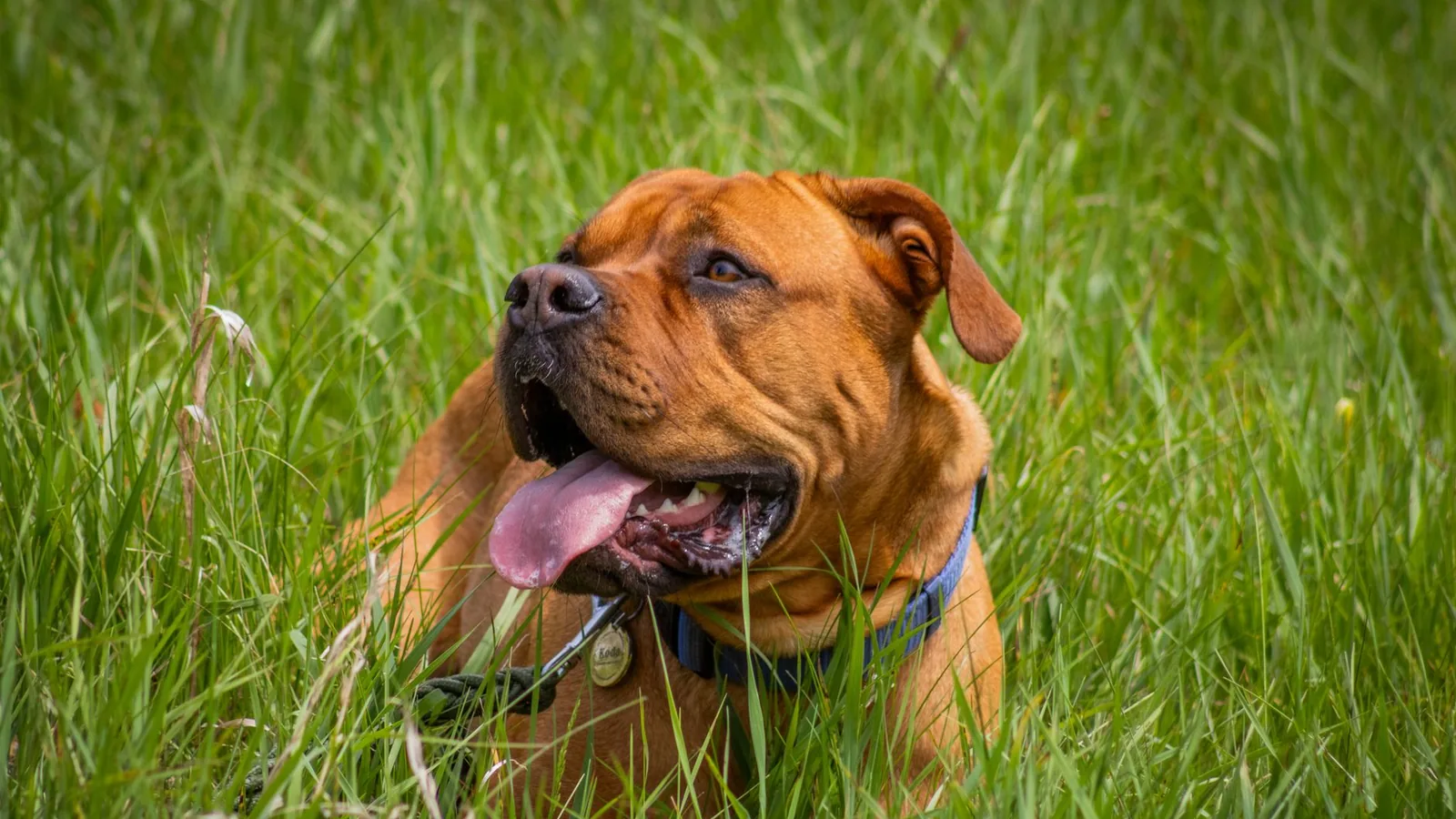
The French Mastiff dog, known worldwide as the Dogue de Bordeaux, is a giant, brachycephalic breed with a powerful build and a short muzzle. Behind the calm expression is a genetic profile that carries real health risks. The breed has passed through genetic bottlenecks, and its small effective population size makes inherited disease more likely [1]. The same breed standards that produce the massive head and deep chest also come with a high rate of congenital heart disease, a familial kidney disease, hypothyroidism, and juvenile skin infections.
For an owner, the single most useful step is to establish a relationship with a veterinarian who knows the breed and will screen for these conditions before symptoms appear. A heart murmur, protein in the urine, and patchy hair loss are all findings that a routine examination can catch early. This guide covers what the veterinary literature says about Dogue de Bordeaux health, which screening tests matter, and when a problem needs urgent attention. The Dogue de Bordeaux is not a breed for owners who prefer a hands-off approach. It needs regular veterinary care, thoughtful breeding practices, and an owner who understands that a calm exterior can hide serious internal disease.
At a Glance: Dogue de Bordeaux Health Priorities
| Topic | What owners should know |
|---|---|
| Breed names | French Mastiff and Dogue de Bordeaux are the same breed |
| Size category | Giant breed, over 40 kg in breeding studies [2] |
| Most reported problems | Chronic skin disease, lameness, gastrointestinal signs, and neoplasia [3] |
| Cardiac risk | Aortic stenosis and other congenital heart defects are documented [4][5] |
| Kidney risk | Abnormal proteinuria is common and linked to familial glomerulonephropathy [6] |
| Hormone risk | The breed is predisposed to hypothyroidism [7] |
| Skin risk | Increased odds of juvenile-onset demodicosis [8] |
| Breeding tool | Fetal biparietal diameter ultrasound can predict whelping date [2] |
Action steps you can take today:
- Ask your veterinarian to listen for a heart murmur at your next visit [4]
- Request a urine protein-to-creatinine ratio if your dog has never had one [6]
- Ask whether your laboratory uses breed-specific reference intervals for the Dogue de Bordeaux [7]
- Check your puppy's skin for patchy hair loss, crusting, or redness
- Book a cardiac screening if your dog has a family history of heart disease [1]
Breed Background and Genetic Context
The Dogue de Bordeaux has gone through several genetic bottlenecks and has a relatively small effective population size [1]. A bottleneck occurs when only a few animals pass their genes to the next generation, which reduces genetic diversity and increases the chance that harmful recessive traits will surface. In Israel, where importing new stock was limited, the local gene pool narrowed even further, and researchers were able to trace congenital heart defects back to three common ancestors [1]. That pattern is a reminder that the breed's health problems are inherited and cluster in family lines.
The breed is documented as predisposed to familial juvenile glomerulonephropathy and hypothyroidism [7]. Both conditions can be silent for months. Routine screening is the only reliable way to catch them early.
Breed-specific reference intervals for blood chemistry have been established for the adult Dogue de Bordeaux [7]. This is a meaningful advance. When a laboratory uses generic canine reference intervals, some results in this breed can be interpreted incorrectly. The study that built these intervals found clinically relevant differences for total proteins, ALT, AST, total cholesterol, lipase, and total thyroxin [7]. For owners, the practical point is to ask whether your veterinarian's laboratory uses breed-specific intervals for your dog.
Cardiac Disease in the French Mastiff
Aortic Stenosis
Aortic stenosis is one of the most common congenital heart defects in dogs, with an overall prevalence of 4.7% reported in a large veterinary referral hospital [5]. The Dogue de Bordeaux is one of the breeds in which the mode of inheritance for this disease has been described [5]. The obstruction is caused by a fibromuscular nodule, ridge, or ring of tissue that narrows the left ventricular outflow tract, so the heart must generate higher pressure to push blood into the aorta [5].
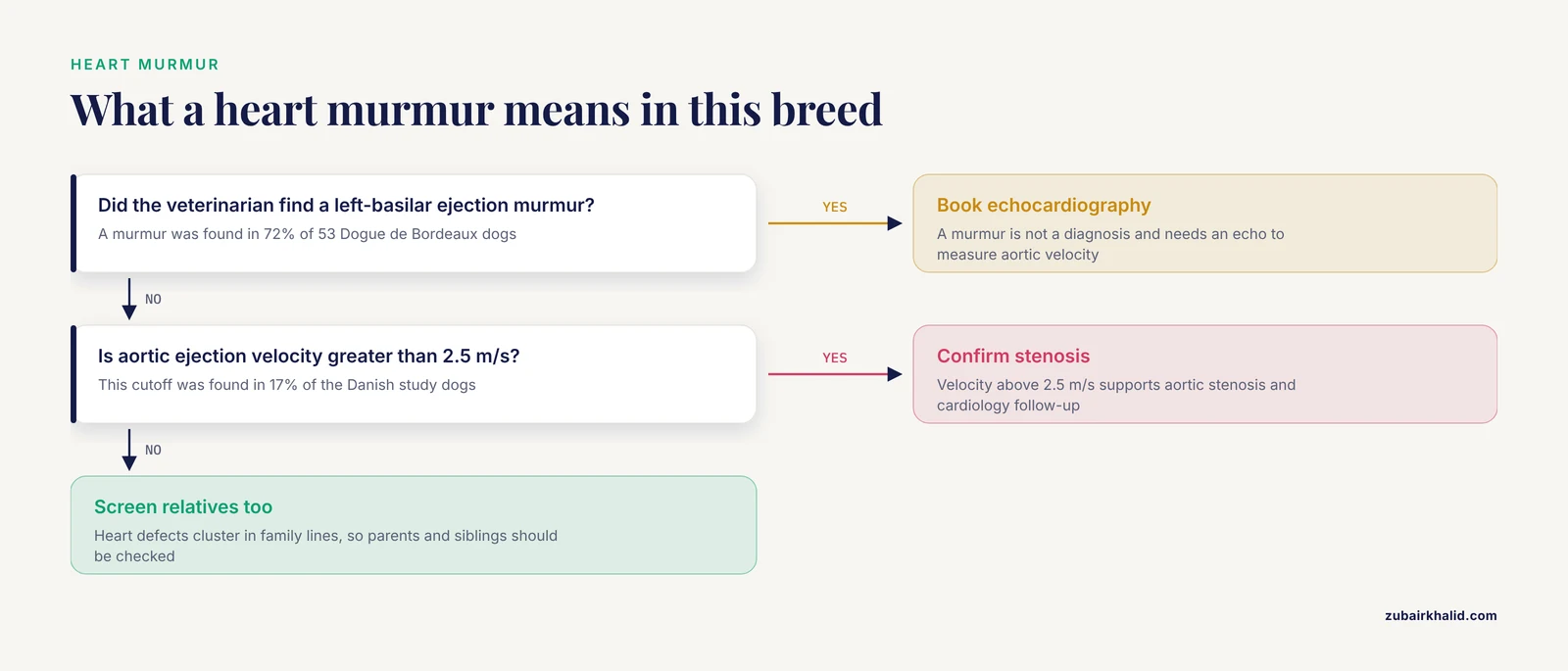
In a Danish study of 53 Dogue de Bordeaux dogs, a left-basilar ejection murmur was detected in 72% of the dogs, and an aortic ejection velocity greater than 2.5 m/s was found in 17% [4]. The same study found that the aortic annulus in the Dogue de Bordeaux is smaller than expected for a dog of comparable body size, and affected dogs had a decreased aortoseptal angle [4]. The authors suggested that these anatomical features may be key to why the breed develops aortic stenosis [4].
For an owner, the practical takeaway is that a heart murmur is common in the breed, but a murmur is not a diagnosis. An echocardiogram is needed to measure aortic velocity and confirm or rule out stenosis. A dog with a murmur and no symptoms still needs a cardiology workup, because the murmur could be the first sign of aortic stenosis.
Subaortic Stenosis and Tricuspid Valve Dysplasia
A study of 56 Dogue de Bordeaux dogs examined between 2003 and 2010 looked specifically at congenital subaortic stenosis (SAS) and tricuspid valve dysplasia (TVD) [1]. Among all breeds in that country, the Dogue de Bordeaux had the highest proportion of TVD and the second highest proportion of SAS [1]. Pedigree and segregation analyses suggested an autosomal recessive mode of inheritance for both defects [1]. Three ancestors were identified as likely sources of these defects in the local population, and the authors recommended excluding those dogs and their progeny from future matings [1].
For breeders, this is a direct call to action. If a dog is diagnosed with SAS or TVD, its parents, siblings, and offspring should all be screened. Because the suspected inheritance is autosomal recessive, a dog can carry the trait without showing disease, and two carriers can produce affected puppies.
Sudden Unexpected Death
In an owner survey, cardiac disease was reported in 13 of 278 dogs (4.7%) [3]. At the time the survey was completed, 55 dogs (19.8%) were dead, and 17 of those (31%) had died suddenly and unexpectedly [3]. The study authors noted that there was no confirmation that the sudden deaths were cardiac, but they recommended exploring the connection further [3]. For an owner, the practical takeaway is that any fainting episode, exercise intolerance, or collapse in a Dogue de Bordeaux warrants an immediate cardiac evaluation.
Kidney Disease: Familial Glomerulonephropathy
The Dogue de Bordeaux is predisposed to a familial glomerulonephropathy that shows morphological changes similar to focal and segmental glomerulosclerosis in humans [6]. The condition damages the kidney's filtering units, and protein leaks into the urine.
A retrospective study of 102 adult Dogue de Bordeaux dogs found that 33% had quantitatively abnormal proteinuria [6]. The dogs were classified by urine protein-to-creatinine ratio (UPCR). Forty-seven were non-proteinuric (UPCR 0.2 or less), 20 were borderline (UPCR greater than 0.2 and up to 0.5), and 35 were proteinuric (UPCR greater than 0.5) [6]. Two of the dogs in the study were already suffering from familial glomerulonephropathy [6].
The nature of the proteinuria was assessed using sodium dodecyl sulfate-agarose gel electrophoresis and urinary markers including retinol-binding protein, N-acetyl-beta-glucosaminidase, albumin, and immunoglobulin G [6]. In all but one proteinuric dog, the protein pattern indicated a glomerular origin, meaning the leak was coming from the kidney's filtering units rather than from lower down the urinary tract [6]. Urinary albumin and immunoglobulin G concentrations were above the reference interval in all proteinuric dogs [6].
The screening test is simple: a urine sample checked for protein and creatinine. The interpretation is not always simple. Borderline results may need follow-up, and a single high result should be discussed with a veterinarian. Because the disease is familial, any Dogue de Bordeaux with proteinuria should prompt screening of related dogs. Breed-specific reference intervals for the Dogue de Bordeaux are available, and using them can reduce misclassification of kidney-related blood values [7].
Hypothyroidism
The Dogue de Bordeaux is predisposed to hypothyroidism, and the breed has its own biochemical reference intervals for thyroid-related analytes [7]. A study that established breed-specific reference intervals found that using generic canine reference intervals for total thyroxin could lead to clinically relevant differences in interpretation [7].
This matters because a Dogue de Bordeaux with a low total thyroxin on a generic reference interval might be diagnosed as hypothyroid when the breed's own reference interval would classify the same value as normal, or the reverse. Breed-specific reference intervals reduce misdiagnosis and help veterinarians decide whether thyroid supplementation is truly needed.
Because the breed is predisposed, thyroid testing should be part of the workup for any Dogue de Bordeaux with signs that could be thyroid-related [7]. A veterinarian will combine physical examination findings with thyroid testing to make the diagnosis.
Skin Disease and Demodicosis
Chronic skin disease was the most common problem reported by owners in the survey, affecting 63 of 278 dogs (22.7%) [3]. One of the specific skin conditions with a documented breed association is demodicosis, also called demodectic mange.
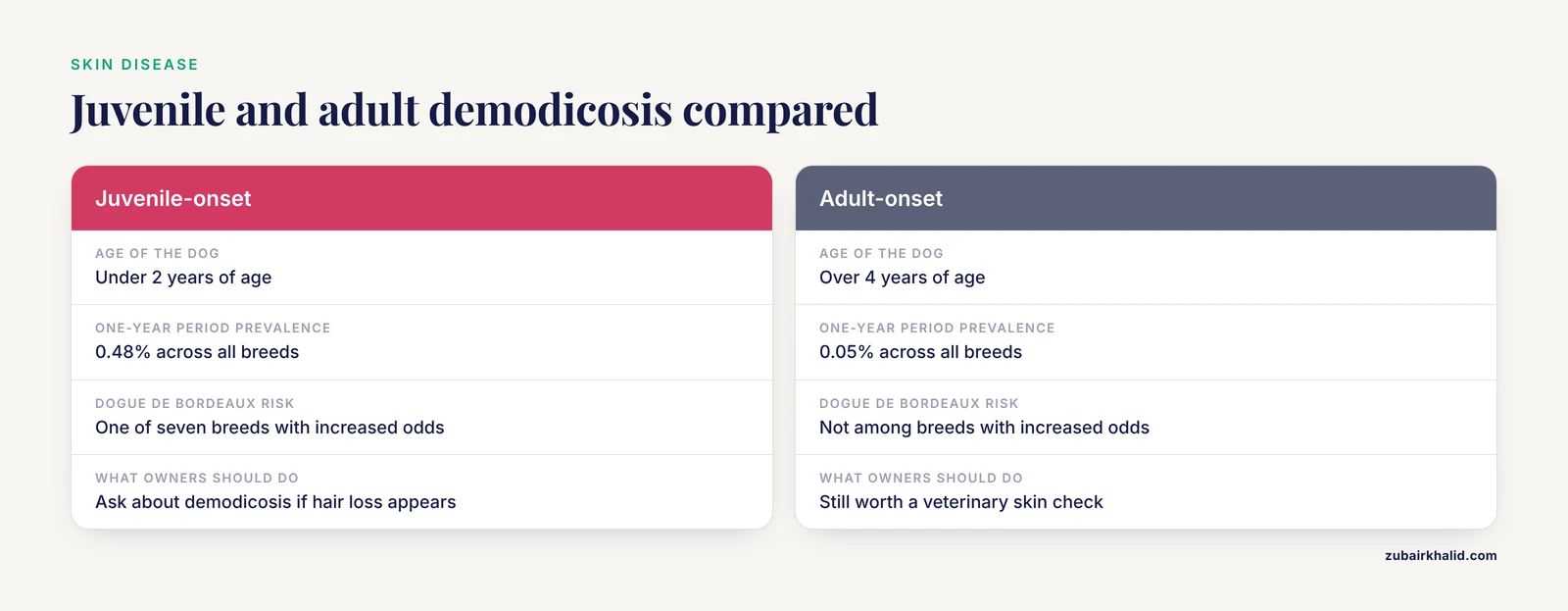
In a UK study using primary-care records, the Dogue de Bordeaux showed increased odds of juvenile-onset demodicosis, defined as disease in dogs under 2 years of age [8]. The one-year period prevalence for juvenile-onset demodicosis across all breeds was 0.48%, and the Dogue de Bordeaux was one of seven breeds with increased odds [8]. Adult-onset demodicosis, in dogs over 4 years, had a much lower prevalence of 0.05%, and the Dogue de Bordeaux was not among the breeds with increased odds for the adult form [8].
For owners, the practical message is that juvenile demodicosis is a breed-associated condition. If your puppy develops hair loss, redness, crusting, or greasy skin, ask your veterinarian whether demodicosis could be the cause [8]. Early diagnosis and treatment give the best chance for a full recovery.
Orthopedic and Neurologic Concerns
Lameness
Lameness was reported in 43 of 278 dogs (15.5%) in the owner survey [3]. The survey did not break down the causes. Any persistent limp in a Dogue de Bordeaux deserves a veterinary workup rather than a wait-and-see approach.
Cranial Thoracic Vertebral Canal Stenosis
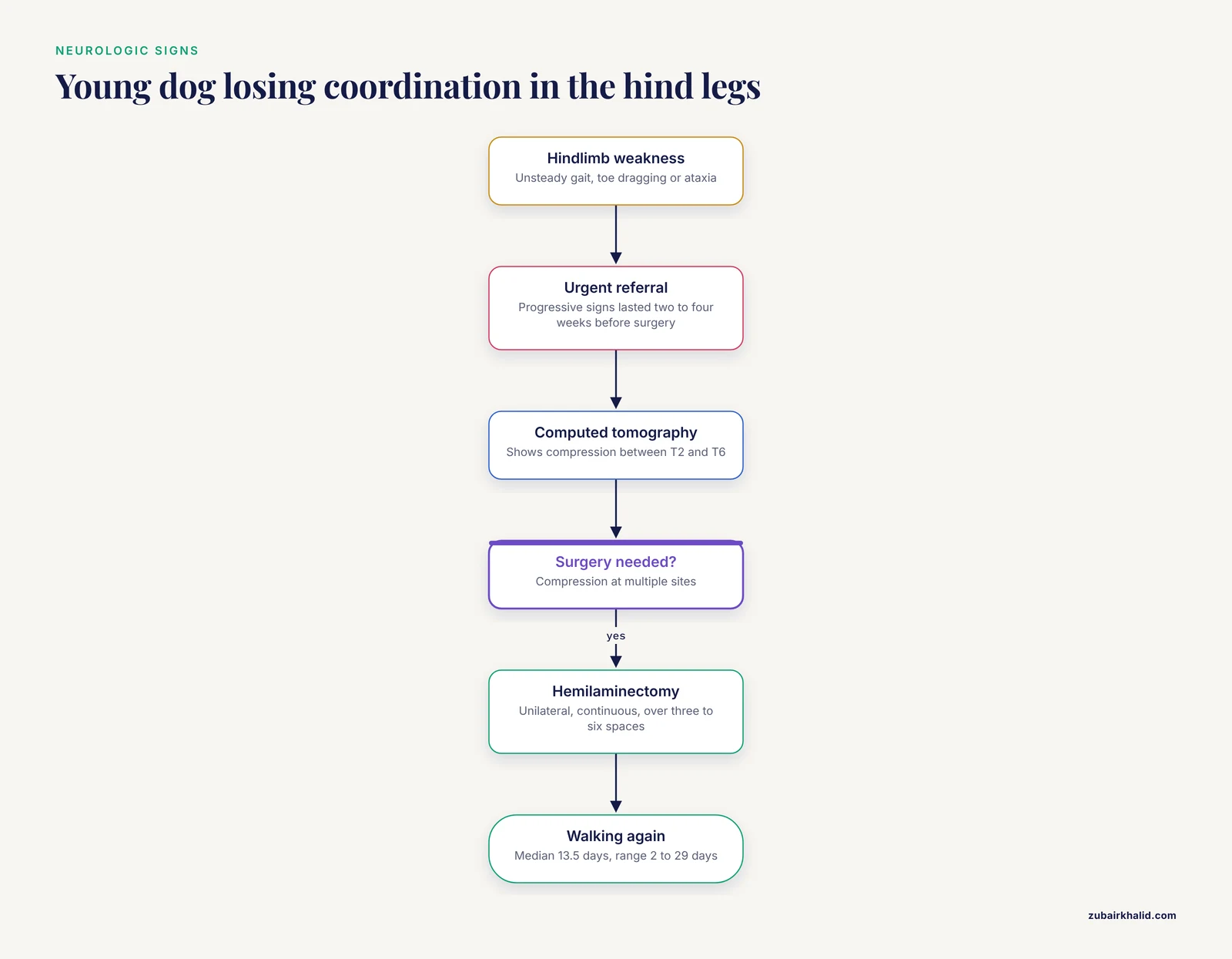
A case series described three juvenile large-breed brachycephalic dogs, including a Dogue de Bordeaux, with cranial thoracic vertebral canal stenosis [9]. These dogs had progressive neurologic signs lasting two to four weeks before surgery, ranging from mild ataxia to paralysis [9]. Computed tomography showed lateral and dorsolateral spinal cord compression at multiple sites between T2 and T6, with alternating left and right compressions [9].
Treatment was a unilateral, continuous hemilaminectomy over three to six vertebral spaces [9]. Postoperative morbidity was minimal, and independent ambulation returned in a median of 13.5 days, with a range of 2 to 29 days [9]. One dog had recurrence of osseous compression four months later and required a second surgery [9]. Long-term follow-up ranged from six to 10 months, and neurologic signs had completely resolved in one dog [9].
For an owner, the warning sign is a young Dogue de Bordeaux that becomes unsteady on its hind legs, drags its toes, or loses coordination. This is an emergency, not a behavioral quirk. Early imaging and surgical referral offer the best chance for recovery [9].
Gastrointestinal Signs and Neoplasia
Gastrointestinal signs were reported in 37 of 278 dogs (13.3%) in the owner survey [3]. The survey did not specify the causes. Owners should take any persistent digestive problem seriously and have it evaluated by a veterinarian, because gastrointestinal issues can have many underlying causes.
Neoplasia was reported in 28 of 278 dogs (10.1%) [3]. This confirms that cancer is a significant health concern in the breed. Owners should discuss cancer screening with their veterinarian during routine wellness visits, and any new lump or unexplained change in health should be investigated.
Breeding and Whelping Prediction
For breeders, predicting the day of parturition is a practical challenge. A retrospective study compared simple linear regression and mixed linear regression models using fetal biparietal diameter measured by ultrasound [2]. The study grouped dogs by maternal weight and by breed. The Dogue de Bordeaux falls into the giant breed group, defined as over 40 kg [2].
Both grouping methods had a statistically significant effect on the accuracy of the prediction. Grouping by maternal weight group gave a p value below 0.0001, and grouping by breed gave a p value of 0.0057 [2]. Breed-specific models were derived and compared within the same maternal weight group [2]. The accuracy of all models was reported as the number of births within plus or minus 1 and plus or minus 2 days of the estimated day of parturition [2].
For a breeder, the practical takeaway is that ultrasound measurement of fetal biparietal diameter is a valid tool for estimating the whelping date, and the estimate should be based on a model that accounts for the dam's breed or weight group rather than a one-size-fits-all formula. Work with a veterinarian who performs pregnancy ultrasound regularly and can apply the appropriate model.
Screening and Monitoring Plan
The veterinary literature supports a proactive screening plan for the Dogue de Bordeaux. The breed has breed-specific biochemical reference intervals, which means that a laboratory using generic canine reference intervals may misclassify some results [7]. Clinically relevant differences were noted for total proteins, ALT, AST, total cholesterol, lipase, and total thyroxin [7]. If your veterinarian uses a laboratory that does not have Dogue de Bordeaux-specific reference intervals, ask whether the generic intervals are appropriate for your dog's breed.
The owner survey found that respondents were interested in a formal cardiac health screening scheme for the breed, but reluctant to volunteer if the results were open access [3]. This is a real tension. Screening is most useful when results are shared with breeders, but privacy concerns are legitimate. A middle path is to work with a veterinary cardiologist who can certify results and share them only with the owner and the referring veterinarian.
A reasonable monitoring plan for the breed includes:
- Cardiac auscultation at every visit, with echocardiography if a murmur is detected [4]
- Annual urine protein-to-creatinine ratio starting in young adulthood [6]
- Thyroid testing using breed-specific reference intervals when hypothyroidism is suspected [7]
- Skin checks for demodicosis in puppies under 2 years [8]
- Immediate neurologic evaluation for hindlimb weakness or ataxia in young dogs [9]
This list is a starting point, not a substitute for a veterinarian's recommendations. Every dog is different, and a veterinarian will tailor the plan to the individual animal's age, sex, and family history. When you visit the veterinarian, bring any previous health records, including ultrasound reports, urine test results, and thyroid panels. If your dog has a family history of heart disease or kidney disease, mention it explicitly. The more information your veterinarian has, the more accurate the screening plan will be.
Common Mistakes Owners Make
The first mistake is assuming that a heart murmur in a Dogue de Bordeaux is harmless. The breed has a high rate of aortic stenosis, and a murmur is a reason for an echocardiogram, not a reason to wait [4].
The second mistake is ignoring proteinuria. A urine test that shows protein is not a fluke. A large share of adult Dogue de Bordeaux dogs have abnormal proteinuria, and the underlying cause is often a familial glomerulonephropathy [6]. Repeat the test and investigate.
The third mistake is treating skin disease as a simple allergy. Demodicosis is a specific diagnosis that requires veterinary testing, and the Dogue de Bordeaux has increased odds of the juvenile form [8]. A veterinarian can distinguish demodicosis from other skin conditions.
The fourth mistake is delaying care for hindlimb weakness. Cranial thoracic vertebral canal stenosis can progress to paralysis within weeks, and surgery is more successful when performed early [9].
The fifth mistake is skipping breed-specific blood work. Generic canine reference intervals can misclassify several analytes in this breed [7]. Ask for breed-specific intervals when blood work is run.
Welfare and Safety Considerations
The Dogue de Bordeaux carries a heavy burden of inherited disease, and that is a welfare issue, not just a medical one. The breed's small effective population size means that harmful recessive traits can spread quickly through the gene pool [1]. Buyers can reduce their risk by asking breeders about cardiac screening, kidney testing, and the health history of the parents and grandparents.
Sudden unexpected death is a documented concern in the breed [3]. Owners should take any collapse or sudden weakness seriously and seek veterinary care immediately.
The breed's predisposition to familial glomerulonephropathy means that a seemingly healthy dog can have silent kidney damage [6]. Routine urine testing is the only way to detect it. Similarly, hypothyroidism can develop gradually, so thyroid testing should be part of wellness care [7].
Responsible ownership means more than feeding and walking. It means knowing the breed's health risks and acting on them before they become emergencies.
Limitations and When to Contact a Veterinarian
This article is educational and is not a substitute for veterinary diagnosis or treatment. Individual cases vary, and only a veterinarian who examines your dog can make a diagnosis or recommend treatment.
Contact a veterinarian immediately if your Dogue de Bordeaux shows any of the following:
- Collapse, fainting, or sudden weakness
- A heart murmur that has not been evaluated by echocardiography
- Persistent gastrointestinal signs
- Hindlimb weakness, ataxia, or paralysis
- Patchy hair loss, crusting, or redness that could be demodicosis
- Persistent lameness lasting more than a few days
- Weight loss, lethargy, or increased thirst and urination, which can signal kidney disease or hypothyroidism
For routine care, schedule a wellness examination at least once a year, and more often for puppies and senior dogs. Ask your veterinarian about breed-specific reference intervals for blood work and about cardiac and kidney screening.
Feeding a Giant Breed: Growth, Weight, and Bloat Risk
Puppy Growth Diets
Giant breed puppies grow rapidly, and their skeletons are vulnerable while they develop. Feed a diet formulated for large or giant breed puppies. These diets have controlled calcium and energy density, which reduces the risk of developmental orthopedic disease. Follow the package guide but adjust portions to the individual puppy. Split the daily amount into three meals for young puppies, then two meals as the puppy grows.
Body Condition Scoring
Body condition score (BCS) is the best tool for adjusting portions. On the 1 to 9 scale, aim for 4 or 5. You should feel the ribs with light pressure but not see them. Viewed from above, the dog should have a waist. Viewed from the side, the abdomen should tuck up. Weigh puppies weekly and adults monthly. Rapid weight gain is more dangerous than slow gain in a giant breed.
Meal Splitting and Bloat Risk
Gastric dilatation-volvulus (GDV), or bloat, is a life-threatening emergency. The Dogue de Bordeaux has a deep chest, which puts it in the higher-risk group. One large meal per day increases the risk, so split food into two or three meals. Avoid vigorous activity for an hour before and after meals. Raised bowls have not been shown to prevent bloat and may increase risk, so feed from a floor-level bowl.
Warning signs of GDV:
- Nonproductive retching or attempts to vomit
- Distended, tight abdomen
- Restlessness, pacing, drooling
- Rapid breathing, pale gums, or collapse
GDV can cause shock and death within hours. Call a veterinarian immediately if these signs appear. Do not wait, and do not give anything by mouth.
Weight Management
Like most giant breeds, adult Dogue de Bordeaux dogs gain weight easily, and excess weight worsens joint problems. Use BCS to guide portions. Treats should be no more than 10% of daily calories. If the dog gains weight, reduce portions and increase low-impact exercise such as walking.
When to Call a Veterinarian
Call a veterinarian if a puppy fails to gain weight, loses appetite, or has persistent vomiting or diarrhea. Call immediately for any sign of GDV. A veterinarian can design a feeding plan, monitor growth, and advise on safe exercise for a growing giant breed.
Brachycephalic Airway, Exercise, and Heat Safety
The Dogue de Bordeaux is brachycephalic, with a shortened muzzle that narrows the upper airway. Occasional snoring or snorting is normal. Constant noisy breathing at rest, breathing with obvious effort, or a dog that cannot settle because it is struggling for air is not. Any of these signs warrants a veterinary examination.
Normal and Concerning Breathing Sounds
Normal: soft snoring during sleep, brief snorting when waking, louder breathing during play. Concerning: stertor that persists all day, stridor on inspiration, open-mouth breathing with exaggerated chest movement, or a dog that refuses to lie down. Noisy breathing that worsens over time or appears suddenly should be evaluated, because it can indicate laryngeal collapse, everted laryngeal saccules, or stenotic nares.
Exercise Limits
Brachycephalic dogs cool themselves poorly and tire quickly. Keep exercise short and low impact. A 15 to 20 minute slow walk is enough for most adults. Avoid running, jumping, and rough play, especially in warm weather. Use a harness rather than a collar. If your dog lags, pants heavily, or stops, end the session.
Heat and Humidity Risks
High temperature and humidity are dangerous. Panting is the main cooling mechanism, but the narrowed airway makes it less effective. Humidity reduces the effectiveness of panting even further. Heatstroke can develop quickly. Walk only in early morning or late evening, and never leave the dog outside unattended in warm weather. Provide shade and fresh water.
Emergency Signs and Action
Seek immediate veterinary care for cyanosis (blue or purple gums), collapse, inability to stand, or respiratory distress with obvious effort. Also act quickly if the dog vomits or retches repeatedly after exercise, as that can signal heatstroke. While transporting, keep the dog calm, offer small amounts of cool water, and wet the paws and belly with cool, not cold, water. Do not force water or immerse the dog.
Conservative acclimation means gradual exposure to exercise over weeks. Start with five minute walks and increase slowly, always stopping before distress. A lean body condition reduces airway fat and makes breathing easier. If your dog has persistent noisy breathing or exercise intolerance, have a veterinarian examine the airway before starting an exercise program.
Anesthesia and Sedation Safety for the Dogue de Bordeaux
Anesthesia and sedation carry higher risk in this breed because of the combined effects of brachycephalic conformation, congenital heart disease, proteinuric kidney disease, and hypothyroidism. Each condition can change drug choice, dosing, and monitoring. The goal is not to assume that anesthesia is dangerous or safe, but to plan around the individual dog's screening results and physical status.
Preanesthetic Examination
A full physical examination should include cardiac auscultation, assessment of the upper airway for stertor or narrowed nostrils, hydration status, and body condition. Owners should report any history of exercise intolerance, collapse, cough, increased thirst, or urinary changes. A dog with no audible murmur can still have subaortic stenosis, so auscultation alone is not enough to clear the heart [4].
Screening Tests
Before anesthesia, the following tests should be considered:
- Echocardiography if a murmur is present or if the dog has not been screened for aortic stenosis [4][5]
- Urine protein-to-creatinine ratio to detect proteinuria, which is common in the breed [6]
- Thyroid testing using breed-specific reference intervals, because hypothyroidism affects drug metabolism and thermoregulation [7]
- Baseline blood work, including kidney values, to guide fluid therapy and drug excretion
Monitoring
During anesthesia, continuous ECG, blood pressure, pulse oximetry, capnography, and temperature monitoring are essential. Brachycephalic dogs should be preoxygenated before induction, intubated promptly, and extubated late in recovery to reduce airway obstruction. Cardiac disease can cause arrhythmias or hypotension under anesthesia. Proteinuric kidney disease affects fluid balance and drug clearance. Hypothyroidism slows drug metabolism and impairs temperature regulation, so warming measures are important.
Questions Owners Should Ask
- What screening tests does my dog need before anesthesia?
- Will an echocardiogram be performed if a murmur is detected?
- How will my dog's kidney and thyroid status affect drug selection?
- What monitoring will be used during and after the procedure?
- How will my dog's airway be managed during recovery?
Discuss these questions with your veterinarian. The right plan depends on your dog's test results, age, and the procedure being performed. Neither assuming safety nor assuming danger is helpful; an informed conversation with the veterinary team is the safest approach.
Related Guides
- English Mastiff Dog Breed Guide: Temperament, Size, Lifespan, Health Problems and Care: Compare English Mastiff traits, size, and health risks
- Tibetan Mastiff Dog Breed Guide: Temperament, Size, Lifespan, Health Problems and Care: Compare Tibetan Mastiff temperament, size, and inherited risks
- Mastiff Feeding Guide: Calorie Targets and Sensitive Stomach Diets: Plan giant-breed feeding, calories, and sensitive-stomach diets
- Bull Mastiff Feeding Guide: Calorie Targets and Sensitive Stomach Diet Plans: Compare feeding plans for another mastiff breed
- French Bulldog Dog Breed Guide: Temperament, Size, Lifespan, Health Problems and Care: French Bulldog guide covers brachycephalic care relevant to French Mastiff owners
- Tibetan Mastiff Health Problems: Inherited Conditions and Preventive Screenings: Tibetan Mastiff health problems detail inherited conditions and preventive screenings useful for comparison
- Tibetan Mastiff Feeding Guide: Calorie Targets and Sensitive Stomach Diet Plans: Tibetan Mastiff feeding guide provides calorie targets and sensitive stomach diet plans
- French Bulldog Health Problems: BOAS, Hemivertebrae, and Skin Folds: French Bulldog health problems explain BOAS and skin folds relevant to brachycephalic breeds
- French Bulldog Health: Genetic Risks, Joint Care, and Lifespan: French Bulldog health covers genetic risks and joint care useful for French Mastiff owners
Frequently Asked Questions
Is the French Mastiff the same as the Dogue de Bordeaux?
Yes. French Mastiff and Dogue de Bordeaux are two names for the same breed.
What health problems are most common in the Dogue de Bordeaux?
Chronic skin disease, lameness, gastrointestinal signs, and neoplasia are the most reported, with cardiac and kidney disease as breed-specific risks.
How common is heart disease in the French Mastiff?
Heart disease is a significant concern, and screening with echocardiography is recommended.
Why does my Dogue de Bordeaux need a urine protein test?
Because the breed is predisposed to familial glomerulonephropathy, and proteinuria is common.
Is the Dogue de Bordeaux prone to skin disease?
Yes, the breed has increased odds of juvenile-onset demodicosis and high rates of chronic skin disease.
What is the risk of sudden death in the Dogue de Bordeaux?
Sudden unexpected death is a documented concern, so any collapse warrants emergency care.
Can ultrasound predict when my Dogue de Bordeaux will give birth?
Yes, fetal biparietal diameter ultrasound can estimate the whelping date.
When should I contact a veterinarian for my Dogue de Bordeaux?
For collapse, hindlimb weakness, a new murmur, or any sudden change, contact a veterinarian immediately.
Sources
- The occurrence and suspected mode of inheritance of congenital subaortic stenosis and tricuspid valve dysplasia in Dogue de Bordeaux dogs.
- Ultrasonographic determination of day of parturition based on fetal biparietal diameter in pregnant bitches: Comparison of simple linear regression and mixed linear regression in breed-specific models and maternal weight grouped models.
- An online health survey of Dogue de Bordeaux owners and breeders with special emphasis on cardiac disease.
- Aortic stenosis in the Dogue de Bordeaux.
- Genetics of canine subvalvular aortic stenosis (SAS).
- Characterization of Proteinuria in Dogue de Bordeaux Dogs, a Breed Predisposed to a Familial Glomerulonephropathy: A Retrospective Study.
- Breed-specific biochemical reference intervals for the adult Dogue de Bordeaux.
- Juvenile-onset and adult-onset demodicosis in dogs in the UK: prevalence and breed associations.
- Cranial thoracic vertebral canal stenosis in three juvenile large-breed brachycephalic dogs treated by unilateral hemilaminectomy.