Dachshund (Dotson) Dog: Breed Health Guide
By Dr. Zubair Khalid, DVM, MS, PhD ·
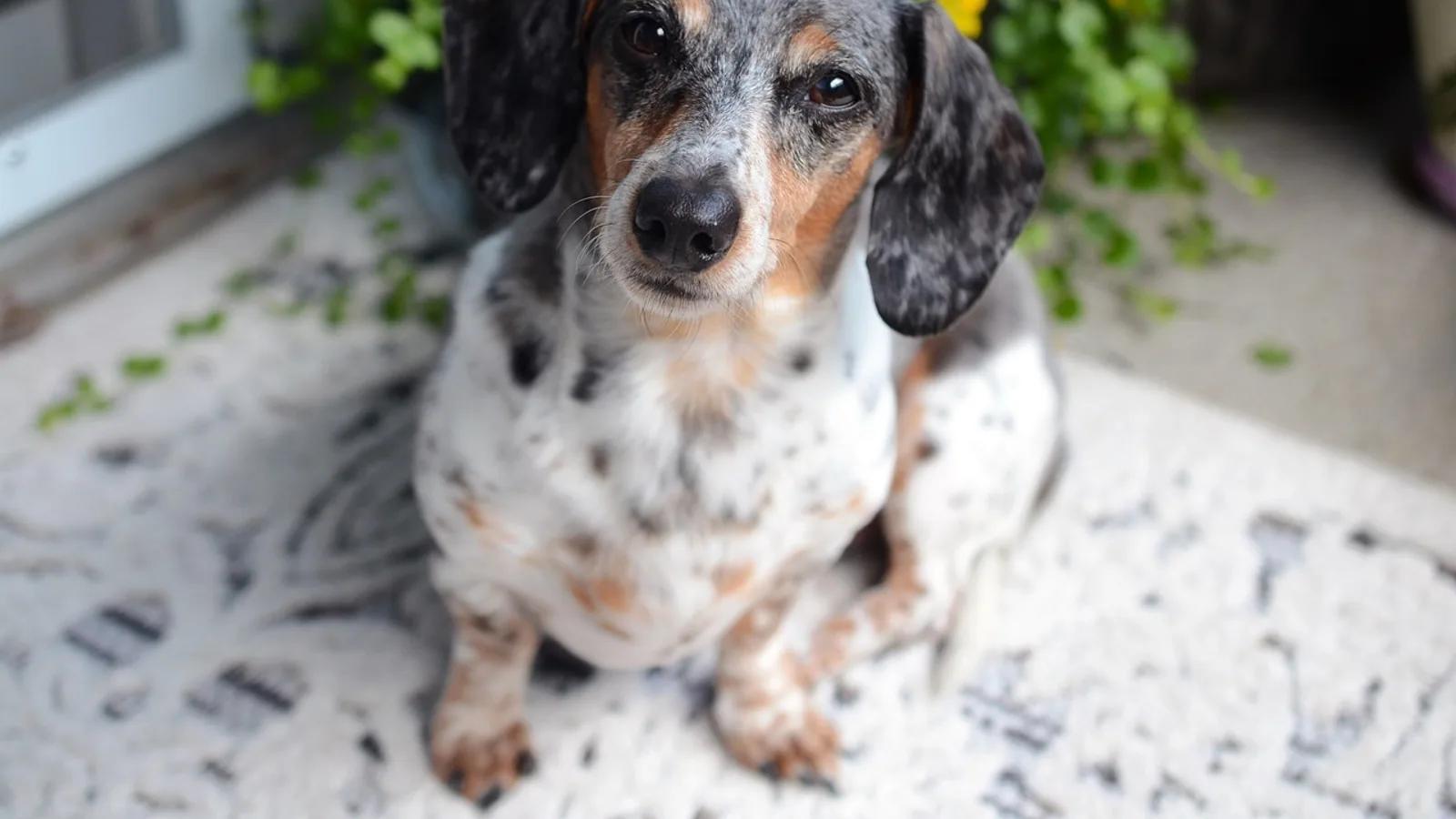
The Dachshund, often spelled "dotson dog" or "doxie" by American owners, is a short-legged, long-backed scent hound developed in Germany to follow badgers and other burrow-dwelling game underground. That same body plan that makes the breed fearless and effective in a tunnel is the reason it carries the highest risk of intervertebral disc disease (IVDD) of any dog breed. Roughly one in four Dachshunds may develop clinical signs of IVDD during its lifetime, and the breed accounts for the single largest share of dogs that arrive at emergency clinics unable to walk.
This guide covers what makes the Dachshund structurally different, how to keep a long-backed dog lean and stable, the daily habits that protect the spine, and the screening and veterinary care that responsible owners build into the calendar. It is written for the owner of a standard or miniature Dachshund, a fluffy sausage dog with a long coat, or a family considering a miniature dachshund puppy and wanting to understand the commitment before bringing one home.
This article is educational and is not a substitute for veterinary diagnosis or treatment.
At a Glance
| Attribute | Detail |
|---|---|
| Origin | Germany, developed as a badger and burrow hunting hound |
| Breed group | Scent hound |
| Size variants | Standard and miniature |
| Coat types | Smooth, long-haired, and wire-haired |
| Typical weight | Standard roughly 16 to 32 lb, miniature under about 11 lb |
| Height | Low-set, short-legged, long-bodied |
| Lifespan | Commonly into the early to mid teens with good care |
| Energy level | Moderate to high, bred for sustained work |
| Grooming | Varies by coat, smooth is low maintenance, long and wire need routine brushing and trimming |
| Trainability | Intelligent and independent, responds best to short, consistent, reward-based sessions |
| Good with children | Best with older, gentle children who can be taught to handle the spine carefully |
| Good with other pets | Variable, strong prey drive toward small animals |
Weight ranges vary by registry and bloodline, so treat these as orientation figures and confirm your dog's target with your veterinarian.
History and Purpose of the Dotson Dog
The name Dachshund translates from German as "badger dog." The breed was shaped to do a specific job: enter a badger sett, confront a powerful animal in a confined space, and hold or flush it for the hunter above ground. Hunters needed a dog short enough to move through a tunnel, brave enough to face a cornered badger, and loud enough to be located underground. The result is a low, muscular dog with a deep chest, powerful forelimbs, and a long, flexible spine.
Owners also used Dachshunds on other quarry, including fox and hare, and the breed's tracking ability kept it useful above ground as well. The three coat types, smooth, long-haired, and wire-haired, arose from different regional breeding traditions and different working conditions rather than from a single standardized line. In the United States the breed is registered in both standard and miniature sizes, and the long-haired and wire-haired varieties are the source of the affectionate "fluffy sausage dog" nickname.
That working history explains the temperament. A dotson the dog is bold, curious, and often stubborn, because a dog bred to work alone in a dark tunnel cannot wait for instructions. It also explains why the breed is prone to obesity when kept as a companion. A dog built for miles of hunting work and then settled onto a couch will gain weight quickly unless the owner controls portions and activity.
Appearance and Size Variants
The Dachshund's defining feature is disproportionality. The legs are short relative to the body, the chest is deep, and the spine is long and flexible. This is not a cosmetic accident. A genetic change, an insertion of an FGF4 retrogene on chromosome 12, is responsible for both the shortened limbs and the premature degeneration of the intervertebral discs that defines the breed's health risk [1]. The same gene that makes a Dachshund look like a Dachshund makes its discs fail early.
Across the dachshunds breeds, three coat types and two size classes produce six common varieties. The Danish study of IVDD incidence found no significant difference in disc herniation rates between the long-haired, smooth-haired, and wire-haired populations, so coat type does not change the fundamental spinal risk [2].
Size matters more for practical care than for disease risk. A standard Dachshund is a substantial dog that an owner cannot easily carry up a flight of stairs. A miniature is light enough to be lifted and carried, which makes spinal protection physically easier for the owner. Weight itself does not predict whether a dog will herniate a disc. In a large surgical case series, patient weight did not correlate with the occurrence of IVDD [3]. What weight does affect is the mechanical load on a degenerating spine and the difficulty of recovery, which is why body condition remains a core part of management.
Temperament and Household Fit
A Dachshund is affectionate with its family and often strongly bonded to one or two people. It is also territorial, vocal, and inclined to alert barking, traits that trace back to its work as a hunting dog that needed to announce a find. Early socialization and consistent, reward-based training from puppyhood reduce nuisance barking and guarding behavior.
The breed's independence cuts both ways. Dachshunds learn quickly but are not eager to comply for its own sake, so short sessions with clear rewards work better than long, repetitive drills. Harsh correction tends to produce a dog that simply refuses to cooperate.
Households with very young children are a poor match. A long-backed dog should not be picked up, squeezed around the middle, or allowed to jump from a child's arms. Families with older children who can be taught to support the chest and hindquarters when lifting can do well. Homes with small pets such as hamsters, rabbits, or birds need to account for a strong prey drive.
Exercise and Training Needs
Exercise for a Dachshund has two goals that pull in different directions. The dog needs enough activity to stay lean, and it needs activity that does not involve repeated impact, twisting, or jumping from height.
The evidence on activity and IVDD is worth understanding. In a large study of 43,517 companion dogs in the United States, higher daily active time was associated with reduced odds of owner-reported IVDD, and overweight dogs had significantly increased odds [4]. That points toward regular, moderate activity as protective. At the same time, a study of lifestyle factors in Dachshunds specifically found that the relationship between exercise and IVDD is not simple, and that advising owners on best-practice prevention is genuinely difficult because findings have conflicted [5].
The practical resolution is steady, low-impact exercise. Brisk leash walks on level ground, sniffing walks that let the dog work its nose, and controlled play in a fenced yard are appropriate. Activities that involve sharp turns at speed, repeated stair descents, leaping off furniture, or high-impact games put sudden load on a spine that is already predisposed to disc degeneration.
Training should include a reliable "wait" and a "come" so the dog can be stopped before it launches off a couch or down a staircase. Teaching a dog to wait at the top of stairs and be carried or use a ramp is a training task, not just a management task, and it is easier to establish in a puppy than to retrofit in an adult.
Grooming
Grooming needs depend on coat type. Smooth Dachshunds shed moderately and need little more than a weekly rub-down with a grooming mitt. Long-haired and wire-haired dogs, the fluffy sausage dogs of the breed, need scheduled brushing to prevent mats behind the ears, under the chest, and along the belly. Wire coats typically need hand-stripping or trimming to stay tidy.
Nail trimming is a spinal care task, not just a cosmetic one. Overgrown nails change the way the foot contacts the ground and alter the dog's stance and gait, which matters in a breed with a long back and short legs. Keep nails short enough that they do not click on hard flooring. Many Dachshunds dislike nail handling, so pair trimming with treats and do a small number of nails per session rather than a full set in one stressful event.
Ears deserve a routine check. The breed's drop ears limit airflow to the ear canal, and owners should look for redness, discharge, or odor and have these evaluated rather than cleaned aggressively at home.
Feeding and Weight Management
Weight control is the single most useful thing an owner can do for a Dachshund's spine. In the large US companion dog study, overweight dogs had 1.67 times the odds of owner-reported IVDD compared with dogs at a healthy weight [4]. A separate study of Dachshunds recovering from disc surgery found that dogs on average lost weight and body fat during rehabilitation while gaining muscle, showing that body composition is changeable with structured care [6].
Target Body Condition
Use body condition scoring rather than the scale alone, because a Dachshund's deep chest and short legs make weight a poor standalone measure. At an ideal body condition:
- The ribs are easy to feel under a thin layer of skin with no fat cover between the fingers.
- Viewed from above, there is a visible waist behind the rib cage, a slight inward curve rather than a straight tube.
- Viewed from the side, the belly tucks up from the rib cage toward the hindquarters.
- The spine and hip bones are not prominent, and there is no heavy fat pad over the tail base or along the back.
An overweight Dachshund often looks "solid" rather than fat because the long body hides the excess. Run your hands along the rib cage monthly. If you cannot feel ribs without pressing, the dog is carrying too much fat.
Weight Ranges by Size
| Variant | Typical adult weight |
|---|---|
| Standard | Roughly 16 to 32 lb |
| Miniature | Under about 11 lb |
These ranges are wide because registries and bloodlines differ. A dog at the top of the standard range can still be at ideal condition if it is tall and heavily boned, and a miniature at the low end can be overweight. Your veterinarian should set the target weight at each wellness visit and adjust it as the dog ages.
Feed measured meals rather than free-feeding, and account for training treats within the daily calorie total. A dog that is losing weight should do so slowly, with veterinary supervision, so it does not lose muscle along with fat.
The Dachshund Spine: Understanding IVDD Risk
Intervertebral disc disease is the defining health problem of the breed. The numbers are striking and consistent across countries and study designs.
In Danish Dachshunds, the overall incidence of disc herniation was 18%, with no significant difference between the long-haired (17%), smooth-haired (22%), and wire-haired (16%) populations [2]. A UK survey of 2,031 Dachshunds found an overall IVDD prevalence of 15.7%, with the highest prevalence in the Standard Smooth-Haired variety at 24.4% [5]. A Finnish study of radiographically screened Dachshunds aged at least ten years found that 31% were affected by disc disease [7]. In a US emergency clinic population, IVDD was the most common cause of acute paralysis in dogs, accounting for 72% of cases, and Dachshunds were the most common breed at 31.1% of those dogs [8].
Taken together, these figures support the widely repeated estimate that roughly one in four Dachshunds will show clinical signs of IVDD in its lifetime, and they explain why the breed is the focus of so much spinal research.
Why the Breed Is Predisposed
Dachshunds are chondrodystrophic. This means the cartilage of the long bones develops abnormally, producing short limbs, and the intervertebral discs degenerate and calcify prematurely [1]. The FGF4 retrogene insertion on CFA12 is the genetic driver, and it carries an odds ratio of 51.23 for IVDD, an unusually strong genetic association [1].
Degeneration begins early. A study of surgically treated Dachshunds found that disc extrusions occur as frequently in discs that show radiographic calcification as in those that do not, which means a normal-looking radiograph does not rule out a problem disc [9]. Chondrodystrophic breeds including the Dachshund, Jack Russell Terrier, and French Bulldog herniate discs much earlier in life than non-chondrodystrophic breeds [3]. A multicenter study of 465 Dachshunds with imaging-confirmed disc extrusion found that IVDD was most common in the thoracolumbar region, the mid-back between the rib cage and the pelvis, and that Dachshunds had the highest proportion of thoracolumbar disease among the chondrodystrophic breeds studied [10].
What Owners See
The classic presentation is a dog that yelps suddenly, becomes reluctant to move, walks with a hunched back, or refuses to jump onto the sofa. Reluctance to jump onto a sofa had a statistically significant association with the presence of multiple calcified discs in screened Finnish Dachshunds [7]. As compression progresses, owners may see wobbling in the hind legs, knuckling of the paws, dragging of a limb, or loss of the ability to stand.
Severity is not simply a function of how badly the disc has degenerated. In a histological study of surgically removed disc material, Dachshunds with more severe neurological deficits had lower degeneration scores, indicating that neurological severity depends on multiple interacting factors rather than on degeneration grade alone [11]. Spinal canal volume also matters. A three-dimensional CT study found that smaller spinal canal volumes were associated with more severe neurological deficits across breeds [12].
Environmental Triggers
Cold weather appears to influence acute onset. A study of 101 dogs presenting to referral centers around Lake Geneva found increased occurrence of intervertebral disc extrusion during colder temperatures, with chondrodystrophic dogs making up 65.3% of the population [13]. This does not mean cold causes IVDD, but it supports extra caution with a predisposed dog in cold conditions, particularly around sudden activity after a period of rest.
Screening and Breeding Programs
Because IVDD is hereditary in the Dachshund, several countries run breeding screening programs based on spinal radiography [14]. The approach is to radiograph a young adult dog's spine, count the number of radiographically detectable calcified discs, and exclude dogs with five or more calcifications from breeding [15].
The evidence supports this strategy. Calcification status is strongly associated with the risk of disc herniation, with a relative risk of 14.78, and using a threshold of five or more calcifications as a risk indicator gives a sensitivity of 0.79 and a specificity of 0.91 [2]. In Finnish Dachshunds, disc disease was rare in dogs with no calcifications and common in dogs with severe calcification [7]. Calcification status is also heritable, which is what makes selective breeding work in principle [16].
The DNA test for the FGF4 retrogene is an alternative or complementary tool. The Danish study compared the two approaches and found a significant association between the retrogene insertion and disc calcification status [2]. For owners, the practical takeaway is that a puppy from parents screened by radiography, genotyping, or both carries a lower expected risk than a puppy from unscreened parents. Screening reduces risk. It does not eliminate it, because disc extrusion occurred in the Finnish surgical population even in discs without visible calcification [9].
Daily Care Steps for a Long-Backed Dog
These are the habits that protect a Dachshund's spine day to day. None of them replaces veterinary care, and none of them guarantees a dog will never herniate a disc. They reduce the mechanical strain on a structure that is already predisposed to failure.
Manage Stairs and Jumping
Stairs and furniture are the two most common sources of repeated spinal impact in a pet Dachshund's life.
- Block or gate staircases so the dog cannot run up and down unsupervised.
- Use a ramp for the couch and the bed, and train the dog to use it consistently.
- Place a low, stable step or ramp at the car rather than letting the dog leap in and out.
- Discourage jumping off decks, retaining walls, and the backs of trucks.
- Pick the dog up rather than letting it scramble onto furniture it cannot reach.
One nuance from the research is worth knowing. In the large US companion dog study, regular use of a staircase was associated with reduced odds of owner-reported IVDD, which seems to contradict common advice [4]. That finding likely reflects the fact that dogs well enough to use stairs are dogs without spinal disease, rather than stairs being protective. It does not change the mechanical reasoning behind limiting stair descents in a predisposed breed, and it is a good example of why owner-reported data must be read carefully.
Lift and Carry Correctly
Support the whole spine when lifting. Place one hand under the chest, between the front legs, and the other hand under the hindquarters, so the back stays level and does not sag. Never lift a Dachshund by the front legs alone, by the scruff, or with one arm around the middle. Never let a child carry the dog without supervision.
For a standard Dachshund, lifting is a two-person job if the dog is heavy or if you have any back or shoulder limitation. A miniature is light enough for most adults to lift comfortably with correct hand placement.
Keep Nails Trimmed
Short nails keep the foot in a normal position and reduce the small postural compensations that travel up a long back. Trim nails every few weeks, or as often as needed to keep them from touching the floor when the dog stands.
Manage Body Weight Continuously
Weigh the dog monthly at home if possible, and body condition score it at the same time. Adjust portions before the dog gains a pound rather than after. Overweight dogs had 1.67 times the odds of owner-reported IVDD in the US study, which makes weight control one of the few modifiable risk factors owners genuinely control [4].
Provide Low-Impact Exercise
Daily walks on level ground, sniffing time, and controlled play. Avoid games that involve leaping, twisting, or chasing a ball down a slope. In cold weather, shorten outdoor sessions and warm up with a short walk before any faster activity, given the observed association between colder temperatures and acute disc extrusion [13].
Watch for Early Warning Signs
Know the signs that warrant a call to your veterinarian the same day: yelping without an obvious cause, reluctance to move or jump, a hunched posture, wobbling in the hind legs, dragging a paw, or sudden inability to stand. Early presentation gives the best chance of a good outcome.
Common Health Problems Beyond IVDD
IVDD dominates the breed's health profile, but owners should be aware of the broader picture.
Obesity. The most common and most preventable problem. It raises IVDD odds [4] and complicates recovery from any orthopedic or spinal condition.
Dental disease. Small and miniature breeds accumulate plaque quickly. Daily tooth brushing and professional dental cleaning under anesthesia are standard preventive care.
Ear disease. Drop ears trap moisture and debris. Check ears weekly and have any discharge, redness, or odor evaluated.
Obesity-related and age-related joint disease. A long-backed, short-legged dog with excess weight puts more load on the elbows, knees, and hips.
Post-surgical muscle loss. Dogs with compressive IVDD develop atrophy and fat infiltration in the epaxial muscles of the back, and these changes correlate with age and duration of clinical signs [17]. This is one reason structured rehabilitation after spinal surgery matters, and it is why a rehabilitation plan should be part of any post-operative care discussion.
Recommended Screening Tests
There is no routine blood test that predicts IVDD. Screening for the breed's core problem is genetic and radiographic, and it is done on breeding candidates rather than on every pet.
| Screening | Purpose | When |
|---|---|---|
| Spinal radiography for disc calcification | Counts calcified discs to estimate IVDD risk and guide breeding decisions [14][15] | Young adulthood, before breeding |
| FGF4 retrogene DNA test | Identifies the chondrodystrophy and IVDD risk variant [1] | Before breeding, ideally with radiographic screening [2] |
| Body condition and weight assessment | Detects overweight status, a modifiable IVDD risk factor [4] | Every wellness visit |
| Neurologic examination | Detects early spinal cord compression signs | Any visit where the owner reports pain, wobbling, or reluctance to move |
| Dental examination | Detects periodontal disease | Every wellness visit |
| Ear examination | Detects otitis | Every wellness visit and any time the owner notices odor or discharge |
Radiographic scoring is not perfectly objective. A study of scoring precision found that repeatability and reproducibility were high but not perfect, with scorer experience improving consistency [15]. This is a reason to use a screening program with trained scorers rather than a single casual radiograph.
Lifespan and Long-Term Outlook
Dachshunds commonly live into their early to mid teens. The breed's lifespan is long enough that a single episode of IVDD, if it occurs, is likely to be one event in a long life rather than an end point. Many Dachshunds that experience a disc extrusion recover with appropriate treatment, and post-operative outcomes in published case series are influenced by the neurological severity and the location of the lesion rather than by breed or surgeon experience [3].
The long-term outlook for any individual dog depends heavily on how quickly an owner recognizes a problem and seeks care, how well body condition is managed over the years, and how consistently spinal precautions are maintained. A lean, well-muscled Dachshund with a controlled environment has the best available odds.
Finding a Responsible Breeder or Rescue
Because IVDD is hereditary and screening tools exist, breeder practices matter more in this breed than in many others.
Ask whether the parents were screened for disc calcification by spinal radiography, genotyped for the FGF4 retrogene, or both. A responsible breeder should be able to explain the screening results and why they chose a particular pairing. Screening programs that exclude dogs with five or more calcified discs are established practice in several countries [15].
Ask to meet the dam and, if possible, the sire. Ask about the health history of previous litters and whether any puppies have developed spinal problems. Ask what the breeder does to keep puppies at a healthy weight and how they socialize them.
For rescue, ask the foster or shelter what is known about the dog's spinal history and whether it has had any episodes of back pain. Many Dachshunds in rescue are adults with known or suspected IVDD, and a frank conversation about expected care costs and mobility needs prevents a poor match.
A miniature dachshund puppy from unscreened parents is a genuine financial and emotional risk. Spinal surgery is expensive, recovery takes weeks to months, and not every dog returns to full function.
Who Should Not Get This Breed
A Dachshund is a poor fit for several households.
- Homes with very young children who cannot be taught to handle a long-backed dog carefully.
- Owners who cannot commit to weight management, because an overweight Dachshund carries meaningfully higher IVDD odds [4].
- Households with many unmanaged stairs and no plan for gates or ramps.
- Owners who want a dog that can be left to run free on varied terrain without supervision.
- Families who cannot absorb the cost of a possible spinal surgery and a months-long recovery period.
- Owners who dislike vocal dogs, since alert barking is characteristic of the breed.
Limitations and When to Contact a Veterinarian
This guide describes the breed's general health profile. It cannot tell you what is happening in your individual dog, and every case needs a veterinarian who can examine the dog, assess pain and neurologic status, and decide on imaging and treatment.
Contact a veterinarian the same day if your Dachshund:
- Yelps or cries when lifted, picked up, or handled around the back or neck.
- Refuses to jump onto furniture it normally jumps onto, or refuses to climb stairs.
- Stands with a hunched back or holds its head and neck stiffly.
- Shows wobbling, weakness, or knuckling in one or both hind legs.
- Drags a paw, scuffs the top of a foot, or crosses the hind legs when walking.
- Loses the ability to stand or walk, even briefly.
- Loses bladder or bowel control, or dribbles urine without awareness.
- Shows sudden reluctance to eat or move at all.
Loss of pain sensation and loss of the ability to walk are emergencies. In a dog that cannot walk, time to treatment affects outcome, and emergency evaluation is warranted immediately, day or night. Do not wait to see if it improves on its own, and do not give human pain medications, several of which are toxic to dogs.
Frequently Asked Questions
What is a dotson dog?
A dotson dog is a Dachshund. The spelling is a phonetic American rendering of the German breed name, and it refers to the same short-legged, long-backed scent hound. The breed is also called a doxie.
How common is IVDD in Dachshunds?
Roughly one in four may be affected in its lifetime. Published estimates include 18% incidence in Danish Dachshunds [2], 15.7% prevalence in a UK survey [5], and 31% in a Finnish screened population of older dogs [7].
What is the ideal weight for a Dachshund?
Standard Dachshunds typically weigh about 16 to 32 lb and miniatures under about 11 lb, but the more useful target is body condition. Your dog should have ribs you can feel without pressing through fat, a visible waist from above, and a belly that tucks up from the side.
How do I lift a Dachshund safely?
Place one hand under the chest between the front legs and the other under the hindquarters so the back stays level. Never lift by the front legs or the scruff, and never let the dog dangle with its back sagging.
Should I let my Dachshund use stairs?
Limit unsupervised stair use and use ramps or a low step for furniture and the car. Repeated stair descents and jumping off furniture put sudden load on a spine that is already predisposed to disc degeneration.
Does coat type change IVDD risk?
No. A study of Danish Dachshunds found no significant difference in disc herniation rates between long-haired, smooth-haired, and wire-haired dogs [2]. A fluffy sausage dog has the same spinal risk as a smooth-coated one.
Can I prevent IVDD in my Dachshund?
You cannot eliminate the risk, because it is largely genetic. You can reduce the mechanical load by keeping your dog lean, limiting stairs and jumping, using ramps, supporting the spine when lifting, and watching for early warning signs so problems are caught quickly [5][4].
When should I see a veterinarian about my Dachshund's back?
See a veterinarian the same day for yelping when lifted, reluctance to jump, a hunched posture, wobbling in the hind legs, or dragging a paw. Go to an emergency clinic immediately if the dog cannot stand or walk or loses bladder control.
Related Articles
- Dachshund Health Guide: Genetic Risks, Joint Care & Lifespan
- Dachshund Health Problems: IVDD Grade 1-5 Management and Spinal Surgery
- Hairless Cat: Care, Health, and Breed Guide
- Dog Breeds: How to Choose a Dog by Lifestyle, Health, and History
- Dachshund Lifespan Diet and Preventive Care Guide
- Can Dogs Eat Sausages? Seasoning Hazards and Fat Content
- Bantam Silkies: Breed Care and Health Guide
- Bully Pit Mix: Breed Traits, Health, and Care
Sources
- FGF4 retrogene on CFA12 is responsible for chondrodystrophy and intervertebral disc disease in dogs.
- Breeding schemes for intervertebral disc disease in dachshunds: Is disc calcification score preferable to genotyping of the FGF4 retrogene insertion on CFA12?
- [[Outcome of intervertebral disk disease surgery depending on dog breed, location and experience of the surgeon: 1113 cases].](https://pubmed.ncbi.nlm.nih.gov/31434123/)
- Demographic and lifestyle characteristics impact lifetime prevalence of owner-reported intervertebral disc disease: 43,517 companion dogs in the United States.
- DachsLife 2015: an investigation of lifestyle associations with the risk of intervertebral disc disease in Dachshunds.
- The effect of body condition on postoperative recovery of dachshunds with intervertebral disc disease treated with postoperative physical rehabilitation.
- Intervertebral disc disease in Dachshunds radiographically screened for intervertebral disc calcifications.
- Intervertebral disc disease and aortic thromboembolism are the most common causes of acute paralysis in dogs and cats presenting to an emergency clinic.
- Prevalence of radiographic detectable intervertebral disc calcifications in Dachshunds surgically treated for disc extrusion.
- Comparison of Clinical Features of Intervertebral Disc Extrusions in English Cocker Spaniels, French Bulldogs and Dachshunds.
- Degree of Inflammation in Surgically Obtained Intervertebral Disc Extrusions in a Population of 74 Dogs.
- 3D CT volumetric analysis of spinal canal volume in Bichon Frisé, Dachshund, and French Bulldog: correlation with neurologic severity in thoracolumbar disc herniation.
- Colder Ambient Temperatures Influence Acute Onset Canine Intervertebral Disc Extrusion.
- Radiographic scoring for intervertebral disc calcification in the Dachshund.
- Precision of spinal radiographs as a screening test for intervertebral disc calcification in Dachshunds.
- Estimate of heritability and genetic trend of intervertebral disc calcification in Dachshunds in Finland.
- Epaxial muscle atrophy is more evident in large dogs with intervertebral disc disease than in dogs with ischaemic myelopathy.