Flat-Faced Cats: Brachycephalic Breeds and Health Risks
By Dr. Zubair Khalid, DVM, MS, PhD ·
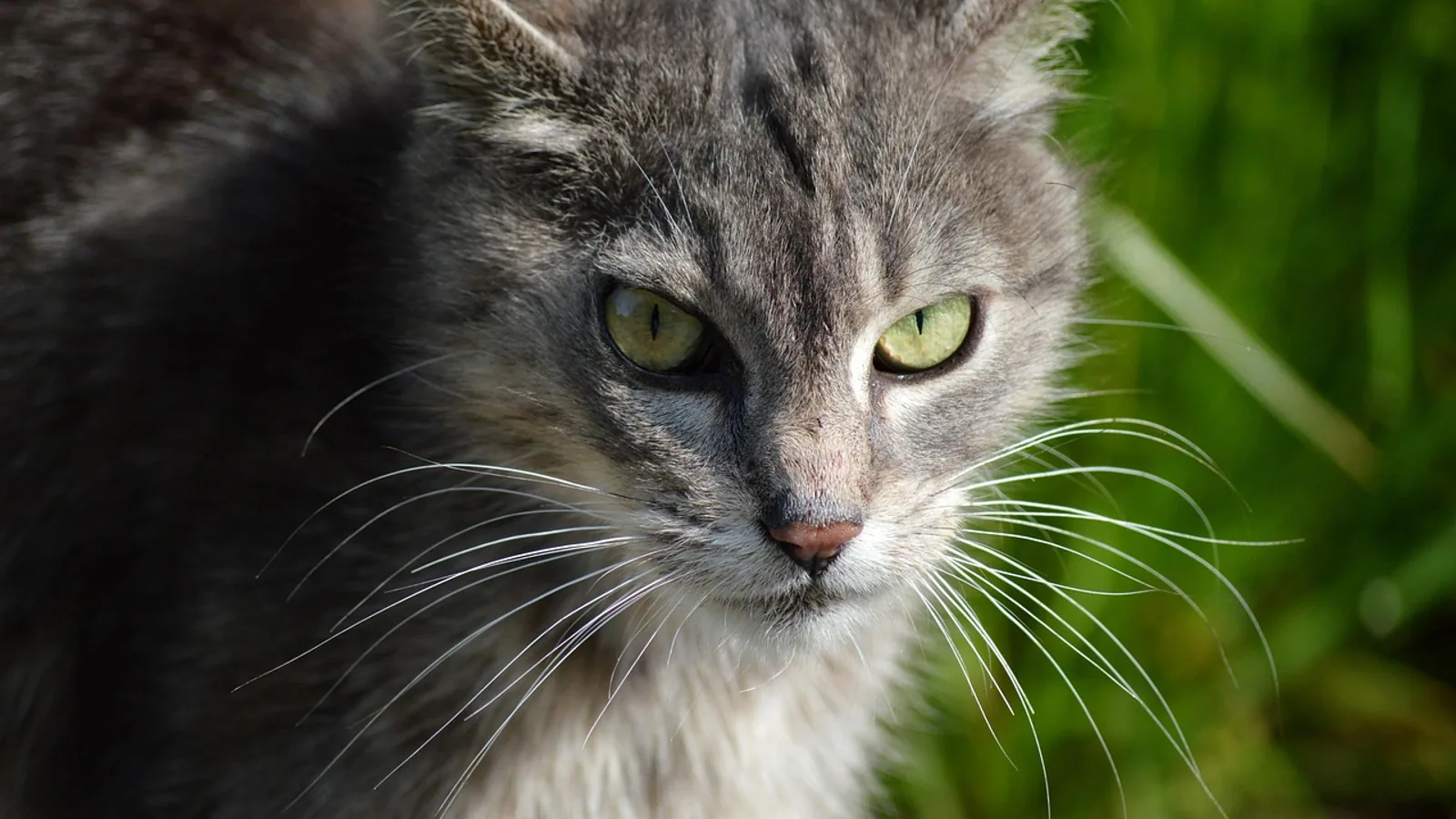
A flat face cat is not simply a cat with a round head. The shortened skull that produces that look also reshapes the entire upper airway, the tear drainage system, the bite, and the way the eyes sit in the socket. The result is a group of breeds that are among the most popular in the United States and also among the most medically complicated to own.
Brachycephalic means "short-headed." In cats, the classic flat-faced breeds are the Persian, the Exotic Shorthair, the Himalayan, the British Shorthair, and the Burmese, with Persian-derived lines showing the most extreme anatomy. These cats are typically calm, affectionate, indoor-oriented companions that suit apartments, quiet households, and owners who want a lap cat rather than an athlete.
That temperament comes with a trade-off. Brachycephalic obstructive airway syndrome (BOAS) is well documented in dogs, and it is less common in cats, but cats still develop it and still suffer from it [1][2]. A flat-faced cat can live a long, comfortable life. Many do. But the owner who understands the anatomy, watches for early signs, and manages eyes, teeth, and breathing proactively will catch problems while they are still easy to manage.
This article is educational and is not a substitute for veterinary diagnosis or treatment.
At a Glance
| Trait | Typical range for brachycephalic cats |
|---|---|
| Height | 10 to 16 inches at the shoulder, breed dependent |
| Weight | 6 to 15 pounds, with Persians and British Shorthairs at the heavier end |
| Coat | Long and dense (Persian, Himalayan), short and plush (Exotic Shorthair, British Shorthair, Burmese) |
| Lifespan | 12 to 17 years with good preventive care |
| Energy level | Low to moderate |
| Grooming | Daily for longhaired cats, twice weekly for shorthaired cats |
| Trainability | Moderate, food motivated, responds to routine |
| Good with children | Yes, with calm and gentle handling |
| Good with other pets | Often yes, especially with slow introductions |
What Makes a Cat Brachycephalic
Brachycephaly is a skull shape, not a disease. The shortened muzzle and the flattened profile come from selective breeding that compresses the bones of the face while the soft tissues inside the head do not shrink to match. The nose, the nasal passages, the soft palate, and the turbinates (the thin scrolls of bone and tissue inside the nose) all end up crowded into less space than they were designed for.
That crowding is the root of most brachycephalic health problems. A narrowed nostril, a soft palate that extends too far back, or turbinate tissue that spills into the nasopharynx all reduce the diameter of the airway. The cat has to work harder to move the same amount of air.
Veterinarians group these abnormalities under the term brachycephalic obstructive airway syndrome, or BOAS. The syndrome is a collection of primary problems that are present from birth and secondary problems that develop over time as the airway is chronically stressed [3]. Primary components include stenotic nares (narrowed nostrils), an elongated soft palate, and aberrant or nasopharyngeal turbinates. Secondary components include laryngeal collapse and other structural changes that follow years of increased respiratory effort [3][4].
The same short skull that narrows the airway also shortens the face in front of the eyes. That pushes the eyes forward, reduces the depth of the eye socket, and can distort the drainage pathway from the eye to the nose. It also shortens the upper jaw relative to the lower jaw, which is why so many flat-faced cats have a bite that does not line up.
Brachycephalic Cat Breeds
Persian
The Persian is the archetype of the flat face cat. The breed is ancient in origin, with longhaired cats traced to Persia (modern Iran) and brought to Europe in the 1600s. The modern show Persian has an extremely flat face, a short nose set nearly level with the eyes, and a long, dense coat that requires daily grooming. Persians are calm, quiet, and devoted to their people. They are not climbers or jumpers by nature. They suit quiet homes and owners who enjoy grooming as part of the daily routine.
Persians are the breed most strongly associated with the full range of brachycephalic problems, including severe stenotic nares, epiphora (excessive tearing), and dental crowding. They are also the breed most often represented in the feline BOAS literature [1][2][5].
Exotic Shorthair
The Exotic Shorthair is a Persian in a short coat. The breed was developed in the 1960s by crossing Persians with American Shorthairs to produce a cat with the Persian face and body but a coat that does not mat. The temperament is nearly identical: calm, affectionate, and undemanding. The health profile mirrors the Persian as well, including the same airway, eye, and dental risks. An Exotic Shorthair with a very flat face can have the same degree of nasal stenosis as a Persian [6].
Himalayan
The Himalayan is a Persian crossed with a Siamese, producing a longhaired cat with the Persian body and the Siamese colorpoint pattern (dark face, ears, legs, and tail with a lighter body). The face is flat, though often slightly less extreme than a show Persian. The coat is long and requires daily grooming. The temperament is gentle and social, with a bit more voice than a Persian. Health risks follow the Persian pattern, including BOAS, epiphora, and dental malocclusion.
British Shorthair
The British Shorthair is a sturdy, muscular cat with a round head, full cheeks, and a short but not fully flat muzzle. The breed descends from cats brought to Britain by the Romans and was refined in the 1800s. British Shorthairs are calm, independent, and undemanding. They are often described as "four on the floor" cats because they prefer to stay grounded rather than climb. Their brachycephaly is milder than the Persian's, so BOAS is less common, but the breed still carries increased risk of tear staining, dental crowding, and weight gain.
Burmese
The Burmese is a medium-sized, muscular cat with a rounded head, large eyes, and a short muzzle that is less extreme than the Persian's. The breed originated in Burma (Myanmar) and was established in the United States in the 1930s. Burmese are social, vocal, and people-oriented. They are more active than Persians and British Shorthairs and often follow their owners from room to room. Their brachycephaly is mild, and severe BOAS is uncommon, but the breed is included in the brachycephalic group and can develop upper airway signs.
BOAS in Cats: What Owners See
BOAS in cats is less common than in dogs, and it is often less dramatic. A dog with BOAS may sound like a freight train. A cat with BOAS may simply snore, breathe with its mouth slightly open when relaxed, or tire faster than expected. Because cats hide respiratory effort well, owners often miss the early signs.
The signs below are the ones veterinarians look for. Any of them warrants a conversation with your veterinarian.
Stenotic Nares
Stenotic nares are narrowed nostrils. In dogs, the narrowing usually comes from the alar cartilage folding inward. In cats, the cause is different. The narrowing in cats is predominantly the result of a redundant fold of skin at the junction of the ventral floor of the nostrils and the haired skin of the lip [7]. A separate study proposed that stenotic nares in brachycephalic cats arise from an elongated dorsal lateral nasal cartilage [8]. Both mechanisms reduce the opening through which air enters.
You can often see stenotic nares at home. Look at your cat's nose from the front. If the openings are slits rather than rounded holes, or if the sides of the nostrils collapse inward when the cat inhales, the nares are narrowed. Cats with significant stenosis often breathe through the mouth, especially when excited or after activity.
Elongated Soft Palate
The soft palate is the flap of tissue at the back of the mouth that separates the nasal passage from the throat during swallowing. In brachycephalic cats, the palate can be longer and thicker than normal. It hangs into the airway and vibrates as air moves past, producing snoring, stertor (a snuffling or snoring sound during breathing), and sometimes gagging or regurgitation.
Dyspnea and Respiratory Distress
Dyspnea means difficult or labored breathing. In a cat with BOAS, dyspnea may appear as rapid breathing at rest, abdominal effort (the belly moves in and out with each breath), open-mouth breathing, or a stretched-neck posture. Open-mouth breathing in a cat is always abnormal and should be treated as an emergency unless the cat is in a hot environment or has just exercised heavily. Even then, a brachycephalic cat that pants easily deserves evaluation.
Snoring and Noisy Breathing
Snoring is common in flat-faced cats and is often dismissed as normal. It is not normal in the sense of being harmless. Snoring is a sign that air is moving through a narrowed passage and vibrating tissue. A cat that snores loudly every night, or that wakes itself up with snoring, has some degree of upper airway obstruction.
Exercise Intolerance
Exercise intolerance means the cat tires quickly, avoids play, or stops to breathe during activity. A Persian that plays for two minutes and then lies down with its mouth open is showing exercise intolerance. So is a cat that used to chase a toy and now watches from the couch.
Sleep and Activity Changes
Cats with BOAS often sleep more than expected, wake frequently, or adopt unusual sleeping positions (chin extended, head elevated) to keep the airway open. Some cats become less interactive over time as breathing effort increases.
Gastrointestinal Signs
Brachycephalic animals frequently have gastrointestinal signs alongside respiratory signs, including regurgitation, vomiting, and food intolerance. The increased negative pressure in the chest during labored breathing is thought to contribute. A study of 27 brachycephalic cats treated surgically for stenotic nares found that owner-reported clinical severity scores improved from a median of 48 before surgery to 17 after surgery, and the improvement covered respiratory, gastrointestinal, sleep, activity, ocular, aural, and dental signs [9].
BOAS Risk Table by Breed
The table below summarizes the relative risk of BOAS and the signs most commonly seen in each breed. Severity is a general guide, not a diagnosis. Individual cats vary widely, and a mildly brachycephalic cat can still develop significant disease.
| Breed | Relative BOAS risk | Common signs to watch for |
|---|---|---|
| Persian | High | Stenotic nares, stertor, snoring, exercise intolerance, epiphora, dental crowding, open-mouth breathing with stress |
| Exotic Shorthair | High | Stenotic nares, stertor, snoring, exercise intolerance, epiphora, dental crowding, severe nasal stenosis in extreme lines |
| Himalayan | Moderate to high | Stertor, snoring, epiphora, dental malocclusion, exercise intolerance |
| British Shorthair | Low to moderate | Tear staining, mild stertor with excitement, dental crowding, weight-related breathing effort |
| Burmese | Low | Occasional stertor, mild exercise intolerance, tear staining |
The risk table reflects the general pattern in the veterinary literature. Persians and Exotic Shorthairs are the breeds most often described with clinically significant BOAS, and the feline surgical case series are dominated by these breeds [1][9][2][5]. British Shorthairs and Burmese are brachycephalic by classification but are less commonly affected by severe airway disease.
Why Cats Are Different from Dogs
Brachycephalic airway syndrome is far more common and far more severe in dogs than in cats. Pugs, French Bulldogs, and English Bulldogs fill veterinary surgical schedules in a way that flat-faced cats do not. Several factors explain the difference.
First, the degree of brachycephaly in the most extreme dog breeds exceeds anything seen in cats. A Pug's skull is compressed far more than a Persian's. Second, dogs are often bred and exercised in ways that expose airway compromise, while cats live indoors and self-limit their activity. Third, the anatomy of the feline nostril differs from the dog's, which changes how stenosis develops and how it is corrected [7][2].
None of this means cats are safe. Cats with BOAS still suffer. They still develop laryngeal collapse from chronic airway obstruction [4]. They still develop secondary complications. They still need treatment. The difference is one of degree and frequency, not of kind.
Eye Problems in Flat-Faced Cats
The shortened skull pushes the eyes forward and reduces the depth of the orbit. The eyelids cannot always close completely over the cornea, and the drainage pathway from the eye to the nose is often distorted. The result is a group of eye problems that are common in flat-faced cats.
Epiphora
Epiphora is excessive tearing that spills onto the face. In a normal cat, tears drain through a small opening at the inner corner of the eye, travel down a duct, and empty into the nose. In a brachycephalic cat, that duct is often narrowed or kinked. Tears overflow onto the cheek and leave a reddish-brown stain on the fur. The stain itself is cosmetic, but the underlying cause matters. Chronic epiphora can lead to skin irritation and infection in the folds around the eye.
Corneal Ulcers
A corneal ulcer is a break in the clear surface of the eye. Flat-faced cats are at higher risk because the cornea is more exposed, because the eyelids may not close fully, and because the tear film that protects the cornea is often abnormal. An ulcer is painful. Signs include squinting, pawing at the eye, redness, discharge, and reluctance to be touched near the face. A corneal ulcer is a medical emergency. Untreated ulcers can progress to deep infection and, in severe cases, loss of the eye.
Entropion
Entropion is a condition in which the eyelid rolls inward and the eyelashes or skin rub against the cornea. It is painful and can cause chronic ulceration. Brachycephalic cats can develop entropion because the shortened face changes the relationship between the eyelid and the eye. Signs include squinting, tearing, and a visibly rolled eyelid margin.
Exposure Keratitis
Exposure keratitis is inflammation of the cornea caused by incomplete blinking or incomplete eyelid closure. It is a consequence of the same anatomy that causes epiphora and ulcers. A cat with exposure keratitis may have a dull or cloudy cornea, chronic redness, and discomfort.
Any eye problem in a flat-faced cat should be evaluated by a veterinarian promptly. Do not wait to see if it resolves on its own.
Dental Problems in Flat-Faced Cats
A shortened upper jaw does not leave enough room for a full set of teeth. The result is dental crowding, rotated teeth, and malocclusion (a bite that does not align). Crowded teeth trap food and plaque, which leads to periodontal disease, gingivitis, and tooth loss.
Common findings in brachycephalic cats include:
- Overcrowded incisors and canines
- Rotated or displaced teeth
- An underbite or overbite
- Persistent deciduous (baby) teeth
- Early periodontal disease
Dental disease is not just a mouth problem. Chronic oral infection and inflammation affect the whole body. Cats with painful mouths may stop eating, drool, or develop behavior changes. The surgical case series of brachycephalic cats found that dental health was among the clinical domains that improved after airway surgery, which suggests that the two problems are linked [9].
Home dental care matters. Daily tooth brushing with a cat-safe toothpaste is the standard recommendation. Dental treats and water additives help but do not replace brushing. Professional dental cleaning under anesthesia is often needed, and brachycephalic cats require extra care during anesthesia because of their airway anatomy [10].
Grooming and Skin Problems
Flat-faced cats cannot groom their own faces effectively. The short neck, the flat face, and the reduced flexibility that comes with a cobby body make it hard for a Persian or Exotic Shorthair to reach its own eyes, nose, and chin. The result is tear staining, food residue, and skin fold dermatitis.
Longhaired brachycephalic cats need daily grooming. Shorthaired flat-faced cats need their faces wiped daily with a soft, damp cloth. Pay attention to:
- The folds around the nose and mouth
- Under the eyes
- The chin
- The area under the tail (Persians often need help here)
Skin fold dermatitis develops when moisture and debris accumulate in a fold and bacteria or yeast overgrow. Signs include redness, odor, discharge, and discomfort. Your veterinarian can recommend an appropriate cleaning routine and, if needed, treatment.
Feeding and Weight Management
Brachycephalic cats often eat slowly because they cannot breathe through their noses while chewing. Some cats swallow air while eating, which contributes to flatulence and gastrointestinal discomfort. Others have difficulty picking up food from a flat bowl because their flat face and short jaw get in the way.
Practical adjustments that help:
- Use a shallow, wide bowl so the cat does not have to push its face into the food
- Offer smaller, more frequent meals
- Elevate the bowl slightly so the neck is not compressed
- Keep the food fresh and palatable, since a cat that cannot smell well may eat less
Weight management is critical. Obesity makes every brachycephalic problem worse. Extra fat around the chest and neck increases the work of breathing and reduces the space available for the airway. A cat at a healthy weight breathes more easily, moves more comfortably, and has a lower risk of complications during anesthesia. Your veterinarian can help you set a target weight and choose an appropriate diet.
Exercise and Activity
Flat-faced cats are not athletes. They do best with short, frequent play sessions rather than long, intense ones. Wand toys, food puzzles, and gentle chase games work well. Watch for signs that your cat is working too hard:
- Open-mouth breathing
- Loud breathing during play
- Stopping to rest after a minute or two
- Reluctance to continue
If your cat shows any of these signs, stop the session and let it recover. If the signs persist at rest, contact your veterinarian.
Anesthesia and Surgery in Brachycephalic Cats
Brachycephalic cats are higher-risk anesthesia patients. The narrowed airway makes intubation more difficult, and the reduced airway diameter means that even mild swelling after extubation can cause significant obstruction. The veterinary literature on brachycephalic airway management emphasizes careful preoperative assessment, careful anesthetic planning, and close postoperative monitoring [10][11].
If your flat-faced cat needs any procedure under anesthesia, including a dental cleaning, choose a veterinarian experienced with brachycephalic patients. Ask about monitoring during recovery. Most complications happen in the hours after the breathing tube is removed, not during the procedure itself.
Surgical correction of stenotic nares is an option for cats with significant obstruction. Several techniques have been described, including ala vestibuloplasty, single pedicle advancement flaps, and bilateral wedge resection of the dorsal lateral nasal cartilage [9][7][8][2][5]. Outcomes are generally good. In one series of 27 cats, 25 (92.5%) sustained long-term clinical improvement for a mean of 1190 days after ala vestibuloplasty [9]. In another series of 37 cats, improvement in respiratory signs was observed in all cats, and owners reported improved quality of life in 83.8% [5]. Surgery is not a cure for every cat, and not every cat needs it, but it can substantially improve comfort for cats with severe stenosis.
Screening and Preventive Care
There is no single test that diagnoses BOAS in cats. Diagnosis is based on history, physical examination, and the pattern of clinical signs. Barometric whole-body plethysmography, a non-invasive breathing test, has been evaluated as a tool for confirming and grading upper airway obstruction in brachycephalic cats [1]. Your veterinarian may recommend referral for advanced diagnostics if the diagnosis is unclear or if surgery is being considered.
Recommended preventive care for flat-faced cats includes:
- Twice-yearly wellness examinations, with attention to breathing, eyes, teeth, and weight
- Annual dental evaluation, with cleaning as needed
- Regular eye examinations, especially if tearing or squinting is present
- Weight monitoring at every visit
- Discussion of anesthesia risk before any procedure
Living with a Flat-Faced Cat
A flat-faced cat can be a wonderful companion. Persians, Exotic Shorthairs, Himalayans, British Shorthairs, and Burmese are affectionate, low-energy cats that fit well into quiet homes. The key is to go in with clear eyes about the health risks and to build a care routine that addresses them.
Daily care for a flat-faced cat includes:
- Wiping the face and eye area with a soft, damp cloth
- Brushing the coat (daily for longhaired cats)
- Brushing the teeth
- Watching for changes in breathing, appetite, and activity
- Keeping the environment cool and calm
Environmental adjustments that help:
- Avoid extreme heat and humidity
- Use a humidifier in dry climates
- Keep the litter box clean and dust-free
- Use low-dust litter
- Avoid cigarette smoke and strong fragrances
- Provide easy access to food, water, and resting spots
Finding a Responsible Breeder or Rescue
If you are looking for a flat-faced cat, start with health testing and honest communication. A responsible breeder will:
- Provide health records for the parents
- Allow you to meet the mother cat
- Discuss the breed's health risks openly
- Ask you questions about your home and lifestyle
- Offer a health guarantee and take the cat back if you cannot keep it
Be cautious of breeders who dismiss breathing problems as normal, who breed for extreme flat faces without regard for health, or who will not let you see where the cats are raised. Breed clubs and national breed councils can help you find reputable breeders.
Rescue is an excellent option. Many flat-faced cats end up in rescue because their owners were not prepared for the grooming or medical needs. A rescue organization can tell you about the cat's known health history and match you with a cat whose needs fit your home.
Who Should Not Get a Flat-Faced Cat
A flat-faced cat may not be the right choice if:
- You cannot commit to daily grooming and face cleaning
- You are not prepared for the cost of veterinary care, including possible surgery
- You live in a hot, humid climate without air conditioning
- You smoke indoors
- You want an active, athletic cat that will play hard and climb
- You cannot manage the emotional weight of a cat with chronic health problems
- You travel frequently and cannot arrange consistent care
Limitations and When to Contact a Veterinarian
This article provides general information about brachycephalic cats. Every cat is an individual, and the severity of brachycephalic problems varies widely. Your veterinarian is the only person who can examine your cat, assess its airway, and recommend a plan.
Contact a veterinarian promptly if your cat shows any of the following:
- Open-mouth breathing at rest
- Breathing that is rapid, labored, or accompanied by abdominal effort
- Blue or gray color to the gums or tongue
- Collapse or fainting
- Sudden worsening of snoring or stertor
- Inability to eat or drink
- Squinting, pawing at the eye, or eye discharge
- A visible change in the eye, including cloudiness or redness
- Drooling, dropping food, or reluctance to chew
- Regurgitation or vomiting after eating
- Lethargy or reluctance to move
- A rectal temperature above 104°F (heat stress)
If your cat is struggling to breathe, do not wait. Go to an emergency veterinary hospital.
Frequently Asked Questions
What is a flat-faced cat called?
A flat-faced cat is called brachycephalic, which means "short-headed." The term describes the skull shape shared by Persians, Exotic Shorthairs, Himalayans, British Shorthairs, and Burmese.
Are flat-faced cats unhealthy?
Flat-faced cats have a higher risk of certain health problems, including breathing difficulty, eye disease, dental crowding, and skin fold dermatitis. Many live long, comfortable lives with good care. The risk is real and should guide your decisions about breeding, buying, and daily management.
Do all flat-faced cats have breathing problems?
No. The severity of breathing problems varies by breed and by individual. Persians and Exotic Shorthairs are most commonly affected. British Shorthairs and Burmese are less likely to have significant airway disease. Any flat-faced cat can develop signs, and any sign warrants evaluation.
What are the signs of BOAS in cats?
Signs include snoring, stertor (noisy breathing), open-mouth breathing, exercise intolerance, rapid breathing at rest, and difficulty eating. Some cats also have regurgitation, vomiting, and sleep changes.
Can BOAS in cats be treated?
Yes. Mild cases are managed with weight control, environmental adjustments, and monitoring. More severe cases may benefit from surgery to open the nostrils or correct other airway abnormalities. Surgery has been shown to improve clinical signs and quality of life in many cats.
Why do flat-faced cats have eye problems?
The shortened skull pushes the eyes forward and reduces the depth of the eye socket. This can cause excessive tearing, incomplete eyelid closure, corneal ulcers, and entropion. Daily face cleaning and prompt veterinary care for any eye sign are important.
Do flat-faced cats need special food or bowls?
Many flat-faced cats eat more comfortably from a shallow, wide bowl. Smaller, more frequent meals can help cats that eat slowly or swallow air. Weight management is critical because obesity worsens breathing problems.
How often should a flat-faced cat see a veterinarian?
Twice-yearly wellness examinations are reasonable for most flat-faced cats, with additional visits for any change in breathing, eyes, teeth, or appetite. Your veterinarian may recommend a different schedule based on your cat's individual health.
Related Articles
- Boston Terrier Health Problems: Brachycephalic Syndrome and Patellar Luxation
- Shih Tzu Health Problems: Brachycephalic Eye Disease and Kidney Stones
- Hairless Cat: Care, Health, and Breed Guide
- Leptospirosis Vaccine: Zoonotic Risk Prevention and Breed Sensitivities
- Dog Breeds: How to Choose a Dog by Lifestyle, Health, and History
- Cat Breeds: How to Choose a Cat by Care Needs, Health, and History
- King Shepherd: Breed Traits, Size, and Health Risks
- Mastiff Breeds: Comparison, Traits, and Health Risks
Sources
- Characterization of Brachycephalic Obstructive Airway Syndrome in Cats Using Barometric Whole-Body Plethysmography.
- Single pedicle advancement flap for treatment of feline stenotic nares: technique and results in five cases.
- Brachycephalic Syndrome.
- Laryngeal Disease in Dogs and Cats: An Update.
- Stenotic nares treatment in 37 brachycephalic cats by ala vestibuloplasty: 2017-2025.
- Surgical reconstruction using a mucosal graft and temporary nasal stent in a cat with severe nasal stenosis.
- Surgical correction of stenotic nares using a single pedicle advancement flap technique in three brachycephalic cats.
- A novel surgical approach for feline stenotic nares: Bilateral wedge resection of the dorsal lateral nasal cartilage in seven cases.
- Ala vestibuloplasty for treatment of feline brachycephalic syndrome: a description of the procedure and long-term outcomes in 27 cats.
- Brachycephalic airway syndrome: management.
- Complications of upper airway surgery in companion animals.