
Cat Breeds: How to Choose a Cat by Care Needs, Health, and History
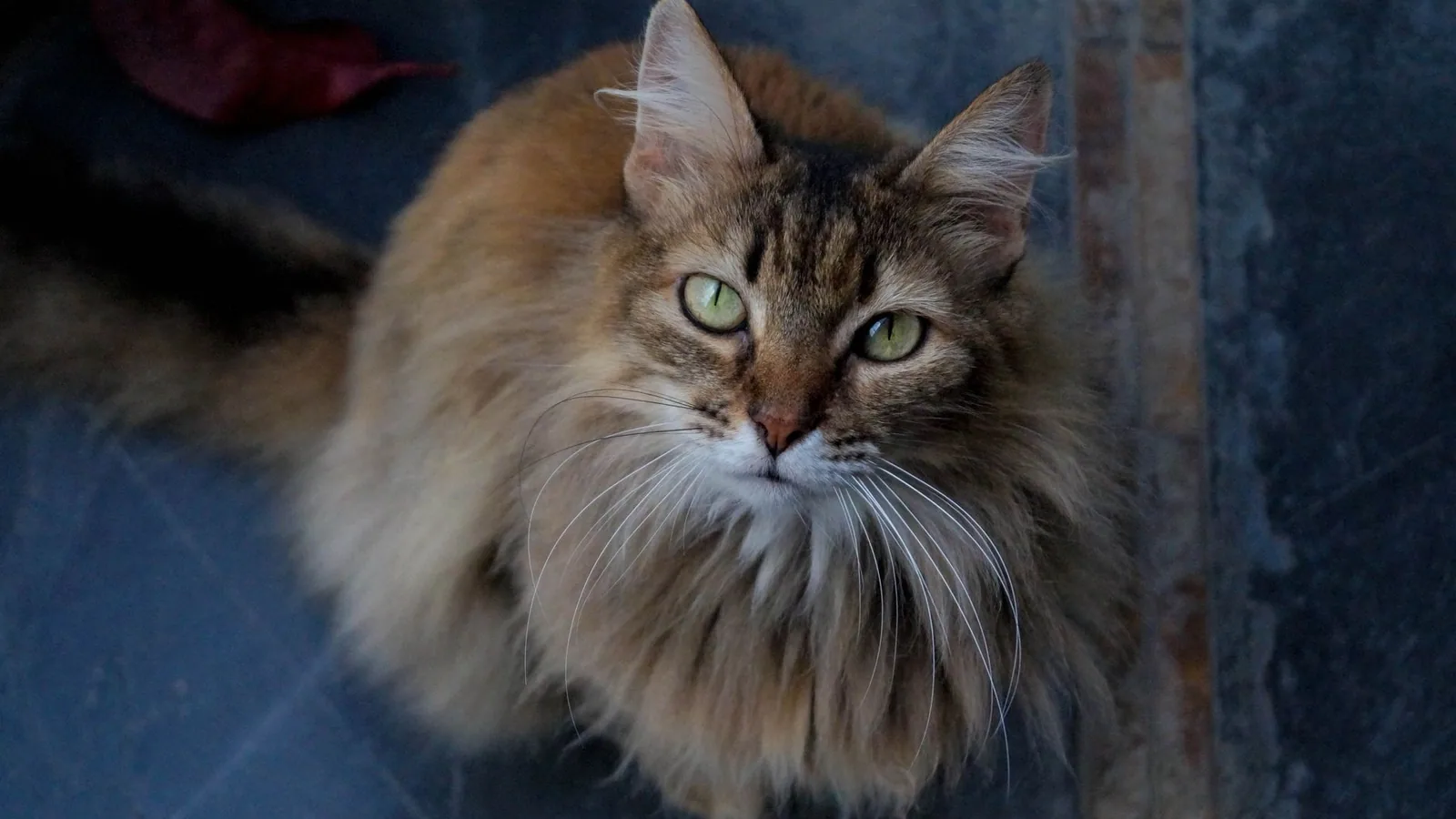
Hero image: long-haired domestic cat. Photograph by Jesus Miguel Hernandez via Pexels, used under the Pexels License. The image illustrates coat-care context and does not identify a breed.
A cat breed can give useful clues about coat work, adult body type, a registry's breeding goals, and health questions worth asking. It cannot tell you exactly how one cat will behave in a new home. Individual experience, early socialization, pain, environment, handling, and the people living with the cat all matter. The soundest choice begins with the home and the individual cat, then uses breed information to ask better questions.
This guide covers cat breed history, common planning categories, honest discussion of claims such as “hypoallergenic,” screening records, rescues and breeders, and the care decisions that stay important after the novelty of a breed name fades.
Quick Answer
Choose a cat by matching the individual animal's needs with your available time, home layout, grooming ability, veterinary budget, and tolerance for activity and noise. Use a breed description as a starting point. Meet the cat if possible, ask for health and social history, and make sure the home can provide litter boxes, vertical space, play, rest areas, and preventive veterinary care. No cat breed is reliably allergy-free, guaranteed affectionate, or guaranteed healthy.
At a Glance
| Question | What a breed description can help with | What still requires individual evidence |
|---|---|---|
| Coat | Length, density, color patterns, routine grooming likely needed | Tolerance for brushing, matting history, skin condition |
| Activity | Historic or registry-described activity range | Play style, recovery after excitement, current enrichment needs |
| Size and build | Adult frame and carrier or furniture planning | Current weight, body condition, mobility, and handling comfort |
| Health | Breed-associated questions and possible screening discussions | Current examination, parent records, actual test results |
| Social fit | Topics to observe around people or other animals | Response to visitors, children, handling, and a new environment |
What a Cat Breed Represents
Modern cat breeds are largely the product of recent, organized selection around ancestry, appearance, coat, body type, or a regional population. The Cat Fanciers' Association breed directory and the International Cat Association breed information describe recognized breeds and standards. A standard is a registry document. It should not be read as a medical record or a behavioral guarantee.
Breed history matters because a visible trait can create a real care demand. Long coat requires routine combing. A very large adult body needs sturdy vertical furniture, an appropriately sized carrier, and comfortable handling at veterinary visits. Reduced hair coverage raises questions about temperature, sunlight, skin oils, and gentle routine care. A flat facial structure should trigger a careful conversation about breathing, eyes, teeth, and comfort. None of these traits is an argument that a cat cannot have a good life. They are reasons to plan care before acquisition.
Four kinds of information that are often mixed together
| Kind of claim | A more careful reading |
|---|---|
| Registry standard | “This organization recognizes a body type or coat.” It does not prove the cat has no health concerns. |
| Population tendency | “This trait may occur more often in a population.” It does not predict every individual. |
| Seller description | “This cat is calm or affectionate.” Ask what was observed, in what setting, and by whom. |
| Medical evidence | A veterinary record, test result, or examination finding tied to a specific animal and date. |
This distinction avoids a common mistake: assigning a new cat a personality before it has settled in. A quiet cat in a shelter may be overwhelmed, a confident cat may be temporarily cautious after transport, and a cat labelled “independent” may simply need more predictable handling. Give a new cat a safe room, steady routine, and time to make choices about interaction.
A Home-First Cat Selection Framework
Before comparing breeds, describe the day your home can consistently offer. Cats benefit from access to food, water, safe resting places, litter boxes, scratching opportunities, climbing or elevated observation points, play, and social contact at a level the individual welcomes. These are management commitments, not optional accessories.
| Home factor | Questions to answer before adopting or buying |
|---|---|
| Household rhythm | Who feeds, cleans litter, plays, and notices appetite or behavior changes every day? |
| Other animals | Can introductions be separated and gradual? Are current pets healthy and safe around cats? |
| Children and visitors | Are adults prepared to protect the cat's retreat spaces and teach gentle contact? |
| Rental or travel | Are pets permitted, and who will provide daily care during absences? |
| Budget | Is there room for preventive exams, dental care, grooming, parasite control, emergency care, and carrier-safe transport? |
| Indoor environment | Can windows, balconies, plants, string, medication, and escape routes be managed safely? |
The American Association of Feline Practitioners feline environmental needs guidelines are a strong foundation for building this environment. They emphasize a cat's need for safe places, multiple separated resources, opportunities for play and predatory behavior, positive human interaction, and respect for scent. Breed selection works better when this foundation is already in place.
Cat Breed Categories That Affect Daily Care
Coat and grooming
Coat is one of the clearest planning variables. A short coat may need occasional brushing and routine checks. A thick undercoat or long coat can require frequent combing, especially in areas prone to friction such as behind the ears, under the forelimbs, belly, and rear. Mats can pull on skin and conceal wounds or parasites. A cat that is uncomfortable with grooming should not be forced through long sessions. Divide care into brief, rewarded handling practice and seek veterinary or professional grooming guidance when needed.
| Coat category | Planning need | Check before choosing |
|---|---|---|
| Short coat | Routine brushing, shedding management, skin checks | Does the individual tolerate touch and brushing? |
| Dense double coat | Seasonal shedding, frequent combing, heat management | Can the home manage grooming during seasonal coat changes? |
| Long coat | Regular combing, mat prevention, sanitary checks | Is there time and confidence for consistent gentle grooming? |
| Reduced hair coverage | Skin observation, temperature and sun protection, oil management | Can the household provide indoor climate control and appropriate veterinary care? |
Avoid shaving a cat's coat as an automatic solution for shedding or grooming. A veterinarian can help assess pain, skin disease, obesity, arthritis, or behavioral stress that makes grooming difficult. For a cat who suddenly stops grooming, seek veterinary assessment because discomfort or illness may be involved.
Body type and mobility
Body type has practical implications. Heavy-bodied cats need stable platforms and a carrier that allows a comfortable turn. Cats with very short limbs, very folded ears, or very flat faces deserve an individual veterinary assessment and a sourcing conversation that prioritizes comfort and function. Never assume that a visible feature is merely cosmetic.
The International Society of Feline Medicine cat-friendly handling guidance is useful when planning carriers and visits. A carrier left open at home with familiar bedding can reduce the need for a last-minute chase. This detail matters for every cat, regardless of breed.
Activity, play, and social needs
Some breed profiles emphasize high activity, vocalization, or close human contact. Treat those phrases as prompts to observe, not promises. A lively cat needs daily interactive play, opportunities to climb and explore, and a routine that avoids turning hands or feet into toys. A quieter cat still needs movement, enrichment, and social choice. People often underestimate how quickly repetitive boredom can become nighttime activity, destructive scratching, conflict with other pets, or overgrooming.
Use a simple observation record during a meeting or foster trial: response to a wand toy, recovery after a new sound, willingness to approach, response to gentle touch, litter habits, appetite, and behavior around other animals. No single visit captures everything, but specific observation is more useful than a stereotype.
Popular Cat Breeds: Questions, Not Rankings
The following comparison is not a list of “best” cats. It shows the questions that a commonly searched breed should trigger. A breeder, rescue, veterinarian, and cat's own records should supply the answers.
| Commonly searched breed | Useful history or trait context | Questions to investigate |
|---|---|---|
| Maine Coon | Large, long-coated North American breed with a documented registry history | Adult size, coat care, mobility, and relevant cardiac or genetic-health discussions |
| Ragdoll | Large semi-longhaired breed often described as people-oriented | Grooming tolerance, handling boundaries, body condition, and parent records |
| Persian | Long-coated, flat-faced type with intensive coat and facial-care considerations | Eyes, breathing, teeth, grooming, and veterinary records for the individual and parents |
| Siamese and related cats | Often associated with a slender body type and strong human interaction in profiles | Vocalization, play needs, social routine, dental and health history |
| Bengal | Hybrid-origin breed type with a reputation for high activity | Legal or registry context, enrichment capacity, safe housing, and individual handling response |
| Sphynx | Reduced-hair type requiring specific skin and temperature planning | Skin care, temperature control, bathing tolerance, heart-screening discussions |
| British Shorthair | Dense coat and substantial body type in registry descriptions | Weight management, grooming, activity, and health history |
For any of these, a good question is “What does this particular cat need to remain comfortable and engaged here?” The answer can differ sharply among cats with the same breed name.
History, Genetics, and Individual Behavior
Domestic cats share a long relationship with people, but most formal cat breeds are comparatively recent human-created populations. That time scale matters. A breed name may carry a visual or family-history pattern, but it does not erase the behavioral flexibility of an individual animal. The research literature on domestic cats repeatedly points to the importance of environment, early handling, social experience, and human behavior in shaping a cat's practical adjustment.
For example, a review of feline socialization and behavior describes a sensitive early period in which gentle, appropriate human contact can influence later responses to people. Read the scholarly overview by Turner in Animals. This is not a license to push contact on a kitten or adult cat. It is a reminder that good breeding and rescue practice includes calm, humane experience with people, transport, handling, household sounds, and the ability to retreat.
Genetic ancestry can also be interesting without being destiny. A cat may inherit a recognizable coat, body type, or a testable variant. Its daily behavior still develops in a particular home. The same cat may be outgoing with one person and cautious with visitors, energetic at dusk and quiet at midday, or affectionate when approached slowly but uncomfortable with being held. These are ordinary individual differences, and a good caretaker works with them instead of grading the cat against a breed stereotype.
What research can and cannot say about breed behavior
| Evidence type | What it contributes | Important limit |
|---|---|---|
| Registry history | Context about how a population was recognized or selected | It does not measure every cat's behavior or health |
| Owner survey | A broad view of reported patterns across many households | Reports can be influenced by expectations and home conditions |
| Veterinary examination | Assessment of a specific cat at a point in time | It cannot predict every future behavior or disease |
| Genetic test | Information about a defined variant | It does not summarize the whole genome or the whole cat |
| Direct observation | Useful current information about handling and environment | One meeting may not show behavior after a major transition |
This is why individual evidence deserves more weight as the decision becomes more personal. A first-time owner should care less about whether a list calls a breed “easy” and more about whether this cat has a clear care history, a reasonable transition plan, and a home that respects its needs.
Litter, Food, Water, and Territory: Care Details That Outrank Breed Labels
Much of feline welfare is built from ordinary resources. A cat cannot express a breed description comfortably if its litter box is dirty, its resting space is continually disturbed, or it has to pass another animal to reach food. Plan resources before the cat arrives, and adjust them after watching how the cat uses the home.
Litter-box planning
Place boxes in quiet, accessible locations away from food and water. Avoid trapping a cat in a corner where another animal can block the exit. The number and arrangement depend on the household, the cats, mobility, and the layout. The goal is easy access and low conflict. Scoop regularly and seek veterinary care for straining, blood, frequent small urinations, defecation changes, or sudden avoidance.
Breed does not explain away litter-box problems. A long-haired cat may need help keeping the rear coat clean. A large cat may need a larger box. An arthritic older cat may need a lower entrance. A fearful cat may need a location with more privacy and more than one escape route. These are individual management changes, not a ranking of breeds.
Food, water, and body condition
Ask a veterinarian for a feeding plan based on age, reproductive status, body condition, health, and lifestyle. Avoid using a breed's expected adult size to justify unchecked weight gain. Cats can look “substantial” while carrying unhealthy excess weight. Measure food where appropriate, observe appetite and water intake, and make diet changes gradually unless a veterinarian advises otherwise.
Water preferences vary. Some cats like several bowls in separate rooms, a wide bowl that does not touch the whiskers, or moving water. The relevant outcome is adequate access and an observable normal pattern for that individual. Sudden increased drinking or a reduced appetite is a health question, not a quirk.
Scratching, climbing, and rest
Scratching is normal. Provide more than one stable scratching surface, with choices in material and orientation. Place some near where the cat rests or enters a room because scratching can be part of scent communication and stretching. If a cat scratches furniture, move an appealing scratching option nearby and reward its use. Punishment can create fear without teaching an alternative.
Climbing and elevated rest allow many cats to observe without direct contact. The furniture must be stable enough for the cat's size and mobility. For older or heavy-bodied cats, add low steps or ramps as needed. A cat that avoids previously easy jumps may be experiencing pain or mobility change and should be assessed by a veterinarian.
Questions for Breeders, Rescues, and Sellers
Bring written questions. A responsible source will welcome them and will not expect an instant decision.
- What is known about this cat's daily routine, social contact, play, appetite, litter habits, and grooming tolerance?
- Which veterinary examinations, vaccines, parasite control, and health tests have been completed? May I see the original records?
- What are the known health issues in parents, siblings, or related cats, and what monitoring is recommended?
- How were kittens or adults introduced to people, carriers, nail care, brushing, household sounds, and other animals?
- What happens if the placement does not work for the cat or household?
- May my veterinarian review records or examine the cat before final commitment where appropriate?
The quality of the answers matters more than polished marketing. Specific records, honest uncertainty, and an ongoing welfare commitment are stronger signals than a rare-color claim or a long list of awards.
Budget, Transport, and Contingency Planning
The acquisition fee is rarely the deciding cost over a cat's life. A durable plan accounts for routine veterinary examinations, vaccination decisions, parasite prevention when indicated, food, litter, grooming equipment, carrier replacement, dental care, emergency transport, and treatment for unexpected disease or injury. Long-coated, giant, or physically distinctive cats can add practical costs through grooming, specialized carriers, facility adjustments, or more frequent monitoring. Those costs are not a reason to avoid a breed. They are a reason to decide with open eyes.
| Cost or contingency area | Planning question |
|---|---|
| Preventive care | Which veterinary visits and routine products are expected in the first year and afterward? |
| Emergency care | Where is the nearest emergency service, and how will transport and payment be handled? |
| Grooming | Can the household maintain the coat, or is professional help needed? |
| Housing change | If a lease ends or a household member moves, who is responsible for the cat? |
| Illness or disability | Is there a realistic plan for medication, mobility support, follow-up, and quality-of-life conversations? |
| End-of-life care | Who will make decisions with a veterinarian if the cat develops an untreatable condition? |
Pet insurance, savings, and care credit are financial choices with different limits and exclusions. Read policy terms before relying on coverage, particularly for pre-existing conditions or breed-associated concerns. A veterinary practice can explain medical estimates but cannot choose a financial product for you. The important result is a contingency plan that prevents a treatable problem from becoming a crisis because no route to care exists.
The Best Outcome Is a Stable, Informed Match
The ideal result is not a cat that performs a breed stereotype. It is a cat whose physical and behavioral needs can be met safely over time. A well-informed choice gives the cat a calm transition, predictable care, veterinary attention when needed, and the freedom to behave like a cat. It gives the household a clear understanding of daily work and a plan for uncertainty. That is a far better measure of fit than a popularity ranking.
“Hypoallergenic” Cat Breeds: What the Claim Misses
No cat breed is reliably hypoallergenic. Cat allergy is commonly linked to proteins, including Fel d 1, found in saliva and skin secretions, not simply to the amount of visible hair. Coat length and shedding can change how allergen moves through a home, but they do not make exposure predictable or risk-free.
The American College of Allergy, Asthma & Immunology explains that pet allergens can be carried on dander, saliva, and urine. Anyone with asthma, a history of severe reactions, or significant allergy symptoms should discuss the plan with their own clinician before bringing a cat home. Spend time with the individual cat in a realistic setting when possible. Do not rely on a seller's “hypoallergenic” label.
Potential exposure-reduction strategies, when medically appropriate, may include keeping the bedroom cat-free, using cleaning and air-filtration practices recommended by a clinician, laundering washable textiles, and maintaining routine cat care. These measures are not a guarantee that a person can safely live with a cat.
Health Records and Responsible Sourcing
Health information should be concrete. “Vet checked” or “health tested” is incomplete without a date, test name, result, laboratory or examining professional, and the condition being addressed. Ask whether a parent-club or registry protocol exists, then read what it covers and what it does not cover. Screening can reduce uncertainty for defined conditions. It does not guarantee a lifetime free of disease.
| Record | What it can establish | What it cannot establish |
|---|---|---|
| Registration certificate | Identity in a registry system | Current health, temperament, or welfare |
| Genetic test | Result for a defined variant or condition | Every inherited or acquired condition |
| Cardiac or orthopedic evaluation | Finding at a stated time | Future disease status or suitability for every activity |
| Veterinary examination | Current clinical observations | A guarantee against later illness |
| Foster or breeder notes | Direct observations in a given environment | Behavior in every future home |
Ethical sourcing includes a realistic return policy. A responsible breeder or rescue has a plan if the placement fails, and should not discourage veterinary examination. Avoid transactions that demand a deposit before questions are answered, will not show conditions where animals are raised, or pressure a same-day decision.
How to read a feline pedigree without overreading it
A pedigree is an ancestry record. It can show registered names, relationships, titles, and sometimes colors or registry codes. It is useful for asking focused questions about parentage and for avoiding an accidental close relationship where the registry provides that information. It is not proof that a cat is healthy, friendly, free of inherited disease, or suited to your household.
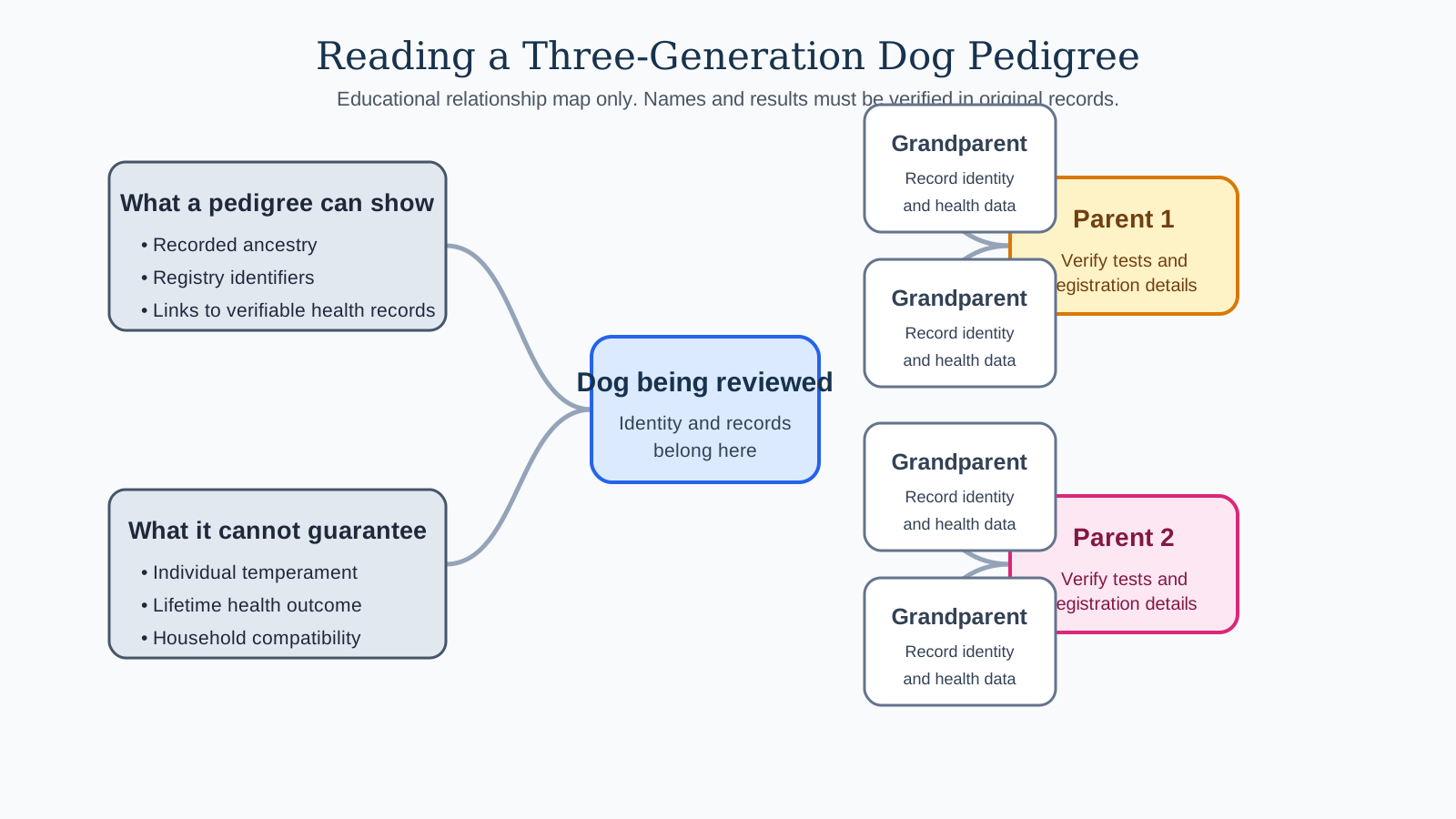
The diagram shows how relationship positions are read across generations. It is a generic illustration, not a feline medical or genetic-risk calculation.
| Pedigree item | Useful follow-up question |
|---|---|
| Registered parent name | Can the registry record be verified, and what information does that registry hold? |
| Repeated ancestor | Is this repetition intentional, and how does the breeder monitor genetic diversity and health? |
| Title or award | What was measured by that title, and what does it not measure? |
| Color notation | Is color being prioritized over health, temperament, and welfare? |
| Unknown or absent parent information | What direct health and history information is available for the individual cat? |
Ask a breeder to explain the pedigree in plain language. Strong answers include the breeding goal, health protocols, temperament observation, socialization, and a plan for every kitten. Weak answers rely on prestige terms without records. The same cautious approach applies to an online DNA report. Genetic testing can provide useful information, but its clinical meaning depends on the test, the variant, the population, and the cat's examination.
Daily Care by Life Stage
Breed conversations often focus on kittens, because that is when searches and advertising are most intense. The care commitment extends through adulthood and senior years. A kitten may be small, playful, and photogenic, but its adult coat, size, confidence, and health needs are still emerging. An adult rescue can offer clearer observations of personality and grooming tolerance. An older cat may need a quieter home, accessible resources, and more frequent health monitoring.
| Life stage | What to plan | Questions that prevent surprises |
|---|---|---|
| Kitten | Socialization, safe play, frequent veterinary visits, gradual handling | Has the kitten had appropriate early care and time with its mother and littermates? |
| Young adult | Activity outlets, safe introductions, routine preventive care | Does the home still meet the cat's play and social needs after the adjustment period? |
| Adult | Weight monitoring, dental and grooming routine, stable enrichment | Are litter boxes, carriers, climbing spaces, and resting spaces still accessible? |
| Senior | Mobility support, appetite and water monitoring, calm handling | Has a new behavior been mistaken for aging when pain or illness could be involved? |
Preventive care belongs in the breed plan because some traits make routine handling and observation more important. Long-coated cats need coat checks beyond a visible top layer. Large cats benefit from regular body-condition monitoring because excess weight can reduce mobility and complicate grooming. Any cat who avoids a jump, withdraws from touch, or changes litter-box habits needs a health discussion, not a personality label.
The Cat-Home Match: Three Practical Scenarios
The busy apartment
An apartment can be an excellent cat home when resources are arranged intentionally. Vertical territory, separate litter and food locations, predictable play, window safety, and a quiet retreat may matter more than square footage alone. A cat selected only for a “low energy” breed description can still become frustrated when left without stimulation. The plan should include daily interactive play and a backup caregiver for travel.
For a highly social or active individual, schedule matters. Do not assume a second cat will automatically solve loneliness. Compatibility, gradual introductions, space, health status, and the resident cat's preference all matter. A foster-based rescue may be particularly helpful here because it can describe how a cat managed a home setting.
The family with children
The right question is not which breed “likes children.” It is whether adults can protect the cat's ability to retreat, prevent chasing and forced contact, and teach children how to read early signs of discomfort. A cat who turns away, flattens ears, tenses, swishes its tail, or leaves is communicating. Respecting those signals reduces bite and scratch risk and helps children learn humane interaction.
Meet the individual cat with the family present when possible. Observe whether it can choose distance, whether it recovers after ordinary household noise, and whether adults can manage the interaction. A calm adult cat with known foster history may be a better fit than a kitten whose adult preferences are unknown.
The allergy-concerned household
The most responsible first step is medical advice for the person with symptoms, particularly if asthma or past severe reactions are involved. A breed label cannot safely answer the question. If a clinician supports further exploration, spend time with the individual cat and consider the entire exposure setting, including textiles, ventilation, cleaning capacity, and bedroom rules. Do not adopt on the promise that a low-shedding coat will eliminate allergy risk.
A Seven-Day Observation and Preparation Plan
Use this short plan to keep selection grounded in evidence.
- Day one: list daily responsibilities, budget limits, rental restrictions, and travel coverage.
- Day two: map food, water, litter, scratching, climbing, carrier, and safe-room locations.
- Day three: identify a primary veterinarian and emergency option, then review transport time and carrier fit.
- Day four: write the desired traits as care questions, such as “can we groom a long coat four times a week?”
- Day five: meet the cat, breeder, rescue, or foster and record specific observations instead of impressions.
- Day six: review records, parent information if relevant, return policy, and veterinary history.
- Day seven: wait. Re-read the plan with every responsible adult, then decide without scarcity pressure.
This process may feel slower than an online breed quiz. It is faster than correcting a mismatch after a cat has already formed attachments or developed stress in an unsuitable setting.
Common Selection Errors and Better Questions
| Common error | Why it fails | Better question |
|---|---|---|
| Selecting a cat only for appearance | Coat and face shape may carry care and welfare considerations | What care does this individual need every week? |
| Trusting “hypoallergenic” marketing | Allergen exposure is not determined by visible hair alone | What does my clinician advise, and have I met this cat? |
| Assuming a pedigree is a health guarantee | Pedigree records ancestry, not current condition | What verified medical and screening records are available? |
| Buying supplies after the cat arrives | Stress and escapes are more likely when resources are improvised | Is the safe room and carrier routine ready now? |
| Calling a sudden change “breed behavior” | Pain and illness can alter behavior | Does this change require veterinary assessment? |
| Treating a cat as a child-accessory | Forced contact and lack of retreat space create stress | Can adults supervise and protect the cat's choices? |
Introducing a New Cat to a Home
The first days shape the adjustment period. Begin with a quiet room supplied with litter, water, food, bedding, a hiding option, scratching material, and a carrier left open. Let the cat emerge at its own pace. Use calm, brief interactions. Avoid passing the cat around, forcing it from a hiding space, or introducing every household member at once.
For resident pets, use separation and gradual scent exchange before direct contact. Feed on opposite sides of a closed door when both animals are calm. Progress only when each animal shows relaxed behavior. A veterinary professional or qualified behaviorist can help if conflict, fear, spraying, or injury risk develops. The page Cat Not Using the Litter Box: Medical or Behavioral? gives additional context for one common signal that needs timely attention.
When Breed Talk Must Stop and Veterinary Care Must Start
Breed is never an explanation for a sudden change. Contact a veterinarian promptly for reduced appetite, repeated vomiting, diarrhea, straining to urinate, open-mouth breathing, collapse, sudden lameness, marked hiding, obvious pain, or a sudden behavior change. A male cat who repeatedly strains in the litter box with little or no urine is an emergency.
Pain, dental disease, urinary disease, endocrine disorders, neurological illness, and other medical conditions can change behavior. Do not label a cat “difficult,” “aloof,” or “aggressive by breed” before medical causes have been considered. A cat's behavior is information, and it deserves a careful response.
Limitations and When to Seek Professional Help
This guide explains selection and care questions. It cannot diagnose a cat, validate an online pedigree, predict an individual animal's behavior, or replace an examination. Consult a veterinarian for health, nutrition, pain, behavior changes, breeding decisions, and preparation for a cat with special physical traits. Seek a credentialed feline behavior professional when a careful veterinary assessment has ruled out medical contributors and household conflict or fear persists.
This article is educational and is not a substitute for veterinary diagnosis or individualized behavioral assessment.
Related Articles
- Dog Breeds: How to Choose a Dog by Lifestyle, Health, and History
- Cat Not Using the Litter Box: Medical or Behavioral?
- Cat Training and Environmental Enrichment
- Animal Breeds: History, Purpose, Welfare, and Choice
Sources
- Cat Fanciers' Association breed directory
- The International Cat Association breed information
- AAFP and ISFM feline environmental needs guidelines
- International Cat Care: cat-friendly clinic guidance
- American College of Allergy, Asthma & Immunology: pet allergies
- Merck Veterinary Manual: overview of behavior problems in cats
- Turner, socialization and behavior in domestic cats