American Water Spaniel: Breed Health and Care
By Dr. Zubair Khalid, DVM, MS, PhD ·

The American Water Spaniel is a medium-sized sporting dog with a distinctive curly or wavy coat and a working heritage in the lakes and marshes of the Upper Midwest. The breed was developed to retrieve waterfowl from cold water and to flush game in dense cover, and that background still shapes the dog's personality and care needs today. Most owners and breeders describe the breed as intelligent, eager to please, and full of stamina. With a consistent routine, an American Water Spaniel can be a healthy and long-lived companion. This guide covers preventive veterinary visits, vaccination, parasite control, nutrition, exercise, grooming, dental care, and the breed-related conditions you should discuss with your veterinarian.
At a Glance: Yearly and Daily Care Checklist
| Care Area | What to Do | How Often |
|---|---|---|
| Wellness exam | Full physical exam by a veterinarian | Yearly for adults, every 6 months for seniors |
| Vaccines | Core vaccines plus lifestyle vaccines based on risk | Follow your veterinarian's schedule |
| Parasite control | Heartworm preventive and flea and tick control | Year-round, monthly or as directed |
| Dental care | Tooth brushing and professional dental cleanings | Daily brushing, yearly dental evaluation |
| Exercise | Swimming, retrieving, running, structured play | Daily |
| Grooming | Brushing, ear checks, nail trims | Weekly brushing, monthly nail trims |
| Nutrition | Complete and balanced diet matched to life stage | Measured meals twice daily |
| Weight check | Body condition score at every visit | Every veterinary visit |
Use this checklist as a starting point. Your veterinarian may adjust the schedule based on your dog's age, health, and lifestyle.
Breed Profile and Health Expectations
History, Temperament, and Training
The American Water Spaniel was developed in the 19th century in the Wisconsin and Minnesota region as a hunter that could retrieve waterfowl from cold water and work upland game. It remains one of the rarer sporting breeds and is the state dog of Wisconsin. Because the breed is uncommon, ask your breeder or rescue organization about your dog's specific lineage and temperament rather than relying on generalizations.
Most American Water Spaniels are intelligent, eager to please, and highly energetic. They respond well to positive-reinforcement training methods, which reward desired behaviors with treats, praise, or play. Harsh correction-based methods are not recommended. Early socialization, including exposure to new people, places, sounds, and other animals, helps build a confident adult dog. Puppy classes run by certified trainers are a practical way to combine socialization with basic obedience.
The breed's working drive means it needs more than a walk around the block. Plan for structured exercise plus mental challenges such as retrieving games, nose work, puzzle toys, and swimming. A bored American Water Spaniel may develop unwanted behaviors like excessive barking, digging, or chewing. If you are unsure how to meet your dog's activity needs, discuss them with your veterinarian or a qualified trainer.
What to Expect at Each Life Stage
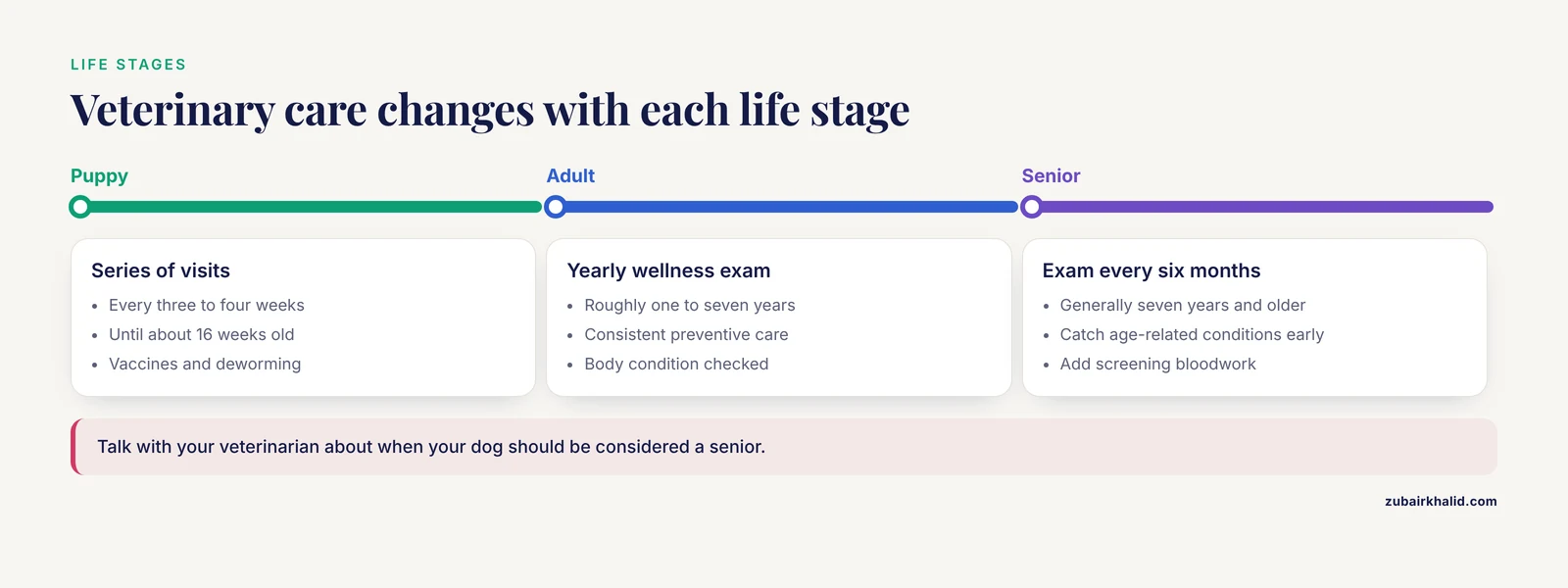
The AAHA Canine Life Stage Guidelines divide dogs into puppy, adult, and senior stages, and each stage has different care priorities. Puppies need a series of veterinary visits for vaccines, deworming, and early socialization guidance. Adult dogs, roughly one to six or seven years of age, need yearly wellness exams and consistent preventive care. Senior dogs, generally seven years and older, benefit from wellness exams every six months so that age-related conditions can be caught early. Talk with your veterinarian about when your dog should be considered a senior.
Preventive Care Schedule
Wellness Examinations
A wellness exam is the foundation of preventive care. According to the AAHA Canine Life Stage Guidelines, adult dogs should have a complete physical examination at least once a year, and senior dogs should be examined every six months. During the exam, your veterinarian will check your dog's weight and body condition, heart and lungs, ears, eyes, skin, coat, teeth, and lymph nodes.
Puppies typically visit the veterinarian every three to four weeks until they are about 16 weeks old to receive their vaccine series and to monitor growth and development. These early visits are also the time to discuss deworming, flea and tick prevention, and spaying or neutering.
The Canadian Veterinary Medical Association (CVMA) and the Australian Veterinary Association (AVA) also recommend regular veterinary examinations and a preventive care plan tailored to each dog's lifestyle. Regular exams allow your veterinarian to detect problems early.
Vaccination
Vaccination protects your American Water Spaniel from several serious infectious diseases. The AVMA and AAHA distinguish between core vaccines, which every dog should receive, and non-core vaccines, which are chosen based on the dog's lifestyle and exposure risk.
Core vaccines for dogs include canine distemper virus, canine adenovirus (hepatitis), canine parvovirus, and rabies. Rabies vaccination is required by law in most states and provinces. Non-core vaccines include those for leptospirosis, Bordetella (kennel cough), Lyme disease, and canine influenza. Because American Water Spaniels often spend time in water, woods, and fields, your veterinarian may recommend leptospirosis and Lyme vaccines based on local risk.
The AAHA vaccination guidelines recommend that adult dogs be revaccinated at intervals determined by their risk and the duration of immunity of the vaccine used. Your veterinarian may also offer titer testing, which measures antibody levels, to help guide revaccination decisions. Always follow your veterinarian's recommendations rather than a fixed one-size-fits-all schedule.
Parasite Prevention
Parasite prevention is a year-round job. The AVMA and AAHA recommend that all dogs receive heartworm prevention and flea and tick control throughout the year, regardless of season. Heartworm disease is transmitted by mosquitoes and can be fatal, but it is preventable with monthly or injectable preventives. Dogs should be tested for heartworm before starting prevention and then re-tested annually.
Intestinal parasites are also common. Roundworms, hookworms, whipworms, and Giardia can cause diarrhea, weight loss, and poor coat condition, and some can be transmitted to people. Your veterinarian will recommend fecal examinations one to two times per year, or more often for puppies. Ticks can transmit Lyme disease, anaplasmosis, and ehrlichiosis, and fleas can transmit tapeworms and cause allergic skin disease. Year-round prevention is the safest approach.
Spay, Neuter, and Reproductive Health
Spaying or neutering is a routine part of preventive care for most pet dogs. The AVMA and AAHA recommend that owners discuss the timing of the procedure with their veterinarian, because the optimal age can vary by breed, size, and lifestyle. Spaying eliminates the risk of uterine infections and greatly reduces the risk of mammary cancer, while neutering prevents testicular cancer and reduces certain behavior problems. Your veterinarian will recommend the best timing for your American Water Spaniel.
Nutrition and Weight Management
Feeding your American Water Spaniel a complete and balanced diet matched to its life stage is one of the most important care decisions you will make. The AAHA guidelines emphasize that dogs should be fed a diet appropriate for their age, and that body condition should be assessed at every veterinary visit. Body condition scoring uses a nine-point scale to determine whether a dog is underweight, ideal, or overweight.
Obesity is the most common nutritional problem in dogs, and it shortens lifespan and worsens conditions like arthritis, heart disease, and diabetes. American Water Spaniels are active dogs, but they will gain weight if they are overfed or under-exercised. Feed measured meals on a schedule rather than leaving food out all day, and limit treats to no more than 10 percent of daily calories. Your veterinarian can recommend a specific food, portion size, and feeding schedule based on your dog's age, weight, and activity level.
Puppies have different nutritional needs than adults. Puppy formulas support growth, adult formulas maintain a healthy weight, and senior formulas account for age-related changes. Ask your veterinarian which formula is appropriate for your puppy. Rapid growth in puppies should be avoided, because it can contribute to orthopedic problems later in life. Fresh, clean water should be available at all times. If you choose to give supplements, discuss them with your veterinarian first.
Exercise and Mental Enrichment
Daily exercise is non-negotiable for a sporting breed like the American Water Spaniel. These dogs were bred to work in the field, and they retain that stamina. Plan for daily exercise that matches your dog's age and fitness, and ask your veterinarian how much activity is appropriate for your individual dog.
Swimming is a natural activity for the breed, and it provides excellent low-impact exercise. Always supervise swimming in open water, use a canine life jacket when boating, and rinse the coat and dry the ears after swimming to reduce the risk of skin and ear infections.
Mental enrichment matters as much as physical exercise. Puzzle toys, nose work, obedience training, and retrieving games keep the breed's active mind engaged. Puppies should not be over-exercised, because repetitive high-impact activity can damage developing joints. Ask your veterinarian when your puppy can safely begin running, jumping, and swimming.
Grooming and Skin Care
The American Water Spaniel has a double coat with a curly or wavy outer layer and a dense undercoat. The coat is water-resistant, but it does shed and it requires regular care. Brush the coat weekly to remove loose hair and prevent mats, and increase brushing during seasonal shedding periods. Bathing is needed occasionally, using a dog-safe shampoo, but over-bathing can strip the coat's natural oils. Choose a shampoo formulated for dogs, not a human shampoo, because dog skin has a different pH balance.
Ear care deserves special attention in this breed. American Water Spaniels have floppy ears, and floppy ears create a warm, moist environment where infections thrive. Dogs that swim are at even higher risk. Check the ears weekly for redness, odor, or discharge, and dry the ear canals gently after swimming. Do not insert cotton swabs into the ear canal, because that can push debris deeper and damage the ear. Ask your veterinarian to demonstrate proper ear cleaning technique and to recommend an appropriate ear cleaner.
Nail trimming is another routine task. Overgrown nails can cause discomfort and affect gait. Trim nails every few weeks, or as needed. Keep these supplies on hand: a slicker brush or pin brush, a dog-safe shampoo, an ear cleaner recommended by your veterinarian, cotton balls or gauze, nail clippers designed for dogs, and a toothbrush and toothpaste formulated for dogs.
Breed-Related Health Conditions to Discuss With Your Veterinarian
No breed is free of inherited health concerns, and the American Water Spaniel is no exception. The conditions below have been reported in the breed, but not every dog will develop them. Ask your veterinarian about screening and prevention, and ask your breeder about health testing of the parents.
Hip Dysplasia
Hip dysplasia is a developmental condition in which the hip joint does not fit together properly, leading to laxity, arthritis, and pain over time. It is influenced by genetics, nutrition, and growth rate, and medium and large breeds are affected more often than small breeds. Signs include reluctance to exercise, stiffness after rest, difficulty rising, and a bunny-hopping gait. Diagnosis is based on physical examination and X-rays, and screening X-rays can identify affected dogs before signs develop. Treatment ranges from weight management and joint supplements to physical therapy and, in severe cases, surgery. Ask your veterinarian whether your American Water Spaniel should have screening X-rays.
Progressive Retinal Atrophy and Other Eye Conditions
Progressive retinal atrophy (PRA) is an inherited eye disease that causes the retina to deteriorate, leading to night blindness and eventually daytime vision loss. It has been reported in several spaniel breeds, and responsible breeders screen for it. There is no cure for PRA, so early diagnosis helps owners plan for a dog with visual impairment. Ask your veterinarian about eye examinations and genetic testing. Other eye conditions, such as cataracts, can also occur and are typically diagnosed during a routine eye exam.
Heart Conditions
Patent ductus arteriosus (PDA) is a congenital heart defect that has been reported in the breed. In PDA, a fetal blood vessel fails to close after birth, causing abnormal blood flow between the aorta and the pulmonary artery. If left untreated, it can lead to heart failure. Treatment is surgical correction, and dogs treated early can have a normal lifespan. Ask your veterinarian to listen for a heart murmur at every exam and to discuss whether an echocardiogram is recommended.
Hypothyroidism
Hypothyroidism is a common endocrine disorder in middle-aged and older dogs. It occurs when the thyroid gland does not produce enough thyroid hormone. Signs include weight gain without a change in diet, lethargy, hair loss, a dull coat, and recurrent skin infections. Diagnosis is made with blood tests, and treatment is daily oral thyroid hormone replacement. With treatment, most dogs do very well.
Allergies and Skin Disease
Skin allergies are common in many sporting breeds. Affected dogs may itch, lick their paws, rub their face, and develop recurrent ear infections. Allergies can be triggered by fleas, food ingredients, or environmental allergens such as pollen and dust mites. Management depends on the cause and may include flea control, dietary changes, medicated shampoos, and prescription medications. Your veterinarian can help identify the trigger and build a treatment plan.
Ear Infections
Because of their floppy ears and love of water, American Water Spaniels are prone to otitis externa, or inflammation of the outer ear canal. Signs include head shaking, scratching at the ears, redness, odor, and discharge. Chronic ear infections can lead to more serious problems, so prompt treatment is important. Routine ear care is the best prevention. Clinical guidance from DVM360 reinforces that ear disease in floppy-eared, water-loving breeds is often recurrent and requires consistent prevention.
Dental Health
Dental disease is the most common health problem in dogs, and it is largely preventable. By three years of age, most dogs have some degree of periodontal disease, which starts with plaque and tartar buildup and progresses to inflammation of the gums and loss of tooth attachment. Cornell University's College of Veterinary Medicine highlights regular dental care as a key part of canine preventive health. Dental disease does not just affect the mouth. Bacteria from the mouth can enter the bloodstream and affect the heart, liver, and kidneys.
The most effective home care is daily tooth brushing with a toothpaste formulated for dogs. Never use human toothpaste, because it can upset a dog's stomach. If daily brushing is not possible, dental chews and diets can help, but they are not a substitute for brushing. Your veterinarian will assess your dog's teeth at every wellness exam and will recommend a professional dental cleaning under anesthesia when tartar and gingivitis are present.
Signs of dental disease include bad breath, red or bleeding gums, yellow-brown tartar on the teeth, drooling, and difficulty eating.
Common Mistakes and Troubleshooting
Common mistakes include skipping parasite prevention during winter, overfeeding treats, brushing the coat too rarely, failing to dry the ears after swimming, and delaying wellness exams until a dog appears sick. Preventive care works best when it is consistent.
Another common mistake is assuming that a dog who is eating and acting normally does not need a veterinary visit. Many conditions, including dental disease, heartworm, and early arthritis, develop silently. Yearly exams catch these problems early.
If your American Water Spaniel develops a behavior problem such as excessive barking, digging, or chewing, first evaluate whether its exercise and enrichment needs are being met. If the behavior persists, ask your veterinarian for a referral to a qualified trainer or veterinary behaviorist.
Welfare and Safety Points
Identification and Microchipping
The AVMA recommends that all pets have a microchip and wear a collar with identification tags. Microchipping is a quick procedure performed by a veterinarian, and it greatly increases the chance of being reunited with your dog if it becomes lost. Keep your contact information current with the microchip registry.
Water Safety
Even strong swimmers can tire or get into trouble in cold water, currents, or boat traffic. Use a well-fitted canine life jacket when boating, and supervise swimming at all times. Choose a life jacket that fits snugly and has a handle on the back for easy lifting. After swimming, rinse the coat with fresh water and dry the ears thoroughly.
Heat and Cold Safety
Sporting dogs can overheat when exercising in hot weather. Provide fresh water, shade, and rest breaks, and avoid strenuous exercise during the hottest part of the day. Never leave a dog in a parked car, even with the windows cracked. In cold weather, the breed's double coat provides some protection, but no dog should be left outside for long periods in freezing temperatures. Watch for shivering or reluctance to move, and bring your dog indoors when conditions are severe.
Travel and Boarding
When traveling, secure your dog in a well-ventilated crate or with a crash-tested harness designed for cars. Bring your dog's regular food, medications, and veterinary records. If you board your dog, make sure its vaccines are current and ask about the facility's requirements. Any medications your dog receives should be prescribed by a veterinarian and used exactly as directed, a principle emphasized by the Federation of Veterinarians of Europe and the European Medicines Agency.
Limitations and When to Contact a Veterinarian
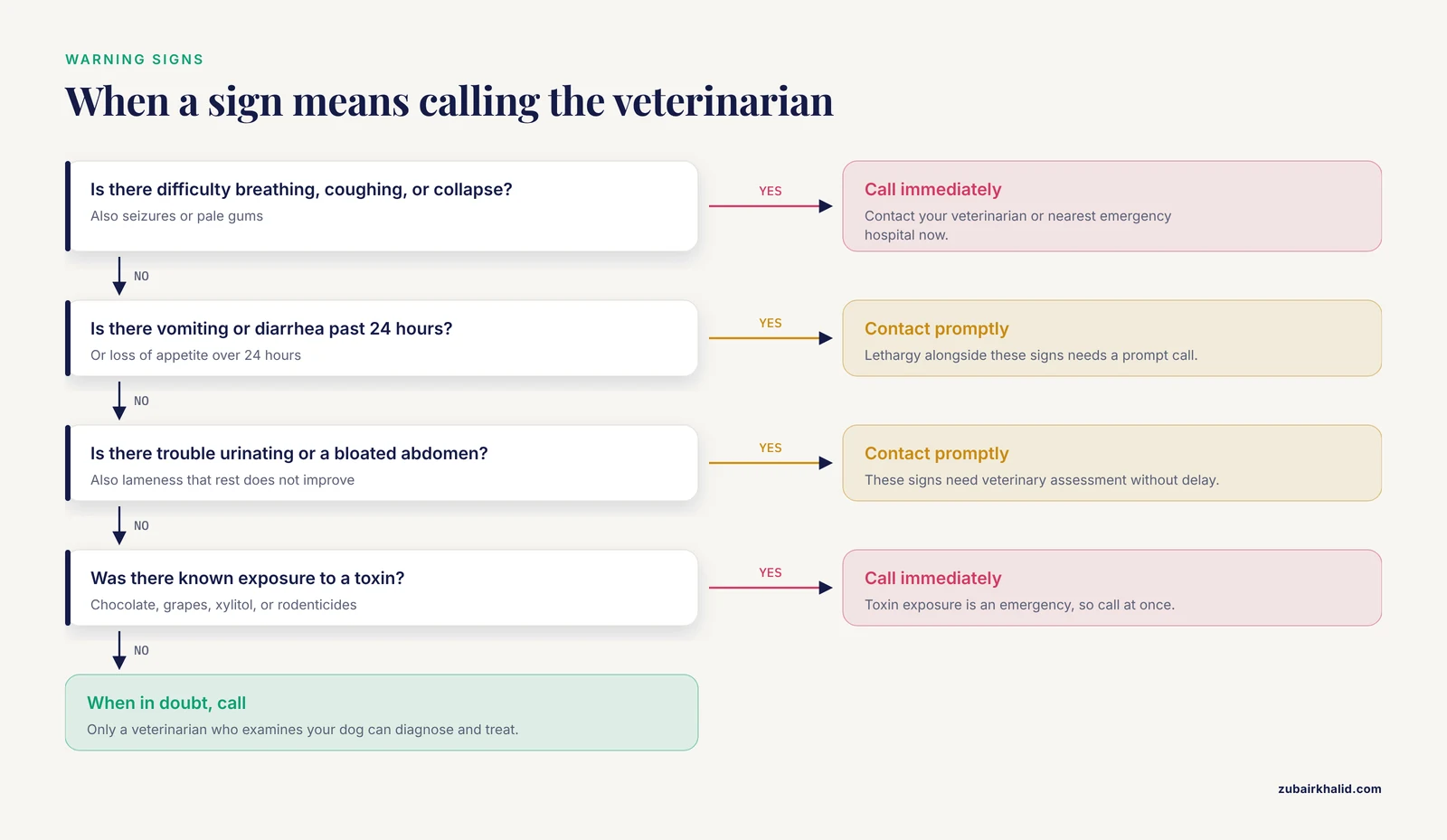
This article is educational and is not a substitute for veterinary diagnosis or treatment. Every dog is an individual, and only a veterinarian who examines your dog can provide a diagnosis, prognosis, or treatment plan.
Contact your veterinarian promptly if your American Water Spaniel shows any of the following signs:
- Vomiting or diarrhea that lasts more than 24 hours, or that is accompanied by lethargy
- Difficulty breathing, coughing, or collapsing
- Seizures
- Difficulty urinating or inability to urinate
- Eye injury, redness, or sudden vision changes
- Lameness that does not improve with rest
- Loss of appetite for more than 24 hours
- A bloated, painful, or distended abdomen
- Pale gums
- Known exposure to toxins, such as chocolate, grapes, xylitol, or rodenticides
For emergencies, contact your veterinarian or the nearest emergency veterinary hospital immediately. When in doubt, call.
Genetic Testing and What to Ask Your Breeder
Responsible breeders screen breeding stock for conditions known to affect the breed. The American Water Spaniel has reported cases of progressive retinal atrophy (PRA), hip dysplasia, and patent ductus arteriosus (PDA), so ask for documentation of testing in the parents before choosing a puppy.
Tests That Matter

- PRA: A DNA test identifies whether a dog carries the known mutation for progressive retinal atrophy. Breeders should provide results for both parents. A clear result means the dog does not carry the tested mutation, but it does not rule out other eye disease, so a veterinary ophthalmologist exam remains valuable.
- Hip dysplasia: Screening X-rays evaluated by OFA or PennHIP assess hip joint conformation. Ask for the parents' scores or ratings. These X-rays show current joint structure, not a guarantee against future arthritis.
- Cardiac screening: Because PDA is reported in the breed, ask whether the parents had a cardiac exam, including auscultation and an echocardiogram. A normal exam at one point does not rule out later heart disease.
How to Read Breeder Records
Ask for written copies, not verbal assurances. Check that the dog's registered name or microchip number appears on the report, and note the date of testing. If a breeder cannot produce records, ask why.
Test Limitations
DNA tests cover only the specific mutations tested. Hip and eye screening identify current status, not future disease. No screening program can guarantee a healthy puppy.
When to Ask Your Veterinarian
If the breeder's records are incomplete, or if you want to screen your own dog, ask your veterinarian about OFA or PennHIP X-rays, an ophthalmologist exam, and an echocardiogram. Your veterinarian can also advise whether repeat screening is appropriate as your dog ages.
Caring for Your Senior American Water Spaniel
Most American Water Spaniels enter the senior stage around age seven, though larger individuals may age faster. The breed's enthusiasm for work often remains, but the body changes. Plan for veterinary visits every six months, as recommended for senior dogs, and add screening bloodwork to those visits.
Age-Related Changes
Arthritis is common. Watch for stiffness after rest, difficulty rising, and reluctance to jump or climb stairs. Cognitive decline can appear as disorientation, altered sleep cycles, house soiling, or reduced responsiveness. Dental disease progresses with age and can affect overall health. Weight shifts go both ways: some seniors gain fat while losing muscle, and others lose weight from dental pain or internal disease.
Adjusted Nutrition and Exercise
Adjust portions to maintain a lean body condition, because excess weight worsens arthritis. If your dog loses weight despite a good appetite, ask your veterinarian to investigate. Senior diets or joint supplements may help, but discuss them first. Keep your dog moving with shorter, more frequent sessions and low-impact activities such as swimming. Mental enrichment, including puzzle toys and nose work, supports cognitive health.
Screening Bloodwork
At each six-month senior visit, ask about bloodwork including a complete blood count, biochemistry profile, thyroid testing, and urinalysis. These tests can detect kidney, liver, and thyroid disease before clinical signs appear, and they establish baselines for tracking changes.
Quality-of-Life Monitoring
Keep a simple weekly log of appetite, mobility, energy, and interest in family activities. Note any new signs of pain, such as panting, whining, or flinching when touched. Schedule a veterinary visit promptly if you notice lameness lasting more than a day, difficulty rising, vomiting, diarrhea, a change in appetite or thirst, weight change, or new confusion or house soiling. Early intervention keeps senior years comfortable.
Emergency Preparedness and First Aid for Active Dogs
A working American Water Spaniel can encounter injury or sudden illness in the field. Preparation and a calm response matter.
Build a Canine First Aid Kit
Keep a waterproof kit in your vehicle and a smaller one in your pack. Include:
- Gauze pads and rolls, self-adhesive wrap, and medical tape
- Antiseptic wipes and saline solution for rinsing wounds
- Tweezers and hemostats for splinters and foxtails
- Blunt-tip scissors
- A digital thermometer
- A muzzle, because injured dogs may bite
- An emergency blanket
- Your veterinarian's phone number and the nearest emergency clinic address
Check the kit each season and replace expired items.
Common Field Injuries
Cuts and abrasions: Rinse the wound with clean water or saline, apply direct pressure with gauze to control bleeding, and bandage it. Puncture wounds, wounds that continue to bleed, or wounds over a joint require veterinary attention.
Foxtails: These grass awns can enter paws, ears, eyes, and nostrils. Signs include excessive licking, head shaking, sneezing, or a draining tract. Do not probe the area. Have the foxtail removed by a veterinarian.
Heat stress: Signs include heavy panting, thick drool, weakness, and collapse. Move the dog to shade, pour cool (not ice-cold) water over the body, offer small amounts of water, and transport to a veterinarian.
Near-drowning: Remove the dog from water immediately. Clear the airway, check for breathing, and begin rescue breathing if needed. Keep the dog warm and seek veterinary care even if it appears to recover, because water in the lungs can cause delayed complications.
When to Seek Immediate Veterinary Care
Go to a veterinarian immediately for uncontrolled bleeding, difficulty breathing, suspected fractures, eye injuries, seizures, collapse, or known toxin exposure. When in doubt, call your veterinarian.
Related Guides
- Irish Water Spaniel Health Problems and Preventive Screenings: Irish water spaniel health screening resource for spaniel-specific concerns
- Boykin Spaniel Dog Breed Guide: Temperament, Size, Lifespan, Health Problems and Care: Similar water spaniel breed for comparing temperament and care needs
- Cocker Spaniel Dog Breed Guide: Temperament, Size, Lifespan, Health Problems and Care: Close spaniel relative for breed-specific health and temperament context
- English Springer Spaniel Dog Breed Guide: Temperament, Size, Lifespan, Health Problems and Care: English spaniel guide useful for comparing sporting dog care routines
- Portuguese Water Dog Dog Breed Guide: Temperament, Size, Lifespan, Health Problems and Care: Water dog breed guide with similar grooming and ear-care considerations
- Sussex Spaniel Health Problems and Preventive Screenings: Related spaniel health screening page for preventive veterinary planning
- Cocker Spaniel Lifespan, Diet and Preventive Care: Cocker spaniel lifespan and diet guide for preventive care comparison
- Orthopedic Memory Foam Beds for Giant Breeds: Joint Pressure Relief, Foam Density, and Water Resistance: Orthopedic bedding guide for joint support in hip dysplasia cases
Frequently Asked Questions
Are American Water Spaniels good family dogs?
Yes, American Water Spaniels can make excellent family dogs when they receive enough exercise, training, and attention. They are intelligent and eager to please, and they bond closely with their families. As with any breed, early socialization and supervision around young children are important.
How much exercise does an American Water Spaniel need?
American Water Spaniels are high-energy sporting dogs that need daily exercise and mental stimulation. The exact amount depends on your dog's age, health, and fitness, so ask your veterinarian for a specific recommendation. Plan for daily activity that includes both physical exercise and enrichment such as retrieving or nose work.
Do American Water Spaniels shed?
Yes, American Water Spaniels shed, despite their curly coats. They have a double coat that requires weekly brushing to remove loose hair and prevent mats, with more frequent brushing during seasonal shedding periods.
What health problems are American Water Spaniels prone to?
Conditions reported in the breed include hip dysplasia, progressive retinal atrophy, patent ductus arteriosus, hypothyroidism, allergies, and ear infections. Not every dog develops these conditions, and screening and prevention should be discussed with your veterinarian.
How often should an American Water Spaniel see the veterinarian?
Adult dogs should have a wellness exam at least once a year, and senior dogs should be seen every six months. Puppies need a series of visits every three to four weeks until about 16 weeks of age for vaccines and growth checks.
What should I feed an American Water Spaniel?
Feed a complete and balanced diet matched to your dog's life stage, and measure meals to maintain a healthy body condition. Your veterinarian can recommend a specific food and portion size based on your dog's age, weight, and activity level.
Are American Water Spaniels easy to train?
Yes, most American Water Spaniels are intelligent and eager to please, which makes them highly trainable with positive-reinforcement methods. Early socialization and consistent, reward-based training produce the best results.
Do American Water Spaniels need professional grooming?
American Water Spaniels need regular brushing and ear care, but they do not require frequent professional grooming. Many owners manage weekly brushing, occasional baths, and nail trims at home. A professional groomer can help with nail trims and ear cleaning if needed.