Dermacentor variabilis: American Dog Tick Guide
By Dr. Zubair Khalid, DVM, MS, PhD ·
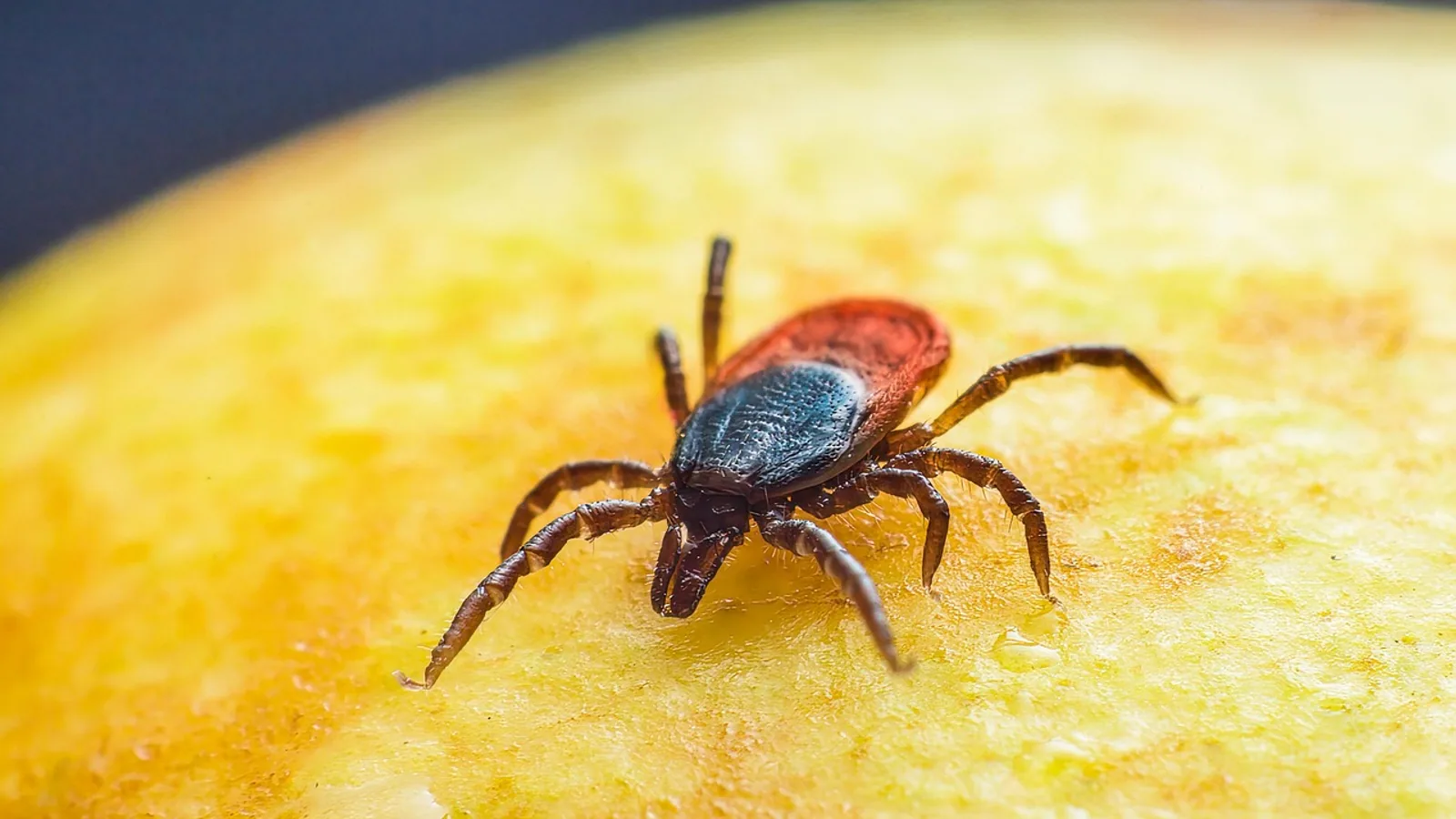
The American dog tick, Dermacentor variabilis, is the most widely distributed native three-host tick in North America and the tick most commonly removed from dogs and cats across the United States [1][2]. It is a hard tick with an ornate white pattern on its back, a three-stage life cycle that requires a blood meal from three separate hosts, and a confirmed role as a vector of Rickettsia rickettsii, the agent of Rocky Mountain spotted fever [3][4][5].
This guide covers how to recognize D. variabilis by photo features, how its life cycle works, which pathogens it transmits to dogs and people, how it differs from the Rocky Mountain wood tick and the blacklegged tick, and why attachment time changes the risk of infection.
What Is the American Dog Tick?
Dermacentor variabilis is a hard tick in the family Ixodidae. It is native to North America and its range has been expanding northward into Canada over recent decades [6][7][8]. A 2025 genome assembly placed the species among the medically important North American tick vectors and confirmed its position as an emerging public health concern [9].
The common name comes from the adult tick's strong preference for dogs as hosts. That preference is real, but it does not mean the tick only bites dogs. All three life stages, larva, nymph, and adult, will bite people [10]. Adults are the stage most often found on dogs and the stage most likely to transmit R. rickettsii to a human or a dog [5].
Photo Identification: What D. variabilis Looks Like
The single most useful identification feature is the scutum, the hard shield plate on the tick's back.
- Ornate white pattern. The scutum of D. variabilis is decorated with a lacy, silvery-white pattern on a dark brown background. This is the "ornate" scutum that separates Dermacentor ticks from the plain, unornamented blacklegged tick.
- Males versus females. In males, the scutum covers the entire back, so the whole tick looks ornate. In females, the scutum covers only the front portion, so the ornate shield sits at the head end and the rear of the body is dark and expands as the tick feeds.
- Body shape changes with feeding. An unfed adult is flat and oval, roughly 5 mm long. An engorged female becomes a gray, bean-shaped, bloated tick that can be several times that length. Do not rely on size alone for identification.
- Mouthparts. Dermacentor ticks have short mouthparts relative to the body, unlike the long mouthparts of the lone star tick.
- Color cues. The base color is brown to reddish-brown. The white markings are the diagnostic feature that most people can see in a phone photo.
If you are photographing a tick for identification, take one image from directly above and one from the side. The top-down view shows the scutum pattern, which is the key feature.
Geographic Range
D. variabilis is found across much of the United States, with established populations in the central, southern, and eastern states [11]. A multi-state survey of ticks removed from pets found D. variabilis in 44 of 50 states sampled, and it accounted for 99.3 percent of all Dermacentor ticks submitted from dogs and cats [2]. In six Rocky Mountain states where the Rocky Mountain wood tick was expected to dominate, 87 percent of Dermacentor ticks removed from pets were still D. variabilis [2].
The northern edge of the range is moving. Populations have become established near the northern distributional limit in Saskatchewan and Manitoba, and the species continues to expand into colder areas [6][7][8]. Off-host survival in winter depends heavily on snow cover, which insulates larvae from lethal cold [12].
The Three-Host Life Cycle
D. variabilis is a three-host tick. Each of its three feeding stages takes a blood meal from a different animal, drops off, molts, and then seeks a new host. The full cycle usually takes about two years in temperate climates.
Stage 1: Larva
A larva hatches from an egg as a six-legged, poppy-seed-sized tick. Larvae typically feed on small mammals, especially rodents such as the white-footed deermouse [13]. After feeding, the larva drops off and molts into a nymph.
Larvae are surprisingly hardy. In a northern population, unfed larvae survived more than 100 days at 25 and 32 degrees Celsius when relative humidity was high, and 95 percent of larvae in field enclosures survived a 140-day winter under snow [6]. Larvae can also survive submersion in spring meltwater for extended periods [6].
Stage 2: Nymph
The nymph is eight-legged and roughly the size of a sesame seed. Nymphs feed on a wide range of medium and small hosts, including rodents, rabbits, and occasionally dogs and people. After feeding, the nymph drops off and molts into an adult.
Stage 3: Adult
Adults are the stage most people encounter. They quest from vegetation and are strongly attracted to dogs. Adults feed for several days, mate on the host, and then the engorged female drops off to lay a single large batch of eggs.
Reproductive output varies with temperature and humidity. In a northern prairie population, oviposition took 10 to 21 days at 25 degrees Celsius and 95 percent relative humidity [6]. A comparison with the Rocky Mountain wood tick found that D. andersoni females produced more eggs than D. variabilis females of equivalent body weight, and D. andersoni eggs hatched faster at high temperature [14].
Host, Season, and Pathogen Table
| Stage | Typical hosts | Peak season | Pathogens of concern |
|---|---|---|---|
| Larva | Small rodents, especially mice | Late summer to fall | R. rickettsii (maintenance in nature) |
| Nymph | Rodents, rabbits, occasionally dogs and people | Spring to summer | R. rickettsii, Francisella tularensis |
| Adult | Dogs, other medium and large mammals, people | Spring to early fall | R. rickettsii, F. tularensis |
Adults are the stage that most often bites dogs and people, which is why adult activity drives the seasonal risk of Rocky Mountain spotted fever.
flowchart TD
    [Egg] --> [Larva]
    [Larva] --> [Feed on small rodent]
    [Feed on small rodent] --> [Drop off and molt]
    [Drop off and molt] --> [Nymph]
    [Nymph] --> [Feed on rodent or rabbit]
    [Feed on rodent or rabbit] --> [Drop off and molt]
    [Drop off and molt] --> [Adult]
    [Adult] --> [Quest for dog or human]
    [Quest for dog or human] --> [Attach and feed]
    [Attach and feed] --> [Pathogen transmission]
Diseases Transmitted by Dermacentor variabilis
Rocky Mountain Spotted Fever
Rocky Mountain spotted fever is caused by Rickettsia rickettsii, a spotted fever group bacterium. D. variabilis is the primary vector of R. rickettsii in the eastern and central United States [5]. The bacterium is maintained in tick populations partly through transovarial transmission, meaning infected females pass the organism to their eggs [15].
Transmission is not instant. R. rickettsii in the salivary glands of an unfed tick exists in a dormant, less infectious state and requires a reactivation period after the tick attaches before it can be transmitted efficiently [5]. In a controlled guinea pig study, animals in every exposure group developed clinical and pathological signs of infection, and severity increased with the length of tick attachment. Even attachments lasting less than 8 hours produced clinically identifiable infection in some animals [5]. This is the key practical point: the risk of infection rises with attachment time, but a short attachment does not guarantee safety.
Tularemia
Francisella tularensis is the agent of tularemia, and D. variabilis is a recognized vector [4]. Tularemia is a zoonosis that can affect dogs, cats, wildlife, and people. It is also transmitted by direct contact with infected animals, so a tick bite is not the only route.
Spotted Fever Group Rickettsiae Other Than R. rickettsii
Surveillance has detected other spotted fever group Rickettsia species in D. variabilis, including R. montanensis, R. amblyommatis, and R. parkeri [3]. These were found at low levels in Kentucky ticks, with R. montanensis the most common at 0.47 percent [3]. R. montanensis is considered an understudied spotted fever group organism [4]. These bacteria can infect ticks and occasionally contribute to human disease, but they are not the same as R. rickettsii [3].
Powassan Virus
A laboratory study found that D. variabilis larvae could acquire Powassan virus lineage II from infected mice, maintain the infection through molting, and transmit the virus to naive mice at the nymphal stage [16]. This does not make D. variabilis the primary vector of Powassan virus. That role belongs to Ixodes species. The finding matters because it shows the potential for range expansion of the virus if it becomes established in other tick species [16].
What D. variabilis Does Not Transmit
D. variabilis is not a vector of Borrelia burgdorferi, the agent of Lyme disease. Lyme disease in North America is transmitted by Ixodes scapularis and Ixodes pacificus [10]. This distinction matters because owners often assume any tick bite carries Lyme risk. The two tick species can feed on the same rodent host without competing, so a dog can be exposed to both species in the same yard [13].
How to Tell D. variabilis From Other Ticks
Dermacentor variabilis vs Dermacentor andersoni
These two species are close relatives and look similar. Both have ornate scuta. The practical differences are geography and host preference.
- Geography. D. andersoni, the Rocky Mountain wood tick, is the western species. D. variabilis is the eastern and central species, though its range extends into parts of the western United States [2].
- Host preference. D. andersoni preferentially feeds on hosts other than dogs and cats in much of its range. A survey of ticks removed from pets found that even in Rocky Mountain states, 87 percent of Dermacentor ticks on pets were D. variabilis [2].
- Biology. D. andersoni is more xerophilic (adapted to dry conditions) than D. variabilis, and its eggs and larvae respond differently to temperature and humidity [14].
For a tick removed from a dog in the eastern or central United States, D. variabilis is by far the most likely Dermacentor species [2].
Dermacentor variabilis vs Ixodes scapularis
The blacklegged tick is the Lyme vector and the most common tick submitted from pets in some regions [17]. The morphological differences are straightforward.
| Feature | D. variabilis | I. scapularis |
|---|---|---|
| Scutum pattern | Ornate, white lacy markings | Plain, dark, no white pattern |
| Mouthparts | Short | Long |
| Adult female color | Brown with white shield at front | Orange-red body, black shield |
| Primary disease role | Rocky Mountain spotted fever, tularemia | Lyme disease, anaplasmosis, babesiosis |
If you are unsure which tick you removed, save it in a sealed container with a slightly damp paper towel and ask your veterinarian to identify it. Species identification changes the disease risk discussion.
Attachment Time and Transmission Risk
The length of time a tick stays attached is one of the few risk factors an owner can influence. For R. rickettsii, transmission efficiency increases with attachment duration, but the reactivation period is shorter than older teaching suggested. In one study, even attachments under 8 hours produced infection in some guinea pigs [5].
The practical implication is simple. Remove ticks as soon as you find them. Do not wait for a tick to "back out" on its own, and do not delay removal because you think the tick has not been attached long enough to matter. Prompt removal reduces the dose of bacteria delivered and shortens the window of exposure [5].
Where Ticks Attach on Dogs and Cats
A Canadian survey of ticks submitted from veterinary clinics found that attachment location varies by tick species [17]. This is why tick checks should be systematic rather than random. Run your fingers over the whole body, including the ears, the neck, the axillae (armpits), the groin, between the toes, and along the tail base. Part the fur and look at the skin.
Practical Prevention for Owners
Prevention combines environmental management, tick checks, and veterinary tick control products. The Companion Animal Parasite Council and AAHA both emphasize year-round or seasonally tailored tick prevention based on local risk.
Environmental Control
D. variabilis quests from vegetation, especially along trail edges and road edges. A field study found that adult ticks were attracted toward road edge habitat, and that ticks with intact Haller's organs (the sensory organs that detect infrared radiation) moved closer to the road edge than ticks with those organs removed [18]. This supports the idea that ticks use heat and other sensory cues to find hosts and to select habitat.
For yard management, keep grass short in areas where pets and people spend time, remove leaf litter, and create a gravel or mulch barrier between lawn and wooded edges. Diatomaceous earth has been studied as a control agent. In laboratory and simulated field experiments, diatomaceous earth killed unfed D. variabilis nymphs rapidly, with mortality starting within one hour of exposure and median survival times of a few hours [1]. This is a research finding, not a complete yard control program. It does not replace veterinary tick prevention.
Tick Checks and Removal
Check pets after every outing in tick habitat. Check yourself too. All three stages of D. variabilis can bite people [10].
When you find an attached tick, use fine-tipped tweezers. Grasp the tick as close to the skin as possible and pull straight up with steady pressure. Do not twist, crush, or apply petroleum jelly, alcohol, or a lit match. Save the tick in a sealed container if you want it identified.
Veterinary Tick Control
Your veterinarian can recommend an appropriate tick control product for your dog or cat based on species, age, weight, lifestyle, and local tick pressure. The One Health framework for tick management emphasizes coordinated veterinary and human health responses because the same ticks and pathogens affect both [10].
What Is Still Uncertain
Several areas remain under active investigation.
- The role of lesser-known spotted fever group rickettsiae. R. montanensis is common in some D. variabilis populations, but how often it causes disease in dogs or people is not well defined [3][4].
- Hormonal control of pathogen transmission. Research on ecdysteroid hormones in D. variabilis suggests that tick hormones influence the movement of Rickettsia between tick tissues, including into the ovaries [15]. The mechanism is not fully understood.
- Range expansion. D. variabilis is moving northward, and the factors that determine how far it can go, including snow cover, supercooling points, and larval survival, are still being characterized [12][7][8].
- Powassan virus competence. Laboratory evidence shows D. variabilis can transmit Powassan virus under experimental conditions, but whether this happens in nature at a meaningful rate is unknown [16].
Limitations and When to Contact a Veterinarian
This article is educational and is not a substitute for veterinary diagnosis or treatment. Individual animals vary, and a veterinarian who examines your pet can assess risk, identify the tick, and recommend next steps.
Contact a veterinarian promptly if any of the following occur:
- Your dog or cat develops fever, lethargy, loss of appetite, vomiting, diarrhea, or unexplained bruising after a tick bite.
- You find a tick attached and your pet has not been on a veterinarian-recommended tick control product.
- Your pet develops swelling, redness, or discharge at the site of a tick bite.
- Your pet develops weakness, wobbliness, or difficulty breathing, which can be signs of a serious tick-borne illness or tick paralysis.
- You or a family member develops fever, headache, muscle aches, or a rash after a tick bite. Contact a physician. Rocky Mountain spotted fever is a medical emergency in people.
Do not wait for a rash to appear before seeking care. Rocky Mountain spotted fever can be severe, and early treatment improves outcomes.
Frequently Asked Questions
What does a Dermacentor variabilis tick look like?
It has an ornate scutum, a hard shield on the back with a lacy white pattern on a dark brown background. In males the shield covers the whole back. In females it covers only the front portion.
Is the American dog tick the same as a deer tick?
No. The American dog tick is Dermacentor variabilis. The deer tick is Ixodes scapularis, the blacklegged tick. They are different species with different appearances and different diseases.
Does the American dog tick carry Lyme disease?
No. D. variabilis is not a Lyme disease vector. Lyme disease in North America is transmitted by Ixodes species.
Can the American dog tick bite humans?
Yes. All three life stages, larva, nymph, and adult, can bite people. Adults are the stage most often found on dogs and the stage most likely to transmit Rickettsia rickettsii.
How long does a tick need to be attached to transmit disease?
Transmission efficiency increases with attachment time, but even attachments under 8 hours have produced infection in controlled studies. Remove ticks as soon as you find them.
What diseases does the American dog tick transmit to dogs?
The most important is Rocky Mountain spotted fever, caused by Rickettsia rickettsii. Tularemia, caused by Francisella tularensis, is also associated with this tick.
Where do American dog ticks live?
They are found across much of the United States, with the highest numbers in central, southern, and eastern regions. The range is expanding northward into Canada.
Should I save the tick after removing it?
Yes, if you can. Saving the tick in a sealed container lets your veterinarian or a public health lab identify the species, which helps assess disease risk.
Related Articles
- American Foulbrood Recognition and Response
- NAVLE Study Guide: How to Pass the North American Veterinary Licensing Exam on
- Flea And Tick For Dogs
- Tick Prevention Pets
- Tick Prevention For Dogs
- Flea And Tick Prevention For Puppies
- Bullseye Rash: Tick Bite and Lyme Disease Signs
Sources
- Use of diatomaceous earth to control nymphal American dog ticks, Dermacentor variabilis Say (Acari: Ixodidae): laboratory to simulated field experiments.
- Dermacentor variabilis is the Predominant Dermacentor spp. (Acari: Ixodidae) Feeding on Dogs and Cats Throughout the United States.
- County-level surveillance for the American dog tick (Dermacentor variabilis) and Rickettsia species in Kentucky.
- Exploring the Niche of Rickettsia montanensis (Rickettsiales: Rickettsiaceae) Infection of the American Dog Tick (Acari: Ixodidae), Using Multiple Species Distribution Model Approaches.
- Minimal Duration of Tick Attachment Sufficient for Transmission of Infectious Rickettsia rickettsii (Rickettsiales: Rickettsiaceae) by Its Primary Vector Dermacentor variabilis (Acari: Ixodidae): Duration of Rickettsial Reactivation in the Vector Revisited.
- Reproductive output and larval survival of American dog ticks (Dermacentor variabilis) from a population at the northern distributional limit.
- Supercooling Points of Adult Dermacentor variabilis (Acari: Ixodidae) From a Population Near the Northern Distribution Limit.
- Off-host survival of Dermacentor variabilis (Acari: Ixodidae) adults near their northern distributional limit in Saskatchewan, Canada.
- The genome of the American dog tick (Dermacentor variabilis).
- Tick and tick-borne disease management requires an integrated One Health approach.
- Spatial distribution and clustering of medically important tick species in Illinois: Implications for tick-borne disease risk.
- Effect of snow cover on the off-host survival of Dermacentor variabilis (Acari: Ixodidae) larvae.
- No Evidence of Competition Between the Blacklegged Tick (Acari: Ixodidae) and American Dog Tick on the Rodent Host White-Footed Deermouse (Rodentia: Cricetidae) in Southwestern Tennessee.
- Differences in the reproductive output and larval survival of Rocky Mountain wood ticks (Dermacentor andersoni) and American dog ticks (Dermacentor variabilis) from prairie populations near their northern distributional limits in western Canada.
- Tick Ecdysteroid Hormone, Global Microbiota/Rickettsia Signaling in the Ovary versus Carcass during Vitellogenesis in Part-Fed (Virgin) American Dog Ticks, Dermacentor variabilis.
- Vector competence of human-biting ticks Ixodes scapularis, Amblyomma americanum and Dermacentor variabilis for Powassan virus.
- Infestation patterns of Ixodes scapularis and Dermacentor variabilis on dogs and cats across Canada.
- A Field Study Examining the Attraction of Adult Dermacentor variabilis to Heat Stimuli Associated with Road Edge Habitats.