Why Does My Dog Nibble on Me? Puppy Mouthing Explained
By Dr. Zubair Khalid, DVM, MS, PhD ·
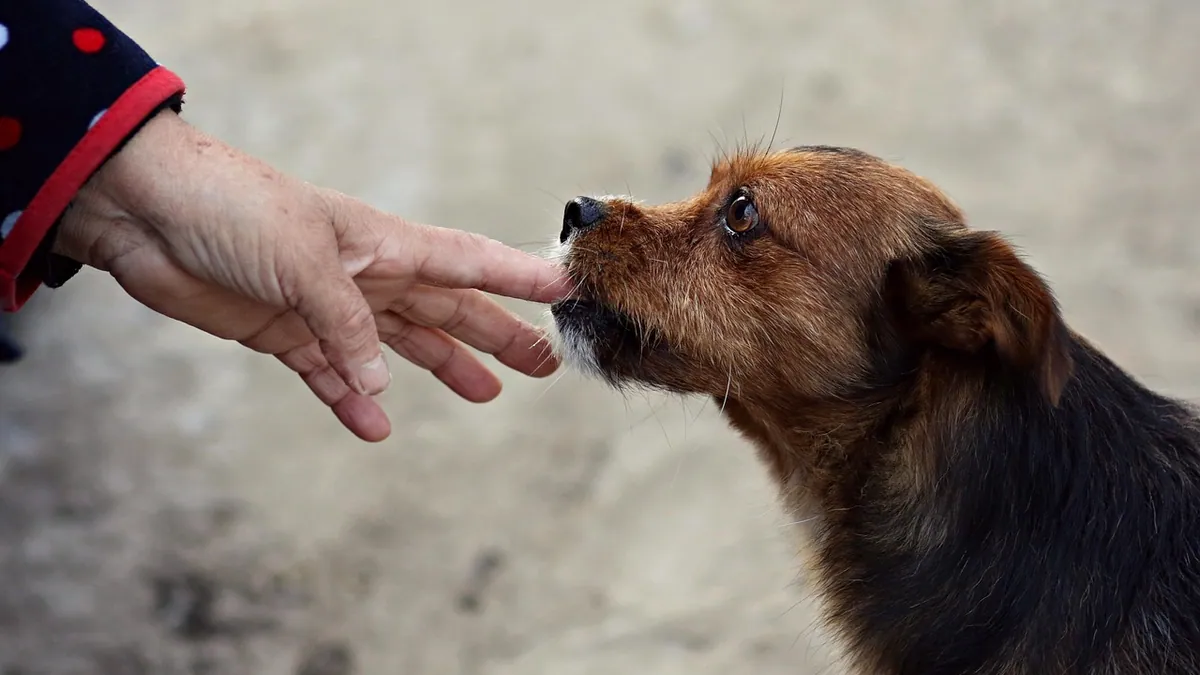
Why does my dog nibble on me? Most of the time, nibbling and mouthing are normal dog behaviors, especially in puppies exploring the world mouth-first. Dogs use their mouths the way people use their hands, so gentle nipping during play or affection is often harmless. The goal is teaching your dog that human skin is sensitive and that teeth stay off people.
This article is educational and is not a substitute for veterinary diagnosis or treatment.
Quick Answer
- Puppy mouthing is normal and peaks during teething and play, but you still need to teach bite inhibition so your dog learns to control jaw pressure [1].
- Adult dogs mouth for many reasons, including arousal, conflict, inappropriate play, or a history of being rewarded for the behavior, sometimes without the owner realizing it [2].
- Playful mouthing usually comes with a relaxed body and face, while aggressive biting often involves a stiff body, wrinkled muzzle, and exposed teeth [3].
- Redirect your dog to an appropriate chew toy or treat before the mouthing escalates, and reward calm behavior instead of punishing nipping [1][4].
- Sudden new nibbling in an adult dog, especially with yelping, stiffness, or avoidance, needs a veterinary exam to rule out pain or illness.
Why Does My Dog Nibble on Me? The Normal Reasons First
Mouthing is a natural oral behavior in dogs, particularly during puppyhood [5]. Puppies investigate texture, temperature, and taste with their mouths. Your hands, ankles, and sleeves are right at mouth level, so they become targets.
Puppy mouthing and bite inhibition
Bite inhibition means a dog's ability to control how hard he uses his mouth [1]. Puppies who never learn this with people do not recognize how easily human skin tears, so they bite too hard even during play [1]. Some behaviorists and trainers believe a dog who has learned to mouth gently around people is less likely to bite hard and break skin if he ever bites out of fear or pain [1].
Puppies often mouth on hands when they are stroked, patted, or scratched, unless they are sleepy or distracted [1]. If your puppy gets riled up during petting, distract him by feeding small treats from your other hand. This helps him get used to being touched without using his teeth [1].
Affectionate nibbling
Some dogs nibble gently as a social behavior. You may see soft, quick nibbles with a loose, wiggly body and a wagging tail. This is different from the hard, fast bites of a dog who is over-aroused or frightened. A relaxed body and face point to play, while a stiff body and wrinkled muzzle with exposed teeth point toward something more serious [3].
Why adult dogs keep nibbling
Inappropriate mouthing is common in adolescent and adult dogs [2]. Several things can prompt it, including arousal, conflict, inappropriate play, or a history of being rewarded for the behavior, often unintentionally [2]. If you laughed the first time your dog grabbed your sleeve, or you pushed him away with your hands, you may have accidentally turned mouthing into a game.
Mouthing is often harder to stop in adult dogs because adults are less sensitive to our reactions than puppies are, and they are usually harder to control physically because of their size [3]. Adult jaws also cause more pain than puppy teeth, and an adult dog can injure someone while mouthing [3].
Medical Causes to Rule Out
Not every nibble is behavioral. Pain, itching, nausea, and dental disease can all push a dog to use his mouth more than usual. A dog with an aching tooth or sore gums may chew or nibble at hands, bedding, or the air. A dog with an upset stomach may lick or mouth objects and people.
Anxiety is another medical-adjacent driver. A dog with generalized anxiety may show mouthing along with pacing, panting, and trouble settling. In one reported case, a young dog with escalating aggression toward people was diagnosed with generalized anxiety, impulse-control problems, fear-related aggression, and socialization deficits after a full medical workup found no underlying physical disease [6]. That dog also had risk factors including early separation from the dam at 6 weeks, minimal early socialization, and chronic illness during early development [6].
If your adult dog suddenly starts nibbling after years of never doing it, book a veterinary visit. Your veterinarian can check the mouth, teeth, gums, skin, and joints, and can talk with you about whether the behavior looks like play, anxiety, or pain. If your dog is also drooling more than usual, that can point to mouth discomfort, and our guide to why is my dog drooling covers what to watch for.
When Nibbling Becomes a Problem
Nibbling crosses into a problem when it hurts, breaks skin, tears clothing, or happens when your dog is scared, frustrated, or guarding something. Most mouthing is normal dog behavior, but some dogs bite out of fear or frustration, and that type of biting can point to aggression problems [3].
Watch your dog's whole body, not just his mouth. A playful dog usually has a relaxed body and face, and his muzzle might look wrinkled without much tension in the facial muscles [3]. Playful mouthing is usually less painful than serious, aggressive biting [3]. An aggressive dog often looks stiff, may wrinkle his muzzle and pull back his lips to expose his teeth, and delivers bites that are quicker and more painful than play bites [3].
Escalation matters too. Inappropriate mouthing may start with soft bites and nips at hands or feet, but it can grow into jumping and grabbing at clothes or body parts, sometimes causing torn clothing and bruises [2]. Learn your dog's early warning signs so you can act before the behavior ramps up [2].
Step-by-Step Plan to Redirect the Behavior
Step 1: Set up management so your dog cannot practice the behavior
Management keeps your dog from mouthing you during times you cannot actively train him [2]. Good management means your dog does not get to rehearse the unwanted behavior, which makes teaching the new behavior easier [2]. Options include no-go zones, crates, and draglines [2]. If your puppy nips during evening couch time, use a baby gate or tether so he cannot reach your hands while you relax.
Step 2: Teach gentle mouthing first, then no mouthing
The ultimate goal is to train your puppy to stop mouthing and biting people altogether [1]. The first and most important step, though, is teaching him that people have very sensitive skin and that he must be very gentle when using his mouth [1]. Yelp or say "ouch" in a calm, high tone when a bite is too hard, pause the play for a few seconds, then resume. If the bites stay hard, end the session and walk away.
Step 3: Redirect to an appropriate item
Keep a chew toy within reach. The moment your dog's mouth heads for your hand, offer the toy instead. Chewing and mouthing are natural oral behaviors, and providing appropriate enrichment items such as chew toys is often recommended to reduce undesirable chewing and mouthing [5]. A 2025 study looked at whether scented chew toys changed how often puppies chewed and mouthed at home, and the researchers collected owner reports on chewing and mouthing frequency before and after a week with the toys [5]. The takeaway for owners is simple: give your dog something legal to chew and praise him when he chooses it.
Choose toys with care. Chewing and mouthing lead to oral exposure to chemicals in some plastic toys and training devices, and one study found that phthalates and bisphenol A leached from dog toys and bumpers into synthetic saliva, with higher levels after simulated chewing [7]. Rotate toys, replace ones that are cracked or worn, and pick products made for heavy chewers.
Step 4: Reward the behavior you want
Focus on rewarding acceptable behaviors instead of punishing unacceptable ones [4]. When your dog sits calmly while you pet him, mark it with a treat. When he picks up his toy instead of your sleeve, praise him. Puppy preschool and kitten kindergarten classes are an ideal way to introduce owners to modern, humane training and socialization [4]. A group class also gives your puppy practice being handled by new people in a controlled setting.
Step 5: Handle petting-triggered mouthing
If your puppy mouths every time you pet him, change the picture. Feed small treats from your other hand while you stroke him [1]. Keep sessions short. If he gets mouthy, stop petting, wait for a calm moment, then try again. Over time, being touched predicts treats instead of a wrestling match.
Step 6: Build a routine that meets his needs
Boredom and excess energy fuel mouthing. Add sniff walks, puzzle feeders, training games, and chew time. A tired, mentally satisfied dog has less reason to grab at hands. If your dog's mouthing spikes in the evening, add a structured chew session before your usual relax time.
What Not to Do
Do not hit, slap, or alpha-roll your dog. Punishment-based methods can increase fear and defensive biting, and they do not teach the gentle mouth control your dog needs [1]. The goal is teaching, not intimidating.
Do not yank your hand away fast during a hard bite. Quick pulling can tear skin and turn the moment into a chase game. Freeze, then withdraw slowly and end the interaction.
Do not assume your dog will grow out of it. Some dogs do mouth less as they mature, but adult mouthing is often harder to suppress because adults are less responsive to our reactions and harder to control physically [3]. Start training now.
Do not ignore stiffness, growling, or lip curling. Those are not play signals [3]. If you see them, stop the interaction and get professional help.
Do not mistake mouthing for teething alone. Teething explains some chewing, but it does not explain grabbing at people during play or when aroused [2].
When to Call a Veterinarian or Behavior Professional
Call your veterinarian if the nibbling started suddenly in an adult dog, if your dog yelps or avoids having his mouth touched, or if he is also shaking, pacing, or hiding. Our article on why is my dog shaking explains some of the medical reasons behind those signs.
Call a certified behavior professional if your dog has broken skin, if bites are getting harder or more frequent, if your dog guards food or toys, or if you feel unsafe. A case report of a 9-month-old dog with severe early-onset aggression showed that prior advisors had minimized the behavior and no plan was in place before referral [6]. Early, qualified help matters. Look for a veterinarian who works with behavior cases or a certified applied animal behaviorist.
If your dog coughs, gags, or retches around the time he mouths or chews, that is a separate concern worth a veterinary visit. See our guides on why does my dog cough and gag so much and why does my dog cough and gag when excited.
Limitations and When to Contact a Veterinarian
This article gives general guidance. Individual cases need a veterinarian who can examine your dog, ask about his history, and see the behavior in context.
Contact your veterinarian the same day if your dog shows sudden new mouthing with drooling, dropping food, pawing at the mouth, or refusing to eat. These can point to dental or oral pain.
Go to an emergency clinic now if a bite broke your skin and will not stop bleeding, if your dog bit a person hard enough to cause injury, if your dog is biting at the air repeatedly, or if he seems disoriented or unsteady.
Schedule a routine visit if the mouthing is new in an adult dog, if it is getting worse over weeks, or if you want help building a training plan. Your veterinarian can rule out pain and refer you to a behavior specialist if needed.
Frequently Asked Questions
Why is my puppy nibbling me?
Puppies nibble because mouthing is a natural oral behavior during puppyhood, and they use their mouths to explore and play [5]. They also need to learn bite inhibition, which means controlling how hard they use their teeth on people [1]. Gentle nibbling is normal, but you should still teach your puppy to be soft and then to stop mouthing people altogether [1].
Why does my puppy nibble on my hand?
Hands are often the closest target when you pet, scratch, or play with your puppy, and puppies commonly mouth hands during those interactions [1]. If your puppy gets worked up when you pet him, distract him with small treats from your other hand so he learns to accept touch without using his teeth [1]. Keep sessions short and reward calm behavior.
My dog keeps nibbling me. Is that aggression?
Most mouthing is normal dog behavior, but some dogs bite from fear or frustration, which can signal aggression problems [3]. Look at your dog's body. A relaxed, loose dog is likely playing, while a stiff dog with a wrinkled muzzle and exposed teeth is showing something more serious [3]. If bites are hard, frequent, or paired with guarding, get professional help.
What should I do when my dog nibbles my hands?
Redirect your dog to a chew toy or treat before the mouthing escalates, and reward him when he chooses the toy. Chewing is a natural behavior, and providing appropriate chew items is a common recommendation to reduce unwanted chewing and mouthing [5]. Avoid punishment, and focus on rewarding the behavior you want instead [4].
Can mouthing be a sign of pain or anxiety?
Yes. Pain, dental problems, and anxiety can all increase mouthing, especially if the behavior is new in an adult dog. A reported case of severe aggression in a young dog included diagnoses of generalized anxiety and fear-related aggression after medical testing found no physical cause [6]. If the behavior changed suddenly, start with a veterinary exam.
Related Articles
- Why Is My Dog Drooling?
- Why Is My Dog Shaking?
- Why Does My Dog Cough And Gag So Much
- Why Does My Dog Cough And Gag When Excited
- Why Is My Dog Barking at Nothing?
- Why Is My Dog Licking Everything?
- Why Does My Puppy Mouth My Hand? Causes and Training
- Why Does My Puppy Only Bite Me? Understanding Puppy Mouthing
- How to Stop a Dog From Mouthing and Nipping
References
- Mouthing, Nipping and Biting in Puppies. ASPCA Animal Poison Control Center.
- Inappropriate Mouthing. ASPCA Animal Poison Control Center.
- Mouthing, Nipping and Play Biting in Adult Dogs. ASPCA Animal Poison Control Center.
- Preventing behavior problems in puppies and kittens. The Veterinary clinics of North America. Small animal practice, 2008.
- To chew or not to chew? Exploring the influence of scented chew toys on puppy chewing. Frontiers in behavioral neuroscience, 2025.
- Evaluation of a Young Dog for Escalating Aggression Toward Both Familiar and Unfamiliar People. Case reports in veterinary medicine, 2026.
- Canine toys and training devices as sources of exposure to phthalates and bisphenol A: quantitation of chemicals in leachate and in vitro screening for endocrine activity. Chemosphere, 2013.