Why Does My Cat Quack? Weird Sounds Explained
By Dr. Zubair Khalid, DVM, MS, PhD ·
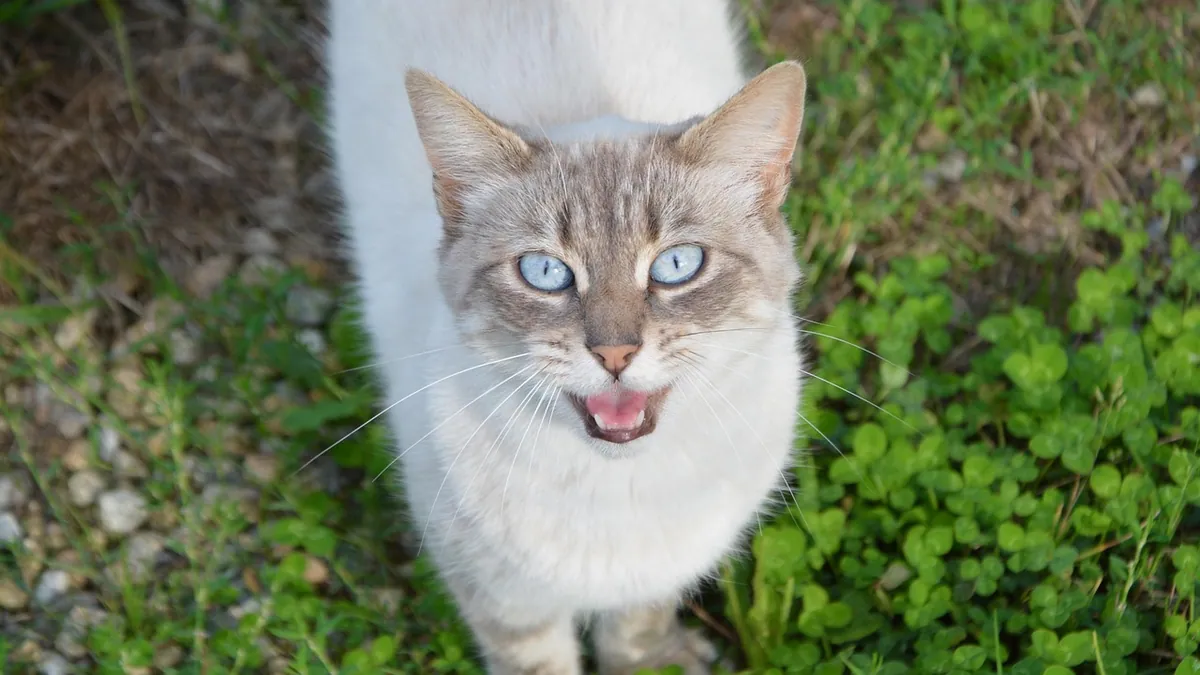
A quack from a cat is usually a chirp, trill, or raspy meow, not a true duck sound. Cats make these short, buzzy calls most often when they are excited, greeting you, or asking for something. So why does my cat quack? Usually because she is talking to you in her own way, but a new or hoarse voice can also point to a throat or airway problem.
This article is educational and is not a substitute for veterinary diagnosis or treatment.
Quick Answer
- A quack is almost always a chirp, trill, or raspy meow, and it is normal cat communication in most cases.
- Cats quack at people most often during greetings, feeding time, or play, and some cats do it when they watch birds through a window.
- A quack that sounds wet, harsh, or hoarse, or that comes with coughing, noisy breathing, or trouble swallowing, needs a vet visit.
- Sudden voice changes can be linked to the throat, larynx, or upper airway, and these problems are easier to treat when caught early.
- Record the sound on your phone and note when it happens, because that helps your vet sort out normal talk from a medical sign.
Why Does My Cat Quack? Normal Reasons First
Most quacking is just vocalization. Cats have a wider range of sounds than many owners expect, and the short, rolled chirp that sounds like a duck call sits between a meow and a purr.
The chirp and the trill
A chirp is a quick, high, clipped sound. A trill is longer and rolls a little, like a question. Mother cats trill to call their kittens, and many cats keep using trills with their people. When your cat trots toward you with a trill, she is saying hello or asking you to follow.
Why does my cat quack at me?
Cats often quack at the person who feeds them, plays with them, or lets them outside. The sound tends to show up at predictable times, such as when you open a can, pick up a toy, or walk in the door. That timing is the clue. A quack that only happens around you and only in happy moments is communication, not illness.
Why does my cat quack like a duck at birds?
Some cats make a rapid chirping or chattering sound while watching birds or squirrels through a window. Owners describe it as quacking. This is a normal hunting-related vocalization, and it usually stops when the bird leaves. If your cat also hides more, paces, or overgrooms, that can be a sign of stress, and it helps to look at the whole picture. See Why Is My Cat Suddenly Hiding and Acting Weird? for related behavior changes.
Stress and excitement can change the sound
Vocalization carries emotion, and researchers are working on ways to classify cat and dog emotions from the sound of their voices [1]. In plain terms, a happy, excited cat may sound buzzy and bright, while a worried cat may sound flat, low, or repeated. A study of indoor and outdoor cats found that cats showing excessive vocalization and isolation had higher hair cortisol levels, a marker of longer-term stress [2]. That does not mean every chatty cat is stressed. It means a sudden jump in how much your cat talks is worth a look at her environment.
Medical Causes of a Quacking or Raspy Voice
A quack that is new, rough, or breathy is different from a chirp your cat has made for years. The throat and voice box sit in a narrow space, so swelling, masses, or nerve problems there can change how a meow sounds.
Laryngeal disease
The larynx is the voice box. A mass in this area can cause hoarseness and a noisy, high-pitched breathing sound called stridor. In one report, a 14-year-old cat had two months of stridor and hoarseness before a laryngeal mass was found and confirmed as squamous cell carcinoma [3]. That cat did not lose her appetite, which shows that a changed voice can be the main early sign. Laryngeal cancer in cats is uncommon and has a poor outlook, and treatment options are limited [3]. Early evaluation gives you the most choices.
Upper airway swelling or obstruction
Swelling in the mouth, throat, or upper airway can change the voice and make breathing hard. A case report described two cats that developed serious upper airway swelling after an ear flush procedure, with swelling on one side of the head that spread and involved the oropharynx, making the trachea impossible to see [4]. That situation is rare and tied to a specific procedure, but it shows how quickly airway swelling can become an emergency. If your cat is quacking and also working hard to breathe, that is not a wait-and-see problem.
Other health problems that affect the voice
Many conditions can make a cat sound different without a true quack. Examples include:
- Upper respiratory infections, which often come with sneezing, nasal discharge, or eye discharge. See Why Is My Cat Sneezing?.
- Ear disease, because the nerves and structures near the ear sit close to the throat and voice box. Head shaking and ear scratching often go together. See Why Is My Cat Scratching Its Ears? and Why Is My Cat Shaking Her Head And Ears.
- Hormonal disease. A study of 28 cats with hypersomatotropism (excess growth hormone) without diabetes found that 26 were male, the mean age was 9.5 years, and 68% had signs possibly related to acromegaly, including a protruding lower jaw, weight gain, and broader facial features [5]. A thicker head and neck can change how a cat sounds, so body changes matter too.
- Pain, dental disease, or a foreign object such as a blade of grass caught in the mouth or throat.
Why the timing of the quack matters
A quack that appears only at meals and has been there for years is normal. A quack that started last week, sounds wet, or comes with any breathing change is a medical question. Your vet will want to know when it started, whether it is getting worse, and whether your cat is eating, drinking, and using the litter box normally.
When Quacking Becomes a Problem
Use these questions to decide how worried to be.
- Is the sound new? A lifelong chirp is different from a voice change that appeared over days.
- Is the sound getting worse? A quack that turns into a rasp, a wheeze, or a near-silent meow deserves a call.
- Does your cat have other signs? Coughing, gagging, drooling, bad breath, weight loss, or a drop in appetite all point toward a medical cause.
- Is breathing affected? Open-mouth breathing, a stretched neck, or fast breathing at rest is an emergency in cats.
- Is the behavior different? Hiding, clinginess, or a sudden need to be near you can be a pain or stress signal. See Why Is My Cat Suddenly Clingy?.
If the answer to the first two questions is yes, book a vet visit. If breathing is affected, go now.
What to Do Step by Step
1. Record the sound
Use your phone to capture the quack in context. Note the time of day, what your cat was doing, and whether the sound is the same every time. A recording is often more useful to your vet than a description.
2. Track the pattern for a few days
Write down meals, play, greetings, and any coughing or sneezing. Patterns help separate a greeting trill from a symptom. If the quack only happens when you shake the treat bag, that is a strong hint.
3. Check the basics at home
Look at your cat's mouth if she lets you. Check for drooling, a swollen face, or a bad smell. Watch her breathe when she is resting. Normal resting breathing in a calm cat is quiet and easy, and you should not see the belly working hard.
4. Support normal communication
Answer your cat. If she trills at you, trill back or talk to her. Cats that get a response often keep using the sound, and that is fine. This is bonding, not a problem to fix.
5. Add enrichment and lower stress
Indoor cats do well with litter boxes, hiding places, vertical spaces, and predatory play such as wand toys and puzzle feeders [2]. A cat with more to do often vocalizes less out of boredom. Set a routine for meals and play so your cat knows what comes next.
6. Keep the environment steady
Sudden changes such as a new pet, a move, or a schedule shift can increase vocalizing. Give your cat a quiet room with her own resources and let her adjust at her pace.
7. Ask your vet about the voice change
If the sound is new or rough, your vet will examine the mouth, throat, and neck and may recommend imaging or endoscopy. Do not wait for the quack to become a wheeze.
What Not to Do
- Do not punish your cat for quacking. Punishment does not teach a cat to be quiet, and it can raise stress and make vocalizing worse.
- Do not use a spray bottle, a shock collar, or a loud noise to stop the sound. These tools damage trust and can hide a medical problem.
- Do not assume a quack is always behavioral. A changed voice can be the first sign of a throat or airway problem, and a laryngeal mass can cause hoarseness for weeks before other signs appear [3].
- Do not try to remove anything from your cat's throat at home. You can cause bleeding or push the object deeper.
- Do not give human medications, cough syrups, or antihistamines. Some are toxic to cats, and dosing is not the same as for people.
- Do not ignore breathing changes because your cat is still eating. The cat in the laryngeal mass report had a normal appetite despite two months of hoarseness and stridor [3].
When to Involve a Veterinarian or Behavior Professional
Call your veterinarian if the quack is new, if it is getting worse, or if it comes with coughing, sneezing, drooling, bad breath, weight loss, or a change in appetite. Your vet can examine the throat and decide whether testing is needed.
Ask for a referral to a veterinary behaviorist if your cat's vocalizing is tied to anxiety, if it happens all night, or if it continues after medical causes are ruled out. A behavior professional can build a plan that fits your home.
If your cat is struggling to breathe, has blue gums, breathes with an open mouth, or collapses, go to an emergency clinic right away. Do not wait for a regular appointment.
Limitations and When to Contact a Veterinarian
This article cannot tell you what is causing your cat's sound. Only a veterinarian who examines your cat can do that, and individual cases need a veterinarian's hands-on assessment.
Contact your vet the same day if you notice:
- A voice change that started within the last few days
- A wet, gurgling, or harsh quack
- Coughing, gagging, or drooling
- A swollen face, neck, or jaw
- A drop in appetite or energy
Go to an emergency clinic now if you notice:
- Open-mouth breathing or a stretched-out neck
- Fast breathing while resting
- Noisy breathing that gets worse when your cat is calm
- Blue or gray gums
- Collapse or extreme weakness
Book a routine visit if the quack is mild but has lasted more than a week, or if you are unsure whether it is normal for your cat.
Frequently Asked Questions
Is a quacking cat normal?
Yes, in most cases. A chirp or trill that your cat has made for a long time, especially around meals or greetings, is normal communication. A quack that is new, rough, or paired with breathing changes is not normal and should be checked.
Why does my cat quack at me and not at other people?
Cats often aim vocalizations at the person who feeds, plays with, or responds to them. If you answer the sound, your cat learns that you are the one who listens. This is a learned greeting, not a sign of illness by itself.
Can a quack mean my cat is in pain?
It can. Pain in the mouth, throat, or neck can change how a cat vocalizes, and some cats become clingy or hide when they hurt. If the new sound comes with drooling, bad breath, or eating changes, see your vet.
Does a hoarse meow always mean cancer?
No. Hoarseness has many causes, including inflammation, infection, and voice box disease. Laryngeal cancer is uncommon in cats, but it can cause hoarseness and noisy breathing for weeks, so a lasting voice change deserves an exam [3].
Should I record the sound before my vet visit?
Yes. A short recording helps your vet hear the pitch, timing, and pattern of the quack. Bring notes about when it started and what your cat was doing, and mention any coughing, sneezing, or appetite changes.
Related Articles
- Why Is My Cat Suddenly Hiding and Acting Weird?
- Why Is My Cat Suddenly Clingy?
- Why Is My Cat Scratching Its Ears?
- Why Is My Cat Shaking Her Head And Ears
- Why Is My Cat Sneezing?
- Why Is My Cat Suddenly Afraid of Me?
- Why Does My Kitten Chirp? What the Sound Means
- Why Is My Cat Quiet? Causes of Sudden Quietness in Cats
- Why Is My Kitten So Quiet? Quiet Meows Explained
References
- Multi-QuadEmoNet: cat and dog emotion classification model from animal vocalization using multi-stage LSTM-GRU paradigm. Frontiers in veterinary science, 2026.
- Stress in Indoor and Outdoor Cats: Association between Hair Cortisol Levels, Housing Style, and Guardians' Perceptions of Behavior. Journal of applied animal welfare science : JAAWS, 2026.
- Long-term remission in a cat with laryngeal squamous cell carcinoma treated with stereotactic radiation therapy. JFMS open reports, 2026.
- Unexpected upper airway obstruction after ear flushing in two cats. Veterinary anaesthesia and analgesia, 2025.
- Hypersomatotropism without concurrent diabetes mellitus in cats: 28 cases (2014-2024). Journal of veterinary internal medicine, 2026.