Why Does My Kitten Walk Sideways? Normal or Not?
By Dr. Zubair Khalid, DVM, MS, PhD ·
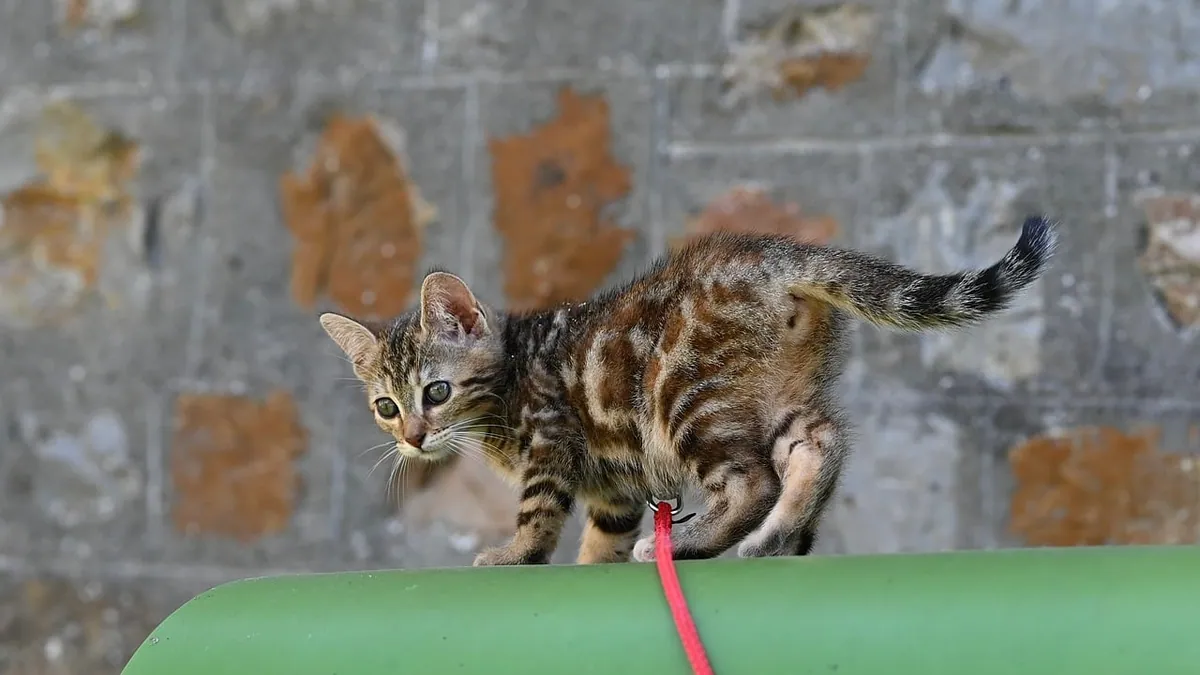
Most of the time, a kitten walking sideways is doing a playful "crab walk," a normal burst of energy during play or a mock threat display. It usually happens with a puffed tail, a sideways hop, and a pounce. If the sideways motion comes with a head tilt, falling, or a body that leans to one side, that is different and needs a vet.
This article is educational and is not a substitute for veterinary diagnosis or treatment.
Quick Answer
- A sideways crab-walk during play, often with a puffed tail and a hop, is normal kitten behavior and usually stops on its own.
- A kitten that runs sideways in short bursts, then plays normally, is almost always fine.
- A kitten that walks sideways constantly, leans, circles, or falls to one side may have a balance problem and needs a vet.
- Record a short video of the behavior so your vet can see exactly what you see.
- Never punish a kitten for sideways walking. Redirect to a toy instead.
Why Does My Kitten Walk Sideways?
The Playful Crab Walk
Kittens have a well-known play posture that owners describe as walking sideways. The kitten turns its body so its side faces you or another pet, arches its back, puffs its tail, and moves in a stiff sideways hop. This is a mock threat display. It is part of normal play and social development.
This behavior often shows up during a burst of energy, sometimes called the zoomies. Your kitten may run sideways across the room, stop, stare, then pounce on a toy or another kitten. The sideways run is a challenge posture, not a sign of pain.
Why Is My Kitten Running Sideways During Play?
Play fighting and hunting practice both trigger sideways movement. When a kitten stalks a toy, it may approach at an angle. When it wants to look bigger or startle a playmate, it turns broadside and hops. This is why you often see the sideways run right before a pounce.
Kittens also use this posture to invite chase. One kitten crab-walks, the other gives chase, and they swap roles. This back-and-forth is healthy social play.
Why Do Kittens Jump Sideways?
A sideways jump is usually a play leap. The kitten launches at an angle to surprise a toy or a sibling. Cats are built for quick direction changes. The thoracic spine (the upper back) has more range of motion and less stiffness than the lumbar spine (the lower back), which supports the twisting and turning cats do during fast movement and midair righting [1]. That flexibility helps explain the wild, sideways leaps you see during play.
Normal Reasons at a Glance
- Play and mock threat displays
- Zoomies and bursts of energy
- Hunting practice with toys
- Inviting a chase from a littermate
- Startle response to a sudden sound or movement
Medical Causes to Rule Out
Sideways walking becomes a concern when it is not playful. The key difference is control. A playing kitten is coordinated. A kitten with a balance problem is not.
Vestibular Disease
The vestibular system controls balance and head position. When it is affected, a cat may tilt its head, circle, and show nystagmus (a repetitive eye movement). One reported case involved a 2-year-old cat with an acute onset of right-sided head tilt, circling, and horizontal nystagmus, and testing confirmed a right-sided peripheral vestibular syndrome from otitis media [2]. That cat improved markedly by day 4 with treatment [2]. This shows that vestibular signs can have a treatable cause, which is why an exam matters.
Feline idiopathic vestibular syndrome is another cause of sudden balance loss. Research has looked at MRI findings in cats with this condition and found no link between inner ear fluid signal changes and which side showed clinical signs [3]. In plain terms, the imaging does not always explain the symptoms, so diagnosis relies on the exam and ruling out other causes.
Ear Infections and Other Ear Disease
Middle or inner ear disease can cause a head tilt and unsteady walking. The cat in the case above had otitis media confirmed by CT and video-otoscopic evaluation [2]. Ear problems are one of the more common and more treatable reasons a kitten suddenly walks off balance.
Neurologic Problems
Cerebellar hypoplasia, brain injury, and other neurologic conditions can cause a wobbly, wide-based, or sideways gait. These kittens often have a tremor and poor coordination from a young age. If your kitten has always been unsteady, that is different from a sudden change. For a deeper look at this pattern, see Why Is My Cat having a wobbly gait? Cerebellar Hypoplasia and Vestibular Disease.
Injury and Pain
A fall, a bad landing, or a strain can change how a kitten moves. A kitten that limps or avoids using a leg may look like it is walking sideways. If you see limping, read Why Is My Cat Limping?.
Other Health Issues
Some health problems change behavior in ways owners notice as "acting weird." If your kitten is also hiding, see Why Is My Cat Suddenly Hiding and Acting Weird?. If there are litter box changes too, see Why Is My Cat Peeing on the Floor Right in Front of Me?.
When Sideways Walking Becomes a Problem
Ask yourself three questions.
First, is it playful? A playing kitten has a relaxed or excited face, normal pupils for the light level, and coordinated movement. It can stop, change direction, and land on its feet.
Second, is it constant? A kitten that walks sideways every time it moves, or that cannot walk straight at all, is not playing.
Third, did it start suddenly? A sudden change in balance in a kitten that was normal yesterday is a red flag. Gradual, lifelong wobbliness points to a different set of causes.
Watch for these signs that separate play from a problem:
- Head tilt that does not go away
- Circling in one direction
- Falling or rolling to one side
- Eyes that flick back and forth
- Vomiting with the balance changes
- Refusing food or acting dull
- Crying or flinching when touched
What to Do Step by Step
1. Record the Behavior
Take a 15 to 30 second video. Capture the walk, the head position, and the eyes. Vets can learn a lot from a short clip, and it helps if your kitten acts normal at the clinic.
2. Check the Environment
Look for hazards that could cause a fall or a startle. Block stairs, cover gaps behind furniture, and remove unstable objects a kitten could climb. A kitten with balance problems should stay on the floor or in a low-sided pen.
3. Keep Play Going
If the behavior is playful, do not stop it. Channel it. Wand toys, balls, and puzzle feeders give your kitten an outlet for the sideways hop and pounce. Two or three short play sessions a day work well for young kittens.
4. Add Enrichment
Scratching posts, cat trees, and safe climbing spots build coordination and confidence. Rotate toys so play stays interesting. A tired, well-played kitten is less likely to bounce off walls at 2 a.m.
5. Keep a Simple Log
Note when the sideways walking happens, how long it lasts, and what happened right before. Note any head tilt, eye movement, or vomiting. Bring the log and the video to your vet visit.
6. Feed and Water Normally
Unless your vet says otherwise, keep meals and water available. A kitten that stops eating needs to be seen.
7. Call Your Vet Early
If you are unsure, call. It is much easier to rule out a problem early than to treat one that has been going on for weeks.
What Not to Do
Do Not Punish the Behavior
Never yell at, spray, or scruff a kitten for walking sideways. If it is play, punishment damages trust. If it is a medical problem, punishment adds stress to a kitten that already feels unwell.
Do Not Assume It Is Always Play
The crab walk is common, but it is not the only reason a kitten moves sideways. If the movement looks stiff, uncoordinated, or constant, treat it as a medical question.
Do Not Wait and See for Weeks
A sudden balance change is not something to watch for a month. Early exams catch ear infections and other treatable causes sooner.
Do Not Give Human Medicine
Never give a kitten human pain relievers or any medication without veterinary direction. Many common human drugs are toxic to cats. Your veterinarian calculates any dose from your kitten's weight and health.
Do Not Rely on Internet Videos Alone
A video of another cat's crab walk does not tell you what is happening with your kitten. Use your own video and a vet exam.
When to Involve a Veterinarian or Behavior Professional
Call your veterinarian if the sideways walking is new, if it comes with a head tilt, circling, eye flicking, vomiting, or falling, or if your kitten seems painful or dull. A kitten with these signs needs an exam, and some cases need imaging or lab work. One reported case used CT and video-otoscopic evaluation to confirm the diagnosis and guide treatment [2].
If your vet finds no medical cause and the behavior is intense, frequent, or directed at people or other pets, ask about a certified behavior professional. Look for someone with credentials in cat behavior. Your vet can often refer you.
If your kitten is also hiding more than usual, that can be a sign of stress or illness. See Cat Hiding After Moving: How to Help Your Cat Adjust for one common trigger.
Limitations and When to Contact a Veterinarian
This article cannot tell you what is happening with your individual kitten. Only a veterinarian who examines your kitten can do that.
Emergency now: repeated falling, inability to stand, seizures, heavy breathing, collapse, or a suspected poisoning. Call your vet or an emergency clinic right away.
Same day: sudden head tilt, circling, eye flicking, vomiting with balance loss, or a kitten that cannot walk straight.
Routine visit: intermittent sideways walking that you think is play but want checked, or any behavior change that lasts more than a day or two.
Frequently Asked Questions
Is it normal for kittens to run sideways?
Yes, in most cases it is normal play. Kittens crab-walk to look bigger, to startle a playmate, or to launch a pounce. The behavior is normal when your kitten is coordinated, stops on its own, and plays normally afterward.
Why is my kitten walking sideways all the time?
Constant sideways walking is not typical play. It can point to a balance problem, an ear issue, or a neurologic condition. A kitten that cannot walk straight needs a veterinary exam.
Why does my kitten run sideways and then pounce?
That is a play sequence. The sideways run is a mock threat display, and the pounce is the payoff. This pattern is common during hunting practice and social play with littermates.
Can ear problems make a kitten walk sideways?
Yes. Middle and inner ear disease can cause a head tilt, circling, and unsteady movement. One reported cat with these signs had otitis media confirmed by imaging and improved with treatment [2]. Ear disease is treatable, so an exam is worthwhile.
Should I stop my kitten from walking sideways?
No, do not stop playful sideways walking. Redirect the energy to a toy if the kitten is bothering you or another pet. If the movement looks uncoordinated or comes with a head tilt, call your vet instead of correcting the kitten.
Related Articles
- Why Is My Cat Peeing on the Floor Right in Front of Me?
- Why Is My Cat Suddenly Hiding and Acting Weird?
- Why Is My Cat Limping?
- Cat Hiding After Moving: How to Help Your Cat Adjust
- Why Is My Cat having a wobbly gait? Cerebellar Hypoplasia and Vestibular Disease
- Cat Hiding: When to Worry and When It's Normal Cat Behavior
- Why Is My Kitten Walking Weird With Its Back Legs?
- Kitten Not Walking Properly: Causes and Urgency
- Why Is My Kitten Wobbly? Causes of an Unsteady Gait
References
- Torsional flexibility of the thoracic spine is superior to that of the lumbar spine in cats: Implications for the falling cat problem. Anatomical record (Hoboken, N.J. : 2007), 2026.
- Idiopathic multifocal calcinosis cutis presenting in a cat with vestibular syndrome: clinical, radiographic and histopathological findings. JFMS open reports, 2026.
- Lack of association between inner ear FLAIR suppression on MRI and laterality of clinical signs in feline idiopathic vestibular syndrome. Journal of feline medicine and surgery, 2026.