Why Is My Kitten Walking Weird With Its Back Legs?
By Dr. Zubair Khalid, DVM, MS, PhD ·
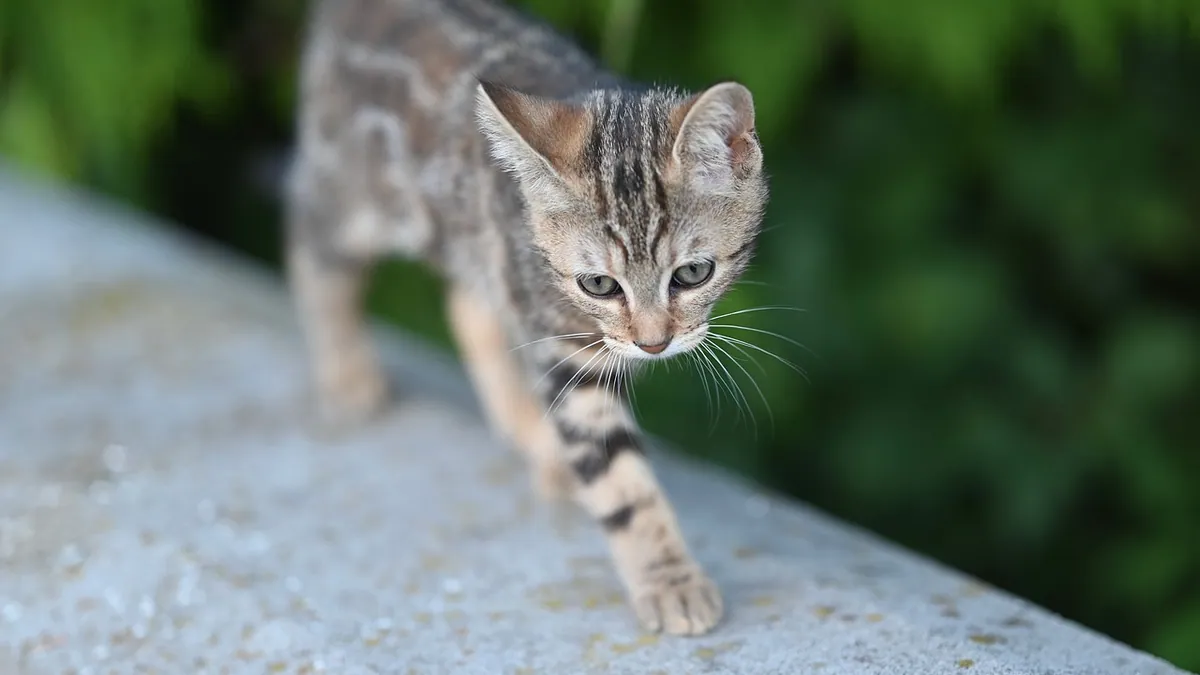
If your kitten is walking weird with his back legs, the cause could be simple clumsiness, an injury, a spinal problem, or a congenital condition present since birth. Young kittens often have unsteady, wobbly gaits while their coordination and muscles develop. The key is telling normal awkwardness apart from a sign that something is wrong.
This article is educational and is not a substitute for veterinary diagnosis or treatment.
Quick Answer
- A young kitten who is a little wobbly, splay-legged, or clumsy on smooth floors is often normal, especially in the first weeks of walking.
- Dragging the back legs, knuckling over onto the tops of the paws, or sudden loss of use is not normal and needs urgent veterinary care.
- Sudden hind leg weakness or dragging in any cat can be an emergency such as a blood clot, so call your veterinarian right away.
- Congenital problems like cerebellar hypoplasia cause a permanent wobble from birth, but the kitten is usually not in pain and can still have a good life.
- Never give human pain medicine to a kitten. Many common pain drugs are toxic to cats.
What "Walking Weird" Actually Looks Like
Kittens move in ways that can look strange to new owners. A kitten may sway, cross the back legs, or take short, choppy steps. On a slick floor, the back legs may slide out to the sides. This is often a coordination and strength issue that improves as the kitten grows.
Some kittens have a wide-based stance, meaning the back legs are spread apart for balance. Others bunny-hop with both back legs together. Mild versions of these patterns can be normal in a developing kitten.
What is not normal is a back leg that does not work. Watch for a leg that drags, a paw that flips over so the kitten walks on the top of the foot, or a kitten who cannot stand on the back legs at all. These signs point to a nerve, spinal cord, or muscle problem.
Is It Normal for Kittens to Walk Weird?
Yes, some odd walking is normal in kittens. Their nervous systems and muscles are still maturing. They also have less body awareness than adult cats, so they bump into things and misjudge steps.
Normal awkwardness tends to improve over days to a few weeks. The kitten still uses both back legs, still plays, still eats, and does not seem painful. The wobble may get worse when the kitten is tired or excited.
Abnormal walking does not improve and often gets worse. The kitten may favor one leg, drag a leg, or lose balance and fall. If the change came on suddenly, treat it as urgent.
Main Causes of Odd Hind Leg Movement in Kittens
| Cause | Typical clues | How urgent |
|---|---|---|
| Normal developmental clumsiness | Wobble on smooth floors, improves with age, both legs used, playful | Routine, watch at home |
| Injury (fall, being stepped on, rough play) | Sudden onset, one leg affected, pain, crying, reluctance to move | Same day, emergency if severe |
| Spinal cord disease or trauma | Dragging legs, knuckling, weakness, loss of bladder control | Emergency now |
| Aortic thromboembolism (blood clot) | Sudden dragging of one or both back legs, cold limb, severe pain, vocalizing | Emergency now |
| Cerebellar hypoplasia | Wobble from birth, wide stance, head tremor, no pain, stable over time | Routine visit |
| Muscle contracture | Firm mass, limited joint motion, lameness that does not improve | Routine to urgent |
| Cancer (rare in kittens, more in older cats) | Shifting lameness, weight loss, other signs | Urgent |
Injury and Trauma
Kittens are small and fragile. A fall from a couch, a door closing on a leg, or a larger pet playing too roughly can cause a fracture, a nerve injury, or a spinal injury. A kitten with a broken back leg often will not put weight on it and may cry when touched.
Spinal injuries are more serious. If the spinal cord is bruised or compressed, the kitten may drag the back legs, lose the ability to urinate normally, or lose pain sensation. This is a true emergency.
Spinal Cord and Nerve Problems
The spinal cord carries signals between the brain and the legs. Anything that presses on or damages it can cause hind leg weakness or dragging. Causes include trauma, infection, a malformed vertebra, or a disk problem.
A kitten who suddenly cannot use the back legs, or who has lost control of the bladder or bowels, needs to be seen immediately. Delay can mean permanent damage.
Aortic Thromboembolism
A blood clot that blocks blood flow to the back legs causes sudden, severe signs. The kitten or cat may drag one or both back legs, cry out in pain, and have cold, pale hind paws. This is a life-threatening emergency. If you see this, go to a veterinary emergency hospital now. You can read more about this pattern in Why Is My Cat having leg that drags suddenly? Aortic Thromboembolism Emergency.
Cerebellar Hypoplasia
Cerebellar hypoplasia is a condition where the cerebellum, the part of the brain that controls coordination, does not develop fully. It is well documented in domestic cats and is caused by feline panleukopenia virus infection before birth [1]. Affected kittens have a wobbly, unsteady gait from a young age, and the signs are permanent but stable. An Amur leopard cat with this condition showed ataxia with no findings on physical exam, radiography, or blood work, and MRI revealed a shrunken cerebellum [1].
Kittens with cerebellar hypoplasia are not in pain. They often adapt well and can live happy lives indoors with some safety changes. Learn more in Why Is My Cat having a wobbly gait? Cerebellar Hypoplasia and Vestibular Disease.
Muscle Contracture
Muscle contracture is when a muscle becomes shortened and fibrous, limiting joint movement. A study of four cases in cats found brachialis muscle contracture caused limited elbow extension and a firm, nonpainful mass on the front of the upper foreleg [2]. One case also involved the biceps muscle, and one case turned out to be caused by a soft tissue sarcoma [2]. Surgery restored full elbow motion in the cases caused by fibrotic contracture [2]. This condition affects the front leg in the reported cases, but muscle problems in general can change how a cat walks.
Cancer
Cancer is uncommon in kittens but possible. Feline lung-digit syndrome is a condition where a primary lung tumor spreads to the toes, causing lameness that shifts from leg to leg and comes and goes [3]. This pattern should raise suspicion for an underlying lung tumor, and chest imaging should be considered [3]. This is more often seen in older cats, but any cat with shifting lameness deserves a veterinary exam.
Red Flags That Mean Emergency
Call an emergency veterinary hospital right away if you see any of these:
- The back legs suddenly stop working, or the kitten drags them.
- One or both back paws are cold, pale, or blue.
- The kitten cries out in pain or cannot be comforted.
- The kitten cannot urinate or has lost control of bladder or bowels.
- The back is bent abnormally or the kitten cannot lift its head.
- Breathing is fast, open-mouthed, or labored.
- The kitten collapses or seems unaware of its surroundings.
These signs can point to a spinal injury, a blood clot, or another life-threatening problem. Minutes matter.
What You Can Safely Do at Home
While you wait for your appointment, keep your kitten safe and calm.
- Confine the kitten to a small, padded area. A carrier or a playpen with soft bedding works well.
- Remove slippery rugs and slick surfaces. Place nonslip mats or towels on the floor.
- Do not let the kitten jump off furniture. Block access to stairs and high spots.
- Support the kitten gently when you move it. Use both hands to cradle the body and legs.
- Keep food, water, and a litter box within easy reach so the kitten does not have to walk far.
- Do not give any human pain medicine. Many common drugs are toxic to cats, and the dose must be calculated by a veterinarian based on your kitten's weight and health.
- Take a short video of the abnormal walking. This helps your veterinarian see what you see.
If the kitten is dragging the back legs, do not wait to see if it improves. Go to the veterinarian.
What Your Veterinarian Will Check
Your veterinarian will start with a full physical and neurologic exam. They will watch the kitten walk, test the reflexes in the back legs, check pain sensation, and feel the spine and limbs for swelling or masses.
Depending on what they find, they may recommend:
- X-rays of the spine, pelvis, and legs to look for fractures or malformed bones.
- Blood work to check for infection, organ problems, or other disease.
- MRI or CT to look at the spinal cord and brain. In the leopard cat case, MRI showed reduced cerebellar tissue and fluid where the cerebellum should be [1].
- Ultrasound to look at muscles. In the contracture cases, ultrasound showed abnormal muscle tissue [2].
- Chest X-rays if cancer is suspected. Thoracic imaging is recommended when lameness shifts and comes and goes [3].
Gait analysis on a pressure-sensitive treadmill is a research tool used to measure walking in healthy cats, and it shows that even normal cats have measurable differences in how they move [4][5]. Your veterinarian will rely on a hands-on exam and imaging for diagnosis.
Prevention and Monitoring
Some causes of hind leg problems cannot be prevented, but you can lower the risk.
- Keep your kitten indoors. This prevents falls, car accidents, and fights with other animals.
- Vaccinate your cat against feline panleukopenia virus. This virus causes cerebellar hypoplasia in kittens infected before birth [1].
- Kitten-proof your home. Block stairs, secure windows, and remove heavy objects that could fall.
- Supervise play with children and large pets.
- Watch for changes. If your kitten starts limping or dragging a leg, note when it started and what it looks like.
If your cat is limping on one back leg without dragging, see Cat Limping on a Back Leg: Causes and Urgency Guide. If your cat is also hiding or acting different, read Why Is My Cat Suddenly Hiding and Acting Weird?.
Limitations and When to Contact a Veterinarian
This article cannot tell you what is wrong with your kitten. Only a veterinarian who examines your kitten can do that. Individual cases need a veterinarian.
Contact a veterinarian the same day if your kitten has a new limp, favors one leg, or seems painful but is still using both back legs.
Go to an emergency hospital now if your kitten is dragging the back legs, has cold or pale back paws, cannot urinate, cries in pain, or suddenly cannot stand.
Schedule a routine visit if your kitten has had a wobble since birth that is stable and not painful. Your veterinarian can confirm the cause and help you plan safe changes at home.
Frequently Asked Questions
Should I wait to see if my kitten's walking improves?
No, do not wait if the back legs are dragging or not working. Sudden loss of hind leg use can be a blood clot or spinal injury, and both need care right away. A mild wobble that has been present since the kitten started walking can be checked at a routine visit.
Can a kitten outgrow a wobbly walk?
Some kittens do improve as their coordination and muscles mature. A wobble that fades over a few weeks and does not affect play or eating is often normal development. A wobble that stays the same or gets worse is not something the kitten will simply outgrow.
Is cerebellar hypoplasia painful for my kitten?
No, cerebellar hypoplasia is not painful. The condition affects coordination, not pain sensation, and kittens with it are usually bright and playful. They need indoor safety changes, but many live full, happy lives.
Can I give my kitten pain medicine from my cabinet?
No, never give human pain medicine to a kitten. Common over-the-counter pain drugs can be severely toxic or fatal to cats. If your kitten seems painful, call your veterinarian, who will choose a safe drug and calculate the dose from your kitten's weight and health.
What if only one back leg looks wrong?
A problem in one back leg often points to an injury, a muscle issue, or a nerve problem on that side. A shifting lameness that moves between legs can be a sign of cancer spread, and chest imaging should be considered [3]. Either way, one-sided or shifting lameness deserves a veterinary exam.
Related Articles
- Why Is My Cat Suddenly Hiding and Acting Weird?
- Cat Limping on a Back Leg: Causes and Urgency Guide
- Why Is My Cat having leg that drags suddenly? Aortic Thromboembolism Emergency
- Why Is My Cat having a wobbly gait? Cerebellar Hypoplasia and Vestibular Disease
- Why Is My Dog Limping Front Leg On His Back
- Why Is My Cat Limping?
- Why Is My Kitten Wobbly? Causes of an Unsteady Gait
- Cat Dragging Back Legs: Causes and Treatment Options
- Cat Not Using Back Legs: Causes and When to Seek Help
References
- Cerebellar hypoplasia in an Amur leopard cat (Prionailurus bengalensis euptilura) with feline panleukopenia virus infection. Veterinarni medicina, 2025.
- Brachialis muscle contracture as a cause of lameness in cats: A study of four cases. Australian veterinary journal, 2026.
- Feline lung-digit syndrome: A differential diagnosis for shifting, waxing and waning lameness in a cat. The Canadian veterinary journal = La revue veterinaire canadienne, 2024.
- Mode-dependent differences in kinetic and selected temporospatial gait parameters in healthy cats walking on a pressure-sensitive treadmill: a pilot study. Frontiers in veterinary science, 2026.
- Repeatability and reliability of kinetic and temporospatial gait parameters measured with a pressure-sensitive treadmill in healthy cats. Frontiers in veterinary science, 2025.