Why Does My Kitten Wag Her Tail? What It Means
By Dr. Zubair Khalid, DVM, MS, PhD ·
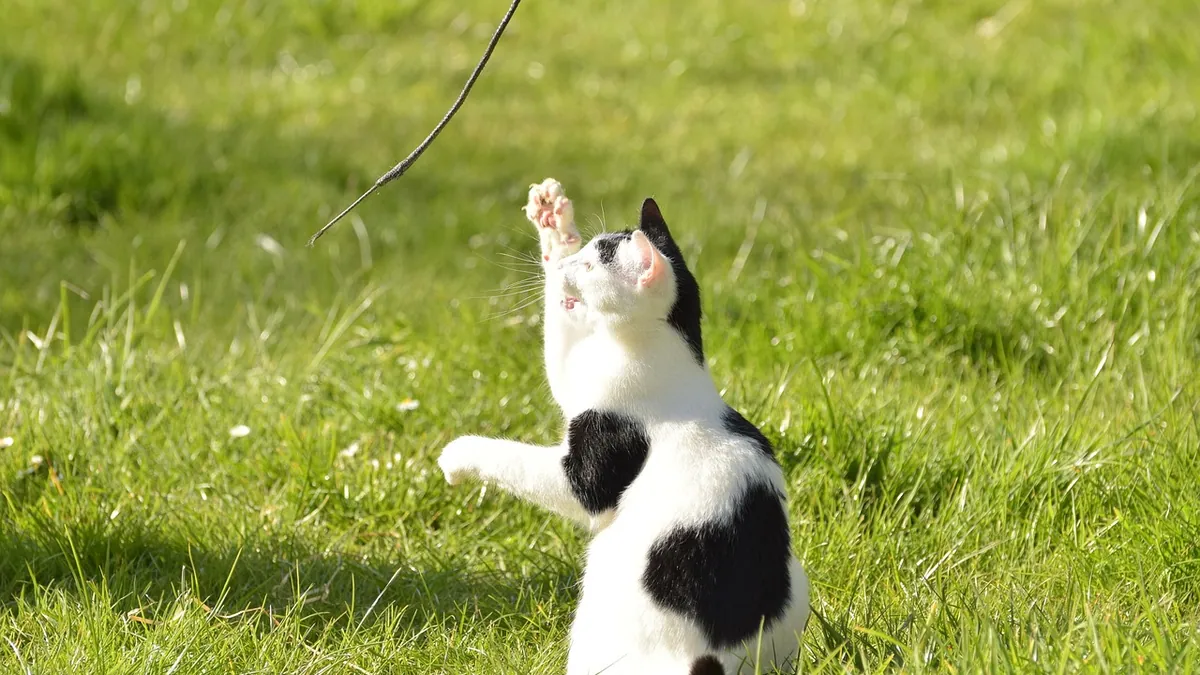
Why does my kitten wag her tail? In most cases, a kitten wagging her tail is not expressing joy the way a dog does. A wagging or swishing tail in cats usually signals arousal, irritation, focus, or conflict, and the speed and direction of the movement tell you how intense that feeling is. Reading the rest of her body along with the tail is the best way to understand what she is telling you.
This article is educational and is not a substitute for veterinary diagnosis or treatment.
Quick Answer
- A wagging cat tail usually means your kitten is aroused, annoyed, overstimulated, or concentrating, not happy like a wagging dog tail.
- A slow, low swish often means mild irritation or focus. A fast, whipping tail usually means back off.
- A tail held straight up with a gentle curve at the tip is a friendly, confident signal in cats.
- Stop petting or playing the moment the tail speed picks up, and give your kitten space to settle.
- Sudden tail changes with hiding, appetite loss, crying, limping, or hair loss near the tail need a veterinary visit.
Why Does My Kitten Wag Her Tail? Normal Reasons First
Kittens use their tails as a mood meter. The tail moves with whatever the rest of the body is feeling, so the same wag can mean very different things depending on posture, ears, eyes, and whiskers.
She is overstimulated or annoyed
This is the most common reason a kitten wags her tail. Petting, holding, or a loud room can push a kitten past her comfort level. The tail starts to flick, then swishes faster as she gets more irritated. If you keep going, you may get a swat or a nip.
She is focused on a toy or prey
A crouched kitten with a twitching tail tip is usually locked onto something. That slow, low flick is concentration, not anger. Watch a kitten stalk a wand toy and you will see the tail tip move in small, controlled pulses right before the pounce.
She is conflicted
Cats often feel two things at once, like wanting the treat but not trusting the hand offering it. The tail may swing in wide arcs while the ears rotate back and forth. This is a cat who has not decided yet, and she needs a moment.
She is playing or excited
Some kittens wag their tails during active play with another cat or a toy. The movement is usually looser and paired with a relaxed face and forward ears. If the play turns into fast whipping and flattened ears, it has shifted into a real disagreement.
She is greeting you
A tail held high with a slight hook at the tip is a friendly hello. This is one of the few tail positions that reliably reads as positive in cats. If your kitten walks toward you with her tail up, she is happy to see you.
Cats are also sensitive to each other's emotional signals. One study found that cats looked longer and more often at negatively valenced visual cues from other cats, which suggests they pick up on tension in body language, including the tail [1]. Your kitten is doing the same thing with you and with other pets in the home.
Why Does My Kitten Wag His Tail? Medical Causes to Rule Out
Tail movement itself is normal. What matters is a change from your kitten's usual pattern, especially if it comes with other signs. Pain and discomfort can make a cat restless, and a restless cat may swish or lash her tail more than usual.
Tail or spine pain
An injured tail, a bite wound, a foreign object, or a problem in the lower spine can make a kitten flick or hold her tail oddly. She may also cry when you touch the base of her tail, avoid jumping, or walk stiffly. If your kitten is limping or moving differently, see Why Is My Cat Limping?.
Skin and parasite problems
Fleas, allergies, and skin infections near the tail base cause itching and chewing. You may notice hair thinning, scabs, or constant grooming right at the tail. Hair loss in that area has its own set of causes, which are covered in Cat Hair Loss on Back Near Tail: What It Means.
Anal gland or rear-end discomfort
Impacted or infected anal glands sit right under the tail base. A kitten with this problem may scoot, lick the rear end, and swish the tail constantly. This needs a veterinary exam, not home treatment.
Ear problems
Head shaking and ear scratching often travel with tail flicking because both point to irritation. If your kitten is also pawing at her ears, read Why Is My Cat Shaking Her Head And Ears.
Neurologic issues
Rarely, a kitten loses normal control of the tail because of a nerve or spinal problem. A tail that drags, hangs limp, or moves without purpose is a reason to call your veterinarian.
When Tail Wagging Becomes a Problem
Tail wagging is a problem when it comes with aggression, fear, or a body that cannot relax.
Warning signs of escalation
- Ears flattened sideways or pinned back
- Pupils wide and staring
- Hissing, growling, or a low yowl
- Skin twitching along the back
- A tail that whips hard from side to side
A kitten showing these signs is telling you she is close to defensive action. Give her an escape route and do not reach for her.
Stress that lasts
Short bursts of tail swishing are normal. A kitten who stays tense for hours, hides constantly, or stops eating is under real stress. Humans are actually not very good at reading feline stress from body language alone. In one study, people asked to judge whether cats were relaxed, tense, or fearful from video did better than chance but still scored low overall, and accuracy was higher in women and in people who had owned cats before [2]. That is a good reason to look at the whole picture, not just the tail.
Behavior that affects health
A kitten who is too stressed to eat, play, or use the litter box can get sick. Long-term stress also makes behavior problems worse. This is when you move from watching to acting.
What to Do Step by Step
Step 1: Pause and read the whole cat
Look at ears, eyes, whiskers, and body posture along with the tail. A fast tail on a relaxed body is very different from a fast tail on a crouched, flattened cat.
Step 2: Stop the interaction
If the tail speeds up while you are petting, stop. Let your kitten walk away. This teaches her that you respect her signals, which lowers the chance she feels the need to swat.
Step 3: Give her control
Offer a hiding spot, a high perch, or a quiet room. Cats feel safer when they can choose distance. Do not corner her or pick her up to "calm her down."
Step 4: Build a predictable routine
Feed, play, and clean the litter box at similar times each day. Predictability lowers arousal. Socialization matters here too. In a survey of US cat owners, most had never heard of kitten socialization programs, but half said they would be interested in one, which shows how much owners want structured guidance on early behavior [3].
Step 5: Use play to burn energy
Two or three short wand-toy sessions a day give a kitten a legal outlet for stalking and pouncing. End each session with a treat or a meal so she can "complete" the hunt.
Step 6: Add enrichment
Scratching posts, puzzle feeders, window perches, and cardboard boxes all reduce boredom. A bored kitten often becomes a tail-swishing, over-aroused kitten.
Step 7: Keep the environment calm
Loud TVs, barking dogs, and busy households raise arousal. Give your kitten a quiet base room and let her approach new things at her own pace.
Step 8: Track what you see
Write down when the tail wagging happens and what came right before it. Patterns show up fast, and your veterinarian will want that history.
What Not to Do
Do not punish her
Never yell at, hit, or spray a kitten for a tail signal. Punishment does not teach her to relax. It teaches her that people are unpredictable, which makes fear and aggression worse.
Do not assume it means happy
The dog comparison trips up a lot of owners. A wagging dog tail often means joy. A wagging cat tail usually means arousal. Treat them as different languages.
Do not trust AI-generated animal videos
Videos made by generative AI often show animals behaving in ways real animals do not, and they rarely show negative welfare states. One analysis of AI-generated animal videos found that negative welfare was shown in as few as 8% of cases depending on the category, while positive mental state, environment, and behavioral interactions appeared in about 42% of the featured videos, and the clips were often misleading or did not represent accurate animal behavior [4]. If a clip shows a cat wagging like a dog, it may simply be fake.
Do not rely on tail position alone
People misread feline stress regularly [2]. Use the full body, the context, and your kitten's history.
Do not skip pain checks
If the tail behavior is new and comes with licking, limping, or appetite changes, assume pain until a veterinarian says otherwise.
When to Involve a Veterinarian or Behavior Professional
Call your veterinarian if the tail wagging is new, intense, or paired with any physical sign. A hands-on exam can rule out pain, parasites, anal gland disease, and neurologic problems.
Ask for a referral to a certified behavior professional if your kitten shows aggression, hides constantly, or cannot settle even after you have improved her environment and routine. Behavior problems that start young often grow if they are not addressed.
If your kitten has swallowed something, chewed a toxic plant, or been exposed to a poison, call for help right away. The ASPCA Animal Poison Control Center is available at (888) 426-4435, and the Pet Poison Helpline is available at (855) 764-7661. A consultation fee may apply.
Limitations and When to Contact a Veterinarian
This article cannot tell you what your individual kitten is feeling. Only a veterinarian who examines her can do that, and individual cases always need professional assessment.
Contact your veterinarian the same day if your kitten has a sudden change in tail movement, holds her tail stiff or at a strange angle, cries when the tail base is touched, stops eating, or starts hiding.
Go to an emergency clinic now if your kitten has a limp or dragging tail after a fall or a door injury, cannot urinate or defecate, is bleeding near the tail, has trouble breathing, or is collapsed and unresponsive.
Schedule a routine visit if the tail swishing has been going on for more than a few days, if you see hair loss or scabs near the tail, or if you are struggling to handle the behavior at home.
Frequently Asked Questions
Is a wagging tail always a bad sign in kittens?
No, it is not always bad, but it is rarely simple happiness. A slow flick can mean focus or mild interest, while a fast swish usually means irritation or overstimulation. Read the ears, eyes, and posture to decide.
Why does my kitten wag her tail when I pet her?
She is likely getting overstimulated by the contact. Many kittens enjoy petting for a short time and then want a break. When the tail starts moving, stop and let her choose whether to stay.
Why does my kitten wag his tail while playing?
Play arousal and hunting focus both produce tail movement. A twitching tail tip on a crouched kitten is normal stalking behavior. If the tail starts whipping and the ears flatten, the play has turned into conflict, so separate the cats or end the toy session.
Can tail wagging mean my kitten is in pain?
Yes, it can. Pain and itching make cats restless, and restlessness often shows up as tail swishing, licking, or chewing at the tail base. If the behavior is new and comes with limping, appetite loss, or hair loss, book a veterinary exam.
Should I ever punish my kitten for wagging her tail?
No. The tail is communication, not misbehavior. Punishing her for a signal will not stop the underlying feeling and can make her more fearful. Change the situation instead, and give her space, enrichment, and a calm routine.
If your kitten's tail talk is paired with clingy behavior, constant crying, or other mood shifts, those articles can help you connect the dots. When in doubt, your veterinarian is the right first call.
Related Articles
- Cat Hair Loss on Back Near Tail: What It Means
- Why Is My Cat Limping?
- Why Is My Cat Shaking Her Head And Ears
- Why Is My Cat Suddenly Clingy?
- Cat Excessive Meowing: What Is Your Cat Trying to Say?
- Cat Overgrooming: Why It Happens and What to Do
- Cat Tail Movements and What They Really Mean
- Do Cats Control Their Tails? Feline Tail Language
- Why Does My Kitten Chirp? What the Sound Means
References
- Purr-ceiving feelings: domestic cats respond to intraspecific cues of emotion. PeerJ, 2026.
- Human recognition of feline stress-related behavioral states from visual cues depends on observer characteristics. Scientific reports, 2026.
- Socialising kitties: A quantitative survey of US cat owner attitudes towards kitten and adult cat socialisation programmes. Animal welfare (South Mimms, England), 2025.
- Tail wagging cats: Veterinary implications of AI-generated video. The Veterinary record, 2026.