How to Get Your Dog to Like and Trust You
By Dr. Zubair Khalid, DVM, MS, PhD ·
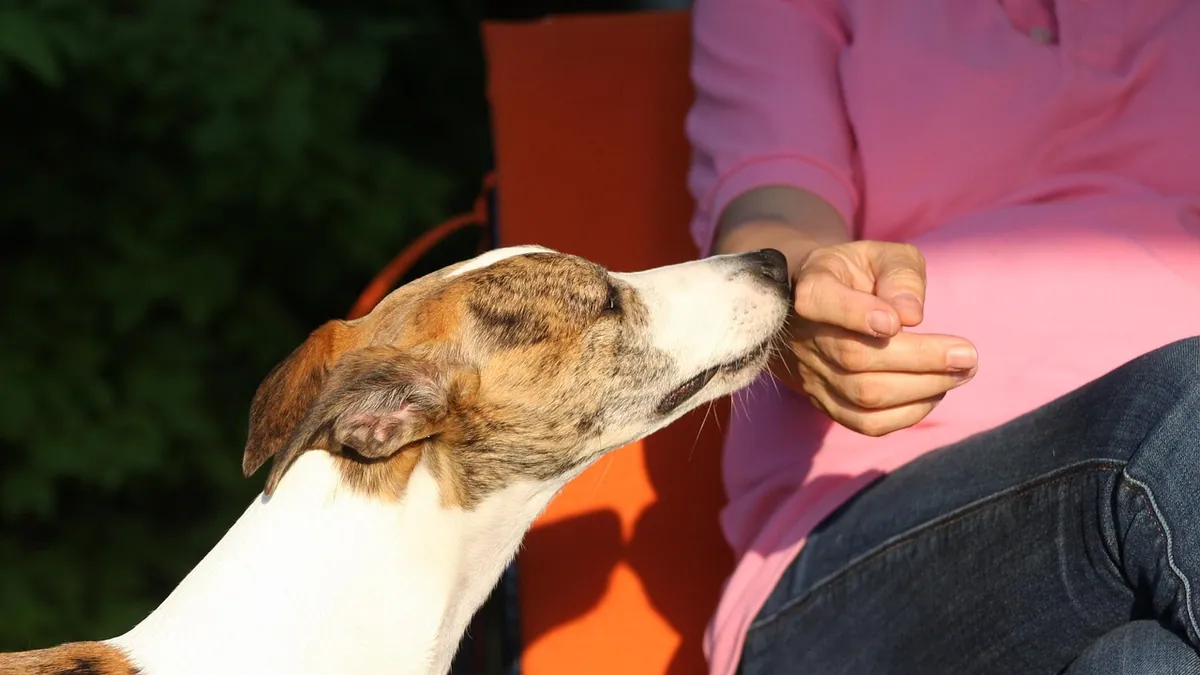
You build a dog's trust the same way you build a friendship: by being predictable, gentle, and worth being around. Dogs decide how much they like you based on how safe you make them feel, not on how much you love them. If you want to know how to get my dog to like me more, start with reading their body language and giving them choices.
This article is educational and is not a substitute for veterinary diagnosis or treatment.
Quick Answer
- Let your dog choose contact. Pet briefly, then pause and wait for them to lean in or nudge for more.
- Feed by hand and use treats to reward calm behavior, not to bribe a scared dog into a scary situation [1].
- Learn the early signs of stress (lip licking, yawning, whale eye, tucked tail, stiff body) and back off before they escalate.
- Play and sniffing walks build positive associations faster than long training sessions.
- Never punish growling, snapping, or hiding. Those are warnings, and removing them removes your dog's way of telling you something is wrong.
Why Your Dog May Not Seem to Like You Yet
Most dogs who seem distant are not holding a grudge. They are responding to their history, their temperament, and their current stress level.
Dogs form attachment to their owners early. Puppies under 6 months of age already show attachment behavior toward their people in standardized testing [2]. That bond is not automatic in its strength, though. It grows or shrinks based on daily interactions.
Early life matters. The socialization window runs roughly from 3 to 12 weeks, when puppies form primary social bonds and get used to new sights, sounds, and people [3]. A dog who had few positive human experiences during that window may be more fearful or anxious as an adult [3]. Dogs adopted at 1 or 2 months of age showed more fear, anxiety, and attention-seeking behavior than dogs adopted later [3]. None of that is your fault if you adopted an adult dog. It just tells you what your dog needs now.
Stress physiology plays a role too. Dogs with anxious attachment patterns show stronger acute stress responses, including higher heart rate, body temperature, and salivary cortisol [4]. Dogs who seek and maintain contact with their caregiver show lower heart rate and lower long-term cortisol levels, which suggests secure attachment protects against chronic stress [4]. In plain terms, a dog who feels safe around you is calmer, and a calmer dog is more likely to seek you out.
Training history cuts both ways. In one large study, adult dogs with more training experience scored lower on attachment to their owner and higher on acceptance of strangers [2]. That does not mean training is bad. It suggests that dogs trained mainly for obedience, without much warmth or choice, may bond less tightly. Relationship quality is separate from obedience.
Medical Causes to Rule Out First
Sometimes a behavior change is not about trust at all. It is about how your dog feels physically.
Pain is the most common hidden cause of new irritability, hiding, or avoidance. Dental disease, arthritis, ear infections, and anal gland problems can all make a dog pull away from touch. A dog who used to lean into you and now flinches may be hurting.
Other medical issues that can look like a personality change include thyroid disease, vision or hearing loss, cognitive dysfunction in older dogs, and chronic itching or allergies. Any sudden shift in how your dog interacts with you deserves a veterinary exam before you assume it is behavioral.
If your dog is anxious, trembling, or pacing, that can also have a medical component. Your veterinarian can check for underlying disease and discuss whether anxiety treatment is appropriate. Dose decisions for any medication are made by your veterinarian based on your dog's weight and health, never from an article.
When It Becomes a Problem
A shy dog who warms up over weeks is normal. A dog who is getting worse is not.
Get help if your dog:
- Growls, snaps, or bites when you approach, touch, or move them
- Freezes, hides, or tries to escape during normal handling
- Cannot eat, sleep, or relax in your presence
- Shows fear of specific people, places, or objects that is getting stronger
- Has stopped seeking you out entirely
These patterns can be signs of fear, anxiety, or aggression that respond well to early professional help and poorly to waiting. Fear and anxiety in adult dogs are also linked to early experiences and can be shaped by how we handle them now [3].
How to Get Your Dog to Like You: Step by Step
Read Your Dog's Body Language
You cannot build trust if you cannot read the answer to "is this okay?"
Relaxed signs include a soft, loose body, a wagging tail that moves in a wide arc, a slightly open mouth, and easy eye contact. Stress signs include lip licking when there is no food, yawning when tired is not the reason, turning the head away, showing the whites of the eyes, a tucked tail, a stiff body, and freezing.
When you see stress signs, stop what you are doing and give space. That single habit does more for trust than any treat.
Use Consent-Based Handling
Consent-based handling means you ask, your dog answers, and you respect the answer.
Try this: reach toward your dog slowly, stop a few inches away, and wait. If your dog leans in or steps toward your hand, pet them for three seconds, then stop and wait again. If your dog pulls back, looks away, or freezes, lower your hand and walk away calmly. No sighing, no coaxing.
Do this with brushing, nail trims, harnesses, and vet prep. When your dog learns that "no" works, "yes" becomes meaningful.
Feed by Hand and Reward the Behavior You Want
Treats are a communication tool, not a bribe. Put jars of treats in strategic spots around your home so you can reward good behavior every time you see it [1]. Reward your dog for checking in with you, for settling on a mat, and for choosing to be near you.
Hand feeding is one of the fastest trust builders. Toss a treat, let your dog come get it, then toss another. This lets your dog approach you on their own terms. It works especially well with shy dogs.
Use treats to "trade" when your dog grabs something they should not have [1]. Chasing and grabbing erodes trust. Trading builds it.
Play in a Way Your Dog Enjoys
Play is how many dogs connect. Find your dog's style. Some love tug, some love fetch, some love a flirt pole, and some only want to sniff.
Watch your dog's face during play. If they disengage, look away, or stop returning the toy, end the game. Short, happy sessions beat long ones that tip into overarousal.
Make Walks About Sniffing
Sniffing is not wasted time. It is how dogs process their world and lower stress. Allow your new dog plenty of time to sniff on walks so they can get to know their neighborhood [1].
Start with the same short routes daily so the world becomes predictable [1]. Bring treats on every walk and reward your dog for checking in, walking on a loose leash, and pottying outside [1]. If your dog seems nervous when another dog approaches, cross the street and feed treats [1]. You are teaching your dog that you are the person who makes scary things easier.
For more help with common behavior goals, see How to Raise a Good Dog: Training Tips for a Well-Behaved Pet and Dog Training Tip.
Build a Predictable Routine
Dogs relax when they know what comes next. Feed at similar times. Walk at similar times. Keep your reactions calm and consistent.
Regular, positive human interaction changes how dogs behave and feel. In one program, kennel-housed dogs who received repeated positive socialization and training sessions showed improvement in all 20 scored behaviors, from 9% to 53%, including feeling more relaxed and less distressed [5]. Your dog does not need a formal class to get this benefit. Daily calm, kind contact does the same work.
Be Your Dog's Advocate
If your dog is scared, do not push them through it. Be your dog's advocate [1]. Ask strangers not to pet your dog. Ask guests to ignore your dog until your dog approaches. Say no to the dog park if your dog is overwhelmed.
Every time you protect your dog from something scary, you become more valuable to them. That is how trust compounds.
What Not to Do
Do Not Punish Growling, Snapping, or Hiding
These behaviors are communication. If you punish a growl, you may get a dog who bites without warning. If you punish hiding, you may get a dog who shuts down. Neither is safer for you or better for your dog.
Do Not Force Affection
Hugging, kissing, and looming over a dog are not universal signs of love in dog language. Many dogs tolerate them. Some find them threatening. Let your dog initiate contact and you will get more of it.
Do Not Use Fear or Startle Training
Yelling, leash jerks, shake cans, and spray bottles can suppress behavior without teaching anything. They also teach your dog that you are unpredictable. That is the opposite of trust.
Do Not Believe These Myths
- "A dog should obey me no matter what." Obedience without a relationship produces a dog who complies out of fear, not connection.
- "Treats spoil dogs." Food rewards are a standard, effective part of humane training [1].
- "My dog knows they did wrong." Dogs respond to your tone and body posture in the moment. They do not replay past events the way people do.
- "If my dog avoids me, they are stubborn." Avoidance is usually fear, pain, or confusion.
Do Not Skip the Basics of Household Management
If you have another dog at home, keep the dogs separate during meals and supervise toys and chews [1]. Tension between dogs can spill over into how your dog relates to you.
When to Involve a Veterinarian or Behavior Professional
Call your veterinarian if your dog's behavior changes suddenly, if you suspect pain, or if your dog seems anxious most of the day. Your veterinarian can rule out medical causes and discuss treatment options.
Ask for a referral to a veterinary behaviorist or a certified applied animal behaviorist if your dog has bitten, has injured themselves or others, or has not improved with basic training. Fear and anxiety problems respond best to early, structured help.
If your dog's barking, lunging, or reactivity is part of the picture, see How To Get My Dog To Stop Barking. If you are considering advanced training roles for your dog, read How To Make My Dog A Service Dog.
Limitations and When to Contact a Veterinarian
This guide covers general bonding principles. Individual cases need a veterinarian who can examine your dog and review their history.
Contact your veterinarian the same day if your dog:
- Suddenly avoids you or hides after being social
- Yelps or snaps when touched in a specific area
- Stops eating or drinking
- Seems disoriented, restless at night, or confused
Go to an emergency clinic now if your dog:
- Bites a person or another animal and breaks skin
- Shows sudden aggression with no warning
- Collapses, has a seizure, or has trouble breathing
- Is unable to stand or walk normally
Schedule a routine visit if your dog:
- Has been gradually more withdrawn over weeks
- Shows fear or anxiety that is not improving with your training efforts
- Has never been examined for behavior concerns
If you ever suspect your dog ate something toxic, contact the ASPCA Animal Poison Control Center right away. Have the product name and your dog's weight ready.
Frequently Asked Questions
How long does it take for a dog to like you?
It varies widely. Some dogs warm up in days, and others need months, especially if they had a rough start. Dogs adopted very young or from stressful situations may carry more fear and anxiety into adulthood, so patience matters more than speed [3].
Should I let my dog sleep in my bed to bond?
Only if your dog chooses it and everyone sleeps well. There is no rule that bed sharing creates a stronger bond. What matters is that your dog has a comfortable place to rest and is not forced into close contact they find stressful.
Does giving treats make my dog love me only for food?
No. Food is a bridge, not the destination. Treats help your dog associate you with good things while you build real trust through calm handling, play, and predictable routines [1]. Over time, your presence itself becomes the reward.
Why does my dog like other people more than me?
This is common and usually not personal. Dogs with more training experience have scored lower on owner attachment and higher on accepting strangers in at least one study [2]. It may also mean your dog feels less pressure around people who ignore them. Try giving your dog more space and letting them come to you.
Can a rescue dog learn to trust me?
Yes. Trust is learnable at any age. Regular positive human interaction improved behavior scores in dogs who had limited positive experiences, with gains across all measured behaviors [5]. Secure attachment is also linked to lower long-term stress hormones in dogs [4], so the work you do now has real physiological benefits.
Related Articles
- How To Get My Dog To Stop Barking
- How to Raise a Good Dog: Training Tips for a Well-Behaved Pet
- Dog Training Tip
- How To Make My Dog A Service Dog
- Good Dog: Training Tips for a Well-Behaved Canine
- Dog Training Tips Reddit
- How to Get Your Dog to Follow and Listen to You
- How to Get Your Dog to Respect You
- Does My Dog Like Me? Reading Your Dog's Real Signals
References
- Tips for a New Dog. ASPCA Animal Poison Control Center.
- Human-analogue age-related dynamics of dog-human attachment. GeroScience, 2026.
- The Puppies' Age at Adoption Time Influences the Behavioral Responses of Adult Dog. Veterinary sciences, 2025.
- Attachment patterns toward the caregiver modulate canine physiological indicators of acute and chronic stress. Scientific reports, 2026.
- Participation in a Short-Term Socialization and Training Program Improved Kennel-Raised Dog Welfare. Animals : an open access journal from MDPI, 2026.