Do Guinea Pigs and Rabbits Get Along With Cats?
By Dr. Zubair Khalid, DVM, MS, PhD ·
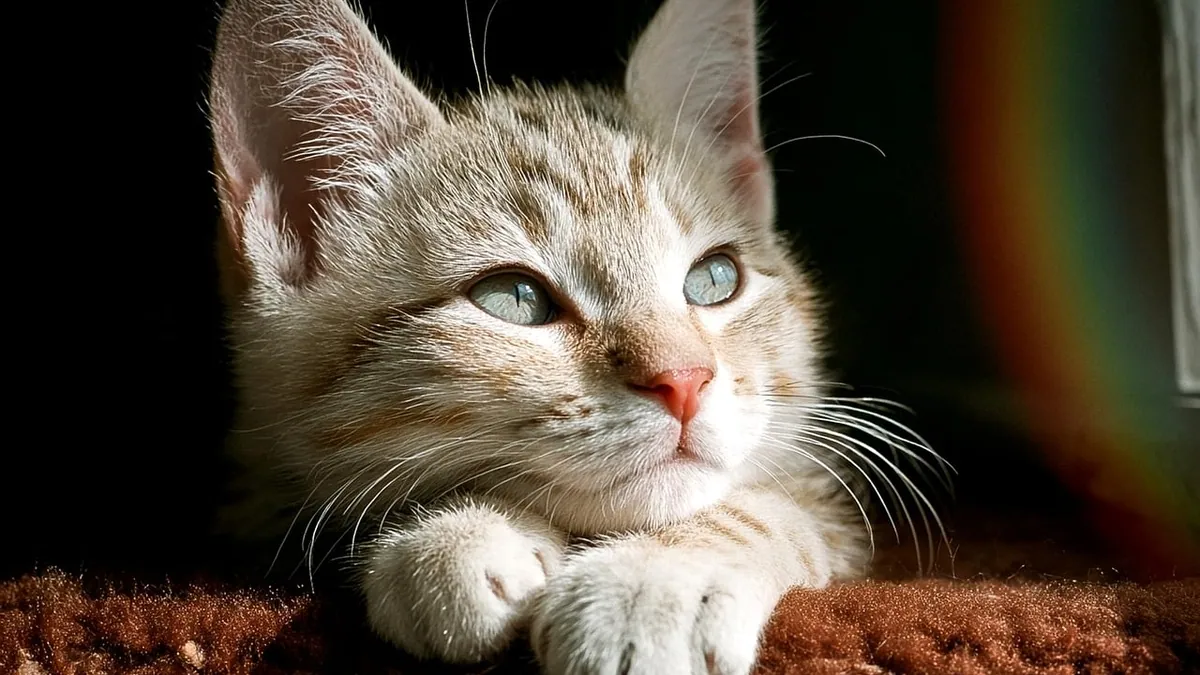
Do guinea pigs get along with cats? In most cases, no, and they should never be left loose together. Cats are predators and guinea pigs are prey animals, so even a friendly cat can seriously injure or kill a guinea pig with one playful swipe. Rabbits and cats can sometimes share a home safely, but only with strict supervision and secure housing for the small pet.
This article is educational and is not a substitute for veterinary diagnosis or treatment.
Quick Answer
- Guinea pigs and cats should never be left unsupervised together, and they should not share open floor space. A cat can injure a guinea pig in seconds, even without meaning to.
- Rabbits and cats can sometimes coexist in the same household, but the rabbit still needs a cat-proof enclosure and supervised time out.
- Age at first introduction matters. In one survey of 777 pet owners, a younger age of introduction strongly predicted more amicable dog-cat relationships in the home [1].
- Cats vary a lot in sociability. More socialized cats tend to approach new things faster and solve problems more readily, which can mean a bolder, more curious cat around small pets [2].
- Every introduction needs a barrier, a plan, and an escape route for the small pet. If either animal shows stress, stop and separate.
Why Cats and Small Pets React the Way They Do
Predator and prey instincts are real
Cats are hunters by nature. Free-ranging pet cats are recognized as significant predators of wildlife, and owners control how much access their cats have to the outdoors [3]. That hunting drive does not switch off just because a guinea pig lives indoors. A guinea pig's normal response to a predator is to freeze or bolt, which can trigger a cat's chase instinct.
Rabbits sit in the middle. They are prey animals too, but a large, confident rabbit may hold its ground or even lunge at a cat. That does not make the pairing safe. It means the risk runs both ways.
Socialization shapes how a cat behaves
Domestic cats can live solitary or social lives, and socialization to humans affects how they handle new situations. In one study, more socialized cats were more likely to solve a food puzzle, solve it faster, and approach a new object sooner [2]. A well-socialized cat may be calmer around a small pet, but calm is not the same as safe. A bold, confident cat is also more likely to investigate a guinea pig up close.
Touch and attention needs differ by species
Owners often assume a cat that likes being stroked will enjoy a small pet's company. Physical contact affects pets differently by species. In a study of 443 owners, the wellbeing benefits of owner stroking appeared only in dogs, while rubbing and head bunting mattered for cats [4]. Cats have their own rules about contact, and a guinea pig or rabbit does not read those rules.
Some cats are simply not compatible
Temperament, age, and past experience all matter. A cat that hunts rodents, stalks the guinea pig cage, or has lived outdoors is a poor candidate for free contact with a small pet. A calm older cat may ignore a rabbit entirely. You cannot predict this from breed or size. You learn it from careful, supervised observation over weeks.
Medical Causes to Rule Out
Behavior changes in either species can have a medical cause. Before you assume your cat is "just being a cat" or your rabbit is "being stubborn," have both animals examined.
In cats, pain, dental disease, hyperthyroidism, and vision loss can all increase irritability, startling, or predatory behavior. A cat that suddenly stalks or swats at a small pet it previously ignored may be uncomfortable or anxious.
In guinea pigs and rabbits, pain, dental problems, and respiratory disease can reduce a small pet's ability to flee or defend itself. A guinea pig that stops moving away from a cat, or a rabbit that sits in the open instead of hiding, may be sick instead of brave.
Your veterinarian will examine the animal, ask about diet, droppings, breathing, and activity, and decide whether testing is needed. Do not give any medication without veterinary guidance. Your veterinarian calculates the dose from the pet's weight and health.
When Cat and Small Pet Contact Becomes a Problem
Warning signs in the cat
- Staring, crouching, or stalking the cage
- Pacing in front of the enclosure
- Pawing at bars or reaching through them
- Chirping or chattering at the small pet
- Blocking the small pet's path or cornering it
Warning signs in the guinea pig or rabbit
- Freezing in place for long periods
- Hiding constantly, even at feeding time
- Reduced eating, drinking, or droppings
- Thumping, stamping, or teeth chattering in rabbits
- Loud squealing, or the opposite, going silent and still
- Weight loss or a messy coat from not grooming
Warning signs in the cat's health
Stress in cats can show up as overgrooming, hiding, litter box avoidance, or vomiting. If your cat starts avoiding the room where the small pet lives, the arrangement is not working for either animal.
Do Guinea Pigs Get Along With Cats? A Step-by-Step Plan
Step 1: Set up separate, secure housing first
The small pet's enclosure comes first. A guinea pig needs a solid-bottom cage with a secure lid, and the cage should sit where a cat cannot jump on top of it. A rabbit needs a large pen or hutch with a top, plus a hide box the rabbit can retreat into.
Do not rely on a wire cage alone. Cats can reach through bars, and guinea pigs can be injured by a single claw. If you are still deciding between species, see Guinea Pig vs Rabbit: Which Pet Is Right for You?.
Step 2: Keep guinea pigs in bonded pairs, not with cats
Guinea pigs are social animals and do best with another guinea pig. If you are adding a companion, follow a structured introduction process. See Guinea Pig Companionship: How to Introduce and Bond Pairs and Guinea Pig Social Needs: Pair Housing, Introductions, and Signs of Conflict.
A cat is not a substitute for a guinea pig companion. A cat is a housemate to be managed, not a buddy to be trusted.
Step 3: Introduce through a barrier only
Start with the cat on one side of a closed door or a sturdy screen and the small pet on the other. Keep sessions short, two to five minutes at first. Watch both animals. If the cat fixates, end the session. If the guinea pig freezes or hides, end the session.
Repeat over days or weeks. Move to a clear barrier, such as a glass door or a double-layer wire panel, only when both animals stay relaxed. Never move to free contact with a guinea pig. For rabbits, free contact is a judgment call that many behavior professionals advise against.
Step 4: Give the small pet a cat-free zone
Set up at least one room or a large exercise pen the cat cannot enter. This gives the guinea pig or rabbit a place to eat, sleep, and move without watching over its shoulder. Use a baby gate the cat cannot jump, or close a door.
Step 5: Enrich both animals separately
Bored cats are more likely to bother small pets. Give your cat daily play with wand toys, food puzzles, and climbing spaces. In one study, more socialized cats were quicker to solve a food puzzle, so puzzle feeders can be a good outlet for a curious cat [2].
For the small pet, provide tunnels, hay, chew items, and hiding spots. A guinea pig with plenty to do is less likely to panic. If you also keep rats, the bonding approach is different, see How to Bond With Your Pet Rats.
Step 6: Supervise every interaction, every time
Supervision means your eyes on both animals, close enough to intervene. It does not mean checking in from the doorway. If you cannot watch closely, separate them. This rule never relaxes for guinea pigs and cats.
What Not to Do
Do not punish the cat
Punishment does not remove hunting behavior. It adds fear and can make a cat more anxious around the small pet. Instead, redirect the cat to a toy or a puzzle feeder and reward calm behavior.
Do not assume a kitten will be safe
People often ask if kittens and rabbits get along better than adult cats. A younger age of introduction does predict more amicable relationships in dogs and cats [1], but a kitten is still a cat. Kittens are playful, fast, and sharp. A rabbit can be injured by a kitten's claws just as easily as by an adult cat's.
Do not believe these myths
- "My cat is too lazy to hurt anything." A lazy cat can still swat once.
- "They will work it out." Prey animals do not negotiate. They get hurt.
- "The rabbit is bigger, so it is fine." Rabbits can be injured by cats, and a frightened rabbit can injure itself.
- "The cat only watches." Watching is stalking behavior, and it stresses the small pet.
Do not skip the barrier because they seem calm
Calm behavior on day one does not predict calm behavior on day thirty. Keep the barrier and the cat-free zone in place permanently.
When to Involve a Veterinarian or Behavior Professional
Call your veterinarian if either animal shows stress signs that do not improve after you separate them. This includes a guinea pig or rabbit that stops eating, a cat that starts hiding or overgrooming, or any change in droppings, breathing, or activity.
Ask your veterinarian for a referral to a certified behavior professional if your cat stalks the enclosure daily, if introductions keep failing, or if you are unsure whether your home setup is safe. A behavior professional can assess the environment and build a plan for your specific animals.
Limitations and When to Contact a Veterinarian
This article cannot tell you whether your specific cat and your specific small pet are safe together. That depends on the individual animals, your home, and your ability to supervise. Individual cases need a veterinarian.
Contact a veterinarian the same day if:
- Your guinea pig or rabbit stops eating or passing droppings
- Your small pet is hiding constantly and will not come out for food
- Your cat shows new hiding, vomiting, or litter box problems
- You see repeated stalking or pawing at the enclosure
Go to an emergency clinic now if:
- A cat has scratched, bitten, or grabbed the small pet, even if you see no wound
- Your guinea pig or rabbit is limp, gasping, or unresponsive
- Your small pet has not eaten for several hours
- There is any bleeding, swelling, or difficulty moving
Cat bites and scratches are contaminated wounds. A small pet can look fine for hours and then decline quickly. Do not wait to see if it improves.
Schedule a routine visit if you are planning to add a cat to a home with a guinea pig or rabbit. Your veterinarian can review housing, discuss disease risks between species, and help you plan the setup before the animals meet.
Frequently Asked Questions
Can a cat and a guinea pig ever be friends?
They can learn to tolerate each other at a distance, but true friendship is not realistic. A guinea pig reads a cat as a predator, and a cat reads a guinea pig as prey. The safest goal is calm coexistence with barriers, not cuddling.
Do rabbits and cats get along better than guinea pigs and cats?
Sometimes, because a rabbit is larger and more likely to stand its ground. Size does not remove the risk. A rabbit still needs a secure enclosure, a cat-free zone, and supervision during any shared time.
Do kittens and rabbits get along if they grow up together?
Early introduction can help, since a younger age of introduction predicted more amicable dog-cat relationships in one large survey [1]. A kitten is still a predator with sharp claws, so the rabbit needs protection and supervision at every stage.
How do cats and rabbits get along in a typical home?
Most settle into a routine where the cat ignores the rabbit and the rabbit stays in its own space. Problems start when the cat stalks, blocks, or paws at the enclosure. If that happens, separate them and add more enrichment for the cat.
Can I let my cat into the room while my guinea pig exercises?
No. Keep the cat out during floor time. A guinea pig on open floor has no barrier and no escape route, which is the highest-risk situation in the home. Put the cat in another room with a toy or puzzle feeder first.
Related Articles
References
- Exploring dog and cat cohabitation within Japanese households. Scientific reports, 2025.
- Effects of Socialization on Problem Solving in Domestic Cats. Animals : an open access journal from MDPI, 2024.
- Is the Cat-Owner Relationship Related to Cat-Wildlife Conflicts?. Animals : an open access journal from MDPI, 2026.
- Wellbeing Effects of Human-Pet Touch in Dogs versus Cats. Journal of applied animal welfare science : JAAWS, 2026.