Do Cats Kill Rabbits? Predatory Behavior Explained
By Dr. Zubair Khalid, DVM, MS, PhD ·
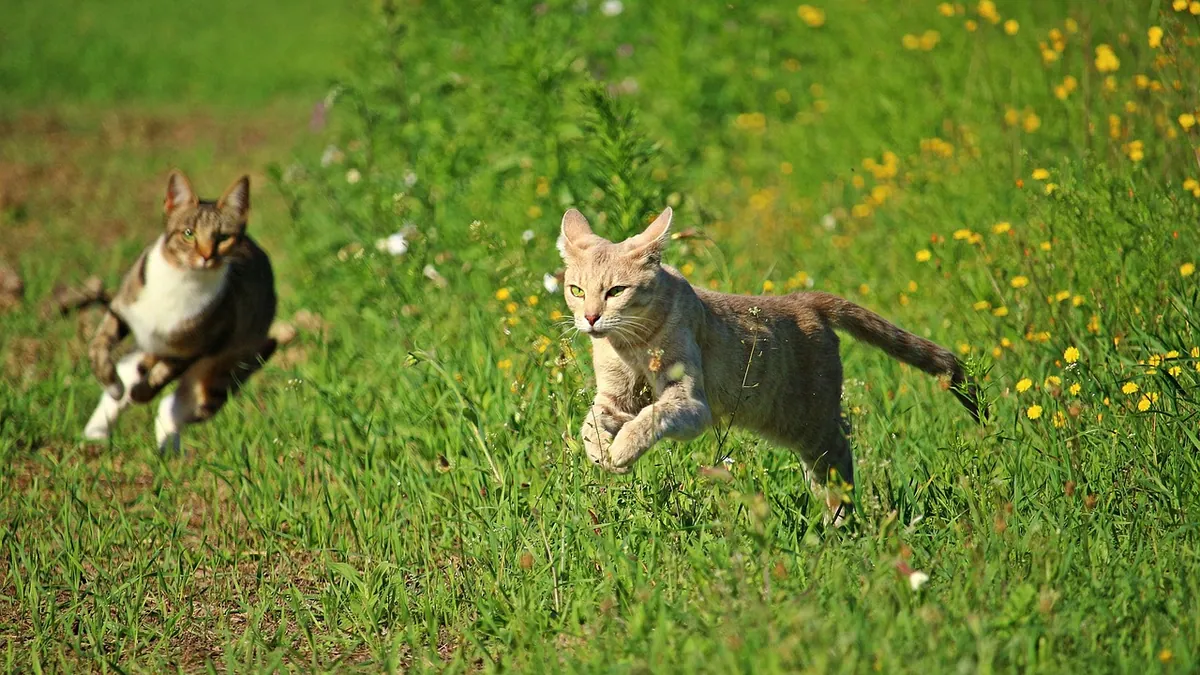
Yes, it is normal for cats to kill rabbits. Hunting is a natural feline behavior, and rabbits are common prey for free-roaming cats. But normal does not mean harmless, and if you are asking "is it normal for cats to kill rabbits," the honest answer is that the behavior is expected while the risks to your cat and to wildlife are real.
This article is educational and is not a substitute for veterinary diagnosis or treatment.
Quick Answer
- Hunting and killing small prey like rabbits is a normal, instinctive cat behavior, not a sign of a behavioral disorder on its own.
- Free-ranging pet cats are significant predators of wildlife, and managing that conflict depends largely on the owner controlling the cat's movement [1].
- Individual cats differ a lot in how much they hunt, and personality and roaming range both play a role [2].
- Eating wild prey exposes your cat to parasites and infectious disease, so prey consumption is a medical concern, not only an ecological one.
- The most effective fix is environmental: keep your cat indoors or in a secure outdoor enclosure, and add daily interactive play and enrichment.
Why Cats Hunt Rabbits
Hunting Is Instinct, Not Hunger
Cats hunt because the behavior is wired in, not because they are starving. Well-fed indoor cats still stalk, pounce, and kill when given the chance. This is why feeding your cat more does not stop the behavior.
Free-ranging pet cats have been identified as significant predators of wildlife, and managing this conflict is difficult because control of movement ultimately lies with the owner [1]. In other words, the cat is doing what cats do. The variable you can actually change is access to prey.
Rabbits Are the Right Size and the Right Speed
Rabbits and young hares sit in the size range that triggers a cat's predatory sequence: scan, stalk, chase, pounce, grab, and bite. A rabbit's quick, darting movement also matches the motion that activates a cat's chase response.
Some Cats Hunt Far More Than Others
Not every cat is an equal hunter. Cats show consistent individual differences in how they respond to moving, prey-like objects, and those responses are repeatable over time [3]. That means a cat who goes wild for a feather wand today will likely do the same next week.
Personality also matters. Owner-ascribed personality predicts range size tendencies and predation behavior in domestic cats, and predation behavior and space use are key indicators of how much a cat affects prey populations [2]. A bold, wide-roaming cat will generally have more opportunities to catch rabbits than a timid cat who stays near the porch.
Play and Hunting Share the Same Motivation
Hunting and play overlap in motivation. In one study, researchers used a standardized feather wand toy to measure individual variation in cats' interest, and found high repeatability across trials (mean R = 0.467) with consistent individual variation in the composite interest score (ICC = 0.65) [3]. A cat with a strong interest score is not "bad." That cat simply has a strong predatory drive that needs an outlet.
If your cat brings prey home instead of eating it, that is a related but separate pattern worth understanding. See Why Is My Cat bringing live prey inside? Normal Hunting vs Obsessive Behavior.
Medical Causes to Rule Out Before You Assume It Is "Just Hunting"
True hunting is normal. But a sudden, dramatic increase in predatory behavior, especially in an indoor cat, can sometimes reflect a medical or welfare problem.
Hunger, Weight Loss, and Intestinal Parasites
A cat with intestinal parasites, dental pain, or an untreated thyroid condition may eat more yet lose weight, and may seem more food-focused overall. If your cat is hunting and eating prey, parasites are a realistic concern. Bring a fresh stool sample to your veterinarian.
Pain and Irritability
A cat in chronic pain may become more reactive, more restless, and more likely to lash out. If your cat's hunting or aggression toward other pets increased suddenly, a physical exam is a reasonable first step. Sudden aggression between cats in the same home has its own set of causes, covered in Why Is My Cat Suddenly Aggressive Towards Other Cats?.
Cognitive and Sensory Changes
Older cats can develop sensory decline and cognitive dysfunction. A senior cat who suddenly stalks shadows, stares at walls, or vocalizes at night needs a veterinary workup, not a training plan.
When Hunting Rabbits Becomes a Problem
Risk to Your Cat
Eating wild prey is the biggest direct risk. Wild rabbits and rodents can carry intestinal parasites and bacteria. Your veterinarian can recommend a parasite prevention plan based on your cat's lifestyle and local risk.
Risk to Wildlife and to You
Free-roaming cats exert predatory pressure on wildlife, and predation is their most direct ecological impact [4]. That pressure is not evenly spread. Europe was a hotspot for cat predation in a global assessment of 8,933 documented predation events, and critically endangered species in Australia and Japan's Okinawa Islands face exceptionally high predation pressure [4]. Even if your cat only brings home one rabbit a month, the cumulative effect across a neighborhood adds up.
There is also a household risk. Prey animals can carry fleas and ticks into your home, and your cat can track feces and soil indoors.
Safety for the Rabbit
If your cat brings a live rabbit inside, do not try to grab the rabbit with bare hands. A frightened rabbit can bite and scratch hard. Confine your cat in another room, open a door or window to the outside, and let the rabbit leave on its own. If it is injured, contact a licensed wildlife rehabilitator in your state.
When It Crosses Into Compulsion
Hunting becomes a welfare concern when it is constant, when your cat cannot settle, when it injures itself at windows or doors, or when it redirects aggression onto people or other pets. That pattern needs a behavior plan, not punishment.
How to Manage Outdoor Hunting: Step by Step
Step 1: Control Access to Prey
This is the single highest-yield change. Because control of movement lies with the owner [1], your decisions about indoor time, supervised outdoor time, and enclosure use directly determine how much your cat hunts.
Options that work:
- Keep your cat indoors, with daily structured play.
- Build or buy a secure outdoor catio.
- Use a harness and leash for supervised outdoor time.
- If your cat already roams, shorten the roaming window and bring your cat in at dawn and dusk, when rabbits and other prey are most active.
Owners reporting more hunting behavior tended to own cats that roamed more [1]. Less roaming means fewer kills.
Step 2: Replace the Hunt With Play
You cannot delete a predatory drive, but you can redirect it. Use a feather wand or flirt pole in short, intense sessions that mimic a real hunt: stalk, chase, pounce, catch. Then let your cat "win" and give a small food reward or meal.
Because cats show consistent individual differences in interest in moving, feathered toys [3], some cats need longer or more frequent sessions than others. Two or three 10-minute sessions a day is a reasonable starting point. Adjust to your cat.
Step 3: Feed the Drive, Not Just the Stomach
Food puzzles, scatter feeding, and hiding kibble around the house give your cat a foraging job. A cat who works for food all day has less restless energy at dusk.
Step 4: Reduce Prey Attraction Around Your Home
- Do not leave birdseed, pet food, or compost accessible outdoors.
- Keep brush piles and tall grass trimmed near doorways and windows.
- Block gaps under decks and sheds where rabbits nest.
- Use window decals or curtains to reduce bird strikes, which also reduces prey activity near your home.
Step 5: Manage the Bring-Home Behavior
If your cat delivers prey to your doorstep, do not chase or scold. Stay calm, remove the prey with gloves, and disinfect the area. Then increase indoor enrichment and shorten outdoor access. The behavior is a normal carry-over from hunting, not a gift and not revenge.
Step 6: Talk to Your Veterinarian About Parasites and Vaccines
Any cat who hunts and eats prey should be on a parasite prevention plan chosen by your veterinarian. Your veterinarian will calculate the dose from your cat's weight and health, so do not use a product or dose intended for another pet. Rabies vaccination is required by law in most U.S. states for cats, and it matters more for cats with outdoor access.
What Not to Do
Do Not Punish the Cat
Punishment does not remove a predatory drive. It teaches your cat to avoid you, and it can increase anxiety and redirected aggression. If you catch your cat mid-stalk, interrupt gently with a clap or a toy, then redirect to play.
Do Not Rely on a Bell or a Bib Alone
Bells and brightly colored collars may reduce some kills, but they do not stop a determined hunter. They are a supplement to access control, not a replacement.
Do Not Assume "Well Fed" Means "Won't Hunt"
This is one of the most common myths. Hunger and hunting are separate systems. A cat who eats a full meal will still chase a rabbit.
Do Not Let Your Cat Eat Wild Prey
If your cat kills and eats a wild rabbit, do not assume it is fine because it looks healthy. Wild prey can carry parasites and bacteria. Call your veterinarian for guidance, especially if your cat vomits, has diarrhea, or acts unwell afterward.
Do Not Ignore Choking or Oral Injury
Cats who eat prey can choke on bones or cut their mouths. If your cat is pawing at its mouth, drooling, gagging, or breathing oddly after eating prey, that is urgent. See How To Know If Your Cats Choking.
Do Not Use Working-Cat Claims as a Reason to Let Cats Roam
Using cats for rodent control sounds appealing, but the evidence is not there yet. A review of proposals to use desexed cats for rodent control on Australian dairy farms concluded that far stronger evidence is required, including direct population monitoring or bait-removal studies, and that the approach may not be appropriate even if evidence emerged [5]. The same review noted that diet analysis through stomach contents, scats, collar cameras, or stable isotope analysis would also quantify predation on wildlife [5]. In short, letting your cat roam to "help" with rodents is not a settled solution.
When to Involve a Veterinarian or Behavior Professional
Same-Day Veterinary Contact
- Your cat ate a wild rabbit and now vomits, has diarrhea, or refuses food.
- Your cat has a cut, puncture, or swelling from a struggle with prey.
- Your cat is drooling, gagging, or pawing at the mouth after eating prey.
- Your cat suddenly hunts far more than usual, especially an indoor-only cat.
Emergency Now
- Difficulty breathing, choking, or a bone stuck in the mouth.
- Collapse, weakness, or pale gums.
- Severe bleeding or a deep wound.
- Straining to urinate, especially in a male cat. Urinary blockage is life threatening and shares no symptoms with hunting, but it is a common emergency in outdoor cats. For context, see Can Urinary Tract Infections Kill Cats.
Routine Visit
- Any cat with outdoor access, for parasite prevention and vaccination review.
- Any cat with a sudden behavior change, for a full physical exam and baseline bloodwork.
- Any cat whose hunting is constant or who cannot settle indoors, for a behavior referral.
A board-certified veterinary behaviorist or a certified applied animal behaviorist can build a structured enrichment and access plan. Your veterinarian can rule out medical causes first, which should always come before a behavior diagnosis.
Limitations and When to Contact a Veterinarian
This article covers general patterns. It cannot tell you what is happening with your specific cat, because hunting behavior depends on your cat's age, health, personality, roaming range, and home environment [1][2]. Individual cases need a veterinarian who can examine your cat and review its history.
Call your veterinarian the same day if your cat ate wild prey and is now vomiting, has diarrhea, or seems painful. Go to an emergency clinic immediately for breathing trouble, choking, collapse, heavy bleeding, or a cat who cannot urinate. Schedule a routine visit if your cat has outdoor access and has not had a recent parasite prevention review, or if hunting behavior changed suddenly. If medical causes are ruled out and the behavior is intense or unsafe, ask for a referral to a veterinary behaviorist.
Frequently Asked Questions
Is it normal for cats to kill rabbits?
Yes, it is normal. Cats are natural predators, and rabbits fall within the size and movement range that triggers their hunting sequence. Normal does not mean risk-free, though, because eating wild prey can expose your cat to parasites and disease.
Do cats kill rabbits for fun?
Cats hunt because the behavior is instinctive, not because they are hungry or malicious. The chase and catch sequence is rewarding on its own, which is why well-fed cats still hunt. Play and hunting share overlapping motivation, and cats differ consistently in how strongly they respond to prey-like movement [3].
Do cats kill bunny rabbits and then eat them?
Some cats eat what they kill, and some leave the carcass. Both patterns are normal. If your cat eats wild prey, talk to your veterinarian about parasite prevention, because wild rabbits and rodents can carry intestinal parasites and bacteria.
Will keeping my cat indoors stop the hunting behavior?
It stops access to wild prey, which is the part you can control. The drive itself remains, so pair indoor life with daily interactive play, food puzzles, and window perches. Owners whose cats roamed more reported more hunting behavior [1], so reducing roaming is the most direct lever you have.
Can I train my cat to stop hunting?
You can redirect the behavior but you cannot erase the instinct. Structured play sessions, foraging toys, and controlled outdoor access reduce opportunities and give the drive a safe outlet. Punishment does not work and can make behavior problems worse. If hunting is constant or your cat cannot settle, ask your veterinarian about a behavior referral.
Related Articles
- Can Cats Eat Rabbit Meat? Novel Protein and Bone Safety
- Can Urinary Tract Infections Kill Cats
- Why Is My Cat bringing live prey inside? Normal Hunting vs Obsessive Behavior
- How To Know If Your Cats Choking
- Why Is My Cat Suddenly Aggressive Towards Other Cats?
- Why Do Cats Kill Birds? Instinct and Safety
- Is It Safe for Cats to Kill and Eat Mice?
- Do Guinea Pigs and Rabbits Get Along With Cats?
References
- Is the Cat-Owner Relationship Related to Cat-Wildlife Conflicts?. Animals : an open access journal from MDPI, 2026.
- Personality Matters: Owner-Ascribed Personality Predicts Range Size Tendencies and Predation Behavior in Domestic Cats. Ecology and evolution, 2026.
- Utilizing citizen science to assess consistent individual variation in play behaviour of the domestic cat, Felis catus. Behavioural processes, 2026.
- Predation impacts of free-roaming animals on terrestrial wildlife species. Conservation biology : the journal of the Society for Conservation Biology, 2026.
- It's Premature to Encourage Working Cats for Rodent Control on Australian Dairy Farms. Animals : an open access journal from MDPI, 2026.