My Dog Keeps Waking Me Up at Night: Causes and Solutions
By Dr. Zubair Khalid, DVM, MS, PhD ·
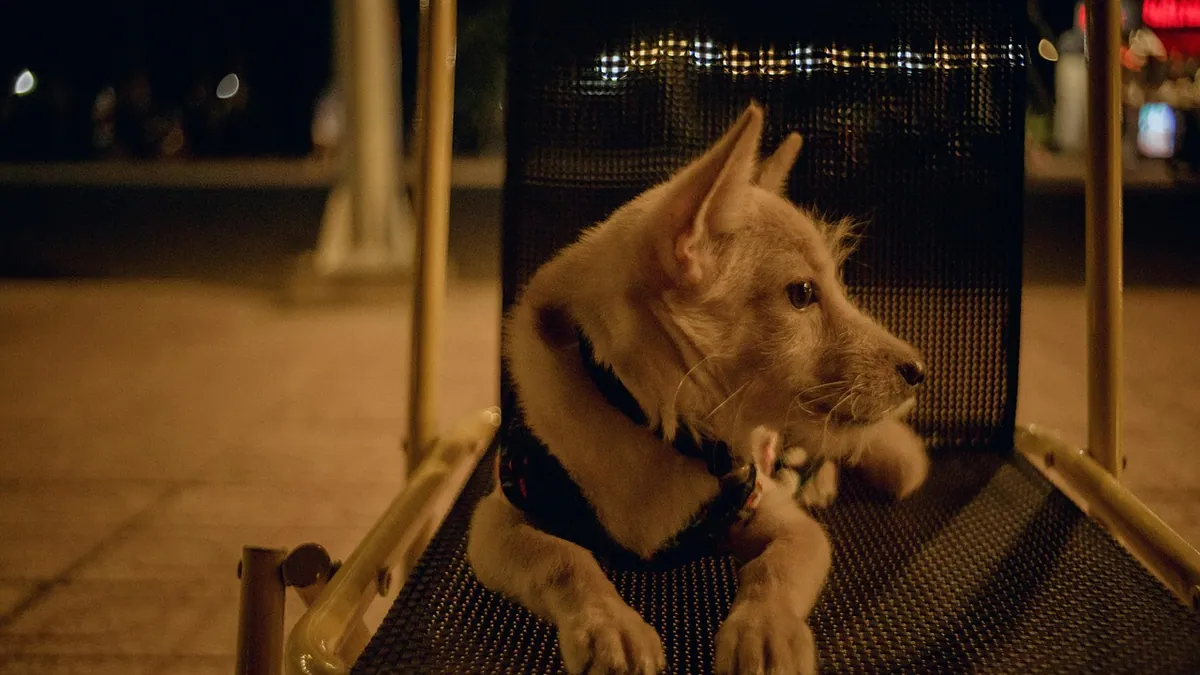
If your dog keeps waking you up in the middle of the night, the cause usually falls into one of three buckets: normal dog biology, a medical problem, or a learned habit that gets rewarded with attention. Most cases improve once you identify which bucket you are in. The fix ranges from a later bedtime walk to a veterinary workup for pain, hormone disease, or cognitive decline.
This article is educational and is not a substitute for veterinary diagnosis or treatment.
Quick Answer
- Track the pattern for 5 to 7 nights before changing anything. Write down the exact time, what your dog does, and what you do in response.
- Rule out medical causes first, especially in dogs over 7 years old. Pain, urinary disease, and cognitive dysfunction are common night-waking triggers.
- Make the last potty break as late as you reasonably can, and keep the bedroom dark, quiet, and boring at night.
- Never punish night waking. Punishment adds anxiety, and anxiety makes night waking worse.
- If your dog is older and also seems confused, stares at walls, or paces, ask your veterinarian about canine cognitive dysfunction at your next visit.
Why Dogs Wake Up at Night: Normal Reasons First
Dogs are not small humans with human sleep schedules. They are crepuscular by tendency, meaning they are often most active around dawn and dusk. A dog who stirs at 4 a.m. may simply be ready to start the day.
Sleep in dogs can be measured with activity monitors, and researchers have used collar-based accelerometers to classify sleep and wake states across a full day [1]. That work confirms what owners already suspect: dog sleep is not one long block. It is broken into many short bouts, and activity levels shift throughout the night [1].
Normal reasons for night waking include:
- A full bladder or bowel. Puppies, senior dogs, and dogs on diuretics or steroids often cannot hold it as long.
- Hunger or thirst. A dog on a weight-loss diet or a new feeding schedule may genuinely be hungry at 3 a.m.
- Noise and light. Garbage trucks, neighbors, streetlights, and early sunrise all wake light sleepers.
- Temperature. A dog who is too warm or too cold will shift, pace, and whine.
- Boredom and stored energy. A dog who slept all day while you were at work often has a full tank at night.
- Age-related sleep changes. Older dogs sleep more during the day and less at night, and this shift is one of the most common complaints from owners of senior dogs [2].
If your dog wakes at 3 a.m. or 4 a.m. and settles quickly after a potty break, you are probably dealing with biology plus habit. If your dog wakes and cannot settle at all, look harder at the medical list below.
Medical Causes to Rule Out
This is the part most owners skip, and it is the part that matters most. A dog who suddenly starts waking at night, especially after months or years of sleeping through, deserves a veterinary exam.
Pain
Arthritis, dental disease, and back pain all get worse when a dog lies still for hours. A dog who paces, repositions constantly, or whines when shifting may be hurting. Pain control is often the single fastest fix for night waking in middle-aged and older dogs.
Urinary and Digestive Problems
Urinary tract infections, bladder stones, kidney disease, and diabetes all increase nighttime urination. Gastrointestinal disease can cause nausea or the urgent need to go out. If your dog is also vomiting, read Dog Vomiting at Night: Causes and How to Help and mention it to your vet.
Cognitive Dysfunction in Senior Dogs
Canine cognitive dysfunction (CCD) is the dog equivalent of dementia, and sleep-wake disturbance is one of its hallmark signs. In a study of 205 owners of dogs aged 8 and older, poorer sleep quality (trouble falling asleep, trouble staying asleep, and more nighttime elimination) was significantly linked to greater CCD severity [2]. More than half of the dogs in that study were most unsettled between 2:00 a.m. and 5:00 a.m. [2].
That 2 to 5 a.m. window matches what many owners describe. If your older dog paces, stares, gets stuck in corners, or seems disoriented at night, CCD should be on your vet's list.
Movement Disorders and Other Neurologic Signs
Some geriatric dogs with cognitive decline also show myoclonus, which are brief sudden muscle jerks. In one survey of owners of dogs over 7 years old, 89% of dogs with signs of CCD also showed myoclonus [3]. That does not mean every twitch is serious, but new jerking, twitching, or trembling at night is worth mentioning to your veterinarian.
Breathing and Airway Issues
Reverse sneezing, collapsing trachea, and brachycephalic airway syndrome can all disrupt sleep. If your dog has noisy breathing spells at night, see Dog Keeps Reverse Sneezing At Night. Head shaking and ear discomfort can also wake a dog repeatedly, covered in Dog Keeps Shaking Head At Night.
Anxiety and Fear
Anxiety is a real medical and behavioral condition, not a personality flaw. Dogs with separation-related distress, noise phobias, or generalized anxiety often sleep poorly. Fear of the dark or of being alone can drive night waking, and you can read more in Why Is My Dog Suddenly Scared of the Dark? and Dog Anxiety at Night: Why It Happens and How to Help.
When Night Waking Becomes a Problem
Night waking is a problem when it damages your sleep, your dog's welfare, or your relationship with your dog. That is a low bar, and it is a fair one.
It is also a problem when the pattern changes. A dog who has slept through the night for years and suddenly starts waking is telling you something changed. That is a medical signal until proven otherwise.
It is a bigger problem when the waking comes with any of these:
- Confusion, disorientation, or staring
- Pacing that does not stop
- Whining, crying, or panting without a clear trigger
- Accidents in the house after a long history of being clean
- Stiffness, reluctance to lie down, or trouble getting up
- New aggression when touched at night
Any of these push you toward a veterinary visit, not a training plan.
How to Stop Your Dog From Waking Up in the Middle of the Night: Step by Step
Work through these in order. Give each change at least a week before judging it, unless your dog is distressed.
Step 1: Build a Sleep Log
For 5 to 7 nights, record the time your dog wakes, what your dog does, what you do, and how long it takes to settle. Patterns jump out fast. A dog who wakes at 3 a.m. every night after a 5 p.m. dinner may be hungry. A dog who wakes 30 minutes after you go to bed may be reacting to your movement.
Step 2: Fix the Day to Fix the Night
- Increase daytime activity. A tired dog sleeps better. Two real walks plus a puzzle feeder or training session beats one quick loop around the block.
- Add mental work. Sniff walks, food puzzles, and short obedience sessions drain energy in a way that running does not.
- Keep daytime naps shorter. If your dog sleeps all day, the night tank is empty.
- Feed the last meal 2 to 3 hours before bed. This gives digestion time and reduces 3 a.m. hunger.
- Cut water 1 to 2 hours before bed unless your vet has told you otherwise. Never restrict water for a dog with kidney disease or on certain medications without asking your vet first.
Step 3: Set a Firm Bedtime Routine
Dogs thrive on predictable sequences. A 20 to 30 minute wind-down that looks the same every night teaches your dog that the day is over.
- Final potty break as late as you can manage.
- Dim the lights and lower your voice.
- Same sleeping spot every night.
- White noise or a fan to mask outside sounds.
- Blackout curtains if early light is the trigger.
Step 4: Change Your Response to Night Waking
This is the hardest step and the one that changes behavior fastest.
- Do not turn on lights, talk, or play. Keep it boring.
- Take your dog out on a leash, in silence, to one spot. No sniffing tour, no treats, no praise.
- Bring your dog straight back inside. If your dog does not eliminate within a few minutes, go back in anyway.
- If your dog is safe and not distressed, wait a few minutes before responding. This breaks the pattern where whining instantly produces a walk.
- Reward quiet behavior in the morning, not at 3 a.m.
If your dog is genuinely distressed (panting, pacing, trying to escape), this is not a training problem. That is anxiety, and it needs a different plan.
Step 5: Use the Right Tools
- Crate or bed in your room. Some dogs settle better when they can see you. Others settle better in another room. Test both.
- Orthopedic bed. Senior dogs with joint pain sleep better on supportive foam.
- Night light. A dim light helps dogs with failing vision.
- Calming aids. Pheromone diffusers, weighted blankets, and pressure wraps help some dogs. Evidence varies, and they are not a substitute for treating pain or anxiety.
Step 6: Ask About Medication When Appropriate
For dogs with CCD, anxiety, or chronic pain, medication is often part of the answer. Your veterinarian calculates the dose from your dog's weight and health status. Never give human sleep aids, antihistamines, or pain relievers to a dog without veterinary guidance. Some are toxic.
What Not to Do
- Do not punish night waking. Yelling, spraying, or crating as punishment adds fear and makes the problem worse.
- Do not ignore a sudden change in an older dog. "He's just getting old" delays treatment for conditions that respond well to early care.
- Do not assume it is behavioral until medical causes are ruled out. Pain and urinary disease look exactly like bad habits.
- Do not give human medications. Many common human drugs are dangerous for dogs.
- Do not expect a fix in one night. Behavior change takes consistency over weeks.
- Do not let your dog "cry it out" if the distress is real. True panic does not extinguish with ignoring. It gets worse.
When to Involve a Veterinarian or Behavior Professional
Call your veterinarian if:
- Your dog is 7 or older and night waking is new
- Your dog has accidents, vomiting, diarrhea, or weight change
- Your dog seems stiff, sore, or reluctant to move
- Your dog seems confused, disoriented, or stares at walls
- Your dog pants, paces, or cannot settle at night
- You have tried the steps above for 2 to 3 weeks with no improvement
Ask for a referral to a veterinary behaviorist or a certified applied animal behaviorist if your dog has severe anxiety, aggression, or a problem that has not responded to a standard plan. Your veterinarian can also screen for cognitive dysfunction using structured questionnaires, since sleep quality tracks closely with cognitive severity in older dogs [2].
Limitations and When to Contact a Veterinarian
No article can tell you what is happening in your specific dog. Sleep problems in dogs have many overlapping causes, and the same symptom can point to arthritis in one dog and anxiety in another. Your veterinarian needs to examine your dog, ask questions, and run tests to sort it out.
Contact your veterinarian the same day if:
- Your dog cannot urinate or is straining with little or no urine produced
- Your dog is vomiting repeatedly or has bloody diarrhea
- Your dog is suddenly weak, wobbly, or unable to stand
- Your dog seems painful when touched or moved
- Your dog's gums are pale, blue, or white
Go to an emergency clinic now if:
- Your dog is having a seizure, especially more than one
- Your dog is struggling to breathe or has blue gums
- Your dog collapses or loses consciousness
- Your dog has eaten something toxic or you suspect poisoning
For poison emergencies in the United States, call the ASPCA Animal Poison Control Center at (888) 426-4435 or the Pet Poison Helpline at (855) 764-7661. Both may charge a consultation fee.
Schedule a routine visit if:
- Night waking is new and your dog is over 7
- Night waking has lasted more than 2 weeks
- Your dog is waking at 3 a.m. or 4 a.m. most nights
- You see any behavior change, even a small one
Frequently Asked Questions
Why does my dog wake up at exactly 3 a.m. every night?
Dogs have strong internal clocks, and a repeated 3 a.m. wake-up usually means a habit has formed around that time. It can also reflect hunger, a full bladder, or, in older dogs, cognitive dysfunction, since owners of dogs with CCD most often report restlessness between 2:00 a.m. and 5:00 a.m. [2]. Start with a sleep log and a vet check if your dog is a senior.
Is it normal for my dog to wake up at 4 a.m.?
Yes, it can be normal. Dogs are naturally more active around dawn, and their sleep is broken into short bouts instead of one long stretch [1]. If your dog wakes at 4 a.m., settles easily, and seems fine during the day, you may just need to shift bedtime later or add an earlier morning walk.
Can a dog have insomnia?
Dogs can have disrupted sleep, but true insomnia as defined in humans is not well established in veterinary research. What vets do see is sleep-wake disturbance linked to pain, anxiety, urinary disease, and cognitive decline [2]. If your dog cannot settle at night, treat it as a medical sign, not a personality quirk.
Should I ignore my dog when it cries at night?
It depends on why your dog is crying. If your dog is in pain, anxious, or needs to go out, ignoring it is not safe or kind. If your dog has learned that crying produces a walk or attention, a calm, boring response works better than ignoring, and it protects your dog's welfare while you retrain the pattern.
Will a later walk really help my dog sleep through the night?
Often, yes. A later, more tiring evening routine helps many dogs, especially young dogs with stored energy. Pair it with a consistent bedtime, a dark quiet room, and a boring response to night waking. If nothing changes after 2 to 3 weeks, ask your veterinarian to look for a medical cause.
Related Articles
- Dog Keeps Shaking Head At Night
- Why Is My Dog Suddenly Scared of the Dark?
- Dog Anxiety at Night: Why It Happens and How to Help
- Dog Vomiting at Night: Causes and How to Help
- Dog Keeps Reverse Sneezing At Night
- Why Is My Dog Panting at night? Pain, Anxiety & Heart Disease Signs
- How to Stop Your Dog Waking You Up Too Early
- How to Help Your Dog Settle and Fall Asleep at Night
- Are Dogs Light Sleepers? Why Your Dog Wakes So Easily
References
- Beacon-based sleep-wake monitoring in dogs. The Journal of veterinary medical science, 2024.
- Sleep-wake disturbance in canine cognitive dysfunction: Guardian-reported patterns and a practical screening tool. Veterinary journal (London, England : 1997), 2026.
- Myoclonus in geriatric dogs and its association with canine cognitive dysfunction: an online survey. Frontiers in veterinary science, 2026.