Why Is My Kitten Obsessed With My Face? Licking and Jumping
By Dr. Zubair Khalid, DVM, MS, PhD ·
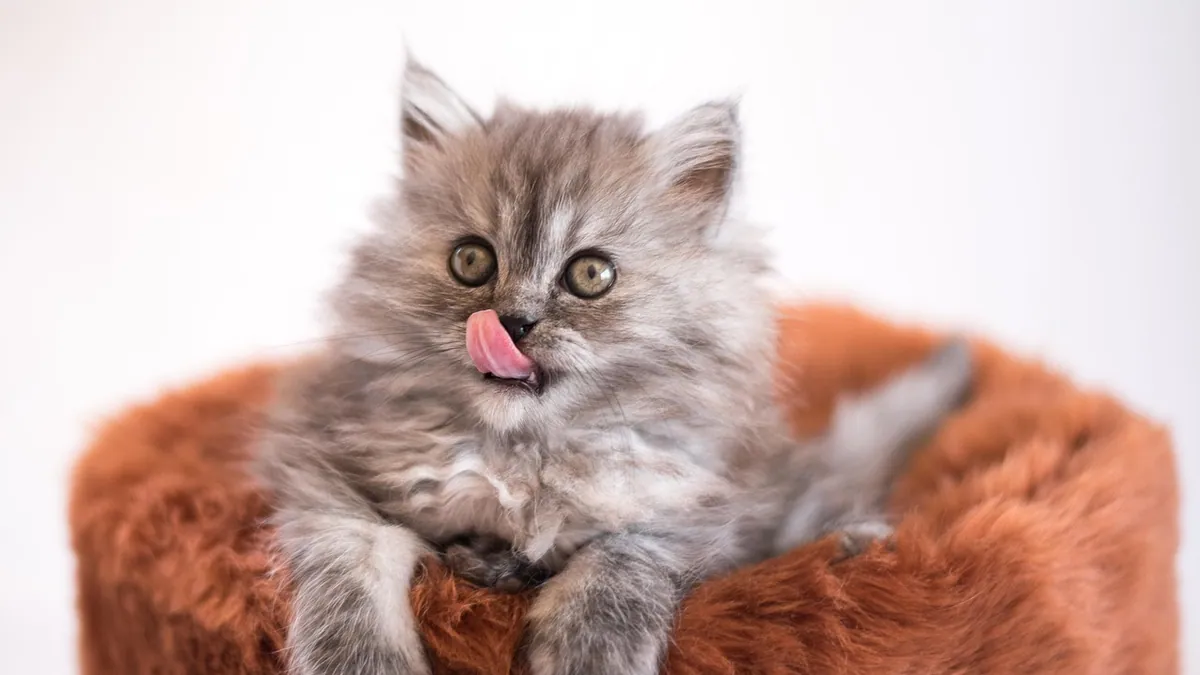
Kittens often push into your face because they are bonding, exploring your scent, or treating you as a playmate. A kitten that licks, reaches for, or jumps at your face is usually showing affection or seeking attention, not trying to dominate you. This article is educational and is not a substitute for veterinary diagnosis or treatment.
Quick Answer
- Face-focused behavior in kittens is usually normal. It comes from scent bonding, social grooming, and play.
- Licking your face is a form of social grooming and closeness, and most grooming is a normal maintenance behavior [1].
- Jumping or reaching at your face is often play or a request for attention, especially in kittens with lots of energy.
- Sudden, intense, or painful-looking face behavior can point to a medical or skin problem that needs a vet visit.
- You can teach gentle boundaries with redirection, scheduled play, and calm handling instead of punishment.
Why Does My Kitten Want to Be in My Face?
Your kitten is not plotting against you. Face-focused behavior sits at the crossroads of three normal kitten drives: bonding, exploring, and playing.
Scent bonding and social closeness
Cats rely heavily on smell to identify safe, familiar individuals. Your face carries your breath, skin oils, and personal scent, all of which your kitten learns to associate with safety and food. When a kitten presses its nose or cheek against your face, it is gathering information and marking you as part of its social group.
Research on owner-cat interactions shows that the type of contact matters. Passive, low-pressure interactions were linked to higher oxytocin and lower cortisol in cats, while forced interactions produced the opposite pattern [2]. In plain terms, a kitten that chooses to come into your face is often seeking a calm, voluntary connection. A kitten that is held against its will may feel stressed even if it looks calm.
Licking as social grooming
Grooming is a normal maintenance behavior that takes up a small share of a cat's day, and it happens in short bouts [1]. Kittens groom themselves and their littermates, and they often extend that behavior to trusted humans. Licking your face can be a leftover from kittenhood nursing and littermate care, a way of saying "you are mine."
Most grooming bouts involve several body parts, and healthy cats vary a lot in how much they groom [1]. So a kitten that licks your chin and nose a few times a day is well within the normal range.
Play, hunting practice, and attention
Kittens have enormous energy and a strong drive to practice hunting. Your face moves, blinks, and makes sounds, which makes it a fascinating target. A kitten that jumps at your face may be treating your nose or hair as prey.
Kittens also learn fast that face contact gets a reaction. If jumping at your face makes you laugh, talk, or push them away, that reaction can be rewarding. The behavior gets stronger because it works.
Reaching for your face
Reaching with a paw toward your face is often a request. Your kitten may want to touch you, get your attention, or ask for food. It can also be a playful swipe. Watch the rest of the body. A relaxed tail, soft ears, and a rumbling purr point to affection. A stiff body, flattened ears, and a hard stare point to overstimulation or play that is tipping into aggression.
Medical Causes to Rule Out
Most face obsession is behavioral, but some medical problems can look similar. A kitten that suddenly focuses on your face with unusual intensity deserves a closer look.
Skin problems and itching
If your kitten licks you constantly and also licks itself, scratches, or has bare patches, itching is a real possibility. Skin disease, parasites, and allergies can all drive licking and grooming. You can read more about this in Why Is My Cat So Itchy?.
Pain and over-sensitivity
Some cats develop over-sensitivity along the back and tail area. In a study of healthy cats, 73% showed at least one behavioral sign linked to feline hyperaesthesia syndrome, and indoor-only cats were more likely to show these signs than outdoor cats [3]. This condition can involve licking, biting, or twitching, and it can make a cat reactive to touch. If your kitten reacts strongly when you pet its back, talk to your vet.
Dental and oral pain
A kitten with mouth pain may lick or chew oddly, drool, or avoid food. Oral pain can also make a kitten irritable around the face. A veterinary exam can check the teeth, gums, and mouth.
Neurologic and other conditions
Rarely, repeated face-focused behavior can reflect a neurologic issue. If your kitten also has seizures, balance problems, or changes in vision, that needs prompt veterinary attention.
When Does Face Behavior Become a Problem?
The behavior crosses into a problem when it affects health, safety, or daily life.
- Your kitten bites, scratches, or draws blood during face contact.
- Your kitten will not stop even when you clearly disengage.
- Your sleep is disrupted every night.
- Your kitten seems distressed, not playful.
- The behavior started suddenly in an older kitten or adult cat.
- Your kitten shows aggression toward you or others.
Aggression in cats is complex and often needs a face-to-face evaluation with a qualified behaviorist [4]. Redirected aggression is one pattern to know. It happens when a cat cannot reach its target and attacks whoever is nearby instead [4]. If your kitten gets aroused by something outside a window and then lunges at your face, that is a red flag.
Fear is another driver. Fear can come from poor early socialization or frightening experiences, and it can lead to hiding, avoidance, or aggression [4]. A fearful kitten that stares at your face and swipes is not being mean. It is scared. If your kitten is hiding more than usual, see Why Is My Cat Hiding? and Why Is My Cat Suddenly Hiding and Acting Weird?.
What to Do Step by Step
You can keep the bond and still teach gentle limits. The goal is to reward calm contact and make wild face contact boring.
Step 1: Read the moment
Before you react, check your kitten's body language. Soft eyes, forward ears, and a relaxed tail mean affection. Wide pupils, a twitching tail, and a crouched stance mean arousal. Match your response to what you see.
Step 2: Reward calm behavior
When your kitten sits near your face without lunging, offer a slow blink, a soft word, or a treat. This teaches that calm closeness earns attention. Passive, voluntary contact is linked to a positive hormonal response in cats [2], so let your kitten choose the contact when possible.
Step 3: Redirect licking and jumping
Keep a toy within reach. When your kitten reaches for your face, offer the toy instead. Wand toys let you move the action away from your skin. If your kitten jumps at your face during play, end the session for a few seconds and then restart with the toy. This teaches that teeth and claws on your face stop the fun.
Step 4: Build a play routine
Kittens need several short play sessions each day. Two or three sessions of five to ten minutes can drain energy and reduce face ambushes. End each session with a meal or a treat so your kitten feels like it "caught" something.
Step 5: Add enrichment
Boredom fuels face obsession. Try food puzzles, cat trees, window perches, and rotating toys. Cats respond strongly to plant-based scent enrichment. In one study, cats showed more voluntary engagement with silver vine than with catnip, and free-roaming cats rarely self-anointed toward intact catnip plants [5]. Silver vine or catnip can be a useful outlet for face-rubbing and rolling that does not involve your skin.
Step 6: Set up your sleep space
If your kitten targets your face at night, close the bedroom door or set up a cozy sleep area with a bed, water, and a litter box. A tired kitten with a full belly settles better. Keep the routine consistent so your kitten learns what to expect.
Step 7: Handle gently
Never grab your kitten by the scruff or hold it against its will. Forced interactions raise cortisol and lower oxytocin in cats [2]. Gentle, choice-based handling builds trust and reduces the odds of a defensive swipe.
What Not to Do
- Do not hit, flick, or spray your kitten. Punishment can create fear and aggression [4].
- Do not yell in your kitten's face. It can escalate arousal and make the behavior worse.
- Do not use your hands as toys. This teaches that hands and faces are fair targets.
- Do not assume it is "just love." Sudden or intense changes need a vet check.
- Do not ignore bite wounds. Cat bites can become infected quickly. Wash the area and contact a doctor.
When to Involve a Veterinarian or Behavior Professional
Start with your veterinarian for any sudden change in behavior, any sign of pain, or any skin problem. Your vet can rule out medical causes and refer you to a qualified behaviorist if needed. Diagnosing and treating behavior problems in cats is complex and usually requires a face-to-face meeting with a qualified behaviorist [4].
A certified behavior professional can build a plan for aggression, fear, or over-arousal. This is especially important if your kitten has bitten or scratched you hard, or if the behavior is getting worse despite your efforts.
Limitations and When to Contact a Veterinarian
This article cannot diagnose your kitten. Every kitten is an individual, and a veterinarian needs to examine yours to give specific advice.
Contact a veterinarian the same day if your kitten:
- Stops eating or drinking
- Vomits repeatedly or has diarrhea
- Shows sudden swelling, redness, or hair loss around the face
- Reacts with pain when you touch its head or back
- Has a sudden change in personality or energy
Go to an emergency clinic now if your kitten:
- Has trouble breathing, choking, or gagging
- Has a seizure or collapses
- Has a swollen, painful abdomen
- Cannot urinate or cries while urinating
- Has a deep bite or scratch wound that will not stop bleeding
If your kitten swallowed something and is choking, call your veterinarian or a pet poison hotline right away. For non-urgent concerns, book a routine visit. Bring notes about when the behavior started, what triggers it, and how often it happens. Video of the behavior is very helpful.
Frequently Asked Questions
Is it normal for my kitten to lick my face?
Yes, face licking is usually normal. Grooming is a natural maintenance behavior, and cats often extend social grooming to trusted people [1]. If the licking is constant, causes skin irritation, or comes with scratching and hair loss, have your vet check for itching or skin disease.
Why does my kitten jump at my face?
Jumping at your face is usually play or a bid for attention. Kittens have strong hunting drives, and a moving face looks like a target. Redirect the jump to a wand toy and end play briefly when claws touch your skin.
Does my kitten licking my face mean it loves me?
It often does signal affection and bonding. Cats use scent and touch to build social ties, and voluntary contact can raise oxytocin and lower cortisol [2]. That said, licking can also be a request for food or attention, so look at the whole picture.
Can I train my kitten to stop jumping at my face?
Yes, with consistency. Reward calm behavior, redirect to toys, and avoid reacting with excitement. Never punish your kitten, because punishment can create fear and aggression [4]. If the behavior continues, ask your vet about a behavior referral.
When should I worry about face-focused behavior?
Worry if the behavior is sudden, intense, or paired with pain, hiding, or aggression. Fear and aggression in cats can stem from poor socialization or frightening experiences and may need professional help [4]. A veterinarian can rule out medical causes first.
Related Articles
- Why Is My Cat Hiding?
- Why Is My Cat Suddenly Hiding and Acting Weird?
- Why Are Cats So Cute? The Science Behind Feline Adorableness
- Why Is My Cat So Itchy?
- Why Was My Cat Choking
- Why Is My Cat Sneezing So Much And Has A Runny Nose
- Why Does My Kitten Lick My Face So Much?
- Why Does My Kitten Want to Sleep on Me or My Face?
- Why Do Kittens Jump on You? Play and Attention Explained
References
- Exploring Normal to Abnormal Variations of Grooming Behaviours in Cats. Veterinary dermatology, 2026.
- EXPRESS: The hormonal effects of owner-cat interactions on pet cats of different potential attachment styles. Journal of feline medicine and surgery, 2026.
- Prevalence of behavioural signs commonly associated with feline hyperaesthesia syndrome among healthy cats. The Journal of small animal practice, 2025.
- Behavior Problems in Cats - Cat Owners. Merck Veterinary Manual.
- Free-Roaming and Captive Cats Prefer Silver Vine to Catnip for Self-Anointing. Journal of chemical ecology, 2026.