How Much Should You Walk Your Dog Each Day?
By Dr. Zubair Khalid, DVM, MS, PhD ·
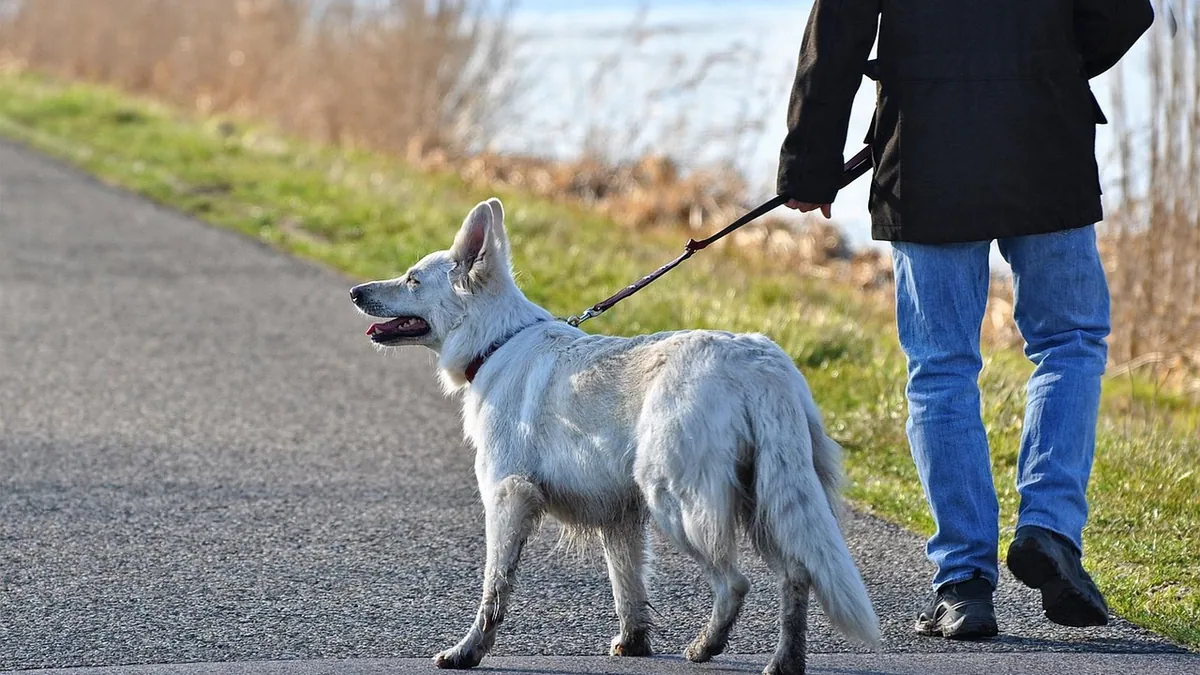
Most healthy adult dogs do well with 30 to 60 minutes of walking per day, split into one or two outings. Puppies, seniors, flat-faced breeds, and dogs with heart or joint disease need less, while working breeds and high-energy types often need more. How much should a dog be walked a day depends less on a universal number and more on your dog's age, breed, body condition, and health status.
This article is educational and is not a substitute for veterinary diagnosis or treatment.
Quick Answer
- Aim for 30 to 60 minutes of walking daily for most healthy adult dogs, split into two walks if your schedule allows.
- Puppies follow a rough rule of about 5 minutes of structured walking per month of age, twice a day, until they finish growing.
- Flat-faced breeds (bulldogs, pugs, Boston terriers) and dogs with heart or breathing disease often need shorter, slower, cooler-weather walks.
- Walking alone rarely produces dramatic weight loss. It works best paired with measured meals and a veterinary weight plan.
- Watch your dog, not the clock. Lagging, heavy panting, limping, or refusing to continue means the walk is over.
How Much Should a Dog Be Walked a Day? Targets by Age, Breed, and Goal
There is no single correct number. Veterinary guidance is built around the individual dog, and the ranges below are starting points you can adjust with your veterinarian.
Adult dogs
For a healthy adult dog of average energy, 30 to 60 minutes per day is a reasonable target. Split it into a 20 to 30 minute walk in the morning and another in the evening if you can. This matches what many owners already do, since dog walking is one of the most common forms of physical activity people get with their pets [1].
Puppies
Puppies have soft growth plates and tire quickly. A common guideline is roughly 5 minutes of structured walking per month of age, twice daily. A 4-month-old puppy would get about 20 minutes per walk. Free play in a safe yard does not count the same way, and off-leash romping with bigger dogs can be harder on growing joints than a controlled walk.
Seniors
Older dogs often do better with two or three shorter walks than one long one. Arthritis, heart disease, and cognitive changes all affect stamina. If your senior dog slows down on the second half of the route, shorten the route.
Breed tendencies
- High-energy working and sporting breeds (border collies, huskies, Labrador retrievers, pointers): often 60 to 120 minutes daily, sometimes more.
- Moderate-energy breeds (beagles, boxers, most terriers, mixed-breed adults): 30 to 60 minutes daily.
- Low-energy or flat-faced breeds (bulldogs, pugs, shih tzus, basset hounds): 20 to 40 minutes daily, often in cooler parts of the day.
- Giant breeds (Great Danes, mastiffs): shorter walks, more of them, because of joint stress.
If the goal is weight loss
Walking burns calories, but the amount is modest. In one study of on-leash dog walking, average walking intensity was about 38% of heart rate reserve and 61% of maximum heart rate, with an average cadence near 45 steps per minute [1]. That is light to moderate activity, not a hard workout. For weight loss, the bigger lever is usually measuring food and treats. Pair walking with a structured weight plan such as Dog Weight Management: How to Help Your Dog Lose Weight Safely.
A Practical Step-by-Step Plan to Start or Adjust Walks
- Get a baseline. Walk your dog at a normal pace for 15 minutes. Note how they breathe, whether they pull, and whether they slow down near the end.
- Check with your veterinarian first if your dog is overweight, over 7 years old, or has a known heart, lung, or orthopedic condition. Ask what duration and pace are safe.
- Add 5 minutes per week to one walk until you reach your target. Sudden jumps in duration or speed are a common cause of soreness and paw injuries.
- Split the total. Two 20-minute walks often beat one 40-minute walk for dogs with joint disease, because the rest period between walks helps.
- Pick surfaces wisely. Hot asphalt burns paw pads. Grass, dirt, and shaded sidewalks are kinder in summer.
- Build in sniff time. Sniffing is mental work. A slower, sniff-heavy walk can tire a dog as much as a brisk one.
- Track it. Log duration, pace, and how your dog looks afterward for two weeks. Adjust based on what you see.
If your dog pulls hard, that is a training problem before it is an exercise problem. See Dog Training Tips For Leash Walking.
Daily Walking Schedule by Dog Profile
| Dog profile | Walks per day | Minutes per walk | Total daily minutes | Notes |
|---|---|---|---|---|
| Puppy, 3 to 6 months | 2 to 3 | 10 to 20 | 20 to 45 | Short, controlled, avoid hard running |
| Adult, moderate energy | 1 to 2 | 20 to 30 | 30 to 60 | Split if possible |
| Adult, high energy | 2 | 30 to 60 | 60 to 120 | Add fetch or swimming if tolerated |
| Senior, healthy | 2 to 3 | 10 to 20 | 20 to 45 | Shorter, more frequent |
| Senior with arthritis | 2 to 3 | 5 to 15 | 15 to 30 | Flat ground, soft surface |
| Flat-faced breed | 2 | 10 to 20 | 20 to 40 | Cool hours only, watch breathing |
| Overweight adult | 2 | 15 to 30 | 30 to 60 | Build gradually, pair with diet plan |
| Heart disease (stable) | Per veterinarian | Per veterinarian | Per veterinarian | Intensity set by your vet |
How Often Should You Walk Your Dog?
Twice a day is the most common recommendation for adult dogs, and it fits most bladders and most human schedules. One longer walk can work for some dogs, but many dogs do better with a morning and evening outing. Puppies and seniors often need three shorter walks.
Frequency matters for more than exercise. In a long-term cohort study of mid-to-older aged adults, female dog owners reported about 17 more minutes of total walking per week, 26 more minutes of recreational walking per week, and 24 more minutes of total physical activity per week than women who did not own dogs at the start of the study [2]. New dog owners also reported positive changes in walking activity and in contact with friends and neighbors compared with people who did not own dogs [3]. Walking is good for the human end of the leash too.
How Long Can a Dog Walk?
There is no fixed ceiling. A conditioned adult dog can often walk for an hour or more, while an unfit dog may be done in 15 minutes. The limit is set by fitness, age, breed, weather, and health.
Heat is the most common reason a walk needs to end early. Flat-faced dogs and dogs with airway disease overheat faster. Cold, ice, and road salt are the winter equivalents.
If you want to add distance, do it slowly. Increase total weekly duration by about 10% per week, and keep at least one easy day between longer efforts.
Signs Something Is Wrong During or After a Walk
Stop the walk and rest your dog if you see any of these:
- Heavy, loud breathing that does not settle within a few minutes
- A blue or gray tint to the gums or tongue
- Lagging behind, sitting down, or refusing to move
- Limping, stiffness, or a bunny-hopping gait
- Vomiting, drooling, or a swollen belly after activity
- Collapse, wobbling, or confusion
- Paw pad cuts, blisters, or burned pads
- Reluctance to go out the next day
Some of these are emergencies. Collapse, blue gums, and a distended abdomen need immediate veterinary care.
Common Mistakes Owners Make
- Doing the same walk every day regardless of weather. Heat, humidity, and pavement temperature change what is safe.
- Using walks as the only weight-loss tool. Walking burns fewer calories than most owners expect [1]. Food measurement matters more.
- Skipping the warm-up. Start slow for the first 5 minutes, especially in cold weather.
- Letting a puppy run hard on hard surfaces. Growing joints do not need long, fast miles.
- Ignoring leash pulling. Strong pulling creates real force on both ends of the leash. In one study, half of the participants experienced leash tension of 125 N or greater, and the largest recorded pulling event reached 412.5 N [4]. That is a lot of force on your shoulder, your dog's neck, and your back.
- Walking a flat-faced dog in midday summer heat. These dogs cannot cool themselves efficiently.
- Assuming a tired dog is a well-exercised dog. Mental fatigue and physical fatigue are different. A bored dog may still need training or enrichment.
Gear and Setup That Actually Matters
- Harness versus collar. A well-fitted harness spreads force across the chest and is generally kinder for dogs that pull. Head halters can help but need proper fitting and training.
- Leash length. A 4 to 6 foot leash gives control on sidewalks. Retractable leashes are a poor choice near roads.
- Paw protection. Boots help on hot pavement, ice, and salt. Check fit so they do not rub.
- Water. Bring it on walks longer than 30 minutes or in warm weather.
- Reflective gear. A reflective harness or light helps drivers see you at dawn and dusk.
- A towel or mat in the car. Useful if your dog gets muddy or overheated on the way home.
If weather or mobility limits outdoor walks, indoor options exist. A treadmill can work for some dogs after training, though it is not right for every dog. See Train Dog To Walk On Treadmill.
Rest matters as much as activity. Most adult dogs sleep 12 to 14 hours a day, and puppies and seniors sleep more. See How Many Hours A Day Do Dogs Sleep.
Walking and Heart Health
Dog walking is being studied as a low-cost addition to cardiac rehabilitation programs. Reviews of cohort studies and meta-analyses suggest an association between dog walking and lower cardiovascular mortality in people with established disease, and the human-animal bond may support stress regulation, exercise motivation, and social connection [5]. That is a benefit for you, not a treatment plan for your dog. If your dog has heart disease, their exercise plan should come from your veterinarian.
Limitations and When to Contact a Veterinarian
Every dog is different, and only your veterinarian can set a safe walking plan for your dog's specific condition.
Contact a veterinarian the same day if your dog:
- Limps for more than a few hours after a walk
- Has diarrhea, vomiting, or refuses food after activity
- Seems more tired than usual for more than a day
- Has sore or cracked paw pads
Go to an emergency clinic now if your dog:
- Collapses or cannot stand
- Has blue, gray, or white gums
- Breathes with obvious effort while resting
- Has a hard, swollen, painful abdomen
- Shows sudden weakness in the back legs
Schedule a routine visit if:
- Your dog is overweight and you want a safe weight-loss plan
- Your dog is slowing down on walks that used to be easy
- You are unsure how much exercise is safe for a puppy or a senior
- Your dog coughs or makes honking sounds during or after walks
Frequently Asked Questions
Is one long walk a day enough for a dog?
For many adult dogs, one longer walk can work if it meets their energy needs. Two shorter walks are usually better for bladder comfort, joint health, and behavior. Puppies and seniors almost always do better with more frequent, shorter outings.
Should I walk my dog before or after meals?
A short walk before meals is often easier on the stomach. Avoid hard exercise right after a large meal, especially in deep-chested breeds. Ask your veterinarian if your dog has a history of bloat or digestive issues.
Can I walk my dog every day?
Yes, daily walking is good for most dogs. Rest days with gentler activity can help dogs with arthritis or those recovering from injury. Consistency matters more than intensity.
How do I know if my dog is getting too much exercise?
Signs include lagging on walks, stiffness the next day, reluctance to go out, and changes in appetite or attitude. If your dog seems sore or tired for more than a day after a walk, cut back and call your veterinarian.
Does walking help a dog lose weight?
Walking helps, but it is rarely enough on its own. Most weight loss comes from feeding measured amounts and cutting treats. Your veterinarian can calculate a target calorie intake based on your dog's current weight and body condition.
Related Articles
- Dog Training Tips For Walking
- How Many Hours A Day Do Dogs Sleep
- Dog Training Tips For Leash Walking
- Train Dog To Walk On Treadmill
- Dog Weight Management: How to Help Your Dog Lose Weight Safely
- Dog Weight Loss Tips
- Dog Exercise Needs by Breed and Age: How Much Is Enough?
- How to Get Your Dog to Focus on You During Walks
- Dog Limping That Gets Better With Walking
References
- Is dog walking suitable for physical activity promotion? Investigating the exercise intensity of on-leash dog walking. Preventive medicine reports, 2024.
- Dog Ownership, Physical Activity, and Mental Health in Mid-to-Older Aged Adults: Findings From the HABITAT Cohort Study. Journal of physical activity & health, 2025.
- Association of new dog ownership with physical activity and social contact: the retrospective study. Scientific reports, 2025.
- Assessment of Dog-Leash Pulling Force and the Impact of Dog-Walking on Gait Kinematics. Annals of biomedical engineering, 2026.
- Benefits of dog walking in cardiovascular rehabilitation. Revue medicale suisse, 2026.