Do Puppies Know Their Dad? Paternal Recognition
By Dr. Zubair Khalid, DVM, MS, PhD ·
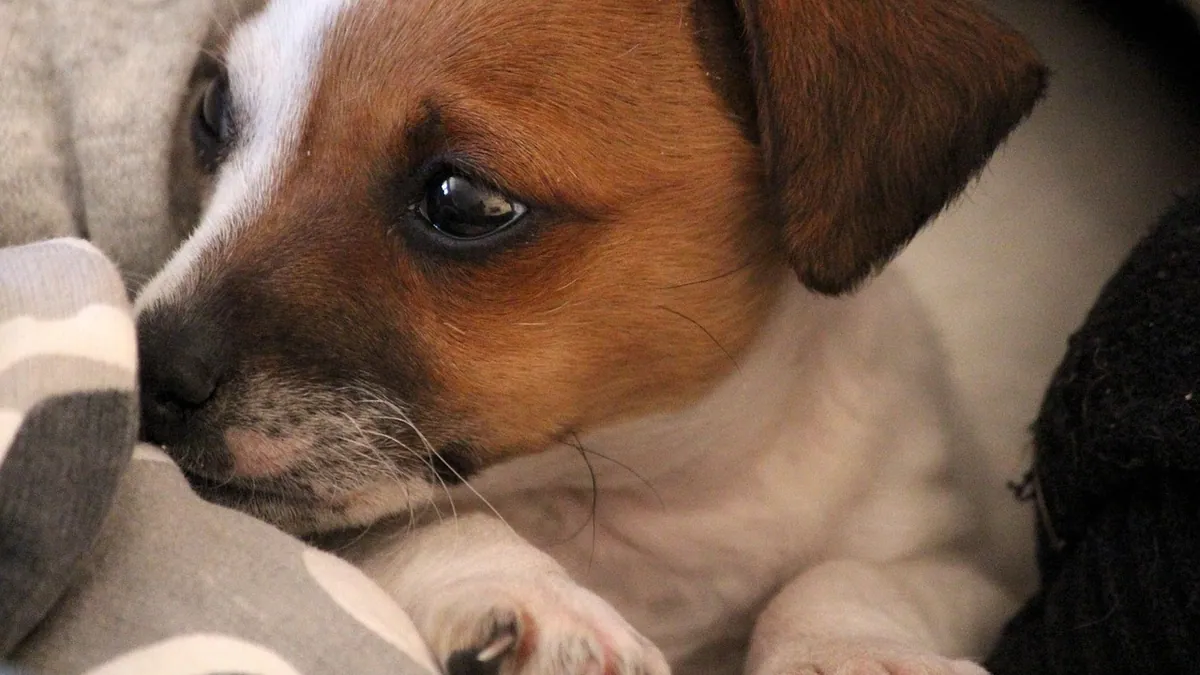
Puppies can sometimes recognize their father through scent and early familiarity, but most do not form a lasting "dad" relationship the way humans do. If a puppy stays with its father past the first few weeks, it may treat him as a familiar dog, not as a parent. This article explains what we know about whether puppies know who their dad is, and why it usually does not change their behavior.
This article is educational and is not a substitute for veterinary diagnosis or treatment.
Quick Answer
- Puppies rely mainly on smell and early exposure to identify other dogs, so a father they lived with may be recognized as familiar.
- Free-ranging dogs often live in loose groups with multiple breeding males and females, so a father is not always present or identifiable [1].
- Most puppies are separated from their father before or shortly after weaning, so there is little chance to form a father-specific bond.
- Dogs do not appear to build family trees the way humans do. Recognition is based on individual scent and past experience, not on the concept of "dad."
- If a father and his offspring meet again as adults, they may act like any two dogs meeting for the first time, friendly, tense, or neutral depending on temperament and history.
Do Puppies Recognize Their Dad? What Science Says
Dogs have an extraordinary sense of smell. They use chemical signals to tell individual dogs apart, to read emotional states, and to decide whether another dog is familiar or strange. A study of 43 dogs found that they could tell the difference between odor samples from an unfamiliar dog that were collected after joyful, stressful, and relaxing events [2]. That means dogs pick up a lot of information from another dog's scent alone.
So if a puppy grows up around its father, it likely learns his individual smell. That smell becomes part of the puppy's early world. The puppy may show recognition by approaching, sniffing, or acting relaxed around that specific dog. But this is familiarity, not a human-style parent-child relationship.
The picture gets more complicated when you look at how dogs actually live. A genetic study of free-ranging dogs found that their mating system is polygynandrous, meaning both males and females may mate with multiple partners [1]. Groups can include several breeding males and females. In that setting, a father is often just one of several adult dogs in the area. Puppies may never have a clear "dad" to recognize.
Domestication changed dog reproduction a lot compared with wolves. Wolves typically live in family packs with a single breeding pair and extended parental care. Free-ranging dogs do not follow that pattern as strictly [1]. This helps explain why fatherhood is not a central part of most dogs' social lives.
Why Puppies May Act Like They Know Their Father
Scent memory starts early
A puppy's nose works from birth. By the time a puppy is a few weeks old, it can tell familiar smells from unfamiliar ones. If the father was present during that window, his scent may be stored as "safe" or "known."
Shared living space creates familiarity
Puppies raised in the same home or yard as their father simply see and smell him every day. That repeated exposure builds familiarity. The puppy may greet him differently than a stranger, but that does not prove the puppy understands they are related.
Play and social learning
Adult dogs sometimes tolerate puppies more than they tolerate other adults. A father dog may play gently or allow puppies to climb on him. Puppies learn bite inhibition and social rules from adult dogs around them. This can look like paternal care, but it is often just normal adult-dog patience.
Hormonal and emotional cues
Dogs read emotional odors from other dogs [2]. A calm father dog gives off calm signals. A nervous father gives off stress signals. Puppies respond to those cues. What looks like recognition may actually be the puppy reacting to the other dog's emotional state.
Do Dogs Recognize Their Parents? The Limits of the Evidence
There is no strong scientific evidence that dogs recognize a biological parent as a parent. What we have is evidence that dogs recognize individual odors and emotional states [2]. We also know that dogs do not show consistent sex-based preferences for male or female dogs or people in social tests [3]. That finding suggests dogs are not wired to seek out a father figure based on sex alone.
Dogs also live in complex social networks. In free-ranging populations, kinship ties spread across packs instead of forming neat family units [1]. A dog may share genes with many dogs nearby and never treat any of them as a parent.
So the honest answer is this. A puppy may recognize its father as a familiar individual. It probably does not recognize him as "dad" in the way a human child would.
Medical Causes to Rule Out
If your puppy or adult dog suddenly seems confused about a familiar dog, or if a father and offspring who used to get along start fighting, do not assume it is about family recognition. Several medical problems can change how a dog smells, acts, or responds to others.
- Pain or illness can make a dog irritable or withdrawn.
- Dental disease, ear infections, or skin infections can change a dog's odor and trigger odd reactions from other dogs.
- Cognitive dysfunction in older dogs can cause them to forget familiar routines or act confused around known dogs.
- Hormonal conditions can change behavior and body odor.
- Sudden blindness or deafness can make a dog startle easily around other dogs.
Your veterinarian can check for these problems with a physical exam and simple tests. If a dog's behavior changes toward a housemate, a medical workup is a reasonable first step.
When Father-Offspring Recognition Becomes a Problem
Most of the time, whether a dog recognizes its father does not matter. Problems tend to come from the living situation, not from family ties.
Same-sex tension
Two intact male dogs in the same home may compete for resources, space, or breeding access. This can happen whether they are related or not. Father and son pairs are not immune.
Resource guarding
Dogs may guard food, toys, beds, or people. A father dog may guard from his son, or the son may guard from the father. This is about resources, not about who is dad.
Mounting and breeding behavior
An intact male dog may mount another male, including his own offspring. This is normal canine behavior and not a sign of confusion about family. It can become a problem if it leads to fights or stress.
Stress in crowded homes
Multiple dogs in a small space can create tension. If you are raising a father and his puppies together, plan for separate feeding areas, separate resting spots, and enough space for each dog to get away.
If you are dealing with behavior problems in a male dog, including possible inbreeding effects, see Male Inbred Dog Behavior Problems. For questions about male reproductive health, see Breeding Soundness Examination of the Canine Male.
What to Do Step by Step
1. Manage the environment
Give each dog its own space. Use crates, baby gates, or separate rooms for feeding and resting. Feed dogs separately so no one feels the need to guard food.
2. Watch body language
Learn the early signs of stress in dogs. Lip licking, whale eye, stiff posture, tucked tail, and turning away are all clues. If you see these signs between a father and his offspring, separate them calmly.
3. Use positive training
Reward calm behavior around the other dog. Keep training sessions short and positive. Never punish a dog for growling. Growling is information. If you punish it, you may get a dog that bites without warning.
4. Provide enrichment
Bored dogs find their own entertainment, and that often means conflict. Give each dog puzzle toys, chew items, walks, and training time. Mental work tires a dog out in a good way.
5. Consider spay and neuter
If you are not breeding dogs, talk to your veterinarian about spay and neuter. Neutering can reduce some male-to-male tension, though it does not erase personality or training needs. Your veterinarian can discuss timing and risks for your individual dog.
6. Introduce dogs slowly
If a father and his grown puppy are meeting again after time apart, treat it like any new dog introduction. Use neutral ground, leashes, and short sessions. Do not assume they will remember each other.
7. Keep records
Note what triggers tension, what time of day it happens, and which dog starts it. This information helps your veterinarian or behavior professional make a plan.
What Not to Do
Do not punish growling or snapping
Punishment can suppress warning signs and make a bite more likely. It also damages your relationship with your dog.
Do not assume family ties prevent fighting
Related dogs fight. Father and son dogs can fight. Genetics do not create automatic peace.
Do not force them to share
Separate beds, bowls, and toys reduce conflict. Forced sharing creates stress.
Do not rely on myths
Myth: Dogs remember their puppies forever. There is no evidence for this. Myth: A father dog will never hurt his offspring. There is no evidence for this either. Myth: Dogs grieve when separated from family. Some dogs show distress when separated from a familiar dog, but that is about attachment and routine, not about a father concept.
Do not breed related dogs
Inbreeding raises the risk of health and behavior problems. If you are considering breeding, talk to your veterinarian first.
When to Involve a Veterinarian or Behavior Professional
Call your veterinarian if you see sudden behavior changes, new aggression, or signs of pain or illness. A certified behavior professional can help if:
- Fights are causing injuries.
- One dog is hiding, not eating, or showing constant stress.
- You cannot safely separate the dogs.
- You are worried about a bite risk to people or other pets.
- Training at home has not improved things after a few weeks.
Your veterinarian can rule out medical causes and may refer you to a veterinary behaviorist or certified trainer. For more on how dogs form bonds with people, see What Is a 'Dog Man'? Understanding the Bond Between Men and Their Dogs and Is Your Dog Human? Understanding Canine Behavior and Bonding.
Limitations and When to Contact a Veterinarian
We do not have a clear answer to whether every puppy recognizes its father. The research on dog scent and social behavior is growing, but it does not yet give us a simple yes or no. What we know is that dogs use smell and familiarity to identify other dogs [2], and that free-ranging dogs often live in mixed groups where fatherhood is not a distinct role [1].
Individual cases need a veterinarian. Contact your veterinarian the same day if your dog has sudden behavior changes, stops eating, or shows signs of pain. Go to an emergency clinic now if there has been a serious fight with deep wounds, heavy bleeding, difficulty breathing, or collapse. Schedule a routine visit for gradual behavior changes, questions about spay or neuter, or if you are planning to breed.
Frequently Asked Questions
Do puppies recognize their father by smell?
Puppies can learn to recognize individual dogs by scent, and a father they lived with would be part of that familiar scent group. However, this is recognition of a familiar dog, not proof that the puppy understands the dog is its father.
Will a father dog recognize his puppies after they are rehomed?
A father dog may recognize a familiar scent if he meets his offspring again, but there is no evidence that he remembers them as his puppies. Most dogs treat a returning offspring like any other dog, with reactions based on temperament and past experience.
Do dogs recognize their siblings and parents as family?
Dogs recognize familiar individuals through scent and past experience. They do not appear to build a family tree or treat relatives differently just because of shared genes. Social bonds come from living together and repeated positive interactions.
Should I keep a father dog with his puppies?
That depends on the dogs and the setup. Some fathers are tolerant and calm with puppies. Others are stressed or aggressive. If you keep them together, provide separate spaces, supervise interactions, and watch for signs of tension. Talk to your veterinarian if you are unsure.
Does neutering a father dog change how he acts with his puppies?
Neutering can reduce some hormone-driven behaviors, but it does not turn a dog into a parent or erase existing habits. Behavior depends more on training, environment, and temperament than on whether the dog is intact. Your veterinarian can help you decide on timing.
Related Articles
- What Is a 'Dog Man'? Understanding the Bond Between Men and Their Dogs
- Is Your Dog Human? Understanding Canine Behavior and Bonding
- Male Inbred Dog Behavior Problems
- Can Dogs Be Intersex? Signs, Diagnosis, and Care
- Breeding Soundness Examination of the Canine Male
- Hermaphrodite Dog Behavior Problems
- Do Puppies Remember Their Littermates?
- How Dogs Recognize Their Owners and Other Dogs
- Do Puppies Imprint? How Bonding Really Works
References
- Genetic inference of the mating system of free-ranging domestic dogs. Behavioral ecology : official journal of the International Society for Behavioral Ecology, 2021.
- Dogs (Canis familiaris) distinguish conspecific emotional chemosignals. Scientific reports, 2026.
- Behavioral Convergence with Physiological Divergence: Sex Differences in Hormones but Not Social Behavior in Beagle Dogs. Animals : an open access journal from MDPI, 2026.