Do Cats Recognize Their Owners? Feline Recognition Explained
By Dr. Zubair Khalid, DVM, MS, PhD ·
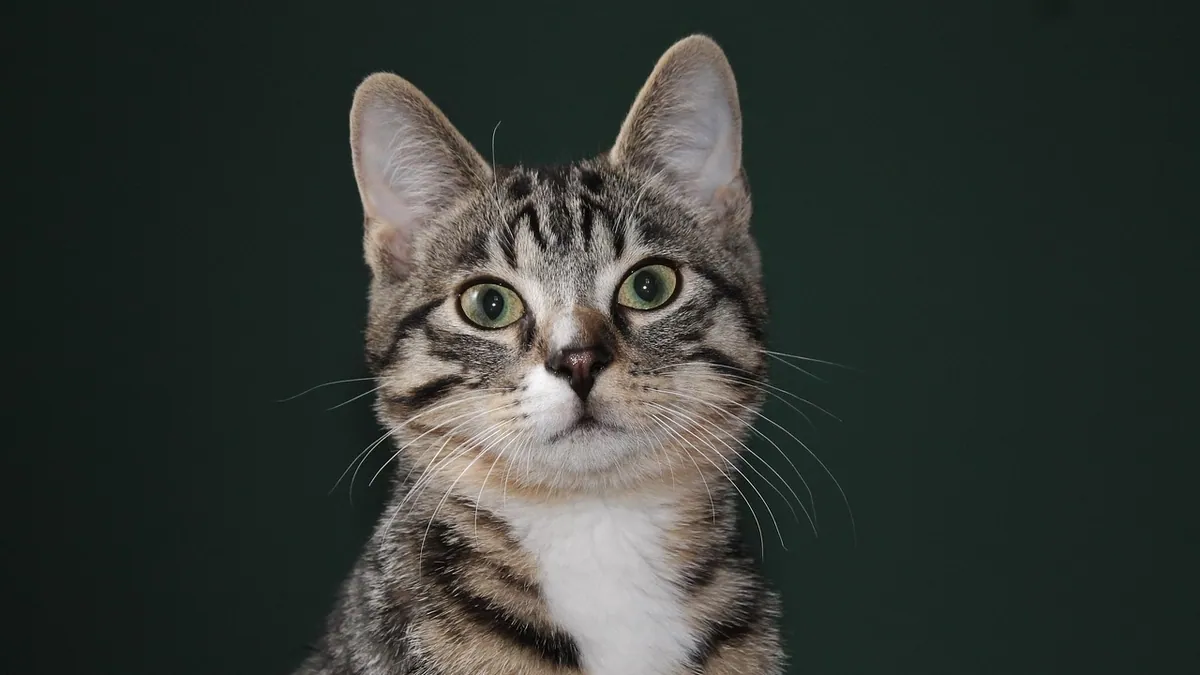
Yes, cats recognize their owners. They do it mainly by smell, then by voice and the daily routines you share. A cat that greets you at the door, rubs against your legs, or settles on your lap is showing recognition and attachment, not just hoping for food.
This article is educational and is not a substitute for veterinary diagnosis or treatment.
Quick Answer
- Cats rely most on scent to tell you apart from strangers, followed by your voice and your habits.
- Rubbing, head bunting, slow blinking, and following you around are friendly signals, not manipulation.
- Cats have flexible social lives and treat people much like they treat other cats they like [1].
- Secure cats show calmer stress hormones during gentle, passive time with their owners [2].
- Punishment and forced handling damage trust and raise stress, so let your cat choose contact.
How Do Cats Recognize Their Owners?
Cats build a picture of you using several senses at once. Scent comes first. Your cat has scent glands on the cheeks, chin, and forehead, and when it rubs against you, it is mixing its smell with yours. That shared scent marks you as familiar and safe.
Voice matters too. Cats learn the sound of the person who feeds them and talks to them. Many cats respond to their owner's voice while ignoring a stranger's. Your footsteps, the jingle of keys, and the time of day you usually appear all become cues.
Sight plays a smaller role than most people assume. Cats are nearsighted and rely on movement and silhouette. Your cat may know your shape and the way you walk, but it is confirming that information with smell and sound.
Routine ties it together. Cats are creatures of pattern. If you feed at 7 a.m. and sit down at 9 p.m., your cat learns those rhythms and starts anticipating them. That anticipation can look like recognition, and in many ways it is.
How Do Cats View Their Owners?
Cats have a flexible social structure. In feral conditions, they live in groups made up mostly of mothers and their litters, with a few males around [1]. They manage those relationships through distancing, friendly behaviors like rubbing and grooming, and unfriendly ones like hissing and swatting [1]. Cats with better relationships spend more time closer together [1].
Here is the part that surprises people. Cats use similar social behaviors with humans [1]. That means your cat may treat you as a familiar, valued member of its social group. It is not a pack leader situation and it is not a parent-child bond in the human sense. It is closer to a chosen companion.
Most cats are solitary hunters, and their talent for catching rodents is probably why living near humans worked out so well for them [1]. Your cat does not need you to survive in the wild sense. It stays close to you because the relationship has value, not because it is helpless.
Attachment style shapes how your cat shows this. In one study, cats classified as securely attached had more positive hormonal responses to human interaction, while insecure cats showed higher cortisol or a muted response [2]. In plain terms, a cat that feels safe with you gets more out of your company.
Owners also read their cats through the lens of their own attachment. Caregivers who felt more strongly attached to their cat were more likely to credit it with complex emotions and thinking [3]. That does not mean the cat feels nothing. It means the bond runs both directions in how it is perceived.
Normal Reasons for Recognition Behavior
Most of what looks like recognition is ordinary cat behavior. Head bunting, cheek rubbing, and weaving between your ankles deposit scent and reaffirm that you belong. Kneading, slow blinking, and a raised tail with a slight curl are friendly signals.
Following you from room to room is common in cats that feel secure. So is waiting by the door. These habits reflect routine and comfort, not anxiety, as long as your cat also plays, eats, and rests normally.
Some cats are simply less demonstrative. A cat that hides when guests arrive but sleeps on your bed at night is still bonded. If your cat has started hiding more than usual, that change is worth a closer look. See Why Is My Cat Hiding? for the common reasons.
Medical Causes to Rule Out
Sudden changes in how your cat interacts with you can signal a health problem. Pain is a frequent culprit. A cat with arthritis, dental disease, or an injury may stop jumping onto your lap or may avoid being picked up.
Vision and hearing loss change recognition too. An older cat that no longer hears you come in, or that startles when you approach, may be losing one of the senses it used to identify you. Cats do see better in dim light than people do, but their vision has limits. Can Cats See in the Dark? Feline Vision Explained covers what feline eyes can and cannot do.
Cognitive dysfunction in senior cats can cause confusion, night vocalizing, and seeming to forget familiar people or places. Thyroid disease, kidney disease, and high blood pressure can all shift behavior. Any abrupt change in sociability deserves a veterinary exam.
One emergency stands apart. If your cat is straining to urinate, crying, or producing little or no urine, that is a blocked cat and a life-threatening emergency. Read Cat Unable to Urinate: Recognize a Blocked Cat and call a veterinarian right away.
When Recognition Problems Become a Real Problem
A behavior becomes a problem when it hurts your cat's health or your household. Watch for these patterns.
- Your cat avoids you after years of seeking you out.
- Your cat hides most of the day and stops eating or grooming.
- Your cat becomes aggressive when you approach, especially if it never was before.
- Your cat vocalizes at night, paces, or seems disoriented.
- Your cat stops using the litter box or urinates outside it.
Stress is often the root. Humans are not great at reading feline stress from body language alone. In one study, accuracy at identifying relaxed, tense, and fearful cats from video was better than chance but still low, and people with prior cat ownership did better [4]. If you are unsure whether your cat is stressed or just quiet, ask your veterinarian to help you read the signs.
How to Strengthen the Bond, Step by Step
Let Your Cat Set the Pace
Offer attention and let your cat decide whether to take it. Passive interactions, meaning calm time together without forced handling, were linked to higher oxytocin and lower cortisol in cats [2]. Forced interactions showed the opposite pattern [2]. Sitting quietly nearby while your cat rests is real bonding, even when nothing dramatic happens.
Build Predictable Routines
Feed, play, and clean the litter box at consistent times. Predictability lowers stress for most cats. Keep the litter box in a quiet spot away from food and water.
Use Play That Mimics Hunting
Wand toys, laser pointers used correctly (always ending on a physical toy your cat can catch), and puzzle feeders give your cat an outlet. Short sessions of five to ten minutes, once or twice a day, work well for most cats.
Respect Scent
Avoid strong perfumes, scented litter, and harsh cleaners around your cat's space. Let your cat rub on you. Do not wash your hands immediately after petting if your cat seems to enjoy the scent exchange.
Give Vertical Space and Hiding Spots
Cat trees, shelves, and covered beds let your cat observe from a safe height. A cat that can retreat will often choose to come back out and engage.
Handle Gently and Briefly
Short, calm handling sessions build tolerance. Pair them with treats. Stop before your cat pulls away. This is especially useful for cats that need medication or grooming.
Talk to Your Cat
Use a soft, steady voice. Say your cat's name before you approach. This helps a cat with fading hearing or vision keep track of you.
If You Add Another Cat
Introductions change household dynamics and can affect how your resident cat relates to you. Go slowly and separate the cats at first. Introducing A New Cat To A Cat walks through the process.
What Not to Do
Do not punish your cat for avoiding you, hiding, or not coming when called. Punishment raises fear and erodes trust. It also teaches your cat to associate you with unpleasant events, which is the opposite of recognition you want.
Do not force cuddling or pick up a cat that is pulling away. Forced interaction raised cortisol in cats during owner interactions [2]. Let contact be your cat's choice.
Do not assume your cat is aloof or plotting. Cats regulate social contact through distance and friendly signals, and they spend much of their time away from others by design [1]. Time apart is normal, not rejection.
Do not rely on food alone to build a bond. Feeding matters, but calm shared time and play do more for the relationship.
Do not assume a behavior change is emotional. Pain and illness look like attitude problems far more often than owners expect.
When to Involve a Veterinarian or Behavior Professional
Call your veterinarian if your cat's social behavior changes suddenly, if it stops eating or grooming, if it hides constantly, or if it becomes aggressive. These can be signs of pain, illness, or stress that needs treatment.
Ask for a referral to a veterinary behaviorist or a certified applied animal behaviorist if aggression is directed at people or other pets, if your cat injures itself or others, or if house soiling continues after a clean bill of health. Behavior problems that involve injury or ongoing stress are best handled with professional guidance.
If your cat has been diagnosed with a medical condition and you are managing breeding, hormones, or reproductive cycles, that is a separate conversation with your veterinarian. Feline Breeding Management: Estrus Detection and Mating explains the basics.
Limitations and When to Contact a Veterinarian
No article can tell you what is happening with your individual cat. Cats hide illness well, and the same behavior can mean very different things in different cats. Your veterinarian needs to examine your cat to sort that out.
Contact a veterinarian the same day if your cat:
- Stops eating for more than 24 hours
- Vomits repeatedly or has diarrhea with lethargy
- Suddenly avoids all contact after being social
- Shows new aggression toward you or family members
- Has trouble walking, jumping, or using the litter box
Go to an emergency clinic now if your cat:
- Strains to urinate with little or no urine produced
- Cries out in pain or pants with an open mouth
- Collapses, has a seizure, or has trouble breathing
- Bleeds heavily or has a suspected broken bone
- Eats something toxic or unknown
Schedule a routine visit if your cat's behavior has drifted slowly over weeks or months. Gradual changes in sociability, appetite, grooming, or activity are common in older cats and often have treatable causes.
For suspected poisoning, contact the ASPCA Animal Poison Control Center at (888) 426-4435 or the Pet Poison Helpline at (855) 764-7661. A consultation fee may apply.
Frequently Asked Questions
Do cats really know their owners?
Yes. Cats identify their owners through scent, voice, and routine, and they often show it with rubbing, following, and greeting behaviors. The recognition is real even when it looks understated.
Why does my cat ignore me sometimes?
Cats spend much of their time away from other individuals by nature, and that applies to their relationships with people too [1]. Ignoring you for part of the day is normal cat behavior, not a sign that the bond is broken.
Do cats prefer one person in the house?
Many cats do have a favorite person, often the one who feeds them, plays with them, and respects their space. Attachment style plays a role, since securely attached cats respond more positively to human interaction [2].
Can cats sense when I am upset?
Cats pick up on changes in your voice, routine, and body language, and many will adjust their behavior around you. Whether they understand human sadness as an emotion is harder to prove, and owners tend to credit their cats with more complex feelings when the bond is strong [3].
Do cats come back if they get out?
Some do, especially indoor cats that stay close to home and recognize your scent and voice nearby. Call calmly, leave familiar scent items outside, and check with neighbors and local shelters. If your cat is not found quickly, contact your veterinarian for guidance.
Related Articles
- Why Is My Cat Hiding?
- Can Cats See in the Dark? Feline Vision Explained
- Cat Unable to Urinate: Recognize a Blocked Cat
- Feline Breeding Management: Estrus Detection and Mating
- Introducing A New Cat To A Cat
- Cat Stock Photography: What Images Reveal About Feline Health
- What Do Cats Know About Their Owners?
- Do Cats Love Their Owners? The Science of Feline Bonding
- Do Cats Miss Their Owners? What Science Says
References
- Social Behavior of Cats - Behavior. Merck Veterinary Manual.
- EXPRESS: The hormonal effects of owner-cat interactions on pet cats of different potential attachment styles. Journal of feline medicine and surgery, 2026.
- Attachment as the Catalyst for the Attribution of Complex Cognition and Emotion to Companion Cats. Animals : an open access journal from MDPI, 2024.
- Human recognition of feline stress-related behavioral states from visual cues depends on observer characteristics. Scientific reports, 2026.