Is It Safe for Cats to Kill and Eat Mice?
By Dr. Zubair Khalid, DVM, MS, PhD ·
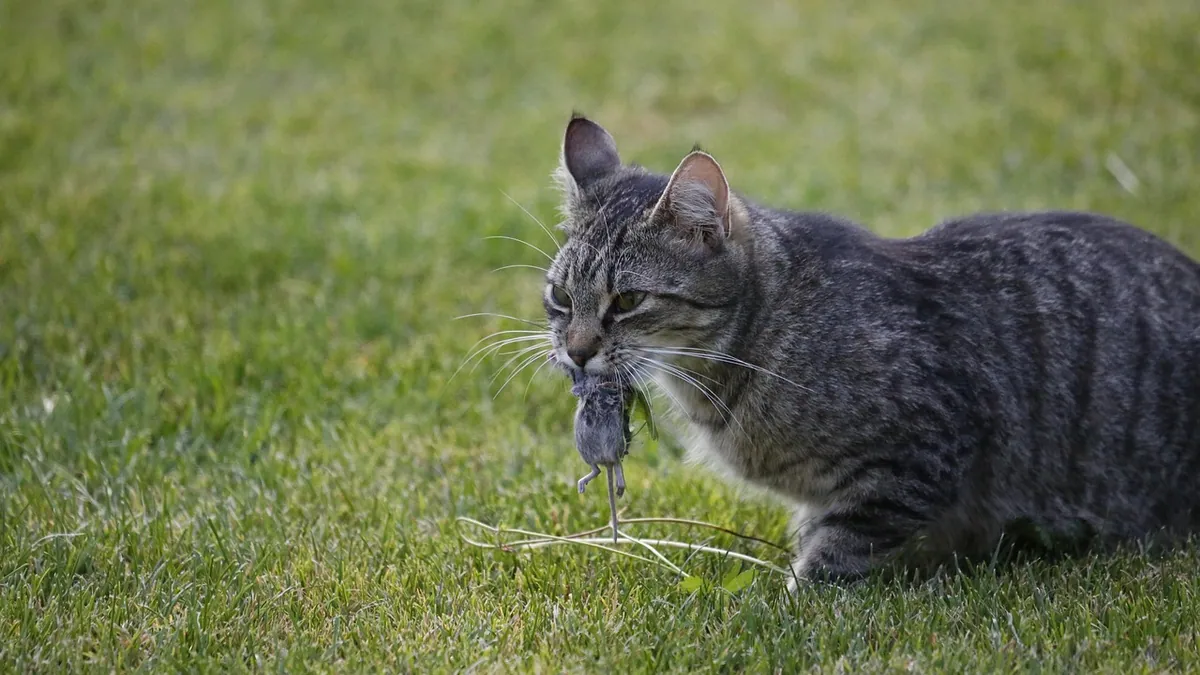
Is it safe for cats to kill mice? In most cases, yes. Killing a mouse is normal predatory behavior for a cat, and the act itself rarely causes injury. The bigger question is what happens next, because eating the mouse, or eating a mouse that was poisoned, is where real risks appear.
This article is educational and is not a substitute for veterinary diagnosis or treatment.
Quick Answer
- Killing and even eating a mouse is normal cat behavior. Most healthy adult cats do it without getting sick.
- The main dangers are parasites, bacteria, and rodenticide (mouse and rat poison) in the mouse's body [1][2].
- A cat that eats a poisoned rodent can be poisoned too. Rodenticides are one of the most common toxicities handled by Pet Poison Helpline [1].
- Never punish hunting. Redirect your cat and manage the environment instead.
- Call your veterinarian or a poison control service right away if you know or suspect your cat ate poison, or if your cat shows vomiting, bleeding, weakness, or wobbliness.
Is It Safe for Cats to Kill Mice?
For most cats, killing a mouse is safe. Cats are built for it. They stalk, pounce, and bite the back of the neck. This is instinct, not cruelty, and it does not mean your cat is aggressive toward you.
The risk goes up when your cat actually eats the mouse. A mouse can carry intestinal parasites, bacteria such as Salmonella, and, if it was poisoned, a toxic dose of rodenticide. A single mouse is a small meal, so the exposure is usually small too. Still, small exposures add up over time, and some poisons are dangerous even in tiny amounts.
Kittens are a special case. Do kittens kill mice? Some do, especially once they are a few months old and their hunting skills develop. Young kittens are more likely to play with or chew a dead mouse, and their small body weight makes any toxin exposure more serious. Keep kittens indoors and away from any rodent control you are using.
Is It Normal for Cats to Kill Mice?
Yes, it is completely normal. Hunting is one of the strongest natural drives in cats, and it appears even in well-fed indoor cats. A study using feather wand toys found that cats show consistent individual differences in how interested they are in moving, prey-like objects, and that this interest is repeatable over time [3]. In other words, some cats are simply more predatory than others, and that trait is stable.
Owners also notice this. In a study that tracked cats with animal-borne video cameras, owners who reported more hunting behavior tended to have cats that roamed more [4]. So if your cat brings you mice, you have a cat with a strong hunting drive, not a behavior problem.
How Do Cats Kill Mice?
Cats kill rodents with a fast, efficient sequence. They stalk low to the ground, freeze, then pounce and grab the prey with both front paws. The killing bite is usually directed at the back of the neck, which severs the spinal cord or compresses the airway. Death is typically quick.
Some cats bat or toss a mouse before the final bite. This looks like play, and it may help tire the prey or sharpen timing. It is normal.
Is It Safe for Cats to Eat Mice?
Eating a mouse is where the risk lives. Here is what to watch for.
Parasites
Mice can carry intestinal worms and other parasites. The most familiar is the tapeworm that uses rodents as an intermediate host. A cat becomes infected by eating an infected rodent. Tapeworm infection is treatable, but it needs a veterinary diagnosis and the right dewormer. Do not guess at a dewormer from a store shelf, because different products target different parasites.
Bacteria
Rodents can carry Salmonella and other bacteria. A cat that eats an infected mouse can develop vomiting or diarrhea. Most healthy cats clear mild cases on their own, but young, old, or immune-compromised cats can get sicker.
Rodenticide Poisoning
This is the most serious risk. Rodenticides are easy to buy and are used in homes, garages, farms, and even parks [1]. There are four common active ingredients in mouse and rat poisons: long-acting anticoagulants, cholecalciferol, bromethalin, and phosphides [2]. Each one works differently, and not all of them respond to vitamin K1 treatment [2]. That is why identifying the exact product matters so much.
A cat can be poisoned by eating a rodent that ate the bait, or by eating the bait directly. If you have any rodenticide in or around your home, assume your cat could reach it. If you suspect your cat ate mouse poison, contact your veterinarian or a poison control service immediately so treatment can start fast [5].
If you can, find the packaging and note the active ingredient and the EPA registration number. That number lets a poison control veterinarian identify the exact product [1]. If the label is gone, save whatever is left of the bait station or box.
Choking and Gut Blockage
Bones and fur are usually not a problem for cats. But a cat that bolts a large rodent, or eats one whole, can choke or develop stomach upset. Vomiting after eating a mouse is common and often harmless. Repeated vomiting, retching without producing anything, or a painful belly needs a vet visit.
Additives in Baits
Bait blocks and pellets contain more than the active poison. They often include grains, sugars, and flavorings to attract rodents. Some products may contain other additives, and any of these can add to stomach upset. The active ingredient is the part that causes serious poisoning [2].
Is It Safe for Cats to Kill Rats?
Rats are a different challenge. A rat is bigger, stronger, and has sharper teeth than a mouse. A rat can fight back and bite or scratch your cat. Rat bites can cause deep wounds and infection, and a bite near the eye or paw is an emergency.
The same poisoning and parasite risks apply, and a rat that ate bait may carry a larger dose of rodenticide than a mouse. If your cat tangles with a rat, check for wounds, clean any scratches, and call your vet. Bite wounds often need antibiotics, and cat bite and rat bite wounds can abscess quickly.
What to Do If Your Cat Ate a Mouse
Stay calm and gather information.
- Remove any remaining mouse or bait from your cat's reach.
- Note the time your cat ate, and whether it ate the whole mouse or just part.
- Look for the poison packaging if you use rodenticides. Write down the active ingredient and EPA registration number [1].
- Call your veterinarian or a poison control service. Describe what happened and what you found.
- Watch for signs over the next several days. Signs depend on the poison type, and can include bleeding, bruising, weakness, wobbliness, vomiting, or trouble breathing [2].
If your cat ate a mouse that you know was poisoned, treat it as an emergency even if your cat looks fine. Some rodenticides cause delayed bleeding that may not show up for days.
How to Offer Rodent Prey Safely (and What to Avoid)
You should not feed your cat wild mice on purpose. Wild rodents carry parasites and bacteria, and you cannot know whether they were exposed to poison. If your cat hunts, the goal is to reduce exposure, not to serve prey.
| Form | Safe? | Notes |
|---|---|---|
| Wild mouse your cat caught | Risky | Parasites, bacteria, and possible rodenticide exposure [1][2] |
| Wild mouse you caught and froze | Risky | Freezing does not remove all parasites or any poison |
| Store-bought frozen feeder mouse | Not recommended | Made for reptiles, not balanced for cats, and not inspected for cat food use |
| Cooked plain mouse meat | Not recommended | Cooking does not remove poison and is not a balanced diet |
| Commercial cat food | Safe | Complete and balanced, no hunting risk |
| Cooked plain chicken or egg | Safe in small amounts | Treat only, not a meal replacement |
Avoid any prey that was killed with poison, and avoid feeding raw wild prey. If you want to give your cat a safe protein treat, plain cooked meat is fine in small amounts. For more on safe extras, see Can Cats Eat Eggs and Can Cats Safely Eat Tuna. If you are considering a raw diet for any reason, read Is Raw Food Safe for Dogs and Cats? first.
Safer Alternatives to Letting Your Cat Hunt
You cannot train the hunt out of a cat, but you can redirect it.
- Play with a wand toy daily. Cats with high prey interest respond well to chasing and pouncing games.
- Feed several small meals or use a puzzle feeder to mimic the hunt.
- Keep your cat indoors, or use a secure catio. Cats that roam more hunt more [4].
- Use traps or exclusion to manage rodents in your home instead of poison.
- If you must use rodenticide, place it where your cat cannot reach it, and store the packaging.
A note on diet studies: even when owners see their cat bring home prey, the cat may not actually eat it. In one study using DNA analysis of cat scat, only one instance of wild prey consumption was found, even though owners reported prey returns [6]. So a cat that catches mice may not be swallowing them at all.
Limitations and When to Contact a Veterinarian
Every cat is different, and only a veterinarian who examines your cat can tell you what is happening in your individual case.
Call your veterinarian the same day if your cat ate a mouse and you do not know whether it was poisoned, if your cat has vomiting or diarrhea that lasts more than a day, or if you see tapeworm segments (small, rice-like pieces) around the tail or in the litter box.
Go to an emergency clinic now if your cat has bleeding from the nose, gums, or rectum, bruises easily, is weak or wobbly, has trouble breathing, is retching without producing anything, or has a swollen, painful belly. These signs can point to rodenticide poisoning or a blockage, and both need urgent care [2].
If you know your cat ate poison, call your veterinarian or a poison control service immediately [5]. Do not wait for symptoms.
Frequently Asked Questions
Should I stop my cat from killing mice?
You do not need to stop the behavior itself, but you should reduce the chances your cat eats what it catches. Take the mouse away promptly, wash your hands, and keep your cat indoors or in a catio. If you use rodenticides anywhere nearby, switch to traps or exclusion.
Can my cat get sick from just biting a mouse, without eating it?
Yes, a bite can cause a wound infection, and a scratch near the eye or a bite on a paw needs a vet visit. A cat that only bites and drops the mouse has a lower risk of parasites than one that swallows it. Check your cat for cuts and clean any scratches.
How long after eating a poisoned mouse would my cat show signs?
It depends on the poison. Some cause signs within hours, while others cause delayed bleeding that may not appear for several days [2]. Because the timing varies, a cat that ate a known poisoned rodent should be seen right away, even if it seems fine.
Do indoor cats still kill mice?
Yes. Hunting is instinct, and indoor cats will chase and kill a mouse that gets inside. Indoor cats have less exposure to wild rodents overall, which lowers their parasite risk. Keep entry points sealed and use traps instead of poison.
Can I get sick from my cat after it kills a mouse?
It is possible. Cats can carry bacteria and parasites from prey on their fur, paws, and mouth. Wash your hands after handling your cat or cleaning the litter box, and keep young children and immune-compromised people away from a cat that just caught a rodent. Ask your vet about routine deworming.
Related Articles
- Can Cats Eat Eggs
- Can Cats Eat Catnip? Nepetalactone and Safe Use Guide
- Is Raw Food Safe for Dogs and Cats?
- Can Cats Safely Eat Tuna
- Can Cats Eat Uncooked Hot Dogs? Risks and Safer Options
- Can Cats Eat Tuna And Chicken
- Cat Caught a Mouse: What to Do and Health Risks
- Are Mouse Traps and Rodenticide Dangerous to Cats?
- How Cats Hunt Mice: Instinct, Skills, and Safety
- Toxoplasmosis in Cats: Risks to Pregnancy and Prevention
References
- Dog Ate Rat Poisons. Pet Poison Helpline.
- The Hazards of Mice Poison for Pets. Pet Poison Helpline.
- Utilizing citizen science to assess consistent individual variation in play behaviour of the domestic cat, Felis catus. Behavioural processes, 2026.
- Is the Cat-Owner Relationship Related to Cat-Wildlife Conflicts?. Animals : an open access journal from MDPI, 2026.
- My Pet Ate Mouse Poison Pellets. Pet Poison Helpline.
- Using DNA Metabarcoding and Citizen Science to Assess the Diet of Owned Domestic Cats. Ecology and evolution, 2026.