Bengal Cat Exercise Needs: How Much Play and Activity They Require
By Dr. Zubair Khalid, DVM, MS, PhD ·
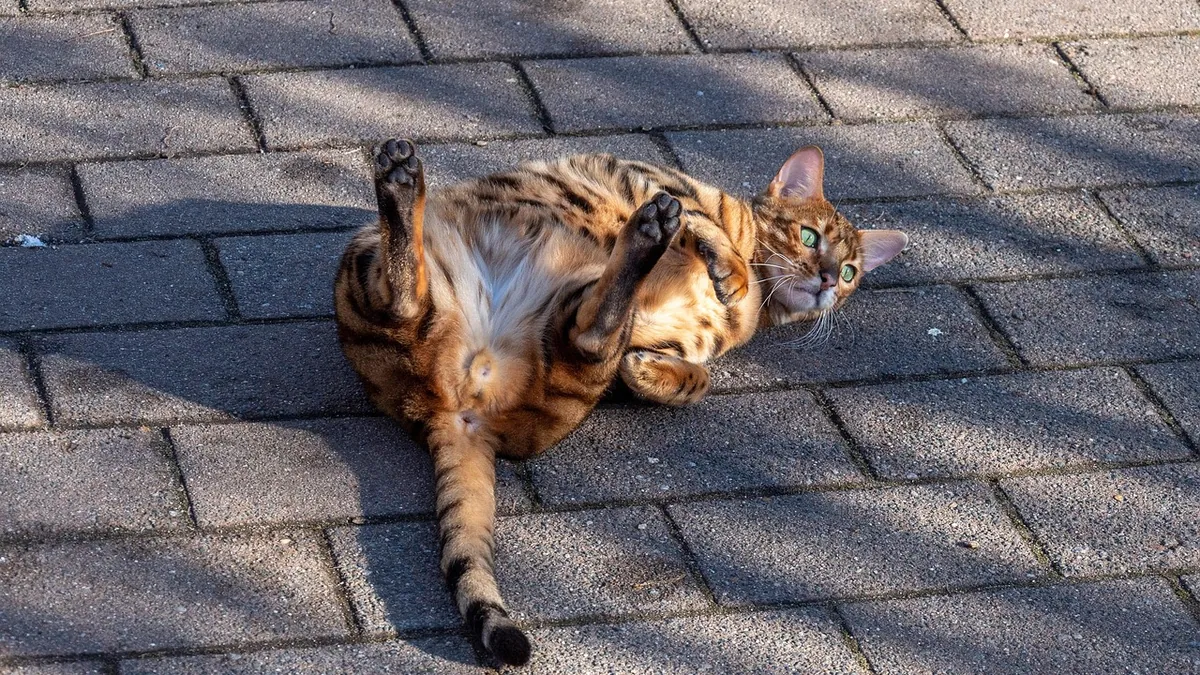
Bengal cats are one of the most active domestic cat breeds, and most need roughly 30 to 60 minutes of structured, interactive play every day, split into two or more sessions, plus climbing, hunting-style games, and puzzle feeders to keep their minds busy. Without that outlet, Bengal cat exercise needs go unmet and boredom behaviors often follow. This article is educational and is not a substitute for veterinary diagnosis or treatment.
Quick Answer
- Plan on at least two play sessions a day, about 15 to 30 minutes each, using wand toys that mimic prey.
- Let your cat catch the toy several times per session so the hunt feels complete and frustration does not build [1].
- Add vertical space (cat trees, shelves) and food puzzles so activity happens even when you are not home.
- Rotate toys weekly and keep a few "high value" toys out of reach between sessions to protect their novelty.
- Watch for boredom signals such as night yowling, ankle ambushes, or over-grooming, and increase enrichment before behavior problems set in [1].
Why Bengals Are So Active
Bengals descend from the Asian leopard cat, and that ancestry shows up in how they play. They stalk, chase, pounce, swat, and bite just like a cat hunting prey, and they are strongly drawn to fast-moving objects [1]. This is normal predatory behavior, not misbehavior.
Play is how cats build physical and mental skills and social skills [1]. For a Bengal, a single slow-moving toy on the floor rarely satisfies that drive. They want a target that runs, hides, and darts.
Bengals also tend to be smart problem solvers. A cat that solves the puzzle of a treat ball in two minutes will look for the next challenge, which is often your curtains, your houseplants, or your ankles.
How Much Exercise Does a Bengal Cat Need?
There is no single official number, because activity needs vary with age, health, and personality. A practical target for most adult Bengals is 30 to 60 minutes of interactive play per day, broken into shorter sessions. Kittens and young adults often want more. Senior Bengals may want less, but they still benefit from daily movement.
Two shorter sessions usually work better than one long one. Try 15 minutes in the morning and 15 to 30 minutes in the evening, ideally ending with a meal or a treat so the hunt-play-eat cycle feels finished.
If your Bengal is alone for long stretches, the total daily play time matters even more. Cats kept alone for long hours without play opportunities are more likely to develop play aggression toward people [1].
Medical Causes to Rule Out Before Assuming It Is Boredom
Sometimes a behavior change that looks like boredom is actually a health problem. Before you redesign your cat's routine, have your veterinarian check for:
- Pain, especially dental disease, arthritis, or back pain. A cat in pain may pace, vocalize, or stop playing.
- Hyperthyroidism, which can cause restlessness, night vocalization, and weight loss.
- Cognitive changes in older cats, which can look like new nighttime activity.
- Skin or allergy issues if over-grooming or hair loss is part of the picture.
- Urinary or digestive disease if appetite, litter box habits, or energy levels have shifted.
A Bengal-specific health and behavior overview can help you spot patterns worth mentioning at your next visit: Bengal Cat: Health, Behavior, and Care Guide.
When Activity Level Becomes a Problem
High energy is normal. The problem starts when the energy has no legal outlet. Common signs of an under-stimulated Bengal include:
- Ambushing ankles or hands as you walk or type [1]
- Nighttime yowling, door scratching, or knocking items off shelves
- Over-grooming, tail chasing, or staring at walls
- Destructive chewing, especially on cords and plants
- Increased biting intensity during play
Play aggression often traces back to boredom and to being encouraged as a kitten to chase hands and feet. That habit is cute at eight weeks and painful at eight months, and it becomes harder to change the longer it continues [1].
Building a Daily Bengal Cat Exercise Plan
Morning session (10 to 15 minutes)
Use a wand toy with feathers or a realistic "prey" attachment. Move it like a bird or mouse: dart, pause, hide behind furniture, then sprint. Let your cat catch it a few times before you end the session [1].
Midday enrichment (no owner needed)
Set out a puzzle feeder, a treat ball, or a few kibble "hunts" hidden around the room. Rotating where you hide food keeps the search interesting. Cats show clear preferences among food, toys, and social contact, and using their top choices makes enrichment more effective [2].
Evening session (15 to 30 minutes)
This is the big one. Combine wand play with a chase game up and down a cat tree or cat shelves. End with a small meal or treat, then quiet time. This mirrors the natural hunt, catch, eat, groom, sleep pattern and often reduces nighttime activity.
Weekly rotation
Swap toys every week and store some out of sight. Novelty matters more than quantity. A toy that disappears for a week feels new again.
Enrichment Ideas Beyond Toys
Bengal cat enrichment should cover the whole environment, not just playtime. Owners who follow multimodal environmental modification advice report high compliance and satisfaction when veterinarians walk them through the options [3]. The categories that matter most are:
- Vertical space. Cat trees, wall shelves, and window perches.
- Private space. A quiet bed or hideaway your cat can retreat to.
- Litter box setup. Enough boxes, in the right places, kept clean.
- Feeding style. Puzzle feeders, food-dispensing toys, or scattered kibble.
- Social interaction. Predictable, gentle contact on your cat's terms.
- Natural behavior. Scratching posts, climbing, and hunting games.
For a full room-by-room plan, see Indoor Cat Enrichment: Building a Safer, More Engaging Home.
Training as enrichment
Short positive reinforcement training sessions (sit, target, come, carrier training) give Bengals a job to do. In zoo-housed big cats, willingness to participate in training sessions, approach to the trainer, and focus during sessions were strongly linked to each other and used as welfare indicators [4]. The same principle applies at home: a cat that eagerly shows up for training is usually a cat whose needs are being met.
Keep sessions to two to five minutes, use food or a favorite toy as a reward, and stop while your cat still wants more.
Choosing toys that actually work
Interactive wand toys beat laser pointers for most Bengals because they can be caught. If you use a laser, always finish by landing the beam on a physical toy or treat so the hunt ends with a catch. A roundup of options is here: Best Interactive Cat Toys: Keep Your Feline Active and Engaged.
What Not to Do
Do not punish play aggression. Yelling, spraying, or swatting can increase fear and arousal and damage your bond. Punishment does not teach your cat what to do instead.
Do not use your hands or feet as toys. Every time you wiggle your fingers under a blanket, you teach your cat that skin is a target [1].
Do not rely on a single toy or a single play session. Bengals habituate fast.
Do not force interaction. Forced contact raises cortisol and lowers oxytocin in cats, while passive, low-pressure interaction tends to do the opposite [5]. Let your cat choose to come to you.
Do not assume a tired cat is a happy cat. Physical exhaustion without mental engagement leaves the underlying drive intact.
Preventing Boredom Before It Starts
Boredom is the root of most Bengal behavior complaints. Cats may target their owners for play out of boredom, and increasing enrichment and active engagement is the standard fix [1].
A simple prevention routine:
- Feed at least one meal from a puzzle feeder.
- Provide two or three climbing options at different heights.
- Schedule two interactive play sessions at the same times each day.
- Rotate toys weekly.
- Add one new enrichment item per month (a new perch, a new puzzle, a new hiding spot).
If you also have a dog, manage introductions carefully, since a Bengal's fast movements can trigger chasing. See Introducing Dogs to Cats: Prey Drive Assessment and Desensitization.
When to Involve a Veterinarian or Behavior Professional
Call your veterinarian if:
- Your cat's activity level changes suddenly, up or down.
- Play biting is breaking skin or directed at children.
- You see over-grooming, hair loss, or self-injury.
- Nighttime vocalization is new, especially in a cat over eight years old.
- Your cat stops playing, hides more, or seems painful.
Ask for a referral to a board-certified veterinary behaviorist if aggression is escalating, if someone in the home has been injured, or if you have followed an enrichment plan for several weeks with no improvement. Your veterinarian can also rule out medical causes that mimic behavior problems, and general breed information is available here: Bengal Cat.
Limitations and When to Contact a Veterinarian
Every cat is an individual, and the play plan that works for one Bengal may need adjusting for another. Your veterinarian is the right person to set a plan for your specific cat.
Contact your veterinarian the same day if your cat:
- Suddenly stops eating or drinking
- Becomes lethargic or hides continuously
- Shows new aggression toward people or other pets
- Has a wound from a bite or scratch
Go to an emergency clinic now if your cat:
- Has trouble breathing
- Cannot urinate or is straining in the litter box
- Is vomiting repeatedly or has a swollen, painful abdomen
- Collapses, seizures, or seems disoriented
Schedule a routine visit if you notice gradual changes in energy, appetite, grooming, or litter box habits, or if behavior problems are not improving with enrichment.
Frequently Asked Questions
How much exercise does a Bengal cat need?
Most adult Bengals do well with 30 to 60 minutes of interactive play per day, split into two or more sessions. Young Bengals often need more, and seniors may need less but still benefit from daily movement. Adjust based on your cat's energy, body condition, and your veterinarian's advice.
Can a Bengal cat be happy as an only cat?
Many Bengals do fine as the only cat if their owner provides daily play and a rich environment. That said, a solo Bengal needs more of your time, not less. If you are away for long hours, extra enrichment or a compatible feline companion may help.
Why does my Bengal attack my ankles?
Ankle ambushing is usually play behavior aimed at a moving target, and it is common in cats that are bored or were encouraged to chase hands and feet as kittens [1]. Redirect that energy to a wand toy before it escalates. Never punish the behavior, and never use your hands or feet as toys.
Do laser pointers count as exercise for Bengals?
Lasers can add variety, but they should not be the main form of play because there is nothing to catch. Always end a laser session by landing the beam on a physical toy or treat so the hunt has a finish. Wand toys that your cat can grab and bite are usually more satisfying.
How do I know if my Bengal is under-stimulated?
Common signs include nighttime yowling, ankle ambushing, over-grooming, destructive chewing, and escalating bite intensity during play. These often improve within a few weeks of a consistent enrichment and play routine. If they do not, talk to your veterinarian to rule out medical causes.
Related Articles
- Bengal Cat: Health, Behavior, and Care Guide
- Bengal Cat
- Best Interactive Cat Toys: Keep Your Feline Active and Engaged
- Indoor Cat Enrichment: Building a Safer, More Engaging Home
- Introducing Dogs to Cats: Prey Drive Assessment and Desensitization
- Cat Hissing at New Kitten: How Long Will It Last?
- How Much Exercise Do Cats Need? Indoor Cat Activity Guide
- How to Get Your Cat to Be More Active: Play and Exercise Plan
- How to Get Your Cat to Play: Toys, Timing and Techniques
References
- Cats Who Play Rough. ASPCA Animal Poison Control Center.
- Preference assessment and reinforcer effectiveness in domestic cats. Journal of the experimental analysis of behavior, 2026.
- Cat owners' perceptions of multimodal environmental modification advice for obstructive feline idiopathic cystitis. Journal of feline medicine and surgery, 2025.
- Roaring to Go: Engagement With Positive Reinforcement Training as a Valid and Reliable Indicator of Positive Welfare in Zoo Big Cats. Zoo biology, 2026.
- EXPRESS: The hormonal effects of owner-cat interactions on pet cats of different potential attachment styles. Journal of feline medicine and surgery, 2026.