Cat Wheel Guide: Do Indoor Cats Need Exercise Wheels?
By Dr. Zubair Khalid, DVM, MS, PhD ·
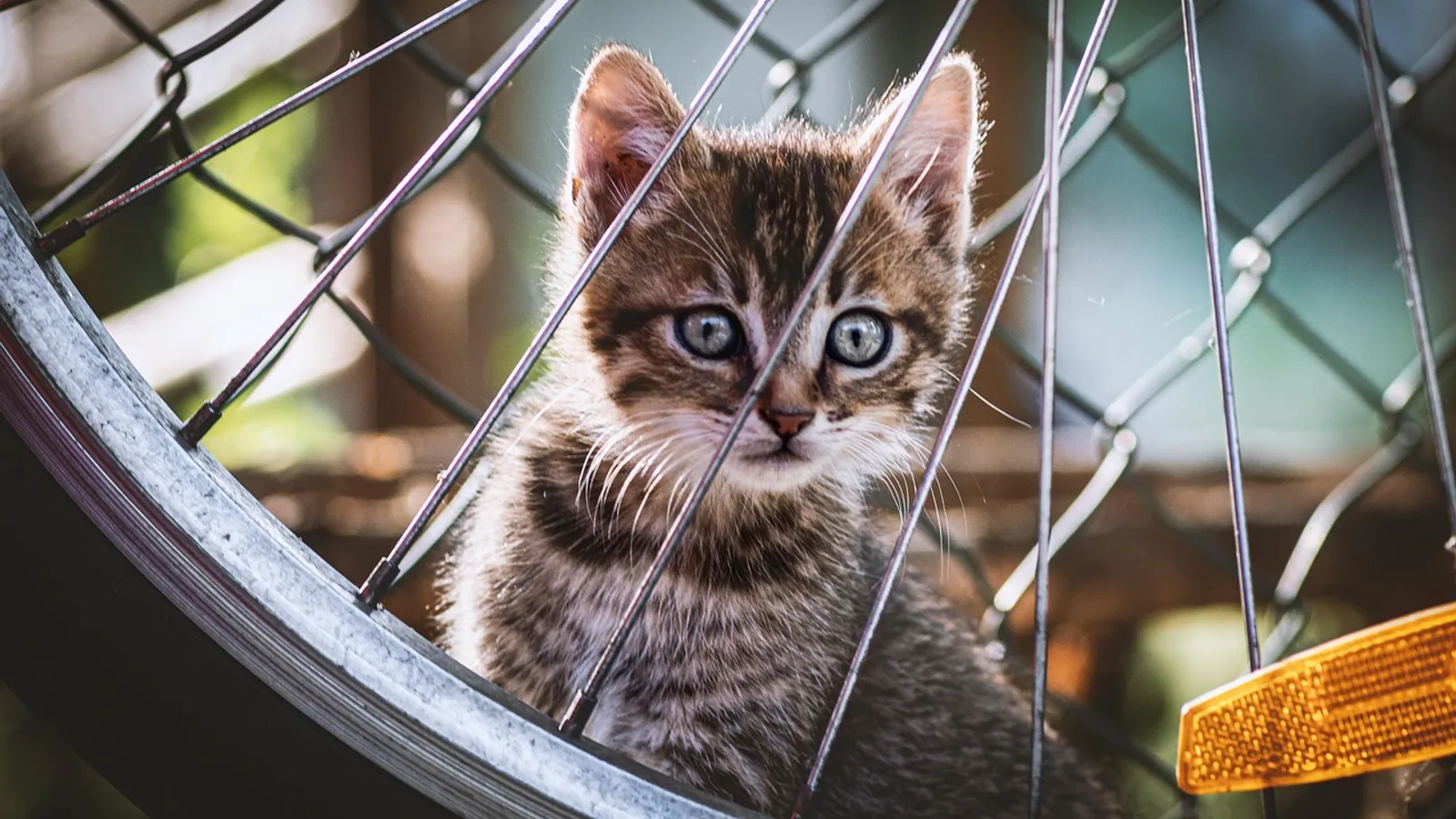
No, most indoor cats do not need a cat wheel. A wheel is an optional enrichment device, not a required piece of feline furniture, and it does not replace predatory play, climbing, scratching, or food puzzles. Some cats take to a wheel quickly and use it in short bursts. Many ignore it entirely. A smaller group learns to run on it after days to weeks of patient shaping with treats and praise.
That answer matters because cat wheels have become a popular purchase in the United States, often marketed as a cure for obesity, boredom, and destructive behavior. The honest position is narrower. Peer-reviewed research on cat wheels specifically is thin. Most claims about what a wheel does for a cat come from owner reports and from what we understand about feline exercise physiology and enrichment needs. That does not make wheels useless. It means you should treat a wheel as one enrichment tool among several, and you should judge it by whether your individual cat uses it safely.
This guide covers when a wheel is worth trying, how to size one so it does not hurt your cat's spine, how to introduce it without frightening your cat, and when to skip it entirely.
This article is educational and is not a substitute for veterinary diagnosis or treatment.
At a Glance
| Question | Short answer |
|---|---|
| Do indoor cats need a wheel? | No. It is optional enrichment, not a necessity. |
| What does a wheel actually provide? | A chance for voluntary, self-paced running activity, which some cats use and many do not. |
| Is a wheel a substitute for play? | No. Keep predatory play, climbing, scratching, and food puzzles. |
| Minimum safe wheel diameter | Large enough that the cat's spine stays straight while running, with no visible arch or dip. |
| Running surface | Solid and continuous, with no gaps, slats, or seams that can catch claws, toes, or a tail. |
| Base | Wide and stable. The wheel must not tip, slide, or wobble when the cat accelerates. |
| Training timeline | Days to weeks of gradual shaping with treats for most cats. |
| Who needs veterinary clearance first? | Kittens, geriatric cats, and cats with cardiac, orthopedic, or neurologic disease. |
| Supervision | Supervised introduction and early sessions. Do not treat the wheel as a locked-room toy on day one. |
| When to stop | Any limping, breathing distress, collapse, or fear response. |
What a Cat Wheel Is and What It Is Not
A cat wheel is a large, upright circular treadmill. The cat runs on the inner surface while the wheel rotates around a central axle or track. The design mimics a hamster wheel scaled up for a cat, though the engineering requirements are different because cats are larger, faster, and more prone to jumping on and off mid-stride.
Owners who buy wheels usually want one of four things: more exercise for a cat that lives entirely indoors, an outlet for a high-energy cat, a way to manage weight, or a distraction for a cat that seems bored. Those goals are reasonable. The tool is just not guaranteed to deliver them.
The strongest evidence base for feline enrichment is not about wheels at all. It is about the broader category of environmental enrichment. A survey of 130 companion animal guardians at a veterinary teaching hospital found that most households had only moderately enriched environments, and that the measures requiring the most owner commitment or prior awareness were the least implemented [1]. That finding is the honest frame for this entire topic. Enrichment works when owners actually build it into the daily routine. A wheel that sits unused in a corner is not enrichment.
Food puzzles are a better-documented enrichment tool. A veterinary review of feline feeding behavior describes food puzzles as one way to provide environmental enrichment and notes that food can be used in multiple ways for behavior modification, including counterconditioning and differential reinforcement of alternative behaviors [2]. That is a useful contrast. If your goal is to give an indoor cat more to do, food puzzles have a clearer behavioral rationale than a wheel does.
A wheel is not a substitute for any of the following:
- Predatory play with wand toys, which lets a cat stalk, chase, pounce, and catch
- Vertical space such as cat trees, shelves, and perches
- Scratching surfaces, which serve marking and claw health functions
- Food puzzles and foraging opportunities
- Social contact and predictable routine
If you add a wheel and drop the wand toy sessions, your cat is likely to be worse off, not better.
Does a Cat Wheel Actually Work?
Here is the honest answer. We do not have peer-reviewed studies measuring how often indoor cats use wheels, how much energy they burn on them, or whether wheels change body condition scores. Anyone who tells you a wheel reliably produces weight loss in cats is going beyond the evidence.
What we do have is indirect and mechanistic. Studies in rodents show that voluntary running wheel access produces measurable physiologic changes. In one mouse study, running wheel activity was one of several exercise models that reduced nitrite levels in the hippocampus compared with sedentary controls [3]. In another, mice with access to voluntary running wheels were used to study how exercise reduces intramuscular stress and counteracts muscle weakness [4]. These are rodent findings. They tell us that voluntary wheel running is a real physiologic stimulus in a small mammal, not that it produces the same effects in cats.
The feline-specific evidence on exercise and body condition is mostly about diet and weight management rather than wheels. One study of obese cats on a standardized weight loss plan found that fecal microbiota was only minimally affected by the weight loss itself [5]. Another study using whole-genome sequencing in obese cats documented reduced microbial diversity and shifts in bacterial populations in the obese feline gut [6]. A separate investigation of a supplement in overweight felines reported antioxidant and anti-inflammatory changes without significant change in body weight or body condition score [7]. None of these studies involved wheels. They are relevant only because they show that feline weight and metabolic health is a complex system in which activity is one input among many.
So what can you reasonably expect from a wheel?
- Some cats will run on it voluntarily, often in short bursts, sometimes at high speed.
- Some cats will walk on it slowly and treat it as a curiosity.
- Some cats will never use it, no matter how you train them.
- A cat that uses a wheel regularly may be more physically active than it was before.
- A cat that uses a wheel is not automatically at a healthy weight.
The last point deserves emphasis. Weight management in cats is primarily a calorie question. A veterinary review of feline feeding behavior addresses obesity, pickiness, begging, and feeding in multi-cat households, and frames food puzzles and feeding strategies as core tools for physical and mental health [2]. If your cat is overweight, portion control and a veterinary weight plan come first. A wheel may help, but it will not outrun a food bowl that is too full.
Which Cats Are Most Likely to Benefit
Wheel use is individual. Certain profiles show up repeatedly in owner reports as more likely to engage.
High-energy indoor cats
Young adult cats with no outdoor access and a strong play drive are the most common success stories. These are cats that already chase toys, climb, and patrol the house. They tend to investigate new objects rather than hide from them.
Cats with limited vertical or outdoor access
A cat in a small apartment with few climbing options may benefit from any added movement opportunity. A wheel is one option. Cat trees, wall shelves, and window perches are usually cheaper and more reliably used.
Cats already comfortable with novel objects
A cat that walks onto new boxes, investigates new furniture, and approaches unfamiliar items with curiosity is a better candidate than a cat that hides under the bed when you move a chair.
Cats in multi-cat homes with enough space
A wheel can reduce competition for other resources if it is placed away from food, water, and litter boxes. It should never be the only activity option in a multi-cat home.
Cats whose owners will train consistently
The single strongest predictor of success is probably owner follow-through. If you are not willing to spend short daily sessions shaping the behavior with treats over one to three weeks, the wheel will likely go unused.
Which Cats Should Not Use a Wheel Without Veterinary Clearance
Some cats should be evaluated by a veterinarian before you introduce a wheel, and some should not use one at all.
- Kittens. Growing cats have open growth plates and developing coordination. A wheel that is too small or too fast can stress joints.
- Geriatric cats. Older cats may have arthritis, reduced vision, or reduced cardiovascular reserve. Sudden sprinting is a risk.
- Cats with cardiac disease. Any condition affecting heart function makes uncontrolled sprinting a concern.
- Cats with orthopedic disease. Arthritis, prior fractures, cruciate issues, and hip problems all change how a cat tolerates running.
- Cats with neurologic disease. Balance, proprioception, and seizure disorders all affect safety on a moving surface.
- Cats with respiratory disease. A cat that is already working harder to breathe should not be pushed into sprinting.
- Cats that are fearful or easily startled. A wheel that moves unexpectedly can create a lasting negative association.
If your cat falls into any of these groups, ask your veterinarian whether any running activity is appropriate and what intensity is safe. This is a real question with a real answer, and it depends on your cat's specific diagnosis.
Sizing a Cat Wheel Correctly
Sizing is the most important safety variable and the one most often gotten wrong. The rule is simple. The wheel must be large enough that your cat's spine stays straight and level while running.
Why spine alignment matters
When a cat runs on a wheel that is too small, the body curves to follow the arc of the track. That means the spine is held in a flexed or extended position rather than a neutral one. Over many repetitions, that is a mechanical load the spine and limbs were not built to handle. A wheel that is too small also forces a shorter, choppier stride, which changes gait mechanics.
How to check diameter before you buy
You cannot judge this from a product photo. You need the actual inner running diameter, and you need to compare it to your cat.
- Measure your cat from the tip of the nose to the base of the tail while standing.
- Add a margin so the cat can fully extend the stride without its body following the curve.
- Confirm the inner running surface diameter is comfortably larger than that figure.
- If the seller does not publish the inner running diameter, do not buy it.
As a practical rule, if you can watch a video of a cat of similar size running on the wheel and its back looks flat and level, the diameter is probably adequate. If the back looks curved like a banana, it is too small.
Running surface
The inner surface must be solid and continuous. Look for these features and reject wheels that lack them.
- No gaps between slats or panels
- No seams that can open under load
- No exposed hardware, bolts, or screw heads on the running path
- No rough or abrasive texture that can wear paw pads
- Enough traction that the cat does not slip when it accelerates
Gaps are the specific hazard that traps claws, toes, and tails. A tail that slips into a gap while the wheel is spinning is a serious injury risk. This is not a theoretical concern. It is the reason solid running surfaces are non-negotiable.
Base and stability
The base must be wide enough and heavy enough that the wheel does not tip or walk across the floor. Test it before your cat uses it.
- Push the top of the wheel sideways. It should not tip.
- Spin it by hand. It should rotate smoothly and then slow down, not free-spin forever.
- Check the floor contact. On hard floors, look for a non-slip base or place it on a mat that does not slide.
- Confirm there are no pinch points where the wheel meets the frame.
A wheel that wobbles will scare a cat off permanently and can cause a fall.
Placement
Put the wheel on a level, hard surface in a room your cat already uses. Keep it away from litter boxes, food, and water. Do not block a cat's escape routes. A cat that feels cornered near a moving object will avoid it.
The Decision Table
Use this table to decide whether a wheel is worth trying for your cat, and what to check first.
| Cat profile | Likely benefit from a wheel | Safety checks before and during use |
|---|---|---|
| Young adult indoor cat, high play drive, curious about new objects | Moderate to high. This is the profile most likely to use a wheel voluntarily. | Confirm wheel diameter keeps the spine straight. Solid running surface. Stable base. Supervised first sessions. |
| Adult indoor cat, moderate energy, some play interest | Low to moderate. May use it after shaping, may ignore it. | Same sizing checks. Budget one to three weeks of treat-based shaping before deciding. |
| Senior cat with no diagnosed disease, still active | Low. Benefit is uncertain and the risk of a fall or strain is higher. | Veterinary check first. Shorter, slower sessions. Stop at any sign of discomfort. |
| Cat with diagnosed cardiac disease | Not recommended without veterinary clearance. | Ask your veterinarian whether any sprinting activity is safe. Do not introduce a wheel on your own. |
| Cat with orthopedic or neurologic disease | Not recommended without veterinary clearance. | Ask your veterinarian about safe activity. A wheel may be contraindicated. |
| Overweight cat | Low to moderate as an add-on. Not a weight loss solution by itself. | Weight plan and calorie control come first. Veterinary guidance on exercise intensity. |
| Fearful or easily startled cat | Low. Risk of creating a negative association. | Do not force interaction. Consider food puzzles and play instead. |
| Kitten under one year | Low and potentially risky. | Veterinary clearance first. Growth plates and coordination are still developing. |
| Multi-cat home with resource competition | Variable. May help if placed away from other resources. | Ensure every cat has separate access to play, food, water, and litter. |
| Cat with no interest after three weeks of shaping | None. | Stop. Redirect effort to play, climbing, scratching, and food puzzles. |
How to Train a Cat to Use a Wheel
Most cats do not jump on a wheel and run. They need shaping, which means rewarding small steps toward the final behavior. Expect days to weeks, not minutes.
Step 1: Let the wheel sit in the room
Place the wheel in a room your cat already uses. Do not spin it, call your cat to it, or place your cat on it. Let it become furniture. This can take a few days.
Step 2: Make the wheel a food location
Put a few treats or a small portion of food on the stationary wheel surface. Let your cat step on to eat. Do not move the wheel yet. Repeat until your cat steps on confidently.
Step 3: Reward standing on the wheel
Once your cat stands on the wheel without hesitation, reward that. Use high-value treats. Keep sessions short, under a minute at first, and end while your cat is still engaged.
Step 4: Introduce slow movement
With your cat on the wheel, use a treat held slightly ahead to encourage one or two steps. Let the wheel turn slowly under the cat's own movement. Do not push the wheel yourself. The cat should be the one generating motion.
Step 5: Build duration gradually
Increase from a few steps to a slow walk, then to a faster walk, then to a trot. Add a few seconds at a time. Stop before your cat loses interest or shows stress.
Step 6: Add speed only when the cat chooses it
Never chase a cat on a wheel or use a toy to force speed. Let the cat set the pace. Some cats will sprint. Many will not, and that is fine.
Step 7: Keep sessions short and frequent
Two or three short sessions per day work better than one long session. Cats lose interest quickly and forcing a session creates avoidance.
Common training mistakes
- Placing the cat on the wheel before it is comfortable
- Spinning the wheel by hand while the cat is on it
- Using low-value treats
- Training for too long in one session
- Punishing or startling the cat when it jumps off
- Expecting results in one day
The behavior change literature is clear that structured, staged interventions work better than one-off attempts. A behavior change intervention study using the behavior change wheel framework in patients with COPD showed that a theory-based, staged physical activity program produced measurable changes over 12 weeks [8]. A related home-based rehabilitation system study used behavior change techniques to improve exercise capacity and reported significant improvement over time [9]. These are human studies, not cat studies, but the underlying principle translates. Behavior change is a process with stages, not a single event. Treat wheel training the same way.
The Decision Path for Introducing a Wheel
The following flow shows the sequence from deciding to try a wheel through to deciding whether to keep it.
flowchart TD
    A[Cat is indoor and healthy] --> B{Vet clearance needed}
    B -->|Yes| C[Ask veterinarian first]
    B -->|No| D[Choose wheel size]
    C --> D
    D --> E{Spine stays straight}
    E -->|No| F[Choose a larger wheel]
    E -->|Yes| G[Check surface and base]
    F --> G
    G --> H[Place wheel in used room]
    H --> I[Shape with treats daily]
    I --> J{Cat uses wheel}
    J -->|Yes| K[Keep short supervised sessions]
    J -->|No| L[Redirect to play and puzzles]
Safety Rules for Wheel Use
These rules apply to every cat, every wheel, and every session.
- Supervise the first sessions and any session where the cat is still learning.
- Do not let a cat use a wheel unattended until it is reliably comfortable and the wheel is confirmed stable.
- Check the wheel for wear, loose hardware, and surface damage regularly.
- Keep the running surface clean and dry.
- Never let two cats use the wheel at the same time.
- Stop immediately if the cat limps, pants heavily, or tries to jump off mid-rotation.
- Do not use the wheel as a punishment or a confinement tool.
- Keep claws trimmed so they are less likely to catch on any surface irregularity.
Wheels vs Other Enrichment
A wheel is one item in a larger enrichment plan. The evidence for enrichment as a category is stronger than the evidence for any single device. The guardian survey mentioned earlier found that feline environmental enrichment can help prevent anxiety, stress, obesity, and feline idiopathic cystitis, and that the measures most often skipped were those requiring owner commitment or prior awareness [1]. That is the real bottleneck. Owners who build enrichment into their routine get results. Owners who buy a device and hope for the best usually do not.
Build the plan in this order.
- Predatory play with wand toys, daily, in short sessions
- Vertical space for climbing and perching
- Scratching surfaces in multiple locations
- Food puzzles and foraging opportunities [2]
- Social contact and predictable routine
- Optional additions such as a wheel
If a wheel is the only enrichment item in your home, adding it will not fix the underlying problem.
Common Mistakes Owners Make With Cat Wheels
- Buying a wheel that is too small and letting the cat run on it anyway
- Choosing a wheel with slats or gaps because it looks more interesting
- Skipping the shaping process and expecting instant use
- Leaving a new cat unsupervised on a wheel
- Using the wheel as a substitute for play and climbing
- Assuming wheel use means the cat is getting enough exercise
- Ignoring signs of pain or fear
- Continuing to push a cat that has clearly lost interest
Troubleshooting
My cat will not go near the wheel
Do not force it. Move the wheel to a location the cat already uses and place treats on it while it is stationary. Give it one to two weeks. If your cat still avoids it, the wheel is probably not a fit.
My cat steps on the wheel but will not walk
Reward standing first. Then lure one step at a time with a treat held just ahead of the nose. Do not spin the wheel yourself.
My cat runs for a few seconds and jumps off
This is normal early behavior. Short bursts are how cats use wheels. Do not try to extend sessions by blocking the exit.
My cat runs fast and then stops suddenly
Check the wheel for wobble or noise. A wheel that shifts under load can startle a cat. Also check the floor surface for slipping.
My cat used the wheel for weeks and now ignores it
Novelty fades. Rotate the wheel's position, pair it with a treat reward again, or accept that your cat has moved on. Enrichment should be varied.
My cat seems sore after using the wheel
Stop using the wheel and contact your veterinarian. Soreness after a new activity can indicate an orthopedic problem, and the wheel may be too small or the sessions too long.
Welfare and Safety Points
A cat wheel is a tool, and like any tool it can be used well or badly. The welfare principles that apply are straightforward.
- Choice. The cat should be able to approach, use, and leave the wheel freely.
- Control. The cat should set the pace. The owner should not force speed or duration.
- Comfort. The wheel must fit the cat's body. A wheel that bends the spine is not comfortable.
- Safety. No gaps, no wobble, no unsupervised early use.
- Balance. The wheel should not replace other enrichment.
A cat that hides from the wheel, flattens its ears when near it, or avoids the room is telling you something. Listen.
Limitations and When to Contact a Veterinarian
The evidence on cat wheels is thin and mostly indirect. Most of what is written about wheel use comes from owner experience and from general principles of feline enrichment and exercise physiology rather than from controlled studies in cats. That means you should treat wheel-related claims with appropriate caution, including claims made in this article where they are framed as owner-reported or mechanistic rather than proven.
Contact your veterinarian before introducing a wheel if your cat is a kitten, is geriatric, or has any diagnosed cardiac, orthopedic, or neurologic condition. Contact your veterinarian promptly if any of the following occur.
- Limping, stiffness, or reluctance to move after wheel use
- Heavy panting, open-mouth breathing, or distress during or after activity
- Collapse or near-collapse
- A claw, toe, or tail caught in the wheel
- A fall from the wheel
- Sudden fear or aggression toward the wheel or toward you near the wheel
- Weight loss or weight gain that continues despite activity
- Any change in appetite, litter box habits, or behavior that concerns you
Individual cats vary. Your veterinarian can assess your cat's specific health status and advise on safe activity. This article cannot replace that assessment.
Frequently Asked Questions
Do indoor cats need a cat wheel?
No. A cat wheel is optional enrichment, not a requirement. Indoor cats need predatory play, climbing space, scratching surfaces, food puzzles, and social contact. A wheel is an add-on for cats that will use it.
Do cat wheels actually help cats lose weight?
There is no strong evidence that wheels produce weight loss in cats. Weight management in cats is primarily about calorie control and a veterinary weight plan. A wheel may increase activity, but it should not be treated as a weight loss solution.
How big should a cat wheel be?
The wheel must be large enough that your cat's spine stays straight and level while running. If the back curves to follow the track, the wheel is too small. Check the inner running diameter before buying, not the outer dimensions.
How long does it take to train a cat to use a wheel?
Most cats need days to weeks of gradual shaping with treats. Some cats learn in a few sessions. Some never use a wheel at all, and that is a normal outcome.
Can kittens use a cat wheel?
Not without veterinary clearance. Kittens are still growing and developing coordination. Ask your veterinarian before introducing a wheel to a kitten.
Can I leave my cat alone on a wheel?
Only after your cat is reliably comfortable and the wheel has been confirmed stable, with no gaps and no wobble. Supervise all early sessions.
What if my cat is scared of the wheel?
Do not force interaction. Move the wheel to a room your cat already uses and place treats on it while it is stationary. If your cat continues to avoid it, the wheel is not a good fit.
Is a cat wheel a substitute for play?
No. A wheel does not replace predatory play, climbing, scratching, or food puzzles. Use a wheel as one part of a broader enrichment plan.
Related Articles
- Hedgehog Care: Obesity wheel exercise and weight management
- Codon Wheel: How to Use It to Decode the Genetic Code
- Indoor Enrichment Activities
- Indoor Enrichment Dogs
- Dog Treadmill Exercise Program
- Indoor Enrichment Activities For Dogs
- Dog Calorie Calculator: Daily kcal Needs by Weight
- Cochin Hen: Breed Profile and Care Needs
Sources
- Guardians' Knowledge and Husbandry Practices of Feline Environmental Enrichment.
- Feeding Cats for Optimal Mental and Behavioral Well-Being.
- How does physical activity and different models of exercise training affect oxidative parameters and memory?
- Exercise reduces intramuscular stress and counteracts muscle weakness in mice with breast cancer.
- Bacterial fecal microbiota is only minimally affected by a standardized weight loss plan in obese cats.
- Whole-Genome Shotgun Metagenomic Sequencing Reveals Distinct Gut Microbiome Signatures of Obese Cats.
- Dietary Supplementation with Deinococcus radiodurans Extract Alleviates Obesity and Systemic Inflammation via Gut Microbiota Modulation in Murine and Feline Models.
- Development of a behavior change intervention to improve physical activity in patients with COPD using the behavior change wheel: a non-randomized trial.
- A home-based pulmonary rehabilitation mHealth system to enhance the exercise capacity of patients with COPD: development and evaluation.