Are Dogs Pack Animals? What That Means for Training
By Dr. Zubair Khalid, DVM, MS, PhD ·
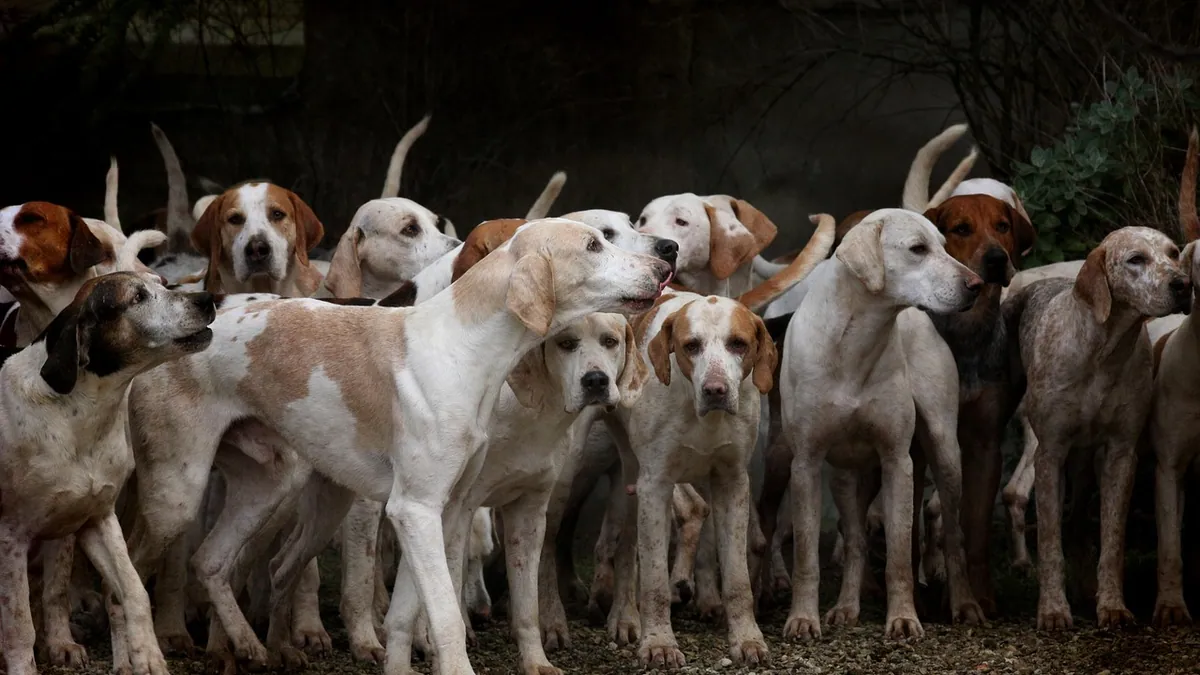
Are dogs pack animals? Yes, dogs are social animals with a flexible group structure, but they are not wolves competing for rank in your living room. The old idea that you must be the "alpha" to control your dog comes from flawed wolf research and does not match how dogs actually live. This article is educational and is not a substitute for veterinary diagnosis or treatment.
Quick Answer
- Dogs are social and cooperative, and they learn well from humans and from other dogs [1][2].
- The strict "alpha dog" model is outdated. Modern research describes dog groups as flexible, with rank shown mainly in specific situations like competition over toys or food [3].
- Your dog does not need you to act like a pack leader. Your dog needs clear, consistent training and predictable routines.
- Multi-dog households do form social ranks, and a dog's rank can affect how it learns from you versus from another dog [4][3].
- Most behavior problems are not dominance struggles. They are often normal dog behavior, stress, lack of training, or a medical issue that needs a veterinarian.
Are Dogs Pack Animals? What the Science Actually Says
Dogs are social animals. They form relationships with people, with other dogs, and with the mixed-species household they live in [4]. That social nature is real, and it is one reason dogs can learn by watching others.
What is not real is the old "pack theory" that treats your home as a wolf pack with a single alpha who must be challenged and put in place. That model came from studying captive wolves, and it does not describe how dogs live with people. Modern research on cohabiting dogs describes a hierarchy, but it is a flexible one that shows up mainly in competitive moments, such as who grabs a toy first or who keeps it [3].
So if you are asking "is my dog a pack animal," the honest answer is that your dog is a social, cooperative animal that reads the people and dogs around it. Your dog is not waiting to overthrow you.
Do Dogs Need a Pack?
Dogs need social contact, but "pack" in the wolf sense is not a requirement. What dogs need is a predictable home, chances to learn, and safe relationships with the people and animals they live with. Dogs are highly tuned to human behavior, and they use humans as a source of information about the world [2].
That is why training works so well. You are not dominating your dog. You are teaching your dog what leads to good outcomes.
Feral Dog Social Structure
Feral dogs do not live in tight, rigid wolf-style packs. They tend to live in loose, flexible groups that form and break apart depending on food, safety, and breeding. Group membership is not fixed, and there is no single leader running the whole show.
This matters for pet owners because it shows that dogs are adaptable social animals, not rank-obsessed ones. Your dog's social skills are built for cooperation and flexibility, which is exactly why your dog can live happily with you.
Why Dogs Act the Way They Do
Most behavior that owners label as "dominance" has a simpler explanation.
Normal Social Behavior
Dogs communicate constantly. A dog who takes a toy may be excited, not power-hungry. A dog who guards a bone may be worried about losing something valuable. A dog who leans on you may be seeking contact, not testing your authority.
In multi-dog homes, some dogs do take on a higher rank, and this can be measured reliably through owner questionnaires and observed behavior [3]. But rank is not the same as aggression, and it is not the same as your dog trying to run your household.
Learning and Breed Differences
Dogs learn from both people and other dogs, and breed background matters. Cooperative breeds tend to learn faster from a human demonstrator, while independent working breeds do not show the same boost from watching a person [1]. Interestingly, independent breeds may learn better from another dog than cooperative breeds do [5].
This is useful for training. If your dog is from a cooperative breed, showing your dog what you want may work well. If your dog is from an independent breed, your dog may pay more attention to what other dogs do, or may need to figure things out alone.
Rank also plays a role in learning. Dominant dogs in a household learn more effectively from the owner than from a subordinate dog companion, while subordinate dogs improve mainly when their dominant companion shows them the task [4]. In plain terms, who your dog lives with can change how your dog learns.
Medical Causes to Rule Out
Before you treat any behavior as a training problem, rule out pain and illness. Dogs with dental pain, arthritis, ear infections, anal gland problems, or gastrointestinal discomfort often act irritable, guard resources, or snap. A dog who suddenly starts growling when approached may be hurting, not challenging you.
Other medical issues that can look like behavior problems include thyroid disease, cognitive dysfunction in older dogs, vision or hearing loss, and seizures. Your veterinarian can sort this out with an exam and testing.
When Dog Behavior Becomes a Problem
Behavior becomes a problem when it affects safety, quality of life, or your ability to keep your dog.
Warning signs include growling, snapping, biting, guarding food or toys, guarding a person, blocking doorways, staring down other dogs, mounting, and refusing to move off furniture. These behaviors can have many causes, and rank is only one possible factor [3].
Fear is a common driver. A scared dog may bark, lunge, or bite to create distance. Punishing fear makes it worse because you add threat to an already frightening situation.
Stress in the home also matters. A dog who is anxious about being alone, for example, needs a behavior plan, not a dominance correction. If your dog panics when you leave, see our guide to Training Your Dog Separation Anxiety.
What to Do: Step by Step
Training
Train with rewards. Mark the behavior you want with a word or click, then give a treat, toy, or praise. Keep sessions short and end on success.
Teach basic cues: sit, down, come, stay, leave it, and drop it. These give you a way to guide your dog without force.
Use management before training when needed. If your dog guards food, feed your dog in a separate room behind a closed door while you work on the behavior with a professional.
If your dog is not yet comfortable in a crate, build that skill slowly. Our articles on Dog Crate For Training and Dog Crate Training walk through the steps. A crate should be a calm resting spot, never a punishment.
Enrichment
Give your dog daily physical exercise and mental work. Sniff walks, food puzzles, chew toys, and training games all reduce problem behavior by meeting normal needs.
Rotate toys so they stay interesting. Give each dog in a multi-dog home its own space, bed, and food bowl to reduce competition.
Environment
Set up your home so your dog can succeed. Use baby gates, closed doors, and separate feeding areas. Provide multiple water bowls and resting spots.
If you use a kennel or outdoor run, make sure it is safe, shaded, and never used as a place of punishment. See Dog Kennel With Training for setup guidance.
Keep routines predictable. Dogs do best when meals, walks, and training happen at similar times each day.
If you are still working on potty habits, our explanation of Dog House Trained Meaning can help you set clear expectations.
What Not to Do
Do not use the alpha roll, scruff shakes, leash jerks, or pinning. These methods rely on fear and pain, and they raise the risk of bites.
Do not punish growling. A growl is information. If you suppress it, your dog may skip the warning and bite instead.
Do not assume every problem is dominance. Most are not. Treating a scared dog like a defiant dog makes the problem worse.
Do not try to "win" against your dog. You are not in a contest. You are building a relationship where your dog looks to you for guidance.
Do not follow advice that tells you to eat first, walk through doors first, or never let your dog on the bed as a way to prove leadership. These rules are not supported by how dogs actually live and learn [2].
When to Get Professional Help
Call your veterinarian if your dog's behavior changes suddenly, if your dog shows pain, or if your dog has a first-time bite or fight.
Ask for a referral to a veterinarian who specializes in behavior or a certified applied animal behaviorist for aggression, severe anxiety, resource guarding, or multi-dog conflict. These cases often need a full medical workup plus a behavior plan.
If you have a multi-dog home with ongoing tension, a professional can assess the social structure and help you manage it. Rank in cohabiting dogs is real and measurable, and it affects behavior in competitive situations [3]. A trained eye can tell the difference between normal rank behavior and a safety risk.
Limitations and When to Contact a Veterinarian
This article covers general information. Every dog is an individual, and your dog's case needs a veterinarian who can examine your dog in person.
Contact your veterinarian the same day if your dog:
- Suddenly refuses to eat or drink
- Yelps when touched or moved
- Shows new aggression toward people or other pets
- Has a first seizure or seems disoriented
- Cannot stand or walk normally
Go to an emergency clinic now if your dog:
- Has a bite wound that is bleeding heavily or deep
- Is struggling to breathe
- Has a swollen, painful abdomen
- Collapses or cannot be woken
- Has repeated vomiting or diarrhea with weakness
Schedule a routine visit if your dog:
- Has gradual behavior changes over weeks
- Seems stiff, slow, or reluctant to climb stairs
- Is drinking or urinating more than usual
- Has new anxiety when left alone
- Has bad breath, drooling, or trouble chewing
Your veterinarian will calculate any medication dose from your dog's weight and health. Never give human medications without veterinary guidance.
Frequently Asked Questions
Is my dog trying to dominate me?
Most likely, no. Dogs who jump, pull, or ignore cues are usually untrained, excited, or reinforced for the behavior. True social dominance in dogs shows up mainly in specific competitive situations with other dogs, not as a plan to control you [3].
Do dogs need a pack leader?
No. Dogs need clear communication, consistent training, and social contact. The pack leader model comes from outdated wolf research and does not reflect how dogs learn from people [2].
Do dogs do better in pairs or groups?
Some dogs enjoy company, and some prefer to be the only dog. Multi-dog homes can work well when resources are managed and the dogs get along. Rank differences do exist in these homes and can affect learning and behavior [4][3].
Does breed matter for training?
Yes, breed background can affect how your dog learns. Cooperative breeds tend to learn faster from watching a person, while independent breeds may not get the same benefit from a human demonstration [1]. Independent breeds may learn better from watching another dog [5].
Can I train out aggression on my own?
No. Aggression carries bite risk and often has a medical or fear component. Work with your veterinarian and a qualified behavior professional. Do not use punishment, which can make aggression worse.
Is crate training cruel?
No, when it is done correctly. A crate can be a safe, calm resting space. Build positive associations slowly, and never use the crate as punishment. Our guide to Dog Crate Training explains the steps.
Will my dog grow out of resource guarding?
Some mild cases improve with management and training, but guarding can get worse without help. A dog who guards food, toys, or a person should be evaluated by a veterinarian and a behavior professional.
Related Articles
- Dog Crate For Training
- Dog Crate Training
- Dog Kennel With Training
- Training Your Dog Separation Anxiety
- Dog House Trained Meaning
- Dogs Being Crate Trained Later In Life
- How Do Dogs Communicate With Each Other?
- How to Tell If Your Dog Wants Another Dog in the Home
- When Do Dogs Calm Down? Age and Training Factors
- How Animals Teach Their Young: From Hunting Skills to Social Rules
References
- Would You Detour with Me? Association between Functional Breed Selection and Social Learning in Dogs Sheds Light on Elements of Dog-Human Cooperation. Animals : an open access journal from MDPI, 2023.
- Social learning in dogs from an ecologically valid perspective. Biologia futura, 2025.
- Many faces of dominance: the manifestation of cohabiting companion dogs' rank in competitive and non-competitive scenarios. Animal cognition, 2024.
- Done deal-cohabiting dominant and subordinate dogs differently rely on familiar demonstrators in a detour task. BMC biology, 2025.
- Independent, but still observant-dog breeds selected for functional independence learn better from a conspecific demonstrator than cooperative breeds in a detour task. BMC biology, 2024.