Are Cats Territorial? Why They Guard Space and People
By Dr. Zubair Khalid, DVM, MS, PhD ·
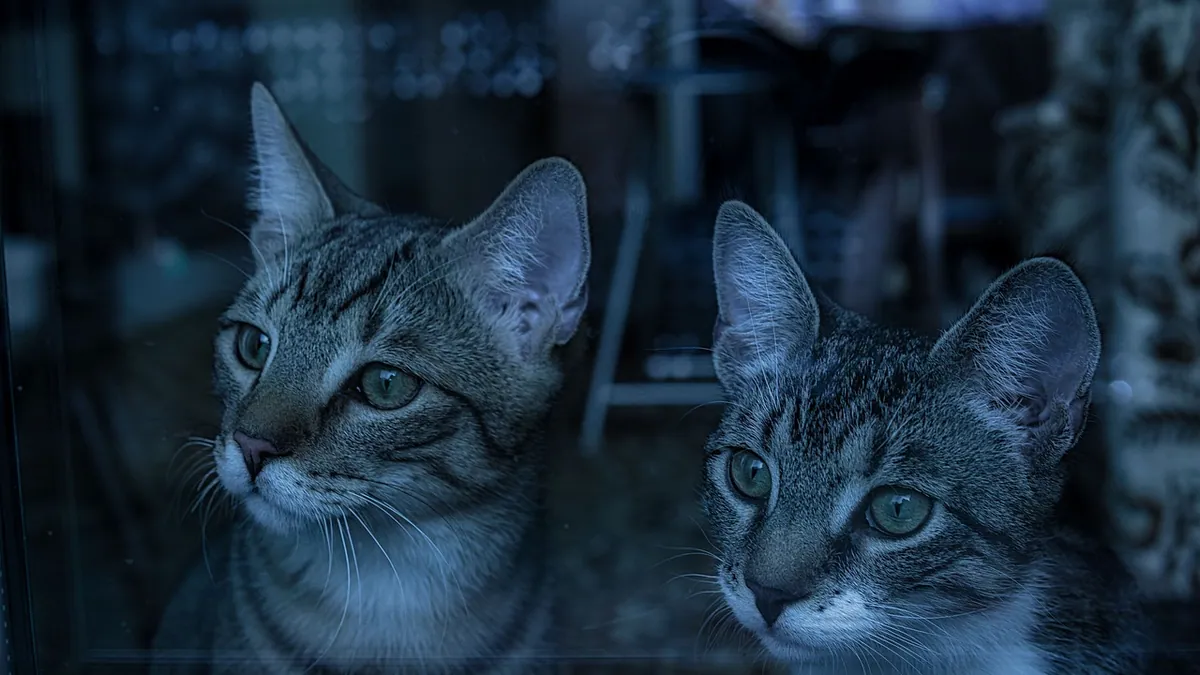
Are cats territorial? Yes, many cats are territorial, though how strongly they guard space varies a lot from cat to cat. Cats are a territorial species, and some overlap their territories freely while others prefer to keep a good distance from neighbors [1]. Understanding why cats guard space and people helps you reduce tension at home without punishing normal behavior.
This article is educational and is not a substitute for veterinary diagnosis or treatment.
Quick Answer
- Cats are territorial by nature, but the strength of that behavior depends on the individual cat, its early social experiences, and how crowded or predictable its home feels [1].
- Cats manage each other mostly through distance, friendly signals like rubbing and grooming, and warning behaviors like hissing or swatting [2].
- Cats often guard resources (food, litter boxes, resting spots, and sometimes a favorite person) more than they guard a drawn boundary line.
- Two unrelated males or two unrelated females may have a particularly hard time sharing space [1].
- Adding vertical space, separate resources, and slow introductions reduces conflict more reliably than punishment.
Why Cats Guard Space and People
Cats Are Flexible, Not Lonely by Design
The old idea that cats are solitary is only partly true. Cats have a flexible social structure. In feral conditions, cats live in groups made up mainly of queens and their litters, along with a few males [2]. The size and density of those groups depends partly on how food is distributed [2]. When food is clumped and reliable, cats can live close together. When it is scattered, they spread out.
That same flexibility shows up in your living room. Some indoor cats prefer living alone, but many get along well in groups [3]. The basic feline social unit is the mother cat and her kittens, and in stable outdoor groups, kittens may stay with their mother or her extended social group for the first 12 to 18 months of life [3]. Multiple generations of related females may even share kitten care [3]. Cats are not antisocial. They are selective.
Distance Is the Default Setting
Cats regulate their social life through distancing, friendly displays (rubbing, grooming, nose touching), and antagonistic behaviors (hissing, swatting, scratching, biting) [2]. Cats with better relationships spend more time closer together than cats with poor relationships [2]. In general, though, cats spend most of their time away from other individuals [2]. The same pattern applies to how they interact with people [2].
So when your cat seems to "claim" the couch or a windowsill, it is often doing something ordinary. It is choosing a safe spot and keeping some distance from whoever else is around.
Are Cats Territorial of Their Owners?
This is one of the most common questions owners ask. Cats can absolutely guard access to a preferred person, but the behavior usually looks different from dog guarding. You may see a cat positioning itself between you and another pet, blocking a doorway, or swatting when another cat approaches you on the bed or lap.
In veterinary behavior terms, this is often called resource guarding. The resource is you, or more precisely, the predictable comfort, attention, and calm that you provide. Cats also guard food bowls, water, litter boxes, favorite beds, high perches, and toy stations. Because cats spend most of their time away from other individuals [2], a cat that suddenly wants to be near you all the time may be protecting a resource instead of acting clingy.
Territory Marking
Territory marking is a normal feline communication system. Cats use scent to leave information about who was there and when. Common forms include rubbing the cheeks and body against objects, scratching surfaces, and urine marking. Scratching serves double duty because it leaves both a visual mark and scent from glands in the paws.
Marking often increases when a cat feels its territory is under pressure. A new pet, a moved litter box, rearranged furniture, or a neighborhood cat visible through a window can all trigger more marking. If marking appears suddenly in a cat that never did it before, that change deserves a veterinary look, because medical problems can also cause house soiling.
Medical Causes to Rule Out Before Assuming It Is "Just Territory"
Behavior that looks territorial can have a physical cause. Pain, dental disease, arthritis, thyroid problems, urinary tract disease, and vision or hearing loss can all make a cat more reactive, more withdrawn, or more likely to guard resources. A cat that hurts when jumped on may swat at a housemate that used to be a friend.
Aggression at the veterinary clinic is common. In one survey of US cat owners, 42.6% of cats showed aggression during veterinary visits, and that aggression was linked to behavior problems at home, including aggression toward familiar cats, house soiling, and resistance to restraint [4]. This does not mean clinic aggression causes home problems. It means both may reflect the same underlying stress or temperament.
If your cat's behavior changed, start with a veterinary exam. Your veterinarian can check for pain and illness and can calculate any medication dose from your cat's weight and health if treatment is needed.
When Territorial Behavior Becomes a Problem
Territorial behavior is normal. It becomes a problem when it affects health or quality of life. Watch for these signs:
- Hiding that increases over time, or one cat that rarely comes out when others are active. See Why Is My Cat Hiding? for context on normal versus concerning hiding.
- Staring, blocking, chasing, or cornering another pet.
- Hissing, growling, swatting, or biting that happens daily.
- One cat guarding litter boxes, food, or doorways so another cat avoids them.
- Spraying or urine marking indoors.
- A cat that stops eating, stops grooming, or starts overgrooming.
- Sudden aggression toward a cat it previously tolerated. See Why Is My Cat Suddenly Aggressive Towards Other Cats?.
Aggression between cats often has a clear trigger. The most common is undersocialization, meaning a lack of pleasant experiences with other cats early in life [1]. A cat raised as an only cat may react strongly to a newcomer because it is afraid of the unknown, lacks feline social skills, and dislikes the change [1]. Cats tend to prefer consistency over change, especially when the change involves a newcomer to an established territory [1].
Other triggers include a personality clash, a scary event that becomes linked to the other cat (fireworks, the smell of the veterinary clinic), and social maturation between one and three years of age [1]. Cats usually do not get to pick their housemates, so mismatches happen [1].
What to Do: Step by Step
1. Get a Veterinary Exam First
Book a checkup for any cat showing new aggression, hiding, marking, or appetite changes. Pain and illness are common and treatable causes. Bring notes about when the behavior started and what happens right before it.
2. Separate Resources, Not Just Space
Resource guarding is often about competition. Give each cat its own food station, water bowl, litter box, bed, and scratching post. A common guideline is one litter box per cat plus one extra, placed in different locations with clear exits. Cats that feel they can eat, drink, and eliminate without being watched usually relax.
3. Add Vertical Territory
Height gives cats control. In a study of cats in a cat café, elevated structures were important, and cats preferred vertical levels or cat-only rooms during periods of high human occupancy [5]. The same principle applies at home. Cat trees, wall shelves, and cleared countertops or window perches let cats share a room without sharing the floor.
4. Reintroduce Slowly if Tension Is High
If two cats are fighting, separate them and restart introductions gradually. Swap bedding so they learn each other's scent. Feed them on opposite sides of a closed door, then a baby gate, then the same room at a distance. Keep sessions short and calm. Move forward only when both cats are relaxed.
5. Build Predictable Routines
Cats prefer consistency [1]. Feed at the same times, keep litter boxes clean, and avoid moving furniture more than necessary. Predictability lowers the sense that territory is under threat.
6. Use Play and Enrichment
Daily interactive play with a wand toy lets cats practice hunting and burn energy. Puzzle feeders, food-dispensing toys, and rotating toys reduce boredom. A tired, engaged cat is usually a calmer cat.
7. Consider Pheromone Products and Environmental Changes
Synthetic feline pheromone diffusers and sprays are widely used to reduce tension. Results vary by cat. They work best alongside the steps above, not instead of them.
8. Talk to Your Veterinarian About Medication
For severe or unsafe aggression, your veterinarian may prescribe behavior medication. The dose is calculated from your cat's weight and health, so never use a dose from the internet or another pet.
What Not to Do
Do not punish cats for hissing, growling, or swatting. These are warnings. If you punish a warning, a cat may skip the warning next time and bite without notice. Punishment also adds stress to an already tense home.
Do not use a spray bottle, loud noise, or physical correction. These tools increase fear and can make aggression worse.
Do not assume your cat is "jealous" or "getting revenge." Cats do not plan spite. They respond to resources, safety, and routine.
Do not force two cats to "work it out." Cats resolve conflict mainly through avoidance and distance [5]. Forcing closeness removes their best coping tool.
Do not skip the veterinary visit because the behavior seems purely emotional. Pain and illness are common hidden drivers.
Do not lock a cat in a small room as a long-term solution. Confinement without enrichment increases stress. Short, supervised separation during reintroduction is different from permanent isolation.
Are Cats Very Territorial in Multi-Cat Households?
Some cats are very territorial, and some are not. The ASPCA notes that while some cats overlap their territories a great deal, others prefer to keep a good distance from their neighbors [1]. Two unrelated males or two unrelated females may have a particularly hard time sharing space [1].
Multi-cat tension often shows up as subtle avoidance instead of open fighting. One cat may start eating less, hiding more, or using a litter box in a distant room. In a cat café study, cat-cat interactions were infrequent and mostly friendly, which is consistent with avoidance as a conflict-reduction strategy [5]. Your cats may be "fine" in the sense that nobody is bleeding, while one of them is quietly stressed.
Watch for these quiet signs of tension:
- One cat always waits until the other leaves the room before eating.
- One cat guards the hallway or the top of the stairs.
- One cat stops using a favorite bed or perch.
- One cat hides when the other is active. See Cat Hiding: When to Worry and When It's Normal Cat Behavior and Cat Hiding All the Time: Causes and When to Be Concerned if hiding is frequent.
If tension is severe, a certified behavior professional can help design a reintroduction plan. Your veterinarian can rule out medical causes and discuss whether medication is appropriate.
Limitations and When to Contact a Veterinarian
This article covers general principles. Every cat is an individual, and behavior plans need to fit your home, your cats, and any medical conditions. Individual cases need a veterinarian who can examine your cat and review the full history.
Contact a veterinarian the same day if:
- A cat has not eaten for 24 hours or is vomiting repeatedly.
- A cat is straining to urinate, crying in the litter box, or producing no urine. This is an emergency, especially in male cats.
- A cat is hiding and cannot be coaxed out for food or litter box use.
- A bite broke the skin on a person or another pet. Bite wounds need medical care and rabies risk should be discussed.
Go to an emergency clinic now if:
- A cat is open-mouth breathing, collapsing, or having trouble breathing.
- A cat has a swollen, painful abdomen or is unable to walk.
- A cat has a seizure or sudden weakness.
- A cat has been bitten and has a deep wound, heavy bleeding, or signs of shock.
Schedule a routine visit soon if:
- Aggression, marking, or hiding started within the last few weeks.
- One cat is losing weight or grooming less.
- Tension between cats is increasing despite your efforts.
- You are considering behavior medication and want to discuss options.
Frequently Asked Questions
Do cats get jealous of each other?
Cats do not experience jealousy the way humans describe it, but they do guard resources, including a preferred person. When a cat blocks another pet from approaching you, it is usually protecting access to comfort and predictability. The fix is to give each cat its own one-on-one time and separate resting spots.
Can a cat be territorial of one person only?
Yes. Cats form individual relationships, and a cat may feel most secure with one household member. That cat may guard lap time, bed space, or the chair next to that person. Giving other pets their own calm spaces and scheduled attention reduces the pressure.
Does neutering stop territorial behavior?
Neutering reduces some hormone-driven behaviors, especially in males, but it does not erase territorial instincts. Many neutered cats still mark, guard resources, or react to newcomers. Behavior and environment changes remain the main tools.
How long does it take for two cats to accept each other?
There is no fixed timeline. Some cats settle in days, and others need weeks or months of gradual introduction. Progress depends on age, early social experiences, personality, and how the introductions are managed. Move at the pace of the more cautious cat.
Should I let my cats "sort it out" on their own?
No. Cats resolve conflict mainly through avoidance and distance, so forcing them together removes their best coping strategy. Separate them, manage resources, and reintroduce slowly. If fighting is frequent or injures anyone, ask your veterinarian about a behavior referral.
Related Articles
- Cat Aggression Towards People: Why and What to Do
- Why Is My Cat Hiding?
- Cat Hiding: When to Worry and When It's Normal Cat Behavior
- Cat Hiding All the Time: Causes and When to Be Concerned
- Why Is My Cat Suddenly Aggressive Towards Other Cats?
- Why Is My Cat bringing live prey inside? Normal Hunting vs Obsessive Behavior
- Why Is My Cat Territorial? Managing Aggression and Marking
- How Do Cats Mark Their Territory? Normal vs Problem
- Resource Guarding in Cats: Signs and How to Stop It
References
- Aggression Between Cats in Your Household. ASPCA Animal Poison Control Center.
- Social Behavior of Cats - Behavior. Merck Veterinary Manual.
- Normal Social Behavior in Cats - Cat Owners. Merck Veterinary Manual.
- Correlation between aggression at the veterinary clinic and problem behaviors at home for cats in the USA. Journal of feline medicine and surgery, 2024.
- Cats in a Cat Café: Individual Cat Behavior and Interactions with Humans. Animals : an open access journal from MDPI, 2025.