Do Turkeys Lay Eggs? Laying Season, Egg Size and Why They Are Rare
By Dr. Zubair Khalid, DVM, MS, PhD ·
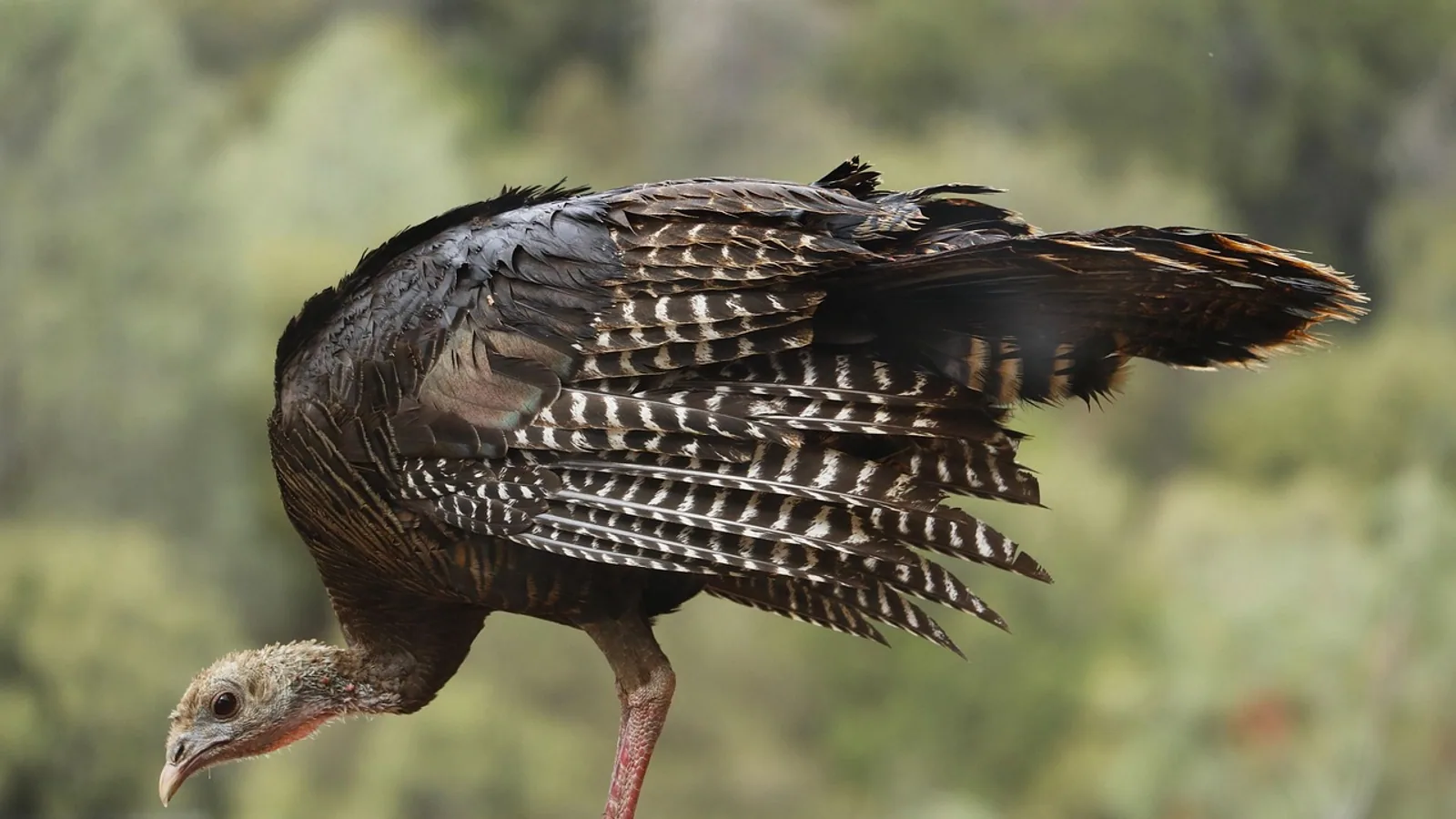
Yes, female turkeys lay eggs. A female turkey is called a hen, and like chickens, quail, and ducks, she produces eggs as part of her normal reproductive cycle whether or not a male turkey is present.
That single fact surprises many people because turkey eggs almost never appear in grocery stores. The birds are raised in enormous numbers for meat, yet the eggs they lay are largely invisible to consumers. The reasons are practical rather than biological. Turkey hens lay fewer eggs than chickens, they take longer to mature, and each egg costs more feed and space to produce. For commercial producers, a turkey egg is worth far more as a future poult than as breakfast.
This guide explains the laying season, how many eggs a turkey lays, turkey egg size and appearance, incubation, whether you can eat turkey eggs, and the real reasons they are rare in the marketplace. It also covers safe handling for backyard keepers. For housing, feeding, and flock management basics, see the backyard turkey care guide.
This article is educational and is not a substitute for veterinary diagnosis or treatment.
Key Takeaways
- Female turkeys, called hens, lay eggs as part of their normal reproductive cycle whether or not a male turkey is present.
- Turkey hens are seasonal breeders that lay in spring and early summer when daylight lengthens, then stop once photorefractoriness sets in.
- Turkey eggs weigh about 96.8 grams in breeder hens, noticeably larger than chicken eggs, with cream to pale tan shells that are often speckled.
- Turkey eggs take about 28 days to incubate, compared with about 21 days for chicken eggs, and need fresh setting from younger hens.
- Turkey eggs are edible and taste similar to chicken eggs, but they are rare in stores because hens lay fewer eggs, mature later, and eat more feed per egg.
The Direct Answer: Female Turkeys Lay Eggs
Only female turkeys lay eggs. Male turkeys, called toms or stags, do not lay eggs and cannot. A turkey hen has a single functional ovary and an oviduct, and ovulation is the first step of egg production. That process is controlled by a chain of hormones running from the brain to the pituitary gland to the ovary, and a surge of luteinizing hormone and progesterone triggers each follicle to release its yolk [1].
A hen does not need a male to lay. She will produce eggs on her own once she reaches sexual maturity and the light conditions are right. Those eggs are simply not fertile. Fertility requires mating or artificial insemination, and in commercial turkey breeding, artificial insemination is the standard practice used to ensure fertile eggs [2].
So the short answer to "do turkeys lay eggs" is unambiguous. The more interesting questions are when, how many, how big, and why you almost never see them for sale.
Turkey Laying Season: A Spring Cycle, Not a Year-Round Job
The domestic turkey hen is a seasonal breeder. She needs a period of short days to become photosensitive, then a long day length to switch on egg production [3]. In practice, that means turkeys lay in spring and early summer, when daylight is lengthening, and then stop.
Why Light Controls the Season
Day length is the master signal. A hen held through winter's short days builds sensitivity to light. When days grow long enough, usually in spring, her reproductive axis activates and she begins to lay. The season does not run forever. A process called photorefractoriness eventually sets in, causing egg laying to decline and then stop [3]. Photorefractoriness is the bird's built-in brake, and it is why a turkey hen cannot be kept in production across a long cycle the way a commercial laying hen can.
This is the key difference between turkeys and the chickens most people know. Modern laying hens have been selected to produce eggs across a long production cycle. Turkey hens have not. Their reproductive cycle is described as short with a low peak, which is exactly why environmental management and lighting programs matter so much in turkey breeder operations [4].
What This Means for Backyard Flocks
A backyard turkey hen will typically begin laying in spring and continue for a limited block of weeks before tapering off. Heritage breeds in particular follow this seasonal pattern closely. Commercial breeder lines are managed with controlled lighting to stretch and time production, but the underlying biology is the same.
If you keep a hen through the winter and she suddenly starts laying as the days lengthen, that is normal. If she stops in late summer, that is also normal. She is not sick. She is following the calendar her hormones read from the sun.
When Do Turkey Hens Start Laying?
Turkey hens mature later than chickens. The age at first egg is a measured trait in turkey breeding programs, and it carries a moderate heritability, meaning genetics partly influence when a given hen starts [5].
In commercial breeder flocks, hens are typically managed so that photostimulation begins in the late twenties to early thirties of weeks of age, and egg collection runs from roughly 30 weeks of age onward [4].
The practical takeaway for a backyard keeper is that a turkey hen is not a fast producer. She takes months to reach laying age, and once she starts, her season is bounded. A chicken may begin laying around five to six months. A turkey hen generally needs longer, and heritage birds often take the better part of a year before their first egg.
How Many Eggs Does a Turkey Lay?
This is where turkeys fall well behind chickens, and it is a major reason turkey eggs are not a supermarket item.
Numbers From Breeder Research
In one controlled study of turkey breeder hens, hen-day egg production averaged 44.7 percent during a second laying cycle after molting, with a mean of 62.6 eggs per hen housed [8]. Hen-day production is the number of eggs laid per 100 hens per day, so 44.7 percent means that on an average day, fewer than half the hens were producing an egg.
For context, good laying hens in a table egg operation run at far higher rates. The U.S. table egg industry produced billions of dozen eggs per year across the national flock, which reflects the sheer output of layer chickens [9]. A turkey hen cannot compete with that.
Eggs Per Season Versus Per Week
A reasonable working picture for a backyard turkey hen is a few eggs per week during her peak, dropping off as the season progresses. Over a full spring season, a hen might produce dozens of eggs, not hundreds. The 62.6 eggs per hen figure from the molting study is a useful anchor for what a managed breeder hen produced in a second cycle [8].
Several factors push the number down:
- Broodiness. A turkey hen that decides to sit on a nest stops laying. Broodiness is a heritable trait, and it is genetically correlated with reduced egg number and shorter clutches [5].
- Clutch and pause patterns. Turkeys lay in clutches separated by pause days. Longer pauses mean fewer eggs [5].
- Body weight. In turkey genetics research, heavier body weight was genetically correlated with lower egg number and shorter clutches, meaning selection for size tends to work against egg output [5].
- Season length. Once photorefractoriness sets in, production ends regardless of management [3].
So when someone asks how many eggs a turkey lays, the honest answer is that it depends on the bird, the breed, and the season, but it is always modest compared with a chicken.
Turkey Egg Size and Appearance
Turkey eggs are noticeably larger than chicken eggs. In the molting study, egg weight remained constant at 96.8 grams across the second cycle [8]. A typical large chicken egg weighs in the low 60s of grams, so a turkey egg is roughly half again as heavy.
What Turkey Eggs Look Like
Turkey eggs are typically larger than chicken eggs and have a distinctive appearance. The shells are usually cream to pale tan, often with darker brown or grayish speckling. The speckling pattern varies between hens and between breeds. The shell is generally thicker and harder than a chicken's.
The yolk is proportionally large. Turkey egg yolk serves as the primary nutrient source for the developing embryo [10].
Turkey Egg Size Compared With Chicken Eggs
| Feature | Turkey egg | Chicken egg |
|---|---|---|
| Typical weight | About 96.8 g in breeder hens [8] | Commonly in the low 60s of grams |
| Relative size | Larger | Smaller |
| Shell color | Cream to pale tan, often speckled | White, brown, blue, or green depending on breed |
| Shell thickness | Generally thicker | Thinner |
| Yolk proportion | Large | Smaller |
| Incubation time | About 28 days [10] | About 21 days |
| Laying season | Seasonal, spring and early summer [3] | Can be managed year-round in production flocks |
| Eggs per hen | Dozens per season [8] | Hundreds per cycle |
The weight figure of 96.8 grams comes from a specific breeder line under research conditions, so a backyard heritage hen's eggs may run somewhat lighter or heavier. The general rule holds. Turkey eggs are bigger than chicken eggs.
Incubation: About 28 Days
Turkey eggs take longer to hatch than chicken eggs. Incubation takes about 28 days, compared with about 21 days for chicken eggs [10].
That extra week matters for anyone hatching at home. Turkey eggs also need careful storage before incubation. Research on turkey embryos found that storage duration and hen age both affect how efficiently the embryo uses the albumen and yolk sac. Embryos from younger hens stored for shorter periods used albumen faster, while the largest amount of unused albumen was found in eggs from hens in week 51 of the laying season that had been stored for 17 days [6]. In plain terms, older hens and longer storage both slow embryonic development.
If you plan to incubate, set fresh eggs from younger hens when possible, and do not hold them for extended periods. The study stored eggs at 15 degrees Celsius (59 degrees Fahrenheit) and 76 percent relative humidity, which is a useful reference point for pre-incubation storage conditions [6].
Can You Eat Turkey Eggs?
Yes, turkey eggs are edible. They are a normal egg from a normal bird, and they can be cooked and eaten the same way as chicken eggs.
What Turkey Eggs Taste Like
Turkey eggs taste similar to chicken eggs. The flavor is often described as slightly richer, which follows from the larger yolk. The difference is subtle. Most people would not identify a turkey egg as anything unusual in a scramble or a baked good.
Nutritional and Culinary Notes
Turkey eggs contain the same broad categories of nutrients as chicken eggs, including protein, fats, and minerals, with more per egg because the egg is larger.
One practical note. Turkey eggs have thicker shells, so they take a firm crack to open. The membranes can also be tougher. A clean tap on a hard edge, then a firm pull apart, works better than a gentle chicken-egg technique.
Fertility Does Not Change Edibility
An egg laid by a hen with no male present is not fertile. An egg laid after mating may be fertile. Either way, a freshly laid, clean, intact egg is edible. Fertility only matters if you intend to incubate. If you crack a fertile egg and see a small white spot on the yolk, that is the germinal disc, and it is normal.
Why Don't We Eat Turkey Eggs? The Real Reasons
Turkey eggs are rare in stores for economic reasons, not because they are unsafe or unpalatable. Four factors drive the scarcity.
1. Fewer Eggs Per Hen
A turkey hen simply does not produce enough eggs to supply a table egg market. The breeder research showing 44.7 percent hen-day production and about 62.6 eggs per hen housed in a second cycle illustrates the gap [8]. Layer chickens in the U.S. table egg industry operate at a scale measured in billions of dozen eggs per year [9]. No turkey flock can match that output per bird.
2. Later Maturity
Turkey hens start laying later than chickens. Age at first egg is a genetically influenced trait in turkeys [5], and breeder management typically runs egg collection from around 30 weeks of age [4]. Every extra week before a hen starts laying is a week of feed and housing with no egg revenue. For a producer, that delay is expensive.
3. More Feed and Space Per Egg
A turkey is a large bird. She eats more and needs more room than a chicken. When you divide feed and housing cost by the number of eggs produced, the cost per turkey egg is far higher than the cost per chicken egg. The genetics research reinforces the tension here. In turkeys, heavier body weight is genetically correlated with lower egg number and shorter clutches [5]. The bird is built for meat, not for maximum egg output.
4. Higher Value as Hatching Eggs
This is the decisive economic reason. Turkey eggs are worth more as future poults than as food. Commercial turkey production depends on a steady supply of breeder eggs, and those eggs are incubated, not sold at retail. Breeder operations manage lighting, nutrition, and insemination specifically to maximize fertile egg production [4][2]. Diverting those eggs to the grocery shelf would undercut the meat industry's own supply chain.
The bottom line is that turkey eggs are not rare because they are bad. They are rare because the economics of turkey farming point in a different direction.
Can a Turkey Hen Lay Without a Male?
Yes. A turkey hen lays eggs without any male present. She does not need a tom to ovulate or to form a shell.
The eggs she lays on her own will not be fertile. If you want poults, you need either a tom in the flock or artificial insemination. In commercial turkey breeding, artificial insemination is standard because modern broad-breasted toms are too heavy to mate naturally, and hens are typically inseminated on a weekly basis [2]. Heritage turkeys can still mate naturally.
Fertility in turkey hens declines after a few weeks of production even with regular insemination. Part of the explanation involves the sperm storage tubules in the hen's reproductive tract, which hold sperm and release it over time. The capacity of these tubules to store sperm is directly correlated with the hen's fertility [2]. Repeated and prolonged exposure to sperm triggers changes in the reproductive tract that accelerate its aging [2]. This is why breeder flocks have a limited high-fertility window.
For a backyard keeper with one or two hens and no tom, expect eggs but no chicks. That is completely normal and not a sign of a problem.
Safe Handling of Eggs From Backyard Birds
Backyard eggs are food, and they deserve the same care as any raw animal product. The following practices reduce risk for anyone eating eggs from a home flock.
Collection and Storage
- Collect eggs promptly, especially in warm weather. Eggs left in a nest can be stepped on, soiled, or exposed to temperature swings.
- Discard eggs with cracked shells, soft shells, or obvious deformity. Abnormal eggs can be a sign of illness in the flock. In chickens and turkeys, avian influenza can cause abnormal eggs including deformed, thin-shelled, and soft-shelled eggs, and egg production can drop or stop entirely [12].
- Refrigerate clean eggs after collection. If eggs are soiled, wash them under running water that is warmer than the egg (about 20 degrees Fahrenheit warmer), then dry them, refrigerate them, and use them promptly.
Cleaning
Do not wash eggs you intend to store for weeks. Washing removes the protective bloom on the shell and opens the pores to bacteria. If an egg is lightly soiled, a dry wipe or a light buff with fine sandpaper is gentler than washing. If an egg is heavily soiled, wash it, refrigerate it, and use it soon.
Cooking
Cook eggs thoroughly. Raw and undercooked eggs can carry bacteria. This applies to backyard eggs and commercial eggs alike. Cook eggs until the yolks and whites are firm, and cook dishes containing eggs to an internal temperature of 160 degrees Fahrenheit.
Biosecurity Around the Flock
Eggshells and egg contents can carry pathogens. In research on avian influenza, viral RNA was detected on or in a portion of eggs laid by infected hens, appearing on eggshells, in egg white and yolk samples, and in embryo tissue [12]. That study was conducted in chickens, but it illustrates the general principle that eggs can be contaminated on the surface and internally when a flock is infected.
Practical biosecurity steps include washing hands after handling birds and eggs, keeping wild birds away from feed and water, isolating new birds before introducing them, and contacting a veterinarian promptly if the flock shows signs of respiratory or reproductive illness.
Eggs From a Sick Flock
Do not eat eggs from a hen that is visibly ill, and do not eat eggs from a flock under treatment with any medication unless a veterinarian has confirmed the withdrawal period has passed. Some drugs are not approved for use in egg-laying birds, and residues can end up in the egg [9]. A veterinarian can advise on specific situations.
What Is Still Uncertain
Turkey egg biology is well studied in commercial breeder contexts, but several practical questions do not have clean answers for backyard keepers.
- Exact seasonal totals for heritage breeds. The published production figures come largely from commercial breeder lines under controlled lighting and management [8][4]. Heritage breeds kept outdoors on natural light may lay fewer eggs over a shorter window, but breed-specific backyard data are limited.
- Optimal storage for home incubation. Research has characterized storage effects on embryo development [6], but the ideal home setup for a small flock is a matter of practical judgment rather than a single tested protocol.
Limitations and When to Contact a Veterinarian
This article covers general biology and husbandry. Individual birds vary, and a veterinarian who can examine your flock is the right resource for any specific concern.
Contact a veterinarian if you observe any of the following:
- A sudden drop in egg production or a complete stop during the normal laying season, especially if accompanied by lethargy, reduced appetite, or respiratory signs.
- Abnormal eggs, including soft-shelled, thin-shelled, deformed, or misshapen eggs, particularly if several hens are affected.
- Swelling, discharge, or foul odor around the vent or abdomen.
- Difficulty passing an egg, straining, or a hen sitting persistently and appearing distressed.
- Any sign of illness in a flock that supplies eggs for your household.
- Questions about medication use in laying birds and withdrawal periods before eggs can be eaten again.
Early veterinary involvement is especially valuable in poultry because flock problems often affect multiple birds before obvious signs appear.
Frequently Asked Questions
Do turkeys lay eggs?
Yes. Female turkeys, called hens, lay eggs. Only females lay. A hen does not need a male present to produce eggs, though eggs laid without mating are not fertile.
How many eggs does a turkey lay?
A turkey hen lays far fewer eggs than a chicken. In breeder research, hen-day production averaged 44.7 percent in a second cycle, with about 62.6 eggs per hen housed [8]. Backyard hens typically produce a few eggs per week during their spring season.
What do turkey eggs look like?
Turkey eggs are larger than chicken eggs, with cream to pale tan shells that are often speckled with darker brown or gray. The shells are generally thicker, and the yolk is proportionally large.
How big are turkey eggs?
Turkey eggs are larger than chicken eggs. In breeder research, egg weight held steady at 96.8 grams across a second laying cycle [8], compared with roughly the low 60s of grams for a typical large chicken egg.
Can you eat turkey eggs?
Yes. Turkey eggs are edible and taste similar to chicken eggs, often described as slightly richer because of the larger yolk. Cook them thoroughly and handle them like any raw egg.
Why don't we eat turkey eggs?
Turkey hens lay fewer eggs, mature later, and consume more feed and space per egg than chickens. Turkey eggs are also worth more to producers as hatching eggs for poults than as a retail food product.
How long do turkey eggs take to hatch?
Turkey eggs incubate for about 28 days, compared with about 21 days for chicken eggs [10].
Do turkeys lay eggs all year?
No. Turkey hens are seasonal breeders. They need short days to become photosensitive and long days to start laying, and production declines and stops once photorefractoriness sets in [3]. Most laying happens in spring and early summer.
Related Articles
- Turkey Brooding and Early Flock Management
- Turkey Farm Biosecurity and Disease Preparedness
- Turkey Farm Management From Placement to Market
- Feeding Turkeys: Nutrition for Growth and Meat Quality
- Turkey Range Shelters: Design and Placement for Pasture Flocks
- Poultry Housing for Niche Flocks: Ducks, Geese, and Turkeys
- Australorp Chickens: Egg Laying, Temperament and Care
- White Leghorn Chickens: Egg Production, Temperament and Health
- Olive Egger Chickens: Genetics, Egg Color and Care
Sources
- Characterization of gene expression in the hypothalamo-pituitary-gonadal axis during the preovulatory surge in the turkey hen.
- Prolonged repeated inseminations trigger a local immune response and accelerate aging of the uterovaginal junction in turkey hens.
- Potential role of thyroid hormones and prolactin in the programming of photorefractoriness in turkey hens.
- Evaluating light spectrum and intensity for female turkey breeder reproductive performance.
- Genetic parameters for clutch and broodiness traits in turkeys (Meleagris Gallopavo) and their relationship with body weight and egg production.
- The effects of hen's age and egg storage duration on selected growth parameters of turkey embryos.
- Research Note: Effect of age on the distribution of lymphocytes in the oviduct in Turkey breeder hens.
- Physiological characteristics of a molt and second cycle of egg laying in turkey breeder hens.
- Estimates of on-farm antimicrobial usage in egg production in the United States, 2016-2021.
- Changes in fatty acid and mineral profiles of the turkey egg yolk-yolk sac complex during embryonic development.
- Bioactivities of hen's egg yolk phosvitin and its functional phosphopeptides in food industry and health.
- Effects of an H7 Highly Pathogenic and Related Low Pathogenic Avian Influenza Virus on Chicken Egg Production, Viability, and Virus Contamination of Egg Contents and Surfaces.
- Bardoxolone methyl modulates Nrf2/NF-𝜅B signaling in turkey uterovaginal junction organoids with potential use for improving reproductive longevity in breeder hens.