Saltwater Aquarium Water Changes: How Much, How Often, How To
By Dr. Zubair Khalid, DVM, MS, PhD ·
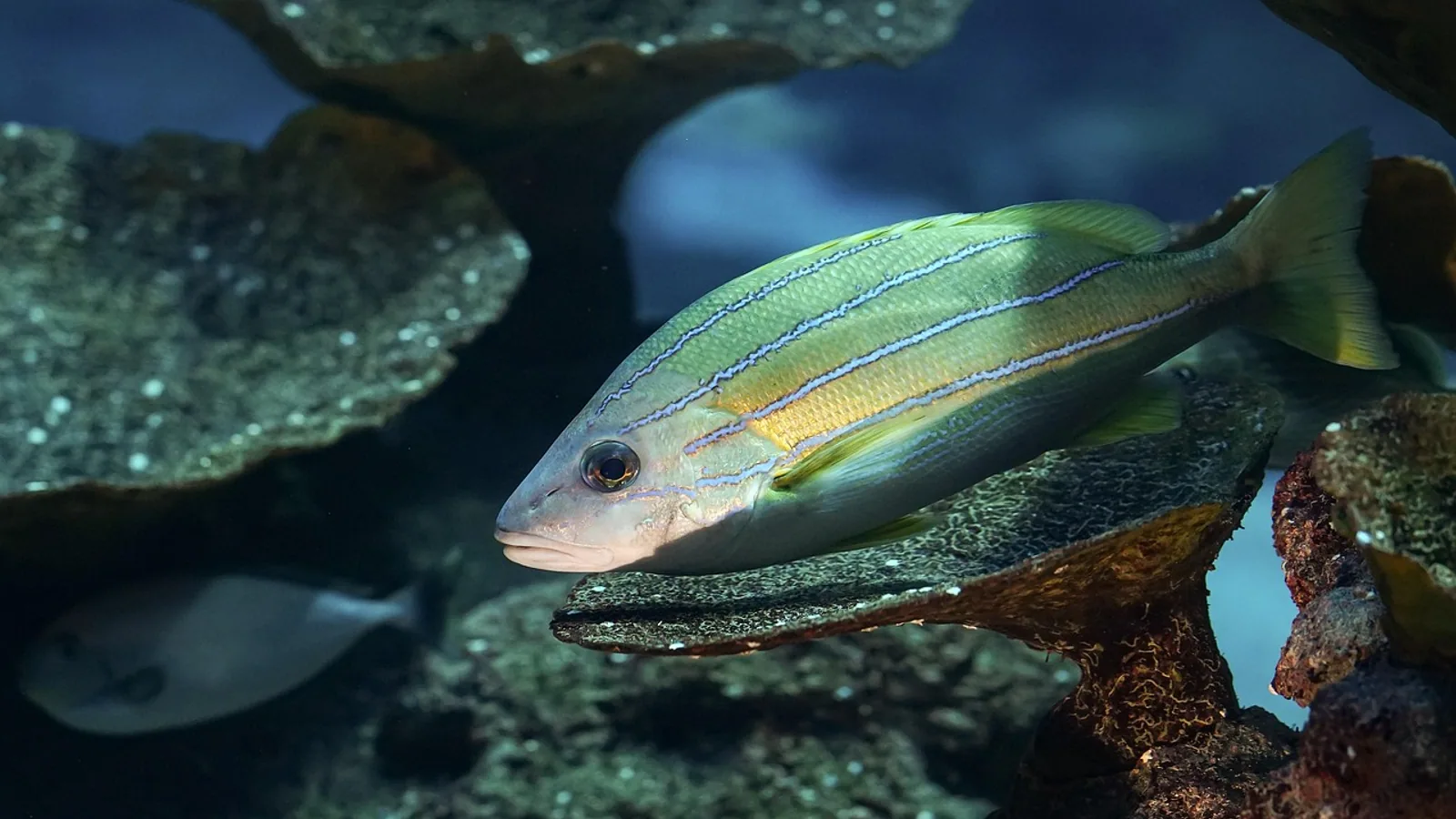
A saltwater fish tank water change is the single most reliable maintenance task you can perform. For most fish-only marine aquariums, replace 10 to 20 percent of the water every two weeks. For reef tanks, replace 10 to 20 percent every one to two weeks, or run a smaller weekly change of 5 to 10 percent. Match the new water to your tank at roughly 35 ppt salinity (1.025 to 1.026 specific gravity for reefs) and within about 1 to 2 degrees Fahrenheit of tank temperature. Mix the salt with RO/DI water, never tap water, and always top off evaporation with fresh RO/DI water, not saltwater.
That is the short answer. The rest of this article explains why those numbers work, how to mix and measure correctly, how fish-only and reef schedules differ, and which mistakes cause the most damage.
This article is educational and is not a substitute for veterinary diagnosis or treatment.
At a Glance: The Water Change Cheat Sheet
| Question | Fish-only marine tank | Reef tank |
|---|---|---|
| How much per change | 10 to 20 percent | 10 to 20 percent, or 5 to 10 percent weekly |
| How often | Every 2 weeks | Every 1 to 2 weeks |
| Target salinity | About 35 ppt (1.025 to 1.026 SG) | About 35 ppt (1.025 to 1.026 SG) |
| Source water | RO/DI only | RO/DI only |
| Temperature match | Within 1 to 2 F | Within 1 to 2 F |
| Evaporation top-off | Fresh RO/DI water | Fresh RO/DI water |
| Key measurement tool | Refractometer or calibrated hydrometer | Calibrated refractometer |
Step checklist for a safe change:
- Turn off return pumps, skimmer, and heaters that could run dry.
- Drain the old water into a bucket or to a drain.
- Confirm the new water matches salinity and temperature.
- Add the new water slowly.
- Restart equipment and check for air locks.
- Log the volume, salinity, and date.
Why Water Changes Matter in a Marine Aquarium
A marine aquarium is a closed system. Fish eat, produce waste, and respire. Bacteria convert toxic ammonia and nitrite into less toxic nitrate, but nitrate and other dissolved compounds still accumulate. Sand and live rock improve water quality and support this biofiltration, and they reduce the volume of water you need to replace over time [1]. Even so, no biological filter removes everything.
Water changes dilute the compounds that build up and replace the minerals that get consumed. In a reef tank, corals and coralline algae pull calcium, alkalinity, and trace elements out of the water. A marine aquarium water change restores a portion of that balance and removes dissolved organic material that fuels nuisance algae and cloudiness.
Public aquariums treat water change as core husbandry. Regular water exchange is a core mechanism that must be carried out alongside physical, chemical, and biological treatment in marine systems [2]. That framing applies directly to home systems.
Water quality also affects fish physiology. Salinity fluctuations alter osmotic balance and energy allocation in marine fish, and chronic low-salinity stress changes muscle structure and antioxidant defenses [3]. A related study identified specific molecular pathways that fish use to regulate osmotic pressure as salinity shifts [4]. The practical takeaway is simple. Stable salinity and clean water reduce physiological stress. Large, sloppy changes that swing salinity do the opposite.
How Much Water to Change: Fish-Only Versus Reef
Fish-Only Marine Tanks
A fish-only tank carries a lighter mineral demand than a reef. There are no stony corals consuming calcium and alkalinity. The main job of a water change is nutrient dilution and waste removal.
For most fish-only systems, 10 to 20 percent every two weeks keeps nitrate and phosphate in a manageable range. Heavily stocked tanks, messy eaters, and tanks with large predatory fish may need 20 to 30 percent weekly. Lightly stocked tanks with strong filtration can often hold at 10 percent every two weeks.
Reef Tanks
A reef tank water change does two jobs at once. It dilutes nutrients and replenishes the ions that corals and coralline algae consume. Because reef tanks usually run at higher light and higher metabolic demand, they tolerate nutrient buildup less well.
Most reef keepers change 10 to 20 percent every one to two weeks. A common alternative is a smaller weekly change of 5 to 10 percent, which keeps parameters steadier. Both approaches work. The choice depends on your stocking level, feeding rate, and how tightly you control calcium and alkalinity.
Nano Tanks and Large Systems
Nano tanks have less water volume, so a small absolute change is a large percentage change. A 5-gallon change in a 20-gallon nano is 25 percent. That is a big swing. Nano owners usually do smaller, more frequent changes, often 10 percent weekly.
Large systems behave the opposite way. A 20 percent change on a 200-gallon tank is 40 gallons of mixing, heating, and hauling. Many large-tank owners run 10 percent every two weeks and lean on protein skimming and refugia for the rest.
How to Decide Your Number
Use these inputs to set your schedule:
- Stocking density and fish size
- Feeding volume and food type
- Nitrate and phosphate test results over time
- Presence of stony corals
- Skimmer performance
- Whether you run a refugium or other nutrient export
Test nitrate and phosphate weekly for a month. If they climb steadily between changes, increase the volume or frequency. If they stay flat and low, you can hold or reduce.
How Often to Change Saltwater Tank Water
The honest answer to how often to change saltwater tank water is that it depends on your test results, but most healthy systems settle into a rhythm.
- Fish-only, light stock: every 2 weeks
- Fish-only, heavy stock: weekly
- Mixed reef: every 1 to 2 weeks
- SPS-dominant reef: weekly, smaller volume
- Nano reef: weekly, small volume
Consistency beats intensity. A steady 10 percent weekly change usually produces more stable parameters than a 40 percent change every two months. Big infrequent changes swing salinity, temperature, alkalinity, and trace elements all at once. That is stressful for fish and corals.
Some experienced reef keepers run very large systems with strong nutrient export and do minimal water changes. That approach requires precise dosing, regular testing, and a mature system. It is not a beginner strategy. For most home aquarists, routine partial changes remain the backbone of marine aquarium maintenance.
Topping Off Evaporation Versus Changing Water
This is the most common point of confusion for new marine aquarists, and getting it wrong causes real problems.
When water evaporates from a saltwater tank, the salt stays behind. Only fresh water leaves. If you top off with saltwater, salinity climbs. Over weeks, that drift can push a tank from 35 ppt into the 40s, which stresses fish and corals.
Top off evaporation with fresh RO/DI water. Do this daily or continuously with an auto top-off unit. Never top off with saltwater.
A water change is different. When you remove tank water and replace it with newly mixed saltwater at the same salinity, you dilute accumulated waste and replenish minerals. You are not correcting for evaporation. You are exchanging a portion of the total water volume.
Keep the two tasks separate in your head:
- Evaporation loss, replace with fresh RO/DI water
- Water change, replace with mixed saltwater at tank salinity
If you only ever top off and never change water, waste compounds accumulate. If you only ever change water and never top off, salinity drifts upward as evaporation continues between changes.
Mixing Saltwater for Aquarium Use
Mixing saltwater for aquarium use is straightforward once you control three variables: source water purity, salinity, and temperature.
Start With RO/DI Water
Use reverse osmosis deionized water, not tap water. Tap water carries chlorine, chloramine, phosphate, silicate, nitrate, copper, and other dissolved solids. Those inputs feed nuisance algae and can harm sensitive invertebrates. Copper in particular is toxic to many marine invertebrates at very low concentrations.
If you do not have an RO/DI unit, buy RO/DI water from a reputable aquarium store. Do not substitute distilled water unless you confirm it is truly pure. Do not use softened tap water, which swaps calcium and magnesium for sodium.
Choose a Marine Salt Mix
Marine salt mixes differ in their ion profiles. One published case series described follicular thyroid hyperplasia in aquarium-housed tropical marine teleosts after a facility changed salt mix brands. The new mix contained roughly five times less iodine than the previous product, and iodine was undetectable in the system water [5]. That case shows that salt mix composition matters, and that a brand change is not a trivial event.
Choose a mix formulated for the type of tank you keep. Reef mixes typically carry elevated calcium, alkalinity, and magnesium. Fish-only mixes are often simpler. Once you settle on a mix, track your parameters. If you change brands, do it gradually and monitor.
Mixing Procedure
- Fill a clean container with RO/DI water. Use a food-grade bucket or a dedicated mixing tank.
- Add salt to the water, not water to salt. This reduces clumping and precipitation.
- Follow the manufacturer's ratio as a starting point, usually around half a cup per gallon, then measure.
- Circulate with a powerhead for at least a few hours, ideally overnight.
- Aerate to stabilize pH and dissolve gases.
- Heat to match tank temperature.
- Measure salinity with a calibrated refractometer and adjust.
- Confirm the mix is clear before use.
Freshly mixed saltwater can be chemically unstable for the first few hours. Alkalinity and pH often shift as the mix fully dissolves and equilibrates with air. Mixing overnight and aerating solves most of this.
Matching Salinity
Target about 35 ppt, which corresponds to a specific gravity of roughly 1.025 to 1.026 for reef tanks. Natural seawater sits near 35 ppt, and the experimental marine systems in the literature ran at 34 to 35 ppt [1]. Fish-only tanks can run slightly lower, but stability matters more than the exact number.
Match the new water to your tank, not to a textbook value. If your tank runs at 1.025, mix to 1.025. A mismatch of 0.002 specific gravity is tolerable. A mismatch of 0.005 or more is a stress event.
Matching Temperature
Bring the new water within about 1 to 2 degrees Fahrenheit of tank temperature. Cold or hot replacement water shocks fish, and large temperature swings can trigger disease outbreaks. Use a heater in your mixing container, or let the container sit in a warm room until it equilibrates.
Refractometer Calibration
A refractometer is the standard tool for measuring salinity in a marine aquarium. It reads a refractive index that converts to salinity or specific gravity.
Calibrate it before you trust it. Use a calibration standard, either a commercial salinity standard or fresh RO/DI water set to zero, depending on your device. Follow the manufacturer's instructions. Temperature-compensating refractometers still benefit from periodic calibration.
Calibrate monthly, and recalibrate after any drop or after storing the unit in extreme temperatures. A drift of 0.002 specific gravity is enough to matter over repeated changes.
Cheap swing-arm hydrometers are less accurate and prone to bubbles and residue. If you use one, rinse it, tap out bubbles, and cross-check against a refractometer.
Step-by-Step: Performing the Water Change
Preparation
- Mix and age the new saltwater. Confirm salinity and temperature.
- Gather a bucket, siphon, towels, and a test kit.
- Turn off return pumps, protein skimmer, and any heater that could run dry.
- Keep circulation pumps running if they stay submerged.
Removing Old Water
- Siphon from the display tank into a bucket or to a drain.
- Vacuum the sand bed lightly if you run sand. Do not disturb deep layers aggressively.
- Siphon visible detritus from rock crevices.
- Remove the target volume, usually 10 to 20 percent.
Adding New Water
- Add the new saltwater slowly. A slow pour or a small pump works well.
- Add it to the sump if you have one, which reduces disturbance in the display.
- Watch temperature and salinity as you add.
- Do not dump the full volume in at once.
Restarting and Checking
- Restart the return pump and skimmer.
- Check for air locks in the return line.
- Confirm the skimmer is not overflowing.
- Verify salinity and temperature.
- Log the change in a notebook or app.
Post-Change Observation
Watch fish behavior for the next hour. Normal behavior includes active swimming and feeding response. Concerning signs include gasping at the surface, hiding, or erratic swimming. If you see those, check salinity, temperature, and ammonia immediately.
Equipment and Supplies: Selection Criteria
You do not need expensive gear, but a few items make water changes safer and faster.
- Refractometer: accurate, calibratable, and worth the cost over a hydrometer.
- RO/DI unit: removes dissolved solids from source water.
- Mixing container: food-grade, sized to your change volume.
- Powerhead: circulates the mix and dissolves salt.
- Heater: brings the mix to tank temperature.
- Siphon or gravel vacuum: removes water and detritus.
- Test kits: nitrate, phosphate, alkalinity, calcium, and magnesium for reefs.
- Auto top-off unit: handles evaporation with fresh RO/DI water.
For reef tanks, add alkalinity, calcium, and magnesium test kits. These tell you whether your water change schedule is keeping up with coral demand.
Common Mistakes to Avoid
Using Tap Water
Tap water introduces phosphate, silicate, nitrate, and metals. It feeds algae and can harm invertebrates. Use RO/DI.
Topping Off With Saltwater
This raises salinity over time. Top off with fresh RO/DI water only.
Skipping Refractometer Calibration
An uncalibrated refractometer gives you false confidence. Calibrate monthly.
Changing Too Much at Once
A 50 percent change swings salinity, temperature, alkalinity, and trace elements. Stick to 10 to 20 percent unless you are correcting a specific problem under guidance.
Not Matching Temperature
Cold replacement water chills fish and can trigger stress responses. Match within 1 to 2 degrees Fahrenheit.
Mixing Salt Too Fast and Using It Immediately
Fresh mix can be chemically unstable. Mix overnight and aerate.
Forgetting to Turn Off Equipment
Running a return pump dry or letting a heater run in air damages equipment and can cause electrical hazards.
Ignoring Test Results
Water changes are not a fixed ritual. Test nitrate and phosphate, and adjust volume and frequency based on what you measure.
Changing Salt Brands Abruptly
Salt mix composition varies, including iodine content, and a sudden brand change has been linked to thyroid disease in aquarium fish [5]. Transition gradually and monitor.
Overcleaning the Sand Bed
Aggressive sand disturbance can release trapped waste and hydrogen sulfide. Vacuum lightly and consistently.
Troubleshooting After a Water Change
Fish Gasping at the Surface
Check salinity, temperature, and ammonia. A sudden salinity drop or a temperature swing reduces dissolved oxygen and stresses fish. Confirm your mix matched the tank.
Cloudy Water
New saltwater can be slightly cloudy if not fully mixed. Cloudiness that persists suggests a precipitation event or a bacterial bloom. Check alkalinity and calcium.
Corals Retracted
Corals often retract briefly after a change. If they stay closed for more than a day, check salinity, alkalinity, and temperature against your normal values.
Skimmer Overflowing
A water change can temporarily change surface tension, causing the skimmer to overflow. Adjust the skimmer or let it settle for an hour.
Salinity Drift Over Weeks
If salinity climbs, you are likely topping off with saltwater or not accounting for evaporation. If it falls, you may be removing water without replacing salt correctly.
Welfare and Safety Points
Fish welfare depends on stable, clean water. Chronic low-salinity stress alters muscle structure and antioxidant status in marine fish, which shows that osmotic stability is not optional [3]. Molecular studies confirm that fish mount complex regulatory responses to salinity shifts, and those responses carry an energy cost [4].
Handle fish stress by keeping changes small and consistent. Avoid netting fish during water changes unless necessary. Keep hands and equipment clean, and never introduce soap or chemicals into the system.
Electrical safety matters. Turn off and unplug equipment before working near water. Use drip loops on cords. Keep outlets away from splash zones.
If you keep invertebrates such as snails and crabs as clean-up crew, remember that they are sensitive to rapid parameter shifts. A study of gastropod clean-up crew species found significant differences in survival and grazing performance among commonly traded species [6]. Stability supports them as much as it supports fish.
Water quality in a home aquarium also depends on your source water and system plumbing. In public aquariums, biofouling inside inlet pipes measurably changed water quality, raising inorganic nitrogen species and lowering bacterial abundance [7]. Home systems do not have inlet pipes, but the principle holds. Anything that adds or concentrates waste in your water loop affects the animals.
When Water Changes Are Not Enough
Water changes manage dissolved waste, but they do not treat disease. If a fish shows white spots, rapid breathing, clamped fins, or refusal to eat, that is a medical issue, not a maintenance issue. Marine ectoparasites such as Cryptocaryon irritans are treated with specific protocols, and copper sulfate immersion is a common quarantine treatment in public aquariums [8]. Do not guess at medication dosing in your display tank.
Some treatments interact with water changes. Praziquantel, used as a bath for ectoparasites, degrades in marine aquarium water faster than once assumed, becoming undetectable within days in controlled systems [9]. If you are running a medicated bath, follow the prescribing veterinarian's instructions on water changes, because a routine change can remove the drug.
Limitations and When to Contact a Veterinarian
This article covers routine husbandry. Individual tanks, species, and disease situations need direct veterinary assessment.
Contact an aquatic veterinarian or a fish health professional if you observe any of the following:
- Fish gasping at the surface or lying on the bottom for more than a few hours
- White spots, fuzzy patches, or visible lesions on skin or fins
- Sudden death of more than one fish
- Refusal to eat for more than two or three days
- Rapid breathing that does not improve after a water change
- Corals or invertebrates dying back across the tank
- Salinity or temperature that you cannot stabilize
- Any suspicion of toxin exposure, including copper or cleaning chemicals
A veterinarian with aquatic animal experience can assess water quality data, examine fish, and prescribe treatment. The World Aquatic Veterinary Medical Association (WAVMA) maintains resources for finding aquatic veterinary care. The Merck Veterinary Manual also covers pet fish health for owners who want background reading.
Do not add medications to a display tank without veterinary guidance. Many treatments harm invertebrates, and dosing errors are common.
Frequently Asked Questions
How much water should I change in a saltwater tank?
Change 10 to 20 percent of the total volume for most fish-only and reef tanks. Heavily stocked tanks may need 20 to 30 percent, and lightly stocked tanks can hold at 10 percent. Let nitrate and phosphate test results guide the final number.
How often should I change water in a reef tank?
Most reef tanks do best with a 10 to 20 percent change every one to two weeks, or a smaller 5 to 10 percent change weekly. Consistency matters more than the exact interval.
Can I use tap water for a saltwater aquarium?
No. Tap water contains phosphate, silicate, nitrate, chlorine, and metals that feed algae and harm invertebrates. Use RO/DI water for both mixing saltwater and topping off evaporation.
Should I top off evaporation with saltwater or fresh water?
Top off with fresh RO/DI water. Evaporation leaves salt behind, so adding saltwater raises salinity over time. Reserve saltwater for actual water changes.
What salinity should new saltwater be mixed to?
Mix to about 35 ppt, which is roughly 1.025 to 1.026 specific gravity for reef tanks. Match your tank's current salinity rather than a fixed textbook value, and keep the difference within 0.002 specific gravity.
How long should I mix saltwater before using it?
Mix for at least a few hours, ideally overnight, with circulation and aeration. Fresh mix can be chemically unstable, and overnight mixing stabilizes pH and alkalinity.
Do I need a refractometer for a saltwater tank?
Yes, a refractometer is the standard tool for measuring salinity accurately. Calibrate it monthly with a proper standard, and recalibrate after drops or temperature extremes. Swing-arm hydrometers are less reliable.
What happens if I skip water changes?
Waste compounds such as nitrate and phosphate accumulate, trace elements deplete, and nuisance algae and coral decline follow. Skipping occasional changes is tolerable. Skipping routinely leads to chronic water quality problems and stressed fish.
Related Articles
- Aquarium Water Changes: How Much and How Often?
- Coral Reef Fish: Species Selection and Compatibility for Marine Aquariums
- Reef Tank Water Chillers: BTU Sizing, Temperature Sensors, and Heat Dissipation Setup
- Best Fish for a Small Aquarium
- Saltwater Fish Quarantine Guide
- Coral Reef Food Webs: A Veterinary Perspective on Marine Aquarium Nutrition
- Do Fish Drink Water? Freshwater vs Saltwater Fish Explained
- Fish Tank Leak: Emergency Steps, Finding It, and Resealing
- Cloudy Aquarium Water: White, Green, or Brown and How to Fix It
Sources
- EFFECTS OF SAND AND LIVE ROCK BOTTOM ON WATER QUALITY IN AQUARIUM TANK
- Design of an Aquarium Water Change System Based on Waterflow Sensor in PIAMARI Seawater Aquarium
- Biochemical and multi-omics analyses reveal skeletal muscle adaptation to chronic low-salinity stress of marine medaka (Oryzias melastigma).
- Screening and Identification of Hnf1ba-slc12a1 Signal Pathway in Response to Low-Salinity Stress in Marine Medaka (Oryzias melastigma).
- A CLUSTER OF CASES OF THYROID HYPERPLASIA IN AQUARIUM-HOUSED TROPICAL MARINE TELEOSTS FOLLOWING A CHANGE OF SALT MIX BRAND.
- A comparison of survivourship and function (grazing and behaviour) of three gastropod species used as clean-up crew for the marine aquarium trade.
- Biofouling of inlet pipes affects water quality in running seawater aquaria and compromises sponge cell proliferation
- RETROSPECTIVE REVIEW OF COPPER SULFATE IMMERSION TREATMENT IN MARINE TELEOSTS DURING QUARANTINE AT THE NATIONAL AQUARIUM OF BALTIMORE FROM 2004 TO 2016
- Praziquantel degradation in marine aquarium water.