Cloudy Aquarium Water: White, Green, or Brown and How to Fix It
By Dr. Zubair Khalid, DVM, MS, PhD ·
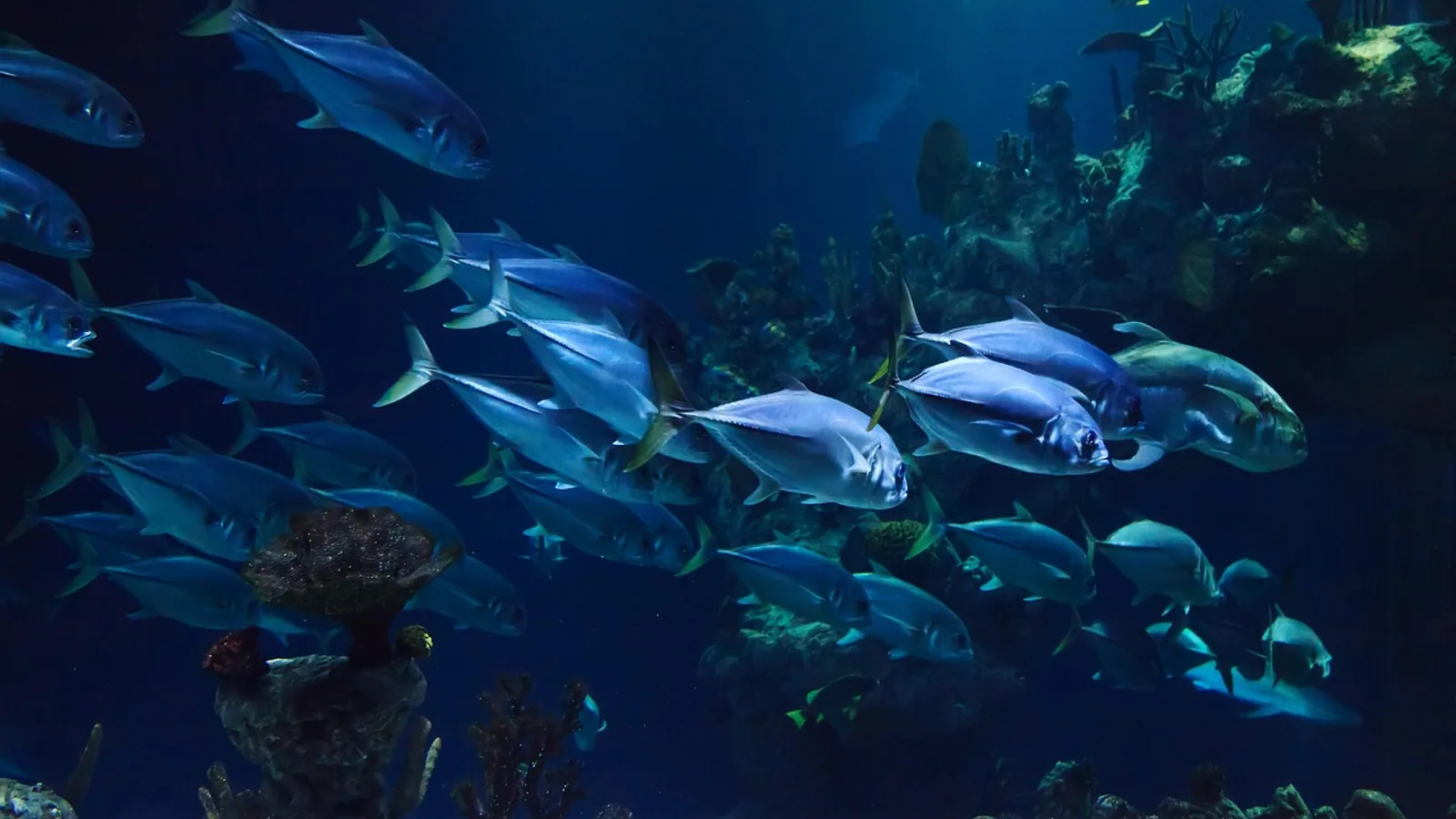
Cloudy aquarium water is almost always a color-coded message from your tank. White or gray haze points to a bacterial bloom, most often in a new tank that is still cycling. Green water is a free-floating algae bloom feeding on light and nutrients. Brown or yellow tinting usually comes from tannins released by driftwood and other botanicals. None of these three is automatically a medical emergency for your fish, but each one signals something about water quality, filtration, or stocking that you should correct rather than ignore. The fix depends entirely on which color you are looking at, so identify the color first, test your water second, and change one thing at a time.
This article is educational and is not a substitute for veterinary diagnosis or treatment.
At a Glance: Color, Cause, and First Move
| Water color | Most likely cause | Dangerous to fish? | Test before acting | First move |
|---|---|---|---|---|
| Milky white or gray | Bacterial bloom in a new or disturbed tank | Usually not directly toxic, but the underlying ammonia can be | Ammonia, nitrite, nitrate, pH | Stop overfeeding, do a partial water change, let the filter cycle |
| Pea-soup green | Free-floating algae | Not directly toxic, but oxygen swings and pH shifts overnight can stress fish | Ammonia, nitrite, nitrate, phosphate, pH | Cut light hours, reduce feeding, consider a UV sterilizer |
| Tea brown or yellow | Tannins from wood, leaves, or substrate | Not dangerous, and can even be mildly beneficial | pH and hardness, since tannins can lower pH | Decide if you want the look, then use carbon or water changes if you do not |
Step Checklist You Can Act On Today
- Look at the water against a white background under room light, not just tank light. Write down the color.
- Test ammonia, nitrite, nitrate, and pH before you change anything. The timetable for the color change is often more informative than the change itself [1].
- If ammonia or nitrite is present at any readable level, treat that as the priority, not the cloudiness.
- Turn off or shorten the light if the water is green.
- Feed less for the next three to five days. Uneaten food and fish waste are the raw material for both bacterial blooms and algae.
- Do a 20 to 30 percent water change with dechlorinated water at matching temperature. Do not do a 100 percent change.
- Leave the filter media alone. Rinsing it in tap water kills the bacteria you need.
- Recheck water parameters 24 hours later. One change, one measurement, one decision.
Why Cloudy Fish Tank Water Happens at All
An aquarium is a small, closed, recirculating system. Pathogens and microbes are constantly present in the water, on surfaces, and inside the fish themselves, and the system is never sterile [2]. What keeps water clear is a balance between what you put in (food, fish waste, plant matter) and what your filter and the bacterial community in the tank can process.
When that balance tips, one of three things usually grows fast enough to become visible: suspended heterotrophic bacteria, free-floating algae, or dissolved organic compounds from plant material. Each produces a different color, and each has a different fix. A large artificial seawater system showed that microbial communities in closed aquatic habitats can shift dramatically within about two weeks and produce visible bloom events featuring fast-growing bacterial groups [3]. Home aquariums work the same way on a smaller scale, which is exactly why a bacterial bloom in a new tank can appear overnight and fade just as quickly once the filter catches up.
Your substrate matters too. Gravel and sand both increase total ammonia nitrogen and nitrate compared with bare tanks, and substrate is associated with a greater presence of Pseudomonas bacteria [4]. That does not mean substrate is bad. It means a gravel or sand bed is a reservoir that holds waste and bacteria, so it needs occasional vacuuming, and it is one more reason to avoid overfeeding.
White or Gray Cloudy Aquarium Water
A milky white haze that looks like someone poured milk into the tank is the classic bacterial bloom. The water looks opaque but colorless when you hold a sample against white paper. It usually appears in one of three situations: a brand-new tank that has not finished cycling, a tank where you just did a large water change or filter cleaning, or a tank where a fish died or food spoiled.
Why White Water Happens
Heterotrophic bacteria multiply explosively when dissolved organic carbon and ammonia are suddenly abundant. In a new tank, there is no established colony to outcompete them. In an established tank, a filter media rinse under tap water, a full filter media replacement, or a deep gravel disturbance strips the biofilm that was keeping the bloom in check. The bloom then feeds on the spike of nutrients and organic matter you just released.
Overfeeding is the single most common trigger in established tanks. Uneaten food breaks down into ammonia and organic carbon, which feeds both the bloom and the bacteria that produce it. Overstocking and poor water quality are well-documented stressors in ornamental fish and predispose them to infection, so a bloom is a warning about husbandry, not just about appearance [5][6].
New substrate that was not rinsed before it went in is a third cause. Fine dust and organic residue from gravel or sand can keep the water hazy for days. The fix is mechanical, not bacterial. Rinse new substrate in a bucket until the runoff is clear before you add it, and if you already added it cloudy, run a filter with fine mechanical media and do repeated small water changes.
Is White Water Dangerous?
The bacteria themselves are not generally a direct threat to fish. The problem is what the bloom implies. A bacterial bloom consumes oxygen, and it is almost always sitting on top of an ammonia or nitrite spike that is genuinely dangerous. Ammonia and nitrite damage gills, and the gills are the primary target organ for poor water quality and environmental pollutants in fish [1]. That is why the first action is a water test, not a product.
Test First
Test ammonia, nitrite, nitrate, and pH. If ammonia or nitrite reads above zero, do a 25 to 50 percent water change with dechlorinated, temperature-matched water and retest. If both read zero and the tank is new, the bloom is part of the normal cycle and you mostly need patience.
How to Fix White Cloudy Aquarium Water
- Stop feeding for two to three days. Fish tolerate short fasts well and the bloom starves faster than the fish.
- Do a 20 to 30 percent water change, then a second one 24 to 48 hours later if the haze persists.
- Add or improve mechanical filtration with fine filter floss to trap suspended particles.
- Do not replace filter media. If it is clogged, rinse it gently in a bucket of tank water, never under the tap.
- Keep the light on a normal schedule. Turning it off will not clear a bacterial bloom and it stresses plants.
- Watch the calendar. A new-tank bloom typically fades over one to two weeks as the nitrifying bacteria establish themselves and outcompete the heterotrophs.
Nitrifying bacteria consortia have been used successfully to reduce ammonia accumulation in closed ornamental fish systems [8], and Bacillus spp. have been selected as potential biological agents for water quality enhancement in ornamental fish culture [7]. Established biological products have a supporting role here. They are not a substitute for water changes and they will not fix overfeeding.
What Not to Do for White Water
- Do not tear the tank down and restart. You will reset the cycle and repeat the bloom.
- Do not replace all filter media at once. That removes the bacteria you are trying to grow.
- Do not reach for a clarifier chemical as your first step. Flocculants bind particles and can drop oxygen and clog gills if overused, and whole-system treatments in home aquaria frequently occur without diagnosis, standardized dosing, or monitoring, which is a recognized stewardship concern [9].
- Do not add more fish. Stocking a tank that has not cycled makes the ammonia problem worse [5].
Green Water in the Aquarium
Green water is a phytoplankton bloom. The tank looks like pea soup and may turn opaque within a day or two of a light or nutrient change. The green is not bacteria and not algae stuck to surfaces. It is a dense suspension of single-celled photosynthetic organisms living in the water column.
Why Green Water Happens
Free-floating algae need light and dissolved nutrients, primarily nitrogen and phosphorus. Blooms in closed systems are driven by the same nutrient dynamics that drive blooms in ponds, where nitrite nitrogen, ammoniacal nitrogen, nitrate nitrogen, phosphate, pH, dissolved oxygen, and temperature all shift together and interact with phytoplankton and human activity [10]. In your tank, the triggers are predictable.
- Too much light. More than eight to ten hours of tank light, direct sunlight from a window, or an aging bulb that has shifted its spectrum.
- Too many nutrients. Overfeeding, overstocking, missed water changes, or a high phosphate source in tap water.
- A young or unstable tank. A cycling tank does not yet support enough competing plant or bacterial growth to lock up the nutrients algae want.
- Dead plant matter. Decaying leaves release nitrogen and phosphorus straight into the water.
Is Green Water Dangerous?
Free-floating algae are not directly toxic. The danger is indirect. Algae produce oxygen during the day and consume it at night, so a dense bloom can cause oxygen to crash before dawn. Blooms also swing pH as they consume carbon dioxide, and a big daytime-to-nighttime pH shift stresses fish. Abrupt shifts in the microbial composition of closed aquatic systems happen rapidly, and bloom events are a normal feature of such systems when nutrients and light allow [3]. Treat green water as a sign that light and nutrients are out of balance, not as a disease.
Test First
Test ammonia, nitrite, nitrate, and phosphate. Ammonia and nitrite should be zero in a mature tank. If nitrate is elevated (for example, above 20 to 40 ppm on many home test kits), nutrient control is your real fix. or phosphate is measurable, nutrient control is your real fix. Also note whether you have changed lighting recently or have direct sun on the tank, since light duration and intensity drive the bloom as much as nutrients do.
How to Fix Green Water
- Cut the light. Reduce tank lighting to six to eight hours per day and block direct sunlight. Cover the tank for three to four days if you want a faster reset, and keep an eye on your fish during a blackout.
- Reduce feeding. Cut to once daily and only what the fish eat in two minutes.
- Do a 30 percent water change, then a second water change three days later. Vacuum the gravel to remove trapped organic matter, which is a documented substrate-associated reservoir of waste [4].
- Add or increase live plants. Fast-growing plants compete directly with free-floating algae for the same nitrogen and phosphorus.
- Consider a UV sterilizer. A properly sized UV unit clumps and kills free-floating algae and cells as water passes through it, and UV is used for exactly this purpose in water treatment. Ultraviolet irradiation is a recognized disinfection method, and its efficiency depends on contact time and dose [11]. Match the UV unit to your flow rate, since algae pass through the unit too quickly to be killed if flow is too high.
- Clean or replace mechanical media. Trapped debris keeps feeding the bloom.
- Be patient with a new tank. Once plants and nitrifying bacteria are established, nutrient competition usually wins.
What Not to Do for Green Water
- Do not do a full teardown. You will restart the cycle and likely get a bacterial bloom followed by another algae bloom.
- Do not replace all your filter media. You will throw away the nitrifying bacteria that consume the ammonia feeding the algae.
- Do not dose a clarifier or algaecide as your first move. Chemical treatments in home aquaria are frequently applied without diagnosis or monitoring and can affect non-target organisms, biofilter communities, and water quality stability, which is why stewardship guidance emphasizes diagnosis first [9].
- Do not keep all lights on to "see better." That is fuel on the fire.
Brown or Yellow Cloudy Aquarium Water
Brown or tea-colored water is almost always tannins. These are natural plant compounds that leach out of driftwood, cholla wood, catappa leaves, Indian almond leaves, and some botanicals and substrate. Freshly added driftwood can tint a tank for weeks to months, sometimes longer. New wood is the usual culprit, but some substrates and plant fertilizers also release brownish organic matter.
Why Brown Water Happens
Tannins are dissolved organic compounds that migrate from wood and leaf litter into the water. They are chemically active. Tannins lower pH and can reduce water hardness, and substrate itself changes pH and ion concentration in home aquaria over time [4]. The degree of tinting and the degree of pH drop depend on the amount of wood, the tank volume, the carbonate hardness of your source water, and whether you pre-soaked the wood.
Brown tinting is not the same as murky brown water full of suspended particles. Suspended debris usually means the wood or substrate was not rinsed and is shedding particles. A clear but tea-colored tint is dissolved tannins. The two often occur together for the first few weeks after adding new wood.
Is Brown Water Dangerous?
Tannins are not dangerous to most tropical freshwater fish, and many aquarists intentionally create blackwater aquariums using wood and leaves to produce a more natural look and a softer, more acidic water chemistry. The real risk is the pH change itself. Tannins cut pH and hardness gradually, and fish that evolved in hard, alkaline water do not tolerate acidic water well. A large amount of fresh wood dropped into a small tank can move pH faster than your fish can adapt. Rapid pH swings are a stressor, and stress from environmental change increases susceptibility to infections [2][5].
Test First
Test pH, carbonate hardness, general hardness, ammonia, nitrite, and nitrate. Compare the current pH and hardness with the values you usually maintain and with what your fish species need. If pH has dropped more than about 0.3 to 0.5 units below your target, act on the wood rather than the fish. Test before and after each water change so you learn how much the wood is moving things.
How to Fix Brown Water
- Decide whether you want the look. If you keep soft-water, acidic-loving fish, tannin tinting is fine and requires no fix at all.
- Pre-soak new wood. Soak it in a bucket of dechlorinated water for one to two weeks, changing the water every few days, until the runoff runs clear or nearly clear. Boiling accelerates the process but changes the look of the wood.
- Run activated carbon. Carbon adsorbs dissolved organic compounds including tannins. Replace it every two to four weeks because it exhausts. It will lighten the tint but may not eliminate it while the wood is still leaching.
- Do water changes. A 20 to 30 percent change once or twice a week dilutes dissolved tannins and stabilizes pH.
- Remove or reduce the wood. If pH control matters more than the aesthetic, take the wood out. You can reintroduce a smaller piece later.
- Watch hardness. If you keep hard-water fish such as many livebearers and African cichlids, monitor hardness and buffer if needed with products formulated for that purpose.
What Not to Do for Brown Water
- Do not panic and tear down the tank. Tannin staining is cosmetic and reversible.
- Do not dump a chemical clarifier in as your first step. Dissolved tannins are not particles, so flocculants designed for suspended matter will not help much and may disrupt filter bacteria, and empirical whole-system treatments without diagnosis or monitoring carry stewardship risks [9].
- Do not replace all the filter media. This is never the answer for tinted water.
- Do not ignore a pH crash. If pH has dropped sharply and your fish look stressed, move the water back toward their target range with a partial water change, then test again.
The Single Most Important Habit: Test Before You Treat
The choice to treat depends on the answer to one question: what does the water test say? Two fish can look identically unhappy in identical water for completely different reasons, and the gills are usually the first tissue to show the consequences of a water problem [1]. Water testing is a cheap, precise tool, and every intervention in this article should follow a measurement, not precede it.
What to Test and Why
- Ammonia. The primary waste product of fish and the number one cause of a stressed fish in a cloudy tank. It is toxic in un-ionized form, and even mild elevations are a recognized contributor to disease outbreaks [12]. Ammonia and nitrite should always be zero in a stable tank.
- Nitrite. The intermediate step in the nitrogen cycle. Also toxic, also should be zero.
- Nitrate. The end product of nitrification. Elevated nitrate fuels algae. Control it with water changes and reduced feeding.
- pH. Tannin tinting and biological activity both shift pH. Record it before and after changes.
- Phosphate. A key algae nutrient. Test if you have persistent green water and low nitrate.
- Temperature and dissolved oxygen. Warm water holds less oxygen and oxygen is the hidden problem in any dense bloom.
Record the numbers in a log with the date and what you did. A log turns guesswork into pattern recognition, and it is the single best habit for a clear aquarium.
Filtration, Feeding, and Maintenance: The Long-Term Fix
Water clarity comes down to three levers: mechanical filtration that removes suspended particles, biological filtration that consumes ammonia and nitrite, and nutrient input that you control at the source.
Mechanical filtration traps particles in fine media such as filter floss or sponges. You rinse these in tank water when they clog. Biological filtration provides surface area for nitrifying bacteria, and this is the biofilm that keeps a tank stable. Nitrifying bacterial consortia have been shown to reduce ammonia accumulation in closed ornamental fish systems, and Bacillus-based biological agents have been demonstrated to reduce ammonium, nitrite, nitrate, and phosphate ions [7][8]. A well-established biofilm is the reason clearance happens on its own in a healthy tank and does not happen in a new one.
Feeding is where most nutrient problems start. Feed only what your fish consume in about two minutes, once or twice a day. Remove uneaten food. Skip feeding entirely for a day or two after any disturbance, such as moving fish, a filter change, or a long power outage.
Gravel vacuuming is the maintenance habit that pays off most. Substrate accumulates organic waste and bacterial load over time, which raises ammonia and nitrate and increases the presence of Pseudomonas species [4]. Vacuuming the top layer every time you change water keeps that reservoir from building up.
Filter media cleaning should be rare and gentle. Rinse in a bucket of tank water when flow drops noticeably. Never rinse under the tap. Never replace the biological media unless it is physically falling apart.
Light management is the whole ballgame for green water. Six to eight hours of tank lighting per day is a reasonable starting point for most community tanks. Shorten it if you get algae. Actively manage sunlight exposure, because a tank lit by a window will outgrow any reasonable light schedule.
Common Mistakes That Make Cloudy Water Worse
- Full teardown and restart. Restarting resets the nitrogen cycle, which causes a fresh bacterial bloom in a new tank and sets you up for the same problem again.
- Replacing all filter media at once. You remove the bacteria doing the actual work, then wonder why ammonia climbs.
- Reaching for a clarifier or algaecide as the first step. Whole-system treatments applied without diagnosis can affect non-target organisms, biofilter communities, and water stability, and empirical treatment without diagnostic confirmation is an ongoing concern in ornamental aquarium keeping [9].
- Doubling down on feeding. A cloudier tank does not mean hungrier fish. It means more nutrients.
- Adding more fish to a cloudy tank. More fish means more ammonia and more waste, and poor water quality and crowding are recognized disease stressors [5].
- Skipping water tests because the color is "just" cosmetic. Green water can swing pH and oxygen overnight, and white water sits on top of an ammonia spike.
- Overstocking. A crowded tank cannot dilute its own waste fast enough for any filter to compensate.
- Ignoring the temperature and oxygen angle. Warm, heavily stocked, cloudy tanks are the setup where a bloom becomes an actual emergency.
Welfare and Safety: What Is at Stake for the Fish
The fish in a cloudy tank are the animals paying the price when a bloom sticks around. Poor water quality, improper diet, and unsuitable conditions are the stressors that convert harmless environmental microbes into disease [2]. Motile Aeromonas species are common environmental bacteria that cause significant mortality in ornamental fish, and they take advantage of stressed, crowded, or poorly kept animals [5]. Even a routine transport handling stressor raises parasite burden in a model host-parasite system, and that tells you that disturbances you can barely see are still physiologically real for the animal [13]. Ammonia is directly harmful to gills, and gill injury is the pathway by which cloudiness becomes a clinical problem instead of a cosmetic one [1].
Stress in ornamental fish can be quantified and used as a welfare indicator, and lessons from aquaculture about water quality, crowding, and handling apply directly to home aquaria [6]. A clear tank is not vanity. It is a marker of stable water chemistry, adequate filtration, and appropriate stocking, all of which determine whether your fish stay healthy.
When the Cloudiness Does Not Match the Color Chart
Some clouds do not fit cleanly into white, green, or brown. Work through these branches.
Cloudy water that is only cloudy when the light is on
- This is usually suspended particulate matter (dust, mulm, tiny food particles) reflecting light, not a bloom. Add fine mechanical filtration and do a water change.
- If the haze disappears against a dark background and only appears against a bright one, it may just be normal light scattering, especially in a newly set up tank. Wait a week before treating.
Cloudy water with an odor
- A rotten-egg smell is a serious signal and usually points to anaerobic pockets in the substrate or decaying organic matter. Vacuum the gravel deeply and improve water circulation. Do a partial water change. Do not tear down the tank.
Cloudy water with gasping fish at the surface
- This is an emergency. Surface gasping means low dissolved oxygen. Increase surface agitation, do a water change, and test ammonia. Do not feed. Contact a veterinarian familiar with aquatic species if the fish do not improve within a few hours.
Cloudy water after adding a medication
- Some treatments cloud the water by design and it clears when the course finishes. Read the label for expected effects. Do not layer a second product on top. Concurrent empirical treatments are exactly the pattern that raises stewardship concerns in ornamental aquaria [9].
Cloudy water in a tank with driftwood and no other change
- Almost always tannins. Test pH to confirm it is stable, then decide whether you want to keep the look. Carbon and water changes will lighten it. Remove the wood if you want to eliminate it.
Cloudy water that comes back every week
- This is a nutrient input problem, and no clarifier will fix it. Review feeding amounts, stocking level, light duration, water change frequency, and filter maintenance. Test nitrate and phosphate. Something is adding more than the tank can process.
Equipment and Supplies: How to Choose, Not What Brand to Buy
You do not need a pantry full of chemicals. A short list of well-chosen items handles almost every cloudy water problem.
- Liquid test kit. Choose one that measures ammonia, nitrite, nitrate, and pH in fresh water. Liquid kits are more precise than strips. Verify expiration dates and shake reagents as directed.
- Filter floss or fine mechanical media. This is how particles get out of the water. Change it as it loads up, and keep using it even after the water clears.
- Spare biological media. Keep a bag of bio-media in the filter so you always have a place to move established bacteria if you need to set up a hospital tank. Do not replace it in a working filter.
- Ultraviolet sterilizer. Sized to your tank volume and matched to your filter flow. It is the most reliable mechanical fix for green water, and it works because proper dose and contact time kill suspended cells [11]. Do not run it continuously in a new tank, since it temporarily reduces the microbial population your tank is trying to establish.
- Activated carbon. For tannins and dissolved organics. It exhausts, so replace on a schedule rather than running it forever.
- Water conditioner. Removes chlorine and chloramine from source water before it goes in the tank. Always use it on new water.
- Partial water change kit. A clean bucket, a siphon, and a gravel vacuum. This is your most-used tool.
Skip the broad-spectrum remedy bottles in the same shopping trip. Diagnose first, then buy what the diagnosis calls for. If you do use a biologically active product in your aquarium, understand what the active ingredient is and why you are using it, because untargeted whole-system treatment is the exact pattern that aquatic health experts warn against [9].
Prevention: Keeping Water Clear Permanently
Clear aquarium water is not a product you buy. It is the visible result of three habits maintained consistently.
- Feed less than you think you should. Most tanks run best on once daily feeding plus one fasting day per week. Uneaten food is the raw material for bacterial blooms and algae.
- Change water on schedule. Twenty-five to thirty percent per week maintains nitrate and dissolved organics at a level a filter can handle. Substrate harbors waste, so vacuum as you change [4].
- Do not disturb the biology. Rinse filter media in tank water and leave the biological media alone. A stable biofilm is what keeps ammonia at zero and clarity high.
Add two optional habits if you want insurance. Keep live plants, because they consume nitrogen and phosphorus that would otherwise feed algae. And keep a light timer, because nine hours one day and twelve the next is exactly how a green water bloom gets started [10].
Limitations and When to Contact a Veterinarian
Cloudy water itself is a husbandry problem, but the fish symptoms it can hide are medical ones. Contact a veterinarian, ideally one who treats aquatic species, when any of these occur.
- Fish that gasp at the surface, hang at the water's surface or in corners, or show clamped fins that persist after a water change and 24 hours of observation.
- Any ammonia or nitrite reading that does not return to zero after two water changes in 48 hours.
- Visible skin lesions, fin rot, white spots, cottony growths, or red streaks that do not resolve in three to five days.
- Fish that stop eating for more than three days.
- Sudden deaths of more than one fish in a 48-hour period.
- Water that stays cloudy after two weeks of consistent corrective steps.
A veterinarian can test or interpret water parameters, examine the gills and external surfaces, and identify whether an infectious problem is present, since treating an infection without diagnosis is imprecise and can waste time [2][1]. Advanced diagnostics and treatment planning are best done with professional support, and effective infectious disease management in ornamental fish depends on understanding how the problem is transmitted and on a plan tailored to the tank [2]. Individual cases vary widely. A veterinarian who sees your fish can assess things a home test kit cannot.
Frequently Asked Questions
Why is my fish tank cloudy?
Your fish tank is cloudy because something is suspended or dissolved in the water, and the color tells you which. White or gray haze is a bacterial bloom, usually in a new or recently disturbed tank. Green water is free-floating algae. Brown or yellow tinting is tannins shed by driftwood, leaves, or substrate.
Is cloudy aquarium water dangerous to my fish?
Cloudy aquarium water is usually not directly dangerous on its own, but the cause often is. White water frequently sits on top of an ammonia or nitrite spike, and ammonia damages fish gills [1]. Green water can swing oxygen and pH overnight. Brown tannin water is the least risky of the three, though a large amount of new wood can drop pH faster than some fish tolerate.
What causes a bacterial bloom in a new aquarium?
A bacterial bloom aquarium event in a new tank happens because heterotrophic bacteria multiply faster than the nitrifying bacteria that consume ammonia. In a tank that has not finished cycling, there is no established colony to compete with them, so they cloud the water until the nitrogen cycle stabilizes, usually over one to two weeks.
How do I fix a bacterial bloom in my fish tank?
Fix a bacterial bloom by stopping feeding for two to three days, doing a 20 to 30 percent water change with dechlorinated water, adding fine mechanical filtration, and testing for ammonia and nitrite. Do not replace your filter media and do not tear the tank down. A new-tank bloom typically clears on its own once the cycle completes.
How do I get rid of green water in my aquarium?
Get rid of green water by cutting light to six to eight hours per day, blocking direct sunlight, reducing feeding, and doing two or three partial water changes over a week. Add fast-growing plants to compete for nutrients. A UV sterilizer sized correctly to your flow rate is the most reliable mechanical fix.
Is brown aquarium water from driftwood safe?
Brown aquarium water from driftwood is usually safe and is a natural tannin effect that many aquarists create on purpose. The concern is pH. Tannins and substrate can lower pH and hardness over time [4], so test pH and hardness, especially if you keep hard-water fish.
Should I use a water clarifier for cloudy water?
Use a water clarifier only after you have a diagnosis, not as a first step. Clarifiers are flocculants that bind particles and can consume oxygen or disrupt filter bacteria if misused, and empirical whole-system treatments in home aquaria are a recognized stewardship concern [9]. Diagnose the color and the water test result first.
Can I do a full water change to fix cloudy water?
A full water change will make cloudy water worse in most cases because it removes the water, not the biology, and resets the tank toward a new cycle. Do 20 to 30 percent partial water changes instead, and repeat them over days rather than hours. Full tear-downs and complete filter media replacement are the fastest way to get a bacterial bloom back.
Related Articles
- Best Fish for a Small Aquarium
- Aquarium Fish Bacterial Infections: Identification and Treatment
- Dechlorinating Water for Your Fish Tank: Methods and Best Practices
- Discus Fish Care: Tank Setup, Water, Diet, and Health
- Aquarium Fish Water Quality Testing and Interpretation
- Fish Tank Size & Stocking Calculator for Healthy Aquariums
- Saltwater Aquarium Water Changes: How Much, How Often, How To
- Fish Tank Leak: Emergency Steps, Finding It, and Resealing
- Do Fish Drink Water? Freshwater vs Saltwater Fish Explained
Sources
- Disorders of the respiratory system in pet and ornamental fish.
- Clinicians Guide to Infectious Disease of Ornamental Fish.
- Microbiome Dynamics in a Large Artificial Seawater Aquarium.
- The Effect of Substrate on Water Quality in Ornamental Fish Tanks.
- Ornamental fish: a potential source of pathogenic and multidrug-resistant motile Aeromonas spp.
- Stress and welfare in ornamental fishes: what can be learned from aquaculture?
- Isolation and selection of Bacillus spp. as potential biological agents for enhancement of water quality in culture of ornamental fish.
- Novel application of nitrifying bacterial consortia to ease ammonia toxicity in ornamental fish transport units: trials with zebrafish.
- Informal Treatment Practices in Ornamental Aquaria: An Overlooked Interface Between Aquatic Animal Health, Antimicrobial Stewardship, and One Health.
- Analysis of changes in nutrient salts and other water quality indexes in the pond water for largemouth bass (micropterus salmoides) farming.
- Comparison of the formation of N-nitrosodimethylamine (NDMA) from algae organic matter by chlor(am)ination and UV irradiation.
- Occurrence of Argulus sp. Infestation with Dual Bacterial Co-infection Caused by Aeromonas hydrophila and Enterococcus faecalis in Oscar Fish (Astronotus ocellatus): A Case Report.
- A neglected fish stressor: mechanical disturbance during transportation impacts susceptibility to disease in a globally important ornamental fish.