Do Fish Drink Water? Freshwater vs Saltwater Fish Explained
By Dr. Zubair Khalid, DVM, MS, PhD ·
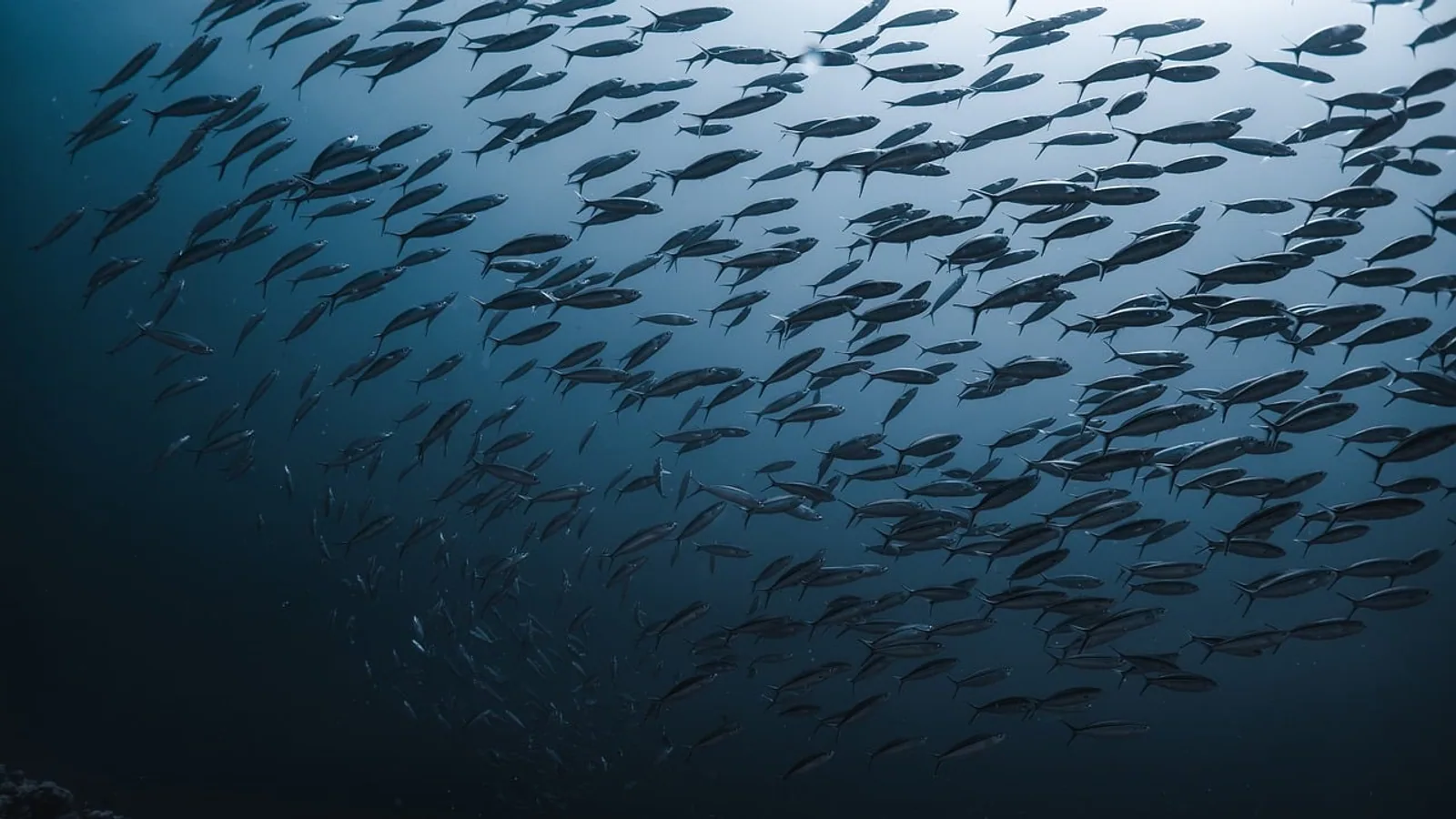
Yes, saltwater fish drink water, and they drink a lot of it. Freshwater fish drink almost nothing at all, because water flows into their bodies through their skin and gills without any effort on their part. The reason comes down to one physical rule: water moves toward the side of a membrane that has more dissolved salt. A saltwater fish is less salty than the ocean around it, so it loses water and must replace it by drinking. A freshwater fish is saltier than the pond or tank around it, so it gains water and must get rid of the excess. The organ that manages all of this is the gill, working together with the kidney.
This article explains how fish drinking water really works, why fish do not get thirsty the way mammals do, how fish pee, and what all of this means for anyone keeping an aquarium. It also covers why sudden salinity changes, poorly matched drip acclimation, and careless salt baths cause real harm.
This article is educational and is not a substitute for veterinary diagnosis or treatment.
The Direct Answer: Do Fish Drink Water?
Whether a fish drinks water depends entirely on the salinity of the water it lives in. Saltwater bony fish drink continuously and pass the swallowed water across the gut, keeping the water and dumping the salt. Freshwater bony fish absorb water passively across the gills and skin and drink very little. Sharks and their relatives sit in a third category. They hold urea and other dissolved compounds in their blood at high concentration, which makes their body fluid about as salty as seawater, so they do not face the same constant water loss and do not need to drink the way a saltwater bony fish does [1].
The word "drink" needs a small clarification. Fish do not have a thirst sensation that feels like yours. They do not seek out water to swallow because their mouth feels dry. Drinking in fish is a reflex driven by water loss, not a conscious craving. When researchers ask "do fish get thirsty," the honest answer is that fish regulate water balance automatically, and the brain circuits involved are tied to salt and water status rather than to a dry mouth [2].
The Physics That Drives Everything: Osmosis in Water
Osmosis is the movement of water across a barrier toward the side with more dissolved particles. Fish gills and skin are that barrier. A fish's body fluid has a fairly stable salt concentration, roughly a third as salty as seawater in most bony fish. The surrounding water can be far more dilute (freshwater) or far more concentrated (seawater). That mismatch is the whole story.
Two terms make the rest of this article easier to follow. An osmoconformer lets its internal concentration drift with the environment. An osmoregulator holds its internal concentration steady no matter what the outside water does. Almost all bony fish are osmoregulators, and that is why they can live in a lake, an estuary, or the open ocean while keeping their blood chemistry nearly constant [3].
Holding that steady state costs energy. The gill cells that move salt are packed with mitochondria, the cell's power plants, because pumping ions against a gradient is hard work. Studies of gill tissue show that these mitochondrion-rich cells are the engine room of salt balance, and they change in size, number, and protein content depending on the salinity the fish faces [4][3].
Freshwater Fish: Why They Barely Drink
A freshwater fish is saltier inside than the water around it. Water pushes inward across the gills, the skin, and the gut lining. The fish does not need to drink because it is already gaining water. In fact, it has the opposite problem: too much water and a slow leak of salts outward.
The freshwater fish solves this in two ways.
First, it produces large volumes of dilute urine. The kidney filters off the incoming water and sends it out, holding onto salts as much as possible. This is why freshwater fish pee frequently and why their urine is close to pure water. If you have ever wondered "do fish pee," the answer is yes, and freshwater fish pee a great deal.
Second, it actively pulls salt back in from the water. Specialized cells in the gills absorb sodium and chloride from an environment where those ions are scarce. In freshwater tilapia, the gill mitochondrion-rich cells express a sodium chloride cotransporter on their surface that captures chloride from the water, and this absorbing machinery becomes more prominent when the fish is placed in very dilute or deionized water [5][6]. The same cell type switches its protein toolkit depending on whether the fish needs to absorb salt or secrete it [5][3].
The gill is not a passive filter. It is a two-way ion exchange organ that can be tuned up or down. Classic work on freshwater-adapted rainbow trout showed that isolated gill cells carry out active chloride transport, confirming that the gill itself does the chemical work rather than just the kidney [7]. Other studies traced how the gill epithelium moves ions and how the cell's internal skeleton helps reposition the transport proteins when conditions change [8][9].
Saltwater Bony Fish: Why They Drink Constantly
A saltwater bony fish is less salty inside than the ocean around it. Water is pulled out of the fish across the gills, and the fish would dehydrate and die within days if it did nothing. So it drinks. Seawater enters through the mouth, travels down the gut, and the intestine absorbs the water while limiting how much salt comes with it.
That absorbed water still carries a salt load. The fish must get rid of the extra sodium and chloride, and the gills are the exit. Mitochondrion-rich cells in the gills of saltwater fish secrete chloride into the surrounding water, and sodium follows. The machinery is well described. In seawater-acclimated fish, the gill cells express a sodium potassium chloride cotransporter that pulls chloride into the cell from the blood side, and a chloride channel on the water-facing side releases it outward [5][3]. This is a coordinated, energy-hungry process, and the cells enlarge and multiply when a fish moves into saltier water.
The kutum, a fish that spawns in rivers but lives in the brackish Caspian Sea, illustrates the size shift clearly. Fish sampled from brackish water had significantly larger and more numerous gill chloride cells than fish from fresh water, and their blood sodium, chloride, potassium, and magnesium levels were higher as well [4]. The gill literally remodels itself to match the salt load.
Saltwater fish also conserve water in the kidney. Instead of dumping dilute urine, they produce small volumes of concentrated urine to hold onto as much water as possible. So a saltwater fish drinks a lot and pees very little, which is the exact opposite of a freshwater fish.
Sharks and Rays: A Third Strategy
Sharks, skates, and rays take a completely different route. They keep urea and trimethylamine oxide in their blood at high levels, which raises their internal concentration until it roughly matches seawater. Because they are close to balanced with the ocean, they do not lose water the way a saltwater bony fish does, and they do not need to drink seawater to stay hydrated [1]. Their problem is the opposite: they tend to gain salt, and they excrete the excess through the kidney and a specialized rectal gland.
This is why shark blood tastes salty and why sharks are sometimes described as retaining urea. The urea is not waste that failed to leave. It is a deliberate osmotic tool.
Do Fish Get Thirsty?
Fish do not experience thirst as a dry-mouth craving. Thirst in mammals is a brain signal triggered by water loss and rising blood salt, and fish have comparable brain regions that monitor salt and water status [2]. A saltwater fish that has lost water will drink, but the drive is hormonal and automatic rather than a felt sensation. A freshwater fish that is gaining water has no reason to seek a drink and generally does not.
So when someone asks "do fish get thirsty," the accurate answer is that fish regulate their water balance without the conscious thirst that land animals feel. They respond to the same underlying signals, but the behavior looks different because their environment is different.
Do Fish Pee? Yes, and the Amount Depends on Salinity
Fish pee, and how much they pee depends on where they live.
Freshwater fish produce copious dilute urine to shed the water that keeps entering their bodies. Saltwater bony fish produce small amounts of concentrated urine to conserve water. Sharks produce urine as well, but their urea retention means their water balance is handled differently from a typical saltwater fish, and they rely heavily on the rectal gland to remove excess salt [1].
For an aquarium keeper, the practical takeaway is that fish continuously release waste and ions into the water. That is one reason water changes and filtration matter, and it is one reason a tank's chemistry drifts over time even when nothing obvious changes.
The Gill: A Two-Way Salt Pump
The gill is the most important osmoregulatory organ in a fish, and it is worth understanding because almost every aquarium problem that involves salinity runs through it.
Gill tissue contains several cell types. Pavement cells form the main surface. Mitochondrion-rich cells, also called chloride cells or ionocytes, handle salt movement. These cells can absorb salt, secrete salt, or do both, depending on the species and the environment [3]. In tilapia, the same mitochondrion-rich cell can switch from a salt-absorbing type in freshwater to a salt-secreting type in seawater, and the switch involves moving transporter proteins to different sides of the cell [5]. The cell's internal microtubule skeleton helps reposition those proteins, and blocking microtubules disrupts the adaptation [5].
The gill also responds to ion-poor water. Tilapia moved to deionized water increased the number of cells expressing a basolateral chloride channel used for chloride uptake, showing that the gill ramps up absorption when salts are scarce [6]. This flexibility is why fish can survive in a range of conditions, and it is also why sudden changes overwhelm them.
Gill cells are metabolically expensive to run. They are rich in mitochondria, and they depend on a steady energy supply. Research on glycogen-rich cells in the gill shows that these cells help fuel ion regulation, linking the gill's salt work to the fish's overall energy budget [10]. A stressed or sick fish has less energy to spare for ion balance, which is one reason illness and poor water quality so often go together.
Why Salinity Swings Harm Fish
A fish acclimated to one salinity has gill cells built for that salinity. Change the water too fast and the cells cannot remodel quickly enough. The result is a mismatch between what the fish's body expects and what the water is doing.
The consequences are predictable. A freshwater fish dropped into full-strength seawater loses water and cannot replace it fast enough. A saltwater fish moved into fresh water takes on water and cannot shed it fast enough. In both cases the fish's blood chemistry shifts, the cells that depend on stable ion concentrations malfunction, and the animal can die.
Tilapia studies show how fast and how completely the gill must change. When seawater-acclimated tilapia were moved to fresh water, the salt-secreting transporter disappeared and the salt-absorbing transporter appeared on the opposite side of the cell, and this remodeling depended on an intact microtubule system [5]. That process takes time. A rapid transfer does not give the gill time to complete it.
Chloride cell size and number track salinity closely, as the kutum study showed, with brackish-water fish carrying larger and more numerous chloride cells than river fish [4]. A fish moved abruptly from one salinity to another is asking its gill to rebuild itself faster than biology allows.
Why Wrong-Salinity Dips and Poor Acclimation Harm Fish
Aquarium keepers sometimes move fish between tanks of different salinity, or dip a fish in a salt bath, without accounting for how long the gill takes to adjust. Two mistakes are common.
The first is a wrong-salinity dip. A dip that is far more or less salty than the fish's home water forces a rapid osmotic shift. The fish's gill cells cannot remodel in minutes, so the fish absorbs or loses water faster than it can compensate. Even a short dip can stress a fish severely, and a long one can kill it.
The second is poor acclimation. When a new fish arrives in a bag of water with a different salinity from the tank, the keeper must equalize the two gradually. Drip acclimation, where tank water is slowly added to the bag over a period of time, gives the gill a chance to adjust. Plopping the fish straight into the tank does not. The longer the salinity difference, the more slowly the transition should go.
The underlying biology is the same in both cases. The gill needs time to change the number, size, and protein content of its mitochondrion-rich cells [4][5][3]. Anything that compresses that timeline increases risk.
Euryhaline Species: Fish That Handle Both Worlds
Some fish can move between fresh water and seawater. These are called euryhaline species, and they are the ones most often kept in brackish or variable-salinity aquariums. Tilapia is a well-studied example, and its gill cells switch between salt absorption and salt secretion as salinity changes [5][6]. The mosquitofish is another adaptable species, though it is better known as a bioindicator of polluted water than as an aquarium fish [11].
Euryhaline fish are not immune to salinity swings. They are more tolerant, but they still need time to adjust, and their gill cells still remodel in response to salinity [5][3]. A keeper who assumes a euryhaline fish can handle any change instantly is misreading the biology.
The kutum is a useful example of a fish that moves between brackish and fresh water as part of its life cycle, and its gill cells and blood ions differ measurably between the two environments [4]. That difference is the signature of an animal that has acclimated, not an animal that can flip a switch.
How Salt Baths Work
A salt bath is a short exposure to water with a higher salt concentration than the fish's normal environment. The idea is to use the osmotic gradient to draw water and possibly surface organisms away from the fish, or to create an environment that is unfavorable to certain external problems.
The mechanism is straightforward. In a salt bath, the water outside the fish is saltier than the fish's body fluid. Water is pulled out of the fish across the gills and skin. A short exposure can be tolerated by some species, but the fish is losing water the entire time, and its gill cells are being pushed to secrete salt. A bath that is too strong or too long overwhelms the fish's ability to compensate.
Salt baths are not a casual home remedy, and they are not appropriate for every fish. Freshwater fish with poor tolerance, scaleless fish, and already stressed or sick fish are at higher risk. The margin between a helpful bath and a harmful one is narrow, and it depends on the species, the fish's condition, and the concentration used. A veterinarian who works with aquatic animals should guide the decision, the concentration, and the duration. The World Aquatic Veterinary Medical Association (WAVMA) and the Merck Veterinary Manual's pet fish resources are reasonable starting points for finding aquatic veterinary guidance.
The same osmotic logic explains why a salt bath can help in one case and harm in another. It is a controlled osmotic stress, and like any stress, the dose and the patient's condition determine the outcome.
Aquarium Relevance: What This Means for Keepers
The biology above translates into a handful of practical rules for anyone keeping fish.
Match the water to the fish. A freshwater fish belongs in fresh water, a saltwater fish belongs in salt water, and a brackish fish belongs somewhere in between. The gill cells of each are built for their environment [4][3].
Change salinity slowly. When you must change salinity, do it over hours or days, not minutes. The gill needs time to remodel [5].
Acclimate new arrivals properly. If the bag water and tank water differ in salinity, drip acclimate. The longer the difference, the slower the transition.
Do not treat salt as a universal tonic. Salt baths have a real mechanism, but they also have real risk. Use them only with guidance.
Watch water quality. Gill cells are energy-hungry and sensitive to toxins. Studies show that pollutants and harmful algae can damage gill cells and disrupt ion transport [11][12]. Copper exposure, for example, can injure gill chloride cells, and cortisol can modify that response [13]. Harmful algal metabolites can cause potassium to leak out of gill cells and kill them [12]. A fish already fighting poor water quality has less capacity to handle an osmotic challenge.
Test your water. Salinity, pH, ammonia, nitrite, and nitrate all affect the gill. Stable, appropriate water chemistry is the foundation of fish health.
Common Myths About Fish Drinking Water
Several myths circulate about fish and water.
Myth: Fish never drink. False. Saltwater bony fish drink constantly [1][2].
Myth: Fish do not pee. False. Fish pee, and freshwater fish pee a lot [2].
Myth: Fish get thirsty like people do. Misleading. Fish regulate water balance automatically, without the conscious thirst land animals feel [2].
Myth: Sharks drink seawater like other saltwater fish. False. Sharks retain urea to match seawater and do not need to drink the same way [1].
Myth: Salt baths are harmless. False. A salt bath is a controlled osmotic stress, and it can harm a fish if the concentration or duration is wrong.
Myth: A fish can move between any two salinities instantly. False. The gill needs time to remodel its cells and transporters [5][3].
What Is Still Uncertain
Fish osmoregulation is well studied, but not every question is settled. The exact mechanisms of sodium and chloride uptake in freshwater fish are still debated, and different species appear to use different pathways [3]. The role of the cell's internal skeleton in remodeling gill cells is an active area of research, and microtubule disruption has been shown to interfere with adaptation in tilapia [5]. How individual aquarium species tolerate specific salinity changes is often not documented in the scientific literature, which is why species-specific guidance from an aquatic veterinarian matters.
Limitations and When to Contact a Veterinarian
This article explains general principles. Individual fish vary by species, age, health status, and history, and a veterinarian who examines the animal can give advice that fits the case.
Contact an aquatic veterinarian or a fish health professional if any of the following occur:
- A fish develops rapid breathing, gasping at the surface, or hanging near the filter outflow after a salinity change.
- A fish shows loss of balance, listing, or erratic swimming.
- A fish develops visible gill swelling, pale gills, or excess mucus.
- A fish stops eating or becomes lethargic after a tank move or a salt bath.
- Multiple fish in the same tank become ill at once, which suggests a water quality problem.
- You are unsure whether a salt bath is appropriate for your species.
The AVMA and WAVMA both provide resources on aquatic animal health, and the Merck Veterinary Manual's pet fish section is a useful reference for owners. A veterinarian can assess water chemistry, examine the fish, and recommend a plan.
Frequently Asked Questions
Do fish drink water?
Yes, but only some fish drink in the everyday sense. Saltwater bony fish drink continuously to replace water lost to the ocean, while freshwater fish absorb water through their gills and skin and drink very little [1][2].
Does a fish drink water in a freshwater tank?
Freshwater fish generally do not drink. Water flows into their bodies passively, so they spend their effort getting rid of excess water rather than taking it in.
Do fish get thirsty?
Fish do not feel thirst the way land animals do. Their water balance is regulated automatically by hormones and brain circuits that monitor salt and water status, not by a dry-mouth sensation [2].
Do fish pee?
Yes. Freshwater fish produce large amounts of dilute urine, while saltwater bony fish produce small amounts of concentrated urine to conserve water [2].
Why do saltwater fish drink so much water?
Saltwater fish are less salty than the sea around them, so water is constantly pulled out of their bodies. Drinking seawater and absorbing it through the gut replaces that lost water [1][2].
Do sharks drink water?
Sharks do not drink the way saltwater bony fish do. They retain urea and other compounds to match seawater, so they do not lose water the same way and do not need to drink to stay hydrated [1].
Why does a sudden salinity change hurt a fish?
Because the gill cells that move salt need time to change in size, number, and protein content. A fast change outpaces that remodeling and disrupts the fish's internal salt and water balance [4][5][3].
How does a salt bath work?
A salt bath uses a higher outside salt concentration to pull water out of the fish across the gills and skin. It is a controlled osmotic stress, and it should only be used with guidance from an aquatic veterinarian because the margin between helpful and harmful is narrow.
Related Articles
- Saltwater Fish Quarantine Guide
- Ich Treatment for Freshwater Fish
- Aquarium Fish Water Quality Testing and Interpretation
- Dechlorinating Water for Your Fish Tank: Methods and Best Practices
- Discus Fish Care: Tank Setup, Water, Diet, and Health
- Choosing the Right Water for Your Fish Tank: Tap, Spring, or Distilled?
- Saltwater Aquarium Water Changes: How Much, How Often, How To
- Can Fish See Water? How Fish Vision Actually Works
- Fish Tank Leak: Emergency Steps, Finding It, and Resealing
Sources
- Do fish and sharks drink water? - Ask Dr. Universe (askdruniverse.wsu.edu)
- How much water do fish drink? - PMC (pmc.ncbi.nlm.nih.gov)
- New insights into fish ion regulation and mitochondrion-rich cells.
- Cytological comparison of gill chloride cells and blood serum ion concentrations in kutum (Rutilus frisii kutum) spawners from brackish (Caspian Sea) and fresh water (Khoshkrood River) environments
- Microtubule-dependent changes in morphology and localization of chloride transport proteins in gill mitochondria-rich cells of the tilapia, Oreochromis mossambicus.
- Ion-deficient environment induces the expression of basolateral chloride channel, ClC-3-like protein, in gill mitochondrion-rich cells for chloride uptake of the tilapia Oreochromis mossambicus.
- Chloride transport by isolated gill cells of the fresh water adapted rainbow trout (Salmo gairdneri)
- Cell signaling and ion transport across the fish gill epithelium.
- Kinetic studies of ion transport by fish gill epithelium.
- Glycogen phosphorylase in glycogen-rich cells is involved in the energy supply for ion regulation in fish gill epithelia.
- The effect of cadmium exposure on the cytoskeleton and morphology of the gill chloride cells in juvenile mosquito fish (Gambusia affinis)
- Fish gill damage by harmful microalgae newly explored by microelectrode ion flux estimation techniques.
- Cortisol protects against copper induced necrosis and promotes apoptosis in fish gill chloride cells in vitro