Why Is My Fish Rubbing Against Rocks or Gravel?
By Dr. Zubair Khalid, DVM, MS, PhD ·
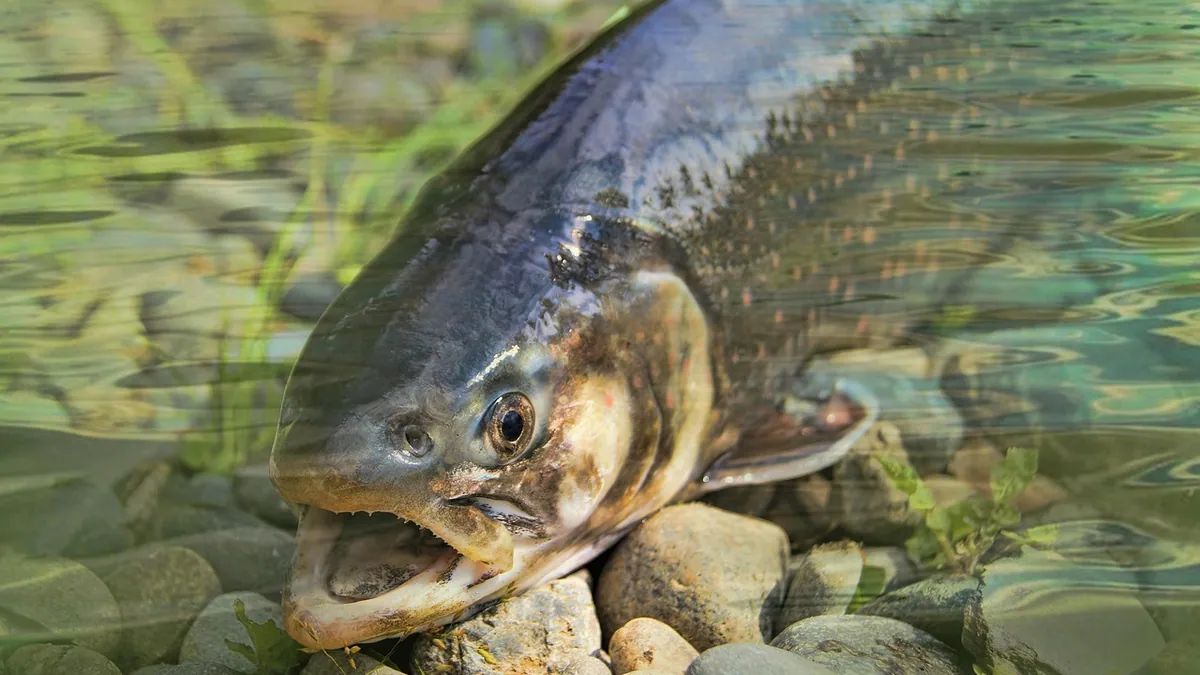
If your goldfish is rubbing against the rocks, the most likely reason is that something is irritating its skin or gills. Fish do this to scratch an itch they cannot reach any other way. The medical term is flashing, and it is one of the earliest visible signs that a parasite, a water quality problem, or an injury is bothering your fish.
This article is educational and is not a substitute for veterinary diagnosis or treatment.
Quick Answer
- Flashing means your fish is scratching its body or gills against a hard surface, and it is almost always a response to irritation.
- The two biggest categories of causes are external parasites (such as Ich, flukes, and lice) and irritant water (ammonia, nitrite, wrong pH, or chlorine).
- Test your water first. Ammonia and nitrite should read zero in a healthy, cycled tank.
- Move a flashing fish to a quarantine tank if you can, and do not add random medications to the main tank.
- Call an aquatic veterinarian if flashing continues after a water change, if multiple fish are affected, or if you see spots, wounds, or clamped fins.
What Flashing Looks Like and What Is Normal
Flashing is a quick, deliberate scrape. Your fish turns its body and darts sideways or downward so its flank or gills drag along a rock, the gravel, the glass, or a filter tube. It often repeats, sometimes several times in a row. A goldfish rubbing on the gravel may also shimmy, twitch, or hold its fins clamped against its body.
Some normal behaviors get mistaken for flashing. A fish may graze algae off a rock, nudge the substrate while foraging, or brush past decor while swimming. Moray eels, for example, use chemical cues to find prey across habitat boundaries, which shows how strongly fish rely on smell and taste to guide feeding behavior [1]. Grazing looks slow and purposeful. Flashing looks sudden and repetitive, and the fish usually returns to the same spot to scratch again.
One more thing that is not flashing: some fish produce light or color signals that can look like a flicker. Certain silversides have iridophore spots that flash rhythmically under white light, with pulses lasting about one second and repeating at roughly 0.5 to 1 Hz [2]. That is a signaling behavior, not scratching. If your fish is pressing its body into a surface, it is flashing.
Why Is My Goldfish Rubbing Against the Rocks? The Main Causes
Several problems produce the same scratching behavior. The table below groups them by what you are likely to see and how fast you need to act.
| Cause | Typical clues | How urgent |
|---|---|---|
| External parasites (Ich, flukes, lice, anchor worms) | White spots, visible bugs, excess slime, clamped fins, scratching that spreads to tankmates | Urgent, treat promptly |
| Ammonia or nitrite spike | Test kit shows ammonia or nitrite above zero, red or inflamed gills, gasping at the surface | Emergency, act today |
| pH swing or wrong hardness | Sudden pH change after a water change, fish acting stressed after new water | Urgent, correct slowly |
| Chlorine or chloramine in tap water | Flashing starts right after a water change with untreated tap water | Emergency, treat water now |
| Skin injury or bacterial infection | A wound, frayed fins, redness at the base of fins | Urgent, may need antibiotics |
| Temperature shock | Flashing after a heater failure or a large cold water change | Urgent, stabilize temperature |
| Nothing physical (rare) | Fish is otherwise healthy, eating well, no spots, water tests clean | Monitor closely |
External Parasites
Parasites are the classic reason a goldfish rubs on the gravel. Ich (white spot disease) is the most common, and it shows up as fine white grains on the fins and body. Flukes, lice, and anchor worms also cause intense scratching. A fish with parasites often produces extra slime, breathes faster, and may clamp its fins. If one fish has parasites, assume the whole tank is exposed, because most of these organisms have a free-swimming stage that moves between fish.
Water Quality Problems
Irritant water is just as common as parasites, and it is easier to rule out. Ammonia and nitrite burn the gills and skin, and fish respond by flashing and gasping. A sudden pH shift, high nitrate, or untreated tap water with chlorine or chloramine can do the same thing. Water chemistry also affects how fish behave and communicate. In one catfish species, sound duration changed significantly with temperature, which shows how sensitive fish physiology is to environmental conditions [3]. Stress from poor water quality can also disrupt hormone regulation and reproduction, and multiple stressors such as ammonia toxicity, low pH, and high temperature compound the damage [4].
Injury, Infection, and Irritating Substrate
A sharp rock or rough gravel can scratch a fish that darts against it. Once the skin is broken, bacteria can move in and cause fin rot or open wounds. Substrate choice matters here, and you can read more about it in Aquarium Substrate Selection: Sand vs. Gravel vs. Soil. Chronic stress from any cause makes fish more vulnerable to infection, which is covered in Aquarium Fish Stress Syndrome: Causes, Signs, and Management.
Why Bettas Do It Too
Owners often search "why is my betta fish rubbing against rocks" for the same reason goldfish owners do. Bettas flash for the same causes: parasites, ammonia, pH swings, or a rough decoration. If your betta fish is rubbing against rocks, check the water first, then look closely for white spots, velvet (a gold dust appearance), or clamped fins. Bettas are also prone to fin problems, so watch for fraying that could point to Aquarium Fish Fin Rot: Causes, Symptoms, and Treatment.
Red Flags That Make It an Emergency
Some signs mean you should act right away, not wait and watch.
- Ammonia or nitrite above zero on a test kit.
- Gasping at the surface or hanging near the filter outflow.
- Multiple fish flashing or dying in the same tank.
- Visible white spots, gold dust, or worms on the body.
- Open wounds, bleeding, or red streaks at the fin bases.
- A fish that stops eating and sits on the bottom.
- A fish that cannot right itself or is floating sideways. This can overlap with swim bladder disease, described in Goldfish Swim Bladder Problem.
If you see any of these, do a partial water change with properly conditioned water and contact an aquatic veterinarian.
Safe Things You Can Do at Home While You Wait
You can take several safe steps before a veterinary visit.
- Test the water. Check ammonia, nitrite, nitrate, pH, and temperature. Write down the numbers so you can share them.
- Do a partial water change. Replace 25 to 50 percent of the water with dechlorinated water that matches the tank temperature.
- Stop feeding for 24 hours. This reduces waste and ammonia production while you sort out the cause.
- Check the filter and aeration. Make sure water flow and oxygen are adequate.
- Isolate the fish if you have a cycled quarantine tank. This protects tankmates and makes observation easier.
- Do not mix medications blindly. Many parasite treatments are harsh, and the wrong one can harm fish, plants, and your biofilter.
If you suspect a toxin or a poisoning, call the ASPCA Animal Poison Control Center at (888) 426-4435 or the Pet Poison Helpline at (855) 764-7661. Both may charge a consultation fee.
What Your Veterinarian Will Check and Test
An aquatic veterinarian will start with a full history: tank size, stocking, filtration, water change schedule, recent additions, and test results. Then they will examine the fish directly.
- Skin and gill scrapes. A small sample of mucus is examined under a microscope to identify parasites.
- Water testing. A veterinarian can confirm ammonia, nitrite, pH, and hardness values.
- Physical exam. They look for wounds, fin damage, spots, and signs of bacterial or fungal infection.
- Behavior review. They may ask about feeding, breathing rate, and how long the flashing has lasted.
Treatment depends on the diagnosis. Parasite medications, antibiotics, or water corrections are chosen based on the specific problem. Your veterinarian calculates any drug dose from the fish's weight, species, and health status. Never guess a dose on your own.
Prevention and Monitoring
Prevention is mostly about stable, clean water and careful quarantine.
- Quarantine new fish for at least two to four weeks before adding them to a main tank.
- Test water weekly and keep ammonia and nitrite at zero.
- Change 25 to 50 percent of the water on a regular schedule.
- Match temperature and pH when adding new water.
- Avoid overcrowding and overfeeding.
- Watch your fish at feeding time. Flashing and appetite changes show up early if you look daily.
If you keep koi or goldfish in a pond, water hardness and alkalinity affect stability, and you can read more in Koi Pond Water Hardness and Alkalinity: What You Need to Know.
Limitations and When to Contact a Veterinarian
This article cannot diagnose your fish. Individual cases need a veterinarian who can examine the fish and test the water directly.
Contact a veterinarian the same day if flashing continues after a water change, if water tests show ammonia or nitrite, or if you see spots, wounds, or clamped fins. Treat it as an emergency now if multiple fish are affected, if a fish is gasping or cannot right itself, or if you suspect chlorine or another toxin in the water. A routine visit is fine for mild, occasional flashing in a fish that is eating and swimming normally.
Frequently Asked Questions
Does flashing always mean parasites?
No. Parasites are common, but irritant water, pH swings, and chlorine cause the same behavior. Test your water before assuming parasites.
Can I treat flashing with aquarium salt?
Salt can help with some external parasites, but it is not right for every fish or every problem. Ask a veterinarian before adding salt, especially for scaleless fish.
How long does it take for a fish to stop flashing after treatment?
It depends on the cause. Water quality fixes may show improvement within a day, while parasite treatments often take a full treatment cycle. Follow your veterinarian's schedule.
Is flashing contagious to other fish?
The behavior itself is not contagious, but the underlying cause often is. Parasites spread between fish, so treat the whole tank when parasites are confirmed.
Should I raise the temperature to treat Ich?
Some Ich treatments work faster at higher temperatures, but raising heat also lowers oxygen and stresses fish. Ask a veterinarian for a plan that fits your species and tank.
Can a fish hurt itself by flashing?
Yes. Repeated scraping can damage skin, fins, and the protective slime coat. That opens the door to bacterial infections, so treat the cause quickly.
Related Articles
- Aquarium Substrate Selection: Sand vs. Gravel vs. Soil
- Aquarium Fish Stress Syndrome: Causes, Signs, and Management
- Goldfish Swim Bladder Problem
- Aquarium Fish Fin Rot: Causes, Symptoms, and Treatment
- Koi Pond Water Hardness and Alkalinity: What You Need to Know
- Goldfish Tank Size Care
- Why Is My Goldfish Sitting at the Bottom of the Tank?
- Why Is My Betta or Goldfish Hiding? Causes and Fixes
- Why Is My Goldfish Dying? Signs and What to Do
References
- Chemical cues facilitate foraging across the water-land interface in a resident predatory fish. Behavioral ecology : official journal of the International Society for Behavioral Ecology, 2026.
- Flashing spots on the dorsal trunk of hardyhead silverside fish. Royal Society open science, 2021.
- Temperature affects sound production in fish with two sets of sonic organs: The Pictus cat. Comparative biochemistry and physiology. Part A, Molecular & integrative physiology, 2020.
- Cobalt nanoparticles protect against endocrine disruption in response to multiple abiotic stresses in fish. Frontiers in immunology, 2026.