Frog vs. Toad: Key Differences for Pet Owners
Key Takeaways
- Amphibian skin is highly permeable, necessitating the use of dechlorinated water and avoidance of chemical contaminants in enclosures to prevent absorption and subsequent health issues like red leg syndrome or chemical burns.
- Toads possess prominent parotoid glands secreting bufotoxins, requiring owners to wash hands thoroughly after handling to prevent irritation to mucous membranes, and to keep toads away from pets susceptible to poisoning.
- Nutritional deficiencies, particularly calcium and vitamin D3, are common in captive amphibians and can lead to metabolic bone disease; consistent gut-loading of prey and appropriate supplementation are critical preventive measures.
- Amphibians are sensitive to stress, and excessive handling can suppress immune function and disrupt the protective mucus layer, thus minimizing handling to essential husbandry tasks and health checks is paramount for welfare.
- Accurate species identification is crucial, as common names "frog" and "toad" do not denote formal taxonomic groups, and differing skin textures, habitat preferences, and toxin production necessitate species-specific enclosure design, humidity targets, and handling protocols.
Frogs and toads are both anurans, the order of tailless amphibians, but they differ in skin structure, habitat preference, reproductive behavior, and captive care requirements. For pet owners, the practical distinction matters because these differences directly affect enclosure design, humidity targets, feeding strategy, and safe handling practices. This article compares frog and toad biology and translates those differences into concrete management decisions for common pet species.
At a Glance
The table below summarizes the main differences between frogs and toads that affect pet ownership decisions. Use it as a quick reference when selecting a species or troubleshooting an existing enclosure.
| Feature | Typical Frog | Typical Toad | Pet Ownership Implication |
|---|---|---|---|
| Skin texture | Smooth, moist, often glandular | Dry, warty, thicker epidermis | Toads tolerate lower humidity but still require moisture access |
| Habitat preference | Aquatic or semi-aquatic, high humidity | Terrestrial, variable humidity | Enclosure design differs in water area size and ventilation |
| Locomotion | Long hind legs for jumping | Shorter legs for walking or hopping | Enclosure height matters more for frogs than toads |
| Parotoid glands | Present in some species, less prominent | Prominent behind eyes | Toads secrete bufotoxins that require hand washing after contact |
| Activity pattern | Many species nocturnal or crepuscular | Most species nocturnal | Both need night-time feeding schedules and hiding spots |
| Captive diet | Live invertebrates, species specific | Live invertebrates, species specific | Gut loading and calcium dusting apply to both |
| Handling tolerance | Poor, skin absorbs substances | Poor, toxin release under stress | Minimize handling for both groups |
Taxonomic Context and Species Identification
The words frog and toad do not describe formal taxonomic categories. Both belong to the order Anura, and the common names reflect physical and ecological tendencies instead of evolutionary lineages. Some families contain species called frogs that look and behave like toads, and some species called toads live in moist environments and have smooth skin.
For pet owners, the practical starting point is species identification. A pet store label that says frog or toad may not match the animal's actual care requirements. Confirm the scientific name before purchasing an enclosure or planning a diet. The Merck Veterinary Manual provides general amphibian health information that applies across anuran species, but individual species still require species specific care.
Anuran Families Commonly Kept as Pets
Common pet frogs include members of the families Hylidae, the tree frogs, and Pipidae, the aquatic clawed frogs. Common pet toads include members of the family Bufonidae, the true toads. Each family has distinct anatomical features that influence captive care.
Tree frogs have expanded toe pads that allow climbing on vertical surfaces. They require tall enclosures with branches and foliage. Aquatic clawed frogs lack tongues and use their forelimbs to push food into their mouths. They require fully aquatic enclosures with filtration. True toads have robust bodies, short legs, and dry skin with prominent warts. They require terrestrial enclosures with a substrate that holds moisture without becoming waterlogged.
Skin Structure and Its Care Implications
Frog skin is thin, moist, and highly permeable. This permeability allows cutaneous respiration, meaning frogs absorb oxygen through their skin. The same permeability means frogs absorb chemicals from their environment, including contaminants on human hands. The Merck Veterinary Manual emphasizes that amphibian skin is sensitive and that improper handling or contaminated substrates can cause health problems.
Toad skin is thicker and drier, with keratinized layers that reduce water loss. The warts on toad skin are clusters of glands, not infectious growths. The parotoid glands behind the eyes produce bufotoxins, which are defensive secretions. These toxins can irritate human skin and mucous membranes. Always wash hands after handling a toad and avoid touching your eyes or mouth before washing.
Habitat Requirements and Enclosure Design
The primary difference between frog and toad enclosures is the balance between water and land. Frogs generally need more water and higher humidity. Toads generally need less water and more ventilation, but they still require a moist retreat.
Enclosure Size and Dimensions
Frogs that jump need vertical space. Tree frogs need height for climbing. Terrestrial frogs need floor space for movement. Toads need floor space but less height because they walk instead of jump. A 20 gallon enclosure suits a single small tree frog or a single small toad, but the dimensions differ. A tall enclosure suits tree frogs. A long, low enclosure suits toads.
Substrate Selection
Substrate choice affects humidity, hygiene, and toxin exposure. For frogs, use moisture retaining substrates such as coconut fiber, sphagnum moss, or chemical free topsoil. Avoid substrates with fertilizers or pesticides because frog skin absorbs these chemicals. For toads, use similar substrates but allow the top layer to dry between mistings. Toads burrow, so provide a substrate depth of at least 5 to 8 centimeters.
Water Quality and Access
Frogs that are aquatic or semi-aquatic need a water area large enough for full submersion. Use dechlorinated water. Tap water contains chlorine and chloramine, which damage amphibian skin. Toads need a shallow water dish large enough for soaking but shallow enough to prevent drowning. Change the water daily and clean the dish with hot water without soap residue.
Temperature and Humidity Targets
Temperature and humidity targets vary by species. Research the specific species before setting up the enclosure. General ranges for tropical frogs are 24 to 28 degrees Celsius during the day with 70 to 90 percent humidity. General ranges for temperate toads are 18 to 24 degrees Celsius with 40 to 60 percent humidity. Use a digital thermometer and hygrometer to monitor conditions. Mist the enclosure with dechlorinated water as needed to maintain the target humidity.
Diet and Feeding Management
Both frogs and toads are carnivorous and eat live invertebrates. The size and frequency of feedings depend on the species and the age of the animal. Juvenile anurans eat daily. Adult anurans eat every two to three days.
Prey Selection
Common prey items include crickets, roaches, mealworms, and waxworms. Aquatic frogs eat aquatic invertebrates such as brine shrimp, bloodworms, and small fish. Toads eat terrestrial invertebrates. Match prey size to the width of the animal's head. Prey that is too large causes impaction or regurgitation.
Gut Loading and Supplementation
Gut loading means feeding nutritious food to the prey before offering it to the amphibian. Feed crickets and roaches fresh vegetables and a commercial gut load formula for 24 hours before feeding them to the amphibian. Dust prey with a calcium supplement at most feedings and a multivitamin supplement once or twice per week. The Merck Veterinary Manual notes that nutritional deficiencies are common in captive amphibians and that supplementation is a standard preventive measure.
Feeding Observation and Records
Observe each feeding to confirm that the animal eats. Record the date, prey type, prey quantity, and whether the animal accepted the food. A sudden loss of appetite lasting more than three days warrants veterinary evaluation. Weight loss, lethargy, and abnormal posture also warrant evaluation.
Handling and Safety Considerations
Amphibians are not pets that tolerate frequent handling. Their skin is delicate and permeable. Handling causes stress, and stress suppresses immune function. The World Organisation for Animal Health addresses animal health and welfare standards that apply to all captive animals, including amphibians. Minimizing handling is a welfare measure.
Safe Handling Technique
When handling is necessary, such as for enclosure cleaning or health inspection, use powder free nitrile gloves wetted with dechlorinated water. Wet gloves reduce friction and prevent the removal of the protective mucus layer on the skin. Support the animal's body fully. Never grasp a frog or toad by a limb. Never use bare hands because skin oils and residues are absorbed through amphibian skin.
Toxin Exposure From Toads
Toads release bufotoxins from their parotoid glands when stressed. These toxins cause irritation to human skin and mucous membranes. After handling a toad, wash your hands thoroughly with soap and water. If toxin contacts your eyes or mouth, rinse with clean water and seek medical advice if irritation persists. Keep toads away from other pets. Dogs and cats that mouth toads can develop severe poisoning and require immediate veterinary care.
Zoonotic Disease Considerations
Amphibians can carry Salmonella bacteria. The World Organisation for Animal Health provides guidance on animal health and welfare that includes biosecurity measures for captive animals. Wash hands after any contact with the enclosure, substrate, or water. Do not allow children under five years old to handle amphibians. Do not clean amphibian equipment in kitchen sinks. Use dedicated cleaning supplies.
Health Monitoring and Common Conditions
Regular observation is the foundation of amphibian health care. Learn the normal appearance and behavior of your animal so you can detect changes early. Weigh the animal monthly and record the weight. Sudden weight loss or weight gain indicates a problem.
Skin Conditions
Redness, peeling, or lesions on the skin indicate infection or environmental irritation. Check water quality and substrate moisture. Red leg syndrome, a bacterial infection, causes redness on the abdomen and legs and requires veterinary treatment. Skin sloughing can indicate a fungal infection or chemical exposure.
Parasitic Infections
Amphibians in the wild carry parasites, and captive animals can acquire parasites from contaminated food or substrate. Research on amphibian parasites documents the diversity of nematode infections across tropical regions. A checklist of molineid nematodes from amphibians and reptiles describes 53 species found in the Neotropical and Panamanian regions, including the Caribbean islands, with details on their host range and geographic distribution. While this research focuses on wild populations, it illustrates that parasitic infections are common in amphibians and that fecal screening is a routine part of veterinary care for captive animals.
Another study documented dactylosomatid parasites in water frogs from Slovakia. Of 239 anurans screened, 67 individuals belonging to three species of water frogs were infected with haemogregarines of the genus Dactylosoma. This finding provides the first published record of these parasites in frogs from Slovakia and demonstrates that blood parasites occur in anuran populations. Captive frogs can carry similar parasites, and a veterinary examination with blood smear evaluation may be recommended for newly acquired animals.
Metabolic Bone Disease
Metabolic bone disease results from calcium deficiency, vitamin D3 deficiency, or both. Symptoms include soft jaws, bent limbs, and muscle tremors. Prevention requires calcium dusting, multivitamin supplementation, and appropriate UVB lighting for species that require it. The Merck Veterinary Manual covers nutritional and metabolic disorders in amphibians and emphasizes prevention through proper diet and lighting.
Respiratory and Digestive Issues
Respiratory infections cause open mouth breathing, wheezing, and lethargy. Digestive issues cause regurgitation, bloating, and reduced appetite. Both require veterinary evaluation. Do not attempt to treat these conditions at home.
Veterinary Care and Escalation Criteria
Routine veterinary care for amphibians includes an annual physical examination, fecal examination for parasites, and a review of husbandry practices. Find a veterinarian who treats exotic pets before you need one. Establish a relationship and ask about emergency availability.
Routine Veterinary Visit Schedule
Schedule a wellness examination within two weeks of acquiring a new frog or toad. Bring a fecal sample from the first three days in your care. The veterinarian will assess body condition, skin health, and hydration status. Annual examinations are recommended for established pets.
Urgent Escalation Criteria
Seek veterinary care immediately if you observe any of the following signs. These signs indicate a potentially life threatening condition that requires professional evaluation.
| Sign | Possible Cause | Action |
|---|---|---|
| Open mouth breathing or wheezing | Respiratory infection | Immediate veterinary visit |
| Redness on abdomen or legs | Bacterial infection, red leg syndrome | Immediate veterinary visit |
| Inability to right itself when flipped over | Neurological or metabolic issue | Immediate veterinary visit |
| Seizures or tremors | Metabolic bone disease or toxin exposure | Immediate veterinary visit |
| Bloated or distended body | Fluid retention or organ failure | Immediate veterinary visit |
| Blood in stool or urine | Parasitic or bacterial infection | Immediate veterinary visit |
| Sudden weight loss exceeding 10 percent of body weight | Parasitic, bacterial, or metabolic disease | Veterinary visit within 24 hours |
| Skin lesions or ulcers | Fungal or bacterial infection | Veterinary visit within 24 hours |
Routine Escalation Criteria
Seek veterinary advice within 24 to 48 hours if you observe any of the following signs. These signs indicate a developing problem that may respond to early intervention.
| Sign | Possible Cause | Action |
|---|---|---|
| Reduced appetite for more than three days | Stress, temperature issue, or early illness | Veterinary advice within 48 hours |
| Abnormal feces for more than two days | Dietary issue or parasitic infection | Veterinary advice within 48 hours |
| Lethargy or reduced activity | Temperature issue or early illness | Check husbandry, then veterinary advice |
| Abnormal skin color or texture | Environmental issue or infection | Check husbandry, then veterinary advice |
| Weight loss over two consecutive monthly weighings | Chronic disease | Veterinary advice within 48 hours |
Common Failure Patterns in Frog and Toad Care
Most health problems in captive frogs and toads trace back to preventable husbandry errors. Recognizing these patterns helps owners correct issues before they become emergencies.
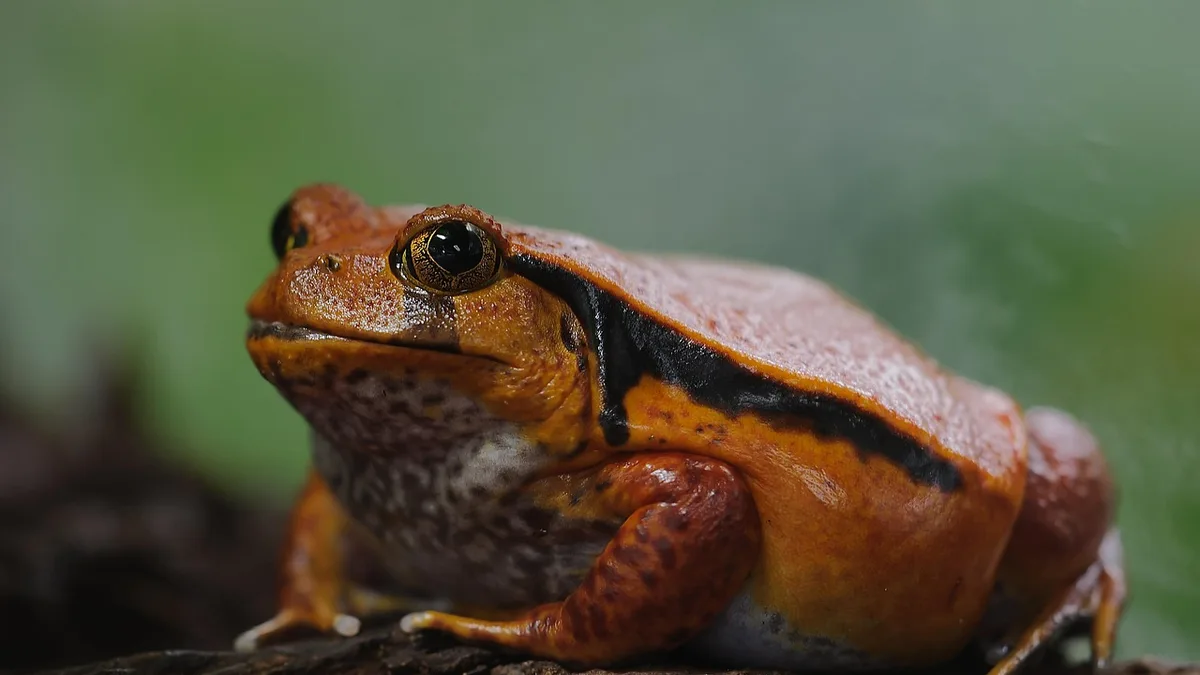 Amphibian skin is permeable, so water chemistry acts directly on the animal. Photo: miniformat65 via Pixabay.
Failure Pattern One: Inappropriate Humidity
Frogs kept too dry develop dry skin, retained shed, and dehydration. Toads kept too wet develop skin infections and bacterial disease. The fix is species specific humidity monitoring. Use a digital hygrometer and adjust misting frequency based on readings, not on a fixed schedule.
Failure Pattern Two: Contaminated Water
Amphibian skin absorbs contaminants from water. Tap water chlorine, soap residue, and decaying organic matter all harm frogs and toads. The fix is dechlorinated water, daily water changes, and thorough rinsing of water dishes and filters.
Failure Pattern Three: Overfeeding or Underfeeding
Overfeeding causes obesity and fatty liver disease. Underfeeding causes malnutrition and stunted growth. The fix is a feeding schedule matched to the species and life stage, with monthly weight records to confirm appropriate body condition.
Failure Pattern Four: Inadequate Supplementation
Calcium and vitamin deficiencies develop over months and cause metabolic bone disease. The fix is consistent gut loading and dusting protocols. Record each feeding and supplementation event to confirm compliance.
Failure Pattern Five: Excessive Handling
Frequent handling removes the protective mucus layer, causes stress, and increases disease susceptibility. The fix is a hands off policy. Handle only for health checks and enclosure maintenance, and use wet gloves when handling is necessary.
Failure Pattern Six: Incompatible Tank Mates
Housing multiple frogs or toads together can cause stress, injury, and disease transmission. Some species are cannibalistic. The fix is species specific research on social compatibility. When in doubt, house amphibians singly.
Species Selection for Pet Owners
Choosing between a frog and a toad starts with an honest assessment of your experience level, available space, and tolerance for specific care tasks. Both groups require commitment, but the daily routines differ.
Beginner Considerations
Some species are more forgiving of minor husbandry errors than others. The Merck Veterinary Manual provides general amphibian care information, but species specific research is essential before purchase. A veterinarian who treats exotic pets can recommend species suited to your experience level.
Space and Time Commitment
Frogs generally require more daily attention to humidity and water quality. Toads generally require less frequent misting but still need daily water changes and regular substrate cleaning. Both groups live for 5 to 15 years depending on species, so consider the long term commitment before purchase.
Cost Considerations
Initial setup costs include the enclosure, heating, lighting, substrate, and water treatment supplies. Ongoing costs include live prey, supplements, and veterinary care. Emergency veterinary care for amphibians can be expensive. Budget for annual wellness examinations and a reserve for unexpected illness.
Observational Records and Monitoring Protocols
Accurate records support early detection of health problems and provide useful information to your veterinarian. Maintain a simple log with the following sections.
Daily Observation Log
Record the date, temperature, humidity, and a brief note on the animal's activity level and appetite. Note any abnormal behavior such as hiding more than usual, reduced movement, or changes in posture. Note any changes in skin appearance or color.
Feeding Log
Record the date, prey type, prey quantity, and whether the animal accepted the food. Record whether supplements were applied. Note any regurgitation or reduced appetite.
Weight Log
Weigh the animal monthly using a digital scale accurate to 1 gram. Place the animal in a clean, dry container on the scale. Record the weight and compare it to previous readings. A weight change of more than 10 percent between monthly readings warrants veterinary advice.
Health Event Log
Record any health concerns, veterinary visits, treatments, and outcomes. Include the date, the concern, the veterinary recommendation, and the response to treatment. This log provides continuity of care and helps your veterinarian track the animal's history.
Welfare and Ethical Considerations
The World Organisation for Animal Health sets international standards for animal health and welfare. These standards apply to all animals under human care, including amphibians. Responsible pet ownership means providing an environment that meets the animal's behavioral and physiological needs.
Environmental Enrichment
Frogs and toads benefit from environmental enrichment that encourages natural behaviors. Provide hiding spots, climbing structures for tree frogs, and burrowing substrate for toads. Vary the arrangement of enclosure furniture during cleaning to provide novelty. Observe the animal's response to enrichment and adjust based on its behavior.
Ethical Sourcing
Acquire frogs and toads from reputable breeders or rescue organizations. Wild caught animals often carry parasites and adapt poorly to captivity. The checklist of molineid nematodes from amphibians and reptiles documents the diversity of parasites in wild populations, and the study of dactylosomatid parasites in water frogs confirms that blood parasites occur in wild anurans. Captive bred animals from reputable sources have lower parasite loads and better health outcomes.
Conservation Awareness
Some frog and toad species are threatened or endangered. The study of new species amongst Sri Lanka's extinct shrub frogs documents species that have already disappeared, highlighting the vulnerability of amphibian populations. Pet owners should verify that their chosen species is not protected or endangered and should never purchase wild caught animals of threatened species.
Research Context and Scientific Background
Understanding the biology of frogs and toads supports better captive care. Research on amphibian physiology, behavior, and disease informs husbandry recommendations.
Amphibian Sensory Biology
Frogs and toads rely on auditory signals for communication and prey detection. A comparison of low-frequency auditory fiber responses in two anuran amphibians examined how anuran auditory systems process low-frequency sounds. This research has implications for captive environments. Loud or constant noise can stress amphibians, and enclosure placement away from televisions, speakers, and high traffic areas supports welfare.
Amphibian UV Tolerance
Some amphibians have evolved mechanisms to cope with ultraviolet radiation. A comparison of photolyase activity in three Australian tree frogs examined the enzyme activity that repairs UV damaged DNA. This research relates to captive lighting decisions. Species that naturally inhabit shaded environments may be more sensitive to UV exposure, and UVB lighting should be matched to the species' natural history.
Amphibian Monitoring Methods
Effective monitoring of amphibian populations requires appropriate survey methods. A comparison of methods for detecting inter-site variation in species composition examined tropical amphibian monitoring techniques. For pet owners, the principle translates to using multiple observation methods. Visual checks, weight records, and feeding observations together provide a more complete picture of health than any single method alone.
Amphibian Genetics and Evolution
Advances in genetic analysis support species identification and conservation. A comparison of next-generation mitogenomics approaches applied to caecilian amphibian phylogeny evaluated different sequencing methods for amphibian evolutionary studies. For pet owners, accurate species identification matters because closely related species can have different care requirements. If you are uncertain about your animal's species, consult a veterinarian or a qualified herpetologist.
Amphibian Starvation Physiology
Understanding the effects of food deprivation supports appropriate feeding protocols. A study of starvation effects in Chinese giant salamander larvae examined growth characteristics, locomotor performance, foraging behavior, and hypoxia tolerance under starvation conditions. While this research focuses on a salamander species instead of frogs or toads, it illustrates that prolonged food deprivation has measurable physiological consequences in amphibians. Pet owners should maintain consistent feeding schedules and seek veterinary advice if an animal refuses food for more than three days.
A Practical Decision Framework for Selecting Between Frog and Toad Species
Selecting between a frog and a toad for a pet requires more than a preference for smooth or warty skin. A structured decision framework helps prospective owners match their experience level, available time, and housing constraints to a species that they can realistically maintain. This section provides a scoring system, a pre-purchase assessment checklist, and a troubleshooting method for common care mismatches that arise when the wrong species is chosen for a given owner profile.
The Species Suitability Score
The Species Suitability Score translates subjective impressions about a frog or toad into a numeric comparison. Score each category from 1 to 5, where 1 means the species demands minimal effort or risk and 5 means the species demands maximum effort or risk. Total the scores for each candidate species and compare them against your personal capacity.
| Category | Score 1 | Score 3 | Score 5 |
|---|---|---|---|
| Daily maintenance time | Under 15 minutes | 15 to 30 minutes | Over 30 minutes |
| Humidity precision required | Wide tolerance range | Moderate tolerance range | Narrow tolerance range |
| Feeding complexity | Common prey only | Mixed prey types | Specialized or hard to source prey |
| Handling risk | Low toxin or injury risk | Moderate risk | High toxin or injury risk |
| Veterinary familiarity | Commonly treated species | Occasionally treated species | Rarely treated species |
| Enclosure complexity | Simple terrestrial setup | Moderate setup with water area | Complex aquatic or arboreal setup |
A total score below 12 suits a first time amphibian owner. A total score between 12 and 18 suits an owner with some experience. A total score above 18 suits an experienced keeper with established veterinary contacts and a reliable prey supply chain.
Applying the Score to Common Pet Species
The score works best when applied to specific species instead of to frogs or toads as a group. Some toads score lower than some frogs on maintenance effort, while some frogs score lower than some toads on handling risk. The Merck Veterinary Manual provides general amphibian health guidance, but species specific research remains necessary because closely related species can differ in care requirements.
For a first time owner, a species with a wide humidity tolerance range and a simple terrestrial enclosure reduces the risk of husbandry failure. For an owner with limited daily time, a species that does not require daily misting or frequent water changes suits the schedule better. For an owner with children, a species with low toxin risk and minimal handling requirements reduces safety concerns.
The Pre-Purchase Assessment Checklist
Before acquiring any frog or toad, complete the following checklist. Each item addresses a factor that contributes to long term success or failure in captive amphibian care.
Enclosure Readiness
Confirm that the enclosure is fully set up and running for at least one week before the animal arrives. This stabilization period allows temperature gradients, humidity levels, and substrate moisture to settle. Test the enclosure with the same monitoring equipment you will use daily. Record temperature and humidity readings at the same time each day for seven days. If readings fall outside the target range for your chosen species, correct the issue before purchase.
Prey Supply Verification
Verify that you can source the required prey locally or through reliable delivery. A species that eats only a specialized prey item becomes a problem if that prey is unavailable. Confirm the prey size needed for the life stage you plan to acquire. Juvenile anurans need smaller prey than adults, and prey that is too large causes impaction or regurgitation.
Veterinary Contact Confirmation
Identify a veterinarian who treats exotic pets before you acquire the animal. Call the clinic and confirm that they see amphibians. Ask about emergency availability and typical response times. A study of dactylosomatid parasites in water frogs documented blood parasites in wild anuran populations, and a checklist of molineid nematodes from amphibians and reptiles described 53 parasite species across tropical regions. These findings illustrate that parasitic infections are common in amphibians and that veterinary access for fecal screening and blood evaluation matters for captive animals.
Long Term Commitment Review
Confirm the expected lifespan of your chosen species. Many pet frogs live 5 to 10 years, and some toads live 10 to 15 years or longer. Consider whether your housing situation, travel plans, and family circumstances can accommodate this commitment. Arrange for a caretaker who can maintain the enclosure and feeding schedule during absences.
Source Verification
Acquire the animal from a reputable breeder or rescue organization. Wild caught animals often carry parasites and adapt poorly to captivity. The checklist of molineid nematodes from amphibians and reptiles documents the diversity of parasites in wild populations, and the study of dactylosomatid parasites in water frogs confirms that blood parasites occur in wild anurans. Captive bred animals from reputable sources have lower parasite loads and better health outcomes.
The First 30 Days Protocol
The first 30 days after acquisition are the highest risk period for captive amphibian health problems. A structured protocol during this period establishes a baseline and catches problems early.
Days 1 to 7: Quarantine and Observation
Keep the new animal in its own enclosure, separate from any existing amphibians. Observe the animal without handling it. Record its activity level, appetite, and skin condition daily. Do not introduce the animal to other amphibians during this period. The World Organisation for Animal Health addresses animal health and welfare standards that include biosecurity measures for captive animals, and quarantine is a standard biosecurity practice.
Days 8 to 14: Feeding Baseline
Begin the regular feeding schedule and record each feeding event. Note the prey type, prey quantity, and whether the animal accepted the food. A healthy anuran should show interest in prey within the first two weeks. If the animal refuses food for more than three consecutive days, check enclosure temperature and humidity before seeking veterinary advice.
Days 15 to 21: Veterinary Wellness Examination
Schedule a wellness examination with a veterinarian who treats exotic pets. Bring a fecal sample collected from the first three days in your care. The veterinarian will assess body condition, skin health, and hydration status. Request a fecal examination for parasites. The Merck Veterinary Manual provides general amphibian health information, and a wellness examination within the first month establishes a health baseline for future comparisons.
Days 22 to 30: Weight Baseline and Enclosure Refinement
Weigh the animal and record the weight. This reading becomes the baseline for monthly weight comparisons. Review your daily observation log and adjust enclosure conditions based on what you recorded. If humidity readings consistently fall outside the target range, adjust misting frequency or ventilation. If the animal hides more than expected, add additional hiding spots.
The Care Mismatch Troubleshooting Method
When a frog or toad shows signs of poor health, the cause is often a mismatch between the species' natural history and the captive environment. The following troubleshooting method identifies the source of the mismatch.
Step One: Verify Species Identity
Confirm the scientific name of your animal. Pet store labels that say frog or toad may not match the animal's actual species. If you are uncertain, consult a veterinarian or a qualified herpetologist. A comparison of next-generation mitogenomics approaches applied to caecilian amphibian phylogeny demonstrated that genetic analysis can resolve amphibian species relationships, and accurate species identification matters because closely related species can have different care requirements.
Step Two: Compare Current Conditions to Species Requirements
List the temperature range, humidity range, enclosure dimensions, and water access requirements for your confirmed species. Compare each requirement to your current enclosure conditions. Record actual readings from your digital thermometer and hygrometer. Identify any condition that falls outside the species' target range.
Step Three: Identify the Most Likely Mismatch
The most common mismatches follow predictable patterns. A frog kept too dry develops dry skin, retained shed, and dehydration. A toad kept too wet develops skin infections and bacterial disease. An arboreal frog kept in a low enclosure cannot climb and experiences stress. A burrowing toad kept on shallow substrate cannot dig and shows repetitive digging behavior at enclosure corners.
Step Four: Correct One Variable at a Time
Change only one environmental variable at a time. Wait three to five days and observe the animal's response before making another change. Changing multiple variables simultaneously makes it impossible to identify which correction resolved the problem. Record each change and the animal's response in your health event log.
Step Five: Escalate to Veterinary Care
If the animal shows no improvement after correcting environmental variables, or if it shows urgent signs such as open mouth breathing, redness on the abdomen or legs, inability to right itself, seizures, or bloating, seek veterinary care immediately. The escalation criteria table in the health monitoring section of this article provides a complete list of urgent signs.
Common Care Mismatch Patterns
The following patterns describe specific mismatches between species natural history and captive conditions. Recognizing these patterns helps owners correct issues before they become emergencies.
Pattern One: Aquatic Species in a Terrestrial Enclosure
Some frogs, such as aquatic clawed frogs, require fully aquatic enclosures. Keeping them in a terrestrial enclosure causes dehydration, skin damage, and death. The fix is a fully aquatic setup with filtration and water quality monitoring.
Pattern Two: Arboreal Species in a Low Enclosure
Tree frogs require vertical space for climbing. Keeping them in a low, wide enclosure prevents natural climbing behavior and causes stress. The fix is a tall enclosure with branches and foliage at multiple heights.
Pattern Three: Burrowing Species on Shallow Substrate
Toads that naturally burrow require substrate deep enough to dig. Keeping them on shallow substrate prevents burrowing and causes stress. The fix is a substrate depth of at least 5 to 8 centimeters.
Pattern Four: Terrestrial Species in a Tall Enclosure
Terrestrial frogs and toads do not climb and may injure themselves falling from height in a tall enclosure. The fix is a long, low enclosure with floor space for movement.
Pattern Five: Nocturnal Species Under Constant Bright Light
Most frogs and toads are nocturnal or crepuscular. Constant bright light causes stress and suppresses natural activity patterns. The fix is a day night cycle with 10 to 12 hours of light and 12 to 14 hours of darkness.
Records That Support the Decision Framework
The decision framework depends on accurate records. Maintain the following records from the pre-purchase assessment through the life of the animal.
Species Selection Record
Record the candidate species you evaluated, their Species Suitability Scores, and the reasons for your final selection. This record helps you understand your decision if problems arise later and provides a reference for future species selections.
Enclosure Stabilization Record
Record daily temperature and humidity readings for the seven day stabilization period before purchase. Include the date, time of reading, temperature, humidity, and any corrections made. This record confirms that the enclosure was ready before the animal arrived.
First 30 Days Record
Record daily observations, feeding events, weight readings, and veterinary visit notes from the first 30 days. This record establishes the health baseline for all future comparisons.
Ongoing Monthly Record
Record monthly weight, feeding observations, and any health events. Compare each month's readings to the baseline. A weight change of more than 10 percent between monthly readings warrants veterinary advice.
Welfare Context for the Decision Framework
The World Organisation for Animal Health sets international standards for animal health and welfare that apply to all animals under human care, including amphibians. The decision framework supports welfare by matching species to owner capacity. A species that exceeds an owner's time, skill, or resources will experience poor welfare through inappropriate husbandry. An honest assessment of capacity before purchase prevents welfare failures.
The Merck Veterinary Manual provides general amphibian health information that supports preventive care. Preventive care, including appropriate enclosure design, consistent feeding, and regular veterinary examination, is the foundation of amphibian welfare in captivity. The decision framework operationalizes preventive care by ensuring that the chosen species matches the owner's ability to provide for its needs.
Limitations of the Decision Framework
The Species Suitability Score and the troubleshooting method are decision support tools, not guarantees of success. Individual animals within a species vary in temperament, health status, and adaptability. Some species have care requirements that are not fully documented in accessible literature. The study of starvation effects in Chinese giant salamander larvae examined growth characteristics, locomotor performance, foraging behavior, and hypoxia tolerance under starvation conditions, illustrating that amphibian physiology responds measurably to environmental stress. Similar physiological responses occur in frogs and toads under inappropriate husbandry, but the specific thresholds vary by species.
The decision framework does not replace species specific research or veterinary consultation. Use the framework to narrow your species options, then research the final candidates in depth. Consult a veterinarian who treats exotic pets before making a purchase decision. The framework identifies likely problems, but only a qualified professional can diagnose and treat health conditions.
Professional Escalation Criteria for the Decision Framework
Escalate to veterinary care when the troubleshooting method does not resolve the problem within the expected timeframe. The following criteria apply specifically to the decision framework context.
| Situation | Action |
|---|---|
| Species identity cannot be confirmed | Veterinary consultation before enclosure setup |
| Enclosure conditions cannot be stabilized within seven days | Veterinary consultation before animal acquisition |
| Animal refuses food for more than three days after environmental correction | Veterinary visit within 48 hours |
| Animal shows no improvement after five days of single variable correction | Veterinary visit within 48 hours |
| Any urgent sign from the escalation criteria table | Immediate veterinary visit |
Applying the Framework to Your Situation
Start by listing the frog and toad species you are considering. Score each species using the Species Suitability Score categories. Compare the totals against your experience level and available time. Complete the pre-purchase assessment checklist for the highest scoring species. Set up the enclosure and stabilize it for seven days. Acquire the animal from a reputable source. Follow the first 30 days protocol. Maintain the ongoing monthly record. Use the troubleshooting method if problems arise. Escalate to veterinary care according to the escalation criteria.
This framework converts the general differences between frogs and toads into a structured decision process. It does not replace species specific research or veterinary consultation, but it provides a systematic method for matching a species to an owner's capacity. The result is a better outcome for both the owner and the animal.
Frequently Asked Questions
What is the main difference between a frog and a toad?
The main difference is skin texture and habitat preference. Frogs typically have smooth, moist skin and live near water. Toads typically have dry, warty skin and live on land. These are general tendencies instead of strict taxonomic categories. Both are anurans, and some species blur the line between the two common names.
Can frogs and toads be housed together?
No. Frogs and toads have different humidity, temperature, and habitat requirements. Housing them together forces one species to tolerate conditions that suit the other. They may also compete for food or injure each other. House each species separately in an enclosure designed for its specific needs.
Do toads cause warts on humans?
No. The warts on toad skin are glands, not infectious growths. They do not cause warts in humans. However, toads secrete bufotoxins from their parotoid glands when stressed. These toxins can irritate human skin and mucous membranes. Wash your hands thoroughly after handling a toad.
How often should I feed my pet frog or toad?
Feeding frequency depends on the species and life stage. Juvenile anurans typically eat daily. Adult anurans typically eat every two to three days. Research your specific species and adjust based on body condition. Monthly weight records help confirm that the feeding schedule is appropriate.
Do frogs and toads need UVB lighting?
Some species require UVB lighting for vitamin D3 synthesis, while others do not. Research your specific species to determine its lighting requirements. The Merck Veterinary Manual provides general amphibian care information, and a veterinarian who treats exotic pets can advise on species specific lighting.
What should I do if my frog or toad stops eating?
Check the enclosure temperature and humidity first. Incorrect conditions are the most common cause of reduced appetite. If conditions are correct and the animal still refuses food for more than three days, seek veterinary advice. Record the date feeding stopped and any other observed changes.
Are frogs or toads better pets for beginners?
Neither group is low maintenance. Both require species specific husbandry, live prey, and regular veterinary care. Some species within each group are more forgiving of minor husbandry errors than others. Research specific species and consult a veterinarian who treats exotic pets before making a purchase decision.
How long do pet frogs and toads live?
Lifespan varies by species. Many pet frogs live 5 to 10 years, and some toads live 10 to 15 years or longer with proper care. Consider the long term commitment before acquiring an amphibian. Confirm the expected lifespan of your chosen species before purchase.
Related Veterinary Guides
- Best Pet Frogs for Beginners: Easy Species and Care
- Hamster Care Guide: Habitat, Diet, and Health
- Cat: Complete Health and Care Guide for Pet Owners
- Dog: Complete Health and Care Guide for Pet Owners
- Pet Mouse Care Guide
Related Clinical & Scientific Guides
References and Further Reading
- Merck Veterinary Manual. Merck Veterinary Manual.
- Animal Health and Welfare. World Organisation for Animal Health.
- Effects of Starvation on Growth Characteristics, Locomotor Performance, Foraging Behavior, and Hypoxia Tolerance in Chinese Giant Salamander (Andrias davidianus) Larvae. 2026.
- An integrative assessment of Dactylosoma cf. ranarum (Apicomplexa: Dactylosomatidae) from Pelophylax water frogs.. 2026.
- Molineid nematodes of amphibians and reptiles: A checklist of Caribbean, Panamanian, and Neotropical species and notes on their biology and host associations.. 2026.
- TROPICAL AMPHIBIAN MONITORING : A COMPARISON OF METHODS FOR DETECTING INTER-SITE VARIATION IN SPECIES' COMPOSITION. 1995.
- Next-Generation Mitogenomics: A Comparison of Approaches Applied to Caecilian Amphibian Phylogeny. PLoS ONE, 2016.
- Frequency and time domain comparison of low-frequency auditory fiber responses in two anuran amphibians.. Hearing Research, 1987.
- New species amongst Sri Lanka’s extinct shrub frogs (Amphibia: Rhacophoridae: Philautus). 2007.
- A comparison of photolyase activity in three Australian tree frogs. Oecologia, 1998.
This article is educational and is not a substitute for veterinary diagnosis or treatment. Contact a veterinarian for advice about an individual animal.