Frog vs. Toad: A Veterinary Comparison of Anatomy, Behavior, and Care
Key Takeaways
- True toads (Bufonidae) possess parotoid glands behind the eyes that secrete bufotoxins, cardiotoxic steroids requiring supportive care if ingested or absorbed; all anurans should be treated as potentially toxic, and handwashing after handling is critical.
- Skin physiology differs significantly: frogs have thin, moist, permeable skin for cutaneous respiration, necessitating high humidity (70-90%), while toads have thicker, drier, warty skin with reduced permeability, tolerating moderate humidity (40-60%).
- Skeletal and limb morphology dictates locomotion: frogs have long hind limbs for jumping, while toads have shorter limbs for walking/hopping, influencing enclosure design and substrate needs for burrowing or climbing species.
- Middle ear development is delayed in bufonids, meaning young toads may have reduced hearing sensitivity for months post-metamorphosis, necessitating avoidance of loud noises.
- Ranavirus surveillance can be effectively performed using non-lethal buccal swabs, which demonstrate higher virus detection rates in both frogs (62%) and toads (71%) compared to other sampling methods, even in asymptomatic individuals.
Frogs and toads are both anurans within the order Anura, but they differ in anatomy, skin physiology, habitat use, reproductive biology, and captive care requirements. This article compares these two groups from a veterinary perspective and provides a decision framework for animal owners selecting between a frog and a toad as a pet. The term "toad" is commonly applied to members of the family Bufonidae, while "frog" refers to other anuran families, but the distinction is not taxonomically strict. All toads are frogs in the sense that both belong to Anura, yet true toads share specific traits such as parotoid glands, dry warty skin, and shorter hind limbs. Veterinary professionals, technicians, students, and owners need to understand these differences because they affect enclosure design, handling safety, nutritional planning, and disease surveillance.
At a Glance
The table below summarizes the primary differences relevant to clinical assessment and captive management.
| Feature | Frog | Toad |
|---|---|---|
| Skin texture | Smooth, moist, often glandular | Dry, warty, thicker epidermis |
| Parotoid glands | Absent in most species | Present behind the eyes in true toads |
| Hind limb length | Long, adapted for jumping | Shorter, adapted for walking or hopping |
| Typical habitat | Aquatic to semi-aquatic, arboreal, or terrestrial | Terrestrial, fossorial, or scansorial |
| Water dependence | High, skin must stay moist | Lower, tolerates drier conditions |
| Toxin production | Variable, some skin toxins | Prominent bufotoxins from parotoid glands |
| Common captive species | African clawed frog, White's tree frog, dart frogs | American toad, cane toad, European common toad |
| Handling frequency | Minimal, skin sensitive | Minimal, toxin risk |
| Dietary needs | Carnivorous, live invertebrates | Carnivorous, live invertebrates |
| Enclosure humidity | High, often 70 to 90 percent | Moderate, 40 to 60 percent |
| UVB lighting | Species dependent | Species dependent |
| Hibernation needs | Some temperate species | Some temperate species |
Taxonomic Context and Naming
The order Anura contains more than 7,000 species, and the common names frog and toad do not map cleanly onto evolutionary lineages. The family Bufonidae contains the true toads, and these animals share a recent common ancestor. Other anurans called toads, such as fire-bellied toads in the family Bombinatoridae, are not true toads. Conversely, some species in other families have toad-like body shapes and are called frogs. For veterinary records and treatment decisions, the species name matters more than the common name. A clinician should confirm the exact species before making assumptions about anatomy, toxin exposure, or husbandry.
The distinction between frogs and toads is useful for general care planning but fails at the edges. For example, the genus Rhinella includes species that climb bushes and trees to escape danger, and these toads show scansorial and arboreal behaviors despite being true toads. The presence of an osseous palmar sesamoid in the manus differs among anuran groups, and typical arboreal anurans lack this bone and the associated flexor plate. This anatomical variation shows that habitat use and phylogeny interact in ways that common names obscure.
Anatomical Differences
Skin Structure and Function
Frog skin is thin, smooth, and highly permeable. It serves as a respiratory surface, and many frogs absorb oxygen and carbon dioxide through the skin. The skin contains mucous glands that keep the surface moist and support cutaneous respiration. Toad skin is thicker, drier, and covered with warts that are actually clusters of glands. The epidermis is more keratinized in toads, which reduces water loss but also limits cutaneous respiration compared with frogs.
The skin of both groups contains mitochondria-rich cells that participate in ion transport. These cells drive chloride uptake across the skin through an apical proton pump and chloride-bicarbonate exchange. This mechanism allows amphibians to absorb NaCl from dilute external solutions, which is essential for life in freshwater environments. The density and activity of these cells differ among species and affect how animals respond to water quality in captivity. Owners should provide clean, dechlorinated water because the skin actively transports ions and can absorb contaminants.
Parotoid Glands and Toxin Production
True toads possess prominent parotoid glands located behind the eyes. These macroglands produce bufotoxins, which are cardiotoxic steroids that can cause clinical signs if ingested or absorbed through mucous membranes. The frog Odontophrynus cultripes also possesses parotoid, radial, and tibial macroglands, showing that macrogland development is not exclusive to toads. Veterinary staff should treat all anurans as potentially toxic and wash hands after handling.
Toxin release occurs when the animal is stressed or physically compressed. Dogs that mouth toads can develop profuse salivation, pawing at the mouth, vomiting, and cardiac arrhythmias. Owners should rinse the mouth with water and seek veterinary care immediately if a dog bites a toad. The severity of clinical signs depends on the species and the amount of toxin absorbed. Cane toads and Colorado River toads produce potent toxins, while most pet toads produce milder secretions. No specific antidote exists, and treatment is supportive.
Skeletal System and Locomotion
Frogs have elongated hind limbs and a specialized pelvic girdle that supports jumping. The skeleton amplifies muscle contractions through joint gearing, and species that move rapidly possess joints with relatively high gears that produce large output displacements. The jaw of a toad is one example of a rapid force-transmission system driven by stored elastic energy. The muscle that opens a toad's jaw dissipates energy during ballistic capture of prey, and this energy loss is reduced when jaw opening occurs from the slower muscle contraction produced by a high gear within the jaw.
Toads have shorter hind limbs and walk or hop instead of leap. Their skeletons are built for endurance and burrowing instead of explosive acceleration. The presence of an osseous palmar sesamoid in the manus differs among species. This bone serves as a distribution point for the forces of the flexor digitorum communis muscle to the flexor tendons of the digits. It has been suggested that the palmar sesamoid inhibits closing of the palm and prevents grasping. Typical arboreal anuran groups lack this bone and the flexor plate, while terrestrial and scansorial toads retain it.
Eye and Lens Morphology
Lens shape and relative size affect the focal length of the eye, with consequences for visual acuity and sensitivity. Lenses are typically spherical in aquatic animals with camera-type eyes and axially flattened in terrestrial species to facilitate vision in optical media with different refractive indices. Tadpole lenses are more spherical than those of adults across broad phylogenetic diversity. Biphasic species with aquatic larvae and terrestrial adults typically undergo ontogenetic changes in lens shape, whereas species that remain aquatic as adults tend to retain more spherical lenses after metamorphosis. Fossorial adults also tend to retain spherical lenses.
Lens size relative to eye size is smaller in aquatic and semiaquatic species than in other adult ecologies. These differences affect how animals perceive prey and predators and have implications for enclosure design. Aquatic frogs need clear water with appropriate lighting, while terrestrial toads benefit from visual barriers and hiding spots that reduce stress.
Middle Ear Development
The tympanic middle ear improves airborne hearing sensitivity, but anurans vary in how soon they develop functional middle ears after transitioning to life on land. Bufonids have particularly slow middle ear developmental rates. In Rhinella horribilis, middle ear development begins during metamorphosis but remains incomplete 15 weeks after the transition from aquatic tadpole to land-dwelling toadlet. This prolonged development means that young toads may have reduced hearing sensitivity for several months after metamorphosis. Owners should avoid loud noises near recently metamorphosed toads and should not expect normal auditory responses during this period.
Tadpole Anatomy and Locomotor Performance
Tadpole anatomy differs between frogs and toads and affects swimming performance. The tactile-stimulated startle response of wood frog, bullfrog, and American toad tadpoles begins with two initial body curls during which tadpoles show a broad spectrum of movement patterns. Maximum linear acceleration and maximum rotational acceleration of the head and body tend to occur immediately upon initiation of motion, within 0.012 seconds. Bullfrog tadpoles have higher maximum acceleration than the other species, but other interspecific differences are not significant. The species rank order for the anatomical indicator of linear acceleration potential is bullfrog greater than wood frog greater than American toad. The rank order for rotational acceleration potential is bullfrog greater than wood frog equal to American toad. Anatomical indicators roughly predict the rank order of interspecific average performance, but they do not correlate with individual tadpole performance. Variability in behavioral patterns may obscure the connection between anatomy and performance.
These findings have practical implications for rearing tadpoles in captivity. Bullfrog tadpoles are faster and may outcompete slower species if housed together. American toad tadpoles are slower and may be more vulnerable to predation or injury in crowded conditions. Owners should house tadpoles by species and provide adequate space to reduce stress and competition.
Behavioral Differences
Activity Patterns and Shelter Use
Frogs and toads show different activity patterns that reflect their ecology. A study of Dybowski's frogs found that both adults and juveniles showed significantly increased resting behavior when provided with shelter, with adults resting more than 70 percent of the time and juveniles exceeding 80 percent. Hibernation induced clear changes in circadian rhythms, including shifts in peak activity times, and vocalizations increased post-hibernation in both age groups. Juveniles displayed more pronounced activity rhythms and greater sensitivity to shelter availability, indicating age-specific differences in environmental adaptability.
These findings demonstrate the importance of shelter in shaping behavioral patterns for frogs. Toads are generally more tolerant of open spaces but still benefit from hides and burrows. Owners should provide species-appropriate shelter and should monitor activity patterns as indicators of welfare. A frog that stops using its shelter or a toad that remains exposed may be showing signs of stress or illness.
Reproductive Behavior
Reproductive dynamics differ between frogs and toads in timing and habitat use. In a study of the common toad and the grass frog, reproductive activity of the common frog occurred in the first half of March to mid-April. The common toad appeared first after hibernation, but spawning occurred approximately a decade later than that of the common frog and took a little longer. These species belong to the sudden type of reproduction, with distinct temporal peaks and troughs of reproductive migrations. Temporary protective barriers gave indicative data regarding the temporal peaks and troughs of reproductive migrations, as well as the direction of movement to reproductive and trophic habitats.
Social cues affect reproductive physiology in frogs. In boreal chorus frogs, broadcasts of conspecific calls nearly doubled the duration of calling activity and increased the proportion of viable eggs by over 13 percent. Exposure to broadcasts of chorus behavior increased the expression of genes associated with steroidogenesis, spermatogenesis, and gonadal development in male chorus frogs within 6 hours. Several gene pathways were similarly affected in male chorus frogs receiving hormone injections to induce sperm development and release, implying parallels in hypothalamic-pituitary-gonadal axis stimulation induced by reception of conspecific cues and hormonal induction. These findings show that social signals cause rapid molecular changes linked to fertility regulation. Owners who intend to breed frogs should consider playing conspecific calls to stimulate reproductive behavior, but they should monitor for stress and aggression.
Nervous System and Endocrine Regulation
Nerve stimulation affects ovarian steroid secretion in amphibians. In Rhinella arenarum, stimulation of nerves that supply the gonad induced an increase in estradiol and progesterone secretion, with differences during the reproductive cycle. During the postreproductive period, estradiol secretion increased, while during the reproductive period, progesterone secretion increased. The sympathetic division of the autonomic nervous system appears responsible for this increase, and adrenaline was effective in inducing steroid secretion through interaction with beta receptors.
The association of adrenaline with follicle-stimulating hormone increased estradiol secretion during the postreproductive period, while the association of catecholamine with luteinizing hormone or human chorionic gonadotropin increased progesterone secretion during the reproductive period. These findings suggest that nerve stimulation acts synergistically with gonadotrophins to stimulate steroid secretion. For captive breeding programs, minimizing stress is important because stress hormones can interfere with reproductive endocrine pathways.
Ovulation Physiology
Ovulation in amphibians involves complex hormonal pathways. In Bufo arenarum, the ovulatory response to different inducers is dose dependent, with the highest percentage of ovulated oocytes obtained with homologous pituitary homogenate treatment. An important increase in the ovulatory response was obtained by the association of prostaglandin F2alpha with either pituitary homogenate or progesterone at suboptimal doses, indicating that this prostaglandin induced a synergistic potentiating effect. Incubation with cyclooxygenase inhibitors such as indomethacin or diclofenac sodium produced a significant decrease in ovulation induced by pituitary homogenate, demonstrating that prostaglandins are involved in the action of the pituitary gland. Prostaglandin E1 had no participation in the ovulatory process and produced an inhibitory effect on ovulation induced by pituitary homogenate treatment.
These findings are relevant for captive breeding programs. Prostaglandin pathways play a role in ovulation, and anti-inflammatory drugs that inhibit cyclooxygenase may interfere with reproductive success. Owners and veterinarians should be cautious about using nonsteroidal anti-inflammatory drugs in breeding amphibians.
Captive Care Requirements
Enclosure Design
Frogs generally require larger enclosures with more water volume than toads of similar body size. Aquatic frogs need a filtration system, while semi-aquatic frogs need a water area and a land area. Toads need a terrestrial enclosure with a substrate that retains some moisture without becoming waterlogged. Coconut fiber, sphagnum moss, and chemical-free topsoil are common substrate choices. The substrate should be deep enough for burrowing species.
Ventilation is critical for both groups. Stagnant air promotes bacterial and fungal growth, while excessive airflow dries out the enclosure. Screen tops allow airflow while maintaining humidity. The enclosure should be escape-proof because many anurans are skilled climbers.
Temperature and Humidity
Temperature requirements vary by species and by life stage. Most tropical frogs need daytime temperatures between 24 and 28 degrees Celsius, with a nighttime drop of a few degrees. Temperate toads tolerate cooler temperatures and may need a hibernation period. A temperature gradient allows the animal to thermoregulate by moving between warmer and cooler areas.
Humidity requirements differ between frogs and toads. Frogs generally need higher humidity, often 70 to 90 percent, because their skin must stay moist for respiration. Toads tolerate lower humidity, around 40 to 60 percent, because their thicker skin reduces water loss. Humidity should be measured with a hygrometer and adjusted by misting or reducing ventilation.
Lighting
UVB lighting is important for many anurans because it supports vitamin D synthesis and calcium metabolism. The specific requirement depends on the species and its natural history. Diurnal species that bask in sunlight need higher UVB output, while nocturnal species need less. UVB bulbs should be replaced according to the manufacturer's instructions because output declines over time. Owners should provide a photoperiod that matches the species' natural day length.
Water Quality
Water quality is a major factor in amphibian health. Chlorine and chloramine are toxic to amphibians and must be removed with a dechlorinator or by aging the water. Heavy metals and nitrates should be monitored. Aquatic frogs need a filtration system that maintains water quality without creating strong currents. Toads need a shallow water dish for soaking, and the water should be changed regularly to prevent bacterial growth.
Nutrition
Both frogs and toads are carnivorous and require live prey. Crickets, roaches, mealworms, and appropriately sized feeder fish are common food items. Prey should be gut-loaded with nutritious food before being offered to the amphibian. Calcium and vitamin supplements should be dusted onto prey according to a schedule appropriate for the species and life stage. Juvenile animals need more frequent feeding than adults.
Obesity is a common problem in captive anurans. Owners should monitor body condition and adjust feeding frequency accordingly. A frog or toad that becomes round and lethargic may be overfed. Conversely, a thin animal with visible ribs or a concave belly may be underfed or ill.
Decision Table for Pet Selection
The table below provides a practical framework for owners choosing between a frog and a toad as a pet.
| Consideration | Choose a Frog | Choose a Toad |
|---|---|---|
| Available time for daily misting | More than 30 minutes daily | Less than 30 minutes daily |
| Experience level | Intermediate to advanced | Beginner to intermediate |
| Tolerance for handling | Minimal handling preferred | Minimal handling preferred, but more tolerant of observation |
| Enclosure space | Larger enclosure with water area | Smaller terrestrial enclosure |
| Budget for equipment | Higher for filtration and humidity control | Lower for basic terrestrial setup |
| Interest in breeding | Willing to manage aquatic tadpole stage | Willing to manage terrestrial egg deposition |
| Sensitivity to toxins | Lower risk of bufotoxin exposure | Higher risk of bufotoxin exposure to other pets |
| Climate control capability | Needs consistent high humidity | Tolerates moderate humidity fluctuations |
Practical Implementation Steps for Owners
Step 1: Confirm the Species
Before acquiring a frog or toad, confirm the exact species with the seller or breeder. The common name is not sufficient for care planning. Record the species name, the source, and the date of acquisition. This information is essential for veterinary consultations and for researching species-specific requirements.
Step 2: Set Up the Enclosure Before Acquisition
Prepare the enclosure at least one week before bringing the animal home. This allows time to stabilize temperature, humidity, and lighting. Test all equipment and verify that the enclosure is escape-proof. A quarantine enclosure should be available for new arrivals to prevent disease transmission to existing animals.
Step 3: Establish a Feeding and Cleaning Schedule
Create a written schedule for feeding, water changes, and enclosure cleaning. Spot-clean the enclosure daily by removing feces and uneaten prey. Perform a full substrate change according to the species' needs and the enclosure size. Keep records of feeding responses, fecal output, and body condition.
Step 4: Monitor Behavior and Physical Condition
Observe the animal daily for changes in activity, appetite, and appearance. Healthy anurans have clear eyes, intact skin, and a normal posture. Weight should be measured weekly for the first month and monthly thereafter. Sudden weight loss or gain warrants veterinary evaluation.
Step 5: Schedule a Veterinary Examination
Find a veterinarian with experience in amphibian medicine before an emergency occurs. Schedule a wellness examination within the first month of ownership. The veterinarian can assess body condition, check for parasites, and provide guidance on husbandry.
Records and Measurements
Body Weight
Body weight is the most useful single measurement for monitoring amphibian health. Weigh the animal weekly using a digital scale accurate to 0.1 grams. Record the weight in a log with the date and any relevant notes. A consistent downward trend in weight is a cause for concern even if the animal appears active.
Temperature and Humidity Logs
Record enclosure temperature and humidity daily at the same time of day. Use separate thermometers for the warm and cool ends of the enclosure. A hygrometer measures relative humidity. These records help identify equipment failures and seasonal trends.
Feeding Records
Record the type and number of prey items offered, the amount consumed, and the supplementation schedule. A sudden decrease in food intake may indicate illness, stress, or inappropriate environmental conditions. A sudden increase may indicate overfeeding or a change in metabolic demand.
Shedding and Skin Condition
Anurans shed their skin periodically, and some species eat the shed skin. Record the frequency of shedding and the condition of the skin between sheds. Retained shed skin, redness, swelling, or lesions warrant veterinary evaluation.
Fecal Output
Record the frequency and consistency of fecal output. Diarrhea or the absence of feces for an extended period may indicate gastrointestinal disease or obstruction. Fecal examination by a veterinarian can detect parasites.
Common Failure Patterns in Captive Care
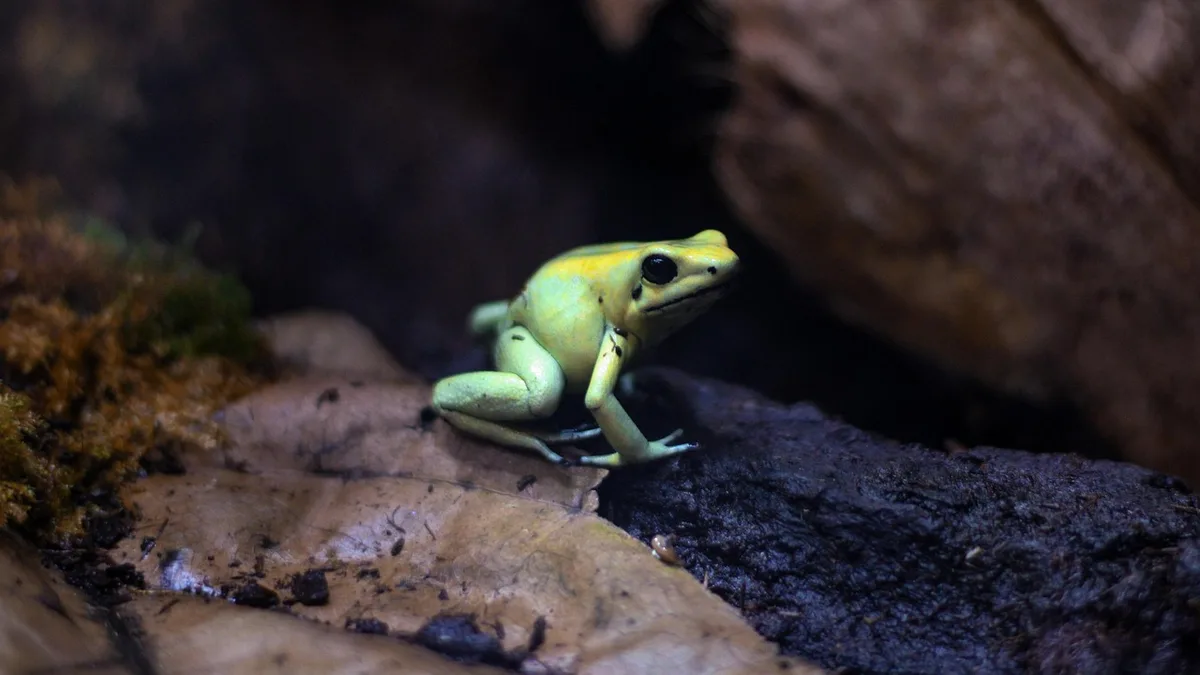 Amphibian skin is permeable, so water chemistry acts directly on the animal. Photo: 23291781 via Pixabay.
Inappropriate Humidity
The most common failure in frog care is inadequate humidity. Frogs with dry skin become lethargic and may develop dysecdysis, or abnormal shedding. Owners should measure humidity with a hygrometer instead of guessing. Misting systems can help maintain humidity but should be cleaned regularly to prevent bacterial growth.
Overfeeding
Obesity is common in captive anurans because owners often offer more food than the animal needs. Overweight animals have reduced mobility and may develop hepatic lipidosis. Owners should feed according to a schedule and monitor body condition.
Inadequate Supplementation
Metabolic bone disease occurs when calcium and vitamin D metabolism is disrupted. Signs include soft jaws, tremors, and difficulty moving. Owners should dust prey with calcium and vitamin supplements according to the species' needs and provide appropriate UVB lighting.
Poor Water Quality
Aquatic frogs are particularly sensitive to water quality. Ammonia and nitrite buildup can cause skin irritation, lethargy, and death. Owners should test water parameters regularly and perform partial water changes as needed.
Inappropriate Handling
Handling causes stress in anurans and can damage their skin. The skin is delicate and absorbs substances from the handler's hands. Owners should handle anurans only when necessary and should use powder-free gloves moistened with dechlorinated water.
Toxin Exposure
Toads can release toxins when stressed. Owners should wash their hands after handling toads and should keep toads away from other pets. Dogs are particularly at risk of toad poisoning because they may mouth toads.
Welfare and Safety Context
Stress and Its Effects
Stress has measurable effects on amphibian physiology and behavior. Shelter availability reduces resting behavior and supports normal circadian rhythms. Social cues affect reproductive physiology, and stress hormones can interfere with reproductive endocrine pathways. Owners should minimize handling, provide appropriate shelter, and maintain stable environmental conditions.
Disease Surveillance
Ranaviruses have been involved in amphibian mass mortality events worldwide. Effective screening is essential to control this pathogen. Non-lethal sampling methods have been evaluated for ranavirus detection. Buccal swab screening had the highest virus detection rate in both frogs and toads, with detection rates of 62 percent in frogs and 71 percent in toads. Buccal swabs produced consistently high virus levels compared to other non-lethal assays and were effective across multiple stages of infection. Successful virus detection in the absence of clinical signs was observed in 33 percent of frogs and 50 percent of toads.
Buccal swabbing could replace lethal sampling for screening and be introduced as standard practice for ranavirus surveillance. Owners who acquire new animals should consider quarantine and screening, especially if they have existing amphibians. Veterinary professionals should be aware of ranavirus as a differential diagnosis for sudden death in amphibian collections.
Zoonotic Considerations
Amphibians can carry Salmonella and other pathogens that are transmissible to humans. Owners should wash their hands after handling animals or cleaning enclosures. Immunocompromised individuals should avoid direct contact with amphibians. Children should be supervised when interacting with pets.
Environmental Adaptation
Human-modified environments impose selective pressures on wild amphibian populations. In Rhinella horribilis, genotype-environment associations were related to suboptimal climatic and water physiochemical conditions. Candidate genes were linked with temperature, solar radiation, oxygen availability, and potassium levels in water bodies. Seven genes were enriched for biological processes and metabolic pathways, associated mainly with embryonic development, sexual maturation, and immune responses. These findings show that amphibians can adapt to stressful conditions, but adaptation has limits. Owners should not collect wild animals for pets because wild populations face multiple threats.
Professional Escalation Criteria
Urgent Veterinary Evaluation
Seek immediate veterinary care if the animal shows any of the following signs:
- Open-mouth breathing or gasping
- Seizures or tremors
- Profuse bleeding or visible wounds
- Swelling of the limbs or body
- Inability to move or right itself
- Sudden death of a cagemate
Routine Veterinary Evaluation
Schedule a veterinary examination if the animal shows any of the following signs:
- Decreased appetite lasting more than three days
- Weight loss of more than 10 percent of body weight
- Abnormal skin lesions or retained shed
- Changes in fecal output lasting more than three days
- Lethargy or reduced activity
- Abnormal posture or gait
Quarantine Procedures
New animals should be quarantined for at least 30 days before introduction to existing collections. Quarantine should occur in a separate room with separate equipment. Observe the new animal for signs of illness and consider ranavirus screening using buccal swabs. Do not introduce new animals to an established collection without quarantine.
A Practical Decision Framework for Matching Anuran Species to Owner Capability
Selecting between a frog and a toad requires more than comparing general traits. The decision hinges on matching the specific species to the owner's measurable capability to provide for its biological needs. This section presents a structured framework that veterinarians and prospective owners can use to evaluate readiness before acquisition. The framework uses scored criteria across five domains: time availability, financial commitment, environmental control, handling expectations, and long-term planning. Each domain carries a maximum score, and the total guides species selection within either the frog or toad category.
Scoring the Five Readiness Domains
The first domain is time availability. Frogs generally require daily attention to humidity, water quality, and feeding. Toads tolerate more flexible schedules but still need consistent care. Owners should estimate the minutes per day they can dedicate to the animal. More than 45 minutes daily scores 5 points, 20 to 45 minutes scores 3 points, and less than 20 minutes scores 1 point. This estimate should include feeding, spot cleaning, misting, and observation time. The estimate should be realistic and based on current routines instead of intended habits.
The second domain is financial commitment. Enclosures, lighting, heating, filtration, and veterinary care represent ongoing costs. Owners should calculate the initial setup cost and the monthly maintenance cost they can sustain. A budget above 500 dollars for setup and 50 dollars monthly scores 5 points. A budget of 250 to 500 dollars for setup and 25 to 50 dollars monthly scores 3 points. A budget below 250 dollars for setup and 25 dollars monthly scores 1 point. Aquatic frogs typically require filtration systems and larger enclosures, which increase both setup and operating costs. Terrestrial toads generally need less equipment, but substrate replacement and heating still represent recurring expenses.
The third domain is environmental control. This refers to the owner's ability to maintain stable temperature, humidity, and lighting within the required ranges for the species. Owners who have experience with thermostats, hygrometers, and timer-controlled lighting score 5 points. Owners who can follow a written schedule and use basic monitoring tools score 3 points. Owners who cannot commit to daily monitoring or lack climate control in their home score 1 point. Temperature and humidity fluctuations cause stress and predispose animals to respiratory and skin disease. The ability to maintain conditions within a narrow range matters more than the specific range itself.
The fourth domain is handling expectations. Anurans are observation pets instead of handling pets. Owners who expect to handle their animal weekly or more often score 1 point because frequent handling causes stress and skin damage. Owners who expect to handle monthly or less score 3 points. Owners who expect to handle only for health checks and enclosure maintenance score 5 points. The skin of both frogs and toads absorbs substances from hands, and the stratum corneum is easily damaged. Handling should be limited to necessary procedures such as weighing, health assessment, and enclosure transfer.
The fifth domain is long-term planning. Many anurans live 5 to 15 years in captivity depending on species. Owners who can commit to the animal's full lifespan score 5 points. Owners who can commit for 3 to 5 years score 3 points. Owners who anticipate a move, career change, or other life transition within 3 years score 1 point. Rehoming anurans is difficult because few rescues accept amphibians, and many owners release animals outdoors, which is harmful to both the animal and local ecosystems. The lifespan of the specific species should be confirmed before acquisition.
Interpreting the Total Score
The maximum total score is 25 points. A total of 20 to 25 points indicates readiness for most frog species, including those with demanding humidity and water quality requirements. A total of 14 to 19 points indicates readiness for hardy frog species or most toad species. A total of 8 to 13 points indicates readiness for beginner toad species only. A total below 8 points indicates that the owner should delay acquisition until at least two domains can be improved.
This scoring system does not replace species-specific research. It identifies general readiness but does not account for the wide variation within frogs and toads. For example, the African clawed frog is fully aquatic and requires filtration, while the White's tree frog is arboreal and requires high humidity with good ventilation. Both are frogs, but their care needs differ substantially. Similarly, the American toad is a hardy terrestrial species, while the cane toad grows large and produces potent toxins that pose risks to other pets. The score narrows the field but does not select the species.
Applying the Framework to Species Selection
After calculating the total score, the owner should list candidate species that match their readiness level. For each candidate species, the owner should verify five specific facts before purchase. First, the adult size, because many species are sold as juveniles and grow larger than expected. Second, the lifespan, because this determines the length of commitment. Third, the enclosure dimensions required for an adult, because undersized enclosures cause chronic stress. Fourth, the dietary requirements, including prey size and supplementation schedule. Fifth, the known health problems in captivity, because some species are prone to specific conditions.
The owner should write these facts in a care plan before acquiring the animal. The care plan should include the species name, the source of the animal, the date of acquisition, the enclosure dimensions, the temperature and humidity ranges, the lighting schedule, the feeding schedule, and the veterinary contact. This document serves as the reference for daily care and for veterinary consultations. A written care plan reduces the risk of husbandry errors that arise from memory and guesswork.
Using the Framework in Veterinary Consultations
Veterinarians can use this framework during pre-acquisition consultations with prospective owners. The consultation should include a review of the owner's scores in each domain and a discussion of the specific species under consideration. The veterinarian can identify gaps between the owner's capability and the species' requirements before the animal is acquired. This preventive approach reduces the number of animals surrendered for husbandry-related health problems.
The framework also supports post-acquisition problem solving. When an animal presents with a husbandry-related condition, the veterinarian can review the owner's scores to identify the domain most likely to have failed. For example, a frog with dysecdysis likely reflects a failure in environmental control, specifically humidity. A toad with obesity likely reflects a failure in time management, specifically feeding discipline. The framework directs the conversation toward the underlying cause instead of the presenting sign.
Limitations of the Framework
The framework does not account for the owner's access to veterinary care. Anuran medicine requires specialized knowledge, and not all veterinary practices treat amphibians. Owners should confirm that a veterinarian with amphibian experience is within reasonable travel distance before acquisition. The framework also does not account for the presence of other pets. Dogs and cats may injure or kill anurans, and toads may poison dogs that mouth them. Households with free-roaming pets should score handling expectations and environmental control lower because the enclosure must be secure against interference.
The framework does not address the legality of keeping specific species. Some jurisdictions restrict or prohibit the possession of certain anurans, particularly invasive species such as the cane toad. Owners must verify local regulations before acquisition. The framework assumes that the species is legally obtainable and that the owner can provide for its needs.
Record Keeping for the Decision Process
Owners should keep a written record of their scoring and the species they considered. This record includes the date of the assessment, the scores in each domain, the candidate species list, and the final selection with justification. This document helps the owner reflect on their decision if problems arise and provides useful history for the veterinarian. The record also serves as evidence of responsible planning if the owner is questioned by a regulatory authority.
The record should be updated when circumstances change. A change in work schedule, living situation, or household composition affects the owner's capability. An owner who scored 20 points at acquisition may score 12 points after a job change that reduces available time. The updated score indicates when the owner should consider rehoming the animal or adjusting the care routine to match the new capability.
Integrating the Framework with Existing Care Guidance
This decision framework complements the husbandry information presented elsewhere in this article. The anatomical and behavioral differences between frogs and toads inform the scoring criteria, and the captive care requirements define the standards that the owner must meet. The framework translates those standards into a practical assessment that an owner can complete before spending money on an animal and enclosure.
The framework also supports the professional escalation criteria described in this article. An owner who notices a decline in their animal's condition can review their scores to identify the likely cause. A score that has dropped in the environmental control domain points to a husbandry problem that should be corrected before or during veterinary treatment. A score that remains high across all domains points to an infectious or metabolic disease that requires diagnostic investigation.
Practical Assessment Steps
The owner should complete the following steps in order. First, score each of the five domains honestly and record the scores. Second, calculate the total and identify the readiness category. Third, list candidate species that match the readiness category. Fourth, verify the five specific facts for each candidate species. Fifth, write a care plan for the selected species. Sixth, set up the enclosure and stabilize conditions before acquisition. Seventh, schedule a pre-acquisition veterinary consultation if possible. Eighth, acquire the animal from a reputable source and begin the written health record.
These steps take time, but they prevent the most common causes of anuran morbidity and mortality in captivity. The most frequent failures are not exotic diseases but preventable husbandry errors. Inappropriate humidity, overfeeding, inadequate supplementation, and poor water quality account for the majority of clinical cases in pet anurans. Each of these failures traces back to a gap between the owner's capability and the species' requirements. The decision framework closes that gap before the animal is acquired.
When to Escalate Beyond the Framework
The framework cannot determine whether a specific animal is healthy at the time of purchase. A pre-acquisition veterinary examination is recommended for any anuran, particularly if the animal shows signs of illness such as lethargy, skin lesions, or abnormal posture. The veterinarian can perform a physical examination, assess body condition, and recommend diagnostic testing if indicated. Ranavirus screening using buccal swabs is a non-lethal option for detecting subclinical infection, and this testing should be considered for animals acquired from colonies with unknown health status.
The framework also cannot predict the behavioral compatibility between the owner and the animal. Some owners find the sedentary nature of toads unrewarding, while others find the activity of frogs stressful to observe. These preferences are personal and cannot be scored. Owners should observe the species in person before acquisition, if possible, to confirm that the animal's behavior matches their expectations.
Frequently Asked Questions
What is the main difference between a frog and a toad?
The main difference is skin structure and associated physiology. Frogs have smooth, moist skin that supports cutaneous respiration, while toads have thicker, drier, warty skin that reduces water loss. True toads also possess parotoid glands behind the eyes that produce bufotoxins. These differences affect humidity requirements and handling safety in captivity.
Are toads a type of frog?
All toads are frogs in the sense that both belong to the order Anura. The term toad is commonly applied to members of the family Bufonidae, the true toads, but some species in other families are also called toads. The distinction is based on common usage instead of strict taxonomy.
Do toads cause warts in humans?
No, toads do not cause warts in humans. The warts on a toad's skin are clusters of glands, and they are not infectious. Human warts are caused by papillomaviruses, which are not transmitted by toads. However, toad skin secretions can be irritating to mucous membranes, so hands should be washed after handling.
Which is easier to keep as a pet, a frog or a toad?
Toads are generally easier to keep because they tolerate drier conditions and are less sensitive to handling stress. Frogs require higher humidity and more careful water quality management. However, the specific species matters more than the general category. Some frogs are hardy, and some toads have specialized requirements.
Do frogs and toads need UVB lighting?
Many anurans benefit from UVB lighting because it supports vitamin D synthesis and calcium metabolism. The specific requirement depends on the species and its natural history. Diurnal species that bask in sunlight need higher UVB output, while nocturnal species need less. Owners should research the specific species and provide appropriate lighting.
Can frogs and toads be housed together?
Frogs and toads should not be housed together. Different species have different environmental requirements, and mixing species increases the risk of disease transmission and aggression. Toads may also release toxins that harm frogs. Each species should be housed separately in an enclosure that meets its specific needs.
What should I do if my dog bites a toad?
If a dog bites a toad, rinse the dog's mouth with water and seek veterinary care immediately. Toad toxins can cause profuse salivation, vomiting, and cardiac arrhythmias. The severity of clinical signs depends on the toad species and the amount of toxin absorbed. Do not induce vomiting without veterinary guidance.
How often should I clean my frog or toad enclosure?
Spot-clean the enclosure daily by removing feces and uneaten prey. Perform a full substrate change according to the species' needs and the enclosure size. Aquatic enclosures require regular water changes and filter maintenance. A written cleaning schedule helps ensure consistency and supports disease prevention.
Related Veterinary Guides
- Cat: Complete Health and Care Guide for Pet Owners
- Dog: Complete Health and Care Guide for Pet Owners
- Best Pet Frogs for Beginners: Easy Species and Care
- Veterinary Stethoscopes for Pet Owners: Cardiac Acoustics, Bell vs. Diaphragm, and Murmur Monitoring
- How Is AI Changing Veterinary Care?
Related Clinical & Scientific Guides
References and Further Reading
- Merck Veterinary Manual. Merck Veterinary Manual.
- Animal Health and Welfare. World Organisation for Animal Health.
- The tactile-stimulated startle response of tadpoles: acceleration performance and its relationship to the anatomy of wood frog (Rana sylvatica), bullfrog (Rana catesbeiana), and American toad (Bufo americanus) tadpoles.. Journal of experimental zoology. Part A, Comparative experimental biology, 2006.
- Modulators of Bufo arenarum ovulation.. Zygote (Cambridge, England), 2008.
- An overview of the osseous palmar sesamoid in Anura, with the particular case of some Rhinella species.. PeerJ, 2023.
- Role of mitochondria-rich cells in epithelial chloride uptake.. Experimental physiology, 1996.
- Ocular lens morphology is influenced by ecology and metamorphosis in frogs and toads.. Proceedings. Biological sciences, 2022.
- When skeletons are geared for speed: the morphology, biomechanics, and energetics of rapid animal motion.. Integrative and comparative biology, 2012.
- Effect of nervous stimulation on ovarian steroid secretion in amphibians.. Journal of experimental zoology. Part A, Ecological and integrative physiology, 2020.
- Prolonged middle ear development in Rhinella horribilis.. Journal of morphology, 2018.
- Influence of Shelter and Hibernation on the 24-Hour Behavioral Rhythms of Male Dybowski's Frog (<,i>,Rana dybowskii<,/i>,) Across Age Groups.. 2026.
- Reception of conspecific cues alters testicular gene expression and improves fertility in boreal chorus frogs (Pseudacris maculata).. 2026.
- Signatures of repeated genomic selection associated with human-modified landscapes in genetically independent populations of Rhinella horribilis.. 2026.
- Memoirs: Contributions to the Anatomy of Auerbach's Plexus in the Intestine of the Frog and Toad. 1873.
- Reproductive dynamics of the common toad (Bufo bufo) and the grass frog (Rana temporaria) as one of the key species of their seasonal cycle. Animal Biology, 2023.
- Laboratory anatomy of the frog and toad. 1994.
- Non-Lethal Detection of Frog Virus 3-Like (RUK13) and Common Midwife Toad Virus-Like (PDE18) Ranaviruses in Two UK-Native Amphibian Species. Viruses, 2022.
- Frog and toad : tomorrow. 2019.
- Difference between frog and toad tadpoles in response of the keratinizing epidermis of the oral region to excess of vitamin A. Experientia, 1977.
- Parotoid, radial, and tibial macroglands of the frog Odontophrynus cultripes: Differences and similarities with toads. Toxicon, 2017.
- Similarities and differences in the cytoarchitecture of the tectum of frogs and salamanders. Acta Biologica Hungarica, 1996.
This article is educational and is not a substitute for veterinary diagnosis or treatment. Contact a veterinarian for advice about an individual animal.