Proto Mammals: Synapsids and Mammal-Like Reptiles
By Dr. Zubair Khalid, DVM, MS, PhD ·
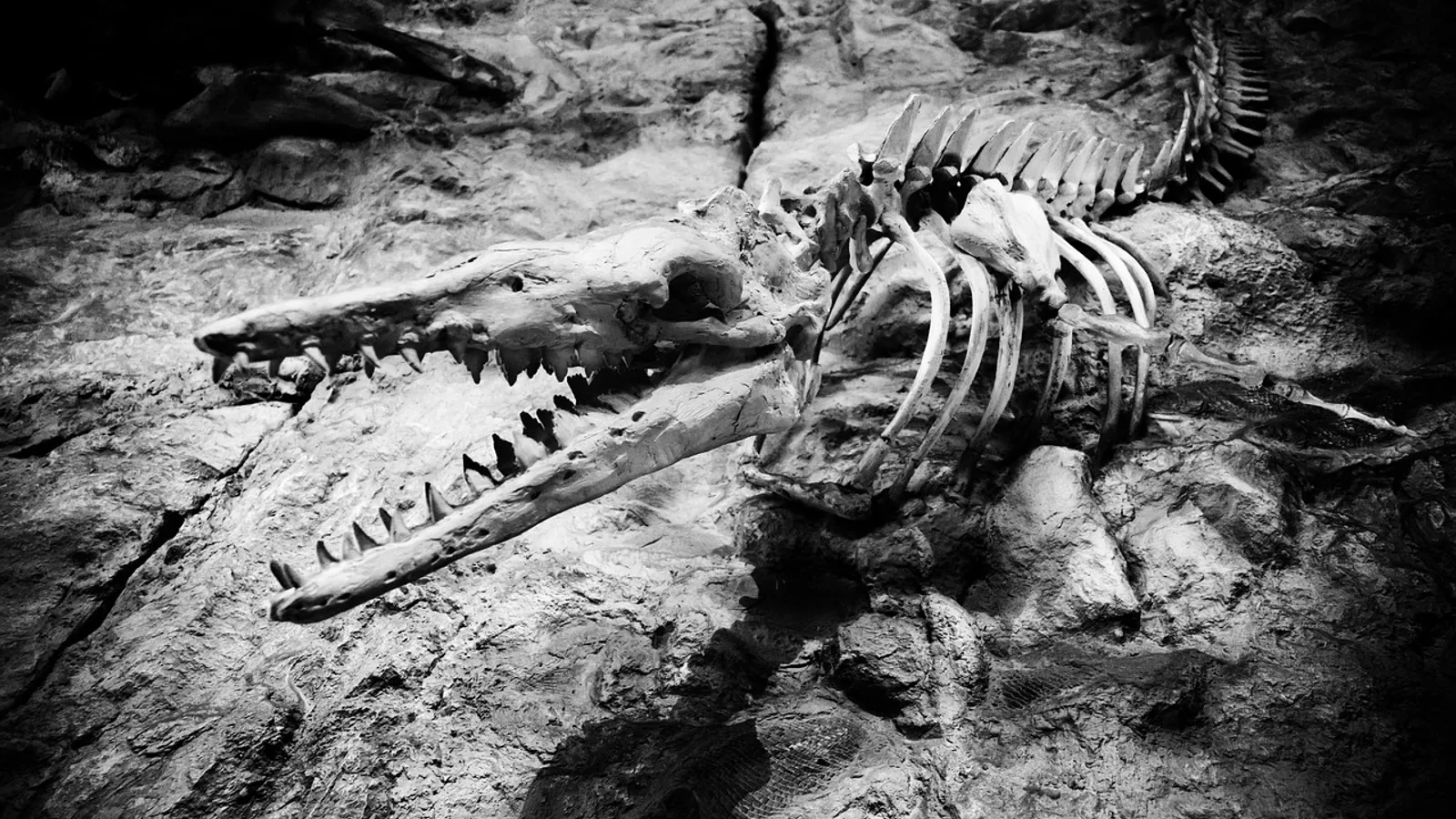
Proto mammals are the extinct synapsid animals that lived between roughly 320 million and 200 million years ago and accumulated, step by step, the anatomical features we now call mammalian: a single bone in the lower jaw, a new jaw joint, three middle ear bones, and a more upright posture. A "mammal-like reptile" is an informal, outdated label for these same animals, and modern paleontology avoids it because synapsids were never reptiles.
That distinction matters because the synapsid fossil record is the best-documented large-scale evolutionary transition in vertebrates. Paleontologists can trace individual bones moving from the jaw into the ear across tens of millions of years, and they can test competing ideas about why it happened using CT scanning, finite element analysis, and biomechanical modeling [1][2][3]. For students, proto mammals are the clearest worked example of how macroevolution actually operates: not a single leap, but a long sequence of small, functional shifts.
What Makes an Animal a Synapsid
The defining feature of Synapsida is a single opening in the skull behind the eye called the temporal fenestra. This is a hole in the bone, not an eye socket, and it gives the jaw-closing muscles room to bulge outward when they contract. Amniotes split into two great lineages on this character. Synapsids have one temporal fenestra. Sauropsids, the lineage that includes lizards, snakes, crocodilians, dinosaurs, and birds, have two, or a modified version of two. This split occurred around 320 million years ago in the Late Carboniferous [4].
The temporal fenestra is the reason you can identify a synapsid skull from a photograph. In pelycosaurs it sits low and relatively small. In later therapsids it enlarges and shifts, and in cynodonts the skull also gains a secondary palate that separates the air passage from the mouth [5]. Skull bone count drops steadily across the whole lineage. Synapsid skulls carried close to their maximum number of separate bones in the Late Carboniferous and Early Permian, and both the minimum and maximum counts fell from the Early Triassic through the Early Jurassic [6].
Synapsids Are Not Reptiles
This is the single most common error in student writing. "Mammal-like reptile" was coined in the nineteenth century, when any fossil tetrapod that was not a mammal or an amphibian was dumped into Reptilia. That category no longer reflects evolutionary relationships. Synapsids and sauropsids are sister groups within Amniota, and neither is ancestral to the other. A pelycosaur is no more a reptile than a human is. When you see the phrase "mammal-like reptile" in older papers, including some of the classic literature, translate it mentally as "non-mammalian synapsid."
The Proto Mammal Timeline
The synapsid story runs through four major phases, separated by two mass extinctions.
Late Carboniferous, around 320 Ma. Synapsids and sauropsids diverge. The earliest synapsids are small, superficially lizard-like animals.
Permian, 299 to 252 Ma. Pelycosaurs dominate terrestrial vertebrate faunas early in the period. Therapsids appear and then radiate explosively in the Mid to Late Permian [4]. The end-Permian extinction at roughly 252 Ma removes most of them.
Triassic, 252 to 201 Ma. Cynodonts survive the extinction and diversify. A derived group, the probainognathian cynodonts, experiments repeatedly with a second jaw joint [7][8].
Jurassic, 201 to 145 Ma. Mammaliaforms appear and diversify. A specimen from the Early Jurassic, roughly 195 million years ago, already shows the middle ear bones detached from the mandible [9].
The end-Permian extinction is the hinge of the whole story. It culled the large herbivorous and carnivorous therapsids that had dominated the Late Permian, and it left the cynodonts, which were comparatively small, as the surviving synapsid stock.
flowchart TD
    A[Synapsids split from sauropsids] --> B[Pelycosaurs dominate early Permian]
    B --> C[Therapsids radiate late Permian]
    C --> D[End Permian extinction]
    D --> E[Cynodonts survive and diversify]
    E --> F[Probainognathian cynodonts]
    F --> G[Repeated secondary jaw joints]
    G --> H[Mammaliaforms appear]
    H --> I[Middle ear detaches from jaw]
    I --> J[Crown mammals]
Group by Group Through the Proto Mammals
Pelycosaurs
Pelycosaurs are the basal synapsids of the Carboniferous and Permian. The best-known examples are Dimetrodon and Edaphosaurus, both of which carried a tall sail of elongated neural spines along the back. Pelycosaurs had a low temporal fenestra, a sprawling limb posture, and a lower jaw made of several bones, of which the dentary was the largest but not the only functional element. Their teeth were typically uniform, with little regional specialization.
One line of evidence suggests some early synapsids pushed ventilation further than a typical sprawling tetrapod could manage. Analysis of the caseid pelycosaurs, a group at the base of Synapsida, indicates they may have been bound to a predominantly aquatic life and would have needed an auxiliary ventilatory structure to meet oxygen demand on surfacing. Under that scenario, a homologue of the mammalian diaphragm could have evolved roughly 50 million years earlier than previously assumed [10].
Non-Cynodont Therapsids
Therapsids replace pelycosaurs as the dominant synapsids through the Permian. The replacement is a well-documented case of incumbent replacement, and the leading explanation ties it to a correlated progression of traits that raised metabolic rate and improved homeostatic regulation, in response to a seasonally arid, savanna-like biome. Therapsid radiation then accelerated when Mid-Permian geography connected that biome to temperate regions [4].
This group includes the dicynodonts, therocephalians, gorgonopsians, and dinocephalians. They show a larger temporal fenestra, a more upright stance than pelycosaurs, and a dentary that is visibly larger relative to the rest of the jaw. The lower jaw still retains postdentary bones, and the jaw joint is still the ancestral quadrate-articular joint.
Cynodonts
Cynodonts are the therapsid subgroup that carries the story into the Mesozoic. They have differentiated teeth with incisors, canines, and postcanine teeth, a secondary palate, and a dentary that dominates the lower jaw. The quadrate and articular bones are still present and still form the jaw joint, but they are shrinking.
The functional problem cynodonts faced is subtle and worth stating plainly. Because the jaw joint sat next to the ear region, the same bones had to bear the load of biting and transmit sound. Auditory performance favors low forces at the joint. Feeding favors high bite forces. A three-dimensional free body analysis of the cynodont Probainognathus shows three ways to limit joint reaction forces without losing much bite force: reorienting the resultant muscle force more vertically, moving the bite point medial to the jaw articulation, and raising the jaw articulation above the tooth row [11].
Mammaliaforms
Mammaliaforms are the group more closely related to living mammals than to non-mammaliaform cynodonts [9]. They include the morganucodontans, docodontans, haramiyidans, and eventually crown mammals. In mammaliaforms, the dentary is the only tooth-bearing bone of the lower jaw, the postdentary trough is gone, and the middle ear ossicles are detached.
A Jurassic docodontan from China preserves hyoid bones with mobile joints arranged in a saddle shape, matching the mobile hyoid linkage of living mammals. Non-mammaliaform cynodonts had simple hyoid rods associated with a wide, nonmuscularized throat, as seen in living reptiles. The derived hyoid apparatus supports a larynx and a constricted, muscularized esophagus, which is what allows powered swallowing of chewed food and liquid. These structures evolved among early mammaliaforms before the middle ear fully disconnected from the mandible [12].
Comparison Table of Key Proto Mammal Groups
| Group | Era and period | Temporal fenestra | Dentition | Jaw joint | Posture |
|---|---|---|---|---|---|
| Pelycosaurs | Late Carboniferous to Permian | Small, low on skull | Mostly uniform teeth | Quadrate-articular | Sprawling |
| Non-cynodont therapsids | Permian | Larger | Some regional variation | Quadrate-articular | More upright than pelycosaurs |
| Cynodonts | Late Permian to Jurassic | Large | Incisors, canines, postcanines | Quadrate-articular, some with a secondary dentary-squamosal contact | Semi-upright to upright |
| Mammaliaforms | Late Triassic to Jurassic | Large | Fully differentiated | Dentary-squamosal | Upright |
The Jaw Transition, Step by Step
The mammalian jaw transition is the most cited example of morphological repurposing in vertebrate history, and it deserves a careful walkthrough.
Step 1. The dentary expands. Across non-mammalian synapsids, the dentary grows relative to the rest of the lower jaw. A phylogenetic analysis of dentary measurements across a broad range of taxa confirms a trend toward a larger dentary area in lateral view, driven mainly by vertical expansion rather than by front-to-back lengthening. The same analysis found no evidence that this happened at the expense of the postdentary bones, so the trend is not a simple one-for-one replacement [13].
Step 2. The dentary reaches the squamosal. In the cynodont lineage, the dentary develops a coronoid process and eventually makes contact with the squamosal bone of the skull. A Middle Triassic form from Argentina was the first ancestral reptile shown to have a definite squamosal-dentary articulation alongside the persistent primitive quadrate-articular connection [14].
Step 3. The secondary joint appears more than once. This is where the story gets more interesting than the textbook version. Micro-CT reconstruction of three probainognathian cynodonts from South America shows that ictidosaurs, meaning Riograndia plus the tritheledontids, independently evolved a dentary-squamosal contact roughly 17 million years before that character first appears in mammaliaforms of the Late Triassic. Brasilodon, previously described as having an incipient dentary condyle, actually lacks one and articulates solely through the ancestral quadrate-articular joint [7]. Additional work reports a tritylodontid with a dentary-jugal articulation and a morganucodontan whose dentary-squamosal joint lacks a bulbous condyle, supporting the idea that the mammalian dentary condyle formed by expansion of the lateral ridge of the dentary. These findings indicate repeated, independent experimentation with secondary jaw joints in advanced cynodonts, with the load-bearing dentary-squamosal joint as a shared derived feature of mammaliaforms [8].
Step 4. The old joint becomes the ear. The quadrate and articular, freed from load bearing, shrink and move into the middle ear as the incus and malleus. A stapes and incus from a Jurassic euharamiyidan, roughly 160 million years ago, are miniscule compared with those of non-mammalian cynodonts, and the stapes falls within the size range of living mammals [15]. The earliest record of a mammaliaform with no postdentary trough on the mandible, meaning the ear bones had separated, comes from the Early Jurassic at about 195 million years ago, which pushed the known date for that feature back by roughly 45 million years [9].
Why Miniaturization Mattered
The paradox at the center of the jaw transition is how bones could serve as a load-bearing hinge for powerful biting and as a delicate hearing apparatus at the same time. Digital reconstruction, computational modeling, and biomechanical analysis of key non-mammaliaform taxa across the cynodont-mammaliaform transition found no evidence for a concurrent reduction in jaw-joint stress and increase in bite force, contrary to earlier proposals. The primary driver of the joint transformation was miniaturization of the early mammalian jaw. A shift in jaw muscle recruitment did occur, but the mechanical explanation is size, not force [2].
This fits with broader evidence that the transition did not simply make the skull stronger. Biomechanical modeling shows no increase in cranial strength or performance across the cynodont-mammaliaform transition. Instead, stresses decreased in the braincase and skull roof and increased in the zygomatic region, a functional reorganization linked to a dietary shift toward insectivory and to overall body size reduction [16]. The Early Jurassic mammaliaform mentioned above had an estimated body weight of only 2 grams [9].
How This Is Studied in Practice
Paleontologists do not rely on visual inspection alone. The main tools are:
- Micro-computed tomography. Scanning fossils produces three-dimensional reconstructions of internal cavities, sutures, and joint surfaces without damaging the specimen. This is how the jaw joint anatomy of Brasilodon, Riograndia, and Oligokyphus was compared [7].
- Finite element analysis. FEA divides a digital model into small elements and calculates stress and strain under simulated loads. It has been used to estimate the harmonic response of the cynodont Thrinaxodon ear to bone-conducted and airborne sound [3].
- Free body analysis. This classical mechanical approach derives equations relating muscle orientation, joint position, bite point, and joint reaction forces. It produced the three limiting terms described for Probainognathus [11].
- Phylogenetic comparative methods. These methods test whether a trend is statistically real across a tree rather than just visible in a few well-known fossils. They are what showed the dentary enlargement trend is real but not a simple replacement of postdentary bones [13].
- Digital muscle reconstruction. CT data can be used to rebuild jaw adductor musculature in three dimensions for non-mammalian cynodonts and mammaliaforms, which addresses a debate that has run for nearly a century [17].
What the Ear Tells Us About Hearing
The mammalian middle ear is distinctive because it is detached from the mandible and has a tympanic membrane supported by a ring-like ectotympanic bone. These features give modern mammals more sensitive hearing than other tetrapods, especially at high frequencies [3].
The question is when this sensitivity appeared. Finite element analysis of Thrinaxodon found that airborne sound received at the tympanum was the most effective mode of sound reception, while bone-conducted sound through the mandibular bones barely met the estimated hearing threshold. That suggests cynodonts already relied on a soft tissue tympanum to receive airborne sound, though with limited sensitivity compared with living mammals [3].
There is a long-running debate about whether any stage of mammalian phylogeny had a middle ear like that of a typical living reptile, with a postquadrate tympanic membrane. One classic analysis concluded that the squamosal sulcus of cynodonts and other therapsids, usually interpreted as housing a long external acoustic meatus, may instead have held a depressor mandibulae muscle. In that reconstruction, an air-filled chamber extended deep to the reflected lamina of the angular bone, and the thin tissues over it served as an eardrum. Vibrations reached the stapes mainly through the anterior hyoid cornu in primitive forms, but in dicynodonts, therocephalians, and cynodonts they passed mainly or exclusively from mandible to quadrate to stapes [18].
The functional payoff of full separation is decoupling. Once the postdentary bones leave the jaw, hearing and feeding stop competing for the same structures, and this is regarded as the key transition that improved both chewing performance and hearing capacity [19].
Posture and the Spine
The traditional story says synapsids shifted from a sprawling limb posture like a lizard to adducted limbs like a mammal, with a matching shift from lateral bending of the spine to sagittal bending. Testing that with functionally informed adaptive landscapes shows the picture is more complicated. The synapsid adaptive landscape differs from both living reptiles and living mammals, which weakens the use of reptiles as a model for early synapsid axial function. The synapsid-to-mammal transition involved increasing sagittal bending in the posterior column but also high stiffness and increasing axial twisting in the anterior column [20].
Other Systems Worth Knowing
Two additional transitions are less famous but equally instructive.
The secondary palate. Mammals have a bony shelf closing the ventral aspect of the rostrum, which turns the snout into a tapered semicylindrical tube. Mechanical analysis of the opossum rostrum shows this shape resists bending and torsion efficiently, and that the palate contributes significantly to torsional strength and stiffness. The evolutionary implication is that even small increments of palatal shelf would have produced a rapid increase in rostral strength, which may explain why the complete structure evolved [5].
Skull simplification. Over roughly 150 million years of premammalian synapsid history, the number of distinct skull and lower jaw bones fell steadily, measured by a skull simplification metric. The pattern appears on both stratigraphic and phylogenetic scales, and postcranial evolution shows a similar pattern. Skull size bears little relationship to bone count [6].
Common Mistakes and Limitations
Calling synapsids reptiles. Synapsida and Sauropsida are sister clades. The phrase "mammal-like reptile" is a historical artifact, not a taxonomic statement.
Treating the jaw transition as a single event. The dentary-squamosal joint evolved independently in at least two lineages, and the load-bearing version is a shared derived feature of mammaliaforms rather than something that appeared once and spread [7][8].
Assuming the transition made the skull stronger. Biomechanical modeling shows no increase in cranial strength, and stresses actually rose in the zygomatic region while falling in the braincase and skull roof [16].
Assuming bite force drove the change. The miniaturization model replaced the bite-force model after biomechanical testing found no concurrent stress reduction and force increase in key taxa [2].
Reading the fossil record as a straight line. Ancestral character reconstruction shows the dentary measurements did not evolve in one direction across all non-mammalian synapsids [13].
Forgetting the sampling problem. The record is biased toward larger, more heavily mineralized animals and toward well-collected formations. New South American and Chinese material has repeatedly overturned conclusions drawn from better-known northern faunas [7][8][9].
Individual specimens and their interpretation require specialist assessment, and any identification of a fragmentary fossil should be confirmed by a vertebrate paleontologist rather than settled from a photograph.
Quick Review
- Synapsids are defined by a single temporal fenestra and split from sauropsids around 320 Ma.
- Pelycosaurs dominate the early Permian. Therapsids replace them and radiate in the late Permian [4].
- The end-Permian extinction around 252 Ma culls most therapsids and leaves cynodonts as the surviving stock.
- The dentary expands across non-mammalian synapsids, but not by simply replacing the postdentary bones [13].
- The dentary-squamosal joint evolved more than once, roughly 17 million years earlier in ictidosaurs than in mammaliaforms [7].
- Miniaturization, not increased bite force, was the primary driver of the jaw joint transformation [2].
- The quadrate and articular became the incus and malleus, and the earliest known detached middle ear dates to about 195 Ma [9].
Frequently Asked Questions
What are proto mammals?
Proto mammals are the non-mammalian synapsids, the extinct animals on the lineage leading to mammals. The group spans pelycosaurs, therapsids, cynodonts, and mammaliaforms, and it lived from roughly 320 million to 200 million years ago.
Are synapsids reptiles?
No. Synapsids and sauropsids are sister groups within Amniota. The label "mammal-like reptile" is an outdated convenience from nineteenth-century classification and does not reflect evolutionary relationships.
What is a temporal fenestra?
A temporal fenestra is an opening in the skull behind the eye that houses jaw-closing muscles. Having exactly one is the defining skull feature of Synapsida, and it separates synapsids from the two-fenestra sauropsids.
When did the mammalian jaw joint evolve?
A dentary-squamosal contact appeared independently in several cynodont lineages. Ictidosaurs evolved one roughly 17 million years before it appears in mammaliaforms, and the load-bearing version is a shared derived feature of mammaliaforms [7][8].
How did jaw bones become ear bones?
The quadrate and articular bones of the ancestral jaw joint shrank and moved into the middle ear as the incus and malleus once the dentary-squamosal joint took over load bearing. A Jurassic euharamiyidan preserves ossicles already within the size range of living mammals [15].
Why did the jaw joint change at all?
Biomechanical modeling points to miniaturization of the early mammalian jaw as the primary driver. Earlier ideas that the change was driven by rising bite force were not supported when joint stress and bite force were tested in key taxa [2].
Related Articles
- Wildlife Rehabilitation Intake and Triage: Protocols for Mammals, Birds, and Reptiles
- Comparative Cardiovascular Physiology: Reptiles, Birds, and Small Mammals
- Renal Adaptations in Reptiles: Why Their Kidneys Differ from Mammals
- Proto Oncogenes: From Normal Genes to Cancer Drivers
- Dental Health in Small Mammals
- Small Mammal Safe Bedding
- c-Myc Gene: Function, Regulation, and Cancer Role
- Dog Feces: What Healthy Stool Looks Like
- Chigger Bite Pictures: What Chiggers Look Like
Sources
- Evolution and development of the mammalian jaw joint: Making a novel structure.
- The role of miniaturization in the evolution of the mammalian jaw and middle ear.
- Biomechanics of the mandibular middle ear of the cynodont Thrinaxodon and the evolution of mammal hearing.
- The origin and early radiation of the therapsid mammal-like reptiles: a palaeobiological hypothesis.
- Mechanical factors in the evolution of the mammalian secondary palate: a theoretical analysis.
- Simplification as a trend in synapsid cranial evolution.
- Brazilian fossils reveal homoplasy in the oldest mammalian jaw joint.
- Convergent evolution of diverse jaw joints in mammaliamorphs.
- A new mammaliaform from the early Jurassic and evolution of mammalian characteristics.
- A caseian point for the evolution of a diaphragm homologue among the earliest synapsids.
- A three dimensional free body analysis describing variation in the musculoskeletal configuration of the cynodont lower jaw.
- New Jurassic mammaliaform sheds light on early evolution of mammal-like hyoid bones.
- Revisiting the evolutionary trend toward the mammalian lower jaw in non-mammalian synapsids in a phylogenetic context.
- Cynodont reptile with incipient mammalian jaw articulation.
- Ear ossicle morphology of the Jurassic euharamiyidan Arboroharamiya and evolution of mammalian middle ear.
- Functional reorganisation of the cranial skeleton during the cynodont-mammaliaform transition.
- Morphological evolution of the mammalian jaw adductor complex.
- Evolution of the mammalian middle ear.
- A perspective from the Mesozoic: Evolutionary changes of the mammalian skull and their influence on feeding efficiency and high-frequency hearing.
- Adaptive landscapes challenge the "lateral-to-sagittal" paradigm for mammalian vertebral evolution.