Parasteatoda tepidariorum: Common House Spider
By Dr. Zubair Khalid, DVM, MS, PhD ·
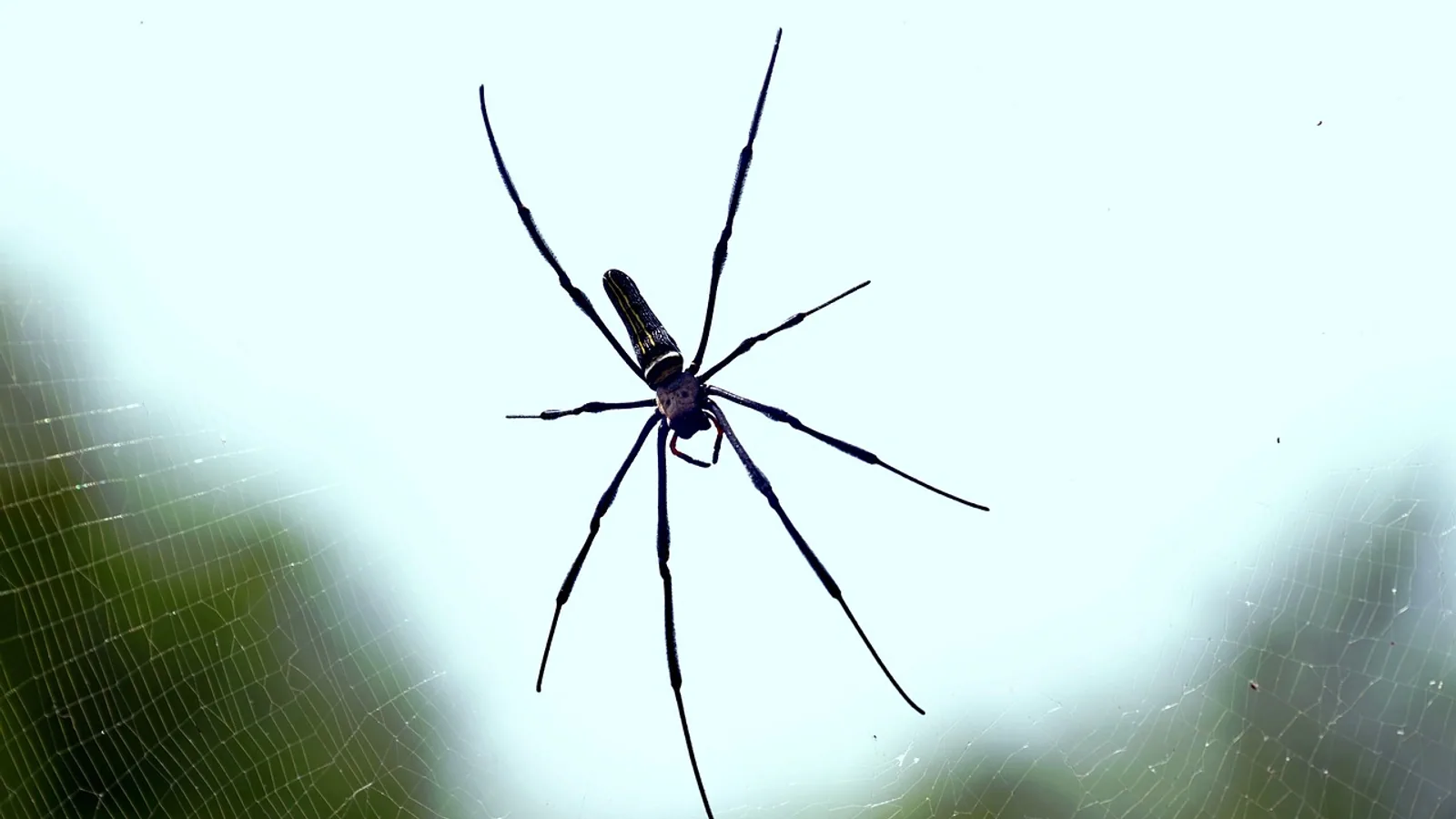
Parasteatoda tepidariorum is a small, mottled brown cobweb spider with a bulbous abdomen that lives in corners, window frames, and outbuildings across most of the world. Its bite is not medically significant to humans or pets, and it is one of the most intensively studied spiders in developmental biology.
This profile covers identification, the irregular tangle web it builds, its venom biology, and why laboratories from Germany to Japan use it as a model organism. It also compares the common house spider with two spiders people confuse it with: widow spiders (Latrodectus) and funnel weavers (Tegenaria).
What Is Parasteatoda tepidariorum?
Parasteatoda tepidariorum is a theridiid spider, meaning it belongs to the family Theridiidae, the cobweb weavers. Theridiids are a large family of spiders that build three-dimensional tangle webs rather than the flat orb webs of garden spiders. The family includes the widow spiders, which is why the common house spider is sometimes described as a widow relative.
The species has a long taxonomic history. It was long placed in the genus Achaearanea, and older scientific papers, including much of the spider silk literature, refer to it as Achaearanea tepidariorum [1][2]. The name Parasteatoda tepidariorum is now standard, and the older name appears in titles and abstracts of studies published before the genus was revised. Both names refer to the same animal.
Its common names include common house spider, American house spider, and cobweb spider. It is cosmopolitan, meaning it is found on every continent except Antarctica, and it thrives in human-built structures. In the United States it is one of the spiders most frequently encountered indoors, particularly in garages, basements, porches, and the upper corners of rooms.
The common house spider is not a pest in the medical sense. It does not damage structures, it does not infest food, and it does not transmit disease. It is a predator of flies, mosquitoes, ants, and other small insects that enter buildings.
Identification: What the Common House Spider Looks Like
Body size and shape
Adult females have a body length of roughly 5 to 8 millimeters, with males slightly smaller. The abdomen (the rear body section, called the opisthosoma) is bulbous and noticeably taller than it is wide, giving the spider a rounded, almost teardrop profile when viewed from the side. The legs are relatively long and thin, and the spider typically hangs upside down in its web with legs splayed.
Color and pattern
The coloration is mottled brown, gray, and tan. The abdomen usually carries a pattern of darker patches, chevrons, or irregular blotches against a lighter background, though the pattern varies widely between individuals and can be faint in older or well-fed spiders. The cephalothorax (the front body section, or prosoma) is usually a lighter tan or yellowish brown with darker markings radiating from the center. The legs are banded with alternating light and dark rings, which is one of the more reliable field characters.
Distinguishing features
Several features separate Parasteatoda tepidariorum from spiders it is commonly confused with:
- The abdomen is rounded and high, not globular and glossy black like a black widow.
- There is no red hourglass or other bright ventral marking.
- The web is a three-dimensional tangle, not a flat orb or a funnel sheet.
- The spider hangs inverted in the web, often in a corner near the ceiling.
- Egg sacs are papery brown, roughly spherical, and hung within the tangle web, often several per female.
Male and female differences
Females are larger and heavier-bodied. Males are smaller, with slightly longer legs relative to body size and enlarged pedipalps (the small appendages near the mouth) used in sperm transfer. Males are more likely to be seen wandering away from webs during the mating season, while females are almost always found in or near a web.
Egg sacs and juveniles
A female produces several egg sacs over her life. Each sac is a brown, papery, teardrop or spherical structure suspended in the web by silk threads. Juveniles resemble small versions of the female and disperse short distances after hatching. The species has a relatively short life cycle, and mated females periodically lay eggs rather than producing one clutch and dying [3].
Where Common House Spiders Live
Parasteatoda tepidariorum is found worldwide in temperate and tropical regions. It is strongly associated with buildings, which is why it is called the house spider. Typical retreats include:
- Ceiling corners and wall-ceiling junctions
- Window frames and door frames
- Basements, garages, and crawl spaces
- Porches, sheds, and outbuildings
- Rock walls, fence posts, and other outdoor structures
Outdoors, it occupies similar microhabitats: crevices, undersides of ledges, and shaded corners where a tangle web can be anchored to multiple surfaces. The web does not need to be horizontal, and it does not need open space the way an orb web does. This flexibility is one reason the species succeeds in so many environments.
The spider is sedentary. Females typically remain in or near one web for long periods, repairing and extending it rather than abandoning it. This site fidelity is useful in research because it means a marked individual can be observed repeatedly.
The Tangle Web: Architecture and Function
What a cobweb actually is
The common house spider builds an irregular three-dimensional tangle web, often called a cobweb. The web has no consistent geometric plan. Instead, it is a scaffold of threads anchored to surrounding surfaces, with sticky capture threads integrated into the structure.
Research on this species distinguishes two functional regions of the web [1][2]:
- Supporting threads, which maintain web shape and bear the weight of the spider and captured prey.
- Sticky gumfooted threads, which adhere directly to prey and run from the web down to a substrate anchor.
Gumfooted threads are a hallmark of theridiid webs. Each one is a thread under tension, anchored to a surface by a sticky droplet at the bottom. When a walking insect brushes the thread, the anchor releases and the insect is pulled up into the tangle.
Silk properties differ by region
The two thread types are not just structurally different. They have different mechanical properties. Supporting threads are thicker and bear higher loads before deforming permanently or breaking. Sticky gumfooted threads are more elastic, which reduces the forces prey apply to the web and allows an insect to contact multiple sticky threads at once [2].
This division of labor is a functional design. The supporting threads must hold the structure together for weeks. The capture threads must stretch and adhere without snapping under the struggles of an insect.
Silk tuning to prey
The common house spider adjusts its silk to the prey it has been eating. In a controlled feeding experiment, spiders fed large, high-energy crickets produced supporting threads that were stiffer and tougher than those from spiders fed small, low-energy pillbugs. Silk from cricket-fed spiders of both thread types broke at higher loads than silk from pillbug-fed spiders [1].
The result suggests the spider is not producing a fixed material. It is tuning silk performance to the mechanical demands it expects, which is one reason the species is used to study the relationship between silk genes, silk material properties, and web function.
Silk gene expression on different diets
A related study asked whether diet changes the expression of silk genes themselves. Spiders were acclimated on mealworms, then fed either high-energy crickets or low-energy flies for one month. Cricket-fed spiders continued to gain mass, while fly-fed spiders maintained or lost mass. Expression of the dragline silk genes MaSp1 and MaSp2 did not differ significantly between groups. However, transcripts of the prey-wrapping silk gene MiSp were significantly less abundant in fly-fed spiders than in lab-acclimated spiders [4].
The takeaway is that silk gene expression is partly buffered against diet and partly responsive to it. Structural silk production appears stable, while the silk used to wrap prey is reduced when the spider is on a poor diet.
Venom: What the Bite Does and Does Not Do
Venom apparatus
Spiders produce venom in a pair of glands in the cephalothorax. Each gland connects by a duct to an opening at the tip of a fang on the chelicera. In Parasteatoda tepidariorum, the venom gland begins forming at the tip of the chelicera during embryonic stage 13, extends proximally through the rest of embryonic development, and continues into the prosoma after the spider hatches [5]. The gland has a secretory epithelium, a surrounding muscle layer, and distinct expression patterns at its extremities [5].
Venom composition
The venom of the common house spider is a complex mixture. Mass spectrometry has identified at least 99 distinct proteins in its venom, including at least 33 latrotoxins, which are pore-forming neurotoxins shared with the confamilial black widow [6]. Latrotoxins are the proteins responsible for the severe effects of widow bites, but the amount and potency in house spider venom are far lower. Latrotoxins account for a much smaller percentage of venom gland expression in the house spider than in black widows [7].
The house spider genome contains at least 47 latrotoxin genes, many arranged in tandem arrays, and these genes vary widely in predicted structure and expression [7]. This diversity is one reason the species is useful for studying how venom evolves.
Bite risk to humans and pets
The common house spider is not medically significant. Its fangs are small, it rarely bites, and it does not bite unless trapped against skin. When bites do occur, they typically cause minor local redness and discomfort that resolves without treatment. There is no antivenom indicated, and no documented pattern of systemic envenomation in healthy humans or in dogs and cats.
This is a key distinction from its famous relative. The house spider shares venom protein families with black widows, but sharing a protein family is not the same as sharing a clinical risk. Dose, potency, and behavior all differ.
Parasteatoda tepidariorum as a Laboratory Model
Why this spider became a model
Parasteatoda tepidariorum has emerged as a primary experimental system for studying development from an evolutionary perspective [3]. Several features make it practical:
- A relatively short life cycle
- Females that lay eggs repeatedly after mating
- Embryos that are accessible and can be manipulated
- A sequenced genome
- Effective parental RNA interference, a technique in which double-stranded RNA injected into a mother silences a target gene in her embryos
The embryo is cellular from an early stage and shows stepwise symmetry-breaking events and stripe-forming processes before reaching the arthropod phylotypic stage, the developmental point at which body plans across a phylum look most similar [3]. The embryonic field also has strong self-regulatory capabilities, meaning it can compensate when parts are disturbed.
Body axis formation and the cumulus
One of the best-studied problems in this spider is how the dorsoventral axis (the back-to-belly axis) is established. In spider embryos, a cluster of signaling cells called the cumulus migrates collectively and organizes the axis. Transplanting the cumulus can induce a secondary axis, which makes it functionally comparable to the Spemann organizer in amphibians [8].
The transcription factor Pt-Ets4 is required for cumulus integrity, dorsoventral patterning, and activation of downstream genes including Pt-hunchback and Pt-twist. Ectopic expression of Pt-Ets4 is enough to induce cell delamination and migration [8]. A later study showed that FGF signaling is also required for cumulus migration. Reducing FGF signaling produces embryos with reduced or absent cumulus migration and dorsoventral patterning defects, and Ets4 regulates several FGF pathway components in the cumulus [9]. The same work proposed that fgf8 may act as a chemoattractant guiding cumulus cells toward the future dorsal pole [9].
Segmentation and the posterior growth zone
Wnt8 is required for posterior development in this spider. Knockdown of Wnt8 via parental RNA interference caused misregulation of Delta, hairy, twist, and caudal and resulted in failure to establish a proper posterior growth zone, with truncation of the opisthosoma. In the most severe cases, the entire opisthosoma was missing [10]. This work helped establish that Wnt8, caudal, and Delta/Notch may form part of an ancient regulatory network for posterior specification shared across protostomes and deuterostomes.
Gut, germ line, and hormone biology
The molecular control of gut formation has been mapped in this species. Orthologs of the ectodermal genes wingless and hedgehog, the endodermal genes serpent and HNF4, and the mesodermal gene twist are expressed in the same germ layers during spider gut development as in the fruit fly Drosophila melanogaster, suggesting conserved downstream components across arthropods. The forkhead ortholog behaves differently from its fly counterpart and appears to specify both endodermal and mesodermal precursors [11].
Germ line development has also been studied. Primordial germ cells arise during late embryogenesis, and the conserved genes vasa and piwi are required for mitotic integrity in early embryogenesis [12].
More recently, the Halloween gene shadow was shown to function in both embryonic development and postembryonic molting. Knockdown increased embryonic mortality, caused developmental delays, and disrupted molt cycles, supporting a role in ecdysteroid biosynthesis [13].
Silk genes and the genome
The genome of Parasteatoda tepidariorum was sequenced and analyzed in a landmark study that found pervasive duplication of coding and non-coding genes, including two clusters of Hox genes. Synteny analysis suggested an ancient whole-genome duplication in spiders, likely shared with scorpions and dating to more than 450 million years ago [14]. Many Hox paralogs show signs of neofunctionalization or subfunctionalization since duplication, making this spider a useful invertebrate platform for studying the consequences of genome duplication [3][14].
Other research areas
Book lung development has been described in detail in both embryos and adults of this species, including the cellular processes that build new lamellae and the polarity rules that produce alternating air and hemolymph channels [15][16]. Venom gland organogenesis was characterized comprehensively for the first time in this spider, identifying gland-specific markers and the timing of toxin gene activation [5]. Alternative transcription at venom genes has also been documented, with multiple distinct proteins produced from transcripts of individual genes, confirmed by mass spectrometry for eight loci [6].
Comparison Table: Common House Spider, Widow Spiders, and Funnel Weavers
| Feature | Parasteatoda tepidariorum | Latrodectus (widow spiders) | Tegenaria (funnel weavers) |
|---|---|---|---|
| Family | Theridiidae | Theridiidae | Agelenidae |
| Adult female body length | About 5 to 8 mm | Typically larger, roughly 8 to 15 mm depending on species | Typically larger, often 10 to 18 mm |
| Body form | Bulbous, high abdomen, mottled brown | Globular, glossy black or brown, often with red or orange ventral marking | Flatter, longer legs, brown with darker markings |
| Web type | Irregular three-dimensional tangle with sticky gumfooted threads | Irregular tangle, often with a retreat | Horizontal sheet funnel with a retreat at one end |
| Typical location | Corners, window frames, garages, basements | Outbuildings, woodpiles, garages, under objects | Ground level, baseboards, corners near floor, outdoors in vegetation |
| Venom risk to humans | Not medically significant | Medically significant, neurotoxic | Not medically significant |
| Venom proteins of note | Latrotoxins present but at low expression | Latrotoxins dominant and highly expressed | Not characterized by latrotoxin dominance |
| Research use | Major developmental and evolutionary model | Venom and antivenom research | Less commonly used as a laboratory model |
The table is a comparison of general tendencies. Individual spiders vary, and species within each genus differ.
Common Mistakes and Limitations
Mistaking it for a black widow. The most common error is assuming any dark spider in a cobweb is a widow. The common house spider is mottled brown, has a high rounded abdomen, and lacks the red hourglass. Widows are glossy and jet black or dark brown with a distinct ventral marking. If you are unsure, do not handle the spider with bare hands.
Assuming a cobweb means a dangerous spider. Cobwebs are built by many harmless theridiids. The presence of a tangle web in a corner is not evidence of a widow.
Confusing funnel weavers with house spiders. Tegenaria species build flat sheet webs with a funnel retreat, usually near the floor or ground. House spiders build three-dimensional tangles, usually higher up. The web type is often more diagnostic than the spider itself.
Believing the bite is dangerous because of the widow connection. The house spider does carry latrotoxin genes, but the expression level is far lower than in black widows, and there is no clinical pattern of serious envenomation [7]. Family relationship is not the same as venom risk.
Overestimating the size. People often describe house spiders as larger than they are. A body length of 5 to 8 millimeters is small, roughly the size of a pencil eraser. The long legs make the spider look bigger than its body.
Assuming all house spiders are the same species. Several theridiids live indoors, and identification to species requires looking at the abdomen pattern, the leg banding, and the reproductive structures. A photograph from a distance is often not enough.
Limitations of this profile. Individual spiders vary in size, pattern, and behavior. Identification from a description alone can be wrong. If a bite occurs and symptoms are more than minor, or if a pet shows signs of illness after a suspected bite, a veterinarian or physician should evaluate the animal or person. This article describes the species in general and is not a substitute for individual medical or veterinary assessment.
Practical Notes for Homeowners and Keepers
If you find a common house spider indoors, the practical response depends on your comfort level. The spider is a predator of flies and other small insects, and it does not damage property. If you leave it, it will stay in its web and continue catching insects. If you remove it, a cup and a piece of cardstock work without touching the spider.
For keepers interested in observing the species, the animal is easy to maintain. It accepts a range of small prey, builds a visible web in a corner or on a stick frame, and produces multiple egg sacs. It does not require special heat or humidity beyond normal room conditions. It is not a handling species, and it should not be encouraged to bite.
For anyone considering the species as a research organism, the practical advantages are the short life cycle, repeated egg laying, and the availability of parental RNA interference, genome sequence, and developmental transcriptome data [3][17]. The genome-scale embryonic expression profile covers ten successive developmental stages and is publicly deposited [17]. Microarray datasets comparing normal and RNAi embryos are also available [18][19].
What Is Still Uncertain
Several areas remain open. The precise mechanisms by which silk material properties are tuned to prey are not fully resolved, and the two hypotheses proposed in the silk tuning work (that spiders tune silk to prey forces, or that silk properties reflect nutritional state, or both) have not been separated experimentally [1].
The functional significance of the many latrotoxin genes in the house spider genome is also unclear. They vary in structure and expression, but their role in the spider's own biology, as opposed to their evolutionary relationship to widow toxins, is not settled [7].
The role of whole-genome duplication in spider diversification is an active question. The duplication is well supported, but how it shaped morphology and ecology over hundreds of millions of years is not fully understood [14].
Female mating behavior in this species is also incompletely described. In a study of mating rates, the majority of females did not mate, and those that did mated only once, not necessarily on the first encounter. The likelihood of re-mating did not differ between monandrous and polyandrous pairings, and female mating experience did not have a clear effect on the measured outcomes [20]. The authors describe the study as exploratory, so the reproductive behavior of the species remains an open area.
Frequently Asked Questions
Is the common house spider dangerous?
No. Parasteatoda tepidariorum is not medically significant to humans or pets. Bites are rare, usually minor, and resolve without treatment.
How do I identify a common house spider?
Look for a mottled brown spider with a bulbous, high abdomen, banded legs, and a body length of about 5 to 8 millimeters, hanging upside down in an irregular tangle web in a corner or window frame.
What kind of web does it build?
It builds an irregular three-dimensional tangle web, commonly called a cobweb, with supporting threads and sticky gumfooted threads that anchor to a surface and pull walking insects into the web.
Is the common house spider related to black widows?
Yes. Both are in the family Theridiidae, the cobweb weavers. The house spider carries latrotoxin genes shared with widows, but expresses them at much lower levels and is not dangerous.
Does the common house spider bite people?
It can bite if trapped against skin, but bites are uncommon and typically cause only minor local redness or discomfort.
Why is Parasteatoda tepidariorum used in research?
It is a major model for evolutionary developmental biology because of its short life cycle, repeated egg laying, accessible embryos, sequenced genome, and effective parental RNA interference.
What does the common house spider eat?
It eats small insects and other arthropods, including flies, mosquitoes, ants, and similar prey that enter its web.
How is it different from a funnel weaver?
Funnel weavers build flat sheet webs with a funnel retreat, usually near the ground. House spiders build three-dimensional tangle webs, usually in corners higher up.
Related Articles
- Are Spider Plants Toxic To Cats
- SPIDER vs. PICo for Qualitative Biology Research
- SPIDER framework ecology conservation research question
- Dog House
- Outdoor Cat House
- Puppy Peeing In House
- House Cat Behavior: Normal vs Problem Signals
- Iliac Artery Anatomy: Common, Internal, and External
- Funnel Weaver Spider: Habits and ID
Sources
- The common house spider alters the material and mechanical properties of cobweb silk in response to different prey.
- Biomechanical variation of silk links spinning plasticity to spider web function.
- The common house spider Parasteatoda tepidariorum.
- The common house spider, Parasteatoda tepidariorum, maintains silk gene expression on sub-optimal diet.
- Venom gland organogenesis in the common house spider.
- Alternative Transcription at Venom Genes and Its Role as a Complementary Mechanism for the Generation of Venom Complexity in the Common House Spider.
- House spider genome uncovers evolutionary shifts in the diversity and expression of black widow venom proteins associated with extreme toxicity.
- A novel role for Ets4 in axis specification and cell migration in the spider Parasteatoda tepidariorum.
- FGF signalling is involved in cumulus migration in the common house spider Parasteatoda tepidariorum.
- Wnt8 is required for growth-zone establishment and development of opisthosomal segments in a spider.
- Molecular control of gut formation in the spider Parasteatoda tepidariorum.
- vasa and piwi are required for mitotic integrity in early embryogenesis in the spider Parasteatoda tepidariorum.
- The Halloween gene shadow is involved in embryonic development and postembryonic molting in the spider Parasteatoda tepidariorum.
- The house spider genome reveals an ancient whole-genome duplication during arachnid evolution.
- Book lung development in juveniles and adults of the cobweb spider, Parasteatoda tepidariorum C. L. Koch, 1841 (Araneomorphae, Theridiidae).
- Book lung development in embryos of the cobweb spider, Parasteatoda tepidariorum C. L. Koch, 1841 (Araneomorphae, Theridiidae).
- Genome-scale embryonic developmental profile of gene expression in the common house spider Parasteatoda tepidariorum.
- Microarray data on the comparison of transcript expression between normal and Pt-Delta RNAi embryos in the common house spider Parasteatoda tepidariorum.
- Dataset on gene expressions affected by simultaneous knockdown of Hedgehog and Dpp signaling components in embryos of the spider Parasteatoda tepidariorum.
- Female mating rates and their fitness consequences in the common house spider Parasteatoda tepidariorum.