Lemmings: Biology, Behavior, and Population Cycles
By Dr. Zubair Khalid, DVM, MS, PhD ·
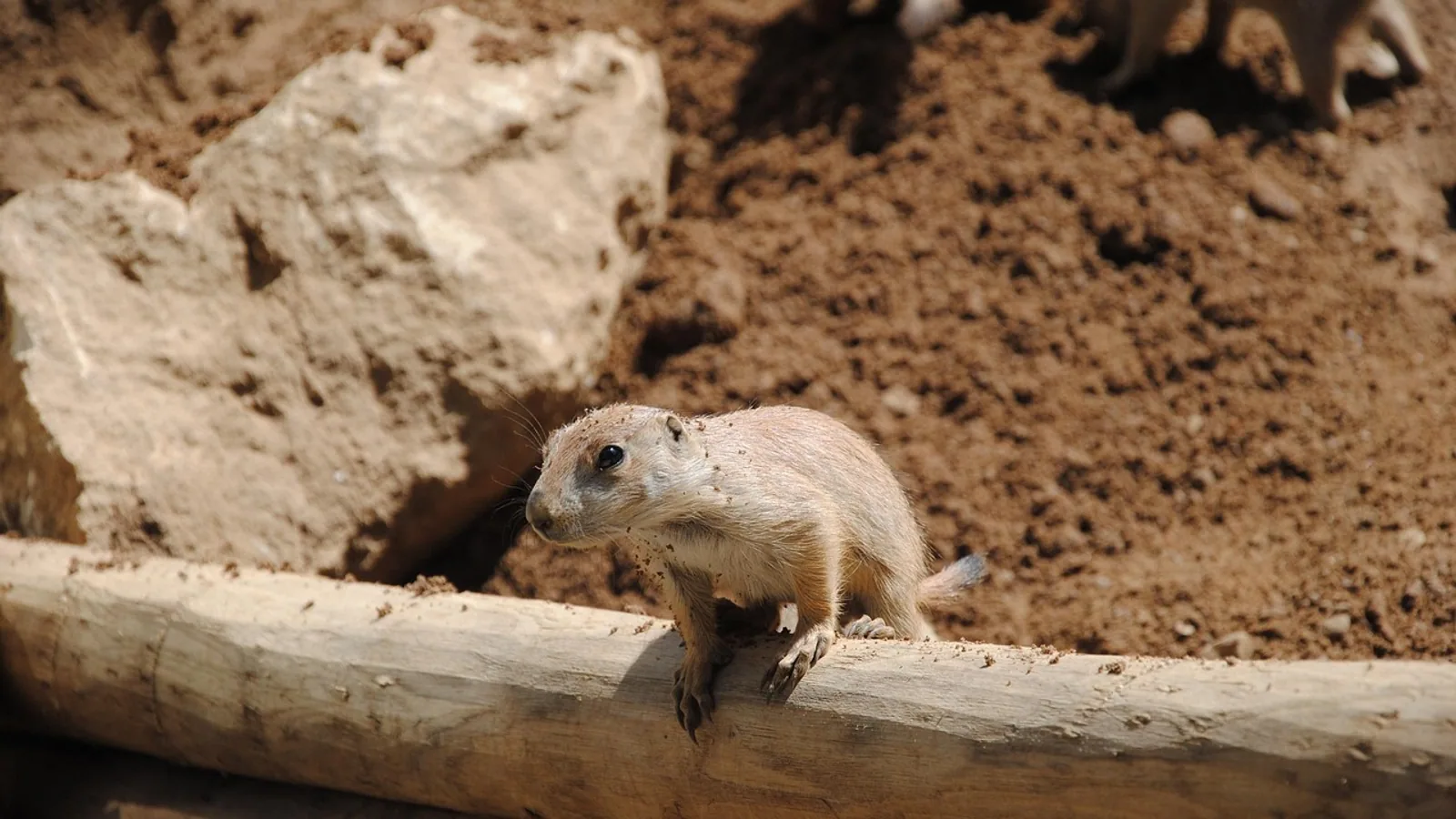
Lemmings are small, stocky rodents that live in the Arctic tundra of North America, Europe, and Asia, and they are best known for two things: dramatic boom-and-bust population cycles that repeat roughly every three to four years, and a stubborn myth that they commit mass suicide by leaping off cliffs. The suicide story is false. It came from a staged 1958 Disney wildlife film, and no lemming species jumps off cliffs on purpose. The real story is far more interesting: lemmings are keystone prey that feed snowy owls, Arctic foxes, skuas, and ermines, and their cycles ripple through the entire tundra food web.
This guide covers lemming biology, the differences between the two main groups (brown lemmings and collared lemmings), the mechanics of their population cycles, the predator-prey dynamics that drive those cycles, and how climate change is disturbing the snow conditions lemmings depend on.
What Is a Lemming?
A lemming is a small rodent in the subfamily Arvicolinae, the same group that includes voles and muskrats. Two genera dominate the Arctic: Lemmus, the brown lemmings, and Dicrostonyx, the collared lemmings. They are not the same animal, and treating them as one species leads to bad ecology.
Brown lemmings (Lemmus species, including Lemmus trimucronatus in North America) are the classic tundra lemming. They are chunky, short-tailed, and brown, and they feed mainly on grasses, sedges, and mosses. They live in wetter meadows and are famous for building networks of winter nests under the snow.
Collared lemmings (Dicrostonyx species, including Dicrostonyx groenlandicus) are built for drier, higher ground. They are named for a collar of pale fur around the neck. Their most striking feature is their winter claws: two front toes grow into large, forked digging claws each winter and shed in spring, an adaptation for tunneling through hard-packed snow and frozen ground.
The two genera overlap across much of the circumpolar Arctic but occupy different microhabitats. Brown lemmings favor moist sedge meadows. Collared lemmings favor drier, rocky, or sandy tundra with willow and dwarf shrubs. This habitat split matters because the two groups can cycle out of sync, and the data for collared lemmings are far thinner than for brown lemmings. A historical review of lemming research at Barrow, Alaska, found that most of what is known about North American brown lemming cycles came from studies between 1946 and 1974, while collared lemming data from the same site were only a minor part of the research [1].
Range and Habitat
Lemmings occupy the circumpolar Arctic: northern Alaska, northern Canada, Greenland, Svalbard, Scandinavia, and the Russian Arctic. They are absent from Iceland and from most temperate zones. Their range is bounded by the tree line to the south and by the Arctic Ocean to the north.
Within that range, lemming density varies sharply with habitat quality. The Barrow review noted that even within a single local area, lemming densities varied with habitat, with higher densities in higher-quality habitats [1]. This is a key point. A "lemming peak" at one site does not mean a peak everywhere. The same review found that synchronous lemming population fluctuations over wide geographic areas did not always occur, and that fluctuations were often localized [1].
That local patchiness complicates the popular picture of a single Arctic-wide lemming cycle. It also explains why two nearby study sites can report opposite results in the same year.
Diet and Daily Behavior
Lemmings are herbivores. Brown lemmings eat grasses, sedges, and mosses, with a strong preference for plants that are high in nutrients and low in defensive chemicals. Collared lemmings eat more woody plants, including willow and dwarf birch, along with forbs and some mosses.
Both groups are active year-round. They do not hibernate. In winter they live under the snow in a subnivean space, the gap between the ground and the snowpack, where temperatures stay near freezing even when surface air drops far below zero. Brown lemmings build winter nests of woven grass and sedge. Collared lemmings dig tunnels and chambers.
Lemmings are prey, and their behavior reflects that. They are quick to retreat into burrows or tunnels, they breed fast, and they disperse when local density gets high. Dispersal is the behavior that got twisted into the suicide myth. When a lemming population peaks, young animals move out of crowded areas in search of new territory. Some of those dispersers cross rivers, lakes, or sea ice, and some drown. That is accidental mortality during dispersal, not deliberate self-destruction.
The Population Cycle
Lemming populations rise and fall in a repeating pattern. The classic period is three to four years. A 2024 analysis compiled 24 unique time series of lemming population fluctuations across the circumpolar region and found that cyclic patterns were detected 55 percent of the time, with a median periodicity of 3.7 years [2].
Two findings from that study are important. First, virtually all populations showed alternating periods of cyclic and non-cyclic fluctuations over the past four decades. Cycles are not a permanent property of a population. They come and go. Second, non-cyclic periods were not more frequent in recent years, so there is no Arctic-wide collapse of lemming cycles at present, even though cycles have been sporadic at most sites [2].
The cycle has four phases. The table below summarizes each phase, the approximate density, and how predators respond.
| Cycle phase | Population density | Predator response |
|---|---|---|
| Low (crash) | Very low, lemmings scarce over large areas | Specialist predators (ermines, snowy owls) decline or leave. Arctic foxes switch to marine subsidies such as seal carrion and goose eggs. Generalist predators switch to alternative prey. |
| Increase | Rising, breeding accelerates | Ermines begin to reproduce. Nomadic predators such as snowy owls and skuas move in. Fox home ranges shrink as rodent prey becomes easier to find. |
| Peak | High, lemmings abundant and visible | Predator numbers peak with a lag. Snowy owls and skuas nest in large numbers. Arctic fox reproduction is high. Ermine numbers are still climbing. |
| Decline | Falling rapidly, often within one season | Predators concentrate on remaining lemmings and on alternative prey. Ermine predation during winter can prolong the low phase. |
The timing of the decline is not random. A 10-year study of brown lemmings in the Canadian Arctic found that population declines after a peak occurred between summer and winter, not during winter itself. During summer, population growth was driven by changes in survival, not by fecundity or the proportion of juveniles. In winter, growth was driven by changes in late-summer and winter reproduction [3]. Body mass was highest in peak years [3].
That pattern matters because it rules out some simple explanations. If lemmings starved during winter, you would expect the crash in winter. Instead the crash starts in late summer and fall.
What Drives the Cycle?
No single factor explains lemming cycles. The current consensus points to an interaction of predation, food, snow conditions, and possibly intrinsic biological rhythms.
Predator-Prey Dynamics
Predation is the leading hypothesis. The specialist predator hypothesis predicts that a predator which specializes on lemmings should respond numerically to lemming abundance with roughly a one-year delay, creating delayed density dependence in the lemming population.
A 2025 study tested this directly using long-term seasonal data on ermines and cyclic lemmings in the High Arctic. The numerical response of ermines to lemming fluctuations was delayed by one year and could mediate delayed density dependence in lemming growth rate. But the impact of ermines on lemming growth rate was small and mostly limited to winter. Simulations with and without ermines suggested that small mustelids are neither necessary nor sufficient to generate cycles on their own. However, their presence may be necessary to prolong the low-abundance phase and delay recovery, which promotes a multiannual cycle [4].
That is a nuanced result. Ermines are not the engine of the cycle. They may be the brake that keeps the low phase low.
A 2026 modeling study reached a compatible conclusion. Using a hybrid dynamical model of the Arctic food web, researchers found that each predator alone does not reduce lemming growth rate enough to generate population cycles. The predator community as a whole is responsible for the cyclic dynamics, because each predator species has unique seasonal adaptations and impacts the cycle in different ways [5].
So the cycle is a community-level phenomenon, not the product of one predator-prey pair.
Food Availability and Plant Defenses
The food hypothesis holds that lemmings overshoot their food supply, then crash when forage is depleted or when plants produce chemical defenses in response to heavy grazing. This mechanism is well documented in vole cycles and is plausible for lemmings, though the evidence is less clean than for predation. The Canadian Arctic study found that summer population growth was driven by survival rather than reproduction, which is consistent with food limitation affecting survival [3]. But the same study did not find direct density dependence on summer demographic parameters, which weakens the simple starvation story [3].
Snow Conditions
Snow is not just weather for lemmings. It is habitat. The subnivean space protects lemmings from extreme cold and from some predators, and it allows winter breeding. Snow that is deep, persistent, and structurally stable supports lemming winter reproduction. Snow that thaws and refreezes, or that forms ice crusts, destroys the subnivean space and can kill lemmings directly.
A 2025 study on Arctic fox and rodent dynamics found that rodent abundance was positively related to snow persistence [6]. The 2024 circumpolar analysis found an indication of a negative effect of warm spells during the snow onset period of the preceding year on lemming abundance [2]. In other words, rain or thaw during early winter, before the snowpack is established, is bad for lemmings.
Intrinsic Rhythms
A newer hypothesis proposes that lemming cycles have an innate, intrinsic driver based on epigenetic regulation. Under this model, epigenetic changes associated with sexual development, growth, and behavior accumulate across generations, eventually producing a phase change from rising density to collapse. Extrinsic factors such as predators and food would modify the cycle but not cause it. The authors argue this explains delayed density dependence, where population growth is controlled by time-dependent negative feedback [7].
This hypothesis is not yet established. It is a proposed mechanism that needs more testing, and it does not replace predator-prey dynamics so much as add a layer to them.
Lemmings as Keystone Prey
Lemmings are the central node of the Arctic terrestrial food web. When lemmings are abundant, predators thrive. When lemmings crash, the effects cascade through the ecosystem.
Snowy Owls and Skuas
Snowy owls and long-tailed skuas are nomadic or semi-nomadic lemming specialists. They breed in the Arctic when lemmings are plentiful and skip breeding or move elsewhere when lemmings are scarce. Long-tailed skuas are strongly site-faithful and lay only two eggs, which limits how much they can capitalize on a lemming peak. A demographic model based on data from northeast Greenland showed that long-tailed skua populations can sustain large changes in lemming dynamics, including temporary collapses lasting around 10 years, because a high proportion of non-breeding floaters buffers the breeding population [8].
Arctic Foxes
Arctic foxes depend on lemmings but have a backup. They also scavenge seal carrion and kill seal pups on sea ice, especially when rodent abundance is low [6]. This marine subsidy stabilizes fox populations and links the marine and terrestrial food webs.
Mathematical models of this three-part system (fox predator, lemming prey, seal carrion subsidy) show that the subsidy can change the dynamics substantially. A combination of favorable conditions for prey and subsidy can push a stable equilibrium into limit cycles, meaning boom-and-bust dynamics [9]. Seasonality matters too. Modeling work shows that including seasonality can predict extinction or persistence of a species when a simpler non-seasonal model predicts the opposite [10].
The fox also responds to lemming abundance by changing its home range size. A study using a multi-prey model showed that the fox numerical response was driven by changes in home range size, and that this response could lead to local exclusion of alternative prey such as sandpipers [11].
Ermines and Other Specialists
Ermines (also called stoats) are small mustelids that prey on lemmings year-round. Their numerical response lags lemming abundance by about a year, and their winter predation can extend the low phase of the cycle [4].
Alternative Prey and the Wider Community
When lemmings crash, predators switch to alternative prey. This is the alternative prey hypothesis, which states that predation pressure on alternative prey should increase when the main prey declines. The pattern shows up in ptarmigan populations. A study across Norway from 2007 to 2017 found that ptarmigan abundance was positively linked with rodent occurrence, and the link was strongest in colder regions [12].
The effect is not universal. A test of the alternative prey hypothesis in Finland using pine marten, voles, and goldeneye nests did not find the predicted negative relationship between vole density and nest predation [13]. So the hypothesis holds in some systems and not others.
Gyrfalcons illustrate how lemming cycles can affect species that do not depend on lemmings as their main prey. A 23-year study in northern Fennoscandia found that gyrfalcon nesting territory occupancy depended on both ptarmigan (the main prey) and lemmings (a cyclic alternative prey). A single high-amplitude lemming peak year boosted colonization of nesting territories [14].
The Suicide Myth and the Disney Film
The idea that lemmings commit mass suicide is one of the most persistent falsehoods in wildlife biology. It originated with the 1958 Disney documentary White Wilderness, which staged a lemming migration and filmed lemmings falling from a cliff. The animals were placed there by the filmmakers. No lemming population has ever been documented deliberately walking off a cliff to die.
The myth also fed on a real phenomenon: irruptions. When lemming numbers peak, large numbers of young animals disperse in search of new territory. Some cross water and drown. Some fall from heights. These are accidents of dispersal, not a coordinated death ritual. The 2024 circumpolar analysis confirms that lemming dynamics are non-stationary and localized, which is the opposite of the synchronized mass migration the myth implies [2].
How Climate Change Affects Lemming Cycles
Climate change is altering Arctic snow. Warmer winters bring more rain-on-snow events, more freeze-thaw cycles, and thinner or less persistent snowpack in many regions. Each of these changes damages the subnivean space that lemmings need.
The 2024 analysis found a negative effect of warm spells during the snow onset period of the preceding year on lemming abundance [2]. The authors concluded that continued warming in early winter may decrease the frequency of periodic irruptions, with negative consequences for tundra ecosystems [2].
The 2025 Arctic fox study found that rodent abundance was positively related to snow persistence [6]. Less persistent snow means fewer rodents, which means foxes rely more on marine subsidies, which changes predation pressure on terrestrial prey including nesting birds.
The 2024 review of lemming cycle research framed the problem directly: reports of fading vole and lemming cycles and persisting low populations in parts of the Arctic have raised concerns about fundamental changes to tundra food web dynamics [2]. The good news from that same analysis is that there is no Arctic-wide collapse of lemming cycles right now. Cycles have become sporadic at most sites, but that pattern also occurred in the past.
The mechanism connecting snow to cycles runs through winter reproduction. The Canadian Arctic study found that winter population growth was driven by late-summer and winter reproduction [3]. If snow conditions prevent winter breeding, the cycle loses one of its main engines.
flowchart TD
    [Snow onset] --> [Subnivean space]
    [Subnivean space] --> [Winter breeding]
    [Winter breeding] --> [Lemming density]
    [Lemming density] --> [Predator numbers]
    [Predator numbers] --> [Predation pressure]
    [Predation pressure] --> [Lemming decline]
    [Lemming decline] --> [Low phase]
    [Low phase] --> [Predator decline]
    [Predator decline] --> [Lemming recovery]
    [Warm spells] --> [Snow onset]
    [Marine subsidy] --> [Predator numbers]
    [Food plants] --> [Lemming density]
The diagram traces the main feedback loop. Snow onset controls the subnivean space, which controls winter breeding, which controls lemming density. Predator numbers follow lemming density with a lag, and predation pressure then drives the decline. Warm spells disrupt the loop at the top. Marine subsidies and food plants modify it from the side.
Common Mistakes and Limitations
Treating all lemmings as one species. Brown lemmings and collared lemmings have different diets, different habitats, and different data quality. Collared lemming cycle data are far less extensive than brown lemming data [1]. A statement about "the lemming cycle" may be true for one genus and unsupported for the other.
Assuming cycles are synchronized across the Arctic. The historical record shows that synchronous fluctuations over wide geographic areas did not always occur and were often localized [1]. Local habitat quality drives density differences even within one area [1].
Assuming cycles are permanent. Virtually all lemming populations alternate between cyclic and non-cyclic periods [2]. A population that stops cycling has not necessarily collapsed. It may be in a non-cyclic phase.
Blaming a single predator. Ermines are neither necessary nor sufficient to generate cycles on their own [4]. The predator community as a whole drives the cyclic dynamics [5].
Confusing dispersal with suicide. Dispersal mortality is real. Deliberate cliff-jumping is not.
Overlooking the marine subsidy. Arctic fox dynamics cannot be understood from lemmings alone. Seal carrion and seal pups on sea ice are a major part of the system, and models that ignore the subsidy can get the dynamics wrong [9][10][6].
Assuming the food hypothesis is settled. The Canadian Arctic study did not find direct density dependence on summer demographic parameters, which is a problem for simple starvation models [3]. Food limitation may still matter, but the evidence is not clean.
Expecting a single mechanism. The intrinsic epigenetic hypothesis [7], the predator community hypothesis [5], the specialist predator hypothesis [4], and the snow hypothesis [2][6] are not mutually exclusive. The cycle is probably a product of several interacting drivers.
Individual animals and local populations vary. Anyone managing captive rodents or studying a specific population should consult a veterinarian or a field ecologist for guidance specific to that situation.
Frequently Asked Questions
Do lemmings really commit mass suicide?
No. The mass suicide story is a myth created for a 1958 Disney documentary that staged lemmings falling from a cliff. Real lemmings disperse when populations are crowded, and some die crossing water or falling, but this is accidental dispersal mortality, not deliberate self-destruction.
How often do lemming population cycles occur?
The median periodicity is about 3.7 years, based on a circumpolar analysis of 24 time series [2]. Cyclic patterns were detected 55 percent of the time, meaning cycles are common but not universal or permanent.
What are the two main types of lemmings?
Brown lemmings (Lemmus) and collared lemmings (Dicrostonyx). Brown lemmings prefer wet sedge meadows and eat grasses and mosses. Collared lemmings prefer drier ground, eat more woody plants, and grow special winter digging claws.
What eats lemmings?
Snowy owls, long-tailed skuas, Arctic foxes, ermines, and gyrfalcons all prey on lemmings. Arctic foxes also scavenge seal carrion when lemmings are scarce [6]. The predator community as a whole drives the cycle [5].
Why do lemming populations crash?
The decline after a peak happens between summer and winter, driven by changes in survival during summer and by winter reproduction [3]. Predation, especially by ermines in winter, can prolong the low phase [4]. Snow conditions and food availability also contribute.
How does climate change affect lemmings?
Warm spells during snow onset reduce lemming abundance [2]. Less persistent snow means less subnivean habitat for winter breeding [6]. Continued warming in early winter may reduce the frequency of population peaks, with consequences for the whole tundra food web [2].
Are lemmings endangered?
Lemming species are not currently listed as globally endangered. The concern is not extinction but the disruption of their population cycles, which affects the predators that depend on them.
What is the subnivean space?
The subnivean space is the gap between the ground and the snowpack. It stays near freezing even in extreme cold, and lemmings use it for winter nesting, tunneling, and breeding. Snow that thaws and refreezes destroys this space.
Related Articles
- populations biology
- Animal Biology
- Risk Factor Analysis for Disease in Animal Populations
- Veterinary Epidemiology: Investigating Disease Patterns in Animal Populations
- Understanding Mini Pig Behavior: Affection, Aggression, and Heat Cycles
- Network Analysis for Infectious Disease Spread in Animal Populations
- Giardia lamblia: Protozoan Biology and Life Cycle
- Bumble Bees: Biology, Behavior and Pollination
- Moles: Anatomy, Diet, and Tunnel-Building Behavior
Sources
- A Historical Review of Our Knowledge of Brown Lemming Population Cycles at Barrow, Alaska: Cycles No More or Never Before.
- Taking the beat of the Arctic: are lemming population cycles changing due to winter climate?
- Seasonal demography of a cyclic lemming population in the Canadian Arctic.
- Seasonal role of a specialist predator in rodent cycles: Ermine-lemming interactions in the High Arctic.
- Simple Seasonal Switches in Food Web Composition Unveil the Complexity of an Arctic Predator-Prey System.
- Marine resources alter tundra food web dynamics by subsidizing a terrestrial predator on the sea ice.
- Lemming and Vole Cycles: A New Intrinsic Model.
- Demographic responses of a site-faithful and territorial predator to its fluctuating prey: long-tailed skuas and arctic lemmings.
- Predator-prey-subsidy population dynamics on stepping-stone domains.
- Role of seasonality on predator-prey-subsidy population dynamics.
- Predator-mediated interactions through changes in predator home range size can lead to local prey exclusion.
- Impacts of predator-mediated interactions along a climatic gradient on the population dynamics of an alpine bird.
- Generalist predator, cyclic voles and cavity nests: testing the alternative prey hypothesis.
- A specialist predator in a food web with cyclic alternative prey: The gyrfalcon-ptarmigan case revisited.